
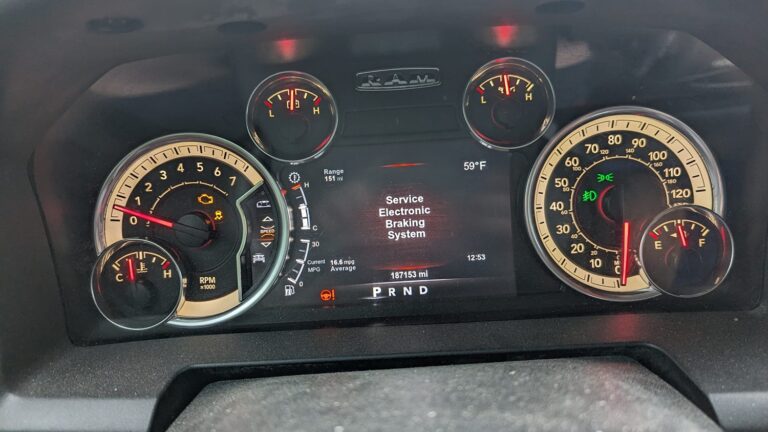
That little message on your dashboard that says “Service Electronic Brake System” is not something you want to brush off. It is your car telling you that something in the electronic brake system is not working the way it should, and in a system that is literally responsible for stopping your vehicle, that matters. A lot.
This warning shows up most commonly in Dodge and Jeep vehicles, but it is not exclusive to them. Any modern vehicle equipped with an electronic brake system can display it. And when it does, you need to understand what it means, what caused it, and how to fix it before it turns into a much bigger, more expensive problem.
What Does “Service Electronic Brake System” Actually Mean?
To understand the warning, you first need to understand what the Electronic Brake System (EBS) actually does. Think of it as the brain behind your braking. When you press the brake pedal, it is not just a mechanical clamp squeezing a rotor. Modern vehicles use a sophisticated electronic system to determine how much braking force each wheel needs at any given moment, and then apply it precisely.
Alongside the EBS, there is also the Electronic Brakeforce Distribution system, or EBD. These two work together constantly. The EBD’s job is to figure out that the rear left wheel needs slightly less braking force than the front right wheel in a given situation, for example, and then make that happen in real time. Without that precision, your braking becomes less controlled, especially in emergency stops or slippery conditions.
Here is something important to understand: the EBS is essentially an extension of the Anti-Lock Braking System (ABS). They are connected and interdependent. When the EBS detects a fault, it cannot confidently manage brake force distribution, so it alerts you through the warning message.
The sensors that feed information into this system are doing a lot of heavy lifting behind the scenes. They track things like:
- Each wheel’s speed and slip ratio
- How much brake force is being applied
- The vehicle’s rotational movement (yaw)
- The angle of the steering wheel
When any part of that data chain breaks down, the system cannot do its job properly. That is when the warning appears.
5 Common Causes of the Service Electronic Brake System Warning
There is no single answer to why this warning light comes on. It could be one of several different issues, some relatively minor and some more serious. Let us walk through each one so you know exactly what to look for.
1. Damaged or Faulty Sensors
This is the most common culprit. The EBS relies on a network of sensors to gather real-time data about what every wheel is doing. If even one of those sensors goes bad, the entire system loses the information it needs to function accurately.
The four main sensors involved in the EBS are:
- Wheel speed sensors – Monitor how fast each wheel is spinning
- Brake force sensor modulator – Measures and regulates the braking pressure applied
- Yaw sensor – Tracks the vehicle’s rotational movement around its vertical axis
- Steering wheel angle sensor – Tells the system which direction the driver is steering
When one of these sensors fails or sends incorrect data, the EBS cannot calculate the right braking response. It flags the error and triggers the warning message. Sometimes the sensor itself is not broken, just dirty or covered in road grime, but either way, it needs attention.
2. A Failing or Weak Battery
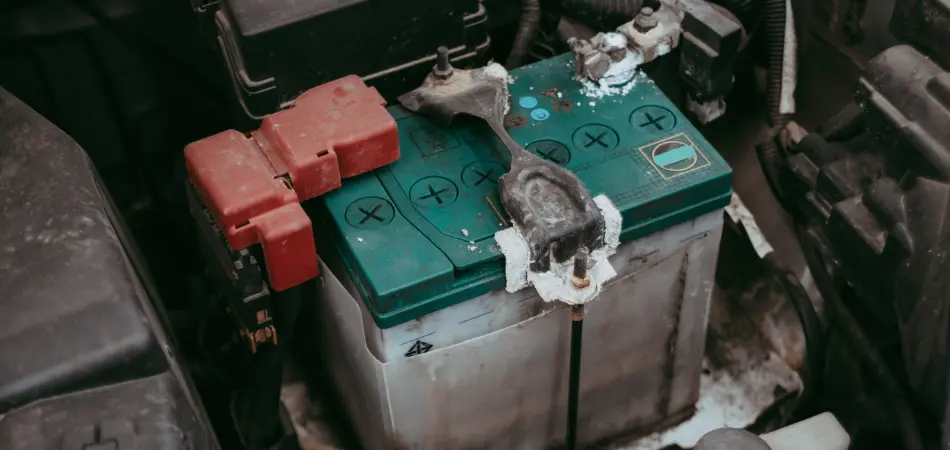
The EBS is an electronic system, and like everything electronic in your car, it needs a steady and reliable supply of power. A battery that is losing its charge or failing to hold voltage properly will disrupt the entire system.
Here is something that surprises a lot of drivers: a weak battery does not just affect the ability to start the car. It can cause all kinds of electronic warning messages to appear across multiple systems, including the brakes. If you see the service electronic brake system warning alongside other seemingly unrelated warnings, a failing battery could be the root cause of all of them at once.
3. Worn-Out Brake Pads
Brake pads have a wear limit. Once the friction material is gone, the pad cannot do its job, and braking performance drops noticeably. But here is the connection most people miss: the EBS is constantly monitoring how effectively each wheel slows down when braking force is applied. If a worn brake pad means the wheel is not responding the way the system expects, it registers that as a fault.
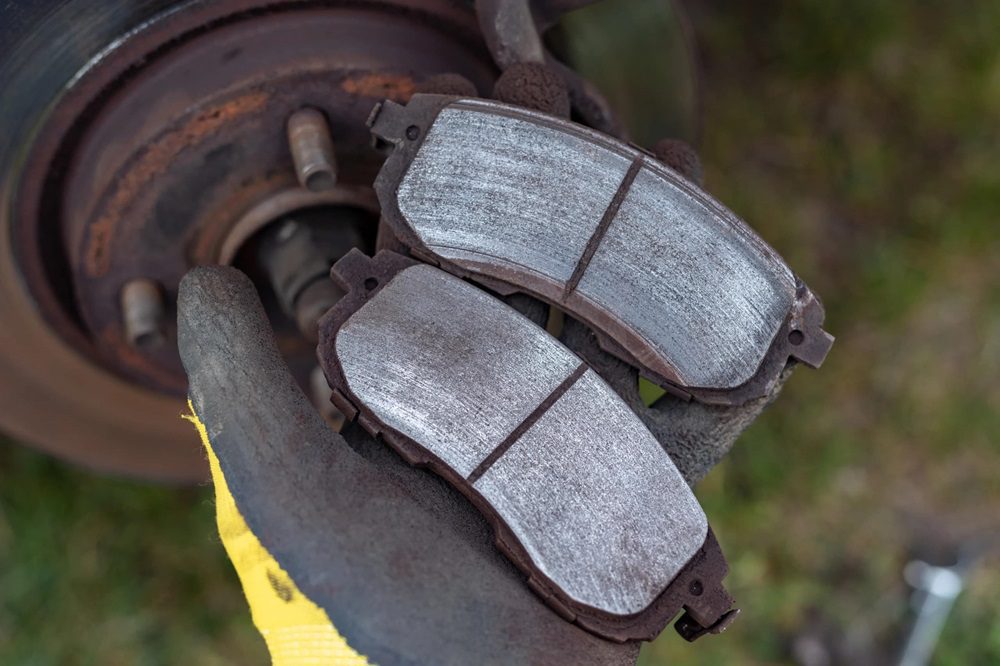
Think of it this way. The EBS tells the brake to apply a certain amount of force to slow down a wheel. The worn pad applies that force but the wheel barely responds. The system notices the mismatch and triggers a warning because something is clearly not working as it should.
Beyond the warning light, worn brake pads give off some very recognizable signs:
- A high-pitched screeching or squealing sound when braking
- A grinding metal-on-metal noise if the pad is completely gone
- Longer stopping distances than usual
- Having to press the pedal harder or further down to slow down
If you are hearing any of those sounds, do not delay. Worn pads left too long can damage your rotors, which turns a relatively affordable repair into a significantly more expensive one.
4. A Failing Electronic Brake Control Module (EBCM)
The Electronic Brake Control Module is essentially the central command unit for the entire brake safety system. It communicates with the Engine Control Unit (ECU), monitors every component involved in braking, and coordinates the response in real time. If the EBCM goes down, the whole safety braking system goes with it.
This is one of the more serious potential causes of the warning message because a failed EBCM does not just affect the EBS. It can compromise normal braking function as well. Sometimes the module just needs a reset, which can be done by disconnecting the battery temporarily. But if the module is genuinely damaged, it will need to be replaced, and that job typically requires a professional because reprogramming the new module to your vehicle’s specifications is often necessary.
5. Damaged or Corroded Wiring
Every sensor and every module in the EBS communicates through wiring. That wiring runs through the engine bay, under the vehicle, and through areas exposed to heat, moisture, road salt, and vibration. Over time, wires can corrode, fray, crack, or disconnect entirely.
When that happens, the current flowing to or from a component in the EBS gets interrupted. A partial disconnection might cause intermittent faults where the warning appears and disappears randomly. A complete break will cause a consistent fault. Either way, damaged wiring is a valid and fairly common cause of this warning, especially in older vehicles or vehicles driven in areas with harsh winters where road salt accelerates corrosion.
How to Diagnose the Problem Before You Start Replacing Parts
Before you start throwing parts at this problem, you need to know what is actually wrong. Guessing is expensive and often pointless. There are two main ways to figure out the root cause.
Use an OBD-II Scanner to Pull Fault Codes
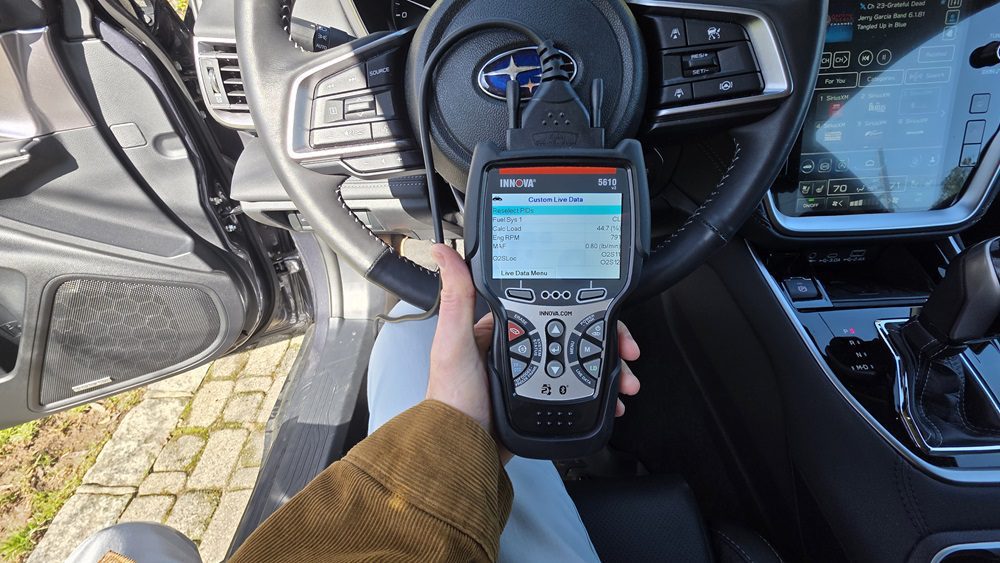
An OBD-II scanner is the fastest and most reliable way to find out why the service electronic brake system warning has come on. You plug it into the diagnostic port under your dashboard (usually near the steering column), and it reads the fault codes stored in your vehicle’s computer system.
These codes point directly at the problem. For example, a code like C0035 typically indicates a wheel speed sensor fault on a specific wheel. A code like C0110 points to a problem with the ABS pump motor. Instead of inspecting every component one by one, you know exactly where to look from the start.
Basic OBD-II scanners are affordable and available at most auto parts stores. If you do not own one, many auto parts retailers will run a free diagnostic scan for you. For brake-specific codes, a more advanced scanner with ABS and brake system capability gives you more detailed information than a basic code reader.
Physical Inspection of Key Components
Even with fault codes in hand, a visual inspection is always a smart step. Some things that scanners flag as faults are actually just dirty sensors or loose connectors that can be cleaned or reseated rather than replaced. Look at:
- The wheel speed sensors at each wheel for dirt, damage, or corrosion
- The brake pads through the wheel spokes to assess remaining thickness
- The battery terminals for corrosion buildup
- The wiring harness connected to brake system components for visible damage
A combination of scanner data and a physical look at the actual components gives you the clearest possible picture of what is going on before any money is spent on repairs.
How to Fix the Service Electronic Brake System Warning
Once you have identified the cause, here is how each issue gets resolved.
1. Inspect, Clean, or Replace the Faulty Sensor
After your scanner points you to a specific sensor, use your owner’s manual or a service diagram to locate it on the vehicle. Wheel speed sensors, for example, sit right at the wheel hub behind each wheel. They are exposed to road debris, brake dust, and moisture, so they get dirty fast.
Remove the sensor carefully and inspect it. If it looks intact but is coated in grime, clean it gently and check the connector for corrosion. Reinstall it and clear the fault code to see if the warning comes back. If the sensor or its wiring shows obvious physical damage, replace it. Wheel speed sensors are generally not expensive, and replacing them is a manageable job for someone comfortable doing basic mechanical work.
2. Address the Battery Issue
Start by checking the battery terminals. Corrosion on terminals is incredibly common and incredibly easy to miss. A simple cleaning mixture of baking soda and water applied with an old toothbrush can remove terminal corrosion quickly. Once cleaned, check that the connections are tight and secure.
If the battery itself is weak, most auto parts stores will test it for free. A battery that is not holding a proper charge needs to be replaced. There is no fix for a chemically exhausted battery. Replacement is the only option, and it is one of the simpler DIY jobs on most vehicles.
3. Replace Worn Brake Pads
If the brake pads are the source of the problem, replacement is non-negotiable. You can visually check pad thickness by looking through the wheel spokes at the caliper. Most brake pads have a minimum thickness of around 3mm. Anything below that and you are in worn-out territory.
When replacing brake pads, always replace them in axle pairs. If the front left pad is worn, replace both front pads together. Replacing them one at a time creates uneven braking, which creates its own set of problems. It is also worth inspecting the rotors while you are in there. If the rotor surface is deeply grooved or has developed a thick lip around the edge, the rotors should be replaced or resurfaced at the same time.
4. Reset or Replace the Electronic Brake Control Module
If the EBCM is suspected, start with the simplest possible fix first: a reset. Disconnect the negative terminal of the battery, wait about 15 minutes, then reconnect it. This clears stored electrical data and can sometimes resolve a module that has simply glitched rather than genuinely failed.
If the warning returns after the reset and fault codes still point to the EBCM, the module needs to be replaced. This is one repair where getting a professional involved is genuinely worth it. Many EBCM replacements require the new module to be programmed specifically to your vehicle using specialized software. Without that programming step, the new module will not communicate correctly with the rest of the vehicle’s systems.
5. Repair or Replace Damaged Wiring
Wiring diagnosis takes patience, but it is straightforward once you have a wiring diagram for your specific vehicle. Your owner’s manual may include a basic diagram, but a repair manual or a subscription to an online service database specific to your vehicle will give you a much more detailed map of the EBS wiring.
Trace the wiring from each EBS component and look carefully for:
- Green or white corrosion at connectors or along the wire insulation
- Cracked, brittle, or melted insulation from heat exposure
- Wires that have been rubbed through by contact with a sharp edge
- Connectors that have come loose or are not fully seated
Minor damage like a small section of exposed wire can sometimes be repaired with proper automotive-grade wire repair techniques. More extensive damage, or damage to a wiring harness, generally requires replacement of the affected section or the entire harness.
What Happens If You Keep Driving With This Warning On?
This is a question worth addressing directly because a lot of drivers see a warning light and think, “I will deal with it next week.” With some warning lights, that is a reasonable approach. With a brake system warning, it is not.
The EBS works alongside your ABS to prevent wheel lockup during hard braking. If the EBS is compromised, your ability to stop quickly and maintain steering control during an emergency stop is reduced. In dry conditions on a straight road, you might not notice much difference. But in wet conditions, on a curve, or in a panic stop situation, that reduced braking performance can be the difference between avoiding an accident and not.
Beyond the safety concern, ignoring the warning can also allow a minor, fixable problem to develop into a more expensive one. A dirty sensor that could have been cleaned for free becomes a damaged sensor that needs replacement. A nearly worn brake pad becomes a completely stripped pad that damages the rotor. The longer you wait, the more it tends to cost.
When to Take It to a Professional
Some of the repairs connected to this warning are genuinely DIY-friendly if you are comfortable working on your own vehicle. Replacing a wheel speed sensor, swapping brake pads, or cleaning battery terminals are all jobs that a mechanically inclined person can handle with basic tools and a service manual.
But there are situations where getting a professional involved is the right call:
- The EBCM needs to be replaced and reprogrammed
- You have pulled fault codes but cannot identify the root cause
- The warning keeps returning after you have already made repairs
- The braking performance has actually changed, meaning the car is not stopping the way it normally does
- The ABS light, traction control light, and service electronic brake system warning are all on simultaneously
Multiple warning lights appearing together often signals a deeper problem in the system, something that requires more advanced diagnostic equipment and experience to trace correctly. A good independent mechanic or dealership service center can run a full brake system diagnostic and give you a clear answer.

Quick Reference: Causes and Fixes at a Glance
| Cause | Key Symptom | Fix |
|---|---|---|
| Damaged sensor | Warning light, ABS light, erratic braking | Clean or replace the faulty sensor |
| Failing battery | Multiple warning lights, sluggish start | Clean terminals or replace the battery |
| Worn brake pads | Screeching, longer stopping distance | Replace brake pads (and inspect rotors) |
| Faulty EBCM | Warning light, loss of ABS or EBS function | Reset or replace the module |
| Damaged wiring | Intermittent or constant warning light | Inspect, repair, or replace wiring |
Your brake system is the single most important safety system on your vehicle. Everything else, the engine, the transmission, the suspension, can fail and you can still pull over safely. If the brakes fail, that option disappears. A “service electronic brake system” warning is your car asking you to pay attention before something goes seriously wrong. Do not wait. Get it diagnosed, find the cause, and fix it. The road is safer for everyone when your brakes are working exactly the way they should.