
You are sitting at a red light. The sky is a perfect shade of blue. You decide to close the sunroof because the wind is picking up. You press the button. You hear a click. Then nothing. Or worse, the glass panel moves an inch, grinds, and stops dead in its tracks. You press the button again. Still nothing. Now you are staring at an open hole in your roof while dark clouds roll in. Panic sets in. What do you do now?
This is one of the most annoying things that can happen to a Kia Sorento owner. It is not just about comfort. It is about security and keeping the rain out of your cabin. A stuck sunroof turns a reliable family SUV into a leaky, drafty headache in a matter of minutes. And if you happen to be far from home when it happens, the stress multiplies fast.
The good news? In many cases, this is a fixable issue that does not require a trip to the dealership. In other cases, it does require a professional. But before you start ripping apart your headliner, you need to understand exactly what is going on under that glass panel. Guessing is how people turn a fifty dollar problem into a fifteen hundred dollar disaster.
Let us break down the likely culprits, the DIY fixes you can try in your driveway, and the moments when you should throw in the towel and call a pro. You will walk away from this guide with a clear action plan, not just a list of vague suggestions.
How a Kia Sorento Sunroof Actually Works
Before you start poking around, it helps to know what you are dealing with. A sunroof is not just a pane of glass with a motor glued to it. It is a small mechanical system packed into a tight space above your head, and every piece of it has to cooperate for the glass to slide smoothly.
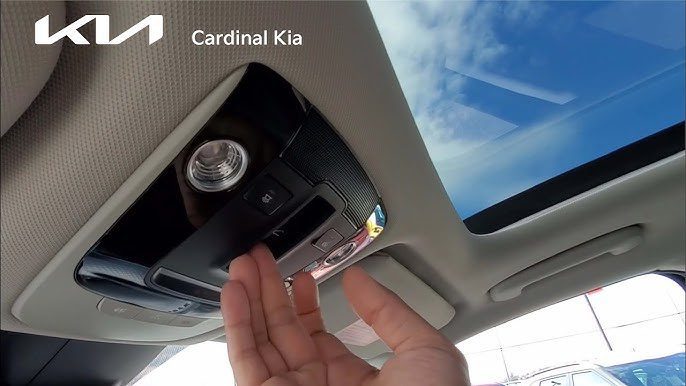
The motor sits near the front of the sunroof opening, usually hidden behind a plastic cover or the dome light assembly. That motor turns a set of gears. Those gears push and pull steel drive cables that run along both sides of the roof opening. The cables are what actually move the glass panel. Think of them like bicycle brake cables, except they are thicker, stiffer, and they live in a greasy channel that collects dirt for years.
There is also a control module, basically a tiny computer, that remembers where the open and closed positions are. If that module loses its memory, the sunroof will refuse to close even if every mechanical part is working perfectly. That is why the reset procedure exists, and we will get to that shortly.
Then you have the anti-pinch sensor. This safety feature watches for resistance while the glass is closing. If it detects something in the way, a hand, a branch, even a thick wad of leaves, it stops the motor and often reverses direction. Smart design. Frustrating when it starts seeing ghosts.
Finally, there are four drain tubes, one at each corner of the sunroof tray. These tubes carry rainwater down through the A-pillars and out the bottom of the vehicle. When they clog, water has nowhere to go except into your headliner, your wiring, and eventually your carpet. A sunroof that will not close is bad enough. A sunroof that leaks on top of that is a whole different level of misery.
Now that you know the parts, diagnosing the problem gets a lot easier. You are no longer staring at a mysterious glass panel. You are looking at a motor, cables, tracks, a switch, a sensor, a fuse, and four drain tubes. One of those is the troublemaker.
Why Your Sunroof Suddenly Stopped Working
Sunroofs are mechanical and electrical systems. They are not magic. They rely on a delicate balance of power, motor torque, and clean tracks to slide back and forth. When one of those elements fails, the whole system grinds to a halt.
Here is the thing: the causes range from embarrassingly simple (a leaf stuck in the track) to mechanically complex (a shattered drive cable). You need to figure out which category your problem falls into before you spend a dime. Let us look at the most common reasons your Kia Sorento sunroof is refusing to cooperate.
The Motor Is Burnt Out or Too Weak to Push
This is the heavy hitter. The sunroof motor is a small electric unit tucked away in the roof assembly. It does a lot of heavy lifting for its size. It is responsible for pushing a heavy piece of glass and metal against wind resistance and gravity, sometimes dozens of times a day in warm weather.
Over time, the carbon brushes inside the motor wear down. The motor starts to draw too much current, or it simply gives up. Heat is the enemy here. Every time the motor struggles against dirty tracks or a binding cable, it generates extra heat. That heat cooks the windings and shortens the life of the unit.
Here is a scenario that happens more often than you would think. You try to close the sunroof. You hear a clicking sound coming from the headliner, but the glass does not move. That click is usually the relay engaging, but the motor is either dead or lacks the torque to move the mechanism. If the motor is completely seized, you might not hear anything at all.
In the real world, a failing motor often shows symptoms before it dies completely. The sunroof might have been moving slowly for weeks. Or it required you to help it along by pushing on the glass with your hand. If that sounds familiar, the motor is likely your culprit. Do not wait for it to fail completely. A weak motor that still moves the glass is cheaper to replace than a seized motor that has already shredded the drive cables.
A Faulty Switch or a Stuck Anti-Pinch Sensor
Sometimes the problem is not the muscle. It is the brain. The switch on your ceiling is a simple device, but it sends the signal that tells the motor what to do. If the switch contacts are corroded or worn out, the signal never gets through. You press close, and the motor stays silent.
This happens more often in vehicles that spend a lot of time in humid climates or get parked outside year-round. Moisture creeps into the switch housing. Corrosion builds up on the contacts. One day the switch just stops sending a clean signal.
Then there is the anti-pinch sensor. This is a safety feature designed to stop the sunroof from closing if it detects an obstruction, like a child’s hand or a stray branch. But these sensors are sensitive. If the sensor gets misaligned or dirty, it can trigger a false positive. The sunroof thinks there is an obstruction when there is not one. It will immediately reverse direction or refuse to close entirely.
This is a safety feature, and it exists for a good reason. That said, when it malfunctions, it turns into a genuine annoyance. You will press the close button, watch the glass start moving, and then watch it reverse itself for no visible reason. If that cycle repeats every time, the sensor or the control module is likely confused about the glass position.
Dirty or Misaligned Tracks and Rails
You would be surprised at what accumulates in those tiny rails. Dust, sand, tiny leaves, pine needles, and the general grime of the road mix together to form a paste that acts like glue. The sunroof panel slides on these tracks. If the tracks are clogged, the motor has to work harder. Eventually, the motor overheats or the cables that push the glass snap under the strain.
Picture a Sorento that spends its life parked under a tree. Every autumn, leaves drop onto the roof. Rain soaks them. They decompose into a fine sludge that works its way into the tracks. After two or three seasons of that, the tracks are packed with organic gunk that the motor was never designed to push through.
Misalignment is another issue. If the glass panel gets knocked out of its proper position, it will bind against the frame. You will hear a grinding noise, or the glass will sit crooked when it is supposed to be flush. This is often the result of a previous repair that was not done correctly, or simply the wear and tear of thousands of open and close cycles over the years.
A misaligned panel also puts uneven load on one side of the cable system. One cable works harder than the other. That imbalance is how you end up with a snapped cable on one side and a perfectly fine cable on the other. Catching misalignment early saves you from that outcome.
Electrical Problems: Fuses, Relays, and Battery Health
Do not overlook the basics. The sunroof motor needs a steady supply of voltage to run. If your battery is weak or on its last legs, the motor might not get enough juice to operate. You might notice that the sunroof works when the engine is running, because the alternator is charging, but fails when the engine is off. That is a classic sign of a battery issue.
A healthy battery should read around 12.6 volts with the engine off. Anything below 12.4 volts means the battery is starting to sag. Below 12.0 volts, you are in trouble. The sunroof motor is one of the first accessories to suffer because it draws a relatively high current for a short burst. Interior lights might still work fine. The radio might still play. But that motor will stall.
A blown fuse is a quick and easy check. If the fuse for the sunroof circuit is blown, the system is completely dead. This can happen for no apparent reason, or it can be a sign of a short circuit elsewhere in the wiring. Checking the fuse is a five-minute job that could save you a hefty repair bill.
Even so, if you replace a blown fuse and the new one pops immediately, stop. That is a short circuit, and repeatedly replacing the fuse is a fire hazard. At that point, you need a wiring diagnosis, not another fuse from the auto parts store.
Obstruction and Debris You Can See With a Flashlight
Before you go tearing into the motor, look at the obvious stuff. Is there a twig wedged in the channel? Did a piece of gravel get stuck in the guide rail? It sounds silly, but the simplest explanation is often the correct one. The sunroof is a tight mechanical fit. Even a small piece of debris can stop it dead in its tracks.
I once had a customer bring in a Sorento because the sunroof would open about two inches and then jam. He was convinced the motor was dying. I grabbed a flashlight, looked along the passenger-side track, and found a small acorn lodged against the guide. Thirty seconds with a pair of needle-nose pliers, and the sunroof cycled perfectly. He felt a little foolish. He also saved about four hundred dollars.
Take a flashlight and look carefully along the entire length of the track. You are looking for anything that does not belong there. If you see a foreign object, carefully remove it. Sometimes, that is all the fix you need.
Your Step-by-Step Troubleshooting Guide
Now that you know the suspects, it is time to interrogate them. We are going to walk through a diagnostic process that will help you pinpoint the issue without wasting time or money. Grab a flashlight, a screwdriver, and maybe a pair of gloves. Let us get to work.
Work through these steps in order. Skipping ahead is how people replace motors that did not need replacing. Each step takes a few minutes and costs nothing but your time.
Step 1: Listen Closely and Watch What the Glass Does
Press the close button and listen carefully. Do not just press it once. Press it a few times and pay attention to every sound coming from the roof.
- Silence: If you hear absolutely nothing, the problem is likely electrical. It could be the switch, the relay, the fuse, or the motor itself. No sound means no power is reaching the motor, or the motor is so dead it cannot even click.
- Clicking: A single click or a rapid clicking sound usually means the relay is working, but the motor is not spinning. This points to a seized motor or a broken drive gear.
- Grinding: If you hear a crunching or grinding, the gears or cables inside the track are likely stripped or broken. This is the sound of metal chewing on metal, and it is never a good sign.
- Straining: If you hear the motor whirring but the glass is moving very slowly or stopping halfway, you have a mechanical bind. The tracks are probably dirty or obstructed.
If the motor is completely silent, your first move should be to check the fuse. Open the fuse box, usually under the dashboard or in the engine bay, and locate the sunroof fuse. Refer to your owner’s manual for the exact location and amperage rating. If the fuse is blown, replace it with a new one of the same amperage.
Important warning: If the new fuse blows immediately, you have a short circuit. Do not keep replacing it. That is a fire hazard. You need to find the wiring issue before you put another fuse in that slot.
Step 2: Test the Switch and Reset the Sunroof Computer
Kia vehicles often have a reset procedure for the sunroof. This matters because the sunroof computer can lose its position memory. If it does not know where the closed position is, it will refuse to close, even if the motor and tracks are perfectly healthy.
This happens after a dead battery, after a jump start, or sometimes after the vehicle sits unused for a few weeks. The module just forgets where home is. The reset tells it to relearn the travel limits.
Here is how you do it. Turn on the ignition but do not start the engine. Press and hold the close or tilt up button for 10 to 15 seconds. Then, press and hold the open or tilt down button for 10 to 15 seconds. Finally, try cycling the sunroof through a full open and close cycle.
In many cases, this resets the limit switches and allows the sunroof to close again. This is one of the first things a dealership technician will try, and it costs you nothing. If the sunroof starts working after the reset, you just saved yourself a service appointment and a diagnostic fee.
If the reset does not work, try it one more time with the engine running. Sometimes the extra voltage from the alternator is enough to push the motor through a sticky spot during the relearn process. If it still fails after two attempts, move on. The problem is not a lost memory.
Step 3: Inspect the Rails and Tracks With Your Own Eyes
You need to get your eyes on the mechanical parts. Open the sunroof as far as it will go, if it opens at all. If it is stuck closed, you might need to remove the glass panel to see the tracks, though that is a bigger job and we will talk about when that is worth doing.
Use a flashlight and look for:
- Dirt and grime buildup along both tracks
- Broken or frayed cables, which look like frayed steel rope
- Metal shavings, a sign of severe gear or cable wear
- Visible debris like leaves, pebbles, pine needles, or bits of plastic
- Rubber seals that have pulled out of their channels or cracked
If you see dirt, clean it out. Use a soft brush and a shop vac to remove loose debris. For stubborn grime, use a damp cloth with a mild soapy solution. Work slowly and get into the corners. The gunk likes to hide at the front and rear ends of each track, right where the cables make their tightest turns.
Do not use a high-pressure washer. You will just force water into the motor and electrical connectors. A garden hose on a gentle setting is already more water than you want near this assembly. Stick to rags, brushes, and a vacuum.
Step 4: Check the Battery Voltage Before You Blame the Motor
You do not need a fancy multimeter to know if your battery is weak, though a cheap one from any auto parts store makes this step much more reliable. If your headlights are dim when you turn the key, or the engine cranks slowly, your battery is struggling. The sunroof motor is sensitive to low voltage. If the battery is low, the motor might not have enough power to overcome the friction of the tracks.
If you have a multimeter, check the voltage at the battery terminals. It should be around 12.6 volts with the engine off. If it is below 12 volts, your battery is discharged. Jump-start the car or charge the battery fully. Then try the sunroof again with the engine running.
You might be surprised at how often a broken sunroof is just a weak battery. I have seen this exact scenario play out in the shop more times than I can count. Customer comes in convinced they need a six hundred dollar motor. We charge the battery, cycle the sunroof, and send them home with a twenty dollar battery tender and a recommendation to replace the battery soon. They leave happy. We did not sell them a motor they did not need.
Step 5: Use the Manual Override to Close the Roof Right Now
Every Kia Sorento has a manual override built into the sunroof motor. This is a lifesaver when the motor dies and you need to close the roof to prevent rain damage. If storm clouds are already rolling in, skip the rest of the diagnosis and do this first. You can figure out the root cause later. Right now, you need that hole in the roof closed.
Here is how to find the override:
- Remove the interior dome light assembly or the sunroof motor cover. It is usually a small plastic panel near the front of the sunroof opening. Gentle pressure with a plastic trim tool works better than a screwdriver, which can scratch or crack the panel.
- Look for a small Allen wrench socket or a hex key port in the center of the motor.
- Use the Allen wrench, usually located in the fuse box or the tool kit in the trunk, to turn the motor manually.
- Turn the wrench in the direction that closes the sunroof. It will take some effort, but it will move the glass if the mechanism is not physically jammed.
Critical advice: Do not force it. If the wrench will not turn, stop. You could strip the gears or break the glass. If it is not moving easily, you have a mechanical obstruction, not just a dead motor. Forcing it will turn a five hundred dollar repair into a fifteen hundred dollar repair. That is not an exaggeration. A cracked sunroof glass panel on a Sorento is an expensive piece of glass.
What You Can Fix in Your Driveway Versus What Needs a Shop
You have done the troubleshooting. Now you need to decide: can you fix this yourself, or is this a job for the pros? Let us break down the scenarios so you can make that call with confidence instead of hope.
The Fixes You Can Handle Yourself
If your issue is debris, dirt, or a low battery, you can handle this. Cleaning the tracks and lubricating them is a straightforward job that takes about 30 minutes. No special tools required beyond what most people already have in a garage or kitchen drawer.
Here is a quick guide for the cleaning and lube job:
- Clean the tracks thoroughly with a brush and rag. Get all the grit out before you add any lubricant. Lubricating dirty tracks just turns the dirt into a grinding paste.
- Apply a silicone-based lubricant or a dry Teflon spray to the tracks. Do not use grease or WD-40. WD-40 will attract dust and turn into a sticky mess over time. Grease will do the same thing, only worse.
- Cycle the sunroof open and closed a few times to distribute the lubricant along the full length of both tracks.
- Wipe away any excess lubricant that squeezed out onto the glass or the headliner. Silicone spray on glass looks terrible and is slippery.
If the issue was a blown fuse, and the new fuse holds, you are done. If you successfully reset the sunroof computer, you are done. These are the cheap and easy wins, and they solve the problem more often than most people expect.
Replacing the switch is also within reach for a careful DIYer. The overhead console usually pops down with a few clips or screws. The switch itself is a plug-and-play part. Just make sure you disconnect the negative battery terminal before you start unplugging electrical connectors. That five-second precaution prevents a lot of accidental short circuits.
When You Need to Put the Tools Down and Call Someone
If you have cleaned the tracks, replaced the fuse, and reset the system, but the sunroof still will not close, you are dealing with a component failure. Here is when you need to stop DIY and pick up the phone:
- Broken cables: The cables are steel and they run inside the tracks. If they are frayed or snapped, they need to be replaced. This is a labor-intensive job that requires removing the entire glass panel and possibly the headliner. The headliner in a Sorento is a large, fragile piece of fabric-covered board. One wrong bend and you have a crease that never comes out.
- Motor failure: Replacing the motor is doable for a skilled DIYer, but it involves removing the headliner or dropping the ceiling panel. It is a tight, awkward space. If you are not comfortable working with interior trim, let a pro do it. Broken clips and cracked panels add up fast.
- Water leaks: If your sunroof has been stuck open and it rained, you might have water damage in the headliner or the electrical system. This requires immediate professional attention to prevent mold and electrical shorts. Wet headliners also sag, and a sagging headliner is an expensive cosmetic repair on top of the mechanical one.
- Recurring fuse blows: If the fuse keeps blowing, you have a short circuit. This is an electrical issue that requires a wiring diagram and a multimeter to trace. Do not guess here. Electrical shorts can cause fires.
There is no shame in knowing your limits. I would rather a customer bring me a diagnosed problem than a half-disassembled interior with extra broken parts. The diagnostic time I save them more than covers the difference.
Dealership or Independent Shop: How to Choose
You have a choice. You can go to the Kia dealership, or you can go to an independent shop that specializes in Asian or Korean vehicles. Both have real advantages depending on your situation.
The dealership has the advantage of using OEM parts and having access to the latest technical service bulletins. If Kia has issued a recall or a software update related to the sunroof, the dealer will know about it and can apply it. If your Sorento is still under warranty, the dealership is your only option for free repairs. Do not let an independent shop touch a warrantied vehicle if you want Kia to pick up the tab.
However, independent shops are often cheaper. They can source aftermarket parts that are just as good as OEM, and their labor rates are usually lower. The downside is that they might not have the specific diagnostic software that Kia uses to reset the sunroof computer after a motor or cable replacement. In some cases, a sunroof repair at a dealership is the safest bet because they see these issues every week and have the factory tools on the shelf.
Ask both shops for a written estimate before you commit. A good independent shop will tell you honestly if the job is better handled by the dealer. A good dealer service advisor will not try to sell you a full cassette replacement when a motor swap will do. Trust the shop that talks you out of the expensive option when a cheaper one will work.
Prevent the Problem Before It Costs You Real Money
Sunroof issues are almost always preventable. The number one cause of sunroof failure is neglect. You would not drive 50,000 miles without changing the oil. So why would you expect the sunroof to work flawlessly for years without a little attention?
Most people never think about their sunroof until it stops working. By then, the tracks are packed with years of grit, the seals are dry and cracked, and the drain tubes are completely blocked. The motor has been fighting that mess the entire time. It was never a fair fight.
Here is a simple maintenance routine you should perform every six months or so. It takes less than an hour and will save you hundreds of dollars in repairs. Put a reminder in your phone. Pair it with an oil change so you do not forget.
Clean and Lubricate the Tracks on a Schedule
Spend ten minutes cleaning the tracks. Use a damp microfiber cloth to wipe away the grime. Then, apply a thin layer of silicone spray to the rubber seals and the tracks. This keeps the rubber supple and prevents it from cracking. It also ensures the glass slides smoothly, reducing the strain on the motor.
Do this in the spring and again in the fall. Spring cleaning gets the winter salt and grit out before summer, when you will actually use the sunroof. Fall cleaning gets the summer dust and tree debris out before winter, when the sunroof will sit closed for months and any leftover dirt will harden in place.
Clear the Drain Tubes Before They Flood Your Interior
This is the most overlooked maintenance task on any vehicle with a sunroof. Your Sorento has four drain tubes that channel water away from the roof and down through the car’s body. Two run down the A-pillars at the front. Two run down the C-pillars at the rear. If these tubes get clogged with dirt and leaves, water will back up and pool in the sunroof assembly.
That standing water can leak into your headliner and ruin the electronics. It can also drip down inside the pillars and soak the carpet, which is how you end up with a musty smell that no air freshener can kill. Mold in a headliner is not just unpleasant. It is a health issue if you drive the vehicle every day.
You can clear these tubes with a piece of trimmer line or compressed air. Feed the trimmer line gently into each drain hole at the corners of the sunroof tray and work it down until you feel it exit at the bottom of the vehicle. You should see water or debris come out near the rocker panels or behind the front wheels. Do this every time you wash your car. It is a five-minute job that prevents a massive headache.
Inspect the Rubber Seals Before They Crack
Inspect the rubber gasket around the glass. Look for cracks, tears, or areas where the rubber has flattened and lost its shape. A compromised seal will let water in, and it can also cause wind noise at highway speeds that will drive you crazy on long trips.
If the seal is damaged, replace it. They are not expensive, and they are reasonably easy to install if you take your time and work the new seal into the channel evenly. A dab of silicone spray on the new seal helps it slide into place without tearing.
Open and Close It Regularly, Even in Winter
Sunroofs that are rarely used tend to fail more often than those that are used regularly. The seals dry out, and the tracks collect dust that sits there undisturbed for months. Make it a habit to open and close your sunroof at least once a week, even in the winter.
You do not need to leave it open. Just cycle it fully open and fully closed. That single motion keeps the moving parts loose, redistributes whatever lubricant is still on the tracks, and flexes the rubber seals so they do not take a permanent set. Think of it like stretching before a workout. The parts stay healthier when they move.
What These Repairs Actually Cost
Money matters. You need to know what you are getting into before you hand your keys to a mechanic. Here is a rough breakdown of what you might pay depending on the issue. These are estimates, and prices vary by region and shop labor rates. Big-city dealer rates will sit at the high end. Small-town independent shops will sit at the low end.
| Issue | Estimated Cost (Parts + Labor) | Time to Fix |
|---|---|---|
| Debris and cleaning | $0 to $50 | 30 minutes |
| Blown fuse | $5 to $20 | 15 minutes |
| Sunroof motor replacement | $300 to $600 | 2 to 4 hours |
| Track and cable assembly | $500 to $900 | 4 to 6 hours |
| Full sunroof cassette replacement | $1,200 to $2,000+ | 6 to 8 hours |
Look at that last row. A full cassette replacement is a big job. This is usually only required if the frame is damaged or severely rusted. In most cases, you will be looking at the motor or track replacement. Do not panic if you hear the words cassette replacement. A good mechanic will try the cheaper fixes first and only recommend the full assembly if the frame itself is compromised.
If a shop quotes you the cassette price as the opening offer, get a second opinion. Some shops default to the most expensive option because it is simpler for them, not because it is necessary for you. Ask specifically whether the motor or the cables can be replaced individually before you approve a two-thousand-dollar repair.
Why the Manual Override Should Never Become Your Daily Routine
Let us talk about the manual override again, because I have seen too many people treat it like a permanent solution. If you use the Allen wrench to close the sunroof, it is tempting to just leave it there. You think you will just use the wrench every time you need to open or close it. Do not do this. Here is why.
First, it is incredibly inconvenient. You have to pull over, dig out the wrench, pop the cover, and spend five minutes cranking the roof open or closed. That gets old after the second time, and it is downright dangerous if weather is changing fast and you are on a busy road.
Second, you are not addressing the underlying problem. The motor is still dead, or the tracks are still dirty. You are just masking the issue. Eventually, the mechanism will seize completely, and even the manual override will not work. At that point, you are stuck with the sunroof in whatever position it is in. If it is open, you have a leak. If it is closed, you have a sunroof that will never open again.
Use the manual override as a temporary solution to get you to a shop. Do not treat it as a permanent fix. Close the roof, drive home or to a mechanic, and get the real problem solved while the mechanism is still movable.
A Real Story: How Ignoring Early Warning Signs Cost Eight Hundred Dollars
Here is a story that will resonate with many of you. A friend of mine has a 2019 Kia Sorento. He started noticing that the sunroof would sometimes close, and sometimes it would not. He would press the button, and the glass would start to move, then stop. He would press it again, and it would close perfectly. This went on for weeks. He ignored it because it always worked eventually.
One day, he was driving on the highway with the sunroof tilted up. He pressed the button to close it. Nothing. He pressed it again. Nothing. He pulled over and tried the manual override. The wrench turned, but the glass did not move. He had to drive home with the sunroof open in the rain. His headliner was soaked. The carpets in the back seat got wet too. The smell lingered for weeks.
The diagnosis? A stripped drive cable. The teeth on the cable had worn down to the point where they could not grip the motor gear anymore. The intermittent failure was the first sign. The complete failure was the result of him ignoring the warning signs for weeks. He ended up paying eight hundred dollars for a new track assembly and labor, plus extra for drying out the interior and treating the headliner.
If he had brought it in when the intermittent issue started, it would have been a fifty dollar cleaning and lubrication job. Maybe a motor if things were already worn, but nowhere near eight hundred dollars plus water damage.
The lesson here is simple. Do not ignore the early warning signs. If your sunroof is acting up, fix it now. It will only get worse, and it will only get more expensive. Intermittent problems are not random. They are the machine telling you something is wearing out. Listen to it.
Related Problems That Show Up Alongside a Stuck Sunroof
A sunroof that will not close is the headline problem, but it rarely travels alone. Once you start looking, you may notice other symptoms that share the same root cause. Addressing them at the same time saves you a second trip later.
Wind Noise at Highway Speeds
If the glass is not sitting perfectly flush with the roof when closed, air will whistle across the gap at speed. You will hear it most clearly above 50 miles per hour, usually as a low whoosh or a high-pitched whistle depending on where the gap is. This is often a sign of misalignment or a flattened seal, both of which also contribute to binding and motor strain.
Rattles Over Bumps
A loose glass panel or worn track sliders will rattle when you hit uneven pavement. The rattle usually comes from above and slightly behind your head. It is easy to blame the cargo in the back or a loose interior panel, but if the rattle only happens when the sunroof is closed and goes away when it is tilted, you have found your source.
Water Stains on the Headliner
Brown or tan stains on the fabric above your head mean water has already been getting in. Even if the sunroof currently closes, those stains are evidence of a past leak, a clogged drain, or a bad seal. Do not ignore them. Water that reached the headliner also reached the wiring and the insulation behind it.
Tools Worth Having Before You Start
You do not need a professional toolbox to diagnose and fix the simple sunroof problems. A short list of basic items will cover every driveway-level job in this guide.
- Flashlight or headlamp: You need both hands free and a bright light aimed into a dark track.
- Plastic trim tools: These pop interior panels without gouging the plastic the way a flathead screwdriver will.
- Allen wrench set: For the manual override. Check your trunk tool kit first. Kia often includes the correct size.
- Soft brush and microfiber cloths: For cleaning tracks without scratching the finish.
- Shop vacuum: Pulls loose debris out of the channels before you wipe them.
- Silicone spray or dry Teflon lubricant: The only lubricants you should put on these tracks.
- Multimeter: Optional, but it takes the guesswork out of battery and fuse checks.
- Trimmer line or compressed air: For clearing the four drain tubes.
None of this is expensive. Most of it is already in a typical garage. If you have to buy the silicone spray and a set of trim tools, you are still looking at less than thirty dollars, which is a fraction of a single diagnostic hour at a shop.
What to Do Right Now If Rain Is Coming
If you are reading this because the sunroof is stuck open and the weather is turning, skip the long diagnosis. Close the roof first. Protect the interior. Diagnose later.
- Try the reset procedure. Ignition on, hold close for 15 seconds, hold open for 15 seconds, then try a full cycle.
- If that fails, go straight to the manual override with the Allen wrench. Close it slowly and stop if you feel hard resistance.
- If the wrench will not turn, cover the opening from the outside. A heavy tarp, a moving blanket, or even a thick plastic drop cloth held down with painter’s tape along the roof edges will keep most of the water out for a short drive home.
- Once the vehicle is under cover, put towels on the seats and carpets. Pull the floor mats. If water already got in, dry everything you can reach and run the heater on high with the windows cracked to pull moisture out of the cabin.
Water in the cabin is a clock. The longer it sits, the more it soaks into foam, wiring insulation, and sound-deadening material. Those materials hold moisture for days and grow mold. Speed matters more than a perfect repair in the first hour.
Take Action Before the Next Storm Rolls In
You have a few options right now. You can stare at the ceiling and hope the sunroof magically fixes itself. That will not work. You can grab a flashlight and a screwdriver and start your investigation. That is the smart move.
Start with the simple things. The fuse. The reset procedure. The tracks. The battery. Nine times out of ten, you will find the issue in those areas, and you will fix it for less than the cost of lunch. If you get to the point where you are looking at the motor or the cables, take a step back and assess your skill level honestly.
Replacing a sunroof motor is not like changing a flat tire. It requires patience and a gentle touch with interior trim that does not forgive rough hands. If you are not confident, do not risk it. Take it to a professional. The cost of a professional repair is much less than the cost of a new headliner, a ruined interior, and a sunroof that is leaking water all over your seats.
Your Sorento is a reliable vehicle. Do not let a stuck sunroof ruin your opinion of it. With a little bit of effort, or a little bit of money, you will have it sliding smoothly again. The only question left is this: are you going to check the fuse and the tracks today, or are you going to wait until the next storm makes the decision for you?