
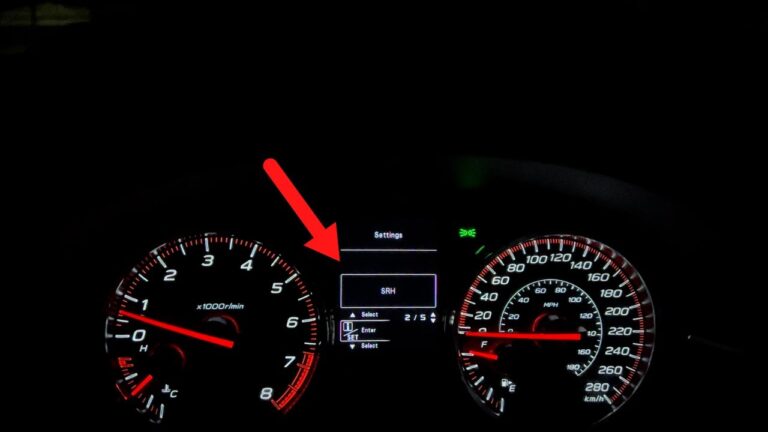
If you have ever seen “SRH” on your Subaru’s dashboard or in the owner’s manual and had absolutely no idea what it meant, you are not alone. It is one of those abbreviations that Subaru uses without much fanfare, yet it refers to a feature that genuinely makes a difference when you are driving at night on winding roads.
SRH stands for Steering Responsive Headlights. And once you understand what it does and how it works, you will start to appreciate why it is one of the more clever safety features Subaru has added to its lineup in recent years.
Let’s break it all down in plain language, cover how to use it, what to do when it acts up, and look at a few other Subaru safety features worth knowing about.
What Is SRH and Why Does It Make Night Driving Safer?
Standard headlights point straight ahead. That works fine when you are driving in a straight line, but the moment you approach a curve or a corner, those fixed beams are lighting up the wrong part of the road. You are essentially steering into darkness until the car has already turned and the headlights finally catch up.

That is the exact problem SRH was designed to solve.
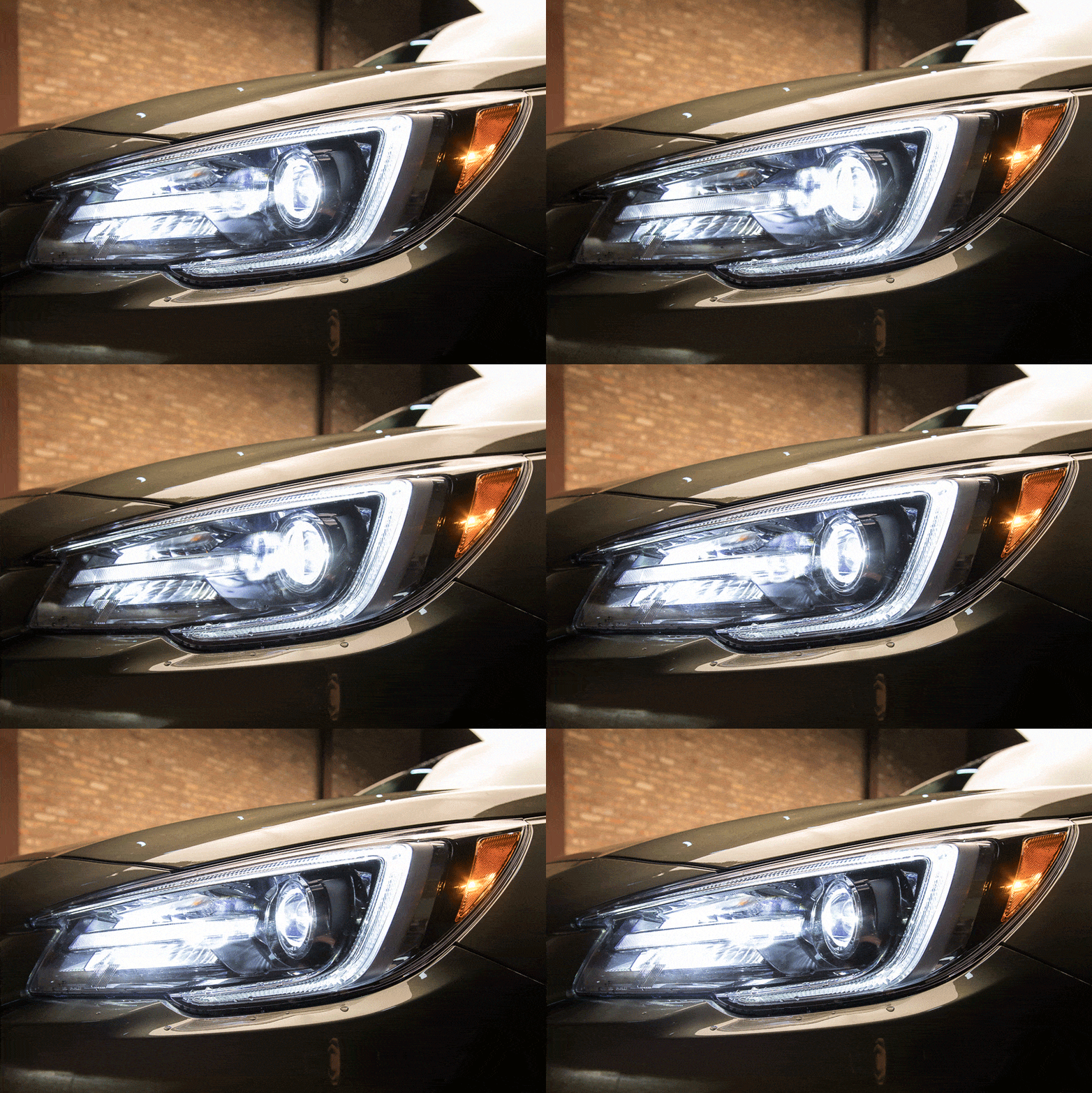
When the SRH system is active, the headlights physically pivot in the same direction you are turning the steering wheel. Turn the wheel right, the headlights swing right. Turn left, they follow left. The result is that you can see further around a bend before the car has even completed the turn. If there is a pedestrian, a stopped vehicle, or a pothole waiting around that corner, you see it sooner. And seeing it sooner gives you more time to react.
Subaru first introduced SRH on its vehicles in 2017. Since then, it has been available on a growing list of models including the 2017 Impreza, 2018 WRX, Crosstrek, Outback, Forester, and Legacy. The headlights use small electronic motors to pivot the beam left or right based on your steering input and your vehicle speed. It all happens automatically. You do not have to do anything once the system is turned on.
Think about driving through a mountain road at night. Every turn is a guessing game with standard headlights. With SRH active, each curve gets illuminated before you are fully committed to the turn. That kind of early visibility is not just convenient. It is genuinely the difference between catching a hazard in time and not catching it at all.
This Technology Is Older Than You Think
Here is something interesting. Steering-responsive headlights are not a new idea at all. The concept actually goes back to the late 1940s, long before electronics made it practical or reliable.
One of the most famous early examples is the Tucker 48, also known as the Tucker Torpedo. This vehicle was considered revolutionary for its time, packed with features that most manufacturers would not touch for decades. One of those features was a centrally mounted headlamp that physically moved in response to steering input. It was a mechanical system, obviously, nothing like the electronically controlled version Subaru uses today, but the core idea was identical.
Early automakers understood the visibility problem at corners. The challenge was building a reliable, affordable system to address it. For most of the 20th century, that challenge was too steep for mass production. Mechanically linking headlights to steering systems introduced complexity, weight, and failure points that were hard to justify at scale.
Modern electronics changed everything. Small, precise motors and sensors made it possible to build adaptive headlight systems that are both reliable and cost-effective enough to put in a family SUV. Subaru took that foundation and built SRH around it, refining the pivot angle and speed thresholds to make the system feel natural rather than distracting.
So while SRH feels like cutting-edge technology, it is really the evolution of an idea that engineers were chasing over 70 years ago.
How to Turn the Subaru SRH System On and Off
The good news is that controlling the SRH system is straightforward. You do not need to dig through menus or remember complicated button sequences. Here is how it works.
Accessing the System Controls
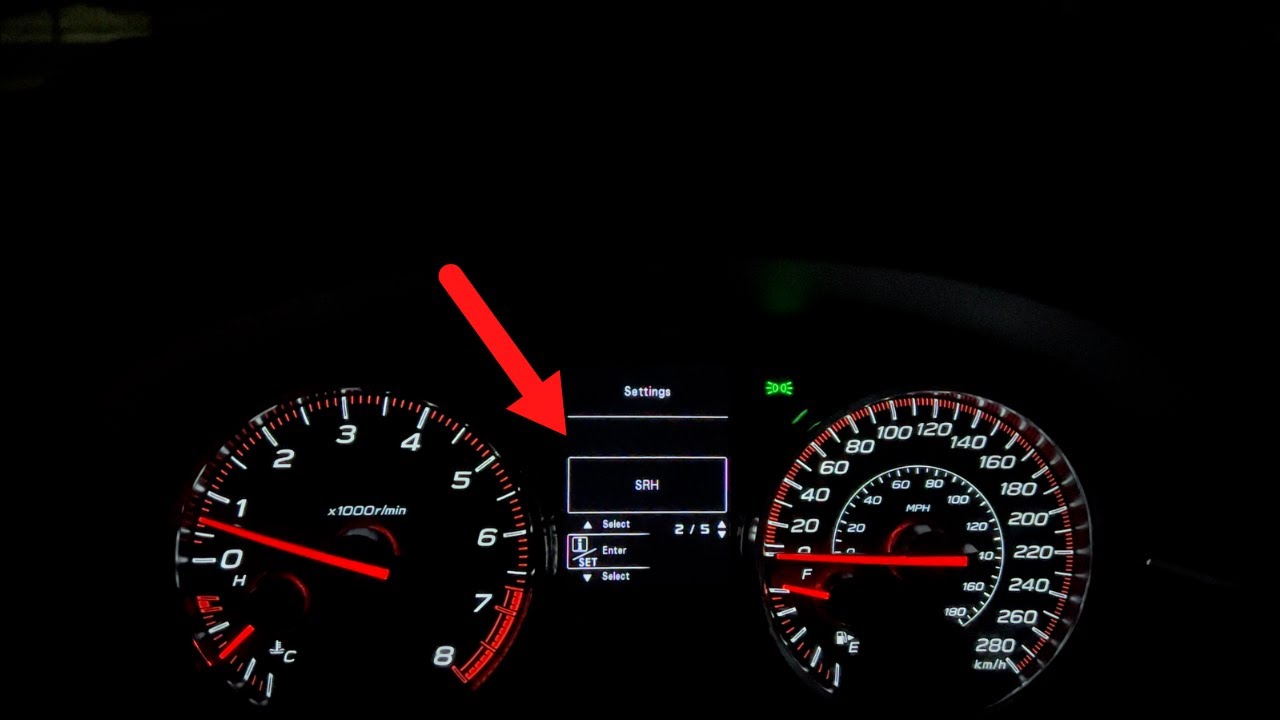
The SRH system is controlled through the information screen in the gauge cluster, which sits directly behind the steering wheel. To toggle the feature on or off, use the control buttons located on the lower left side of the steering wheel. These buttons let you navigate through the information screen and adjust the SRH setting without taking your eyes off the road for more than a second.
It is worth spending a minute or two getting familiar with those buttons before you need them. Knowing exactly where they are and how they work means you will never be fumbling around while driving.
Understanding How the System Behaves in Different Situations
The SRH system has a specific indicator light on the combination meter called the SRH OFF indicator light. Pay attention to how it behaves because it tells you exactly what the system is doing at any given moment.

- When the SRH function is turned ON, the SRH OFF indicator light will be off. No light means the system is active and working.
- When the SRH function is turned OFF, the SRH OFF indicator light will illuminate on the dashboard.
- If you turn the ignition on while SRH is disabled and then start the engine again, the SRH system automatically reactivates. Subaru defaults to having it on, which makes sense since that is the safer state.
- When you first switch the ignition on, the SRH OFF indicator light will briefly illuminate and then turn off after a moment. That is just the system running its self-check. It is normal and not a cause for concern.
Important: The SRH system only activates when your Subaru is moving forward at 5 mph or more. It will not engage if you are reversing, stationary, or crawling at parking lot speeds. That speed threshold is intentional. At very low speeds, the headlight pivot would be unnecessary and potentially distracting.
How to Tell If Your SRH System Is Malfunctioning and What to Do About It
SRH problems are not widespread, especially given how relatively new the feature is on most Subaru models. But they do happen. Knowing what a malfunction looks like helps you respond appropriately instead of guessing.
The most obvious sign of an SRH fault is the SRH OFF indicator light flashing when you turn the ignition to the ON position. A steady light means the system is manually turned off. A flashing light means something is wrong with the system itself and it has been automatically disabled. When you see that flashing light, the SRH function is out of service and the headlights will behave like standard fixed units until the fault is addressed.
There are two specific issues that Subaru owners have reported:
1. A Potential Sensor Fault
In this scenario, the SRH OFF indicator light stays illuminated and pressing the on/off button does nothing. The system simply will not respond. There is also no separate warning light pointing to a specific fault, which makes it confusing to diagnose without proper equipment.
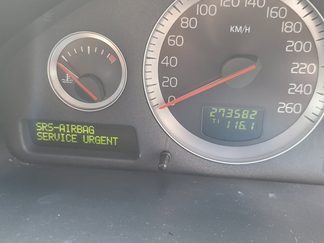
If this happens to you, do not spend time pressing buttons hoping something changes. The system has internally detected a problem and locked itself out as a precaution. Take the vehicle to an authorized Subaru dealer. They have the diagnostic tools to read the specific fault codes from the SRH module and determine whether it is a sensor issue, a wiring fault, or something else entirely.
2. A Defective Headlamp Assembly
The second reported issue involves the headlamp assembly itself developing a fault. Some owners have found that stopping the vehicle, turning the engine off, and restarting it clears the issue temporarily. That might work once or twice, but it is not a real fix. It is the automotive equivalent of turning a computer off and back on to clear a software glitch.
If the fault keeps coming back after restarts, the headlamp assembly likely has a genuine hardware problem. In that case, the only real solution is a visit to the dealership for a proper inspection and, if needed, a headlamp replacement. Trying to diagnose or repair the SRH headlamp assembly yourself is not recommended. These are precision components with electronic motors and sensors that require specific calibration after any repair or replacement.
Other Newer Subaru Safety Features Worth Knowing About
SRH is a great feature, but it is just one piece of a broader safety picture. Subaru has invested heavily in driver assistance and collision prevention technology over the past several years. Two features that pair especially well with SRH are worth understanding in detail.
1. High Beam Assist (HBA): Smarter Headlights That Manage Themselves
High beams are one of those things drivers either forget to use or forget to turn off. High Beam Assist removes that problem entirely by handling the switch between high and low beams automatically.
The system uses sensors to monitor the environment around your vehicle. When it detects sufficient ambient light from street lamps, when it sees headlights from a vehicle approaching in the oncoming lane, or when it detects taillights from a car ahead of you, it automatically drops the headlights from high to low beam. When the triggering light source moves away and conditions darken again, it switches back to high beam without you doing anything.
The practical benefit is significant. High beams genuinely extend your visible range on dark roads by a meaningful distance compared to low beams. But most drivers either leave them on and annoy or blind oncoming traffic, or just avoid using high beams altogether to skip the hassle of managing them manually. HBA lets you get the visibility benefit of high beams without the social friction of blinding other drivers. Your hands stay on the wheel and your eyes stay on the road.
Used together, SRH and HBA create a genuinely impressive nighttime driving experience. SRH points the light where you are going, and HBA makes sure you have the maximum amount of that light available whenever conditions allow it.
2. Reverse Auto Braking (RAB): The Safety Net for Backing Up
Backing up is statistically one of the most common scenarios for low-speed vehicle accidents and property damage. Kids on bikes, shopping carts, other cars, concrete pillars in parking garages. The list of things that appear behind a vehicle when reversing is long, and rearview cameras alone do not catch everything.
Reverse Auto Braking addresses this directly. The system uses sensors built into the rear bumper to monitor what is in the vehicle’s path when you are reversing at low speed. When those sensors detect an obstacle, the system first sends an audio warning to alert you. If you do not respond quickly enough, whether because you did not hear it or because you could not stop in time, the system automatically applies the brakes and brings the vehicle to a stop before contact occurs.
That automatic intervention is what separates RAB from a basic parking sensor. Sensors warn you. RAB actually stops the car. For anyone who has ever tapped a concrete pillar in a parking garage or clipped a bollard while distracted, the value of that active intervention is immediately obvious.
RAB is particularly useful in environments where you are frequently distracted while reversing, like parking lots, driveways with foot traffic, or tight urban spaces. It is a low-drama system that works quietly in the background and only announces itself when it actually needs to act.
How SRH, HBA, and RAB Work Together as a Safety System
It is worth stepping back for a moment and looking at these three features as a group rather than individually. Because together, they cover three different driving scenarios where visibility and reaction time directly affect safety.
| Feature | When It Works | What It Does | The Safety Benefit |
|---|---|---|---|
| SRH | Moving forward at 5 mph or more | Pivots headlights in the direction of steering input | Illuminates curves and corners before you complete the turn |
| HBA | Nighttime driving | Automatically switches between high and low beams | Maximizes visibility without blinding other drivers |
| RAB | Reversing at low speed | Detects obstacles and auto-applies brakes if needed | Prevents low-speed collisions when backing up |
Notice that these three features essentially cover forward visibility at night, light management on dark roads, and rear collision prevention. Subaru did not design these in isolation. They are part of a broader driver assistance philosophy aimed at reducing the specific moments where driver error and limited visibility combine to cause accidents.
Common Questions Subaru Owners Have About SRH
Even after understanding what SRH is and how it works, a few questions tend to come up repeatedly. Here are the most common ones answered directly.
Does SRH Work With Both Headlights or Just One?
The SRH system pivots both headlights simultaneously in the direction of your steering input. Both beams move together, which means the entire forward lighting pattern shifts toward the corner. One headlight pivoting while the other stays fixed would create an uneven, distracting light pattern and would not provide the full visibility benefit the system is designed to deliver.
Does SRH Work at Highway Speeds?
Yes, but the pivot angle adjusts based on vehicle speed. At higher speeds, the system uses a more conservative pivot range because the radius of a highway curve is much larger than a tight city street corner. A smaller pivot angle is appropriate at speed because the road ahead is curving gradually rather than sharply. At lower speeds on tighter roads, the system allows a more pronounced pivot to account for the tighter steering inputs required.
Should You Leave SRH On All the Time?
For most driving situations, yes. The system is designed to be on by default for good reason. It only activates when conditions call for it, specifically when you are moving forward above 5 mph and making a steering input. On straight roads, the headlights stay pointed straight ahead just as they normally would. The pivot only kicks in when you actually steer, so there is no downside to leaving it on continuously.
The option to turn it off exists for situations where you might find the headlight movement distracting, but most drivers never feel the need to disable it once they experience it in action.
Will SRH Affect Headlight Alignment Over Time?
This is a reasonable concern. Any component that moves repeatedly is subject to wear. The motors and pivot mechanisms in SRH headlights are engineered for longevity and are designed to handle the constant movement involved in normal driving. That said, like any mechanical system, they can develop issues over time. If you notice the headlights are not tracking your steering as smoothly as they used to, or if one side seems to be lagging behind the other, have a technician inspect the pivot motors and the calibration at your next service visit.
Quick Recap of Everything You Need to Know About SRH
- SRH stands for Steering Responsive Headlights, an adaptive headlight system that pivots the beams in the direction you steer.
- It improves nighttime visibility on corners and curves by lighting up the road ahead before you have completed the turn.
- Subaru introduced SRH in 2017 across several models including the Impreza, WRX, Crosstrek, Outback, Forester, and Legacy.
- The concept is not new. Steering-linked headlights date back to the 1940s, with the Tucker 48 as one of the most famous early examples.
- You control SRH through the information screen in the gauge cluster using buttons on the lower left of the steering wheel.
- The SRH OFF indicator light tells you the system’s status. Steady light means it is manually off. Flashing light means there is a fault.
- The system only activates above 5 mph when moving forward.
- If the SRH OFF light flashes or the system stops responding to the button, take the vehicle to an authorized Subaru dealer.
- High Beam Assist and Reverse Auto Braking are two companion safety features that complement what SRH does during night driving and reversing situations.
The headlights on your Subaru do a lot more than illuminate the road in front of you. When features like SRH, HBA, and RAB are working together, they are actively reducing the gaps in visibility and reaction time that lead to accidents. If your Subaru has these features and you have never paid much attention to them, spend a few minutes getting familiar with the controls and indicator lights. Knowing how your safety systems work means you will also know immediately when something is not right.