
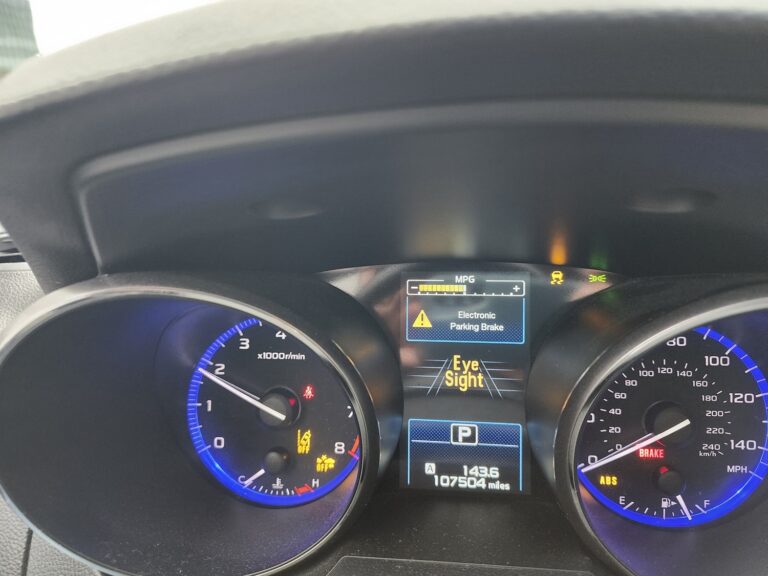
You walk up to your Subaru, get in, and hit the button to release the electronic parking brake. Nothing happens. Or the warning light is blinking at you and the brake will not engage properly. Or you just finished a brake job and now the system needs to be reset before you can drive the car. Whatever version of this problem you are dealing with, a Subaru electronic parking brake issue can range from mildly inconvenient to completely immobilizing.
The electronic parking brake on modern Subaru vehicles is genuinely clever technology, but it comes with quirks that the traditional cable-operated handbrake never had. It requires proper calibration after brake service. It can throw warning lights for reasons that are not always obvious. And when it fails, you cannot just bypass it the way you might with an older system.
This guide walks you through how the system works, what goes wrong, how to diagnose the problem, how to reset it, and which specific Subaru models have had documented issues worth knowing about.
How the Subaru Electronic Parking Brake Actually Works
Understanding the system before trying to fix it makes every step easier. The Subaru electronic parking brake is not just a motorized cable. It is an integrated electromechanical system built into the rear brake calipers.
When you press the EPB button, the electronic module sends a signal to a small electric motor located inside each rear caliper. That motor drives a threaded mechanism that pushes the caliper piston outward, clamping the brake pads against the rotor. A force sensor monitors the applied clamping force and feeds that data back to the control module, which stops the motor once the correct force is reached.
When you release the EPB, the motor runs in reverse, retracting the piston and releasing the brake pads from the rotor. The whole process happens in a few seconds and is fully automatic.
Here is where it gets important for anyone who does brake work on these vehicles. The piston in an EPB caliper cannot be compressed the same way as a conventional caliper piston. You cannot just use a C-clamp or a simple piston compression tool to push the piston back into the caliper body when installing new brake pads. The EPB piston must be rotated while being compressed, because the threaded mechanism inside will not allow a straight push. Forcing it will damage the caliper.
Beyond the physical reset of the piston, the electronic system also needs to be recalibrated after brake pad replacement. This is because the module has learned the position that produces the correct clamping force, and with thicker new pads, that position has changed. Without recalibration, the system either applies too little force, leaving the parking brake ineffective, or runs the motor unnecessarily hard trying to reach a force level the sensor is not registering correctly.
Common Subaru Electronic Parking Brake Problems
The Warning Light Is On or Blinking
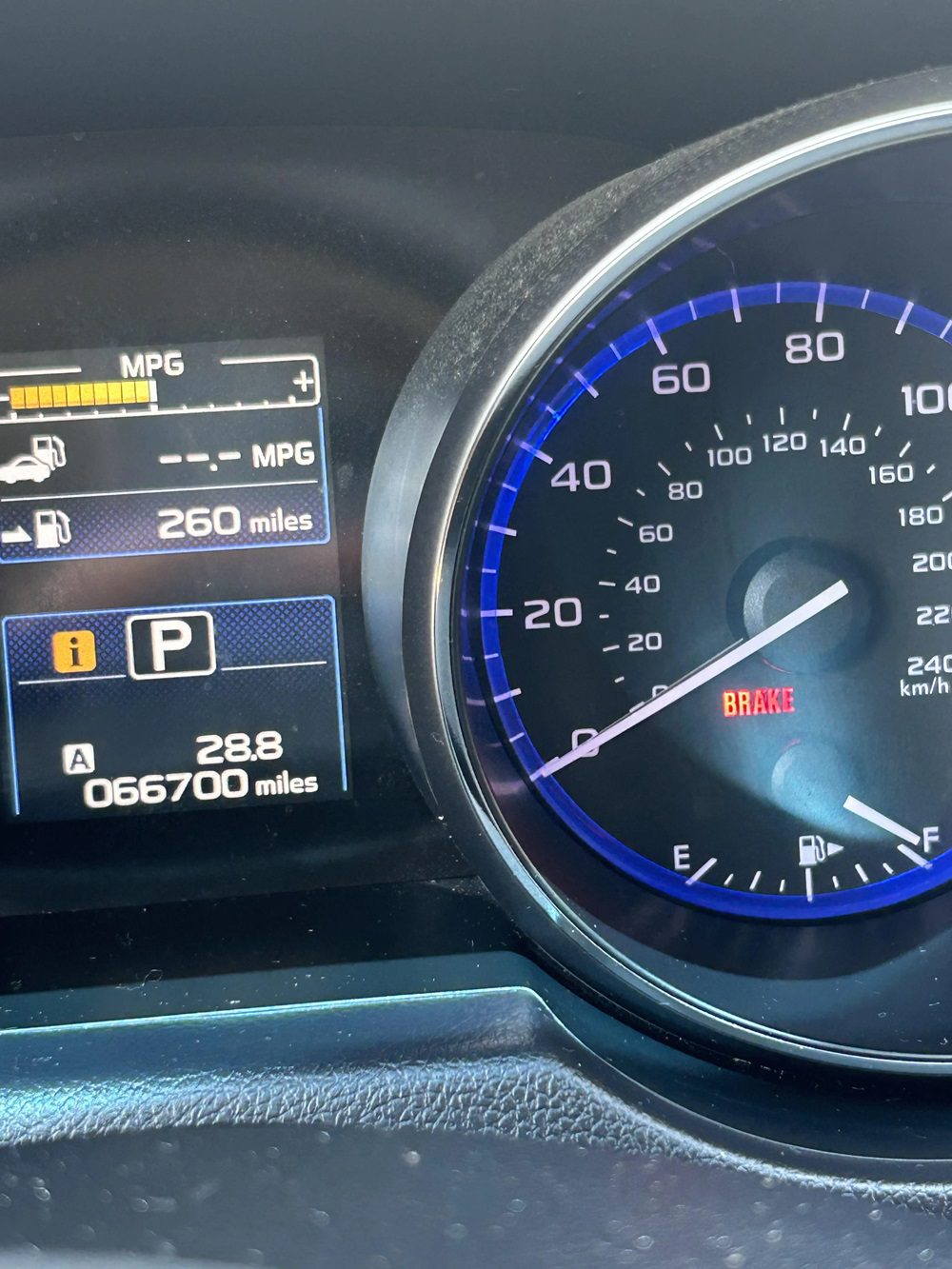
The EPB warning light on the dashboard can illuminate for a wide range of reasons, from minor to serious. Seeing the light does not immediately tell you which specific fault has occurred. What it does tell you is that the EPB control module has detected something outside its expected parameters and wants you to pay attention.
A blinking EPB light typically indicates an active fault that is preventing normal operation. A steady illuminated EPB light can indicate a stored fault that is not currently affecting operation but has been logged and should be investigated. Both situations require a scan tool capable of reading EPB-specific codes to determine the actual cause.
One documented cause of the EPB warning light on Subaru vehicles is a loose or deteriorated electrical connector on the EPB module or caliper motor. The plastic retaining clip on these connectors can become brittle and fail to hold the connector securely. Vibration from driving eventually works the connection loose enough to trigger a fault. Inspecting and reseating the connector is always worth doing before chasing more complex causes.
The Parking Brake Will Not Disengage
This is the most alarming version of the problem. You press the EPB button to release the brake and nothing happens. The car is stuck.
This can happen for several reasons:
- The brake pedal switch is not registering that the brake pedal is being pressed, which is a required input before the EPB will release in many Subaru models
- The EPB actuator motor has failed and cannot drive the mechanism to retract the piston
- The EPB module itself has a fault that is preventing it from sending the release command
- The caliper’s internal mechanism has seized, either from corrosion or lack of lubrication
- A blown fuse has cut power to the EPB system
The brake pedal switch is a simple and inexpensive component that is easy to overlook. The EPB system on many Subaru vehicles requires the brake pedal to be pressed and the brake lights to activate before it will release. If the brake pedal switch has failed, the EPB module never receives confirmation that the brake is depressed, and it will not release. Press the brake, check in a window reflection or have someone confirm that the brake lights are coming on. If they are not, the brake pedal switch is suspect.
Brake Pads and Caliper Issues
Worn brake pads do not just affect braking performance. On a vehicle with an EPB, they also affect how the system calibrates itself. When pads wear significantly, the piston has to travel further to make contact with the rotor. The EPB module adjusts for this over time, but eventually it reaches the limit of its compensation range and throws a fault.
The caliper piston dragging is another related issue. When the piston does not fully retract after the EPB releases, it stays in partial contact with the brake pad. This causes accelerated brake pad wear, rotor heat, and reduced fuel economy from the added rolling resistance. It can also cause the car to pull to one side. A dragging EPB caliper can be caused by a seized caliper slide pin, a damaged piston seal, or debris inside the caliper mechanism.
Brake Booster and Master Cylinder Faults
The EPB system does not operate the brake booster or master cylinder directly, but faults in these components can interact with the EPB in indirect ways. If the master cylinder has a leak or the brake booster is failing, brake fluid level drops. Low brake fluid level is one of the conditions the EPB module monitors because low fluid can indicate worn pads or a leak in the system. A sufficiently low fluid level can trigger EPB warning lights and may cause the system to limit its operation.
A spongy brake pedal that requires more force than usual, especially combined with an EPB warning light, is worth investigating through proper brake system diagnosis rather than just resetting the EPB.
Contaminated Brake Fluid
Brake fluid absorbs moisture over time. As water content increases, the fluid’s boiling point drops and its protective properties deteriorate. Contaminated brake fluid can cause corrosion inside the calipers, damage rubber seals, and compromise the hydraulic performance of the brake system. All of these effects can produce EPB-related symptoms.
Subaru recommends brake fluid replacement every two years for most models regardless of mileage. This is not an arbitrary schedule. It is based on the rate at which brake fluid absorbs moisture from the atmosphere and how quickly that moisture degrades system performance. Skipping this service on a vehicle with an EPB system is a false economy.
How to Reset the Subaru Electronic Parking Brake
There are several reset approaches depending on what situation you are dealing with. Work through them in order from simplest to most involved.
Method 1: The Fuse Reset Procedure
This is the first thing to try when the EPB is misbehaving and you do not have access to a scan tool. It forces a complete power cycle of the EPB control module, which can clear temporary faults and allow the system to reinitialize.
- Turn the engine off completely.
- Locate the EPB fuse in the fuse box. Your owner’s manual will show the fuse diagram and identify the correct fuse. It is typically labeled “EPB” or “Parking Brake” and is often in the engine bay fuse box or the interior fuse panel.
- Remove the EPB fuse carefully using a fuse puller or small needle-nose pliers.
- Start the engine and allow it to idle for about 30 seconds without the fuse installed. The EPB system will be offline during this time.
- Turn the engine off again.
- Reinstall the EPB fuse.
- Wait 30 seconds before restarting the engine.
- Once the engine is running, apply the parking brake and release it several times to allow the system to cycle and recalibrate.
- Check whether the warning light has cleared.
This method resolves minor software faults and resets the module’s learned parameters. It does not fix underlying hardware problems. If the fault returns immediately after the fuse reset, there is a physical problem that needs to be diagnosed.
Method 2: Check the Brake Pedal Switch First
If the EPB will not disengage at all, before anything else, check the brake pedal switch. This is a quick and free diagnostic step that resolves the problem in a meaningful number of cases.
- With the vehicle on and in park, press the brake pedal firmly.
- Look at the rear of the vehicle or have someone confirm whether the brake lights are illuminating.
- If the brake lights are not coming on, the brake pedal switch has failed or the electrical connection to it has come loose.
- Locate the brake pedal switch, which is mounted on the brake pedal arm above the pedal pad, typically just inside the firewall behind the pedal.
- Check that the connector is fully seated and free of corrosion.
- If the switch itself has failed, replace it. Brake pedal switches are inexpensive parts and straightforward to replace on most Subaru models.
Method 3: Use a Compatible Scan Tool for EPB Service Mode
This is the proper professional method and the one you need after brake pad replacement or for any fault that a fuse reset did not resolve. The Subaru EPB system requires a scan tool that can access the EPB control module specifically, not just read generic OBD-II codes.
Tools that work for Subaru EPB service include:
- Subaru Select Monitor (SSM4): The factory diagnostic tool used at Subaru dealerships. It provides full access to every module in the vehicle and can perform EPB service procedures including caliper retraction, brake pad replacement mode, and system calibration.
- Select III Subaru Scanner: A professional-grade aftermarket tool with Subaru-specific capabilities that covers EPB service functions.
- Professional-grade scan tools with Subaru EPB support: Autel, Launch, and Snap-on scanners with appropriate software coverage can typically access the Subaru EPB module for service functions.
The brake pad replacement reset procedure using a scan tool typically works like this:
- Connect the scan tool with the vehicle on and the engine running.
- Navigate to the EPB system or brake control module in the vehicle-specific menu.
- Select the brake pad replacement or EPB service mode function.
- Follow the on-screen prompts, which will retract the caliper piston fully to allow clearance for new brake pad installation.
- Install the new brake pads with the piston fully retracted.
- After installation, return to the scan tool and run the EPB initialization or calibration function.
- The system will apply the parking brake, test the mechanism, and set new reference positions based on the new pad thickness.
- Clear any stored fault codes and confirm the warning light has extinguished.
Watch the video below for a visual walkthrough of Subaru EPB service and reset procedures:

Method 4: Inspect and Reseat the EPB Electrical Connectors
If the warning light appeared without any brake work having been done and the fuse reset did not clear it, inspect the wiring connections to the EPB caliper motors and the EPB control module.
- Locate the EPB connector on each rear caliper. The connector is typically a two or three-wire plug that connects to the motor assembly inside the caliper.
- Inspect the plastic connector housing for cracks, broken retaining clips, or visible corrosion at the terminals.
- Unplug the connector and inspect both sides for corrosion, pushed-back pins, or debris inside the connector housing.
- Clean any corrosion with electrical contact cleaner and a small brush.
- Apply a small amount of dielectric grease to the terminals before reconnecting.
- Firmly seat the connector and confirm the locking tab clicks into place.
- Repeat on both sides and also inspect the main EPB module connector if accessible.
Recalls and Known Issues on Specific Subaru Models
Subaru Outback (2010 to 2014)
The 2010 to 2014 Subaru Outback with a manual transmission was subject to a recall related to the electronic parking brake system. The EPB in some of these vehicles was found to have the potential to fail, increasing the risk of vehicle rollaway. If you own an Outback in this model year range with a manual gearbox, check your VIN against the recall database to confirm whether your vehicle was affected and whether the recall repair has been completed.
Beyond the recall, Outback owners have reported the EPB warning light appearing due to the connector issue described earlier, where the plastic retaining clip on the EPB caliper connector fails over time and allows the connection to loosen under vibration.
Subaru Legacy (2010 to 2014)
The Subaru Legacy recall covering certain 2010 to 2014 models with manual transmissions mirrors the Outback situation. The electronic parking brake in these vehicles could fail, and the risk of unintended vehicle movement was identified as a safety concern. Owners of affected Legacy models should confirm whether the recall has been addressed on their specific vehicle through their local Subaru dealer or the NHTSA recall database.
Right-Hand Drive Models
For Subaru owners in markets where right-hand drive vehicles are standard, including Australia, New Zealand, and the UK, the EPB issues described in this article apply equally. The underlying system design is the same. Recall coverage in those markets may differ from North American recalls, so owners should check with their regional Subaru distributor or the relevant vehicle safety authority for country-specific recall information.
When to Go to a Dealer or Professional Shop
Some EPB situations are straightforward enough for a knowledgeable DIY approach. Others genuinely need professional equipment and expertise. Here is how to decide.
- Go to a professional if the EPB will not release at all and the fuse reset and brake pedal switch checks did not resolve it. A stuck EPB that cannot be released manually is a situation that requires proper diagnostic tools to avoid damaging the caliper or the EPB actuator.
- Go to a professional if you are replacing brake pads and do not have access to a scan tool capable of performing the Subaru EPB service function. Skipping the electronic calibration step after pad replacement is not an option on these vehicles.
- Go to a professional if the EPB warning light returns persistently after a fuse reset. There is an underlying hardware fault that needs to be properly identified before parts are replaced.
- You can handle it yourself if the warning light appeared recently and a fuse reset cleared it without returning. Monitor for recurrence.
- You can handle it yourself if the issue is a loose connector that you can inspect and reseat without specialized tools.
Quick Reference: EPB Problems, Causes, and Fixes
| Symptom | Most Likely Cause | Recommended Fix | DIY or Professional? |
|---|---|---|---|
| Warning light on after brake work | System needs electronic calibration | EPB service reset with compatible scan tool | Professional or DIY with proper tool |
| Warning light, no brake work done | Loose connector or minor fault | Fuse reset, inspect connectors | DIY |
| EPB will not release | Brake pedal switch, module fault, actuator failure | Check pedal switch, fuse reset, scan tool diagnosis | DIY then professional |
| EPB releases but vehicle pulls to one side | Caliper piston dragging | Inspect caliper, replace if seized | Professional recommended |
| Spongy brake pedal with EPB warning | Low fluid or brake system fault | Full brake system inspection | Professional |
| Piston cannot be compressed for pad install | EPB piston requires rotation, not just compression | Use proper EPB caliper wind-back tool | DIY with correct tool |
| Recurring warning light | Actuator or ATE failure | Scan tool diagnosis, possible actuator replacement | Professional |
Frequently Asked Questions About the Subaru Electronic Parking Brake
Do I need a scan tool to replace brake pads on a Subaru with an EPB?
Yes. You need a scan tool capable of accessing the Subaru EPB module to retract the caliper piston for pad removal and to recalibrate the system after installing new pads. You also need the proper EPB caliper wind-back tool to compress the piston with the required rotation. Without these, you risk damaging the caliper and ending up with an uncalibrated system that throws fault codes and may not hold the vehicle securely.
Can I drive with the EPB warning light on?
It depends on what is causing the light. If the regular braking system is working normally and the car is otherwise driving fine, short-distance travel to a shop is generally acceptable. Do not rely on the electronic parking brake for holding the vehicle on inclines while the warning light is on. Use wheel chocks or leave the vehicle in gear as a backup. Get the system diagnosed promptly rather than driving with a known EPB fault for extended periods.
How long do Subaru EPB calipers last?
The calipers themselves can last the life of the vehicle with proper maintenance. The EPB actuator motors inside the calipers are the components most likely to fail over time. Keeping the caliper slide pins lubricated, flushing brake fluid on schedule, and using the EPB regularly rather than leaving it unused for extended periods all contribute to longer EPB component life. Long periods of non-use allow the actuator mechanism to corrode internally, which is one reason to cycle the EPB periodically even when the vehicle is not being parked on hills.
What is the ATE in the context of the Subaru EPB?
ATE stands for Automatic Test Equipment in this context and refers to the self-calibration function the EPB system performs during ignition-on cycles. When you start the vehicle, the EPB actuator performs a brief self-check and adjustment sequence. If the actuator is faulty and cannot complete this self-calibration successfully, the module logs a fault. A failed ATE sequence that persists after a reset typically indicates the EPB actuator assembly needs replacement.
One Thing That Trips People Up Most Often
The single most common mistake Subaru owners and even some mechanics make with the EPB system is treating it like a conventional parking brake during brake service. They compress the piston with a C-clamp, damage the internal threading, install the new pads, and then wonder why the EPB warning light is on and the system does not work correctly. The caliper is then condemned as faulty when it was actually fine before the improper piston compression destroyed the mechanism.
If you are doing your own brake service on a Subaru with an EPB, invest in the proper wind-back tool before you start. It is not expensive and it is the difference between a successful repair and an expensive caliper replacement. Use the scan tool to retract the piston first, then use the wind-back tool during installation, and then recalibrate the system with the scan tool after the job is done. Do all three steps correctly and the EPB system will work exactly as it should.