
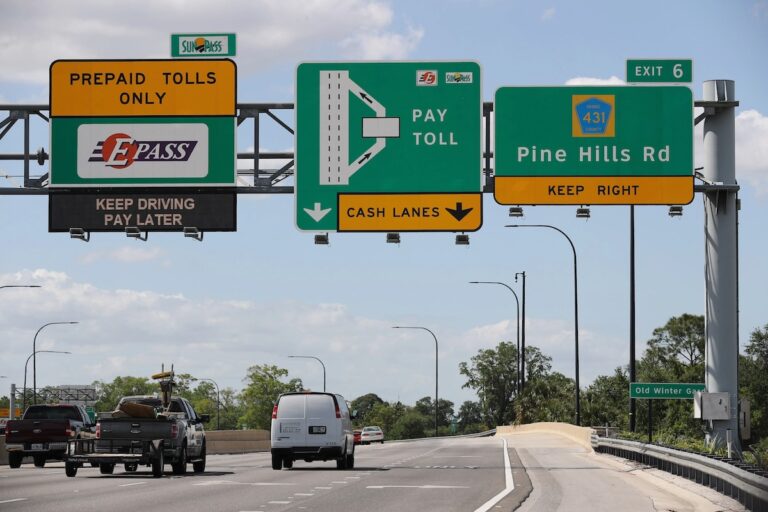
If you drive anywhere near Orlando, Tampa, or the Turnpike, you have probably had this thought while sitting at a toll gantry: “Wait, does the transponder stuck to my windshield actually work here?” It is a fair question. Florida runs more than one toll system, and the two big names, SunPass and E-Pass, get mixed up constantly by drivers who just want to get where they are going without fumbling for cash or getting a surprise bill in the mail.
Here is the short version before we get into the weeds: SunPass and E-Pass talk to each other. A SunPass transponder will read on E-Pass toll roads, and certain E-Pass transponders will read on SunPass roads. But there are details that matter, especially if you travel outside Central Florida or cross state lines. That is what we are going to sort out below, in plain language, the way I would explain it to a customer standing in my shop asking why his toll bill looked weird.
What SunPass and E-Pass Actually Do For You
Before comparing the two, it helps to understand what these little plastic boxes are doing every time you drive under a toll gantry. Neither one is magic. They are both part of a system built to keep traffic moving without a human being sitting in a booth taking your dollar bills.
How Electronic Tolling Works Under the Hood
Every transponder, whether it is a SunPass or an E-Pass, contains a small radio chip. As you approach a toll point, an antenna mounted overhead or on the side of the road pings that chip and reads its unique ID number. That number is tied to your prepaid account, and the toll gets deducted automatically. No stopping, no rolling down the window, no digging through the cupholder for quarters.
This is why you can cruise through an express lane at 65 miles per hour and still get charged the right amount. The system does the math in the background while you keep driving. It sounds simple, and honestly, for the driver, it is. The complexity lives behind the scenes, in the agreements between different toll authorities that decide whose transponder gets accepted where.
SunPass vs E-Pass: The Real Differences You Should Know
SunPass and E-Pass are not run by the same people, and that is the root of most of the confusion. SunPass falls under the Florida Turnpike Enterprise, which is part of the Florida Department of Transportation. E-Pass is run by the Central Florida Expressway Authority, a separate agency that manages toll roads mostly around Orlando and the surrounding counties.
Think of it like two different cell phone carriers. Your phone might work fine on both networks, but the billing, the customer service, and even some of the coverage areas belong to different companies. Here is a side-by-side look at how they stack up.
| Aspect | SunPass | E-Pass |
|---|---|---|
| Operating Agency | Florida Turnpike Enterprise | Central Florida Expressway Authority |
| Works on Florida Toll Roads | Yes, statewide | Yes, statewide |
| E-ZPass Compatibility | Yes, with the SunPass PRO model | Select E-Pass transponders only |
| Payment Options | Prepaid account, reload lanes | Prepaid, Pay By Plate, drive-up reload lanes |
Neither one is objectively “better” in a vacuum. It really comes down to where you drive most often and whether you cross state lines regularly. A retiree who only drives between Kissimmee and the grocery store has different needs than a sales rep who drives from Miami to Atlanta twice a month.
So, Does SunPass Actually Work With E-Pass?
Let us answer the question in the title directly, because you did not click on this article to read fluff. Yes, in the vast majority of situations, a SunPass transponder will work on E-Pass toll roads, and vice versa. This is the result of a reciprocal agreement between Florida’s toll authorities, built specifically so drivers do not need three different transponders rattling around on their dashboard.
The Short Answer, Explained
Your SunPass transponder is read by the sensors on E-Pass roads throughout Lake, Osceola, and Seminole counties, along with the rest of the network managed by the Central Florida Expressway Authority. You do not need to sign up for a separate E-Pass account just because you are driving through Orlando on your way to the theme parks. The toll simply gets billed to your existing SunPass account.
The same courtesy runs in reverse. If you already have an E-Pass Xtra or an E-Pass Portable transponder, that device will be read on standard SunPass-operated toll roads across the state, including stretches of the Turnpike and many bridges and expressways outside Central Florida.
Which E-Pass Transponders Actually Play Nice With SunPass
Not every single E-Pass device offers the same level of compatibility, so it is worth knowing which models you are dealing with:
- E-Pass Xtra: A sticker-style transponder that mounts to your windshield and is compatible with SunPass roads.
- E-Pass Portable: A battery-powered device you can move between vehicles, also compatible with SunPass toll points.
If you rent cars frequently or drive more than one vehicle, the portable option tends to be the more practical pick, since you are not stuck reassigning a sticker every time you swap cars.
The 19-State Network: Just How Far Does SunPass Reach?
Here is where things get genuinely useful for anyone who drives outside Florida on a regular basis. The SunPass PRO transponder, a slightly upgraded version of the standard SunPass, is now recognized across a network covering 19 states. That is not a typo. Nineteen.
Where Your SunPass PRO Will Actually Work
This expanded coverage happens because SunPass PRO plugs into the broader interoperable toll network that includes E-ZPass and several state-specific systems. Some of the bigger names in that network include:
| State | Local Toll System |
|---|---|
| Georgia | Peach Pass |
| North Carolina | NC Quick Pass |
| New York, New Jersey, Pennsylvania, and others | E-ZPass |
In practical terms, this means a Florida resident driving up the East Coast for a family visit does not need to buy a new transponder every time they cross a state border. One device, one account, and the tolls get sorted out behind the scenes. That is a real time saver on a road trip, especially with kids in the back seat asking “are we there yet” every twenty minutes.
How These Cross-State Agreements Came Together
None of this happened by accident. Toll authorities across different states sat down and worked out data-sharing agreements so that a transponder read in one state gets billed correctly back to your home account, even if that account is managed by an entirely different agency. Florida’s Lee County toll facilities were part of this broader push toward one connected system, and the goal has always been to widen that net even further over time.
In the real world, this kind of cooperation between government agencies is not always fast or simple. But when it comes to tolling, the incentive is obvious for everyone involved: fewer stopped cars, faster traffic flow, and fewer complaints from drivers stuck holding transponders that only work in one small corner of the map.
Which Vehicles and Toll Roads Are Actually Covered
Whether you drive a compact sedan, a pickup truck, or a motorcycle, electronic tolling in Florida is built to accommodate you. That said, there are a few practical wrinkles worth knowing before you assume everything works the exact same way for every vehicle type.
Accessibility Across Different Vehicle Types
SunPass is accepted on every toll road in Florida and works with motorcycles, passenger cars, vans, and larger vehicles. If you own more than one car, you are not required to buy a brand new transponder for each one. Many drivers simply move a portable transponder between vehicles, or request additional stickers linked to the same account.
E-Pass, meanwhile, is your primary option if most of your driving happens on Central Florida expressways. It handles the same range of vehicle types, though its home turf is more concentrated around Orlando rather than statewide.
Both systems are also built into the express lane infrastructure found on busier corridors. That means no slowing down, no rolling down your window, and no dealing with a toll booth attendant who has seen ten thousand cars that day and could not care less about your travel schedule.
Customer Service: Who Answers The Phone When Something Goes Wrong
Every driver eventually runs into a billing question, a lost transponder, or a payment that did not process correctly. This is where knowing your support options in advance saves you a headache later.
- SunPass: Offers service centers, walk-in locations, and phone support. Full details are available on the official SunPass website.
- E-Pass: Provides account help and transponder troubleshooting through their FAQ page, along with phone and in-person support options.
Neither system is perfect, and hold times can occasionally test your patience. But both agencies have put real effort into making sure a billing dispute or a malfunctioning transponder does not turn into a three-week ordeal.
Regional Quirks Every Florida Driver Should Know
Florida is a big state with a lot of separate toll authorities, and understanding the regional layout will save you from unnecessary confusion, especially if you are new to the area or just passing through on vacation.
Central Florida Expressway Authority Territory
If your daily commute runs through Orange County or anywhere near Orlando, you are firmly in CFX territory. E-Pass is the preferred system here, and it covers the roads that get you to popular destinations like the theme parks, convention centers, and the airport area. Locals in this region often lean toward E-Pass simply because it is the hometown option, even though a SunPass will read on the same gantries without a problem.
Beyond Central Florida: SunPass Country
Once you leave the Orlando bubble, SunPass becomes the dominant player. It is accepted throughout the territories managed by the Tampa-Hillsborough Expressway Authority and the Miami-Dade Expressway Authority, and it covers toll roads near Jacksonville and Miami as well. In other words, if your trip spans multiple regions of the state, SunPass tends to offer the smoother, more consistent experience.
Even so, the reciprocal relationship between these systems is not always flawless in every corner case. If you are uncertain whether your transponder will read correctly on an unfamiliar toll road, it takes two minutes to check with the relevant authority before you head out. That beats getting an unexpected violation notice in the mail three weeks later.
Getting To The Airport Or The Cruise Port Without The Hassle
Heading to Orlando International Airport or Port Canaveral for a flight or a cruise? SunPass generally makes that final stretch of driving painless, since it is widely accepted on the toll roads that feed into both locations. Just make sure your account balance is loaded ahead of time. Nothing ruins the start of a vacation faster than a transponder that beeps with an insufficient funds warning while you are already running late for a flight.
Practical Tips That Actually Save You Money and Hassle
Owning a transponder is one thing. Using it wisely is another. Here are some field-tested tips that will help you get the most out of either system.
Getting The Most Out Of Your Toll Pass
Since SunPass and E-Pass interoperate on Florida roads, you have some flexibility in choosing which one fits your lifestyle. If you regularly drive north out of state, a SunPass PRO that works on E-ZPass roads is going to serve you better long term. This becomes especially handy on corridors like the I-4 Express lanes, where keeping your momentum matters more than saving a few cents here and there.
- Choose a transponder that mounts flush against your windshield. It looks cleaner and reduces the odds of interference from other electronics in your dash.
- Check in periodically with either agency, or stop by a walk-in center, to stay current on new interoperability agreements. Coverage maps do get updated as new states and regions join the network.
Handling Multiple Vehicles Without Losing Your Mind
Families with more than one car often run into transponder confusion. Maybe one car has a SunPass and the other does not, or a transponder gets left in the wrong vehicle before a road trip. A little organization goes a long way here.
- Link every transponder you own to a single account. It makes tracking balances and usage far easier than juggling separate logins.
- If you are borrowing a family member’s car for a trip, either move the portable transponder over or make sure the correct vehicle is registered in the account beforehand. A mismatched vehicle and transponder pairing is one of the most common reasons drivers get hit with unexpected fees.
Common Problems And How To Fix Them Before They Become Expensive
Every mechanic will tell you the same thing about cars: small problems ignored long enough turn into big, expensive problems. Toll accounts work the same way. Here are the issues drivers run into most often, and how to nip them in the bud.
Your Transponder Did Not Read At The Gantry
This happens more than people realize, usually because of a low battery in a portable unit, a windshield sticker that has started peeling, or window tint that interferes with the radio signal. If this happens occasionally, do not panic. Most toll systems use a camera as a backup and will bill your license plate directly if the transponder fails to register. Just make sure your account has an updated address and payment method on file so that bill actually reaches you.
You Got Billed For A Road You Never Drove On
Billing errors are rare, but they do happen, especially with rental cars that previously had a transponder assigned to a different renter’s account. If a charge looks wrong, contact customer service immediately with your trip dates and vehicle information. Both SunPass and E-Pass have dispute processes built specifically for this kind of mix-up.
Your Balance Ran Dry Without You Noticing
This is the most avoidable problem on this list. Set up automatic replenishment on your account so that when your balance dips below a certain threshold, funds get pulled automatically from your linked card or bank account. It takes five minutes to set up and it will save you from the awkward experience of a transponder beeping red at a busy toll plaza while cars line up behind you.
What Does This Actually Cost You?
Money talks, so let us break down the real financial side of owning one of these transponders. Tolls in Florida are generally cheaper for transponder users compared to drivers who get billed by license plate through a Toll-By-Plate system, which usually carries a small administrative fee on top of the base toll.
| Payment Method | Typical Cost Impact |
|---|---|
| SunPass Transponder | Can save around 25 percent compared to standard Toll-By-Plate rates |
| E-Pass Transponder | Discounted rates versus Pay By Plate billing on most CFX roads |
| Toll-By-Plate (no transponder) | Higher per-toll cost plus possible processing fees |
If you drive on toll roads even a few times a month, the math almost always favors getting a transponder. The upfront cost of the device pays for itself quickly once you factor in the savings on every single trip.
So Which One Should You Actually Get?
Here is a simple way to think about it. If your driving stays mostly within Florida, and especially if you frequently head north out of state, a SunPass PRO gives you the widest coverage with the least hassle. If almost all your driving happens around Orlando and the surrounding CFX-managed roads, an E-Pass, particularly the portable version, will feel like the more natural fit.
Neither choice locks you out of the other network entirely, and that is really the whole point of this article. Florida’s toll authorities built these systems to work together, not against each other. A snowbird driving from Fort Myers to visit family in North Carolina, a theme park regular commuting through Orlando every weekend, and a rental car driver passing through for a week all have different needs, but all three can get where they are going without juggling three separate transponders.
Before your next road trip, take five minutes to check your account balance, confirm your transponder is mounted correctly, and glance at your vehicle registration on file. That small bit of prep beats dealing with a mailed violation notice weeks after the fact. Safe travels, and may your tolls always be automatic.