
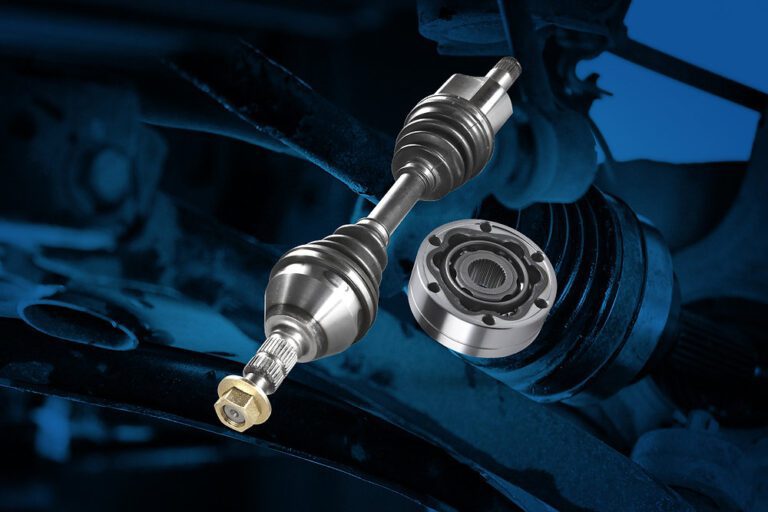
The driveshaft may look like a simple piece of metal under the car, but it has a much bigger job than most people realize. Inside that system are parts that have to handle engine power, wheel movement, steering angles, suspension travel, and road abuse all at the same time. That is where CV joints and CV axles come in.
People often mix up CV joint vs CV axle differences, and that is understandable. The names sound close, the parts work together, and when one fails, the symptoms can overlap. But here is the thing: they are not the same part, and knowing the difference can save time, money, and a lot of guesswork.
If you have ever heard clicking on turns, felt vibration during acceleration, or seen grease flung around the inside of a wheel, you have already brushed up against this system. In the real world, those signs matter. They usually point to a problem with a CV joint, a CV axle, or both.
What a CV Joint Actually Does
CV stands for Constant Velocity. That name tells you a lot already. A CV joint is designed to transfer rotational power at a steady speed, even while the angle of the joint changes.

That matters because wheels do not stay perfectly straight and level. They move up and down with the suspension, and the front wheels also turn left and right. A basic rigid shaft would struggle with that kind of movement. A CV joint lets the axle keep sending power without binding up or losing smoothness.
Think about a front-wheel-drive car turning into a parking lot while going over a dip. The wheel is steering, the suspension is moving, and torque is still being delivered to the wheel. The CV joint is the part that makes that possible without shaking the whole driveline apart.
Where CV Joints Sit in the System
A vehicle usually has an inner CV joint and an outer CV joint on each axle assembly. These joints are located at both ends of the axle shaft. Each one has a different job depending on its position.
- Inner CV joint: Usually handles in-and-out movement as the suspension works
- Outer CV joint: Usually handles more steering angle and is often the one that wears out first
The outer joint takes a lot of abuse because it sees the sharpest angles during turns. That is why the classic clicking noise on a tight turn often points straight to the outer CV joint.
What a CV Axle Actually Is
A CV axle is the complete assembly that connects the transmission or differential to the wheel hub. It includes the shaft itself and usually the CV joints at each end. In simple terms, the axle is the full working unit, while the CV joint is one of the parts inside that unit.
If the CV joint is the flexible connector, the CV axle is the whole assembly that carries power across the space between the drivetrain and the wheel. It has to be strong enough to transmit torque, but flexible enough to move with the suspension and steering system.
That is why a lot of drivers say they need a “CV axle” replaced, when the actual failure may be in one of the joints or the boot around it. Mechanics usually talk about the full axle assembly because, in many vehicles, that is how the parts are sold and serviced.
Why the Axle Assembly Matters
The axle is not just a spinning rod. It is part of a system that has to perform under stress every time the car moves. It transfers power, handles torque loads, and works through a range of motion that changes constantly as you drive.
On a bad road, the suspension is always moving. On a tight turn, the CV joint is working harder. Under acceleration, the axle has to deliver power without twisting apart. That combination of forces is exactly why this part deserves attention when symptoms start showing up.
CV Joint vs CV Axle Differences: The Short Version
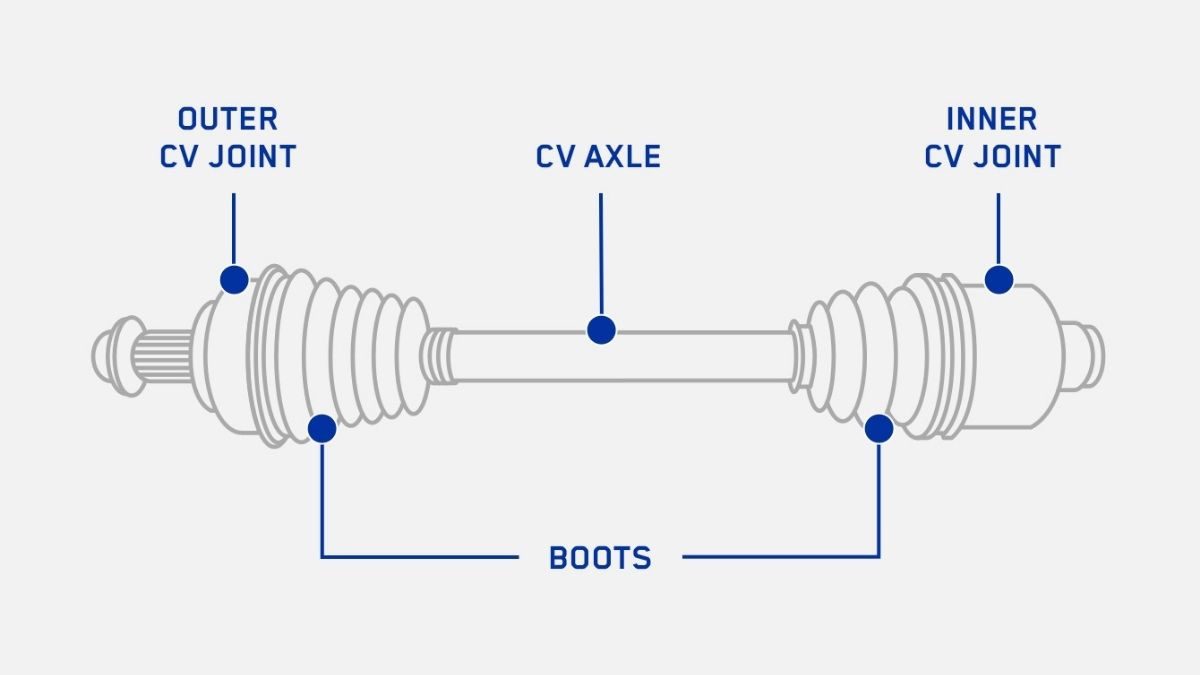
Here is the simplest way to separate the two:
| Part | What It Is | Main Job | Typical Location |
|---|---|---|---|
| CV Joint | A flexible joint inside the axle assembly | Transfers torque through changing angles | Inner and outer ends of the axle |
| CV Axle | The full axle assembly with shaft and joints | Connects drivetrain power to the wheel | Between transmission/differential and wheel hub |
So, a CV joint is a part. A CV axle is the full assembly. That distinction is the heart of the whole conversation.
How the CV Joint and CV Axle Work Together
The axle and the joints are not competing parts. They are partners. The axle shaft carries the torque, while the CV joints allow that torque to keep flowing smoothly while the wheel changes position.
Without the joint, the shaft would not be able to work through steering angles or suspension travel. Without the shaft, the joint would have nothing useful to connect to. One supports the other, and both need to stay in good shape if you want smooth drivability.
That is why a bad boot, worn grease, or a failing joint can lead to damage across the entire axle assembly. In the real world, small problems tend to grow fast if they are ignored.

Why CV Joints Are Built the Way They Are
CV joints need to be strong, precise, and well lubricated. They are not just simple hinges. Inside the joint is a carefully engineered setup of steel parts that can move under load without seizing.
A typical CV joint includes a cage, balls, and an inner raceway, all protected by a rubber boot and packed with grease. The steel components handle the force, while the boot keeps dirt and moisture out and holds the grease in place.
That grease is not just there for comfort. It prevents metal-on-metal wear and helps the joint move smoothly under pressure. If the boot tears, the grease starts escaping, and dirt starts getting in. Once that happens, wear ramps up quickly.
Common CV Joint Construction Materials
- Steel: Used for the cage, balls, and raceway
- Rubber: Used for the protective boot
- Grease: Used to reduce friction and wear
This design is why CV joints can survive thousands of miles of steering and suspension movement. They are tough, but they are not invincible.
What a CV Axle Is Made Of
A CV axle shaft is built to take serious punishment. The shaft itself is usually made from strong steel, commonly SAE grade 41xx chrome-moly steel or SAE grade 10xx carbon steel. Those materials are chosen because the axle needs high strength and durability under torque.
The axle is doing more than spinning. It is dealing with load transfer, twisting force, and repeated movement. A weaker material would fatigue too quickly or fail under stress.
That is also why replacement axles are not all equal. Some are built with better materials and tighter tolerances than others. A cheap axle might get the car back on the road, but if the balance or fit is poor, you may be dealing with vibration or early wear later on.
The Most Common Types of CV Joints
Not every CV joint is the same. Two styles are used most often, and each one has its own role.
1. Ball-Type CV Joint
The ball-type joint is commonly used on the outer side of the axle. It handles steering angles well, which makes it a good fit for the wheel end of the system. If you are turning the steering wheel, this is the joint that is working hard.
These joints are often the ones that make clicking or popping noises when worn. If the sound gets louder during tight turns, that is a strong clue that the outer CV joint is getting tired.
2. Tripod-Type CV Joint
The tripod-type joint is usually found on the inner side of the axle. It is better suited to the in-and-out movement that happens as the suspension compresses and extends.
This type is not usually the one that gets all the attention, but it still matters. If the inner joint wears out, you may notice shuddering, vibration, or movement under acceleration rather than the classic clicking sound.
The Different CV Axle Setups in Real Vehicles
Different vehicles use different axle layouts. The number of CV axles depends on the drivetrain and suspension design.
Front-Wheel Drive Vehicles
Front-wheel-drive cars usually have two CV axles. Both are at the front because the front wheels do the driving. They also handle steering, which means the front axle assemblies work harder than many people realize.
A typical FWD vehicle puts a lot of load on the front end. That is why front axle problems are so common on these cars.
Rear-Wheel Drive Vehicles with Independent Rear Suspension
Rear-wheel-drive vehicles with independent rear suspension often use two CV axles at the rear. These axles send power to the rear wheels while allowing suspension movement on each side.
If the rear suspension is independent, the axle must flex and move with each wheel separately. CV joints make that possible.
All-Wheel Drive Vehicles
All-wheel-drive vehicles can use four CV axles, one at each wheel. Since the engine power is distributed across all four wheels, the drivetrain has more moving parts and more opportunities for wear.
That does not automatically mean the system is weak. It means there are more components doing more work. If one joint starts failing, the symptoms may appear in a less obvious way than on a simpler drivetrain.
Front Axles and Rear Axles Are Not Identical
Even though people often lump everything together under the word “axle,” front and rear axles are not always built the same way. Their shape, placement, and function can differ depending on the vehicle.
Front Axles
Front axles are found in the front wheels and are designed to be strong and reliable. In many vehicles, they include four main parts:
- Beam
- Swivel pin
- Track rod
- Stub axle
They are commonly made from tough materials like nickel steel or carbon steel because they must hold up under heavy load. On a front axle setup, steering and road shock both come into play, so strength is not optional.
Rear Axles
Rear axles are usually located at the back of the vehicle. In many cases, they come in two halves, also called half shafts, connected by the differential. They often rotate with the wheels and help transfer power while allowing the rear suspension to move.
Again, the layout depends on the vehicle design. Some rear axles are more rigid, while others rely heavily on CV-type components to keep things smooth.
Why People Confuse a CV Joint with a CV Axle
It is easy to see why the confusion happens. The parts are connected, they are often replaced together, and the symptoms can overlap. On top of that, parts stores and repair estimates sometimes use the terms loosely.
For example, a driver might hear a clicking noise and assume the whole axle is bad. In some cases, that is true. In others, the joint is the real problem and the axle shaft itself is still fine. The opposite can also happen.
Another reason for the confusion is service strategy. Many repair shops replace the entire CV axle assembly because it can be more efficient than rebuilding one joint. That does not mean the joint and axle are the same thing. It just means they are often serviced as a unit.
Signs of a Bad CV Joint
When a CV joint starts failing, the symptoms can be pretty easy to spot if you know what to listen for. The earlier you catch it, the better your chances of avoiding bigger repairs.
- Clicking or popping noises during turns
- Grease splattered around the wheel area
- Vibration during acceleration
- Shuddering when turning or taking off
- Visible torn boot with grease leaking out
That clicking sound is the big one. If it gets louder as you turn more sharply, the outer CV joint is often the main suspect. A torn boot is another red flag because it means the joint is losing lubrication and getting contaminated.
Signs of a Bad CV Axle
A failing CV axle can create symptoms that overlap with CV joint failure, but there are a few clues that point more toward the axle assembly itself.
- Clunking when shifting between drive and reverse
- Strong vibration at highway speeds
- Uneven power delivery under acceleration
- Visible shaft damage or bending
- Excessive play in the axle assembly
If the axle shaft is bent or damaged, the whole assembly can feel wrong even if the joints are still partly functional. A bad axle can also cause vibration that shows up under load and gets worse as speed increases.
Can You Drive with a Bad CV Joint or CV Axle?
The short answer is that you can sometimes keep driving for a while, but that does not mean you should. A damaged CV joint or axle can get worse fast, and when it finally lets go, the failure may be sudden and messy.
In a front-wheel-drive vehicle, a completely failed axle can leave you stranded. In some cases, the car might still roll, but it will not be safe or reliable. If the joint is badly worn, it can eventually separate or lose the ability to transfer power properly.
If you hear loud clicking, feel heavy vibration, or notice grease leaking from the boot, it is smart to inspect the issue right away. Waiting usually turns a repair into a bigger repair.
How Mechanics Diagnose the Problem
A good diagnosis starts with a simple road test and a visual inspection. Mechanics listen for the noise, feel for vibration, and check the boots, joints, and axle shaft for wear or damage.
They may also raise the vehicle and inspect for excessive movement in the axle assembly. If the boot is torn and grease is gone, that alone can explain a failing joint. If the shaft is bent or the axle has too much play, the problem may be broader than just the joint.
One of the biggest mistakes is replacing parts based only on a guess. A clicking noise does point toward a CV joint, but a proper inspection confirms whether the issue is the joint, the axle, or something else nearby such as a wheel bearing or suspension component.
Why the Boot Matters So Much
The rubber boot around a CV joint does a lot of heavy lifting. It keeps grease sealed in and dirt, water, and road grime sealed out. Once the boot fails, the joint is on borrowed time.
Many CV joints do not fail because the design is weak. They fail because the boot tears, the grease escapes, and contamination starts grinding away the internal surfaces. That is why a tiny crack in the boot can turn into a full axle replacement later.
If you catch the boot damage early enough, you may be able to save the joint. If you ignore it, the joint may wear to the point where replacement is the only realistic option.
CV Joint vs CV Axle Differences in Everyday Driving
The difference between these parts becomes easier to understand when you think about how a car behaves on the road. When you turn into a driveway, the outer CV joint is working through a sharper angle. When you hit a bump, the inner joint is helping the axle move with the suspension. When you accelerate, the axle shaft is carrying the torque.
So, in everyday terms, the CV joint is the flexible mover and the CV axle is the full power-carrying assembly. They are related, but they are not interchangeable terms.
Imagine a delivery van making repeated tight turns in a city route. The outer joints see a lot of stress from the constant steering movement. Now imagine the same van loaded with tools and equipment. The axle assembly now has to handle that added weight and torque too. Over time, wear is going to show up somewhere in that system.
How Long They Usually Last
CV joints often last longer than many people expect. Under normal conditions, they can go about 70,000 to 130,000 miles before they need replacement. Some last longer if the boots stay intact and the vehicle is not abused.
CV axles, on the other hand, typically do not go past 100,000 miles before wear starts showing up. That is not a hard rule, because driving style, road conditions, and maintenance habits all affect lifespan.
A car that spends its life on smooth highways may treat these parts far better than one that lives on rough roads, sees potholes daily, or gets driven hard with rapid acceleration and sharp turns. Real-world use matters a lot.
What Makes Some Replacement Parts Better Than Others
Replacement CV joints and axles are not all created equal. Some are built to match factory specs closely, while others are made to hit a lower price point. That difference can show up in fit, balance, durability, and how smoothly the car drives afterward.
If a replacement axle is not balanced well, you may feel vibration. If the joints are not properly greased or sealed, the part may wear out early. That is why quality matters, especially if the vehicle is used every day.
Sometimes the cheapest part is expensive in the long run. If you are replacing a CV axle, paying attention to brand quality and warranty coverage can save a second repair job later.
How to Keep CV Joints and Axles Alive Longer
You cannot stop wear forever, but you can slow it down. A few good habits go a long way.
- Inspect the boots regularly. Look for cracks, tears, or grease leaks.
- Fix suspension issues early. Bad bushings, worn ball joints, and loose parts can add stress.
- Avoid hard launches. Excess torque is rough on the drivetrain.
- Be careful over potholes. Sharp impacts can damage the axle or joint.
- Do not ignore noise. Clicking and vibration usually get worse, not better.
These are simple habits, but they pay off. A torn boot caught early may save a joint. A vibration checked early may prevent a full axle replacement. Small inspections can prevent large bills.
When to Replace the Whole Axle Instead of Just the Joint
Sometimes it makes sense to replace the entire CV axle assembly instead of trying to repair one joint. This is common when the shaft is damaged, the joints are badly worn, or labor costs make a rebuild less practical.
In many vehicles, full axle replacement is simply the more efficient route. The old unit comes out, the new one goes in, and the car is back on the road faster. For a lot of daily drivers, that is the preferred solution.
That said, if the issue is caught very early and the axle shaft is still in good shape, replacing just the damaged component may still be possible depending on the vehicle and available parts. The right choice depends on the condition of the assembly and the repair approach being used.
Why the Difference Matters for DIY Repairs
If you work on your own car, understanding CV joint vs CV axle differences helps you buy the right parts and avoid wasted time. It is easy to order a full axle when the boot was the only problem, or vice versa.
It also helps you decide how deep the repair needs to go. A torn boot with no clicking may still be worth addressing right away. A noisy joint with heavy wear may mean the full axle assembly is the smarter fix. Knowing the difference makes your repair plan more accurate.
There is nothing worse than taking a car apart twice because the wrong part was ordered the first time. That is a headache no one needs.
Quick Comparison Table: CV Joint vs CV Axle
| Feature | CV Joint | CV Axle |
|---|---|---|
| Definition | Flexible joint in the driveline | Complete shaft and joint assembly |
| Main role | Keeps torque flowing through changing angles | Transfers engine power to the wheels |
| Typical materials | Steel parts with a rubber boot | High-strength steel shaft |
| Common wear point | Boot damage, grease loss, joint wear | Shaft wear, bend, joint failure within the assembly |
| Common symptom | Clicking on turns | Vibration, clunking, power transfer issues |
The Bottom Line on CV Joint vs CV Axle Differences
The easiest way to remember it is this: the CV joint is the flexible connector, and the CV axle is the full assembly that carries power to the wheel. The joint helps the axle move smoothly through steering and suspension motion, while the axle itself transmits torque from the drivetrain.
Once you understand that relationship, diagnosis gets a lot easier. Clicking on turns, grease leaks, vibration under acceleration, and clunking during shifts all start making more sense. That can help you speak the same language as your mechanic, or it can help you handle the repair yourself with more confidence.
If your car is already showing signs of wear, do not wait for the noise to get louder. Check the boots, inspect the axle, and fix the problem before a small issue turns into a roadside breakdown.
Take a closer look the next time you hear a click from the front end, because that sound is often your car asking for help.