
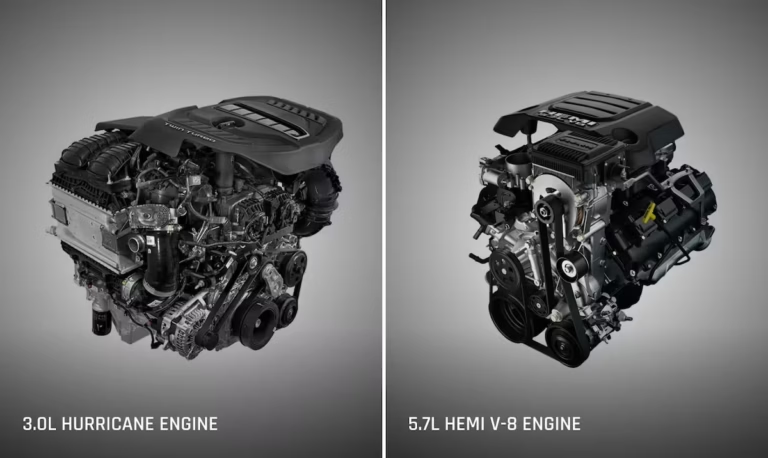
The 5.7 Hemi horsepower question comes up a lot for good reason. This engine has built a reputation for strong pull, solid reliability, and the kind of sound that makes people turn their heads in a parking lot. If you have ever driven one, or even heard one pass by, you already know it has a personality.
The 5.7 HEMI is a third-generation V8 from Chrysler, and it has been around for more than three decades in one form or another. Over that time, it has gone through real improvements, not just cosmetic changes. Engineers refined the power delivery, improved fuel efficiency, and worked on durability so the engine could stay useful for daily driving, towing, and hard acceleration alike.
That is part of why people still ask about it today. They want to know how much power it really makes, what changed over the years, and how far it can be pushed without turning into a money pit. The short answer is simple: a stock 5.7 HEMI delivers 395 horsepower and 410 lb-ft of torque. But the better answer is a little more interesting than that.
Why the 5.7 HEMI Still Gets So Much Respect
Not every engine earns a long shelf life. Some come and go. The 5.7 HEMI stuck around because it hits a sweet spot that many drivers actually care about in the real world. It has enough power to feel strong without constantly begging for premium attention from a mechanic every other month, and it has enough torque to make towing and merging feel easy.
It also sounds right. That deep V8 rumble is part of the appeal, especially in Dodge and Ram trucks where the exhaust note feels like part of the vehicle’s identity. Even at idle, the engine has a presence. Step on it, and the response is immediate enough to remind you that this is not just another engine with a badge on the valve cover.
In the real world, that balance matters more than spec-sheet bragging rights. A truck owner wants confidence pulling a trailer. A car owner wants clean acceleration from a stoplight. A weekend driver wants a motor that feels alive. The 5.7 HEMI checks all of those boxes without trying too hard.
How Much Horsepower Does a 5.7 HEMI Have?
In its current form, the 5.7 HEMI produces 395 horsepower and 410 lb-ft of torque. That number is not just a marketing claim. It reflects the later version of the engine after Chrysler made meaningful upgrades to combustion, airflow, and timing control.
With that output, a vehicle equipped with the engine can hit 0 to 60 mph in about 5.2 seconds, depending on the vehicle, gearing, traction, and weight. That is quick enough to feel strong in everyday driving and fast enough to surprise people who expect a full-size car or truck to move with that kind of urgency.
The engine also has a towing rating that is impressive for its class. In the right setup, it can move up to 11,610 lbs. That is a big reason the 5.7 HEMI has been a favorite in trucks and larger vehicles where low-end torque matters just as much as peak horsepower.
What Year Has the Most 5.7 HEMI Horsepower?
The current version of the 5.7 HEMI, introduced with major updates in 2013, has the most horsepower in the lineup. That updated engine brought several important changes that made it stronger and more efficient than earlier versions.
One of the biggest improvements was the coil-on-plug ignition system. That helped reduce emissions and improved combustion quality. The engine also gained variable camshaft timing (VCT), which helped optimize performance across different RPM ranges. On top of that, the cylinder heads were revised to improve airflow by about 14%, and the manifold was modified to better support power and torque delivery.
If you look at the numbers, the progression is clear:
| Engine Year | Peak Horsepower |
|---|---|
| 2013 to current | 395 |
| 2009 to 2012 | 383 |
| 2003 to 2008 | 345 |
That increase did not happen by accident. It came from smarter engine design, better airflow, and more refined fuel and ignition control. Even so, the earlier versions still had plenty of punch and helped establish the engine’s reputation long before the latest update arrived.
What Makes a HEMI Different From a Regular Engine?
The term HEMI comes from the hemispherical combustion chamber design. Instead of the flatter combustion chamber used in many engines, the HEMI shape helps the engine breathe better and burn the air-fuel mixture more efficiently. That is one reason these engines are known for making strong power.
There is also a mechanical advantage to the design. Better airflow means better combustion, and better combustion means more power. When the mixture burns more completely and more efficiently, the engine can make stronger peak pressure in the cylinder. That translates to better horsepower and torque output.
The design also helps reduce heat loss in the chamber. In plain English, less energy gets wasted, and more of it gets turned into motion. That is part of what gives a HEMI its strong feel under load.
If you have ever driven an older truck that feels lazy on takeoff, then stepped into a 5.7 HEMI vehicle, the difference is obvious. The HEMI does not feel strained when you ask for power. It feels ready.
Are Hemis Fast?
Yes, Hemis are fast. Not race-car fast in every form, but certainly fast enough to earn respect. They are known for strong acceleration, dependable power delivery, and the kind of responsiveness that makes a vehicle feel more capable than the numbers alone might suggest.
Part of that comes from the compression ratio and the chamber design. HEMI pistons typically work with a setup that supports quicker power delivery. The engine responds hard when fuel and air are delivered correctly, which is why these engines have been such a favorite among drivers who want muscle with everyday usability.
A stock 5.7 HEMI can get you to 0 to 60 mph in about 5.2 seconds. For a full-size engine that can also tow serious weight, that is nothing to sneeze at. It is a practical performance figure, not just a bench-racing number.
Can You Add More Horsepower to a 5.7 HEMI?
Yes, and that is one of the reasons enthusiasts like this engine so much. It responds well to modifications. Depending on the tuning stage and supporting parts, you can add up to 200 horsepower to a 5.7 HEMI.
But here is the thing: power gains are not magic. If you want more horsepower, the engine has to breathe better, fuel better, and exhaust better. A proper setup matters. Slapping on random parts and hoping for big gains usually leads to disappointment.
Stage 1: Easy Gains With Basic Bolt-Ons
Stage 1 tuning is where many owners start because it is affordable and simple. This usually includes an upgraded air filter, a less restrictive exhaust, and engine remapping. Done correctly, this can add up to 50 horsepower.
For a daily driver, that is a solid bump. The vehicle feels more eager, throttle response improves, and the engine tends to sound a little freer. A lot of owners like Stage 1 because it changes the character of the vehicle without forcing a major build.
Think of it like this: if a stock 5.7 HEMI is already strong, Stage 1 gives it room to breathe. It is the automotive equivalent of taking a deep breath before a sprint.
Stage 2: Bigger Power With Supporting Hardware
Stage 2 tuning goes further by addressing flow restrictions in the exhaust and intake path. Replacing the original catalytic converter with a sports catalyst and upgrading the intercooler can add up to 100 horsepower.
This is where the vehicle starts feeling seriously lively. The engine can move air more efficiently, and that usually means stronger power across a wider RPM range. It is not just about peak numbers on a dyno sheet. The whole driving experience changes.
That said, Stage 2 usually makes more sense when the rest of the package is ready for it. If the tune, fueling, and exhaust are not matched properly, the gains can be less impressive than expected.
Stage 3: Serious Power With Major Upgrades
Stage 3 is where the build becomes much more aggressive. This stage usually includes larger fuel injectors, a stronger fuel pump, and a turbocharger. Depending on the setup, this can add between 150 and 200 horsepower.
At that point, the engine is no longer just a mild performance machine. It starts moving into territory where traction, cooling, transmission strength, and driveline durability all matter. More power is fun. Keeping the whole vehicle together is the part people sometimes forget.
If someone wants a 5.7 HEMI that feels truly fast, Stage 3 is where the conversation gets serious. But it is also where planning matters more than spending money blindly.
What Is the Easiest Way to Make a V6 Stronger?
The original article mentioned V6 engines, and the general principle applies to many engines: air in, fuel in, air out. While the 5.7 HEMI is not a V6, the logic behind performance gains is the same. If an engine can breathe better and burn fuel more efficiently, it can make more power.
There are three basic ways to improve output:
- Increase the amount of air flowing into the engine.
- Increase the amount of fuel going to the engine.
- Increase the amount of air flowing out of the engine.
That sounds simple because it is. The hard part is doing it well. A performance intake that actually helps airflow can make a difference. A proper tune can unlock more power from the fuel system. A freer-flowing exhaust can reduce backpressure and improve efficiency.
Each change should support the others. Otherwise, the engine ends up lopsided, and the gains never live up to the promise.
How Intake Upgrades Help the 5.7 HEMI
One of the easiest ways to improve performance is with a better intake system. A factory air intake is designed for quiet operation, emissions compliance, and cost efficiency. It is usually not built with maximum airflow in mind.
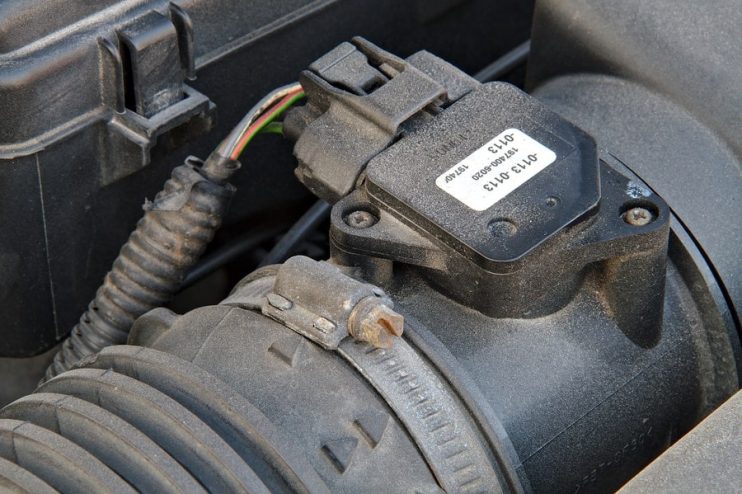
A performance cold air intake can pull in cooler, denser air from outside the engine bay. Cooler air contains more oxygen, and more oxygen gives the engine a better shot at making stronger combustion. The result is often improved throttle response and a modest horsepower gain.
This is one of the most common first upgrades because it is relatively affordable and can often be installed in about an hour. For a driver who wants a little more sound and a little more pull without tearing the truck apart, it makes sense.
Still, not every intake is equal. Some look good in photos and do very little in the real world. The best gains come from parts that actually improve airflow, not just parts with a flashy name.
Why Fueling Changes Matter
Air alone does not make power. The engine also needs fuel delivered at the right amount and the right time. When the fuel side of the equation improves, the engine can support more aggressive combustion and better output.
One way to do this is through a performance computer chip or ECU tune. This adjusts how the engine control unit manages fuel injection, ignition timing, and other parameters. A good tune can wake up a vehicle in a way that feels bigger than the hardware changes alone.
The tradeoff is simple. More fuel and more aggressive tuning can reduce fuel economy. That is the price of power. If you want the engine to perform harder, it will usually consume more fuel while doing it.
For many enthusiasts, that trade makes sense. They are not buying a 5.7 HEMI because they want to hypermile through traffic. They are buying it because they want real V8 pull when they need it.
Why Exhaust Flow Is So Important
Exhaust flow matters just as much as intake flow. If the engine cannot expel hot gases efficiently, it has a harder time making room for the next combustion cycle. That means reduced performance and a less responsive feel.
Upgrading the headers and exhaust system can help the engine breathe out more easily. Less restriction usually means better horsepower potential, especially when paired with intake and tuning changes. On the 5.7 HEMI, this can also make the engine sound deeper and more aggressive without sounding sloppy.
A good exhaust setup does more than make noise. It helps the engine work with less effort. That is why serious performance builds pay attention to the full path, from intake to combustion to exhaust exit.
Can You Turbo a 5.7 HEMI?
Yes, you can turbo a 5.7 HEMI. In fact, many owners do exactly that when they want a major jump in performance. A turbocharger forces more air into the engine, which allows the engine to burn more fuel and make more power.
For a 5.7 HEMI, adding an aftermarket turbocharger can increase horsepower by roughly 40 to 60 horsepower on a basic setup. Depending on how the system is built, tuned, and supported, the gains can go higher. The exact number depends on the full combination, not just the turbo itself.
Turbocharging sounds exciting, and it is. But it also adds heat, pressure, and complexity. If the fuel system, cooling system, and tune are not ready for it, problems show up fast. A turbo does not forgive sloppy planning.
If the build is done correctly, though, the results can be impressive. The engine feels much stronger in the midrange, and the extra pull at speed can make the vehicle feel like a different machine.
How Much Power Does a Supercharger Add?
If a turbo is one path to big power, a supercharger is the other. A supercharger can add serious horsepower to a 5.7 HEMI, often in the range of 125 to 160 horsepower. That is a substantial gain on an already powerful engine.
Superchargers deliver boost in a way that feels immediate. The power comes on hard and quickly, which is why many drivers love them. There is less waiting, less lag, and more of that old-school muscle car shove when the throttle goes down.
But there is a catch. The engine has to be ready for it, and the rest of the vehicle should be able to handle the extra output. More power means more stress on the transmission, tires, cooling system, and brakes. If those parts are not matched to the build, the extra horsepower can become a headache.
That is why a smart setup matters more than a wild one. Fast is fun. Fast and reliable is better.
5.7 HEMI Horsepower by Year
If you are shopping for one of these engines or trying to understand why one year feels stronger than another, it helps to look at the horsepower changes across the production run.
| Year Range | Horsepower | Notes |
|---|---|---|
| 2003 to 2008 | 345 hp | Early version of the 5.7 HEMI with strong torque and solid V8 character |
| 2009 to 2012 | 383 hp | Improved output with updates to efficiency and performance |
| 2013 to current | 395 hp | Highest stock output thanks to major engine revisions |
That progression tells a clear story. Chrysler kept refining the formula instead of abandoning it. Each revision brought a little more efficiency, a little more output, and a better overall driving feel.
What Owners Usually Notice First
People who drive a 5.7 HEMI usually notice three things right away. First, the engine has strong low-end torque. Second, it does not feel strained when loaded. Third, it sounds like it means business.
That matters in ordinary driving. Pulling onto a highway with a trailer behind you, passing slower traffic, or climbing a hill with passengers in the vehicle all reveal what the engine can do. The 5.7 HEMI does not need to be revved to the moon just to get moving.
There is a confidence that comes with that. It feels sturdy. It feels willing. And in a world of small turbo engines that can sometimes feel buzzy under load, that old-school V8 character still has a lot of fans.
How Long Can a 5.7 HEMI Last?
With proper care and maintenance, the 5.7 HEMI can run for up to 300,000 miles. That is a big reason it has earned such a loyal following. When maintained properly, it can stay dependable for a very long time.
Regular oil changes, good cooling system maintenance, attention to spark plugs, and prompt repairs go a long way. Skip those basics, and any engine will start to complain. Keep up with them, and the 5.7 HEMI has a strong chance of giving you many years of service.
In practical terms, longevity often comes down to how the vehicle was driven and maintained. A truck that spent its life towing hard with bad oil changes will tell a very different story than one that was serviced on schedule and treated with care.
Real-World Example: Stock vs. Modified
Imagine two drivers with the same 5.7 HEMI truck. One leaves it stock and uses it for commuting, occasional towing, and weekend errands. The other installs a cold air intake, gets a proper tune, upgrades the exhaust, and eventually adds forced induction.
The first truck still feels strong, dependable, and easy to live with. The second truck may feel much quicker, but it will also demand more attention. Fuel quality, maintenance, and supporting components become more important as power goes up.
That is the tradeoff with modified engines. More power is exciting, but it changes the ownership experience. Some people love that. Others just want a reliable truck with V8 muscle. Neither choice is wrong. The right choice depends on how you plan to use it.
Best Ways to Add Power Without Ruining Reliability
Not every owner wants a wild build. Plenty of people want more power without turning the vehicle into a full-time project. If that sounds like you, the safest path is usually the simplest one.
- Start with a quality cold air intake. It is affordable and can improve response.
- Use a proper ECU tune. This helps the engine take advantage of the hardware.
- Upgrade the exhaust in stages. Better flow can help without overcomplicating the setup.
- Keep the cooling system in good shape. Heat is the enemy of modified engines.
- Do not ignore the transmission. More power means more stress on the driveline.
That approach keeps the vehicle enjoyable instead of annoying. It also helps avoid the common mistake of chasing horsepower before the supporting parts are ready.
What About Fuel Economy?
The 5.7 HEMI is not famous for sipping fuel, and that should not surprise anyone. It is a full-size V8 with real power. If you want strong acceleration and towing ability, you usually give up some efficiency to get it.
Factory upgrades over the years helped improve fuel economy compared with older versions, but power still has a cost. Add tuning, turbocharging, or a supercharger, and fuel consumption typically climbs. More air and fuel equals more power, but also more demand from the tank.
For many owners, that is perfectly acceptable. They would rather have a truck or car that feels strong when needed than chase a few extra miles per gallon and give up the V8 experience.
Why the 5.7 HEMI Keeps Winning Fans
Some engines are admired for their engineering. Others are loved because they make ownership feel special. The 5.7 HEMI manages to do both. It has real mechanical personality, strong performance, and enough durability to make it a practical choice for a wide range of drivers.
It is also one of those engines that responds in a satisfying way to mods. You do not have to build it into a monster to enjoy it. Even stock, it feels muscular. With a few smart upgrades, it becomes something better. That is a huge part of its appeal.
In the end, this is not just about horsepower on paper. It is about how the engine feels when you use it. The 5.7 HEMI delivers a sense of force that remains easy to appreciate whether you are driving to work or hauling a trailer on the weekend.
Common Questions Drivers Ask Before Buying or Modifying
Is 395 horsepower enough?
For most drivers, yes. In a full-size car, truck, or SUV, 395 horsepower is plenty. It provides strong acceleration, comfortable highway passing power, and real towing capability without feeling underpowered.
Will a 5.7 HEMI handle mods well?
Yes, within reason. It responds well to intake, exhaust, and tuning upgrades. Once you move into turbo or supercharger territory, supporting parts and careful tuning become much more important.
Is the 5.7 HEMI better for torque or horsepower?
Both matter, but torque is part of what makes it feel so strong in normal driving. Horsepower helps at higher speeds, while torque gives the engine that punchy, confident launch from a stop.
Is the sound part of the appeal?
Absolutely. Many owners love the deep exhaust note just as much as the power itself. It gives the vehicle character, and that character is a big reason the engine has such a loyal following.
Should You Choose a 5.7 HEMI?
If you want a V8 that mixes strong horsepower, useful torque, and a proven track record, the 5.7 HEMI is still a smart choice. It is not the newest engine on the block, but that is not always a bad thing. Sometimes the best engine is the one that has already shown it can last.
For daily driving, towing, weekend fun, and straightforward performance upgrades, it has a lot going for it. You get a real engine with real character, not something that feels over-engineered just for a brochure.
And if you want more power later, the aftermarket support makes it even more appealing. That flexibility is one of the reasons the engine keeps showing up in conversations years after its original launch.
Final Thoughts on 5.7 HEMI Horsepower
The 5.7 HEMI remains one of the most respected V8 engines because it blends power, torque, sound, and everyday usability in a way that still feels relevant. Stock, it delivers 395 horsepower. With the right upgrades, it can climb far beyond that and reach serious performance territory.
What really sets it apart is the way it delivers power. It does not need to be exotic to be exciting. It just needs fuel, air, and a driver who knows what to do with it.
If you own one, keep it maintained and it will reward you. If you are thinking about buying one, now you know why so many drivers still talk about it with a grin. The next move is yours, and if you want more from it, start with a smart plan, not a random pile of parts.
Now ask yourself this: do you want a 5.7 HEMI that stays stock and dependable, or one tuned to make the kind of power that makes every on-ramp feel like a short drag strip?