
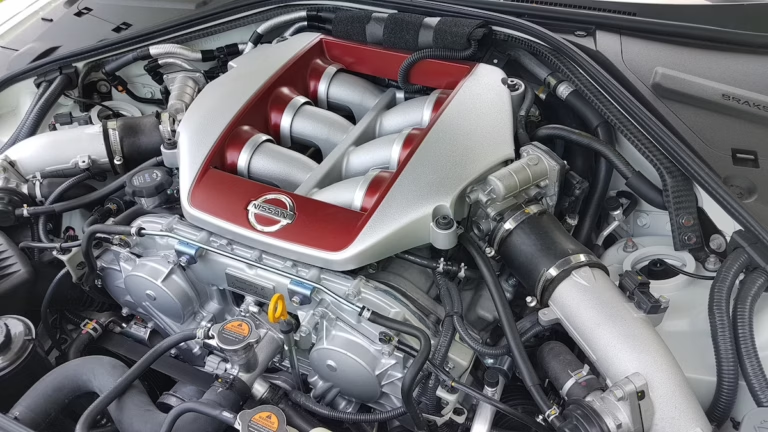
The popularity of V6 engines has climbed fast over the last few years, and it is easy to see why. They have a sweet mix of power, decent fuel economy, and the kind of reliability that keeps drivers from spending every weekend at the repair shop. For a lot of people, that balance matters more than chasing the biggest number on paper.
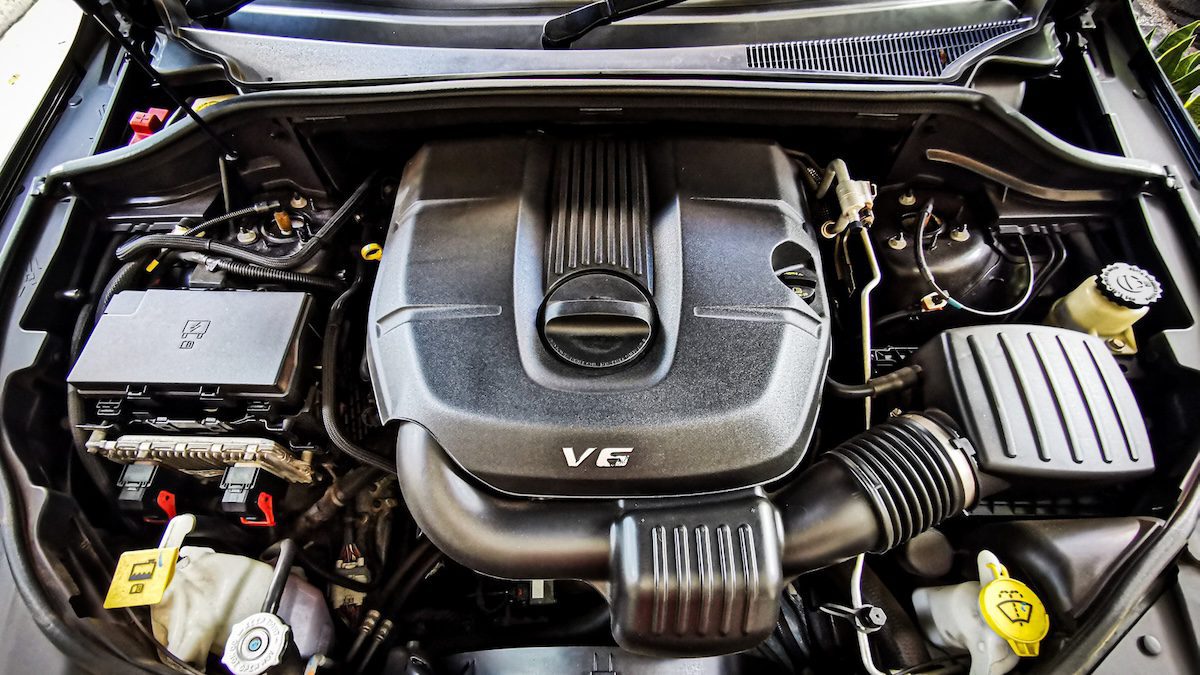
Car enthusiasts like V6 engines because they deliver a lively, satisfying drive without the bulk of a V8. They are also compact by design, which helps automakers fit them into all kinds of vehicles. As the name suggests, a V6 is a six-cylinder piston engine with the cylinders arranged in a V shape around a common crankshaft.
You will find them in sports cars, SUVs, family sedans, and performance-oriented trucks. Some are tuned for smooth everyday driving. Others are built to push hard when the pedal goes down. That range is what makes the V6 engine horsepower range such a useful topic for buyers, gearheads, and anyone comparing engines.
What Makes a V6 So Popular?
There is a reason V6 engines show up in so many different vehicles. They offer a strong middle ground. A four-cylinder can be efficient, sure, but it can also feel strained in heavier vehicles. A V8 brings a big grin, but it usually comes with more weight, more fuel use, and a higher price tag.
A V6 sits right in the center. It gives drivers more muscle than a typical four-cylinder and often better fuel economy than a V8. In the real world, that means easier highway merging, more confident passing, and enough power for towing or spirited driving without going overboard.
There is also the packaging advantage. Because a V6 is smaller than many larger engines, manufacturers can use it in vehicles where space is tight. That can improve weight distribution, handling, and even crash structure in some designs.
V6 Engine Horsepower Range Explained
Like any engine family, V6 engines come in different forms, so horsepower numbers vary a lot. The general V6 engine horsepower range falls between 215 and 500 horsepower in many production examples. Some tuned or high-performance versions go beyond that, but this range gives a realistic picture of what many drivers can expect.
For example, a 3.5L V6 can produce around 400 horsepower in a performance setup, while a 2.5L V6 may land closer to 250 horsepower. The difference is not magic. It comes down to how much air and fuel the engine can move, how it is tuned, and what kind of hardware supports it.

Horsepower is only part of the story, though. Torque matters too, especially if you care about low-end pull. A V6 with strong torque can feel quicker in everyday driving than a higher-horsepower engine that needs to rev harder before waking up.
| V6 Size / Setup | Typical Horsepower | Common Use |
|---|---|---|
| 2.5L V6 | 215 to 250 HP | Daily driving, mid-size sedans |
| 3.0L to 3.5L V6 | 300 to 424 HP | Performance sedans, SUVs, sports models |
| 3.5L twin-turbo V6 | 400 to 505 HP | High-performance cars and premium sports vehicles |
| Highly tuned V6 | 500+ HP | Track builds, supercar-level applications |
Why Some V6 Engines Make More Power Than Others
There are three big factors behind V6 output: engine displacement, tuning, and the V angle. Each one changes how much air and fuel the engine can process, how smoothly it runs, and how efficiently it turns combustion into power.
1. Engine displacement
Displacement is the total volume of the cylinders. A larger displacement usually means the engine can burn more air and fuel in each cycle. That often translates to more horsepower, especially when the engine is designed to breathe well and support higher output.
That is why a 3.5L V6 usually produces more power than a 2.5L version. Bigger does not automatically mean better, but it does give the engine more room to work with. Think of it like using a wider straw. More air and fuel can move through the system, and that can support stronger performance.
2. Tuning
Tuning can completely change how a V6 feels. The factory calibration is usually set up for emissions, durability, drivability, and fuel economy. Once you change the software and supporting parts, the engine can make noticeably more power.
That is why two engines with similar hardware can produce very different results. One may feel tame and smooth. The other may hit harder, rev quicker, and pull much stronger through the midrange.
3. The V angle
The V angle refers to the angle between the two cylinder banks. It affects balance, packaging, and sometimes how the engine delivers power. A good V angle helps the engine run smoothly and fit better in the vehicle. In some designs, it also supports better airflow and overall engine efficiency.
Low-Horsepower V6 Engines Still Have a Place
Not every V6 is built to chase big numbers. Some are tuned for smoothness, reliability, and usable everyday power. These engines often sit in the 215 to 250 horsepower range, and that can be more than enough for many drivers.
A good example is the Nissan Teana V6 petrol engine, which produces 215 horsepower. The Toyota Mark X 2.5L V6 engine generates about 217 horsepower. These are not headline-grabbing figures, but they are respectable for a comfortable daily driver.
In a commuter car, that kind of power is often the sweet spot. You get enough punch to merge safely, climb hills without drama, and overtake when needed. At the same time, the engine stays friendly at the gas pump.
High-Horsepower V6 Engines Are a Different Animal
Once a V6 climbs into the 3.0L to 3.8L range, especially with turbocharging, the story changes fast. These engines can make serious power, often between 400 and 500 horsepower, and some go higher still. At that point, the car no longer feels like a practical sedan with a decent engine. It starts acting like a performance machine.
Examples include the Maserati Levante S 3.0-liter twin-turbocharged V6, which produces 424 horsepower, and the Acura NSX 3.5 twin-turbocharged V6, which can produce 505 horsepower. These engines are built for speed, response, and a strong sense of urgency when the throttle opens.
In the real world, that kind of output changes how a vehicle behaves. Passing becomes effortless. Highway ramps feel shorter. And the engine does not need much encouragement to deliver a grin.

What Is the Highest Horsepower V6 Engine?
V6 engines are known for strong performance, solid reliability, and a compact shape that works in many kinds of vehicles. But even within the same engine family, power output can vary a lot. Some V6 engines are made for relaxed driving. Others are built to do damage on a straight stretch of road.
High-horsepower V6 engines are usually defined as those making more than 400 horsepower. Most of them are found in sports cars or high-performance SUVs, where quick acceleration matters. Some push close to 500 horsepower from the factory, while a few engineered or boosted setups can go even further.
One standout example is the Ford 3.5L EcoBoost V6 in the GT, which can produce 647 horsepower. That is serious output from a six-cylinder. Another heavy hitter is Nissan’s VR38DETT, a 3.8L V6 known for making around 480 horsepower in stock form and climbing much higher with tuning.
The Nissan GT-R built around this engine earned its reputation the hard way, with performance that embarrasses far more expensive cars. That is what happens when the engine, transmission, chassis, and tuning all work together the right way.
Top high-horsepower V6 engines
| Engine | Horsepower |
|---|---|
| Ford 3.5L EcoBoost (Second generation) | 647 |
| VR38DETT | 480 |
| Alfa Romeo 2.9L twin-turbocharged | 505 |
| Venturi 400 GT | 408 |
| Maserati Levante S turbocharged | 424 |
| Cadillac ATS-V Coupe | 464 |
| Acura NSX | 500 |
Why Turbocharged V6 Engines Hit Harder
Turbocharging is one of the biggest reasons modern V6 engines can make such impressive horsepower. A turbo forces more air into the engine than natural atmospheric pressure would allow. More air means more fuel can be burned, and more fuel burned means more power.
That is why turbo V6 engines often outperform older naturally aspirated ones of similar size. They are not just making power through displacement. They are using forced induction to squeeze much more out of the same engine size.
There is a tradeoff, of course. Turbocharged engines can be more complex. They need good cooling, proper oil maintenance, and careful tuning. But when they are done right, they deliver a strong blend of performance and efficiency that is hard to ignore.
How Much Horsepower Does Tuning Add to a V6?
One of the biggest reasons some V6 engines outperform others is tuning. Engine tuning refers to changes made to the ECU, or engine control unit, to raise output. In simple terms, the computer running the engine gets reprogrammed so the engine can make more power under the right conditions.
The amount of horsepower gained depends on the tuning stage. Some setups only change the software and a few supporting parts. Others go much deeper with fuel delivery, turbo upgrades, and internal engine work.
Here is a practical look at how the tuning stages usually break down.
| Tuning Stage | Common Modifications | Horsepower Gain | Typical Price |
|---|---|---|---|
| Stage 1 | Engine remapping, performance air filter, exhaust derestriction | 5 to 50 HP | $800 to $1,200 |
| Stage 2 | Engine remapping, de-cat pipe or sports catalyst, intercooler upgrade, stronger mounts, exhaust improvements | 25 to 200 HP | $1,300 to $2,000 |
| Stage 3 | Bigger fuel injectors, larger fuel pump, bigger turbocharger, upgraded engine internals | 100 to 350 HP | $4,000 to $6,000 |
| Dyno Tuning | Boost pressure adjustments, air-fuel ratio changes, upgraded plugs and filters | 40 to 100 HP | $400 to $700 |
Stage 1 tuning
Stage 1 is usually the easiest entry point. It often includes engine remapping, a performance air filter, and exhaust changes that help the engine breathe more freely. For many drivers, this is the first step that makes the car feel more eager without going deep into mechanical work.
The power gain can range from 5 to 50 horsepower. That may not sound dramatic, but in a daily driver, even a modest gain can sharpen throttle response and make the engine feel less lazy. The cost usually falls between $800 and $1,200 depending on the vehicle and location.
Stage 2 tuning
Stage 2 is where things start to get more serious. This level may include a better flowing catalytic converter, a more efficient intercooler, and exhaust changes that reduce restriction. Stronger mounts may also be added to help keep the drivetrain stable under extra load.
Power gains here can range from 25 to 200 horsepower, depending on the engine and supporting parts. Costs often sit between $1,300 and $2,000. If the car already has a turbocharged V6, this stage can produce a very noticeable jump in performance.
Stage 3 tuning
Stage 3 is not for the casual owner who wants a small bump and nothing more. This level often includes bigger fuel injectors, a larger fuel pump, a bigger turbocharger, and upgraded internals to handle the added stress. The engine is being asked to work far harder, so the supporting hardware has to keep up.
Horsepower gains can range from 100 to 350 horsepower. The price can run from $4,000 to $6,000 or more, depending on the car. At this point, the build starts looking more like a serious project than a simple modification.
Dyno tuning
Dyno tuning uses a dynamometer to measure and adjust the engine while it is running under load. It helps fine-tune the boost pressure, air-fuel ratio, plugs, and filters so the engine performs as well as possible. This step is often used after other upgrades are already in place.
Horsepower gains are usually around 40 to 100 horsepower, and the price tends to fall between $400 and $700. It is one of the smartest ways to make sure the car is not just stronger, but also smoother and safer under full throttle.
Can a V6 Engine Produce 500 Horsepower or More?
Yes, some stock V6 engines can absolutely produce more than 500 horsepower. This is not just a tuner fantasy or a race-only trick. Several factory engines are already built with that kind of output in mind.
Examples of stock V6 engines making more than 500 horsepower include the Ford 3.5L EcoBoost in its high-output form, the Acura NSX, and the Alfa Romeo 2.9L twin-turbocharged engine. These engines show how far the V6 platform has come.
Years ago, a V6 was often seen as the sensible choice, while the V8 got the glory. That line has blurred. Today, a well-designed V6 can deliver punchy acceleration, strong torque, and performance that surprises people who still think six cylinders are not enough.
Real-World Factors That Affect Horsepower
Horsepower numbers on a spec sheet are one thing. What a car actually feels like on the road can be a little different. Several real-world factors affect how a V6 performs once it is in a vehicle and not on a brochure.
- Vehicle weight: A lighter car will feel quicker with the same engine than a heavy SUV.
- Transmission: Gear ratios and shift speed can change how power reaches the wheels.
- Drivetrain loss: Some power is lost between the engine and the tires.
- Cooling system: A V6 that stays cool can maintain power better under load.
- Fuel quality: Lower-grade fuel can limit timing and reduce output.
Take two cars with the same 350-horsepower V6. Put one in a light coupe with a fast-shifting transmission and the other in a heavy SUV, and they will feel very different. The engine is only part of the story.
Is a V6 Better Than a Four-Cylinder or V8?
That depends on what you want. There is no one-size-fits-all answer here, and that is part of the fun. A four-cylinder is usually cheaper and more fuel-efficient. A V8 typically gives more traditional muscle-car character. A V6 tries to balance both sides.
If you want smooth power, decent efficiency, and a lighter engine than a V8, the V6 makes a lot of sense. If you want the most sound and brute force possible, a V8 may be more your style. If your priority is economy above all else, a four-cylinder probably wins.
For a lot of drivers, though, the V6 is the sweet spot. It gives enough performance to feel exciting without turning every fill-up into a small financial event.
Common V6 Applications You See Every Day
V6 engines are everywhere because they work well in so many roles. They are not limited to sports cars. In fact, you can find them in plenty of practical vehicles that most people drive every day.
- Sports cars: For quick acceleration and high-speed pull.
- Luxury sedans: For smooth, quiet power.
- SUVs: For towing, hauling, and confident merging.
- Pickup trucks: For balanced power and efficiency.
- Crossovers: For families who want extra strength without jumping to a V8.
That broad use is part of what keeps the V6 alive in the market. It is flexible. It can be calm or aggressive. It can be tuned for comfort or performance. Not many engine layouts can cover that many bases so well.
What Owners Should Know Before Modifying a V6
Modifying a V6 can be rewarding, but it is not something to rush. Extra power is fun, but the rest of the car has to be ready for it. Brakes, tires, transmission, cooling, and suspension all matter once output starts climbing.
A 50-horsepower gain on paper might sound modest, but if the engine is already near its safe limit, that extra load can create wear if supporting parts are ignored. The smartest builds are the ones that treat the whole car as a system, not just the engine alone.
- Start with maintenance. Fresh spark plugs, clean filters, and good oil matter more than many people think.
- Choose reputable parts. Cheap components can create expensive problems later.
- Think about cooling. Heat is one of the biggest enemies of performance.
- Match the tune to the hardware. Software and parts should work together.
- Do not ignore the drivetrain. More power can expose weak clutches, mounts, and transmissions.
Why the V6 Still Makes Sense in 2026
Even with electric vehicles and turbocharged four-cylinders gaining ground, the V6 still has a place. It delivers a familiar driving feel, strong power delivery, and a mechanical character that many drivers still prefer. There is something satisfying about a well-sorted V6 pulling hard through the gears.
For drivers who want an engine that is strong but not excessive, the V6 remains a smart choice. It can be efficient enough for commuting and powerful enough for a fun weekend drive. That combination is hard to beat.
And let us be honest, a lot of people still enjoy the sound and feel of a six-cylinder engine. It is not only about numbers. It is about how the vehicle responds when you ask it to move.
Signs You Are Dealing with a Strong V6
If you are shopping for a car or comparing engines, there are a few signs that usually point to a stronger V6 setup. These are not perfect rules, but they help you spot a performance-oriented engine quickly.
- Turbocharging or supercharging: Forced induction usually means more power potential.
- Larger displacement: A 3.0L to 3.8L V6 often has more output potential than a smaller one.
- Performance branding: Badges like EcoBoost, Twin Turbo, or NSX often hint at higher output.
- Upgraded cooling: Larger intercoolers and extra cooling hardware point to serious performance intent.
- Sport-tuned transmission: The engine is often paired with a gearbox that can handle the extra power.
Why Horsepower Alone Does Not Tell the Whole Story
It is easy to get caught up in horsepower numbers. They are simple, visible, and easy to compare. But the way an engine delivers that power matters just as much, if not more.
A V6 with 350 horsepower and strong low-end torque can feel more useful than a peaky 400-horsepower setup that needs high revs to wake up. That is why some drivers love turbo V6 engines. They hit hard in the midrange, which is exactly where everyday driving happens.
So, when looking at the V6 engine horsepower range, think beyond the headline number. Consider how the engine feels in traffic, on the highway, and during acceleration. That is where the real character shows up.
Which V6 Horsepower Range Fits You Best?
The best V6 for you depends on how you drive. If your car is mostly for commuting and family use, a 215 to 250 horsepower V6 may be more than enough. It gives you decent passing power without pushing fuel costs too high.
If you want a more exciting daily driver, a V6 in the 300 to 400 horsepower range can be a perfect match. That level feels quick without becoming hard to live with. It is the kind of power that makes ordinary drives more enjoyable.
If you are chasing serious speed, then the 400 to 500-plus horsepower range is where the fun gets wild. At that point, the engine is built for performance first, and everything else comes second. Just be ready for the maintenance and the costs that usually follow.
Final Thoughts on the V6 Engine Horsepower Range
The V6 engine has earned its place because it does a lot of things well. It can be efficient. It can be smooth. It can also be brutally fast when the design and tuning are right. That kind of flexibility is exactly why the V6 engine horsepower range is so broad and so interesting.
From modest 215-horsepower daily drivers to 647-horsepower monsters, the V6 has proved it can handle just about anything the auto world throws at it. Some versions are built for comfort, some for balance, and some for straight-up speed. There is no shortage of personality in this engine family.
If you are choosing between engines, pay attention to how the car will actually be used. The right V6 can give you the power you want without making daily driving a chore. And if you are serious about more performance, the V6 still has plenty of room to grow. The question is not whether a V6 can deliver. The question is how much power you really want under your right foot.