
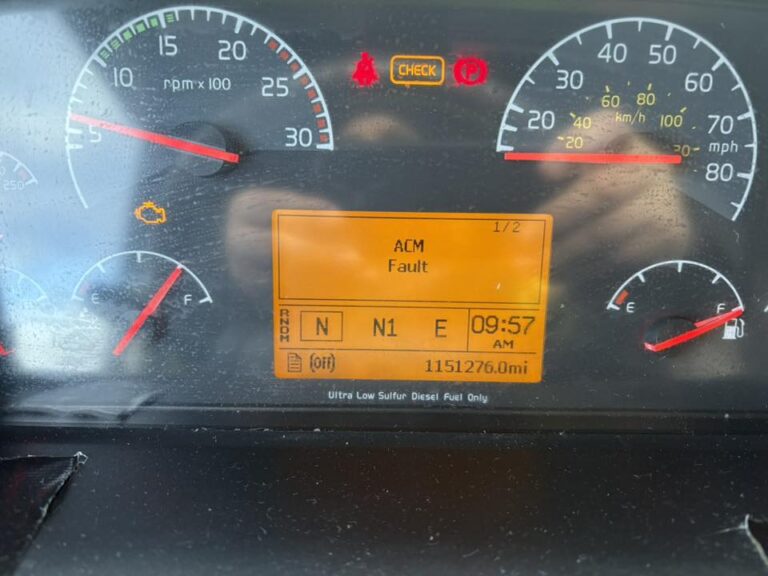
You’re driving your Volvo, everything feels fine, and then out of nowhere, a message pops up on your diagnostic screen: ACM Fault. Most drivers freeze up when they see this. What does it mean? Is it safe to keep driving? How bad is it?
Here’s the short answer: it depends on the cause. And that’s exactly what this guide is going to walk you through. We’ll cover what the ACM fault actually means, what triggers it, how to diagnose it properly, and what you can do to fix it before it puts your engine into a derate or leaves you stranded on the side of the road.
Let’s get into it.
What Is the Volvo ACM Fault and Why Should You Take It Seriously?
The ACM stands for Aftertreatment Control Module. Think of it as the brain behind your vehicle’s emission control system. It monitors and manages everything involved in cleaning up the exhaust gases that come out of your diesel engine. When something goes wrong anywhere in that system, or in the components it communicates with, the ACM logs a fault and sends a message to your dashboard.
That message is what you see as the Volvo ACM Fault.
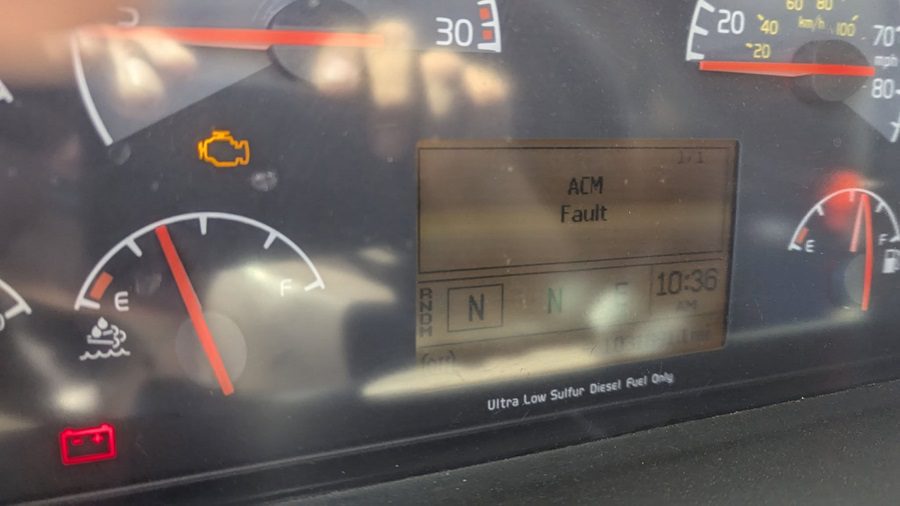
Now, it is easy to assume this is just a minor warning you can ignore for a few days. But here’s what actually happens when you do that. The ACM fault often comes with a timer. Depending on the specific error code behind the fault, your engine will eventually go into what is called an engine derate. That means your engine power gets deliberately reduced by the system, and your vehicle speed can drop to as low as 5 mph. If you’re hauling freight on a highway, that’s a nightmare scenario.
The first thing you should do when you see the ACM fault message is check your dashboard for additional warning lights. Is the check engine light on? Are you having trouble starting the vehicle? Any extra symptoms will help narrow down what’s going on under the hood.
You can still drive for a short period after the fault appears. But driving through it without addressing the root cause puts you at serious risk of engine damage and unexpected breakdowns. Treat it like a check engine light that actually has a countdown attached to it.
Understanding How the Aftertreatment System Works
Before we get into the specific causes, it helps to understand what the aftertreatment system actually does. Modern Volvo diesel trucks and vehicles are required to meet strict emissions standards. To do that, they use a combination of systems working together.
Here is a simplified breakdown of the key components the ACM oversees:
- Diesel Particulate Filter (DPF): Traps soot and particulate matter from the exhaust. It needs to be cleaned out periodically through a process called regeneration.
- Selective Catalytic Reduction (SCR) System: Uses Diesel Exhaust Fluid (DEF) to convert harmful nitrogen oxides (NOx) into harmless nitrogen and water vapor.
- DEF Dosing System: Injects the right amount of DEF into the exhaust stream at the right time. The ACM controls this precisely.
- Diesel Oxidation Catalyst (DOC): Converts carbon monoxide and unburned hydrocarbons into carbon dioxide and water.
- NOx Sensors: Measure the nitrogen oxide levels before and after the SCR system to verify that the system is working correctly.
- Exhaust Temperature Sensors: Monitor the temperature at multiple points in the exhaust system to protect components and optimize performance.
The ACM pulls data from all of these sensors and components constantly. If any reading falls outside of acceptable parameters, it logs a fault code and triggers that ACM Fault message on your dashboard. That’s why there isn’t just one single cause for this warning. It can point to a dozen different problems.
What Actually Causes the Volvo ACM Fault?
This is where most guides get vague. They list a few causes and move on. But as a mechanic, I want to give you the real picture. There are several distinct categories of problems that trigger this fault, and each one has different symptoms and fixes.
1. Outdated or Corrupted ACM Software
This one catches a lot of people off guard because they never think of their truck as running software. But it does. The ACM runs firmware, just like your smartphone runs an operating system. And just like your phone, if that software gets outdated or corrupted, things start going wrong.
An outdated ACM firmware version may not correctly interpret sensor data. It can misread perfectly normal readings as faults, or it can fail to properly manage the DEF dosing and DPF regeneration cycles. The result is random or frequent ACM fault messages that don’t seem tied to any obvious physical problem.
Outdated software is also more vulnerable to bugs and glitches. Volvo regularly releases firmware updates for their ACM systems specifically to address known issues. If you haven’t had your ACM updated in a while, that could be the first place to look.
The fix here is straightforward: update or reprogram the ACM software to the latest version through an authorized Volvo dealership or a qualified workshop with the right diagnostic tools.
2. Faulty Wiring or Loose Connections
This is one of the most common causes, especially in trucks that have seen heavy use or rough road conditions. The ACM does not operate in isolation. It communicates constantly with sensors, control units, and other modules throughout the vehicle. That communication happens through a network of wires and connectors.
When one of those wires becomes frayed, corroded, pinched, or simply disconnects from its terminal, the ACM loses its data feed from whatever component that wire was connected to. The result is a fault code.
A very specific example of this is the ACM main power wire on the battery. If this wire dislodges from its fuse holder, even slightly, you can get an ACM fault with no other obvious symptoms. The engine might still start. Everything might seem fine. But the ACM is logging a communication error in the background.
Wiring problems can be tricky to find without a proper inspection. Vibration from the road causes connectors to work themselves loose over thousands of miles. Rodents chewing through insulation is more common than you think. And heat from the engine bay can cause wire insulation to crack and deteriorate over time.
3. Physical damage to the ACM Itself
The control module itself is a physical component. It can wear out, overheat, or suffer damage from moisture, corrosion, or road debris. If the ACM’s internal circuitry develops a fault, it cannot accurately manage the aftertreatment system, and it will generate fault codes as a result.
Physical damage to the ACM is sometimes visible on inspection. You might see burn marks, corrosion on the connector pins, or moisture damage inside the module housing. Other times, the damage is internal and can only be confirmed after replacing the unit and checking whether the faults clear.
If your Volvo has been through extremely harsh weather or has been driven in flooding conditions, moisture intrusion into the ACM is a real possibility. This kind of damage tends to cause intermittent faults that come and go, which makes diagnosis frustrating if you don’t know what to look for.
4. Contaminated Diesel Exhaust Fluid (DEF)
DEF is not just any fluid. It’s a precise mixture of 32.5% urea and 67.5% deionized water. That ratio matters. If you accidentally put the wrong fluid in the DEF tank, dilute it with regular water, or use DEF that has been stored improperly and degraded, the SCR system stops working as it should.
The ACM monitors DEF quality through a dedicated sensor. When it detects that the fluid is not up to spec, it logs a fault. And depending on how far out of spec the DEF is, the consequences can range from reduced system efficiency to full engine derate.
Contaminated DEF can also foul up the DEF dosing injector and the SCR catalyst. In severe cases, you’re looking at expensive component replacement, not just a fluid change. This is why using the correct, high-quality DEF and storing it properly matters a lot.
DEF has a shelf life. It degrades faster in extreme heat or cold. If you’ve been using fluid that’s been sitting in a hot storage room or a freezing garage for months, it may have already broken down to a concentration that the ACM won’t accept.
5. Damage from an Accident

If your vehicle has been in a collision, even a relatively minor one, the impact can cause hidden damage to modules and connectors throughout the vehicle. The ACM and its associated wiring are not immune to this. Sometimes the physical damage is obvious. Other times, a connector got pushed slightly off its seat or a bracket protecting a wire harness got bent, putting stress on the wiring inside.
Post-accident ACM faults can be particularly tricky because you might not immediately associate the warning message with the accident, especially if the fault shows up days or weeks later. But the connection is often there. If you’ve had any recent collision and are now seeing an ACM fault, start your inspection around the areas of impact.
6. Failing or Miscalibrated NOx Sensors
The NOx sensors are a frequent culprit behind ACM faults on Volvo diesel trucks. There are typically two of them. One sits upstream of the SCR catalyst and one downstream. They work together to tell the ACM whether the SCR system is effectively converting nitrogen oxides.
If either sensor starts reading inaccurately, or fails completely, the ACM cannot verify the system is working. It will flag a fault and may trigger a derate to protect the system from running out of compliance.
NOx sensors can fail due to age, heat exposure, or contamination. They are also sensitive to DEF quality issues. If contaminated DEF has been used, the sensors can get coated and start reading incorrectly even after the DEF is replaced.
7. DPF Blockage or Regeneration Failure
The Diesel Particulate Filter captures soot with every mile you drive. Periodically, the ACM initiates a regeneration cycle to burn off that accumulated soot and clean the filter. This is a normal, automatic process.
But if the truck is consistently used for short trips at low speeds, the exhaust temperatures never get high enough to complete regeneration. Soot builds up. The DPF gets clogged. And the ACM flags a fault.
A partially blocked DPF causes increased exhaust backpressure, reduced engine efficiency, higher fuel consumption, and eventually, if left untreated, can cause serious engine and turbocharger damage. The ACM fault in this case is actually doing you a favor by warning you early before things get really expensive.
8. Battery or Charging System Issues
This one is less obvious but worth mentioning. The ACM requires a stable power supply to function correctly. If the battery voltage is dropping below the required threshold, or if the alternator is not charging consistently, the ACM can experience power fluctuations that cause it to log false fault codes.
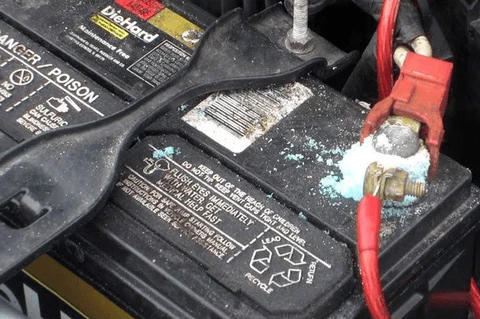
Corrosion on the battery terminals is a very common culprit. The corrosion creates resistance in the connection, which leads to voltage drops under load. The ACM sees these drops as faults. Clean the battery terminals thoroughly and test the charging system output before assuming you have a deeper problem.
Common ACM Fault Codes on Volvo Trucks and What They Mean
Not all ACM faults are the same. Each one has a specific fault code behind it that points to the exact problem. Here’s a reference table of some of the most commonly seen ACM-related fault codes on Volvo trucks:
| Fault Code | Description | Likely Cause |
|---|---|---|
| ACM 3216 | DEF quality poor | Contaminated or degraded DEF fluid |
| ACM 3031 | SCR catalyst efficiency below threshold | Failing SCR catalyst or NOx sensor issue |
| ACM 3226 | DEF level low | DEF tank nearly empty |
| ACM 1569 | Engine protection torque derate | Aftertreatment system fault triggering derate |
| ACM 3251 | DPF differential pressure high | Clogged or blocked DPF |
| ACM 4364 | NOx sensor upstream circuit failure | Faulty upstream NOx sensor |
| ACM 3361 | Exhaust temperature sensor out of range | Failing exhaust temperature sensor |
| ACM 3246 | DEF dosing valve circuit failure | Faulty DEF injector or wiring issue |
This is not an exhaustive list. Volvo’s ACM system can generate dozens of unique fault codes. The table above just gives you a starting point so you know the kind of specificity a diagnostic scan will return. Without reading the actual code, you’re just guessing at the cause.
How to Properly Diagnose a Volvo ACM Fault
Diagnosis is not optional here. You cannot fix an ACM fault by guessing. The steps below are what a professional would follow, and they’re what you should follow too if you want to actually solve the problem rather than just clear the code and hope for the best.
Step 1: Read the Fault Codes
Connect a compatible diagnostic scanner to the truck’s OBD-II port. For Volvo trucks specifically, a scanner that can communicate with Volvo’s proprietary modules is ideal. The Volvo Impact or VCADS Pro software gives you the deepest access, but there are also third-party scanners that work reasonably well.
Navigate to the aftertreatment section of the diagnostic menu. Read all active and stored fault codes. Write them down. Do not just clear them. Clearing codes without reading them first is one of the most common mistakes DIY mechanics make, and it erases valuable diagnostic information.
Look at the freeze frame data if it’s available. This tells you the operating conditions at the exact moment the fault was logged, which can help identify what triggered it.
Step 2: Check for Additional Warning Lights and Symptoms
While you have the scanner connected, look at what other warning lights are active on the dash. Is the MIL (Malfunction Indicator Lamp) on? Are there any transmission faults, brake system faults, or engine fault codes showing alongside the ACM fault? Multiple simultaneous faults often point toward a shared root cause, such as a wiring or power supply issue.
Also pay attention to how the truck is behaving. Is it harder to start? Is there reduced power already? Do you smell anything unusual from the exhaust? Is the exhaust smoke a different color than normal? These physical symptoms give you context that the fault codes alone don’t always provide.
Step 3: Inspect the ACM and Its Wiring
Locate the ACM on your Volvo. Depending on the model and year, it’s typically mounted in the engine bay or along the frame rail. Once you find it, look for the following:
- Visible physical damage to the module housing
- Corrosion on the connector pins
- Moisture inside the connector or module
- Wiring that looks burned, frayed, chewed, or pinched
- Connectors that feel loose or that don’t click firmly into place
Gently wiggle the wiring harness connectors at the ACM while the ignition is on. If the fault code clears or changes while you’re wiggling, you’ve found a wiring or connection issue. That’s actually a good sign because wiring repairs are typically cheaper than replacing the module itself.
Step 4: Check the Battery and Ground Connections
Test the battery voltage with a multimeter. A fully charged battery should read around 12.6 volts with the engine off. Start the engine and check again. With the engine running, you should see between 13.8 and 14.4 volts if the charging system is working properly.
Check the battery terminals for corrosion. Even a thin layer of white or greenish buildup can cause enough resistance to cause intermittent ACM faults. Clean the terminals with a wire brush and a baking soda solution, then reconnect them firmly.
Also check the ground straps. A bad ground connection between the engine block and the chassis can cause all kinds of electronic gremlins, including ACM faults. These are easy to overlook but critical to check.
Step 5: Inspect the DEF System
Check the DEF tank level first. A low DEF level is one of the simplest causes of an ACM fault and one of the easiest to fix. Just fill it up with the correct DEF fluid.
If the level is fine, check the DEF quality sensor reading on your diagnostic scanner. If it’s flagging poor quality, drain the DEF tank completely and refill it with fresh, certified fluid. You should also inspect the DEF dosing injector (sometimes called the SCR dosser injector) for crystallized deposits. DEF can crystallize around the injector tip over time, partially blocking it. Cleaning it off is usually enough to restore normal function.
How to Fix the Volvo ACM Fault: Step-by-Step Solutions
Once you’ve diagnosed the cause, here is how to actually fix it. Not every fix applies to every situation. Match the repair to the fault code and the inspection findings.
Fix 1: Update or Reprogram the ACM Software
If the fault is traced to outdated or corrupted firmware, a software update is the solution. This is not something you can do at home with a basic scanner. It requires Volvo-specific reprogramming tools and access to Volvo’s software database.
Take the truck to an authorized Volvo dealer or a truck repair shop that has the VCADS Pro or Volvo Premium Tech Tool (PTT) software. The technician will connect to the vehicle, check the current ACM software version, and update it to the latest release. This process usually takes an hour or two and is not terribly expensive unless other work is needed alongside it.
After the update, the technician should perform a parameter reset to make sure the ACM adapts correctly to the new software version. Skipping this step can lead to continued faults even after the update.
Fix 2: Repair or Replace Damaged Wiring
For minor wiring issues like a slightly loose connector or a terminal that’s just barely making contact, you can sometimes resolve the problem by reseating the connector firmly and making sure it clicks into place. But if the wire insulation is cracked, the wire is broken internally, or there’s significant corrosion on the terminals, you need a proper repair.
Volvo wiring repairs should be done with the correct wire gauge and the right type of tape or conduit to protect the repair from heat and moisture. Volvo-specific wiring tape runs about $25 per roll, which sounds expensive for tape, but it’s worth it. The wrong tape will fail in the heat of the engine bay and leave you right back where you started.
For major wiring harness damage, replacement of the harness section is often more practical than attempting to repair dozens of individual wires. A wiring harness for a specific section of the truck might cost a few hundred dollars, but it’s a cleaner fix that will last longer.
Fix 3: Replace Blown Fuses
If an inspection of the fuse box reveals blown fuses in the circuits related to the ACM or aftertreatment system, replace them. Fuses are cheap. But before you do, understand that a fuse blows for a reason. It’s protecting the circuit from overcurrent. If the new fuse blows immediately, there’s a short circuit somewhere in the wiring that needs to be found and fixed first. Do not install a higher-rated fuse to “fix” a blowing fuse. That’s a fire hazard.
Fix 4: Clean or Replace the DEF Dosing Injector
The DEF dosing injector can get fouled with crystallized urea deposits over time. When this happens, the injector doesn’t dose the correct amount of DEF into the exhaust stream, and the SCR system’s efficiency drops. The ACM catches this and logs a fault.
To clean the injector, remove it from the exhaust pipe and soak the tip in warm water. Urea is water-soluble, so the deposits will dissolve given a little time. Use a soft brush to clean any remaining residue. Reinstall and test.
If the injector is damaged, leaking, or the electrical connector is corroded beyond cleaning, replacement is the better option. A new DEF dosing injector for a Volvo truck typically runs between $150 and $400 depending on the model.
Fix 5: Replace Faulty NOx Sensors
If diagnostic scanning confirms a failed or out-of-range NOx sensor, replacement is the fix. NOx sensors on Volvo trucks are plug-and-play components, meaning no reprogramming is required after replacement in most cases. That said, it’s worth confirming with your dealer or shop whether a reset or calibration is needed for your specific model year.
NOx sensors can run anywhere from $200 to $500 per sensor at the parts counter. Labor to replace them is usually an hour or less per sensor. If you’re replacing one, it’s worth having the other one checked too. If one has failed from age or contamination, the other is usually not far behind.
Fix 6: Perform a Forced DPF Regeneration
If the ACM fault is related to DPF soot loading, you have two options. The first is a stationary regeneration, which you can initiate through the dash controls or through a diagnostic scanner. This runs the engine at elevated temperatures to burn off the soot while the truck is parked. It takes about 30 to 45 minutes and requires the truck to be in a safe, ventilated area because a lot of heat comes out of the exhaust during the process.
The second option is a highway drive at sustained speeds, which allows the exhaust system to reach the temperatures needed for passive regeneration. This works better for mild soot loading. For a heavily clogged DPF, a forced stationary regen is more effective.
If the DPF is so clogged that regeneration cannot clean it, the filter will need to be removed and cleaned professionally, or replaced entirely. A DPF cleaning service typically costs between $300 and $600. A new DPF can cost $1,500 to $3,000 or more depending on the model.
Fix 7: Replace the ACM If It’s Internally Damaged
If every other possible cause has been ruled out and the ACM itself is found to be faulty, replacement is the last resort. A new ACM from Volvo is not cheap. Expect to pay anywhere from $1,000 to $3,000 for the part alone, and then there’s labor and programming on top of that.
Remanufactured ACM units are available at lower cost from reputable suppliers and can be a good option if you’re trying to manage repair costs. Just make sure you’re buying from a supplier with a solid warranty and a track record with Volvo-specific modules.
After any ACM replacement, the module will need to be programmed with the correct parameters for your specific truck. This is not optional. An unprogrammed or incorrectly programmed ACM will generate fault codes from day one.

What Happens If You Ignore the Volvo ACM Fault?
Let’s be straight about this. Ignoring the ACM fault is not a viable long-term strategy. Some drivers see the fault message, notice the truck is still running fine, and decide to deal with it later. That logic works right up until it doesn’t.
Here’s what typically happens when an ACM fault is left unaddressed:
- First warning stage: The ACM fault message appears. The truck runs normally. You have time to get it diagnosed.
- Second warning stage: The system starts counting down toward a derate. You may see additional warning messages. Engine performance may start to feel slightly off.
- Engine derate: Power is reduced. The truck may be limited to 5 mph or a specific RPM range. At this point, you’re not making your delivery on time.
- Engine shutdown: In severe cases, the system can shut down the engine entirely as a protection measure. Now you’re not moving at all.
- Secondary damage: If the underlying cause was something like a clogged DPF, continued operation during a fault can cause backpressure damage to the turbocharger, increased oil contamination, and accelerated engine wear.
The repair cost at stage one is almost always significantly less than the repair cost at stage four or five. Getting it checked early is not just smart maintenance. It’s financial common sense.
How to Prevent Volvo ACM Faults From Coming Back
Once you’ve dealt with an ACM fault, you obviously don’t want to be back in the same situation a few months later. Here are the habits and maintenance practices that will significantly reduce the chances of a repeat:
Use Only High-Quality, Certified DEF
This cannot be overstated. Always use DEF that meets the ISO 22241 standard. Buy it from reputable suppliers. Check the expiration date. Store it in a cool, shaded location away from direct sunlight and temperature extremes. Do not use containers that have previously held other fluids. Even trace amounts of contamination can affect DEF quality.
Stay on Top of DPF Maintenance
Know the DPF service interval for your specific Volvo model. In most heavy-duty applications, the DPF should be professionally cleaned every 200,000 to 300,000 miles, or sooner if the truck is used for mostly short-haul, low-speed work. Don’t wait for a fault code to tell you the filter needs attention.
Keep the ACM Software Current
When your truck goes in for routine service, ask the shop to check whether the ACM software is current. Volvo releases firmware updates periodically. Staying current reduces the risk of software-related faults and ensures your system is managing emissions as efficiently as possible.
Inspect Wiring During Preventive Maintenance
Make wiring inspection part of your regular PM checklist. Look at the connectors around the ACM, the NOx sensors, and the DEF system every time the truck goes in for service. Catching a fraying wire or a corroded connector before it causes a fault is a lot cheaper than dealing with an unexpected breakdown.
Don’t Ignore Small Faults
If a fault code appears and then clears itself, don’t assume the problem went away. Intermittent faults often precede consistent faults. The stored fault code is still in the system’s memory even if the warning light went off. Have it read and addressed before it becomes a bigger issue.
Check Battery Health Regularly
Have the battery load-tested at least once a year, especially before winter. A weak battery causes all kinds of electronic problems on modern trucks, and ACM faults are one of them. Battery replacement is cheap compared to the diagnostic time spent chasing faults caused by marginal battery voltage.
Volvo ACM Fault vs. Similar Fault Codes: How to Tell the Difference
One thing that confuses a lot of drivers and even some mechanics is distinguishing between the ACM fault and other fault codes that can appear at the same time or look similar. Here’s a quick reference:
| Fault Type | Module Involved | What It Indicates |
|---|---|---|
| ACM Fault | Aftertreatment Control Module | Problem in emission control system or ACM communication |
| ECM Fault | Engine Control Module | Problem with engine management (fuel, air, timing) |
| TCM Fault | Transmission Control Module | Problem with transmission shifting or communication |
| SCR Fault | Selective Catalytic Reduction | DEF system issue, NOx conversion efficiency problem |
| DPF Fault | Diesel Particulate Filter | Soot loading too high, regeneration failure |
| SPN/FMI Code | Various modules | Specific parameter fault within a particular system |
When multiple faults appear together, it usually points to one underlying problem affecting multiple systems. A failing battery, for example, can simultaneously trigger ACM, ECM, and TCM faults. That’s why reading all the codes at once and looking for patterns is so important in diagnosis.
When to Handle It Yourself and When to Call a Professional
Not every ACM fault requires a trip to the dealer. Some things you can absolutely handle on your own:
- Refilling a low DEF tank
- Cleaning battery terminals
- Checking and reseating loose wiring connectors
- Replacing a blown fuse
- Initiating a parked DPF regeneration through the dash controls
But there are situations where you need a qualified technician with the right tools:
- ACM software programming or reprogramming
- NOx sensor replacement with recalibration
- ACM module replacement
- Complex wiring harness repairs
- DPF removal and professional cleaning
- Any fault code you cannot identify or cannot clear after basic repairs
Trying to DIY an ACM software update without the proper tools can brick the module and turn a $500 repair into a $3,000 module replacement. Know your limits, and don’t be afraid to hand it off to someone with the right equipment.
The ACM fault on your Volvo is not something to gamble with. The engine derate is real, the countdown is real, and the repair costs only go up the longer you wait. Get it scanned, identify the exact fault code, and address it. Every mile you drive past that warning is a mile closer to being stuck on the side of the road with a truck that won’t move faster than walking speed. Don’t let that be you.
Reference: NHTSA Technical Service Bulletin – MC-10180438-0001