
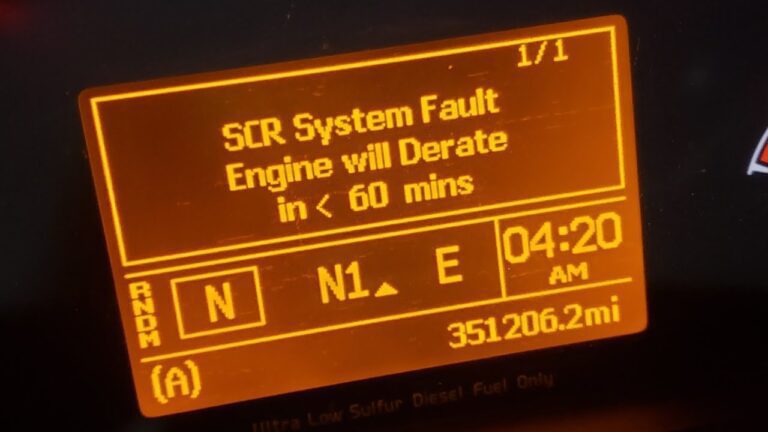
If you drive a Volvo diesel truck and your dashboard is showing an SCR system fault warning, that is not something to acknowledge and then forget about until your next service. This warning is telling you that the emission control system on your truck is either struggling or has stopped working altogether. And the longer you ignore it, the more serious the consequences get, right down to the engine being electronically limited in what it can do.
This guide is going to walk you through exactly what the SCR system is, why it faults, and how to fix each cause properly. No unnecessary jargon, no vague advice. Just clear, practical information you can actually use.
What Is the Volvo SCR System and Why Does It Matter?
SCR stands for Selective Catalytic Reduction. It is an emission control technology built into Volvo diesel trucks specifically to reduce the amount of harmful nitrogen oxides (NOx) that the engine releases into the atmosphere. Diesel engines are powerful and efficient, but they naturally produce high levels of NOx as a byproduct of combustion. Left unchecked, that is both an environmental problem and a legal one.
Here is how the system works in simple terms. The SCR system uses a liquid called Diesel exhaust Fluid (DEF), sometimes referred to as AdBlue in European markets, which is injected into the exhaust stream before the gases exit through the tailpipe. When DEF meets the hot exhaust gases, a chemical reaction occurs that converts the harmful nitrogen oxides into nitrogen and water vapor, which are both harmless. The result is dramatically cleaner exhaust emissions.
But the SCR system does more than just keep emissions clean. It also contributes to better fuel economy and improved engine output by allowing the engine to operate more efficiently without having to manage emissions purely through internal combustion tuning. When the SCR system is working well, the whole powertrain benefits.
When it is not working, the engine management system knows. And it will not just let you carry on as if nothing is wrong.
What Happens When the SCR System Fault Warning Comes On?
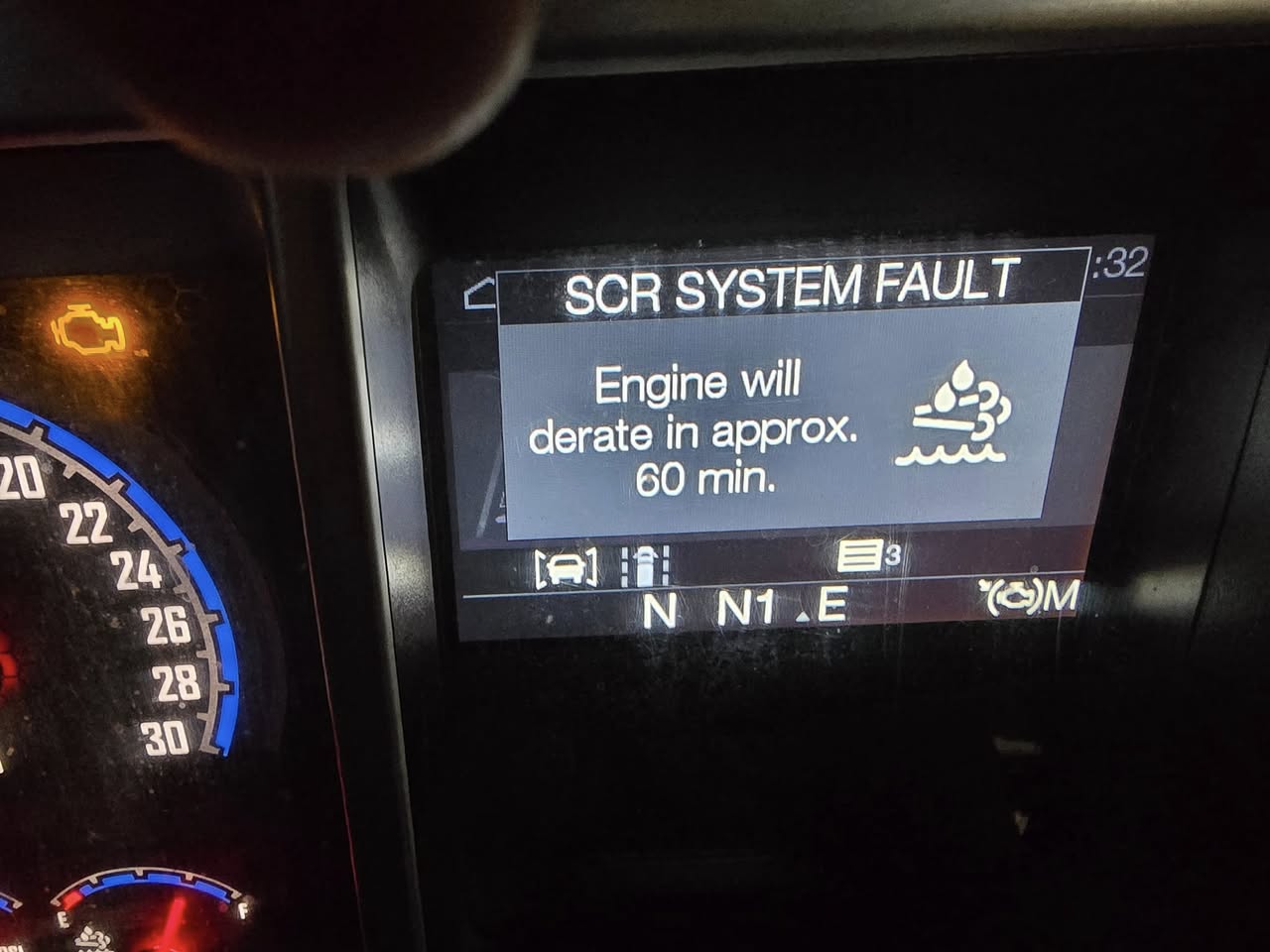
The “SCR System Fault” message appearing on your Volvo’s display means the system has detected something wrong with one or more components involved in exhaust treatment. The warning can range in severity depending on what triggered it. In mild cases, it might just be a low DEF level that needs topping up. In more serious cases, a component has failed and the system has partially or completely stopped functioning.
Here is the part that gets people’s attention. Volvo trucks are programmed to derate the engine if the SCR fault is not resolved within a certain window. Engine derate means the truck’s computer deliberately limits engine power and sometimes speed to force the issue to be addressed. You might find the truck will not go above a certain speed, or that acceleration becomes sluggish and restricted. That is the truck enforcing compliance with emission regulations by making it very inconvenient to keep driving without fixing the problem.
In other words, this is not a warning you can quietly live with. It will affect your operations if ignored.
The Components That Make Up the SCR System
Understanding what is inside the SCR system helps you understand why it can fail in different ways. This is not a single part that either works or does not. It is a multi-component system, and any one of those components can be the source of the fault.
| Component | Function |
|---|---|
| DEF (Diesel Exhaust Fluid) Tank | Stores the AdBlue/DEF fluid used in the reduction process |
| DEF Dosing Injector | Injects measured amounts of DEF into the exhaust stream |
| SCR Catalyst | Where the chemical reaction between DEF and NOx takes place |
| Diesel Particulate Filter (DPF) | Traps soot and particulate matter from diesel combustion |
| Diesel Oxidation Catalyst (DOC) | Oxidizes unburned fuel and carbon monoxide in the exhaust |
| Exhaust Gas Temperature (EGT) Sensor | Monitors exhaust temperature to ensure optimal SCR function |
| NOx Sensors | Measure NOx levels before and after the SCR catalyst |
| DEF Quality Sensor | Checks the concentration and quality of the DEF fluid |
| Engine Control Module (ECM) | Manages and monitors the entire emission control system |
A fault in any one of these components can trigger the SCR system fault warning. That is why proper diagnosis matters so much before you start replacing parts.
5 Common Causes of the Volvo SCR System Fault Warning
1. Low DEF Fluid Level
This is the most straightforward and most common cause of the SCR system fault warning. DEF is a consumable fluid. It gets used up as the truck runs, and it needs to be topped up regularly just like engine oil or coolant. If the level drops too low, the system cannot inject enough DEF into the exhaust stream to carry out the reduction process.
Low DEF does not always happen because of neglect. Sometimes a slow leak in the DEF tank, a line, or a fitting causes the fluid to drop faster than expected without the driver noticing until the warning appears. Either way, the result is the same: the SCR system cannot function properly, and the warning comes on.
When DEF is critically low, you will often see other accompanying signs beyond just the SCR fault message:
- A dedicated DEF level warning light or gauge reading
- A check engine light appearing alongside the SCR message
- Noticeably reduced fuel efficiency
- Engine derate beginning to take effect if the level is critically low
2. Failing SCR System Components
The individual components within the SCR system have service lives. The DPF, for example, accumulates soot over time and requires periodic regeneration cycles to burn it off. If those regeneration cycles are interrupted consistently, or if the filter is not maintained, it becomes clogged. A clogged DPF restricts exhaust flow and directly impacts the SCR system’s ability to function correctly.
The Diesel Oxidation Catalyst (DOC) and the SCR catalyst itself can also degrade over time. Once the catalyst material wears out, the chemical conversion process becomes less effective, and the NOx sensor after the catalyst picks up higher-than-expected emissions levels. That discrepancy triggers the fault warning.
The Exhaust Gas Temperature sensor is another common failure point. If it sends incorrect temperature readings to the ECM, the system may mismanage DEF injection timing, causing the whole system to underperform. The ECM flags it as a fault even if the DEF level is perfectly fine.
3. Overheating
The SCR system operates within a specific temperature range to function correctly. The chemical reaction between DEF and NOx requires heat, but too much heat is just as problematic as too little. If the truck’s cooling system is struggling and engine temperatures are climbing higher than they should be, the SCR system can be pushed outside its operating range and begin to malfunction.
Overheating in diesel trucks is often linked to low or leaking coolant, a failing thermostat, a blocked radiator, or a failing water pump. If you are seeing the SCR fault alongside a temperature warning or if the temp gauge is reading higher than normal, overheating is likely part of the picture and needs to be addressed as a connected issue rather than a separate one.
4. Contaminated DEF Fluid
DEF is a precise mixture of 32.5 percent urea and 67.5 percent deionized water. That ratio matters. If the fluid becomes contaminated with the wrong type of urea, diesel fuel, regular water, or any other substance, the concentration changes and the fluid becomes less effective at reducing NOx emissions.
The DEF quality sensor in the tank monitors the concentration of the fluid. When it detects that the concentration is outside the acceptable range, it flags the fault. Contamination can happen if the wrong fluid is accidentally added to the DEF tank, if the tank itself develops internal corrosion that introduces contaminants, or if low-quality DEF was used during a previous fill.
Using contaminated DEF does not just trigger a warning. It can also damage the dosing injector and the SCR catalyst over time if left uncorrected, turning what was a fluid issue into a much more expensive component repair.
5. A Failing Engine Control Module (ECM)
The ECM is the central computer that manages the SCR system alongside every other major engine function. It monitors sensor inputs, controls DEF injection rates, manages DPF regeneration cycles, and interprets data from NOx sensors. When the ECM starts failing, it can generate fault codes and warning messages that do not accurately reflect the actual condition of the components being monitored.
This is important to understand because a failing ECM can make a perfectly functional SCR system appear to be broken. You might replace sensors or spend time chasing faults that do not actually exist, only to find the real problem is in the module itself. A failing ECM will almost always produce multiple simultaneous warning lights and error codes across different systems, not just the SCR fault. That pattern of widespread, seemingly unrelated warnings is a strong indicator that the ECM deserves a closer look.
How to Diagnose a Volvo SCR System Fault Correctly
Diagnosing this fault properly before touching a single component saves time and money. Here is a logical sequence to follow.
Start With the DEF Tank
Open the hood and locate the DEF reservoir. On most Volvo trucks, it is a blue-capped tank positioned near the firewall on the driver’s side. Check the fluid level against the reservoir’s indicated markings. If it is low, top it up with approved DEF fluid before doing anything else and see if the warning clears after the engine has run for a few minutes.
While you are there, inspect the tank, the fill cap seal, and the lines running from the tank to the dosing system. Look for any signs of fluid residue, drips, or staining that would indicate a leak. DEF fluid leaves a white crystalline residue when it dries, which makes leak points relatively easy to spot on inspection.
Use a Diagnostic Scanner With Volvo-Specific Capability
A generic OBD-II scanner will not give you what you need here. Volvo trucks use proprietary diagnostic codes and communication protocols that require either a Volvo-specific diagnostic tool, such as Volvo VCADS or PTT (Premium Tech Tool), or a professional-grade scanner that supports heavy-duty truck systems.
With the right scanner, you can pull the specific fault codes stored in the ECM, run live data tests on individual components like the DEF dosing injector and NOx sensors, check DEF quality readings from the fluid sensor, and monitor exhaust temperature readings in real time. That level of detail tells you exactly which component is reporting a fault rather than leaving you guessing.
Check for Multiple Simultaneous Fault Codes
When you pull the codes, look at the full picture rather than just the SCR-specific code. If you are seeing codes across multiple unrelated systems alongside the SCR fault, the ECM becomes a more likely suspect. If the fault codes are all concentrated within the SCR and exhaust treatment system, focus your investigation there.
How to Fix the Volvo SCR System Fault
Fix 1: Top Up or Replace the DEF Fluid
If the DEF level is low, fill it up to the correct level using Volvo-approved DEF fluid. Do not use off-brand or unverified DEF products. The concentration must meet the ISO 22241 standard to work correctly in the system. Using substandard DEF may not trigger an immediate warning, but it will degrade system performance over time and can damage sensitive components like the dosing injector.
If the fluid is contaminated rather than just low, the fix is more involved. Here is the correct process:
- Drain the DEF tank completely using an approved extraction method
- Flush the tank with deionized water, not regular tap water, which contains minerals that can further contaminate the system
- Drain the deionized water flush completely
- Refill with fresh, quality DEF fluid to the correct level
- Clear the fault codes and monitor the system to confirm the warning does not return
If contamination has been present for a while, inspect the dosing injector for signs of crystallization or blockage. DEF that has been sitting in a hot injector for too long can crystallize and clog the injector tip, requiring cleaning or replacement.
Fix 2: Address Failing SCR System Components
Once the diagnostic scanner has pointed you to a specific component, the repair approach depends on what was found.
DPF blockage: If the DPF is clogged, the first step is attempting a forced regeneration using the diagnostic tool. This raises exhaust temperature to burn off accumulated soot. If the filter is too far gone for regeneration to work, it will need to be removed for professional cleaning or replaced entirely.
DOC or SCR catalyst failure: A degraded catalyst cannot be repaired. It needs to be replaced. This is a significant repair in terms of both parts cost and labor, but there is no workaround for a catalyst that has lost its effectiveness.
EGT sensor failure: A faulty exhaust gas temperature sensor is usually a straightforward replacement. The sensor threads into the exhaust system at a specific monitoring point. Replacing it with a correct OEM part and clearing the fault code typically resolves the issue cleanly.
NOx sensor failure: NOx sensors are positioned before and after the SCR catalyst. A fault in either one will throw the SCR system fault warning. These sensors are also a direct replacement job, but it is important to confirm through the scanner which specific sensor is at fault since the upstream and downstream sensors are different parts with different functions.
DEF dosing injector blockage or failure: The dosing injector can become blocked with DEF crystallization, especially in trucks that sit for extended periods or that have had contaminated DEF run through the system. Cleaning may be possible if the blockage is minor, but a failed or physically damaged injector needs to be replaced.
Fix 3: Resolve the Overheating Problem
If overheating is contributing to the SCR fault, the cooling system issue needs to be addressed first. The SCR system cannot be expected to work correctly while the engine is running hotter than it should. Investigate and resolve:
- Coolant level and condition (low coolant is the most common overheating cause)
- Coolant leaks at hoses, the radiator, or the water pump
- Thermostat function (a stuck thermostat prevents proper coolant circulation)
- Radiator blockage from debris buildup on the fins
- Water pump performance (a failing pump cannot circulate coolant effectively)
Once the cooling system is back in proper working order and the truck is running at correct operating temperature, check whether the SCR fault clears. In some cases, the SCR fault was a consequence of the temperature excursion rather than an independent failure, and resolving the overheating resolves the SCR warning along with it.
Fix 4: Reset or Replace the ECM
If the ECM is suspected as the source of the problem, start with the least invasive approach first. Using the diagnostic tool, clear all stored fault codes from the ECM memory. This essentially gives the system a clean slate and allows you to see whether the faults return under normal operating conditions or were simply stored errors from a previous event.
If the fault codes return immediately or the system continues to behave erratically after a full code clear, the ECM likely needs reprogramming or replacement. This is not a job to attempt without professional support. ECM replacement on a Volvo truck requires the new module to be programmed specifically to your vehicle’s VIN and specifications using Volvo’s proprietary software. Without correct programming, a new ECM will not function correctly and may introduce more problems than it solves.
Take the truck to a Volvo-authorized service center or a heavy-duty truck specialist with genuine Volvo diagnostic capability for this repair.
What Happens If You Keep Driving With the SCR System Fault?
Beyond the immediate performance consequences of engine derate, there are longer-term problems with ignoring this warning. A non-functioning SCR system means your truck is releasing NOx emissions above the legal limit. Depending on your location and the regulations in force, that can result in failed roadside emissions inspections, fines, and potentially being taken off the road until the issue is resolved.
In commercial trucking, time off the road is money lost. The cost of resolving this fault proactively, even in cases where it involves a component replacement, is almost always lower than the combined cost of engine derate affecting operations, potential regulatory fines, and emergency breakdown repairs if a component fails completely while the truck is on a run.
There is also the matter of what unresolved SCR faults can do to the system itself over time. A contaminated DEF fluid issue that goes unaddressed will eventually damage the dosing injector and potentially the SCR catalyst. A clogged DPF that is never addressed can lead to excessive back pressure that stresses the engine. Small problems become expensive ones when they are left to develop.

SCR System Fault: Quick Diagnosis and Fix Reference
| Cause | Key Signs | Fix |
|---|---|---|
| Low DEF fluid | DEF level warning, poor fuel economy, engine derate | Top up with approved DEF fluid; check for leaks |
| Contaminated DEF fluid | DEF quality fault code, system underperformance | Drain tank, flush with deionized water, refill with fresh DEF |
| Clogged DPF | Restricted exhaust flow, regeneration failure codes | Forced regeneration or DPF cleaning/replacement |
| Failed DOC or SCR catalyst | High NOx readings after catalyst, efficiency codes | Replace the failed catalyst |
| Faulty EGT sensor | Incorrect temperature readings, SCR management errors | Replace the EGT sensor |
| Failed NOx sensor | NOx measurement fault codes, upstream or downstream | Replace the faulty NOx sensor |
| Clogged dosing injector | DEF injection fault codes, reduced DEF consumption | Clean or replace the dosing injector |
| Overheating | Temperature warning, high coolant temp reading | Diagnose and fix the cooling system fault first |
| Failing ECM | Multiple unrelated fault codes, false warnings across systems | Clear codes; reprogram or replace ECM if fault persists |
The SCR system fault is one of those warnings that tells you something real is wrong, and that the truck already knows about it and is preparing to respond by limiting what you can do with it. The right move is always to diagnose it early, identify the specific cause with proper diagnostic equipment, and fix it before the engine derate kicks in and the repair bill grows. If you are not sure what you are dealing with after pulling codes, get a Volvo-qualified technician involved. This is not a system that responds well to guesswork.