
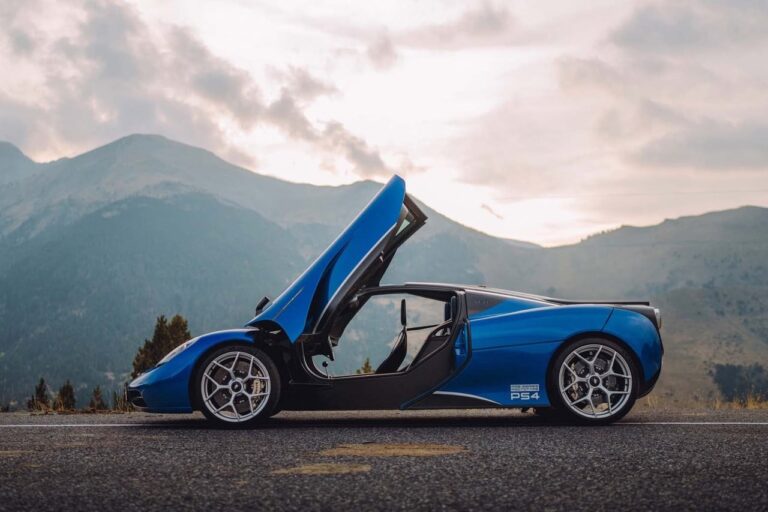
There are car brands, and then there are car brands that exist in an entirely different stratosphere. These are the manufacturers that stopped worrying about price points decades ago and focused entirely on what was possible when budget was not a constraint. The results are machines that blur the line between automotive engineering and art, between transportation and obsession.
Some of the brands on this list have been chasing perfection since the early 1900s. Others arrived more recently but immediately made their presence felt in the most dramatic way possible. All of them share one thing: they build cars that most of the world will only ever see in a magazine or a museum, and they are completely unapologetic about it.
Here are 15 of the most expensive car brands in the world, broken down by what makes each one genuinely worth knowing about.
1. Mercedes-Benz: From Everyday Luxury to $8 Million Legends
Founded in 1926, Mercedes-Benz is one of the oldest and most consistently respected names in the automotive industry. The German brand covers an enormous range, from relatively accessible luxury sedans to vehicles that almost no one on earth can afford. Both ends of that spectrum are worth talking about.
The Mercedes-Benz Maybach Exelero sits at the extreme end, priced at $8 million. Fewer than 12 of these cars exist worldwide, each powered by a twin-turbo V12 engine. Jay-Z famously referenced his Exelero in his song “Lost One,” which is perhaps the most expensive name-drop in hip-hop history.
The Mercedes-AMG Project One is another landmark vehicle, borrowing powertrain technology directly from Formula One racing. All 275 units were pre-sold at $2.72 million each before most people even saw one in person. For a brand that also sells the C-Class to working professionals, the engineering range is genuinely staggering.
2. Aston Martin: The Brand That Makes Even Bankruptcy Look Stylish
Aston Martin’s history is almost impossibly dramatic. In 1913, businessman Lionel Martin and engineer Robert Bamford started a company selling Singer cars from a small London workshop. A year later, Martin entered his first competitive motorsport event, the Aston Clinton Hill Climb, and the car that bore that event’s name was born. The company competed in the 1922 French Grand Prix and then went bankrupt in 1924. It has changed hands multiple times since, survived the Second World War, and somehow emerged as one of the most recognizable luxury sports car brands on the planet.
Today’s Aston Martin lineup reflects everything the brand has learned across more than a century of building cars people cannot stop staring at. The DB11 starts at around £150,000. The Vantage opens at approximately £125,000. The DBS Superleggera demands around £225,000. And then there is the Valkyrie hypercar, developed in partnership with Red Bull Racing’s Formula One engineers, which takes the brand into a territory where price becomes secondary to the question of whether it is physically possible to build something this extreme.
Every single Aston Martin, from the earliest DB models to the current lineup, is designed around one consistent philosophy: beautiful form married to genuine performance. That is harder to achieve than it sounds, and Aston Martin has spent over a hundred years proving it can be done.
3. Pagani Automobili: Carbon Fiber, Italian Passion, and Prices That Make Supercars Look Cheap
Founded in 1992 near Modena, Italy, the same region that produced Ferrari and Lamborghini, Pagani has established itself as one of the most exclusive automotive manufacturers anywhere in the world. The brand specializes in carbon fiber construction and hand-built sports cars where the production numbers are measured in the dozens rather than the thousands.
The Pagani Huayra BC takes its name from the Inca god of wind and from Benny Caiola, the very first Pagani customer. Only 40 examples were produced, each priced at $3.4 million before taxes. The Huayra Imola goes further, starting at $5 million with 827 horsepower spread across just five total examples ever made.
But the most extraordinary Pagani ever created is the Zonda HP Barchetta. Its design was inspired by the curves of a woman’s body, each car is custom-built to individual customer specifications, and with a price tag of $23.65 million and only three total examples in existence, it holds the distinction of being one of the most expensive new cars ever offered for sale. Pagani does not compete in the supercar market. It operates somewhere entirely above it.
4. Bugatti: The Brand That Made 300 mph Road Legal
Bugatti was founded in 1909 by Ettore Bugatti, an Italian-born manufacturer who believed that a car could be both mechanically exquisite and visually beautiful at the same time. His most celebrated prewar creations, the Type 41 Royale and the Type 57 Atlantic, are still considered among the most beautiful cars ever designed. When Ettore died in 1947, the company effectively died with him.
The resurrection came in 1998 when the Volkswagen Group acquired the Bugatti name and made a decision that nobody in the industry was entirely sure would work: build the most powerful production car ever made and charge accordingly. The 2005 Veyron, with its 8.0-liter quad-turbo engine producing 987 horsepower and a price tag around £1.6 million, immediately redefined what a road-legal car could be. The SuperSport variant pushed top speed to 267 mph.
The Chiron followed with 1,479 horsepower and a £2.5 million price. The Chiron SuperSport 300+, built in 2019, became one of the first production cars to break the 300 mph barrier in testing. The limited Divo, offered only to existing Chiron owners, and the Centodieci, capped at 10 units and priced around £7.5 million, further cemented Bugatti’s position at the absolute top of the hypercar hierarchy.
The La Voiture Noire, sold to a single buyer for approximately £12.5 million, may be the single most expensive new car ever commissioned. Bugatti has not announced plans to slow down.
5. Audi: Engineering Excellence Across Every Price Point
Audi occupies a unique position among expensive car brands because it has genuinely succeeded at both ends of the market simultaneously. The brand produces some of the world’s most prestigious and expensive automobiles while also building accessible, practical cars that have converted millions of drivers into loyal customers.
The Audi R8, their flagship supercar, uses a naturally aspirated V10 engine borrowed from Lamborghini and delivers performance that rivals dedicated sports cars from much more expensive brands. Audi Sport has also been a dominant force in motorsport, particularly at Le Mans, where its diesel-powered endurance racers rewrote what was possible in prototype racing.
Audi has also been increasingly serious about the SUV and Sportback segments, with models like the RS Q8 and the RS6 Avant demonstrating that high performance and everyday practicality are not mutually exclusive. The brand’s engineering philosophy, characterized by the legendary Quattro all-wheel drive system developed in the 1980s, runs through every vehicle in the lineup regardless of price.
6. Rolls-Royce: The Brand That Builds Cars for Monarchs and Musicians
Charles Rolls and Henry Royce founded their partnership in 1904, and the cars that resulted from that collaboration became synonymous with wealth, refinement, and absolute quality. The founding principle, famously attributed to Henry Royce, was: “Strive for perfection in everything you do. Take the best that exists and make it better. When it does not exist, design it.”
The Rolls-Royce Phantom V remains one of the most iconic cars in the brand’s history. Both Queen Elizabeth II and John Lennon owned examples, which covers the full spectrum of its appeal. The Ghost, the brand’s entry point into coachbuilt luxury, starts at $311,000 and represents the most accessible way into the Rolls-Royce ownership experience, which is still out of reach for almost everyone.
The most expensive Rolls-Royce ever built is the Sweptail, commissioned by a single private client and valued at over $12 million. The car was built entirely to that client’s personal specifications and features a custom set of matching luggage fitted to the trunk, along with a mechanism that reveals a chilled bottle of vintage champagne and crystal flutes at the press of a button. That detail tells you everything you need to know about what Rolls-Royce considers a standard amenity.
7. Ferrari: The Brand That Dominates Auction Records as Convincingly as It Dominates Racetracks
Enzo Ferrari’s stated mission was to build cars that everyone dreams of driving. On that metric, the company he founded in Maranello, Italy has succeeded beyond any reasonable measure. Ferrari is simultaneously one of the most successful racing organizations in history and one of the most coveted luxury brands in any category.
The modern Ferrari lineup reflects the brand’s refusal to compromise. The LaFerrari hybridized Formula One technology with road-legal construction and commanded over £1 million. The SF90 Stradale costs approximately £375,000. The 812 Superfast, powered by a naturally aspirated V12 producing 800 horsepower, starts above £260,000.
But the most remarkable Ferrari story plays out at auction rather than at dealerships. Ferrari appears seven times on the list of the ten most expensive cars ever sold at auction, including all three of the top positions. The most expensive of all is the 1962 Ferrari 250 GTO, which sold for $48,405,000 (approximately £38.8 million) to a private collector. That figure is not just a car sale. It is a cultural artifact being purchased, and it confirms Ferrari’s position as the brand whose cars appreciate rather than depreciate in the hands of serious collectors.
8. Koenigsegg Automotive: The Swedish Brand That Keeps Rewriting the Physics Textbook

Christian von Koenigsegg founded his eponymous Swedish company in 1994 with the goal of building the fastest road car in the world. What followed was a series of vehicles that did not just meet that ambition but repeatedly redefined what automotive engineering was capable of.
In 2002, the CC8S received the Guinness World Record as the most powerful production car at the time. The Agera S introduced the world’s first carbon fiber wheels. The One:1 became the first production car in history to achieve a 1:1 power-to-weight ratio, meaning it produced one horsepower for every kilogram of vehicle weight. Each of these achievements was not a marketing claim. They were independently verified engineering milestones.
The most expensive Koenigsegg sold to consumers is the CCXR Trevita, starting at $4.8 million with only two examples made for customer delivery. The car’s body is constructed using a proprietary diamond weave carbon fiber process that reflects light unlike any other surface in automotive history.
The Jesko, the brand’s twelfth model, debuted at the 2019 Geneva International Motor Show with a rumored starting price around $2.8 million and performance specifications that, if realized in production form, could set new absolute speed records for road-legal vehicles.
9. Lamborghini: The Brand Born From a Grudge Against Ferrari
Ferruccio Lamborghini built tractors before he built sports cars, and the story of how one led to the other is one of the best in automotive history. According to automotive legend, Ferruccio complained to Enzo Ferrari about a clutch problem in his Ferrari. Enzo, unimpressed with the feedback, reportedly told a tractor manufacturer to leave the making of sports cars to the professionals. Ferruccio went home and built the Lamborghini 350 GT. The sports car world has never been the same since.
Ferruccio also established the tradition of naming Lamborghini models after famous fighting bulls or bull-related terms. The Miura, Islero, and Diablo are among the most celebrated. Today, the Lamborghini Urus SUV, the Huracan, and the Aventador carry that heritage forward under Volkswagen Group ownership through Audi.
The Lamborghini Sian is the brand’s most technologically significant recent model, combining a V12 engine with supercapacitor hybrid technology. Just 63 units were produced, priced at $3.7 million each. The Aventador SVJ Roadster reaches nearly 217 mph. The most expensive Lamborghini ever to change hands is the Veneno Roadster, originally valued at $4.5 million, which sold for $8.3 million at a Bonhams auction in 2019 after being seized by Swiss authorities from a government official’s son as part of a corruption investigation. Even the provenance of the most expensive Lamborghinis comes with extraordinary stories.
10. McLaren: A Racing Legacy That Became a Road Car Philosophy
Bruce McLaren was a New Zealand-born racing driver described by his contemporaries as a naturally gifted engineer who happened to also be an outstanding driver. Recruited to the UK by Jack Brabham in the late 1950s, McLaren competed in Formula One before founding his own team and eventually his own car company. He died in a testing accident in 1970, but the company he built survived and eventually became one of the most technically sophisticated automotive manufacturers in the world.
The modern McLaren road car program began in earnest with the F1 in the 1990s, a car that held the production car top speed record for over a decade. Today’s lineup includes the 720S from £215,000, the track-focused 765LT from £280,000, and the Senna from £750,000, a car named after three-time Formula One World Champion Ayrton Senna and built as an uncompromising track weapon that is technically legal for road use.
The P1, McLaren’s hybrid hypercar developed alongside Ferrari’s LaFerrari and Porsche’s 918 Spyder as the “Holy Trinity” of their era, combined a 727-horsepower twin-turbo 3.8-liter V8 with a 176-horsepower electric motor. All 375 examples sold immediately. McLaren does not shout about its achievements the way some other supercar brands do, but the cars consistently rank among the fastest and most technologically advanced road-legal vehicles ever built.
11. W Motors: The Middle East’s First Supercar Brand
W Motors holds a historically significant position in the automotive world as the creator of the first sports car to be designed and manufactured in the Arab world. Based in Dubai, the company launched the Lykan HyperSport as its flagship vehicle and immediately made a global impression.
The Lykan HyperSport is powered by a twin-turbocharged flat-six engine sourced from Porsche, producing 750 horsepower and 960 Nm of torque. Only seven examples were produced at $3.4 million each. The car gained international recognition when it appeared in the film Fast and Furious 7, in a scene where one drives through multiple skyscrapers in Abu Dhabi. Vin Diesel’s character owns one in the film, which contributed to the Lykan’s status as one of the most visually recognized hypercars outside of traditional supercar circles.
12. Jaguar: British Performance With a Predator’s Name
Jaguar has always occupied an interesting space in the luxury car market. The brand consistently produces vehicles that punch above their price point in terms of visual drama and driving character, while still being positioned below the absolute top tier of luxury brands in terms of cost. That combination has given Jaguar a distinctly broad appeal.
The F-Type is perhaps the strongest recent expression of what Jaguar does well. With a top speed around 275 km/h in its higher-performance variants and a design that draws genuine second looks from passersby, it represents the Jaguar philosophy of building a car that feels special every time you sit in it. The brand has also ventured into electric vehicles with the I-PACE, winning the European Car of the Year award in 2019 and signaling where Jaguar intends to position itself in the coming decade.
13. Maserati: Italian Craftsmanship With a Trident Badge

Maserati occupies a unique position in the Italian performance car hierarchy. It is not as raw or aggressive as a Lamborghini, not as track-obsessed as a Ferrari, but it offers something those brands rarely do: a luxury grand touring experience with genuine Italian character baked into every surface and sound.
The brand won the Red Dot Award’s “Best of the Best” distinction in 2021 for design excellence, which reflects a consistent commitment to building cars that are as visually compelling as they are mechanically sound. Models like the GranTurismo, the Quattroporte, and the MC20 supercar represent different facets of the brand’s personality, from long-distance cruising in absolute comfort to track-capable performance using a new twin-turbo V6 engine developed entirely in-house.
14. Lotus Cars: Light Is Right, and Collectors Know It

Colin Chapman, Lotus’s founder, operated by a philosophy that has defined the brand for over seven decades: add lightness. Instead of adding power to go faster, Chapman believed in removing weight. The result was a series of lightweight, nimble sports cars that drove unlike anything else at their price point and influenced the engineering principles of virtually every performance car built since.
Today’s Lotus exists in an interesting transition period. Under Geely ownership, the brand has launched the Emira, its final internal combustion production car, and the Eletre, a fully electric performance SUV that represents an entirely new direction. But the historical Lotus models, the Excel, the Evora, and the various limited-edition track specials, are increasingly sought after by collectors who understand just how special these lightweight machines are. Buying and maintaining one at a high level is genuinely expensive, but for those who appreciate what driving a truly purpose-built sports car feels like, the cost is considered secondary.
15. BMW: The Brand That Defined What “Driver’s Car” Means
BMW’s tagline “The Ultimate Driving Machine” is one of the most recognized marketing statements in automotive history, and unlike many advertising claims, it has been consistently backed up by the cars themselves. From the iconic E30 M3 of the 1980s to the current M5 and M8, BMW has produced a continuous line of performance vehicles that prioritize driver engagement above almost everything else.
The brand’s M division operates almost as a separate entity within BMW, responsible for developing the most extreme versions of BMW’s production models. The BMW M3 in particular has been one of the most benchmarked performance sedans in the industry for four decades, consistently used by automotive journalists as the reference point against which competitors are measured.
BMW also held the search attention of approximately 22.8 percent of global luxury car searches in 2021, which tells you how powerful the brand’s presence is even in a crowded market. The range extends from the relatively accessible 3 Series to the 7 Series flagship and the i8 hybrid sports car, giving BMW one of the most genuinely comprehensive lineups of any premium brand. For a company that has been building performance-focused vehicles since the early 20th century, the consistency of that quality over time is perhaps the most impressive achievement of all.
What These Brands Have in Common
Looking across all 15 of these brands, a few themes emerge consistently.
The most expensive and exclusive vehicles almost always come from brands with deep motorsport heritage. Ferrari, McLaren, Bugatti, Koenigsegg, and Aston Martin all developed their engineering philosophies through racing before transferring that knowledge to road cars. The connection between competition and product is not marketing. It is genuine.
Production numbers are deliberately limited for the most expensive models. The Pagani Zonda HP Barchetta exists in three examples. The Bugatti La Voiture Noire was built for one buyer. The W Motors Lykan HyperSport numbers seven total units. Exclusivity is not an accident. It is engineering that cannot be scaled without compromising the result.
Technology developed for the most extreme models eventually filters down to more accessible vehicles. The hybrid systems in the LaFerrari and McLaren P1, the lightweight carbon fiber construction pioneered by Pagani and Koenigsegg, the all-wheel drive systems refined by Audi Quattro, all of these eventually influenced vehicles that ordinary drivers can afford to buy and use daily. The most expensive cars in the world are not just status symbols. They are rolling research and development programs that advance the entire industry.
| Brand | Country of Origin | Most Expensive Model | Notable Price |
|---|---|---|---|
| Mercedes-Benz | Germany | Maybach Exelero | $8 million |
| Aston Martin | United Kingdom | Valkyrie Hypercar | Over £3 million |
| Pagani | Italy | Zonda HP Barchetta | $23.65 million |
| Bugatti | France | La Voiture Noire | Approximately £12.5 million |
| Audi | Germany | R8 V10 Performance | From approximately £165,000 |
| Rolls-Royce | United Kingdom | Sweptail | Over $12 million |
| Ferrari | Italy | 1962 250 GTO (at auction) | $48.4 million |
| Koenigsegg | Sweden | CCXR Trevita | $4.8 million |
| Lamborghini | Italy | Veneno Roadster (at auction) | $8.3 million |
| McLaren | United Kingdom | Senna | From £750,000 |
| W Motors | UAE | Lykan HyperSport | $3.4 million |
| Jaguar | United Kingdom | F-Type R | From approximately £100,000 |
| Maserati | Italy | MC20 | From approximately £185,000 |
| Lotus | United Kingdom | Evija Electric Hypercar | From £2 million |
| BMW | Germany | M8 Competition | From approximately £130,000 |
Every brand on this list started with someone who believed they could build something better than what already existed. Most of them were told, at some point, that what they were attempting was not commercially sensible or technically possible. Every car on this list is proof that they were right and the critics were wrong.