
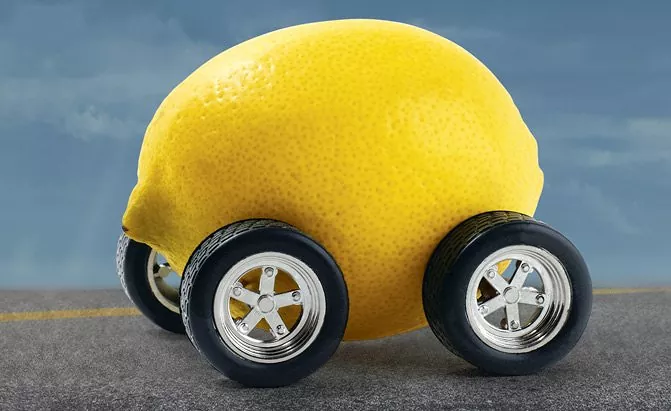
If you have spent any time shopping for used cars, you have probably heard the word “lemon car” thrown around. But ask 5 different people what it actually means and you will likely get 5 different answers. Some people use it to describe any beat-up old car. Others think it is a legal term. A few confuse it with lemon law protections entirely.
The confusion is understandable, but it matters. Buying a lemon car when you did not know what to look for is an expensive lesson. This guide clears it all up, from what the term actually means, to how lemon laws work, to the practical steps you can take to avoid getting stuck with a vehicle that causes nothing but headaches.
What Does “Lemon Car” Actually Mean?
The term “lemon” has been used in North America and Western Europe for decades to describe a vehicle that turns out to be defective after purchase. Not just a car with minor quirks or normal wear. A genuine lemon is one with a significant defect, usually rooted in how the vehicle was designed or manufactured, that makes it unreliable or unsafe to drive.
The slang dates back to the 1950s and 60s, when “lemon” became common shorthand for a car so problematic that the owner had no choice but to return it to the manufacturer. The fruit analogy stuck because lemons look appealing on the outside but taste terrible once you bite in. A lemon car works the same way. It looks fine on the lot, drives acceptably for a short time, and then reveals its true nature once you have already signed the paperwork.
Here is something that catches a lot of buyers off guard: a lemon car does not have to be old or high-mileage. Some lemons come straight off the assembly line with defects baked in from day one. The car may have been reasonably well maintained by its previous owner. The problem is not how it was cared for. The problem is how it was built.
When a car is formally classified as a lemon, whether it gets replaced or compensated typically comes down to the manufacturer’s policies and, more importantly, whatever lemon law applies in your state or country.
Lemon Car vs. Lemon Law: Two Different Things
This is the part most people get wrong, and it is worth being very clear about.
A lemon car describes the condition of the vehicle itself. It is defective. It has been or should have been returned under warranty because of those defects. That is a description of the car’s history and mechanical state.
The lemon law is an entirely separate thing. It is consumer protection legislation that governs the sale of defective products. Lemon laws protect buyers. They have nothing to do with whether a specific vehicle qualifies as a lemon in the colloquial sense.
Think of it this way. You could buy a car that is a genuine lemon without any lemon law protection applying to your purchase, depending on where you bought it, what state you are in, and what type of vehicle it is. And you could invoke lemon law protections on a vehicle that most people would not call a lemon, simply because a covered defect was not repaired within the required number of attempts.
They overlap sometimes. But treating them as the same thing will leave you confused and potentially unprotected.
How Lemon Laws Actually Work
In the United States, lemon laws are state-level statutes. Every state has one, but the specifics vary considerably. Generally speaking, lemon law protection kicks in when a new vehicle has a significant defect covered by the manufacturer’s warranty, and that defect cannot be fixed after a reasonable number of repair attempts.
What counts as “reasonable” depends on the state. Some states say three repair attempts. Others say four. Some have a days-out-of-service threshold, meaning if your car spends more than a certain number of days in the shop within a defined period, you may have a lemon law claim regardless of how many repair attempts were made.
When a lemon law claim is successful, the outcome is typically one of two things:
- A replacement vehicle of the same or comparable make and model
- A refund of the purchase price, which may be reduced by a usage fee based on how many miles you drove the vehicle before the defect was first reported
Some states also extend lemon law protections beyond cars. Appliances, electronics, and other consumer products can sometimes fall under the same legislation, though the specifics vary widely by state.
One important point: lemon laws in most US states primarily cover new vehicles. Used car lemon law protections exist in some states but are generally much narrower. If you are buying used, do not assume the full weight of lemon law protection is behind you. It probably is not.
How to Spot a Lemon Car Before You Buy It
When you are shopping for a car, especially used, most of your attention naturally goes to the obvious stuff: the style, the color, the price, the mileage. Those things matter. But none of them will tell you whether the vehicle has a history of serious defects.
Here is what actually will.
Run the VIN Through a Vehicle History Report
This is the single most important step in any used car purchase. The Vehicle Identification Number, or VIN, is a unique 17-character code assigned to every vehicle. Run it through a reputable service and you will get a detailed history that can include:
- Title history and any branded titles such as salvage, rebuilt, or flood damage
- Reported accidents and insurance claims
- Number of previous owners
- Odometer readings over time, which can reveal tampering
- Service and repair records in some cases
- Manufacturer buybacks, which is one of the clearest indicators that a vehicle was formally treated as a lemon
A “manufacturer buyback” notation in the vehicle history is a major red flag. It means the original owner returned the car under lemon law or warranty provisions, and the manufacturer repurchased it. That vehicle can legally be resold, but the seller is required to disclose its lemon history. Many do not, which is exactly why running the VIN yourself matters.
Ask for the Full Service Records
A legitimate seller with nothing to hide will have service records and will be willing to show them. Those records tell you a story about what the car has been through. Look for:
- Recurring repairs for the same issue, which is a classic lemon warning sign
- Major repairs early in the vehicle’s life
- Gaps in the service history that cannot be explained
- Repairs completed at the dealership under warranty, which can sometimes indicate manufacturer-acknowledged defects
If the seller claims there are no records, or gets evasive when you ask for them, treat that as a warning sign rather than an explanation.
Check Whether It Is a Domestic or Foreign Model
This sounds like a strange thing to check, but it matters in a practical sense. Some lemon law protections and warranty terms differ based on whether the vehicle is domestic or imported. Parts availability and repair costs can also vary significantly, which affects how expensive it will be to deal with problems if they do arise. Know what you are buying and what the long-term support picture looks like before committing.
Never Skip the Pre-Purchase Inspection
An independent pre-purchase inspection, done by a mechanic you hire and trust rather than one the seller recommends, is one of the best investments you can make before buying any used vehicle. A good inspection will cover:
- Engine condition and oil quality
- Transmission function
- Brake condition
- Suspension and steering
- Electrical systems
- Signs of previous accident damage that may not appear in a history report
- Frame integrity
- Any active warning lights or stored diagnostic trouble codes
The inspection typically costs between $100 and $200. That is a small price compared to what you could be walking into if you skip it and discover major problems after the sale.
Take It for a Proper Test Drive
A test drive around the block tells you very little. You need to drive the car long enough and in varied enough conditions to actually experience how it behaves. During the test drive, pay attention to:
- Any unusual noises, vibrations, or shuddering under acceleration or braking
- How the transmission shifts, whether it is smooth or hesitant
- How the steering feels, whether it tracks straight without pulling
- Whether the brakes feel firm and responsive or spongy and uneven
- Warning lights on the dashboard
- How the engine sounds at idle versus under load
If the seller tries to rush you, discourages a long test drive, or the car is only available to view in the dark or in rainy conditions where problems are harder to see, those are not coincidences.
Common Defects That Make a Car a Lemon
Not every mechanical problem qualifies. A worn-out clutch or a dead battery is a maintenance issue, not a lemon situation. A lemon defect is typically something that:
- Is covered under the manufacturer’s warranty
- Substantially impairs the use, value, or safety of the vehicle
- Has not been successfully repaired after a reasonable number of attempts
In practice, the most commonly reported lemon defects include:
- Transmission problems such as slipping, rough shifting, or complete failure
- Engine defects including misfires, stalling, overheating, or oil consumption beyond normal limits
- Electrical system failures that affect safety systems, the instrument cluster, or critical vehicle functions
- Brake system problems that cannot be resolved through standard repair
- Steering defects that affect vehicle control
- Persistent water leaks into the cabin or electrical systems despite repeated repairs
The key word across all of these is “persistent.” One repair attempt that fixes a problem is not a lemon situation. The same problem returning repeatedly after multiple repair attempts is exactly what lemon laws were written to address.
What Happens When a Manufacturer Buys Back a Lemon?
When a vehicle is formally bought back by the manufacturer under a lemon law settlement, it does not simply disappear. The manufacturer can legally resell it, but in most states, the car must carry a disclosure on its title indicating it is a manufacturer buyback or was repurchased under lemon law. This is sometimes called a “branded title.”
Here is where it gets complicated. Not all states require the same level of disclosure. Some title branding requirements apply only within the state where the buyback occurred. If a vehicle is bought back in one state and resold in another with looser disclosure laws, the buyer in the second state may never know.
This is exactly why a VIN check matters so much. A branded title that does not show up on the physical paperwork in front of you may still appear in the national database that VIN history services pull from. That is your best protection against unknowingly buying a formally documented lemon.
Buying Online Without Seeing the Car: The Risk Nobody Talks About Enough
Online car-buying has grown dramatically over the past decade, and with it, a particular type of buyer risk has grown alongside it. Buying a car you have never seen in person, from a seller you have never met, without the ability to inspect or drive it, is exactly the scenario where lemon cars and misrepresented vehicles thrive.
Photos can be edited. Descriptions can omit inconvenient details. A seller three states away is difficult to hold accountable once the car is in your driveway and something goes wrong. The car that looked perfect in the listing photos can arrive with body filler hiding rust, a transmission on its last legs, or warning lights that conveniently were not pictured.
That does not mean online car buying is always a mistake. It means you need to be more rigorous, not less, when you cannot physically be there. Practical steps for remote car purchases include:
- Requesting a live video walkthrough of the vehicle, not just pre-recorded photos or video
- Hiring a local third-party inspection service to visit the vehicle before you commit
- Running the VIN through a vehicle history report yourself
- Using a payment method or purchase structure that offers some buyer protection
- Getting any representations the seller makes about the vehicle’s condition in writing
Third-party inspection services exist specifically for remote purchases. Companies like Lemon Squad or CARCHEX will send an inspector to the vehicle’s location and provide you with a detailed report, often within 24 hours. That service, combined with a VIN report, gives you most of what an in-person visit would provide at a fraction of the cost of flying out to see the car yourself.
What to Do If You Think You Already Bought a Lemon
If you are reading this after the fact because your recently purchased vehicle is already giving you serious trouble, here is the practical path forward.
Document Everything From This Point Forward
Every repair attempt needs to be in writing. Every time you bring the car in for the same issue, get a repair order that clearly describes the problem, what was done, and the date. That paper trail is the foundation of any lemon law claim.
Notify the Manufacturer in Writing
In many states, lemon law protections require you to give the manufacturer a formal written notice of the defect and a final opportunity to repair it before you can pursue a claim. Check your specific state’s requirements, but sending a certified letter to the manufacturer’s customer service department is typically the right starting point.
Contact a Lemon Law Attorney
Most lemon law attorneys work on a contingency basis, meaning they only get paid if you win. Under many state lemon laws, if you win your claim, the manufacturer is also required to pay your attorney fees. That means pursuing a legitimate lemon law claim can often cost you very little out of pocket. A free consultation with a lemon law attorney will tell you quickly whether you have a viable case.
File a Complaint With Your State’s Attorney General
If the manufacturer is being unresponsive, filing a complaint with your state attorney general’s consumer protection division adds formal pressure. It also creates a public record of your complaint, which can be relevant if the case progresses.
Quick Reference: Lemon Car Warning Signs at a Glance
| Warning Sign | What It Could Mean | What to Do |
|---|---|---|
| Manufacturer buyback on VIN report | Vehicle was formally returned as a lemon | Walk away or research the specific defect deeply |
| Recurring repairs for the same issue in service records | Unresolved manufacturing defect | Ask for specifics and get an independent inspection |
| Seller unable or unwilling to provide service records | Something is being hidden | Treat this as a red flag and proceed with extreme caution |
| Dashboard warning lights during test drive | Active or stored fault codes | Have the codes read by an independent mechanic before buying |
| Transmission hesitation or rough shifting | Potential transmission defect or wear | Get a full inspection before committing |
| Unusual engine noises under load | Possible internal engine damage or defect | Walk away unless a professional inspection clears it |
| Price significantly below market value with no clear reason | Seller knows something you do not | Dig harder before trusting it |
The Bottom Line on Lemon Cars
Understanding what a lemon car is, and knowing the difference between that term and the legal protections lemon laws provide, puts you in a genuinely better position as a buyer. Most people who end up with a lemon did not walk into the dealership or private sale looking to make a bad decision. They just skipped steps that would have revealed the problem before money changed hands.
Run the VIN. Ask for service records. Hire an independent inspector. Take a real test drive. If any of those steps reveals something the seller cannot explain, that is your answer. The $150 you spend on a pre-purchase inspection is either the best money you ever spent or proof that the car is exactly what it claims to be. Either outcome is worth the cost.
If the seller cannot give you the time and access to do those things, they are not selling you a car. They are selling you a problem.