
Throttle body trouble can feel random until you connect the dots. You get in, turn the key, and the engine does not catch. Or it starts fine for a moment, then stalls at a stoplight like something is being cut off. In other cases, the car runs rough at idle, the check engine light shows up, and the whole situation becomes a daily headache.
Most people think “fuel problem” or “battery problem” first. Those things can be involved, but a malfunctioning throttle body can absolutely be the reason your car will not start or will not stay running. And when it fails, it often sends symptoms that overlap with other engine issues, so it helps to know what you are looking for.
In this guide, we will talk about what a throttle body does, why it can stop a car from starting, what typically causes throttle body problems, what happens when the throttle body fails, and when replacement makes more sense than cleaning. There is also a practical YouTube walkthrough embedded below that many owners find helpful when they are ready to take action.
One more thing before we get into it. Even if you are not planning to fix anything yourself, understanding the basics helps you talk to a mechanic clearly. You will know whether this sounds like a throttle plate issue, a sensor issue, or something else hiding under the same symptom umbrella.
Can a Faulty Throttle Body Prevent a Car from Starting?
Absolutely. A defective throttle body can stop your car from starting, and it usually comes down to two primary reasons.
First, the throttle body may fail to deliver the correct amount of air to the combustion chamber. When the engine cannot get the right air supply, the air-fuel mixture does not form correctly, and that can prevent the spark needed for ignition from doing its job.
Second, a problem with the throttle position sensor could stop the throttle valve from opening properly. If the sensor goes offline, reads wrong, or fails, the throttle plate may not open when it should, which restricts airflow and interrupts the conditions the engine needs to start and run smoothly.
To make sense of that, picture the throttle body as the engine’s air doorway. It regulates the airflow coming into the intake system, and the engine management system depends on that airflow data to calculate how much fuel to inject and when.
The throttle body’s role is to regulate the air entering the engine. Its sensors monitor fuel levels in the combustion chamber and adjust airflow to create the ideal air-fuel mixture. That mixture then ignites, powering the engine’s pistons and cylinders.
When the air-fuel balance is off, you do not just get one weird symptom. You can see a whole chain reaction: hard starting, stalling, rough idle, poor response, and fuel economy issues that show up even when you are driving normally.
Here is a real-world style example. Imagine you start your car on a cold morning. You turn the key, and the engine tries to crank, maybe even fires once or twice. But it quickly dies. That pattern often points to air delivery problems or sensor feedback issues, because the engine cannot build a stable, correct air-fuel mixture to keep combustion going.
Even so, you should still verify, because a throttle body issue can share symptoms with vacuum leaks, MAF problems, ignition issues, or fuel delivery problems. The key is to focus on the throttle logic: air control and throttle sensor feedback.
What Leads to Throttle Body Issues?
Throttle body problems typically stem from two main causes: a dirty or worn-out throttle body clogged with debris or damaged in a collision, or excessive air bypassing the throttle sensor.
The throttle sensors manage how much air the intake system allows into the engine manifold to combine with fuel. When the readings are off, or the throttle plate cannot move properly, the engine struggles to maintain correct combustion.
That is why throttle issues are often a mix of mechanical and electrical problems. Sometimes the throttle body itself is coated in gunk. Other times, a sensor or wiring issue misreports position. And sometimes, air enters the intake system in a way it should not, which throws off the air-fuel ratio even if the throttle plate is technically working.
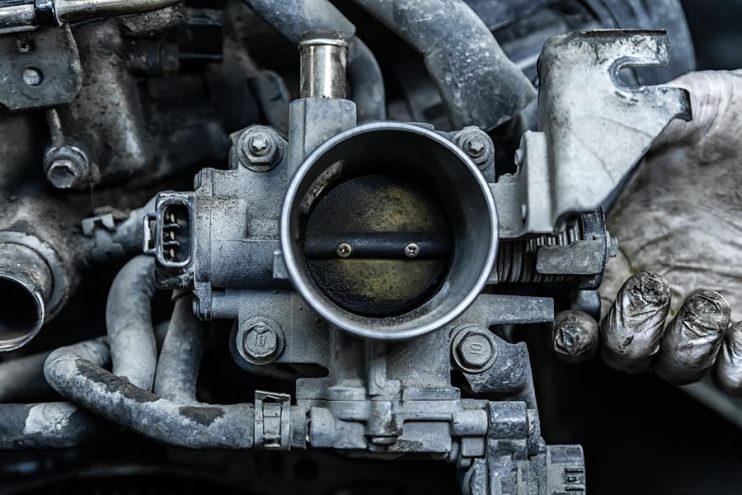
Contaminated Throttle Body
What causes a throttle body to become dirty? Environmental factors like dust, pollen, or other airborne particles contribute. These can come from sources such as wildfires, increased smog, strong winds carrying debris, or nearby construction stirring up dirt.
The air filter is designed to trap these particles before they reach the throttle, but no filter is foolproof. Tiny particles may slip through, or a clogged filter may fail to function effectively. Over time, those contaminants can build up where airflow slows down and where deposits stick.
Contamination is not just about what the air filter lets in. Many engines also create internal deposits that can coat the throttle plate and bore. That is why you might see buildup even when you use good filters and buy reputable fuel.
In the real world, owners often notice contamination-based symptoms in a predictable way. The car may idle rougher than usual, hesitation appears during light acceleration, and sometimes the engine refuses to start until it is warmed up. The throttle plate has to open correctly, and deposits can make it stick or reduce how smoothly it moves.
Then there is the “invisible” impact. A throttle that is coated does not always fail completely. Instead, it can cause subtle airflow control errors that make the engine compensate until the compensation is no longer enough.
Collision-Related Damage
A car accident can harm the throttle body or its internal butterfly valve, impairing its ability to open and close correctly.
This type of damage is tricky because you might not see it right away. The throttle body might still look “mostly fine” from a distance, but internally, the butterfly valve can bind, misalign, or lose smooth movement. In electronics-controlled throttle systems, the position feedback can also be affected, which leads to sensor mismatch.
Fixing a damaged throttle body is often as costly as replacing it, making replacement the more practical choice.
If you recently repaired collision damage and then noticed starting problems or stalling at idle, consider that timing as a clue. Even if the collision seemed unrelated to the intake area, the throttle body lives close enough to other components that impacts can still affect it.
Vacuum Leak and Sensor Problems
Sensor issues often arise from a vacuum leak, where air enters the engine without passing through the throttle valve.
Normally, air travels from the air filter through the throttle body to the engine manifold, with the sensor regulating the flow. That is the correct path the engine management system expects. It calculates fuel and ignition based on that controlled airflow.
A leak allows excess air to bypass the throttle, disrupting the air-fuel ratio and affecting combustion.
Here is what can happen in a driveway scenario. A small vacuum hose is cracked, a gasket is leaking, or a connection is loose. The engine might start and run at first, but as soon as you come to a stop, it may stall because the engine cannot regulate idle properly when extra air enters the system.
It is also common for vacuum leak symptoms to be “intermittent,” meaning they appear more often under certain conditions. Cold weather can make hoses contract. Heat cycles can loosen clamps. A leak can show up when the engine bay expands and shifts slightly.
That is one reason people assume the throttle body is at fault when it may not be. Excess air and sensor confusion can produce throttle-like symptoms. So the diagnosis should include intake and vacuum checks, not only throttle cleaning.
What Happens When a Throttle Body Fails?
A failing throttle body; whether dirty, damaged, or leaking; prevents the valve from delivering the proper amount of air. Too little or too much air disrupts the fuel mixture.
When you think about throttle body failure, it helps to remember that modern engines depend on accurate airflow control to keep combustion stable. When the airflow is off, the engine management system can only correct so much. Eventually, it cannot correct enough to maintain smooth operation, and the driver feels it.
What are the consequences of a faulty throttle body?
At stops, such as traffic lights, your car may stall, shut off, and become undrivable, possibly requiring you to push it off the road.
This is one of the most alarming throttle-related symptoms because it puts you in a risky situation. If the car shuts off at idle, you may lose power steering assist on some vehicles and reduce the ability to keep steady control while you manage the situation.
A bad throttle body also reduces fuel efficiency, increasing gas costs and diminishing performance.
Even when the car still drives, poor throttle control can lead to inefficient combustion. You press the pedal and the engine does not respond the way it should. It may hunt for idle speed, feel sluggish, or consume more fuel trying to compensate.
Additionally, a persistent check engine light may appear. If this happens, visit a mechanic promptly to diagnose the issue.
That check engine light matters because it often stores codes that point to throttle plate position errors, throttle position sensor faults, or airflow/idle regulation issues. Without a scan, it becomes guesswork, and guesswork is expensive.
Now, let us look at how these failures tend to show up day-to-day.
Common Driver-Noticed Symptoms
If your throttle body is failing, you might notice one symptom or several. Some owners see starting problems. Others notice stalling only at idle. Some experience rough running and poor acceleration. All of those can relate back to disrupted airflow and throttle sensor feedback.
Here is a practical symptom list based on the effects described, plus what many owners notice in the field:
- Failure to start when you turn the key
- Stalling or shutting off during idle, especially at stops
- Rough idle that makes the engine feel unstable
- Bad throttle response, such as hesitation or delayed acceleration
- Reduced fuel efficiency and higher fuel costs
- Persistent check engine light that does not go away
- Possible throttle position sensor disconnection or failure, depending on the design of your vehicle
That list matters because it helps you decide urgency. Stalling at traffic lights is not a “watch it later” symptom. It can leave you stranded at the worst possible moment.
When Should You Replace a Throttle Body?
Knowing when to replace a throttle body is key. You want to avoid spending money twice. Replace when the part is physically compromised or when cleaning will not restore correct function. Look for these signs to determine if replacement is necessary.
Here are the replacement indicators from the original guidance, explained in plain terms.
- Physical damage, such as cracks, dents, or a broken butterfly valve. If the valve cannot function properly, replacement is often the best solution. Repairs may be just as expensive depending on the extent of the damage.
- Corrosion. Rust in the throttle body signals trouble. It is often linked to leaks that also need addressing alongside replacement.
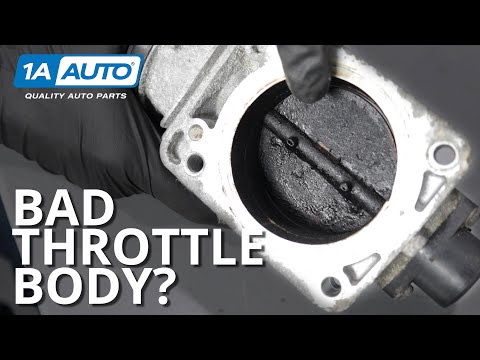
- Excessive buildup. If dirt or grime has accumulated in the throttle valve, cleaning with a throttle body cleaner may help. However, if the buildup is too severe, replacement is the only option.
Let us add a bit of real-world context so this decision feels less vague. Light buildup can sometimes be removed, and the throttle plate can move freely again. But if the throttle body is warped, the butterfly valve is damaged, or the housing is corroded, cleaning will not fix the underlying mechanical problem. In those cases, replacement saves you from repeating the same repair and still dealing with stalling or hard starting.
Also remember this: if your car shuts off at idle or refuses to start, delaying repairs can push other components into trouble because the engine management system keeps reacting to the incorrect air control situation.
Clean or Replace: A Simple Owner Decision Framework
Owners often ask, “Can I just clean it?” That can be a good move in the right circumstances. Here is a straightforward way to decide without turning it into a guessing game.
Use this quick checklist:
| What you notice | Most likely situation | Best next step |
|---|---|---|
| Gunk on throttle plate and bore, but plate still moves | Contamination causing restricted movement | Cleaning may help, then confirm idle behavior |
| Cracks, dents, or broken butterfly valve | Physical damage affecting airflow control | Replace the throttle body |
| Rust or corrosion inside the throttle body | Corroded housing and possible leak issues | Plan for replacement and address associated leaks |
| Severe buildup that prevents proper function even after cleaning attempts | Deposit severity or deeper mechanical issue | Replace |
This framework matches the original replacement rules while helping you make a decision with less stress.
The Throttle Position Sensor Factor
Do not forget the sensor side. The original guidance calls out that a faulty throttle position sensor might become disconnected or fail entirely. If the throttle body is fine mechanically but the sensor feedback is wrong, your engine can still refuse to start or stall.
In those cases, replacement may still be needed depending on how your vehicle is designed. Some throttle bodies integrate the sensor into the unit. Others may allow separate repair, but your diagnosis has to confirm what is actually failing.
This is why scan data and careful inspection matter. It is also why the phrase “visit a mechanic promptly to diagnose the issue” should not be treated like an empty suggestion. A throttle body can look dirty and still be mechanically okay, while a sensor failure can create serious symptoms even without obvious grime.
How to Spot a Throttle Body Problem Before You Get Stranded
Here is the thing. A throttle body issue often gives hints before it fully collapses. The problem is that owners sometimes mistake those hints as “normal for an older car,” or they blame fuel, spark, or a battery because the symptoms overlap.
So what should you watch for? Start with patterns. When the symptoms show up, what conditions trigger them, and whether the check engine light stays on or comes back after you clear it.
Focus on these early warning signs that line up with the effects described earlier:
- Hard starting, especially after sitting for a while
- Stalling at idle, more likely at traffic lights or stop signs
- Engine shutoff after warm-up or during low-speed driving
- Rough idle that feels worse than usual
- Reduced performance, such as sluggish acceleration
- Fuel economy drop, with no driving habit change
- Check engine light that persists
If you want a simple rule, use this: if you experience stalling at stops, you treat it as urgent. That scenario can leave you undrivable and possibly needing help moving the vehicle off the road. It is not something to wait on for “later this week.”
What a Mechanic Usually Checks (So You Know What You Are Paying For)
Even if you plan to DIY some parts of the process, it helps to understand how shops typically approach throttle body concerns. The goal is to separate airflow control problems, sensor feedback problems, and leaks that allow excess air to bypass the throttle.
In practice, a professional diagnosis often includes:
- Scanning the vehicle for stored codes and pending codes related to throttle control and sensor feedback
- Checking throttle response using live data, such as whether the throttle position readings match commanded movement
- Inspecting the intake path, including hoses and connections, to look for vacuum leaks
- Reviewing idle behavior, because stalling at idle is one of the most direct throttle body failure signs described earlier
- Inspecting for obvious contamination inside the throttle body where gunk can restrict movement
- Verifying whether the throttle body has physical damage such as cracks, dents, or issues with the butterfly valve
That last point matters for replacement decisions. If the housing is cracked or the butterfly valve is damaged, the job is not just “clean and reset.” It is “repair the airflow control hardware” so the engine can get the correct amount of air again.
If you are wondering why a shop may still recommend replacement even when the throttle body is “just dirty,” this is the reason. Severe buildup can be beyond what cleaning can restore. Corrosion can also create weak areas or associated leaks. Collision damage can impair valve movement in ways cleaner cannot undo.
A Practical DIY Approach You Can Use Safely
You may not be able to fully repair a throttle body problem yourself, but you can often take steps that make the diagnosis easier and prevent the issue from turning into a bigger failure. The safe DIY approach is to inspect, confirm symptoms, and keep the situation from getting worse.
Here is a practical DIY plan that stays focused on what matters:
- Write down the symptoms. When does it happen? Starting attempt, cold start, warm start, at idle stops, during acceleration, or after bumps?
- Check whether the check engine light is on. If it is persistent, you should plan for a prompt diagnosis, because the earlier guidance specifically calls that out.
- Look for obvious intake leaks. If you see cracked hoses, loose clamps, or disconnected lines, those can support the vacuum leak and excess-air bypass theory described earlier.
- Inspect throttle body condition. If accessible, check whether the throttle plate is heavily coated with grime. Excessive buildup can push a case toward replacement.
- Avoid forcing the throttle plate. If it sticks, forcing can damage components or worsen the problem.
- If you plan to clean, use a proper throttle body cleaner and be careful around sensor connections.
That plan does not guarantee your throttle body is the culprit. It simply gives you a clear path to reduce uncertainty. Uncertainty is where time and money go missing.
If the Car Stalls at Stops, Treat It Like an Urgency Level Issue
Let us be direct. The earlier guidance says the car may stall, shut off, and become undrivable, possibly requiring you to push it off the road. When your vehicle does that at intersections, you have a safety problem and a control problem, not just a mechanical annoyance.
If it happens to you, limit driving as much as possible. Try to get it diagnosed promptly. A throttle body problem that disrupts the air-fuel mixture and idle regulation can worsen as deposits build or as electrical components fail more completely.
Fuel Economy and Performance Drops Are Not Random
Fuel efficiency and performance complaints often feel “soft” to owners. It can be tempting to ignore them because the car still moves. But a bad throttle body reduces fuel efficiency and diminishes performance because the engine is not getting stable, correct airflow. When the fuel mixture is off, combustion efficiency suffers.
When fuel costs rise alongside rough starting or stalling at idle, that combination is a strong sign that airflow control and sensor feedback are involved. It points back to the core throttle body role: regulating the air entering the engine and supporting the ideal air-fuel mixture.
Understanding the Air-Fuel Mix Link (Why the Engine Cannot “Just Run Anyway”)
This is the part many owners find confusing. If the engine has fuel and spark, why does wrong airflow stop it from starting? The answer is that starting requires a specific balance at the exact moment the engine begins combustion.
A throttle body that fails to deliver the correct amount of air throws off the air-fuel mixture. Even if the engine has spark, the mixture might be too lean or too rich for stable ignition. The engine then either will not start at all or starts briefly and stalls as it cannot sustain combustion.
That is also why an issue with the throttle position sensor matters. If the sensor cannot report the throttle position accurately, the throttle valve may not open properly. In other words, the engine loses the ability to regulate airflow in the way it expects, and the air-fuel mixture falls out of the “sweet spot.”
Then consider the vacuum leak scenario. A leak allows excess air to bypass the throttle valve. That excess air disrupts the air-fuel ratio and affects combustion. Even if the throttle plate is moving, the engine still receives air that the control system did not plan for, which makes idle stability harder.
This is the hidden reason why throttle body symptoms can escalate. The engine management system tries to compensate. It has limits. Once the imbalance becomes too large or too frequent, the engine cannot correct enough, and you get stalling, reduced performance, and check engine light persistence.
When You Should Call a Mechanic Instead of Trying Another DIY Fix
It is possible to handle some throttle-related work yourself, especially when the issue is simple contamination or basic inspection. But certain situations call for professional diagnosis, because the symptoms can overlap and the safety risk of leaving it unresolved is real.
Consider getting professional help promptly if you see:
- Failure to start that repeats after basic troubleshooting
- Stalling at stops where the car shuts off and becomes undrivable
- Persistent check engine light as described earlier
- Evidence of physical damage such as cracks, dents, or a compromised butterfly valve
- Corrosion inside the throttle body
- Severe buildup where cleaning does not restore normal throttle operation
- Signs of vacuum leaks that you cannot confidently locate or fix
That guidance also matches the earlier direction: if the check engine light persists, you should visit a mechanic promptly to diagnose the issue. A throttle body problem can be manageable, but only when the root cause is identified.
A Quick Reality Check: What You Should Not Ignore
Most owners want to save money. That makes sense. But there is a difference between smart troubleshooting and stubborn delays. If your car stalls at traffic lights, you are dealing with a problem that can leave you stranded. If your car will not start, you may need a dependable fix that restores correct airflow control rather than repeated random attempts.
That is why replacement criteria exist. Physical damage like cracks, dents, or broken butterfly valves typically means replacement is the best solution. Corrosion usually signals trouble that cleaning will not solve. Excessive buildup can be too severe to clean effectively.
So ask yourself this: when your throttle body is failing, are you trying to treat symptoms, or are you addressing the exact cause that stops the correct air-fuel mixture from forming?
Question for you: when your car will not start or stalls at idle, do you also notice rough running or a persistent check engine light, or does it only act up in specific conditions like cold starts and traffic stops?