
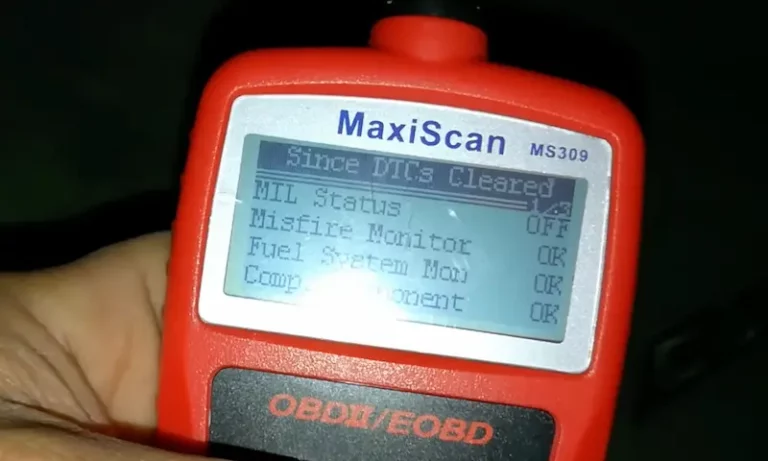
Yes, you can technically force-pass readiness monitors. But should you? Absolutely not. It is illegal, it is risky, and it does nothing to fix whatever caused the problem in the first place.
Forcing a readiness monitor to pass requires reprogramming the ECU, and if that is done incorrectly, you could end up with a vehicle that runs worse than before. We are talking about a car that may not start properly, throw more codes, or develop serious drivability problems that cost you far more to fix down the road.
And here is the part most people miss: forcing the monitor to pass does not fix the root cause. If something is broken in your emissions system, that problem is still there, quietly doing damage. A bad oxygen sensor, for example, does not just trip a monitor. It messes with your fuel trim, hurts your fuel economy, and can cause rough idling and poor acceleration. You cannot just reprogram your way out of that.
So before we talk about what you can and cannot do, let us back up and make sure you actually understand what readiness monitors are, why they matter, and why your vehicle might be failing them in the first place.
What Exactly Is a Readiness Monitor?
Think of readiness monitors as your car running its own internal checkup. Every time you drive, your vehicle’s onboard computer, the ECU, is quietly running self-tests on the emissions control systems. These tests are designed to confirm that every part of the emissions system is doing its job and staying within the acceptable operating range.
Depending on the make, model, and year of your vehicle, the ECU can run up to 11 separate system tests. Each test checks a different part of the emissions system, and the results are stored inside the ECU. When a smog technician plugs in their OBD-II scanner during an emissions inspection, they are reading those stored results to see whether your car passed or not.
Now, there are two types of readiness monitors, and they behave very differently.
Continuous Monitors: Always Running in the Background
Continuous monitors run every single time the engine is on. They never stop. As long as your engine is running, these monitors are actively checking systems like the misfire detection, fuel system, and comprehensive component monitoring. They do not need any special driving conditions to activate. They are just always working.
Non-Continuous Monitors: They Run Only When Conditions Are Right
Non-continuous monitors are a little more demanding. They only run when very specific driving and environmental conditions are met. Things like engine temperature, vehicle speed, throttle position, and how long the engine has been running all play a role. If those conditions are not met during your drive cycle, the monitor simply does not run, and it stays in an “incomplete” state.
This is actually one of the most common reasons people fail emissions testing. They assume that because their check engine light is off, everything is fine. But the monitors were never given the chance to complete their tests. More on that in a moment.
The Three Possible Outcomes When a Monitor Is Checked
When a technician plugs in an OBD-II scan tool and reads your monitor status, there are only three possible results for each monitor. Understanding what each one means will save you a lot of confusion at the smog station.
1. Complete (Ready)
This is the result you want. It means the ECU ran the self-test for that particular system, everything checked out, and the result was stored. The system passed. You are good to go for that monitor.
2. Incomplete (Not Ready)
This means the system tried to run the test but could not finish it, or it has not been given the right conditions to run at all. It does not necessarily mean something is broken. It might just mean your car has not been driven long enough or in the right pattern for the monitor to complete. That said, an active fault code can also prevent the test from running, so you cannot always assume it is just a driving issue.
3. Disabled
A disabled status is different from incomplete. It means the monitor has been shut down for the entire current monitoring cycle. This usually happens when there is a specific fault with the system that controls that monitor, and the ECU has determined there is no way for the monitor to function correctly under those conditions. It is essentially the ECU saying, “I cannot run this test right now, and I am not going to try.”
Here is a quick reference table to keep it all straight:
| Monitor Status | What It Means | Will You Pass Emissions? |
|---|---|---|
| Complete / Ready | Test ran and passed | Yes, for this monitor |
| Incomplete / Not Ready | Test did not run or failed to complete | No |
| Disabled | Test shut down due to a fault in the system | No |
Why Is Your Vehicle Failing the Readiness Monitor?
This is the question most car owners actually need answered. There are several reasons a vehicle will not pass readiness monitors, and not all of them mean your car is falling apart. Some are straightforward fixes. Others require a proper diagnosis. Let us go through each one.
1. The Battery Was Disconnected or Replaced
This is one of the most common reasons people show up to an emissions test and fail, even when their car seems perfectly fine. When the battery is disconnected, even for just a few minutes, the ECU loses power. And when the ECU loses power, it wipes its memory completely. Every monitor reading, every stored test result, every completed status, gone.
So if you just replaced your battery last week and drove straight to the smog station, you were probably going to fail regardless of how well your car was running. The ECU simply had no data to report.
The fix here is not complicated. You just need to drive the vehicle through a proper drive cycle so the monitors can re-run and store their results. But that takes time, and it requires the right driving conditions, which brings us to another point we will cover shortly.
2. A Repair Shop Cleared the Memory
Here is a scenario that trips up a lot of car owners. You take your car to a shop because the check engine light is on. They fix the problem and clear the fault codes. Great, right? Well, not if you are planning to go in for emissions testing right away.
Clearing fault codes also resets the readiness monitors. The ECU is back to square one, just like after a battery disconnect. All those monitor statuses go back to “incomplete,” and your car needs to be driven through the proper conditions before those monitors will show as “complete” again.
A good shop will tell you this before you leave. They will say something like, “We cleared the codes, but you need to drive it for a few days before going in for your emissions test.” If they did not tell you that, now you know.
3. Power Is Not Reaching the ECU
The ECU is the brain of your emissions system. If it is not getting a steady supply of power, it cannot run the monitor tests. And if it cannot run the tests, nothing gets stored, and nothing passes.
This can happen due to a blown fuse, a corroded ground connection, a wiring fault, or even a weak battery that is still technically “working” but not delivering consistent voltage. When all monitors show as disabled, this is one of the first things a technician should check.
4. The Engine Has Not Reached the Right Operating Temperature
Emissions systems have specific temperature requirements. Certain monitors, especially those related to the catalytic converter and oxygen sensors, will not run until the engine has warmed up fully. If the vehicle is tested before it reaches normal operating temperature, or if there is a fault with the cooling system causing the engine to run too hot or too cold, the monitors will not complete.
A thermostat that is stuck open is a classic example. The engine never fully warms up, so the catalytic converter monitor never gets the chance to run. The car looks fine from the outside, but the monitor stays stuck at “incomplete.”
5. There Is an Active Fault Code Stored in the ECU
This one is straightforward. If the ECU has detected a fault and stored a diagnostic trouble code (DTC), certain monitors will be blocked from running. The ECU is essentially saying, “There is already a known problem here. Running this test would give me meaningless results, so I am not going to bother.”
You cannot trick your way past this. The fault code needs to be diagnosed and the underlying problem needs to be repaired. Clearing the code without fixing the problem just means the code comes back, and the monitor stays incomplete.
6. The Vehicle Has Not Met the Required Driving Conditions
This is the one that surprises most people. Some monitors require very specific driving patterns to run. We are talking about things like:
- Starting the engine from a cold soak (meaning the car sat overnight and the engine is completely cold)
- Idling for a specific amount of time after startup
- Driving at a steady highway speed for a set duration
- Decelerating without using the brakes
- Accelerating at a moderate rate to a specific speed
If your daily commute is just five minutes to the grocery store and back, some of these monitors may never complete. You genuinely just have not driven the car in a way that allows the tests to run.
7. Other Electrical and Communication Issues
Beyond the main causes above, there are a handful of other issues that can prevent monitors from completing:
- Wiring problems: Damaged, frayed, or corroded wiring can interrupt the signals that allow monitors to run.
- Connector and voltage issues: Loose or corroded electrical connectors can cause intermittent failures that confuse the ECU.
- Communication protocol errors: If there is a mismatch or fault in the communication between modules in the vehicle, the OBD-II system may not be able to run or report monitor status correctly.
These are less common but worth knowing about, especially on older vehicles where wiring and connectors have had years to degrade.
Can You Actually Force-Pass a Readiness Monitor?
Let us be honest about this. Technically, yes. It can be done. But it is complicated, it is not legal, and it carries real risks that most people do not fully appreciate before they go down that road.
Here is how it works in practice. Using a specialized ECU reprogramming tool, a technician can remap the read-only portion of the ECU chip. This involves accessing and rewriting a specific file, typically a 32-bit XML file sometimes labeled “readiness,” that tells the ECU which monitor results to report. Once that file is rewritten to show all monitors as “ready,” the OBD scanner at the emissions station will read passing results.
The ECU reprogramming also removes certain factory restrictions, which is why this kind of work is usually done for performance tuning purposes rather than emissions fraud. But in the wrong hands, or with the wrong intentions, the same tools can be used to make a failing car look like it is passing.
But here is the thing. That does not fix anything. The oxygen sensor that was damaged is still damaged. The catalytic converter that was failing is still failing. The monitor just says “ready” now because you told the computer to lie. And when you drive that car, those underlying problems continue to affect how it runs, how much fuel it burns, and how much pollution it puts into the air.
In many states, tampering with emissions systems is a criminal offense, not just a fine. Shops that do this work illegally can lose their licenses. And if your vehicle is involved in an accident or inspection where the tampered ECU is discovered, you could be facing serious legal and financial consequences.
So yes, it can be done. No, you should not do it.
The Right Way to Pass Readiness Monitors Without Shortcuts
Now let us talk about what you should actually do. Getting your monitors to pass legitimately is not as complicated as it might seem. It just takes a bit of patience and the right approach. Here are the steps that work.
Step 1: Fix Any Active Fault Codes First
This is non-negotiable. Before you do anything else, grab a scan tool or take your car to a shop and check for stored diagnostic trouble codes. If any codes are present, do not clear them yet. Read them, understand what system is affected, and get the underlying problem diagnosed and repaired.
Clearing codes without fixing the problem is a waste of time. The code will come back, the monitor will stay incomplete, and you will be back to square one. Fix the problem first. Then clear the codes.
Step 2: Let the Car Sit Overnight
Many readiness monitors, especially the catalyst monitor and the evaporative emissions monitor, require a “cold soak” before they will run. This means the engine needs to sit completely cold for at least 8 hours before you start the drive cycle. If your car was running two hours ago, it is not ready for the test yet.
Park it overnight. Let it sit. Come back to it in the morning when the engine is stone cold.
Step 3: Follow a Proper OBD-II Drive Cycle
This is where most people get confused. A drive cycle is not just “drive the car for a while.” It is a specific sequence of driving conditions that allows each monitor to run its self-test. Here is a general drive cycle that works for most vehicles:
- Cold start: Start the engine from cold and let it idle for about 10 minutes without turning on accessories like the AC. This allows the oxygen sensor heater monitor and the misfire monitor to run.
- Highway driving: Drive at a steady highway speed, around 55 to 65 mph, with a constant throttle position for at least 15 minutes. Avoid aggressive acceleration or deceleration during this phase. This is when the catalyst monitor typically runs.
- Deceleration: Allow the vehicle to decelerate naturally from highway speed without pressing the brake. Just lift your foot off the gas and let the car slow down. This helps run the fuel system monitor.
- City driving: Drive at moderate speeds, around 25 to 45 mph, for about 10 minutes. Include some gentle acceleration and coasting. This covers several non-continuous monitors.
- Idle again: Come to a stop and let the engine idle for about 5 minutes. Do not turn the car off.
Some manufacturers have their own specific drive cycles that are slightly different. If your vehicle has a known issue getting certain monitors to complete, it is worth looking up the manufacturer-specific drive cycle for your make and model.
Step 4: Do Not Disconnect the Battery
This should go without saying at this point, but do not disconnect or replace the battery right before an emissions test. If your battery needs to be replaced, do it well in advance of your test date, then complete a full drive cycle before going in.
Step 5: Make Sure Power Is Getting to the ECU
If all your monitors are showing as disabled and you have not done anything to reset the ECU recently, check the basics. Look at the fuses related to the ECU and OBD-II system. Check the ground connections at the battery and on the engine block. A loose or corroded ground is a surprisingly common cause of ECU power issues and can be fixed in 20 minutes with a wrench and some sandpaper.
Step 6: Drive It for a Few Days If Needed
Sometimes, a single drive cycle is not enough. If your monitors are still showing as incomplete after one proper drive cycle, just keep driving the car normally for a few days. Put about 100 to 300 miles on it, mixing highway and city driving. Check the monitor status with your scan tool after each day of driving. You will usually see more and more monitors flip to “complete” as the days go on.
Patience is genuinely your best tool here.
Understanding the Individual Readiness Monitors (And What They Are Actually Checking)
It helps to know what each monitor is actually doing. That way, if a specific monitor is stuck at “incomplete,” you have a better idea of where to look for the problem.
Continuous Monitors
- Misfire Monitor: Watches for engine misfires that could damage the catalytic converter or increase emissions. Runs all the time. If you have a misfire, this monitor will flag it fast.
- Fuel System Monitor: Checks that the fuel delivery system is operating within the correct air-to-fuel ratio range. A clogged fuel injector or a failing fuel pressure regulator can cause this monitor to flag issues.
- Comprehensive Component Monitor (CCM): This is a broad one. It monitors sensors, actuators, and circuits throughout the engine management system. Basically, it is checking that all the inputs and outputs the ECU relies on are functioning correctly.
Non-Continuous Monitors
- Catalyst Monitor: Tests the efficiency of the catalytic converter. This is one of the pickiest monitors when it comes to drive cycle requirements. It needs the engine fully warmed up and a sustained period of steady driving to run.
- Heated Catalyst Monitor: Similar to the catalyst monitor but specifically for vehicles with a heated catalytic converter. Not all vehicles have this.
- Evaporative System (EVAP) Monitor: Checks the evaporative emissions system for leaks. This is the system that prevents fuel vapors from escaping into the atmosphere. A loose gas cap is enough to cause this monitor to fail.
- Secondary Air System Monitor: Checks the secondary air injection system, which helps reduce emissions during cold starts. Not all vehicles have this system.
- Oxygen Sensor Monitor: Tests the upstream and downstream oxygen sensors for proper response time and output range. A sluggish or dead oxygen sensor will cause this monitor to fail and will also mess with your fuel economy.
- Oxygen Sensor Heater Monitor: Checks that the heater inside the oxygen sensor is working. The heater gets the sensor up to operating temperature faster during cold starts, which reduces cold-start emissions.
- EGR System Monitor: Tests the exhaust gas recirculation system, which helps reduce nitrogen oxide (NOx) emissions by recirculating a portion of exhaust gas back into the intake.
Here is a quick summary table:
| Monitor Name | Type | What It Checks |
|---|---|---|
| Misfire | Continuous | Engine misfires |
| Fuel System | Continuous | Air-to-fuel ratio accuracy |
| Comprehensive Component | Continuous | Sensors, actuators, circuits |
| Catalyst | Non-Continuous | Catalytic converter efficiency |
| EVAP System | Non-Continuous | Fuel vapor leak detection |
| Oxygen Sensor | Non-Continuous | O2 sensor response and output |
| O2 Sensor Heater | Non-Continuous | O2 sensor heater function |
| EGR System | Non-Continuous | Exhaust gas recirculation function |
| Secondary Air System | Non-Continuous | Cold-start emissions reduction |
What Happens If You Show Up to Emissions Testing With Incomplete Monitors?
Most states allow a small number of incomplete monitors and still consider the vehicle to have passed. The exact number depends on the state and the model year of the vehicle. Generally speaking:
- For 1996 to 2000 model year vehicles, typically up to 2 incomplete monitors are allowed.
- For 2001 and newer vehicles, most states only allow 1 incomplete monitor.
- If there are no fault codes stored and the monitors that did run all passed, some states will still issue a pass with 1 incomplete monitor.
But this varies significantly by state, so check your local regulations before assuming you will get a pass. California, for example, is notoriously strict about emissions standards, while other states have more lenient rules.
The worst thing you can do is show up to the test station assuming incomplete monitors will be overlooked. Get them completed first. It saves you the test fee and the hassle of coming back.
Common Mistakes Car Owners Make With Readiness Monitors
Over the years, these are the mistakes that come up again and again. Avoid these and you will save yourself a lot of frustration.
Going to the Emissions Test Immediately After a Battery Change
As we covered earlier, a battery change wipes the ECU memory. If you drove straight from the auto parts store to the smog station, you were almost certainly going to fail. Give yourself at least a week of normal driving after any battery change before going in for emissions.
Assuming the Check Engine Light Being Off Means the Monitors Are Ready
No check engine light does not mean all monitors are complete. The light only comes on when there is an active fault code. If the memory was recently cleared, there are no fault codes to trigger the light, but the monitors are still showing as incomplete. Always check monitor status with a scan tool before going in for testing.
Clearing Codes Without Fixing the Problem
This one wastes time and money. Clear a code without fixing the issue, and the code comes back within a short drive. Now your monitors are reset, your fault code is back, and you are exactly where you started, except with fewer miles on your tires and more frustration.
Not Knowing What Drive Cycle Your Specific Vehicle Needs
Different makes and models have different drive cycle requirements. A generic OBD-II drive cycle will work for most vehicles, but some manufacturers have very specific procedures. Toyota, Ford, GM, and Honda all publish their own drive cycle procedures. If your monitors are stubbornly staying incomplete after multiple generic drive cycles, it is worth looking up the specific procedure for your vehicle.
How to Check Your Own Readiness Monitor Status at Home

You do not need to take your car to a shop just to check monitor status. A basic OBD-II scanner can do this at home in about five minutes. Here is what you need:
- An OBD-II scan tool (basic ones start around $25, and mid-range options that show monitor status clearly go for $50 to $150)
- Access to the OBD-II port, which is usually located under the dashboard on the driver’s side
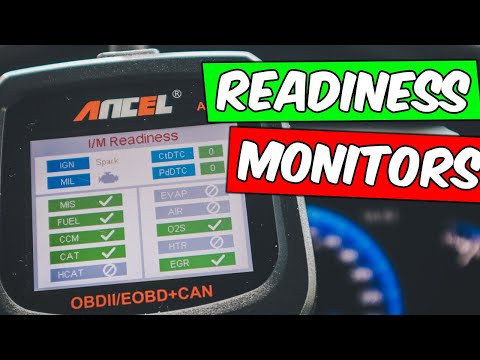
Plug the scanner in, turn the key to the “on” position without starting the engine, and navigate to the “I/M Readiness” or “Monitor Status” section of the scanner’s menu. You will see a list of all the monitors and their current status. Any monitor showing “incomplete” or “not ready” is one you need to address before going in for testing.
Some newer scan tools and smartphone-connected OBD-II adapters (like those used with apps on your phone) also show this information. They are a great investment if you want to keep an eye on your car’s health without always paying for a shop visit.
When to Call in a Professional
There are situations where the DIY approach just is not going to cut it. Here is when you need to take the vehicle to a qualified technician:
- You have completed multiple proper drive cycles and specific monitors still refuse to run or complete.
- Your scan tool shows active fault codes that you cannot identify or do not feel confident diagnosing.
- Monitors are showing as “disabled” rather than “incomplete,” which usually indicates a deeper system fault.
- Your vehicle has known issues with the catalytic converter, oxygen sensors, or EVAP system that require component replacement.
- The ECU itself may be faulty or experiencing internal errors that prevent monitors from running.
A good shop will not just clear your codes and send you on your way. They will diagnose the root cause, fix it properly, and then advise you on the drive cycle you need to complete before coming back for your emissions retest.
A Real-World Example: Why Skipping the Proper Fix Always Backfires
Picture this. A car owner gets a P0420 code, which means catalyst efficiency is below threshold. Translation: the catalytic converter is not doing its job. The check engine light is on, the catalyst monitor is incomplete, and the vehicle is going to fail emissions.
Instead of fixing the catalytic converter, which can admittedly be expensive, the owner finds someone willing to reprogram the ECU to force the monitor to show as “complete.” They go in for their emissions test, pass, and drive away feeling clever.
Six months later, the oxygen sensors that were also struggling to work with the failing catalytic converter have now failed completely. The fuel trim is so far out of range that the engine is running rich. Fuel economy has dropped noticeably. The engine is starting to run rough. And now, instead of just replacing a catalytic converter, they are also looking at two oxygen sensors, possible fuel injector issues from running rich for months, and a potential inspection from the emissions board because someone flagged an ECU with suspicious programming.
What would have been a $400 to $800 catalytic converter repair became a $1,500 to $2,500 mess. That is what happens when you try to outsmart the system instead of just fixing the problem.
What About Waiver Programs for Emissions Failures?
Here is something a lot of car owners do not know about. Many states that require emissions testing also have waiver programs for vehicles that fail. If you have spent a certain amount of money on emissions-related repairs and your vehicle still will not pass, you may qualify for a waiver that allows you to register the vehicle anyway.
The threshold varies by state, but it is typically in the range of $150 to $650 in documented repair costs. The repairs must be performed by a licensed shop, and you need to keep the receipts. The waiver does not mean your vehicle is now in compliance. It just means the state acknowledges you made a good-faith effort to fix it and is giving you a pass for that registration cycle.
This is a legitimate, legal option that many car owners overlook because they do not know it exists. Before you consider anything shady to get past an emissions failure, check whether your state has a waiver program. It might be exactly what you need.
Quick Reference: Steps to Get Your Readiness Monitors to Pass
- Scan for fault codes using an OBD-II tool.
- Diagnose and repair any faults found. Do not just clear the codes.
- Verify that the ECU is receiving consistent power. Check fuses and ground connections.
- Make sure the battery is secure and fully charged. Do not disconnect it.
- Park the car overnight (minimum 8 hours) for a proper cold soak.
- Complete a full OBD-II drive cycle the following morning.
- Re-check monitor status with your scan tool.
- If some monitors are still incomplete, drive the vehicle normally for a few more days (100 to 300 miles).
- Check the monitor status again before scheduling your emissions test.
- Only go in for testing when all required monitors show as “complete.”
The Bottom Line on Force-Passing Readiness Monitors
Every time someone tries to game the readiness monitor system, they are choosing a short-term win over a long-term loss. The emissions system exists for a reason. It protects the air quality in the communities we all live in, and it protects your engine from running in conditions that will shorten its life.
Forcing a readiness monitor to pass is illegal in most jurisdictions, it does not fix what is wrong with your vehicle, and it can make a small, manageable repair turn into an expensive, complicated mess. The legitimate path, diagnosing the real problem, fixing it properly, and completing a drive cycle, is genuinely not as hard as it sounds. It just takes a little time and the willingness to do it right.
If your vehicle is failing readiness monitors, that is your car telling you something. Listen to it, fix it, and you will not just pass the emissions test. You will have a vehicle that runs better, lasts longer, and costs you less in the long run. That is a deal worth taking.