
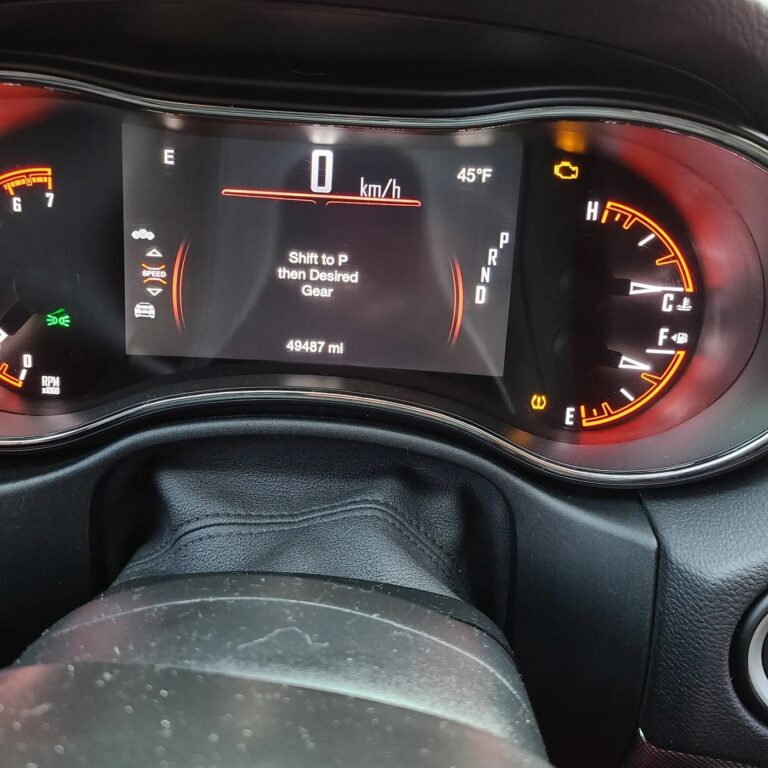
You are sitting in your Dodge, ready to pull out, and instead of the gear shifting smoothly, a message appears on the instrument cluster: “Shift To P Then Desired Gear.” The vehicle will not move. You try again and get the same result. It is confusing, and if you have never seen this message before, it is easy to assume the worst about your transmission.
Here is the thing. This message is not always a sign of a serious transmission problem. Sometimes the fix is as simple as closing a door. Other times it genuinely does point to a transmission system fault that needs proper attention. Understanding which situation you are in is the first priority.
This guide covers exactly what this message means, every possible cause, how to properly diagnose which one applies to your vehicle, and what to do to fix it.
What “Shift To P Then Desired Gear” Actually Means
The message is essentially an instruction from the vehicle’s computer: return the gear selector to Park, and then attempt to select your desired gear from Park.
Why would the system ask you to do this? Because the vehicle has detected a condition that prevents a normal gear change. Rather than allowing the transmission to shift from whatever position it is currently in, the computer is telling you to start over from a known safe position, which is Park.
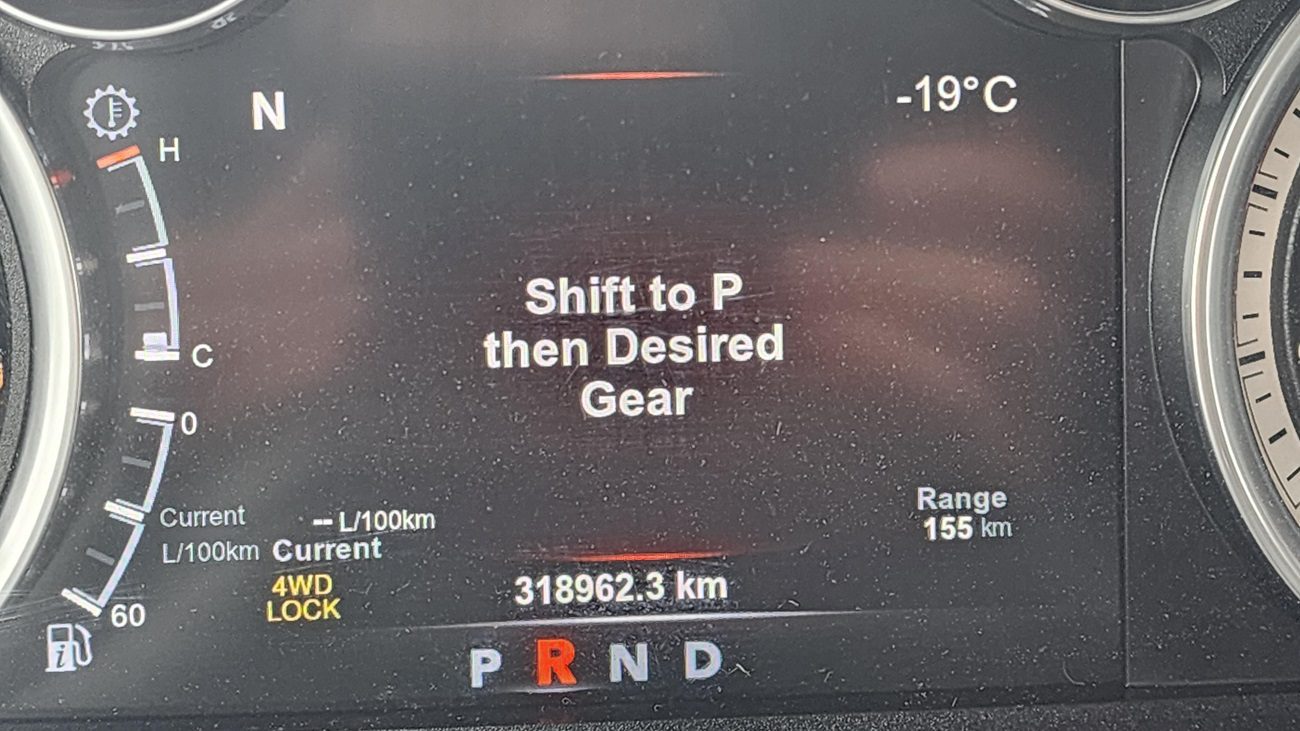
This message most commonly appears in two distinct scenarios:
- A door is open when you attempt to shift. Many Dodge vehicles have a built-in safety interlock that prevents gear changes while a door is open. This is to prevent accidental gear selection while someone is getting out of or into the vehicle, which could allow the car to roll away. If you or a passenger has a door open and you try to shift, this message appears. The fix is immediate: close the door and try again.
- A transmission-related fault is present. If the doors are all closed and the message still appears, or if closing the doors and returning to Park does not resolve it, there is a genuine fault in the transmission control system that needs to be diagnosed and repaired.
The First Thing to Try: Close the Doors and Restart From Park
Before diving into any diagnosis, do this sequence first. It takes 30 seconds and resolves the issue completely if an open door is the cause:
- Make sure all doors are fully closed and latched, not just pushed partially shut.
- Move the gear selector to Park.
- Wait a few seconds for the system to register the Park position.
- Attempt to shift to your desired gear.
If the vehicle shifts normally after this, the cause was the door interlock. No further diagnosis is needed. Just be aware of it going forward, and make sure all doors are properly closed before attempting to shift.
If the message returns even with all doors closed and from a Park position, move to the next section.
What Causes This Message When Doors Are Not the Issue
1. Damaged or Faulty Transmission Range Switch
The transmission range switch, sometimes called the park/neutral position switch or the gear position sensor, monitors the current position of the gear selector and sends that information to the Powertrain Control Module (PCM) and Transmission Control Module (TCM). The TCM uses this data to confirm what gear the driver has selected before commanding the transmission to respond.
When the range switch fails, it cannot accurately report the gear position to the computer. The PCM may receive a signal that does not match what the driver is requesting, or it may receive no signal at all. In response, the system defaults to a safe state, often locking the transmission in Park, and displays the “Shift To P Then Desired Gear” message to inform the driver.
Range switch failures can be caused by internal wear, corrosion from moisture exposure, or wiring faults at the switch connector. The switch is located either on the outside of the transmission case or in the valve body, depending on the specific Dodge model and transmission type.
2. Damaged Electric Gear Lever
Many newer Dodge vehicles use an electronic gear selector rather than a traditional mechanical shift lever. Instead of a physical linkage between the shifter and the transmission, the electronic selector sends electrical signals to the TCM to request gear changes. The TCM then actuates the transmission electronically.
If the electronic gear shifter unit develops an internal fault, whether from physical damage, electrical failure within the unit, or a connection problem at its wiring connector, it can fail to send the correct signals to the TCM. The TCM does not receive a valid gear request, cannot complete the shift, and the warning message appears.
Signs that the gear shifter itself may be the issue include buttons that feel different to the touch than they used to, no haptic or auditory feedback when pressing the shifter buttons, or the position display on the gear shifter not matching what the instrument cluster shows.
3. TCM Fault or Software Issue
The Transmission Control Module manages all shift commands, controls the transmission solenoids, and monitors every aspect of transmission operation. When the TCM develops a fault, whether from a software crash, hardware failure, electrical damage, or corrupted programming, the transmission system can become unresponsive or behave in ways that are not normal.
A TCM that is stuck in a fault state may refuse to execute gear changes and display the warning message as a result. This type of fault sometimes responds to a reset, which clears the stored fault state and allows the module to restart cleanly. Other times, the TCM has a hardware failure that requires replacement and reprogramming.
TCM faults are more likely to produce this specific warning message alongside other transmission-related fault codes, which is why pulling codes with a diagnostic scanner is so important for this issue.
4. Wiring and Connector Problems
The transmission range switch, the electronic gear shifter, and the TCM all communicate through wiring harnesses. A break in any of these wires, corrosion at a connector, or a loose connection can disrupt the signals that the TCM needs to operate correctly. The result is similar to a failed component: the TCM cannot confirm gear position, cannot receive valid shift requests, or cannot execute the shift commands it sends.
Wiring faults are particularly likely in vehicles with higher mileage, vehicles that have been in minor accidents that may have pinched or damaged harness routing, or vehicles that have had previous electrical work done where connectors were not fully reseated.
5. Damaged Door Sensors
The door ajar sensors are the components that tell the ECU whether each door is open or closed. When a door sensor fails, it can report that a door is open even when it is physically closed and properly latched. The ECU believes a door is open, activates the door interlock that prevents gear changes, and the warning message appears even though the driver can see and feel that all doors are shut.
This is a particularly frustrating cause because everything appears normal from the driver’s perspective. The doors look closed, they feel closed, but the system does not agree. A door sensor fault will typically also activate the door ajar warning light on the instrument cluster, which can help you identify this as the cause.
How to Diagnose the “Shift To P Then Desired Gear” Message
Step 1: Check the Instrument Cluster for All Warning Indicators
Look at everything on the dashboard, not just the gear message. Is there a door ajar light? If yes, one of the door sensors may be reporting an open door. Are there transmission warning lights or a check engine light? These indicate additional fault codes that need to be retrieved. The combination of warning lights tells you a lot about where the problem originates before you even use a scanner.
Step 2: Read Fault Codes With an OBD-II Scanner
Connect an OBD-II scanner and retrieve all stored and pending fault codes. On Dodge vehicles, look specifically at codes in the following categories:
| Code Type | What It Points To |
|---|---|
| P0700 series (transmission general) | Transmission control system fault, need TCM-specific codes |
| P0706 to P0712 | Transmission range sensor circuit fault |
| P0708 | Transmission range sensor high input |
| U codes (communication) | Module communication fault, possible TCM issue |
| B codes (body) | Door sensor or body electrical faults |
The specific codes stored will point you directly toward the component or circuit that has failed. Do not skip this step and start replacing parts blindly. The cost of a misdiagnosis adds up quickly when you are dealing with transmission components.
Step 3: Check the Door Sensors
If the diagnostic scanner shows body codes related to doors, or if the door ajar warning light is active with all doors physically closed:
- Identify which door the fault code is pointing to.
- Open and close that door several times while watching the door ajar indicator. If the indicator does not respond correctly to the door opening and closing, the sensor at that door is suspect.
- Inspect the door latch and striker area. Sometimes the door ajar sensor is built into the latch mechanism itself. Make sure the door closes fully and the latch engages completely. A door that appears closed but is not fully latching will also trigger the sensor fault.
- Inspect the door wiring harness at the door hinge area, where the harness flexes every time the door opens and closes. This is a common failure point where wires break internally from repeated flexing over many cycles.
Step 4: Inspect the Transmission Range Switch
If the fault codes point to the transmission range switch or sensor:
- Locate the switch on your specific Dodge model. The location varies by transmission type, but on most Dodge trucks and SUVs it is on the driver’s side of the transmission case.
- Inspect the connector at the switch for corrosion, damaged pins, or a connector that is not fully seated.
- Use a multimeter to test the switch’s resistance across its terminals in different gear positions. The readings should follow a specific pattern that changes as the gear selector is moved through its positions. Incorrect readings confirm the switch has failed.
- Check the wiring harness between the switch and the TCM for continuity and any signs of damage.
Step 5: Attempt a TCM Reset
If the fault codes suggest a TCM issue and no physical component failure has been identified, try a TCM reset before assuming the module needs to be replaced:
- Turn the ignition off.
- Disconnect the negative battery terminal.
- Wait 10 to 15 minutes. This allows the TCM’s internal capacitors to fully discharge and forces a complete restart of the module when power is restored.
- Reconnect the battery and start the vehicle.
- Attempt to shift normally and see if the warning message returns.
If the reset clears the problem and it does not return, a software fault in the TCM was the cause. If the warning returns immediately or within a short drive, the underlying hardware or wiring fault needs to be addressed.
How to Fix the “Shift To P Then Desired Gear” Warning
Fix 1: Replace the Transmission Range Switch
Once confirmed as the fault, the range switch needs to be replaced. The general process:
- Raise the vehicle safely and support it on jack stands to access the transmission.
- Locate the range switch on the transmission case. Disconnect the electrical connector.
- Remove the mounting bolts and carefully extract the switch.
- Install the new switch, ensuring the shift linkage aligns correctly with the switch’s detent positions. Misalignment here will cause incorrect gear position reporting even with a new switch.
- Reconnect the electrical connector.
- Lower the vehicle, clear the fault codes, and verify normal operation through all gear positions.
On some Dodge models, the range switch requires adjustment after installation rather than just bolt-in replacement. Consult the service manual for your specific transmission to confirm whether an adjustment procedure is required.
Fix 2: Replace the Electronic Gear Shifter
If the electronic gear shifter unit has failed, it needs to be replaced as an assembly. On most Dodge models, this involves removing the center console trim panels to access the shifter unit, disconnecting the wiring harness connector, unbolting the shifter from its mount, and installing the new unit in reverse order. After replacement, some models require the shifter to be initialized or calibrated using a diagnostic tool before normal operation is confirmed.
Fix 3: Replace or Reprogram the TCM
If the TCM hardware has failed beyond what a reset can address, replacement is necessary. A replacement TCM must be programmed to the vehicle’s VIN and specific transmission configuration. This is not a plug-and-play replacement. An unprogrammed or incorrectly programmed TCM will not function and may generate new fault codes. TCM replacement and programming is best handled by a dealer or a shop with Dodge-compatible programming software.
Fix 4: Repair Wiring Issues
Use the vehicle’s wiring diagram from the service manual to trace the specific circuit identified by the fault codes. Inspect every connector in that circuit, clean corrosion with electrical contact cleaner, and ensure all connectors are fully seated. Repair any broken or damaged wires using solder and heat-shrink tubing. After repairs, clear the fault codes and verify the system operates correctly before returning the vehicle to service.
Fix 5: Replace the Door Sensor
If a door sensor is confirmed faulty, locate the specific sensor based on the fault code. On most Dodge vehicles, the door ajar sensor is integrated into the door latch assembly. If the latch assembly needs to be replaced, the sensor comes with it as a unit. Before replacing the latch, also inspect the door hinge-area wiring harness where internal wire breaks from repeated flexing are common. Replacing the harness section at the hinge resolves many door sensor faults without replacing the latch.
Estimated Repair Costs
| Repair | Estimated Cost |
|---|---|
| Door closure check (no repair needed) | Free |
| TCM reset (DIY) | Free |
| Door wiring harness repair | $100 to $300 |
| Door sensor or latch replacement | $100 to $250 |
| Transmission range switch replacement | $150 to $400 |
| Electronic gear shifter replacement | $200 to $600 |
| TCM replacement and programming | $500 to $1,200 |
Notice the wide cost range here. A door sensor fault or a TCM reset costs virtually nothing. A TCM replacement costs significantly more. Proper diagnosis is what determines which end of that range you are dealing with. Never skip the diagnostic step and go straight to replacing the more expensive component based on assumption.
Is It Safe to Drive With This Warning Active?
If the transmission is stuck in Park and will not shift, the vehicle is not drivable by definition. Do not force the issue by trying repeatedly.
If the vehicle does shift but the warning keeps appearing intermittently, limit driving to what is necessary to get the vehicle to a shop. An intermittent transmission control fault can become a permanent one at any time, and being stranded with the transmission locked in Park in the middle of traffic is not a situation anyone wants to deal with.
Start with the simplest check, make sure the doors are closed and try from Park. If that does not work, pull the fault codes before anything else. The codes will tell you exactly where to direct the repair, and that information saves you both time and money on a vehicle system that has a well-defined set of failure causes.