
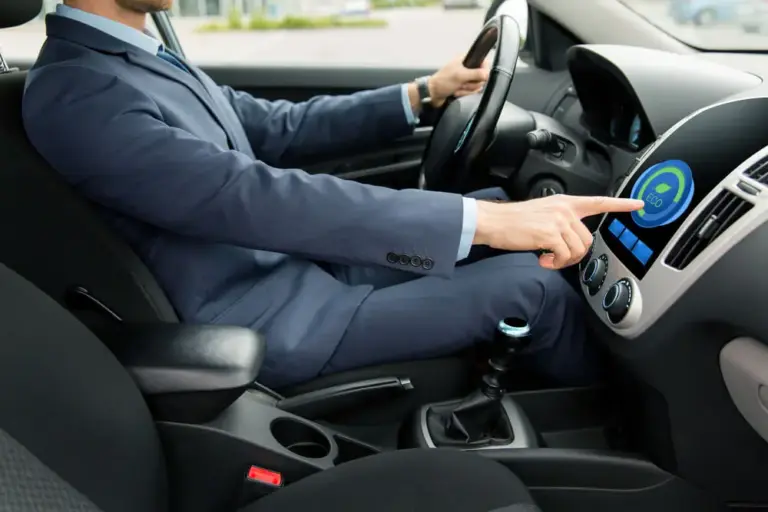
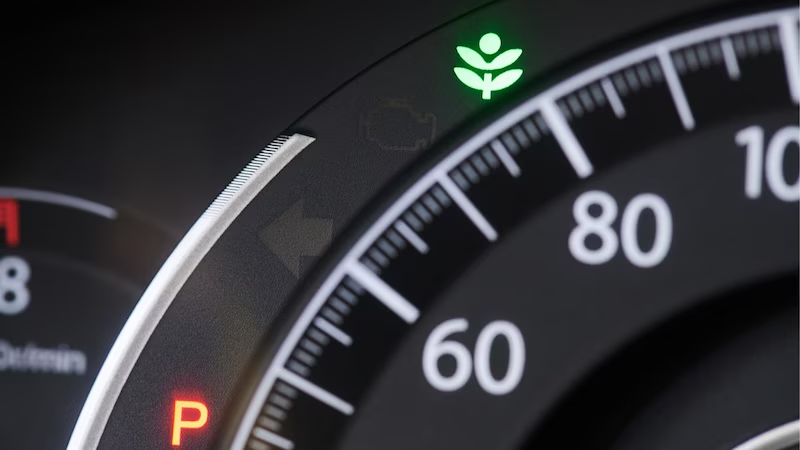
The little green leaf or “Eco” badge glowing on your dashboard can feel like a tiny victory every time it appears. It is a quiet nod of approval from your vehicle, telling you that right now, at this very moment, you are not wasting fuel. Given how painful a trip to the gas station has become, that little light has turned into a trusted co-pilot for millions of drivers. You find yourself adjusting your right foot, trying to keep it illuminated for as long as possible, turning your commute into a personal high-score challenge.
So when that light suddenly stops working, it is more than just an annoyance. It feels like a betrayal. The screen looks empty. The feedback loop is gone. And in the back of your mind, a small panic sets in. Did something break? Is the car about to start guzzling fuel without warning? Will this require an expensive trip to the shop? Before you start tearing apart the dashboard or scheduling a diagnostic appointment that might cost more than a tank of gas, let us walk through exactly what is happening, why the Eco light calls it quits, and how you can get it back without losing your mind.
What the Eco Light Actually Does for Your Wallet and Engine
The Eco light is not a gimmick cooked up by marketing teams to make you feel good. It is a real-time feedback mechanism built into the engine control unit (ECU) that monitors how efficiently you are driving. Think of it as a driving coach that never yells, never nags, and simply shines green when you are doing things right. What it measures is not just how far you push the pedal, but the entire combination of throttle angle, engine load, vehicle speed, current gear, and even accessory draw like the air conditioning compressor.
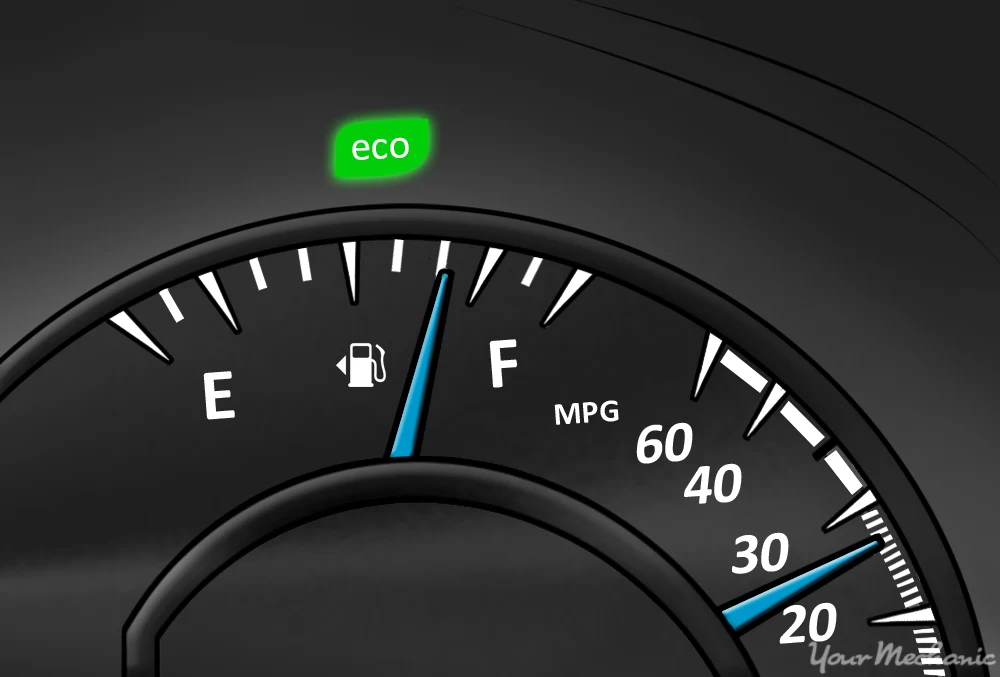
Some drivers dismiss the Eco light as useless, insisting that careful driving habits work just as well. In theory, that is true. You can hypermile without any dashboard feedback if you have the discipline to coast early, avoid jackrabbit starts, and keep your highway speed reasonable. But the real world is full of distractions. The Eco light serves as an instant, subconscious nudge that keeps you honest. Without it, your fuel economy can quietly slide backward by two or three miles per gallon without you ever noticing.
With Eco mode engaged on vehicles that go beyond a simple indicator and actually alter powertrain behavior, the system actively restricts throttle response, shifts the transmission earlier, and dials back the air conditioning compressor’s appetite for engine power. You can drive with a slightly heavier foot and the car will still filter your inputs through a fuel-saving lens. That is why losing the Eco light feels so jarring. It is like the car suddenly stopped helping you save money.
How Your Car Decides When to Turn On the Eco Light
To fix a problem, you first need to understand what normal operation looks like. The Eco light is not a simple on/off switch. It exists on a spectrum, usually represented by a bar graph or a moving indicator on your multi-information display. The closer the bar sits to the left, the better your instantaneous fuel economy. When you apply a gentle, progressive squeeze to the accelerator, the bar stays within the Eco zone and the green icon remains lit. The engine is sipping fuel, operating in a low-load, high-efficiency sweet spot that the engineers programmed into the ECU maps.
Push the pedal a little deeper, and the bar slides right, eventually leaving the Eco zone. The green light disappears. In many vehicles, the bar will start flashing to visually scold you. That is the car’s way of saying, “You just demanded more fuel than what qualifies as efficient, and I had to deliver it.” This is not a malfunction. It is the system working exactly as designed.
There is a temperature gate as well. A cold engine runs in open loop, using a richer fuel mixture to stay lit until the catalytic converter reaches operating temperature. The Eco light will refuse to appear during this warm-up phase. That is normal. No amount of feather-footing will make it come on until the coolant temperature sensor tells the ECU that the engine is ready. On a frosty winter morning, this can take several minutes of driving, not just idling.
Battery voltage also plays a role. The alternator puts a load on the engine. If the battery is weak and the charging system has to work overtime, the ECU sees that parasitic drag and might keep the Eco light off because the engine is not operating in its most efficient window. This is a detail even some technicians overlook. A battery on its way out can cause all sorts of subtle dashboard behavior, including a stubborn Eco indicator.


You can usually find the Eco light display by scrolling through the multi-information screen using the Display (or DISP) button on your steering wheel. If the screen is on a different page showing music tracks or trip mileage, the Eco indicator might be hidden. That can be the simplest “fix” of all. The system is not broken. You are just looking at the wrong screen.
Why Your Eco Light Quit and How to Bring It Back
Now we get into the real reasons the light goes dark, beyond just pressing the gas too hard or being on the wrong display page. Some causes are mechanical. Some are electrical. A few are so simple you will kick yourself for not spotting them sooner.
The Check Engine Light Overrides Everything
When your check engine light is illuminated, the Eco light will almost always remain off. The ECU is programmed with a self-preservation hierarchy. If it detects a fault that could impact emissions, misfire, or sensor accuracy, it locks out any efficiency-focused features to protect the engine and catalytic converter. The last thing the computer wants to do is lean out the fuel mixture when an oxygen sensor is lying to it, or encourage low RPM driving when a cylinder is not firing properly.
Even stored pending codes, the kind that have not yet triggered a full warning light, can suppress the Eco indicator. The system always errs on the side of caution. If your Eco light is missing and there is no obvious check engine light, it is still worth plugging in a code reader. You might find a pending P0171 lean code or a P0420 catalyst efficiency code lurking in the background, quietly turning off your fuel-saving features.
Clearing the codes will often bring the Eco light back immediately, assuming the underlying issue has been fixed. If the problem persists and the codes keep returning, you need to address the real mechanical fault. Ignoring the root cause and just trying to reset the Eco system is like putting a bandage over a nail in your tire.
The Setting That Accidentally Got Toggled Off
Many vehicles allow you to completely disable the Eco driving indicator through the settings menu. It is surprisingly easy to do this by accident. Maybe you were scrolling through the DISP options to reset a trip meter, or a passenger was playing with the buttons, and without realizing it you turned off the Eco light display.
To check, put the vehicle in park and press and hold the DISP button until the settings menu appears. Scroll through the options carefully. Look for an entry labeled “Eco Light” or “Eco Driving Indicator” and ensure it is set to On. In some Toyota models, for example, it sits within a submenu that also controls the shift indicator and the climate control eco settings. It takes thirty seconds to fix and costs nothing.
Do not skip this step. I have seen drivers pay a diagnostic fee at a shop only to have the technician press two buttons and hand the car back. You can save yourself the embarrassment and the cash by simply consulting your owner’s manual for the exact sequence.
When Your Battery Starts Fading, the Eco Light Goes With It
A weak battery does not just make the engine crank slowly on a cold morning. It can cause ghostly electrical issues all over the vehicle. The Eco light circuit depends on stable voltage from the battery to power the instrument cluster and keep the ECU’s logic happy. If the battery’s state of charge drops below a certain threshold, the system may disable non-essential indicators to conserve power.
You might notice other signs. The interior lights dim slightly at idle. The clock resets itself after shutting off the ignition. The power windows move sluggishly. If any of these symptoms are present alongside a missing Eco light, get your battery tested. It could be on its last legs. A simple voltage check with a multimeter will tell you a lot. You want to see 12.6 volts at rest with the engine off, and around 14 volts with the engine running. Anything consistently lower points to a charging or battery issue that needs attention before it strands you.
The Engine Needs to Warm Up First
This one catches newer drivers off guard all the time. The Eco light will not activate until the engine has reached its normal operating temperature. If you jump in on a cold morning, start the car, and immediately pull out of the driveway watching for the green indicator, you will be staring at an empty screen. The ECU is deliberately running a richer fuel mixture, holding lower gears longer, and sometimes even heating a secondary air injection system. None of that is compatible with the Eco light’s efficiency parameters.
The warm-up period is not just about coolant temperature. The transmission fluid, the catalytic converter, and the engine oil all need to reach a certain thermal threshold before the entire system is considered stable. In freezing temperatures, this can take a solid ten to fifteen minutes of driving, not just idling in the driveway. If your Eco light starts working after a few miles on the highway, your car is not broken. It is just doing its job.
Stomping the Accelerator Kills the Indicator Instantly
This is the most straightforward cause and the one you will encounter every single day. The Eco light disappears whenever you cross a certain throttle threshold. That threshold is calibrated to the engine’s brake specific fuel consumption map. Essentially, it is the point where asking for more power spikes fuel use beyond what any reasonable person would call efficient.
If you accelerate hard to merge onto a freeway, climb a steep grade, or pass a slow-moving truck, the bar will jump right out of the Eco zone and the light will vanish. The system is working. Once you ease back into a steady cruise, the light should return. If it does not return even when you are driving at a constant 55 miles per hour with a feather-light foot, that is when you know something else is wrong.
The Hidden Electrical and Sensor Gremlins Nobody Talks About
Beyond the five common causes we just covered, there are a few deeper issues that can keep the Eco light from working even when everything else seems fine. These are the kind that send a perfectly maintained car to the repair shop with a complaint that sounds trivial but stumps a quick diagnosis.
A failing vehicle speed sensor can confuse the ECU. If the computer cannot accurately tell how fast the car is moving, it cannot calculate fuel efficiency properly, so it just shuts the indicator off as a safety default. A glitchy accelerator pedal position sensor can have the same effect, if the ECU thinks the throttle angle is greater than it really is, it will never allow the Eco light to come on.
Even a software glitch after a battery replacement can lock the Eco indicator out. Some vehicles require a short drive cycle to relearn sensor parameters before all the driver-assist features and efficiency displays begin functioning again. If you swapped out a dead battery and the Eco light vanished, drive the car for twenty or thirty miles through varied city and highway conditions. The ECU might just need to complete a readiness monitor cycle.
In rare cases, a blown fuse in the instrument panel circuit takes out more than just the Eco light. If the entire trip computer or a section of the dashboard is dead, check the fuse box. The owner’s manual will have a diagram showing exactly which fuse protects the combination meter. A fifty-cent fuse could save you a two-hundred-dollar diagnostic fee.
What Happens Inside the Engine When Eco Mode Is Active
Understanding Eco mode beyond the dashboard indicator helps you appreciate why the light exists and why you might want it working. When you engage Eco mode in a vehicle that has a dedicated button, the ECU rewrites several key operating parameters. The most noticeable change is the throttle map. In normal mode, pressing the pedal thirty percent of the way might give you fifty percent of the engine’s available torque. In Eco mode, that same pedal position might only request thirty percent torque. The response feels softer, lazier, and that is entirely intentional.
The transmission shift schedule also changes. The gearbox chases the lowest possible engine RPM at any given road speed. It upshifts sooner, holds higher gears longer even on gentle inclines, and resists downshifting unless you really push the pedal. The goal is to keep the engine spinning in its most efficient RPM band, usually between 1,500 and 2,500 RPM in a typical four-cylinder.
Climate control takes a back seat. The air conditioning compressor might cycle less frequently, or the system may blend in more outside air instead of running the chiller full blast. Heated seats and steering wheels, if equipped, might operate at a lower output. All of this reduces the parasitic drag on the engine, freeing up power that would otherwise be consumed by accessories. In hot stop-and-go traffic, this can make the cabin slightly less comfortable, but the fuel savings are measurable over a full tank.
The fuel, air, and ignition timing adjustments are subtle. The ECU might target a slightly leaner air-fuel ratio, advance ignition timing a couple of degrees, and even adjust the variable valve timing to reduce pumping losses. These changes happen thousands of times per second. You will not feel a massive transformation, but you might notice a gentle softening of the power delivery. That softness is the price of saving money.
Can You Drive With the Eco Light On All the Time Without Consequences?
Yes. You can drive with the Eco indicator glowing green on every single trip, and your engine will not complain. There is no hidden wear penalty, no secret carbon buildup, no maintenance schedule that suddenly accelerates. The light is purely an information tool and, on some cars, a gateway to a more efficient powertrain calibration. The calibrations are designed by engineers who expect owners to use Eco mode continuously if they choose to.
In fact, leaving the Eco mode engaged is recommended for the vast majority of daily driving. It will lower your fuel bill and reduce the emissions your car pumps into the atmosphere. The only thing the light does is keep you aware of how heavy your right foot is. Many drivers swear they are smooth and gentle until they see the Eco bar flashing and realize they jab the accelerator without even thinking about it.
The computer systems in a modern car are robust enough to handle constant Eco mode use through extreme weather, long highway trips, and years of ownership. There will be no check engine light because of it, no transmission slipping, no clogged fuel injectors. Anyone who tells you otherwise is confusing old carburetor folklore with modern electronic fuel injection.
When You Should Absolutely Turn Eco Mode Off
There are situations where Eco mode stops being your friend and starts becoming a liability. The system is designed to save fuel, not to prioritize safety or performance. Knowing when to switch it off is just as important as knowing how to turn it on.
If you are climbing a long, steep grade, Eco mode will try to keep the transmission in a high gear, lugging the engine until it feels like it is shaking apart. That lugging creates excessive load on the connecting rod bearings and can increase combustion chamber temperatures. In a turbocharged engine, low RPM and high load invite low-speed pre-ignition, a silent killer that can crack ring lands. Shift into normal or sport mode, let the engine rev where it wants to, and protect your hardware.
When you need to merge onto a busy highway where the flow of traffic is moving faster than you expected, Eco mode’s lazy throttle response can leave you with a dangerous lack of acceleration. That half-second delay between your foot and the engine’s reaction might be the difference between sliding safely into a gap and having to bail onto the shoulder. Turn it off, make the merge with confidence, and then switch it back once you are settled in the lane.
Towing or carrying a heavy load is another no-go zone for Eco mode. The transmission will hunt for the highest possible gear, constantly upshifting and downshifting on rolling terrain, overheating the fluid and wearing the clutch packs faster. Use a tow/haul mode if your vehicle has one, or at least normal mode, to keep the revs up and the shifting decisive.
On a brutally hot day when you need maximum air conditioning to keep a child or pet safe in the back seat, Eco mode can reduce cooling performance noticeably. The cabin might never get truly comfortable. That is a quality-of-life sacrifice that is not worth the few cents of fuel you save. Turn off Eco, get the cabin cool, and then you can consider switching back once the interior has stabilized.
Eco Mode and Other Driving Modes: A Fuel-Saving Comparison
Most modern vehicles offer a suite of driving modes that go beyond just Eco and Normal. A typical Toyota, for instance, gives you Normal, Sport, Snow, and Eco. Each one tailors the powertrain to a different scenario. Understanding the differences helps you know when to use which, and why the Eco light might behave differently in each mode.
| Drive Mode | Throttle Response | Shift Behavior | Climate Control | Ideal Use |
|---|---|---|---|---|
| Eco | Soft, dampened | Early upshifts, resists downshifts | Reduced compressor load | City driving, highway cruising, saving fuel |
| Normal | Linear, natural | Balanced shift map | Standard cooling and heating | Everyday all-around driving |
| Sport | Sharp, immediate | Holds lower gears, higher RPM | Unrestricted | Merging, spirited driving, twisty roads |
| Snow | Gentle, anti-slip | Starts in second gear, early upshifts | May reduce cooling to prevent fogging | Low-traction surfaces, icy roads |
When you are in Sport mode, the Eco light may not appear at all even if you are driving smoothly. The mode itself prioritizes responsiveness over efficiency, so the ECU disables the indicator. In Snow mode, some vehicles still show an Eco bar because the gentle throttle mapping naturally promotes fuel-efficient driving, even if that is not the primary goal.
Common Myths About the Eco Light That Cost You Money
Misinformation spreads fast in parking lots and online forums. Let us clear up a few myths that might be keeping you from using the Eco light the way it was intended.
Myth: Driving with the Eco light on all the time will carbon up the engine. Reality: Carbon buildup is primarily caused by direct injection, oil vapor, and short trips that never let the engine get hot. The Eco light does not cause carbon. If anything, it encourages longer engine operation at its most thermally efficient range, which helps burn off light deposits.
Myth: The Eco light is a marketing trick that does not actually save fuel. Reality: Independent testing has shown that drivers using an eco indicator can improve fuel economy by five to ten percent compared to driving without any feedback. The light itself does not save fuel, but the behavioral changes it encourages do.
Myth: If the Eco light is off, the car is broken. Reality: As we covered, the light turns off for many normal, everyday reasons. Hard acceleration, cold start, checking a different display screen, all are normal. Do not assume a trip to the mechanic is required just because the light blinked out during a passing maneuver.
Myth: Using Eco mode will make the transmission wear out faster. Reality: The shift schedule is calibrated to keep the torque converter locked and reduce clutch slip. The loads are within the design limits. In fact, lower RPM operation often reduces fluid shear and heat generation compared to constant high-RPM driving.
How to Diagnose and Fix a Stubborn Eco Light That Will Not Come On
If you have verified that the engine is warm, the check engine light is off, the battery is charged, and you are driving gently, yet the Eco light remains stubbornly dark, it is time for a systematic check. You can do most of this at home with minimal tools.
- Read the owner’s manual. Find the section on warning lights and indicators. Confirm that your vehicle actually has an Eco light and that it is not a feature only included on a different trim level.
- Scroll through the multi-information display. Use the DISP button to cycle through all available screens. The Eco indicator might be on a separate page that you accidentally skipped.
- Check the Eco light setting. If your vehicle allows you to turn the indicator on and off through the settings menu, make sure it is enabled. This is buried in the MID settings on many cars.
- Inspect the battery terminals. Corroded or loose battery connections can cause intermittent electrical problems. Clean the terminals with a wire brush and tighten the clamps.
- Test the battery and charging system. A failing battery or a weak alternator can confuse the ECU. A voltage reading below 12.4 volts at rest or below 13.5 volts with the engine running indicates a problem.
- Scan for diagnostic trouble codes. Even if no warning lights are on, pending codes can suppress the Eco indicator. A simple OBD-II scanner will reveal hidden faults.
- Perform a drive cycle. After clearing codes or disconnecting the battery, drive the vehicle for at least 20 miles through a mix of city and highway conditions. Some systems need to complete readiness monitors before re-enabling the Eco light.
- Check the fuses. Look in the fuse box for a fuse labeled “Meter,” “Combination Meter,” or “Instrument Panel.” A blown fuse is a cheap fix.
- Look for technical service bulletins (TSBs). A quick online search with your vehicle’s year, make, model, and “Eco light not working TSB” can reveal a known software update that a dealer can apply.
- Consult a trusted mechanic. If you have exhausted the simple steps and the light is still missing, the issue might require a professional scan tool that can read body control module codes and perform active tests on the instrument cluster.
Real Workshop Stories: The Strangest Eco Light Fixes
After enough years in the garage, you collect a mental library of oddball fixes that make you shake your head. The Eco light has its own chapter. One customer came in frustrated that his Eco indicator had been dead for months. After checking the battery, codes, and settings with no luck, we discovered he had taped a note card over the instrument cluster to cover a different warning light. The Eco indicator was right behind the card, working perfectly.
Another vehicle, a young family’s crossover, lost the Eco light every time the rear window defroster was turned on. The defroster circuit had a weak ground that was pulling down the vehicle’s voltage reference for the body control module. Fixing the ground strap near the rear hatch brought the Eco light back to life permanently. The owner had accepted it as a quirk for two years.
A third case involved a car that would lose the Eco light in the rain. Water was entering through a cracked windshield seal and dripping onto the accelerator pedal position sensor connector. The corrosion was just enough to skew the sensor reading, making the ECU think the throttle was open wider than it was. In dry weather, everything worked. In wet weather, the Eco light vanished and the transmission would not upshift properly. A new sensor and sealed connector solved both problems.
These stories are not meant to scare you. They are proof that the Eco light is just one part of a complex electrical ecosystem. When something goes wrong, the root cause is often somewhere unexpected. The check engine light hoards all the attention, but the Eco indicator is often the first to flicker off when the vehicle’s electrical health begins to waver.
Why Paying Attention to That Little Green Leaf Keeps Your Engine Healthier
Monitoring the Eco light does more than save gas. It promotes a driving style that extends the life of your entire powertrain. Gentle acceleration reduces stress on engine mounts, CV joints, and transmission clutch packs. Lower average RPM means less piston travel per mile, which slows ring and cylinder wall wear. Coasting down in gear, which keeps the Eco bar pegged to the left, cuts fuel delivery to zero on many modern engines, pulling heat out of the combustion chambers and letting the engine cool slightly during deceleration.
Brake pads last longer when you anticipate stops and ease off the gas early. Tires wear more evenly when you are not spinning them from every stoplight. The cumulative effect of driving with the Eco light as your guide is a vehicle that ages gracefully and costs less to own over the years. The light is just a light, but the habits it reinforces translate directly to fewer shop visits.
Frequently Asked Questions That Mechanics Hear Every Week
Will using Eco mode damage my turbocharger? No. Eco mode simply reduces throttle opening and uses lower RPM. At those low loads, the turbocharger is not producing significant boost, so it operates well within its safe parameters. Lugging the engine in a high gear while towing, however, can cause low-speed pre-ignition that is hard on the engine regardless of mode. Avoid that situation and your turbo will be fine.
Does the Eco light work when I am coasting downhill? Yes. In fact, the Eco bar will usually go all the way to the left and stay there because you are using zero fuel (if the vehicle is in deceleration fuel cutoff) or very little fuel. The light sees that the fuel consumption is effectively zero and rewards you with a solid green glow.
My Eco light is flashing instead of staying solid. Is that bad? A flashing Eco zone bar typically means you have moved outside the efficient range and are burning more fuel than the system deems optimal. It is not a warning of a fault. It is an encouragement to ease off the pedal. If the light itself is flashing and the bar is not visible, that could indicate a system glitch and should be investigated.
Can I install an Eco mode if my car did not come with one? Aftermarket plug-in modules exist that modify throttle response and claim to offer an “eco” setting. They can soften the accelerator, but they cannot reprogram the transmission or climate control like a factory Eco mode. The fuel savings are questionable. You are better off using your own right foot as the eco mode.
The One Thing You Should Do Today If Your Eco Light Stopped Working
Take a deep breath. Do not panic. The most likely culprit is a simple setting, a cold engine, or a temporarily heavy foot. Walk through the easy checks with your owner’s manual in hand, and nine times out of ten you will have that green glow back before you finish your morning coffee. The Eco light is your car’s quiet way of saying, “I appreciate how you are driving right now.” When it disappears, your car is not necessarily sick. It is just trying to tell you something in a language that takes a little practice to understand.
And if the light stays off, treat it as an invitation to get to know your vehicle’s electrical system a little better. Check the battery. Clear those old codes. Inspect the fuse box. The process will make you a more confident owner, and the fuel savings that come back will reward you every mile. So, the next time you glance down and see that familiar green leaf shining back at you, you will know exactly what it took to keep it there.