
Modern GMC trucks and SUVs are rolling computers wrapped in sheet metal. They are packed with technology designed to make your life easier and your wallet heavier at the fuel pump. Among these innovations, the active grill shutter system stands out as a bit of a paradox. It is a simple set of plastic louvers, but when they fail, they can bring a wave of frustration that makes you want to pull your hair out.
You might be staring at a check engine light right now, wondering why your brand-new Sierra is acting up. Or perhaps you are hearing strange noises from the front of your vehicle. Do not panic. You are not alone, and more importantly, you have options. This guide is your roadmap to diagnosing, fixing, and preventing the dreaded GMC active grill shutter problems without emptying your savings account.
We are going to get our hands dirty here. We will talk about the nuts and bolts, the sensors, the water intrusion, and the exact steps you can take to get those shutters moving again. Let us cut through the noise and get straight to the mechanical truth.
Why Your GMC Grill Shutters Are Actually a Big Deal
Before we dive into the gritty details of failure, you need to understand why these plastic flaps exist in the first place. They are not there just to look cool or to give you something to clean. They are there for science.
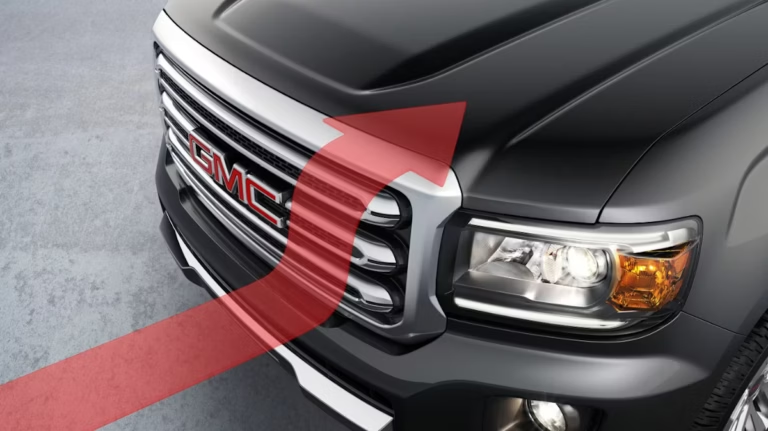
Active grill shutters are essentially aerodynamic valves. When you are cruising down the highway, the engine does not need a massive amount of air rushing through the radiator. The shutters close to smooth out the front of the vehicle. This reduces drag. Less drag means the engine does not have to work as hard. When the engine works less, it uses less fuel.
Think of it like putting your hand out the window while driving. If your hand is flat, the wind pushes hard against it. If you turn your hand sideways, the wind glides past. The shutters do this automatically for your entire truck. They also help the engine warm up faster on cold mornings by trapping heat, which reduces wear and tear over time.
So, when this system fails, you are not just losing a few miles per gallon. You are losing efficiency, and you are potentially causing stress on the cooling system. What seems like a minor annoyance can turn into a hefty repair bill if you ignore it long enough.
Common GMC Active Grill Shutter Problems and How to Spot Them
Your truck is talking to you. It is trying to tell you something is wrong. The problem is that the symptoms of a failing shutter system can be subtle, or they can be as obvious as a brick through a window. You need to know what to listen for.
Here are the most common signs that your shutters are throwing a tantrum:
- Check Engine Light (CEL): This is the most obvious indicator. The computer monitors the position of the shutters. If they do not move when commanded, the computer logs a fault code and lights up your dash.
- Poor Fuel Economy: If the shutters are stuck open, the aerodynamics of the truck are ruined. You will notice your fuel gauge dropping faster than usual, especially on the highway.
- Overheating Issues: This is less common but critical. If the shutters are stuck closed and the engine needs air, it can overheat, especially at low speeds or when towing.
- Visible Damage: Sometimes, you can see the problem. A cracked louver, a missing piece, or an actuator that looks like it has been through a war zone.
- Whistling Noises: At highway speeds, a partially open shutter can create a high-pitched whistle or wind noise that drives you crazy.
Decoding the Error Codes: P151E, P059F, and Friends
When the check engine light pops on, your first move should be to scan the computer for trouble codes. You can do this with a cheap OBD-II scanner that plugs into the port under your dashboard. If you do not have one, most auto parts stores will scan it for free.
Here is what those cryptic codes actually mean:
| Code | Meaning | Common Cause |
|---|---|---|
| P151E | Grille Shutter Position Sensor Circuit Malfunction | Wiring damage or a faulty sensor inside the actuator. |
| P059F | Active Grille Air Shutter Position Performance | The shutters are stuck or moving slower than expected. |
| P069E | Fuel Pump Control Module Requested MIL | Often a secondary code triggered by the shutter issue. |
| U1510 | Lost Communication with Device | Water ingress in the connector, causing a short. |
Do not just buy a new part based on the code alone. That is a rookie mistake. The code tells you where the problem is, but not what the problem is. You need to inspect the wiring and the physical condition of the shutters before you spend any money.
The Real Culprits: Water, Dirt, and Cold Weather
In the real world, these shutters live a harsh life. They sit right behind the grille, facing the brunt of the road. They get hit with rain, snow, salt, and rocks. It is a tough job for a plastic part.
Water Intrusion: The Silent Killer
The number one reason for GMC active grill shutter problems is water. The actuator is an electric motor with a gearbox inside. It has a breathing hole to equalize pressure. When you drive through a deep puddle or use a pressure washer on the front of your truck, water can get into that motor.
Once water gets inside, it causes corrosion. The pins in the connector turn green. The circuit board shorts out. The motor seizes. It is a slow, painful death for the component. If you are handy, you can sometimes fix this by disconnecting the battery, unplugging the connector, and spraying it with electrical contact cleaner. But if the motor is already corroded, you are better off replacing it.
Debris and Impact Damage
Think about the last time you drove behind a semi-truck on the interstate. Rocks were flying everywhere. Your shutters are right in the line of fire. A single large rock can crack the plastic frame or break the linkage arms that connect the louvers.
Even without a direct hit, dirt and road grime build up on the pivot points. This creates friction. The actuator has to work harder to move the shutters. Eventually, the motor burns out or the plastic gears strip. If you live on a gravel road, you are going to have a higher rate of failure than someone who only drives on clean pavement.
Which GMC Models Are Most Affected?
While the technology is similar across the board, some models have a higher reported incidence of failure. This is often due to the specific placement of the shutters or the design of the front bumper.
The GMC Sierra 1500 and the U1510 Code
The Sierra 1500 is a fantastic truck. It is powerful, comfortable, and capable. But owners of the 2018 and 2019 models have reported issues with the active grill shutters. The most common complaint is the U1510 code, which indicates a loss of communication with the actuator.
In many of these cases, the primary cause is water ingress in the connector at the motor. The connector sits low in the front of the truck, making it prone to catching water splash from the tires. If you are experiencing this, the first step is to check that connector. If you see green corrosion, clean it out with a pick and some electrical cleaner. Seal it up with dielectric grease to prevent future water intrusion.
Yukon and Terrain: Similar Systems, Similar Headaches
The Yukon and the Terrain also use active shutters. While they are not as notorious as the Sierra, they are not immune. The Yukon, with its massive front end, can suffer from ice buildup in the winter. When ice freezes the shutters closed, the actuator tries to force them open. This can strip the gears inside the motor.
For the Terrain, the shutters are often smaller and more delicate. A simple fender bender, even a minor one, can knock the linkage out of alignment. Always inspect the shutters after any front-end impact, no matter how minor it seems.
DIY Fix: How to Solve GMC Active Grill Shutter Problems Effortlessly
Here is the good news. You do not have to be a master mechanic to fix this. With a few basic tools and some patience, you can solve this problem in your driveway. Here is how to do it step by step.
Step 1: Visual Inspection and Cleaning
Park your truck on a flat surface and turn it off. Look through the grille. Can you see the shutters? Are they stuck in one position? Grab a flashlight and take a closer look.
Check for leaves, sticks, or dead bugs blocking the mechanism. Use a screwdriver to gently pry the louvers open and closed. They should move freely. If they feel gritty or stiff, they need a cleaning. Spray them down with a gentle degreaser and a soft brush. Rinse with a hose. Be careful not to use a pressure washer, as that can force water into the motor.
Step 2: The Connector Check
This is where most of the magic happens. Locate the actuator. It is the black plastic box attached to the side of the shutter assembly. Follow the wiring harness to the connector.
Twist the connector and pull it off. Look at the pins. Are they shiny and clean? Or are they green and crusty? If they are dirty, clean them with a contact cleaner and a small wire brush. Apply a generous amount of dielectric grease to the connector before plugging it back in. This grease keeps water out and ensures a solid electrical connection.
Step 3: Manual Reset and Relearn
Sometimes, the shutters just get confused. The computer stores a last known position and gets stuck on it. You can try a manual reset.
Disconnect the negative battery terminal for about 30 minutes. This drains the residual power from the capacitors and resets the computer. After reconnecting the battery, turn the key to the ON position but do not start the engine. Wait a few seconds. You might hear the shutters cycle through a self-test. Start the truck and see if the code clears. If it does, you just saved yourself a trip to the dealership.
Step 4: Replacing the Assembly
If cleaning and resetting do not work, you need to replace the assembly. This is not a hard job, but it is a bit tedious because of the tight space.
Here is the quick rundown:
- Disconnect the battery to avoid any electrical shorts.
- Depending on your model, you may need to remove the top radiator cover or the front bumper fascia to access the shutters.
- Unplug the electrical connector from the actuator.
- Remove the mounting screws or push-pins holding the assembly to the radiator support.
- Slide the assembly out. It might take some wiggling.
- Install the new assembly. Make sure you buy a genuine GM part or a high-quality OEM equivalent. Cheap aftermarket parts often fail quickly.
- Reconnect everything and test the system.
If you are replacing the lower shutter assembly, be prepared for a bit more work. You might have to remove the splash shield underneath the truck to get to it.
Prevention: Keeping the Shutters Alive
An ounce of prevention is worth a pound of cure. Here are some tips to keep your shutters functioning for years to come.
- Wash Carefully: Avoid using high-pressure spray directly on the grille. Use a lower pressure setting and a wide fan pattern.
- Winter Prep: Before a snowstorm, spray the shutters with a silicone-based lubricant. This helps prevent ice from bonding to the plastic.
- Clear Debris: Once a month, take a minute to pick out any leaves or debris from the front of the radiator.
- Address Codes Quickly: Do not let a check engine light sit for months. A small issue can turn into a fried motor if you ignore it.
When to Call the Pros vs. DIY
We have covered a lot of ground here. But there is a limit to what a driveway mechanic can do. If you have tried the cleaning and the reset, and you are still seeing the code, it is time to bring in the big guns.
If your truck is still under warranty, do not touch anything. Take it straight to the dealership. They will replace the faulty parts for free. If you are out of warranty, you still have options. A good independent mechanic who specializes in GM vehicles will have the diagnostic tools to pinpoint the exact issue.
Do not be afraid to ask the mechanic to show you the faulty part. A reputable shop will be happy to show you the cracked louver or the corroded motor to justify the repair cost.
What About the Chevy Counterparts?
We have focused on GMC, but it is important to know that Chevy trucks and SUVs use the exact same systems. If you own a Silverado, a Tahoe, or a Suburban, the same GMC active grill shutter problems apply to you.
In fact, the Chevy Cruze Eco, Volt, Malibu, and Impala also feature active aero shutters, identifiable by the RPO code VTI. These cars are known for a specific issue where the lower grille shutter remains open and refuses to close. This is usually a mechanical failure of the linkage. Replacing the lower grille shutter assembly is the only reliable fix for this. The parts are affordable, and the labor is straightforward if you are willing to get under the car.
The bottom line is that whether it is a Chevy or a GMC, the physics are the same. The parts are similar, and the fixes are identical.
The Hidden Cost of Ignoring the Problem
We get it. The check engine light is on, but the truck runs fine. You figure you will deal with it later. That is a costly mistake.
When the shutters fail in the open position, your truck is constantly fighting the wind. Over a year, that can cost you an extra $150 to $200 in fuel. But the bigger risk is when they fail in the closed position. If that happens, you run the risk of overheating your transmission or your engine. A blown head gasket or a cooked transmission will cost you thousands of dollars to fix. Replacing a $200 shutter assembly now is a lot cheaper than replacing a $5,000 transmission later.
Think of the shutters as the gatekeepers of your engine’s health. You need to keep them operational to ensure the whole system breathes properly.
Final Thoughts on GMC Active Grill Shutter Problems
Dealing with these issues is a rite of passage for many GMC owners. It is a known weak point in an otherwise stellar lineup of vehicles. But here is the silver lining: it is a fixable problem. It is not like a transmission failure or a blown engine. It is a plastic part that wears out or gets damaged.
You have the knowledge now. You know the codes. You know the symptoms. You know how to fix them. The next time your check engine light comes on, you do not have to fear the worst. You can grab your tools, pop the hood, and take control of the situation.
Have you dealt with a stuck shutter? Did you fix it yourself or take it to a shop? The community wants to hear your story. Share your experience in the comments below and help the next guy out.