

If your Mazda’s dashboard has lit up with the “Smart Brake System Malfunction” warning, that is not a message you want to dismiss, especially when you are navigating busy city streets or highway traffic. The Smart Brake System is one of the most practical active safety features Mazda has built into its modern lineup, and when it stops working correctly, you lose a layer of protection that can genuinely make a difference in a close-call situation.
This guide will walk you through what the system actually does, what causes it to malfunction, and what needs to happen to get it working properly again.
What Is the Mazda Smart Brake System and How Does It Work?
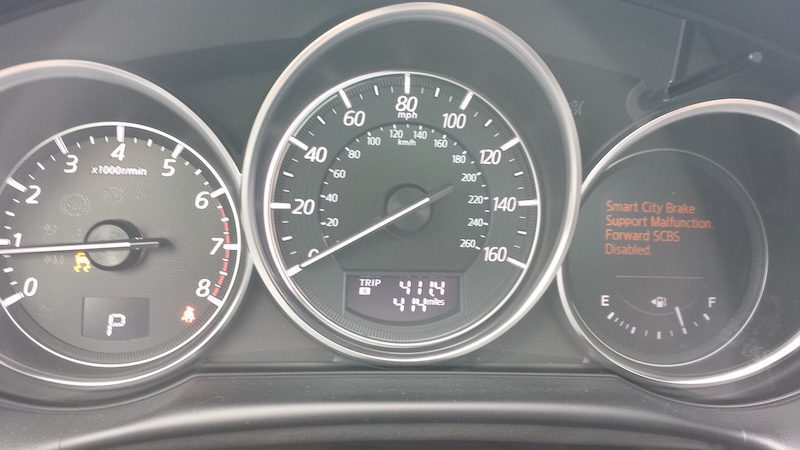
Mazda’s Smart Brake System, more formally called the Smart City Brake Support (SCBS), is a collision mitigation system designed to detect potential front-end collisions and intervene before impact. It is specifically built for the kind of slow-moving, stop-and-go city driving where most low-speed collisions happen.
The system operates within a speed range of approximately 4 to 30 km/h (roughly 2.5 to 18 mph). At those speeds, a windshield-mounted laser or camera-based sensor continuously scans the road ahead for vehicles, pedestrians, and obstacles. When the system detects that a collision is likely based on closing speed and distance, it does two things: it alerts the driver, and if the driver does not respond in time, it applies the brakes automatically to reduce the severity of the impact or prevent the collision entirely.
Think of it as a co-pilot that is always watching the road ahead while you are also watching. In heavy city traffic where attention slips for a fraction of a second, this system acts as a genuine safety net. When it develops a fault, that net disappears, which is why the malfunction warning matters and why it should be addressed promptly.
Affected Mazda models include the MX-5, CX-3, CX-5, CX-9, and Mazda 6, among others. The issue tends to be more common under hot or humid driving conditions, which is relevant to understanding one of the most common causes of this specific warning.
What Causes the Mazda Smart Brake System Malfunction Warning?
There are several different failure points behind this warning. Some are hardware failures. Others involve the vehicle’s electrical system or fluid condition. Here is each cause explained clearly.
1. Defective Forward Sensing Camera or Laser Sensor
This is one of the most commonly reported causes of the Smart Brake System Malfunction warning on Mazda vehicles, and it is specifically documented in Mazda’s own Technical Service Bulletins, including the 2018 TSB that references forward sensing camera overheating.
The forward sensing camera (FSC) is a critical input device for the Smart Brake System. It uses a combination of camera imaging and radar or laser sensing to detect obstacles in the vehicle’s path. When the FSC overheats in hot weather conditions, its heat radiation performance drops. The sensor can no longer reliably detect what is in front of the vehicle, so the Smart Brake System shuts itself down and displays the malfunction warning rather than continue operating with compromised detection capability.
This explains why the warning is more prevalent during summer driving in hot climates or after extended driving in direct sunlight. The FSC is mounted behind the windshield where it absorbs significant heat from solar radiation. In some cases, the warning appears during the hottest part of the day and clears after the vehicle cools down, which is a strong indicator that thermal overheating of the FSC is involved.
Physical damage to the camera or sensor, contamination of the windshield in front of the sensor, or an accumulation of dirt, ice, or film on the sensor lens can also trigger this fault by degrading the sensor’s ability to read the road ahead accurately.
2. A Failing Master Brake Cylinder
The master brake cylinder is the hydraulic heart of your braking system. When you press the brake pedal, the master cylinder converts that mechanical force into hydraulic pressure and distributes it through the brake lines to the calipers at each wheel. The Smart Brake System relies on this hydraulic circuit to apply the brakes when it intervenes automatically.
When the master cylinder develops a fault, whether from internal seal wear, external leakage, or physical damage, the hydraulic pressure it generates becomes inconsistent or insufficient. You may notice the brake pedal feeling spongy, soft, or sinking lower than normal under consistent pressure. The Smart Brake System’s control module detects the hydraulic irregularity and flags the malfunction warning because it cannot guarantee reliable automatic brake application in an intervention scenario.
A master cylinder that is slowly failing may produce the warning intermittently at first, particularly during hard braking when the hydraulic demand is highest, before progressing to a more consistent fault.
3. Low Battery Voltage
This cause surprises a lot of people because the connection between a battery and a braking safety system is not immediately obvious. But modern active safety systems like the Smart Brake System are electronically operated and require stable, adequate voltage to function correctly. A battery that is dropping below the required 12-volt threshold cannot reliably power the system’s sensors, control module, and actuators.
When voltage drops, the front radar sensor and the FSC may not receive enough power to operate within their normal parameters. The system detects this power insufficiency and shuts down, displaying the malfunction warning. A low-voltage battery can also cause the control module to lose stored configuration data, which can produce erratic warning behavior even after the battery is charged if the module needs to be reset.
If you are seeing the Smart Brake System warning alongside other seemingly unrelated electronic warnings, a failing battery is a strong suspect. It is one of the simplest and cheapest potential causes to check and should be done early in the diagnostic process.
4. Faulty Engine Control Unit (ECU)
The ECU is the central processing system of your Mazda’s electronics. It receives data from the forward sensing camera and radar sensor, processes that data, determines whether a collision threat exists, and sends the command to activate the Smart Brake System when needed. It also monitors the system continuously and reports faults when any component is not communicating correctly.
When the ECU develops a fault, whether from software corruption, a hardware failure, or damage from voltage spikes, it may be unable to properly process FSC or radar signals. It may also log incorrect fault codes, which confuses the diagnostic process. A faulty ECU can produce the Smart Brake System warning even when all the physical components of the system are working correctly, simply because the ECU is misinterpreting the data it receives.
ECU faults are among the more serious and expensive causes of this warning, so they should be confirmed through thorough diagnostic testing rather than assumed.
5. Brake Fluid Issues: Low Level, Contamination, or Leaks
Brake fluid is the hydraulic medium that transfers braking force from the master cylinder to the wheel calipers. The Smart Brake System depends on a properly functioning hydraulic circuit for its automatic braking capability. Several brake fluid-related problems can trigger the malfunction warning:
- Low fluid level: A low brake fluid reservoir can indicate either a leak in the system or worn brake pads (as pads wear, the caliper pistons extend further and the reservoir level drops). Low fluid can cause the brake system to lose hydraulic efficiency.
- Contaminated brake fluid: Brake fluid absorbs moisture over time, which lowers its boiling point and can cause internal corrosion throughout the hydraulic system. Heavily contaminated fluid can cause erratic brake behavior that the Smart Brake System’s sensors detect as a fault.
- Brake fluid leaks: A leak anywhere in the brake hydraulic circuit, whether at a caliper, a brake line fitting, or the master cylinder itself, reduces the hydraulic pressure available to the system and can trigger the warning.
6. Damaged ABS Pump or ABS System Fault
The Smart Brake System uses the ABS hydraulic unit to apply automatic braking. When the system intervenes in a potential collision scenario, it commands the ABS modulator to apply brake pressure to the wheels. If the ABS pump or modulator is faulty, the Smart Brake System cannot carry out its automatic braking function and will display the malfunction warning because it cannot guarantee it can intervene when needed.
7. Low Tire Pressure
Significantly low tire pressure affects rolling dynamics and how the vehicle’s systems interpret wheel speed data. Because the Smart Brake System factors in vehicle speed and deceleration rates when determining braking intervention thresholds, abnormal wheel behavior from low tire pressure can produce readings that trigger a system fault. This is a less common cause but worth checking as part of a complete diagnostic approach.
How to Fix the Mazda Smart Brake System Malfunction
The right fix depends entirely on what the diagnostic identifies as the root cause. Here is the step-by-step approach to working through this warning correctly.
Step 1: Run a Complete Diagnostic Scan
Before touching anything, connect a scan tool that can access Mazda-specific module codes, not just generic OBD-II powertrain codes. The Smart Brake System stores its fault codes in the ADAS (Advanced Driver Assistance Systems) module, which a generic scanner may not be able to access.
Pull codes from all accessible modules and note everything present. Common fault codes associated with the Smart Brake System malfunction on Mazda vehicles include:
| Fault Code Area | What It Typically Indicates |
|---|---|
| FSC camera fault | Camera overheating, contamination, or hardware failure |
| Radar sensor fault | Front radar sensor signal loss or hardware failure |
| SCBS control module fault | Module communication failure or internal fault |
| ABS module communication fault | ABS system not responding to SCBS commands |
| Power supply fault | Insufficient voltage to the SCBS system |
| Brake pressure fault | Master cylinder or hydraulic system issue |
The fault code tells you where to look. Work from that information rather than replacing components based on guesswork.
Fix 1: Clean or Replace the Forward Sensing Camera
If the diagnostic points to the FSC and the vehicle has been driven in hot conditions, start by checking whether the warning clears after the car has cooled down for an hour or more with the engine off. If the warning clears when cool and returns in hot weather, the FSC overheating issue documented in Mazda’s Technical Service Bulletin is likely the cause.
For the overheating-related FSC fault, Mazda’s recommended fix involves replacing the FSC with an updated unit that includes an improved thermal pad for better heat management. This thermal pad enhances the camera’s ability to dissipate heat and maintain stable operation in hot weather. Installing a replacement FSC without the updated thermal pad will likely result in the same issue recurring.
Before replacing the camera, also check and clean the windshield in the area directly in front of the FSC. A film of grime, tinting, or an aftermarket windshield coating in that area can interfere with the camera’s field of view and trigger the warning. The windshield in front of the sensor should be optically clear and free of any obstruction.
After replacing the FSC, the system must be recalibrated. This is not optional. The camera needs to be aligned to the vehicle’s specific geometry, which requires calibration equipment and a specific procedure. Installing a new camera without calibration will result in inaccurate detection and potential system faults continuing. Calibration is best done at a Mazda dealership or a shop with ADAS calibration capability.
Fix 2: Recharge or Replace the Battery
This is the cheapest and fastest check to perform early in the diagnostic process. Have the battery load-tested rather than just checking the resting voltage. A battery sitting at 12.4 volts at rest may still fail to maintain adequate voltage under the electrical load of the vehicle’s systems during operation, which is when the Smart Brake System draws power.
- If the battery tests as weak or below spec, charge it fully and retest. If it cannot hold charge adequately, replace it.
- Check the battery terminals for corrosion. Green or white buildup on the terminals creates resistance that reduces the effective voltage reaching the vehicle’s systems.
- After replacing the battery, clear the Smart Brake System fault codes and check whether the warning returns after a test drive.
Note that if you replace the Mazda 3’s battery, some model years require battery registration through the vehicle’s electronics to ensure the charging system adjusts correctly for the new battery’s capacity. Check with a Mazda dealer whether this step is needed for your specific model and year.
Fix 3: Address Brake Fluid Issues
Check the brake fluid reservoir level and condition as part of any Smart Brake System diagnosis. Here is what to look for:
- Low fluid level: If the level is low, identify why before simply topping it up. Low brake fluid is usually either a sign of worn brake pads (normal consumption over time) or a leak somewhere in the system (not normal). If pads are worn, replacement resolves both issues. If there is a leak, it needs to be found and repaired before adding fresh fluid.
- Contaminated fluid: Brake fluid that has darkened significantly from its original clear or light yellow color, or that has a burnt smell, needs to be flushed and replaced with fresh fluid meeting Mazda’s specification. Contaminated fluid should be replaced as a complete flush, not just a top-up.
- Moisture content testing: Some shops can test brake fluid for moisture content. Fluid with high moisture content needs flushing regardless of color.
Fix 4: Replace the Master Brake Cylinder
If the diagnostic confirms a master cylinder fault, replacement is the standard repair. Here is what to know about this job:
- Inspect the master cylinder for external leakage at the seals or housing before removing it. Evidence of fluid weeping from the rear of the master cylinder confirms a seal failure.
- In some cases, the master cylinder seals can be replaced individually if the cylinder bore is in good condition. However, if the cylinder itself is damaged or corroded internally, the entire master cylinder must be replaced.
- After any master cylinder work, the entire brake hydraulic system must be bled properly to remove any air that entered the system during the repair. Air in the brake lines produces the spongy pedal feel that can trigger system warnings. A proper brake bleed is non-negotiable after this repair.
- Use a master cylinder that meets Mazda’s specifications for your specific model and year. Aftermarket master cylinders that do not meet OEM specifications for pressure output can cause continued brake system irregularities.
Fix 5: Reset, Reprogram, or Replace the ECU
ECU-related issues require a layered approach before jumping to replacement:
- Check for available software updates: Mazda periodically releases ECU software updates through their dealer network that address known bugs and improve system stability. Before condemning the ECU, have a dealer check whether an update is available for your vehicle’s current software version. In many cases, a software update resolves the malfunction without any hardware replacement.
- Attempt a reset or reflash: A technician with the appropriate tools can attempt to reflash the ECU, which reinstalls the software and clears any corrupted data. This sometimes resolves software-based faults without replacing the hardware.
- Replace if confirmed faulty: If the ECU has a confirmed hardware failure, replacement is necessary. ECU replacement on Mazda vehicles requires the new unit to be programmed to match the vehicle’s VIN and configuration. This programming step is mandatory and requires either a Mazda dealership or a shop with the appropriate Mazda programming tools.

Is It Safe to Drive With the Smart Brake System Malfunction Warning On?
The vehicle will still drive normally. Your standard brakes work through an independent hydraulic circuit, and the Smart Brake System going offline does not directly disable your manual braking ability. So a short, careful drive to a shop is generally acceptable.
But here is the honest reality: with the Smart Brake System offline, you have lost automatic collision detection and automatic emergency braking. In slow city traffic, that system is one of your most active safety tools. Driving in dense traffic without it means you are relying entirely on your own reaction time if the car ahead stops suddenly. That is how most rear-end collisions happen.
Drive with increased following distances, avoid distracted driving, and get the system repaired as soon as possible rather than treating the warning as background noise.
Approximate Repair Costs for Smart Brake System Issues
Here is a realistic cost guide based on the most common causes of this warning.
| Repair Type | Approximate Parts Cost | Approximate Total Cost (with labor) |
|---|---|---|
| Diagnostic scan (Mazda-specific) | N/A | $80 to $150 |
| Battery replacement | $100 to $200 | $150 to $300 |
| Brake fluid flush | $15 to $30 (fluid) | $80 to $150 |
| Forward sensing camera (FSC) replacement | $200 to $600+ | $500 to $1,200+ including calibration |
| FSC calibration only | N/A | $150 to $400 |
| Master brake cylinder replacement | $80 to $250 | $300 to $600 |
| ECU software update or reflash | N/A | $100 to $250 |
| ECU replacement (with programming) | $500 to $1,500+ | $800 to $2,000+ |
| ABS module or pump repair | $300 to $800 | $600 to $1,400 |
The FSC replacement is one of the pricier repairs on this list, but it is also one of the more common ones on Mazda vehicles showing this specific warning. The calibration step adds to the cost but is not optional. An uncalibrated FSC will produce either continued warnings or, worse, inaccurate collision detection that could result in unexpected braking or failure to brake when needed.
Why a Mazda Dealership or ADAS-Capable Shop Matters for This Repair
The Smart Brake System falls under the category of Advanced Driver Assistance Systems (ADAS). These systems require specialized calibration equipment and manufacturer-specific diagnostic software that not every repair shop has. Here is why this matters practically:
- Generic OBD-II scanners cannot fully access the SCBS module’s fault codes or live data. You need Mazda-specific diagnostic capability for a complete picture.
- FSC replacement requires camera calibration using targets and alignment equipment. A shop that replaces the camera without calibrating it creates a system that looks fixed but is not operating correctly.
- ECU replacement requires VIN-specific programming that needs Mazda’s manufacturer software or a compatible equivalent.
- Mazda TSBs, including the FSC overheating bulletin, are most reliably accessed and implemented by dealership technicians who are kept current on manufacturer service guidance.
A reputable independent shop with dedicated ADAS capability and Mazda-compatible diagnostic tools is also a valid option. The key question to ask any shop before booking this repair is: do you have ADAS calibration equipment and the diagnostic software to access Mazda’s safety system modules?
Final Thought
The Smart Brake System on your Mazda was designed for exactly the driving situations where split-second reaction time is the difference between a close call and a collision. Get the diagnostic done with the right tools, identify whether it is the FSC, the battery, the brake hydraulics, or the ECU causing the fault, and repair it properly with the calibration steps that ADAS systems require. Letting this warning sit unresolved in stop-and-go city traffic is one of the few situations where the cost of ignoring a warning light can become very real, very fast.