
The short answer is yes, without a doubt.
If you are sitting at a red light and your car feels like it is trembling, buzzing, or fighting to stay running, worn spark plugs are almost always somewhere near the top of the suspect list. It is one of the most common reasons a customer walks into a shop saying, “My car shakes when I stop, but drives fine on the highway.”
That single sentence tells a mechanic a lot. In this guide, we are going to walk through exactly what is happening inside your engine when this occurs, how to tell if your spark plugs are the guilty party, and what you can do about it before it turns into a bigger repair bill. Grab a coffee. This one is worth reading all the way through.
What Is Actually Happening Inside That Engine of Yours
Before we point fingers at the spark plugs, it helps to understand what they are even there for. A lot of car owners know the term “spark plug” but could not tell you what it actually does if their life depended on it. No judgment here. Let us fix that right now.
The Simple Recipe Your Engine Follows
Every gasoline engine on the road runs on the same basic formula: air, fuel, and spark equal power. Mix the right amount of air with the right amount of fuel, add a spark at exactly the right moment, and you get a tiny controlled explosion inside the engine cylinder. That explosion shoves a piston downward, and thousands of these tiny explosions happening in sequence, every second, is what turns your wheels and gets you to work in the morning.
The spark plug is the part responsible for the “spark” piece of that equation. It sits inside the cylinder head and delivers a small, extremely hot bolt of electricity at exactly the right split second. Think of it as a tiny lightning bolt on a very tight schedule. Miss that schedule, or fail to deliver the spark at all, and the whole system falls out of rhythm.
Why Idling Is Actually the Hardest Test for Your Engine
Here is something most drivers never stop to consider. You would think that sitting still, just idling at a stoplight, would be the easiest thing in the world for an engine to do. In reality, it is one of the toughest moments in its entire operating range.
When you are cruising down the highway, the engine is spinning fast and carrying a lot of momentum, almost like a bicycle wheel spinning at speed. If one cylinder has a weak moment, the rest of the engine’s rotational energy just carries it through the hiccup. You barely notice.
But at idle, the engine is turning over as slowly as it possibly can without stalling out completely. There is very little momentum to fall back on. So if even one spark plug fails to ignite the fuel mixture at that moment, the whole engine loses its balance immediately. That missed explosion has a name in the automotive world. Mechanics call it a misfire, and it is the direct cause of that heavy, physical shake you feel through the steering wheel, the seat, and sometimes even the pedals.
In the real world, this is why a rough idle often disappears the moment you start driving, only to come back the next time you stop at a light. The car is not “fixing itself.” It is simply hiding the problem under a layer of momentum.
What Actually Kills a Spark Plug Over Time
Spark plugs do not just fail out of nowhere. They live in one of the harshest environments inside your entire vehicle, dealing with extreme heat, intense pressure, and constant chemical exposure thousands of times every single minute the engine runs. Over time, wear and tear catches up with them in a few predictable ways.
The Gap Gets Too Wide
Every spark plug has a tiny gap between two small pieces of metal. This is where the electrical spark actually jumps across, kind of like a miniature lightning strike crossing a gap between two clouds. That gap is measured in fractions of a millimeter, and it matters a lot more than most people realize.
Every time the plug fires, a microscopic amount of metal erodes away from that gap. It happens slowly, mile after mile, but it adds up. As the gap widens beyond spec, the electricity has to work harder to jump across it. Eventually, the spark becomes weak, inconsistent, or stops happening entirely at that plug. A weak spark is not really much better than no spark when your engine needs a strong, instant ignition to keep its rhythm.
Carbon Buildup, Also Known as Fouling
Sometimes the problem is not wear at all. Instead, a black, dry, sooty layer builds up right on the tip of the spark plug. Mechanics call this fouling, and it acts like a wet blanket thrown over a campfire. The spark still wants to happen, but the buildup smothers it before it can properly ignite the air and fuel mixture.
Fouling tends to show up in cars that mostly do short trips around town, ones that never really get the chance to warm all the way up and burn off moisture and residue. It can also happen with a dirty air filter, a fuel mixture running too rich, or an ignition system that is already struggling in other ways.
What Happens the Moment the Spark Fails
When the spark is either too weak or completely smothered, the fuel inside that cylinder does not burn the way it is supposed to. Instead of a clean, complete burn, you get a partial burn or none at all. For that brief instant, the affected cylinder becomes what mechanics call dead weight. It is not contributing power, but the other cylinders are still trying to do their job around it.
That imbalance throws off the entire rhythm of the engine. Multiply that by hundreds of firing cycles per minute, and you get the rough, jerky, uneven idle that has you gripping the steering wheel and wondering if your car is about to break down on the spot.
Other Warning Signs That Show Up Alongside a Rough Idle
Here is the thing about bad spark plugs. They rarely cause just one symptom and stop there. If your plugs are on their way out, chances are good you have already noticed, or will soon notice, at least one or two of these companions.
- Poor fuel economy. Since the plugs are not burning fuel completely, your engine has to work harder and burn more gas just to keep moving at the same speed. You will start noticing more frequent gas station visits, and your wallet will feel it before you even connect the dots.
- The Check Engine Light turns on. Modern cars are packed with sensors, and the onboard computer is watching every single firing cycle. The moment it detects a misfire pattern, it lights up that dashboard warning. A steady light usually means monitor it and get it checked soon. A flashing Check Engine Light is a different story entirely. That means a severe misfire is happening right now, and you should pull over and stop driving as soon as it is safely possible, because a flashing light often means unburned fuel is being dumped into the exhaust system, which can cook your catalytic converter in a hurry.
- Hard starts, especially in the morning. If your car cranks and cranks before finally sputtering to life, particularly on cold mornings, weak spark plugs are a very common cause. Cold, damp air makes an already weak spark even less reliable.
- Sluggish or hesitant acceleration. Step on the gas to merge onto the freeway or pass a slow driver, and instead of smooth power, you get a jerk, a stumble, or a flat spot where the car just does not seem to want to respond. That hesitation is your engine trying to compensate for one or more cylinders that are not pulling their weight.
If two or more of these are showing up together with your rough idle, that is not a coincidence. That is a pattern, and patterns point straight to the ignition system.
How to Check Your Own Spark Plugs, Step by Step
Here is some good news. Checking your spark plugs is one of the more approachable DIY jobs out there. You do not need a shop full of expensive equipment. A ratchet, an extension bar, and a spark plug socket will get you most of the way there.
Safety first. Always work on a completely cool engine. A hot engine can burn your hands badly, and pulling a plug while the metal is still hot and expanded increases your risk of damaging the soft aluminum threads inside the cylinder head. Give it at least a couple of hours after driving, or better yet, do this job first thing before you start the car at all.
- Find your spark plugs. Pop the hood and look for the ignition coils or spark plug wires sitting on top of the engine, usually lined up in a neat row.
- Disconnect one coil or wire at a time. Unclip the electrical connector carefully, then gently twist and pull the coil or wire straight up and off the plug. Work on only one cylinder at a time so the wires do not get mixed up and end up back in the wrong spot, which can actually cause its own set of misfires.
- Remove the spark plug itself. Slide your spark plug socket down the tube until you feel it seat around the plug, then turn counter-clockwise with your ratchet to loosen and remove it.
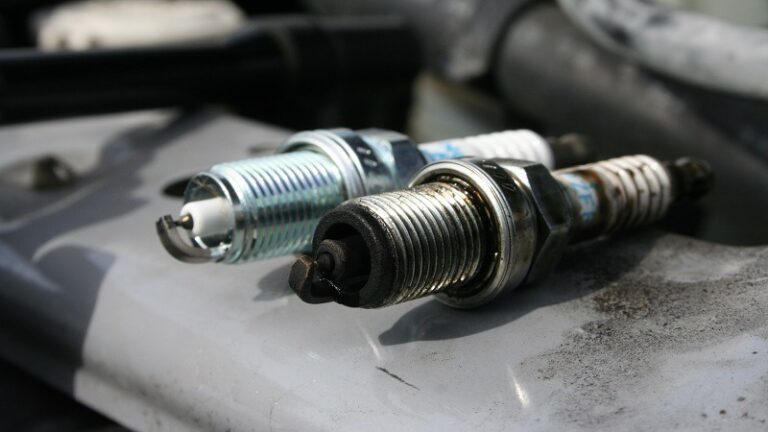
- Take a good look at the tip. Hold the plug up to good light and examine the color, texture, and condition of the metal tip. Compare what you see against the reference table further down this page.
- Reinstall or replace as needed. If the plug looks worn, fouled, or damaged, it is time for a fresh set. When threading a new plug back in, always start it by hand first, without the ratchet. This one step alone prevents cross-threading, which is one of the most common and most expensive mistakes people make on this job. Once it threads in smoothly by hand and feels snug, finish tightening it with the ratchet, but do not overtighten it. A plug that is cranked down too hard can crack the porcelain insulator or make future removal a nightmare.
One tip from the garage floor: take a photo of your engine bay before you start pulling wires. It sounds unnecessary until you are staring at four identical coil packs an hour later trying to remember which one went where.
What Your Spark Plug’s Appearance Is Telling You
Pulling a spark plug and just staring at it does not help much if you do not know what you are looking at. Spark plugs are basically tiny diagnostic tools. The tip tells a story about what is happening inside that cylinder, long before any dashboard light turns on.
| Spark Plug Condition | Visual Appearance | Common Causes |
|---|---|---|
| Normal / Healthy | Light tan or grayish tip, clean threads, no heavy buildup. | Your engine is burning fuel correctly and everything is working as designed. |
| Carbon Fouled | Dry, flat black, sooty coating over the tip. | Frequent short trips, a dirty air filter, or a fuel mixture running too rich. |
| Oil Fouled | Wet, shiny, black oily sludge covering the plug. | A leaking valve cover gasket or worn internal engine seals letting oil into the combustion chamber. |
| Worn Out | Center electrode is melted down, rounded off, or noticeably shortened. | Ordinary wear and tear. The plug has simply reached the end of its service life. |
If your plug looks anything close to that “Normal” description, the ignition system is probably not your problem, and the rough idle might be coming from somewhere else, such as a vacuum leak, a dirty throttle body, or a struggling idle air control valve. But if you see heavy fouling or a worn-down electrode, you have found your answer.
How Often Should You Actually Replace Spark Plugs?
This is where a lot of confusion happens, because not all spark plugs are built the same, and the replacement schedule can vary quite a bit depending on the metal used in the electrode. Your owner’s manual is always the final word here, since manufacturers design these intervals around the exact plugs their engineers chose for your specific engine. That said, here is the general rule of thumb across the industry.
- Copper plugs: These typically need replacing every 20,000 to 30,000 miles. You will mostly find these in older vehicles, since copper conducts electricity very well but wears down faster than other metals.
- Platinum plugs: A step up in durability, these can often last 50,000 to 60,000 miles before they need attention.
- Iridium plugs: This is the modern standard found in most newer vehicles. Iridium is extremely hard and resistant to erosion, which allows these plugs to last anywhere from 80,000 to 100,000 miles in many applications.
Here is a mistake worth avoiding. If your owner’s manual specifies iridium plugs, do not swap in copper or platinum just because they happen to be cheaper at the auto parts store. Modern engines, especially ones with direct injection or turbocharging, are tuned very precisely for the exact electrode design and gap the manufacturer specified. Using the wrong material will not just shorten the lifespan, it can bring that rough idle right back within a few thousand miles.
Spark Plug Replacement Costs: DIY Versus Shop
Since we are already deep into the topic, it is worth talking about money, because that is usually the real deciding factor between doing this job yourself or handing it to a shop.
| Approach | Typical Cost Range | Notes |
|---|---|---|
| DIY, parts only | $20 to $80 for a full set | Price depends heavily on plug material and how many cylinders your engine has. |
| Shop labor, simple engine layout | $100 to $250 total | Common on four-cylinder engines where the plugs are easy to reach. |
| Shop labor, complex engine layout | $250 to $600 or more | V6 and V8 engines, especially transverse-mounted ones, sometimes require removing intake components just to reach the rear plugs. |
If you drive something with an easily accessible four-cylinder engine, doing this job yourself on a Saturday afternoon can save you a good chunk of change. But if your rear spark plugs are buried under the intake manifold on a transverse V6, do not feel bad about paying a shop for that one. Some jobs simply are not worth the frustration, especially if you do not have a lift and a full set of tools.
Common Mistakes People Make With Spark Plug Jobs
Since we are talking shop talk here, let us cover a few mistakes that turn a simple maintenance job into a costly headache. These come up often enough that they deserve their own section.
- Cross-threading the new plug. Forcing a plug in at an angle with a ratchet, instead of starting it by hand, can strip the threads inside the cylinder head. That repair is expensive and sometimes requires a helicoil insert or even a new cylinder head in bad cases.
- Overtightening. More torque is not better here. Cranking a plug down too hard can crack the ceramic insulator or crush the gasket, leading to a poor seal and, ironically, another misfire.
- Mixing up the coil or wire order. On engines with plug wires, especially older V6 and V8 engines, putting wires back in the wrong firing order will cause severe misfires and a check engine light, even though every part is technically “new.”
- Replacing only the worst plug. If one plug is bad, the rest are usually not far behind it, since they have all seen the same mileage and conditions. Replacing only one throws off the balance between cylinders and rarely solves the problem for long.
- Ignoring the anti-seize and dielectric grease question. Some plugs come pre-coated and should not have anti-seize added, while others benefit from a light coating on the threads. Check the instructions on the box rather than assuming.
When It Is Time to Let a Professional Handle It
There is no shame in handing this job over to a mechanic. In fact, sometimes it is the smarter financial decision. If any of the following apply to your situation, consider booking a shop appointment instead of grabbing your own tools.
- Your engine bay is packed so tight that you cannot even see the rear spark plugs, let alone reach them.
- You already tried the DIY approach and now have a broken plug, a stripped thread, or a stuck coil that will not budge.
- The Check Engine Light is flashing, which points to an active, ongoing misfire that needs immediate diagnosis, not just a plug swap.
- Your rough idle persists even after fresh spark plugs are installed, which usually means the real problem is somewhere else, such as a vacuum leak, a failing ignition coil, or a dirty fuel injector.
A good independent shop or dealership technician has a scan tool that can pull misfire counts for each individual cylinder. That kind of data narrows the diagnosis down in minutes, saving you the guesswork of pulling every plug one at a time.
The Real Cost of Ignoring That Rough Idle
It is tempting to shrug off a shaky idle, especially if the car still drives fine once you get moving. But here is the thing. A misfire is not just an annoyance. It is unburned fuel being pushed straight into your exhaust system, where it does not belong.
Over time, that raw fuel can overheat and damage your catalytic converter, a part that often costs well over a thousand dollars to replace on many vehicles. A forty dollar set of spark plugs left unaddressed can eventually turn into a repair bill that is thirty times more expensive. That is not scare talk, that is simply how the exhaust system works, and it is a story mechanics see play out in the shop every single week.
So even if the shaking seems minor, it is worth taking fifteen minutes to check things out rather than letting it ride for another six months.
Frequently Asked Questions About Rough Idle and Spark Plugs
Can a single bad spark plug really cause the whole engine to shake?
Yes. Modern engines rely on every cylinder firing in perfect sequence and balance. One weak or dead cylinder throws that entire balance off, and you feel it as a vibration through the whole car, not just near that one spot in the engine.
Will new spark plugs fix a rough idle every time?
Not always, but they solve the problem more often than any other single fix. If fresh plugs do not clear it up, the next suspects are usually ignition coils, a vacuum leak, or a dirty throttle body.
How do I know if it is spark plugs or something else, like a bad ignition coil?
Pull the plugs and inspect them first, since that costs nothing but time. If the plugs look healthy and the misfire follows a specific cylinder even after swapping plugs around, the ignition coil for that cylinder is the more likely culprit.
Is it normal for a car to shake a little at idle?
A very slight vibration, especially in older vehicles or ones with big engines, can be normal. But a noticeable shake that you can see in the steering wheel or feel in your seat is not something to brush off. That is your car telling you something needs attention.
A rough idle is one of those problems your car practically hands you the answer for, if you know where to look. Pop the hood, pull a plug, and take a good look at that little metal tip. More often than not, it will tell you exactly what is going on before any diagnostic scanner ever needs to get involved. So the next time your engine starts shivering at a red light, do not just turn up the radio and ignore it. Check your spark plugs first. Your catalytic converter, and your wallet, will thank you later.