
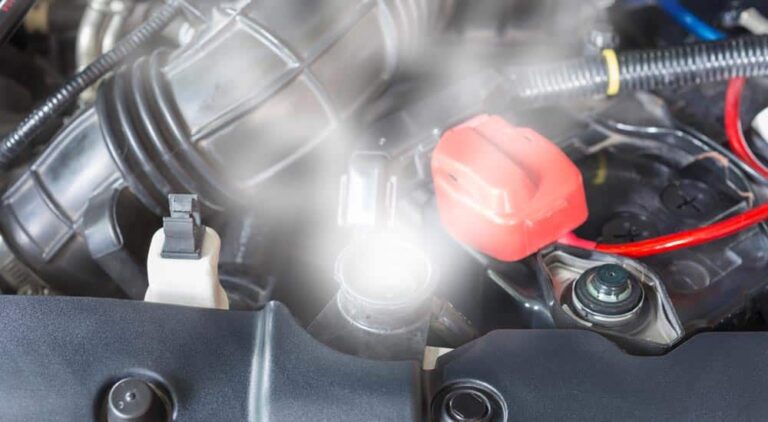
You pop the hood because the temperature gauge just jumped. The overflow bottle is empty. The radiator cap comes off and you see nothing but dry metal and maybe a smear of dried residue. No pink. No green. No orange. The engine is still ticking as it cools, and you are standing on the shoulder trying to decide whether you can limp the last few miles home.
Coolant is not an optional fluid. Without it, the engine will not run for long, and it will overheat and fail very quickly. That is not scare talk from a parts counter. That is what happens inside the block when heat has nowhere to go.
Without coolant, you can drive only a relatively short distance before critical engine damage begins. The distance, or rather the running time, differs for each engine and for the conditions under which that motor is forced to run dry.
My honest opinion is simple. Avoid driving a car without coolant, because real damage can start right after you start the engine. The first minute does not look dramatic from the driver seat. Inside the cylinder head, it already is.
The coolant’s job is to pull excess heat off the hottest parts and hold the engine in its working range, roughly 85°C to 97°C, or 185°F to 206°F, depending on the make and model. That window is where the onboard computer expects the engine to live. Leave that window and the metal starts to lose the fight.
What Coolant Actually Does While You Drive
A lot of owners think coolant is just colored water that keeps the radiator from freezing in January. That is only half the story, and the less important half on a July afternoon. Coolant is a heat taxi. It drinks heat at the head and the block, rides out to the radiator, dumps that heat into the passing air, and comes back for another load. All day. Every trip.
The mixture is usually about half ethylene glycol or propylene glycol and half water, plus additives that fight corrosion, cavitation, and mineral scale. Water is actually a better heat carrier than pure antifreeze on its own. The glycol raises the boiling point, drops the freezing point, and lets the additives stay suspended instead of settling out. You need both working together. Straight water works in a pinch. Straight water forever will eat the system from the inside out.
The thermostat decides when that heat-hauling route opens. When the engine is cold, the thermostat stays shut so the motor can reach operating temperature fast. Once it opens, coolant flows through the radiator. The water pump, almost always belt driven or driven off the timing components, keeps that loop moving nonstop. The radiator fan, electric on most modern cars, pulls extra air through the core when you are sitting in traffic and the wind coming through the grille is not enough on its own.
If any of those parts fail, or if the fluid is simply gone, the whole loop stops doing its job. Heat stays trapped in the metal instead of leaving. The gauge climbs. Then the expensive noises start.
Here is something a lot of drivers never think about. The cooling system is pressurized on purpose. A healthy cap holds the system at roughly 13 to 16 psi on most passenger cars. That extra pressure raises the boiling point of the mixture well above what it would be at atmospheric pressure. Lose the fluid and you lose that pressure too. Whatever tiny amount is left turns to steam sooner, and steam is a terrible heat carrier compared to liquid. Once the jackets fill with vapor pockets instead of flowing coolant, hot spots form fast, and hot spots are exactly where heads warp and gaskets fail.
What Happens Inside the Engine When There Is No Coolant
The parts that heat up the most are the section of the cylinder head near the exhaust manifold, the cylinder walls, and the valves. Those surfaces sit right next to the flame front and the hot exhaust gas leaving the chamber. The rest of the engine warms more slowly and unevenly. That mismatch is the first problem. The head wants to expand. The block wants to hold closer to its original dimensions. Head bolts and gasket surfaces do not enjoy that tug of war.
Because the coolant is missing, heat keeps stacking up with nowhere to escape. Temperatures climb past what the alloy was engineered to tolerate. Metal in the cylinder and piston assembly, and in the crankshaft mechanism, moves past its strength limit. Bends and mechanical deformation follow. That is not a maybe. That is simple physics for aluminum and iron pushed past their comfort zone.
That extra heat, combined with the missing coolant, also cracks things outright. Cylinder heads crack. Pistons crack or scuff against the cylinder walls. Valves burn or stick in their guides. A hairline crack in a head can dump combustion pressure straight into a cooling jacket the next time you refill the system, which is exactly how one dry-run afternoon turns into a full head gasket job even after you have added fresh fluid.
Heat that used to leave with the coolant now has to escape through the only liquid left in the engine, the oil. Engine oil does carry some heat away. That is genuinely one of its jobs. But it is nowhere close to as good at it as coolant. Oil is a lubricant first and a coolant a distant second. Its flow path and heat capacity were never designed to replace an entire cooling system. Lean on oil as your only heat management and you cook the oil, varnish the internal galleries, and still warp the head anyway.
So a car with no coolant begins taking real damage as soon as the engine reaches operating heat. You do not get a grace period measured in highway miles. You get minutes, sometimes far less, depending entirely on load and weather.
Even so, the car may keep moving the whole time. That is the cruel trap here. Combustion still happens. The crankshaft still spins. From behind the wheel it can feel like you got away with something. Meanwhile, clearances are tightening up inside, the head is twisting by a few thousandths of an inch, and the oil is thinning out by the second. Motion is not proof of health.
A Minute-by-Minute Picture of a Dry Engine
Owners always want to know what it actually feels like from the driver seat. Here is a fairly typical sequence for a modern four-cylinder that lost its coolant on a warm day. Your car will not match this timeline exactly, but the order of events tends to hold up.
In the first minute or two after a cold start, the gauge may still read normal. The mass of the surrounding metal has not soaked through with heat yet. You might notice a slightly louder mechanical tick as clearances shift with the growing heat. Most drivers never catch that early clue.
A few minutes later, the gauge begins its climb. The heater might blow hot, then oddly weak, because there is no fluid left in the heater core to carry warmth into the cabin. On plenty of cars, the heater going cold is actually the first noticeable clue. You ask for heat and get almost nothing. That points to an empty cooling system, not a broken blower motor.
Then the temperature needle heads toward the red zone, or a warning light comes on, or a message on the dash tells you to stop the vehicle. Keep driving past that point and you may smell hot metal, or catch a faint sweet odor if a little leftover coolant is baking off on the exhaust. You might hear a knock as the pistons expand and start kissing the cylinder walls. You might see steam if anything remaining in the system finally flashes to vapor.
Push further than that and you are shopping for a new engine, or at minimum a new head, a full gasket set, and a lot of machine shop time. The car will not always die on the spot either. Some engines will happily keep running while they quietly destroy themselves from the inside. That is the cruel part of this whole situation. Continued motion is not evidence that everything is fine.
How Long Can You Actually Drive Without Coolant?
I looked into this because I wanted a clean, simple number to give you. What I found instead was the answer nobody wants to hear. It depends.
A running car with no coolant begins suffering damage within the first few minutes after startup because of heat buildup. That statement is honest and still unsatisfying, I know. Too many variables sit between a gentle cold idle in January and a loaded highway climb in August. Below are the main factors worth weighing if you are trying to guess whether the next half mile is going to be cheap or catastrophic.
Engine Condition Changes the Clock
A newer engine with low mileage can sometimes hold on a bit longer because every internal part is still tight, the oil is usually clean, and the clearances match exactly what the factory intended. Bearings are happy. Rings seal properly. Heat soaks through the metal in a predictable, even pattern.
That said, a high mileage engine can occasionally tolerate thermal expansion without seizing quite as fast, simply because the clearances are already a bit looser than factory spec. Pistons have a little extra room to grow before they grab the cylinder walls. Do not read that as permission to push your luck. A tired engine also carries weaker oil pressure, more built-up sludge, and gaskets that are already halfway to failing. Surviving two extra minutes before the piston scuffs means nothing if the head cracks anyway.
In the real world, I would much rather see a clean 40,000 mile engine shut off at the very first sign of overheating than watch a 180,000 mile engine try to prove it can limp another block or two. Age alone is not a substitute for a working cooling system.
How Hard You Are Working the Engine
At idle, or when rolling along with almost no load, the engine will run longer without coolant. Less fuel is burning per minute, which means less heat is being generated and dumped into the cylinder head. A gentle idle on a mild day is about the kindest abuse you can offer a dry engine, and it is still abuse.
Climb a grade. Tow a trailer. Sit in bumper-to-bumper summer traffic with the air conditioning running. Now the fuel burn rate jumps sharply, and the fan, even if it still has fluid to work with, cannot keep up. Highway speed actually helps a healthy cooling system, since fast-moving air rams straight through the radiator core. With no coolant sitting in that radiator, however, highway speed simply adds engine load and wind noise while the head continues cooking underneath.
If you absolutely must move the car a short distance, idle it and creep along slowly. Stay off the throttle entirely. Do not assume a short on-ramp or a quick lane change is somehow harmless.
What the Engine Is Made Of
Materials genuinely matter here. So does wall thickness, fuel delivery type, and how aggressively the engine was tuned from the factory. Older engines were frequently built with more overall mass, thicker castings, and cast iron blocks and heads. Iron sheds heat far better than thin aluminum and takes noticeably longer to reach the temperature where it starts to yield. It also holds onto that heat longer once hot, which becomes a different problem the moment you finally shut it off.
Even those heavy old iron engines are hard to believe lasting more than 20 or 30 minutes running completely dry. I have heard people swear they drove clear across town in an old pickup with a bone-dry radiator. Sometimes that story checks out, and the engine happened to be loose already, the weather was cold, and they never once touched the throttle hard. Other times the story conveniently leaves out the engine rebuild that followed the next week.
Thin-walled aluminum engines in modern vehicles last a fraction of that time. Aluminum expands more per degree than iron does. The castings are made intentionally lighter for fuel economy and emissions reasons, which means there is simply less metal mass available to soak up heat before things go wrong. Turbocharged small-displacement engines are worse still, because they generate more heat inside a smaller overall package. A current four-cylinder turbo with an aluminum head can be in serious trouble before you have even finished arguing with yourself about whether the gauge is reading correctly.
Outside Temperature Still Counts
The surrounding air is your last line of cooling once the liquid is gone entirely. In winter, cold ambient air pulls heat off the block, the oil pan, and the exhaust more aggressively than warm summer air ever could. The engine will genuinely last longer without coolant in January than it would in July. That part is real. It is also exactly how people talk themselves into a bad decision.
If you start an engine with no coolant in a cold-weather environment, a reasonable expectation is somewhere around 500 to 1500 meters before serious consequences set in. That translates to roughly a third of a mile up to about a full mile. That is not enough distance for a trip to the parts store across town. It is only enough to pull safely out of a travel lane and onto the shoulder, or to coast into a parking lot you can already see ahead of you.
Liquid-cooled engines should never be operated with a failed cooling system, even during winter months. A vehicle in this condition should cover the absolute minimum distance possible. A tow truck is the correct tool for the job here. Pride has never once served as an acceptable substitute for coolant.
Why “Just a Couple of Miles” Is How Engines Die
Every repair shop has a story that starts with exactly those words. The driver knew the gauge was climbing. The driver knew the overflow bottle was bone dry. Home felt close, and it felt a lot closer than the cost of a tow truck.
A couple of miles at 45 miles per hour still adds up to several minutes of sustained load. That alone is plenty of time to warp an aluminum head on a typical four-cylinder engine. The car might still make it into the driveway. It might even start again the next morning without complaint. Then it overheats again almost immediately once you add water, because the head is no longer flat and the gasket can no longer create a proper seal. Now you are paying for machine shop work, a full gasket set, labor to pull and reinstall the head, plus whatever else the heat managed to cook along the way. The tow truck would have cost a fraction of that bill.
I tell customers to treat an empty cooling system the same way they would treat a flat tire on the freeway. You can destroy a wheel and a tire within a few hundred yards of driving on it. You can destroy an entire engine within a few minutes of running it dry. The real difference is scale. A wheel costs a few hundred dollars to replace. A modern engine can run five thousand dollars and climb from there, assuming you can even source a replacement without a long wait.
A Temporary Fix When You Are Truly Stuck
The simplest move in a genuinely desperate situation is adding plain water to the radiator or the overflow bottle, whichever one your particular vehicle uses as its fill point. Do not worry that a single tank of water will somehow poison the engine. Real harm comes from relying on water as the only fluid for weeks or months on end, not from a one-time rescue fill that simply gets you safely to a shop.
Water carries no corrosion inhibitors of its own. Water freezes at a higher temperature than a proper glycol mixture. Water also boils at a noticeably lower temperature than the correct blend. Use it to limp along, then drain and refill with the proper coolant as soon as you reasonably can. If you live somewhere nights drop below freezing, do not leave that plain water sitting in the block overnight. A frozen block quickly becomes a cracked block.
When the leak is severe enough that water runs straight back out, plugging any obvious hose ends might buy you a small amount of extra time. After that, crank the cabin heater to full blast. The heater core functions as a small secondary radiator tucked inside the dashboard. It will dump a meaningful amount of heat into the cabin air. You will be sweating. The engine will thank you for it. Keep your speed under roughly 60 to 90 km/h, which works out to about 37 to 55 miles per hour. Watch the temperature gauge constantly. If the reading climbs past 110°C or 230°F, stop immediately. Shut the engine off. Wait it out. Call for the tow truck.
Never pour cold water directly onto or into a screaming hot engine. Thermal shock alone can crack a head that might otherwise have been salvageable. Let the engine cool down until you can comfortably hold a bare hand near the radiator without instantly pulling back. Then fill slowly and carefully. Watch for fresh leaks the whole time. Burp any trapped air out of the system if you know the proper procedure, or simply fill it, idle the engine, and keep a close eye on the gauge for the short drive to get help.
How to Add Water Without Making the Situation Worse
If you have decided that a quick water fill is genuinely your only way off the road, follow a sequence that respects exactly how hot metal behaves under pressure.
- Shut the engine off completely. Open the hood. Stay clear of any steam and the electric fan, which can kick on suddenly without warning.
- Wait until both the radiator and the surrounding hoses are no longer too hot to touch safely. A serious scald from a pressurized cooling system is a genuine hospital visit.
- Open the cap slowly, using a thick rag over your hand, turning it only to the first stop position so any remaining pressure can hiss out safely. Then remove it fully.
- Add clean water. Ordinary tap water works fine for an emergency rescue. Distilled water is a better choice if you happen to have it. Do not pour in some random chemical from your trunk unless you are certain it is compatible with your system.
- Fill to the proper marked level on the bottle, or up to the neck of the radiator itself if that is how your particular system is designed.
- Start the engine back up. Set the heater to maximum. Watch the gauge closely. Check underneath the car for a stream that suggests the water is leaving just as fast as you poured it in.
- If the gauge stays out of the red zone and the leak looks like a slow drip rather than a steady stream, creep carefully toward the nearest safe stopping point. If the gauge starts climbing again, shut the engine down once more.
Understand clearly that this is not an actual repair. This is roadside first aid. The cooling system still has a hole in it somewhere, a failed gasket, a dead water pump, or a cracked component. Water only changes how far you can realistically roll before the next overheating event catches up with you.
What a Famous No-Fluid Test Actually Showed
Back in 2020, the folks at carwow ran an experiment involving a Honda, a Peugeot, and a Ford. They wanted to see which engine would survive longest running with absolutely no fluids at all. No oil. No coolant whatsoever. That is admittedly a much harsher test than the everyday question this article is answering, but it still teaches something genuinely useful about how quickly modern engines fall apart once heat and friction team up against them.
The Ford was the first to go. It ran without any obvious drama for roughly 14 seconds, then began making sounds that simply do not belong inside a running engine. By the 20th second, that engine was completely dead.
The Peugeot managed to survive 47 seconds running with no oil and no coolant before its engine failed outright.
The Honda turned out to be the genuine surprise of the group. It ran for a full 2 minutes, briefly stalled, then fired right back up and settled into holding roughly 4000 RPM on its own. The test team eventually put a driver behind the wheel and pushed the engine hard into the red zone. The Honda finally died at 6 minutes and 22 seconds. That is genuinely impressive engineering resilience. It is absolutely not a recommended driving technique for anyone reading this.

That particular test does not give us a clean, precise answer for how long you could drive with oil still in the pan but no coolant left in the water jackets. Oil sitting in the pan would have helped somewhat with heat management and considerably more with basic lubrication. Those engines still would have overheated regardless. They likely would have lasted several extra minutes rather than mere seconds. They almost certainly would not have survived an actual daily commute.
If you genuinely want a precise number for oil-in, coolant-out conditions, you would need a separate controlled test holding engine type, load, and ambient air temperature all constant. Nobody actually needs that specific test running in their own driveway. The safe, practical answer is already sitting right in front of you. Do not drive it. Tow it instead.
Oil Is a Backup Cooler Only in the Sales Brochure
People hear that engine oil carries away some heat and quietly decide that a recent oil change means they can skip worrying about coolant today. Oil genuinely does pick up heat from the bearings, the underside of the pistons, and the turbocharger if the engine has one. It dumps a portion of that collected heat into the oil pan and, on some engine designs, into a dedicated oil cooler. That cooler, on many vehicles, is itself cooled by engine coolant flowing around it.
Once the cooling jackets run completely dry, oil temperature climbs at an alarming rate. Hot oil thins out significantly. Thin oil does a much poorer job protecting bearing surfaces from wear. It also begins to oxidize and leave behind varnish deposits throughout the internal galleries. You can quietly destroy the entire bottom end of the engine while you are focused entirely on worrying about the cylinder head up top. Two separate failures for the price of one bad decision.
If the oil pressure warning light starts flickering while the temperature gauge is already sitting high, you have reached the final chapter of this story. Shut the engine down immediately. Every additional second at this point is genuinely metal grinding against metal.
Warning Signs You Are About to Cook the Motor
You will not always get a dramatic cloud of steam pouring out from under the hood. Learn the quieter warning signs so you can pull over while the engine is still salvageable.
- Temperature gauge climbing past its normal mark and refusing to come back down.
- A red thermometer warning light or a dashboard message reading engine hot or low coolant.
- Heater blowing noticeably cold when it should be putting out warm air, a classic sign of an empty system.
- A faint sweet smell or visible steam escaping from the cowl area or the front grille.
- Puddles of green, orange, pink, or yellow fluid appearing underneath the front of the vehicle.
- A sudden ticking, knocking, or noticeable loss of power right after the gauge has been reading high.
- The upper radiator hose staying oddly cold while the engine is clearly running hot, which can mean no coolant is flowing at all, or the hose going rock hard from trapped steam pressure.
Any single one of these signs is reason enough to pull over immediately. Seeing several of them together at once means you have already waited too long to act.
What to Do in the Next Sixty Seconds If the Gauge Spikes
You are already driving. The needle is rising fast. Here is the exact sequence I want fixed in your head ahead of time, so you are not trying to invent a plan while doing 65 miles per hour.
- Take your foot completely off the throttle. Turn off the air conditioning immediately. That single move cuts engine load right away.
- Turn the cabin heat to full hot and crank the fan speed to high. You are effectively using the heater core as an emergency backup radiator.
- Signal and work your way out of the travel lane as soon as it is safe to do so. Do not try to bargain for one more exit if the needle is already buried in the red.
- Shut the engine off completely once you have come to a stop. Do not sit there idling to “let it cool down” while the motor is still actively generating heat.
- Pop the hood only after you have parked somewhere safe. Do not open the radiator cap right away.
- Call for a tow truck if you cannot see any coolant remaining in the bottle, or if you cannot identify a small, slow leak that you could realistically refill and monitor.
If the gauge actually drops once you add heat and reduce engine load, you may be dealing with a marginal system that still retains some fluid. That still calls for a shop visit soon. It is not a green light to finish out your road trip as planned.
The Damage You Are Gambling Against
People often ask what “critical engine damage” actually looks like once it shows up on a repair invoice. Here is the honest breakdown, ranked from cheapest fix to genuinely life-changing expense.
| What failed | Why the dry run caused it | Typical repair range |
|---|---|---|
| Hoses, cap, or a small leak caught early | You stopped before the metal gave up | $50 to $300 |
| Thermostat or water pump | Related cooling failure, not always caused directly by running dry | $200 to $800 |
| Warped cylinder head and gasket | Uneven heat, aluminum pushed past its limit | $1,200 to $3,000+ |
| Cracked cylinder head | Thermal shock or extreme localized hot spots | $1,500 to $4,000+ |
| Scuffed pistons or scored cylinder walls | Piston expansion combined with oil breakdown | Engine rebuild or full replacement |
| Seized engine | Heat combined with friction, sometimes within minutes | $4,000 to $10,000+ or a replacement used engine |
Those figures shift depending on the specific vehicle involved. A common four-cylinder in a mainstream sedan sits at the cheaper end of the scale. A luxury V6 or anything with the cylinder head buried under a mess of intake and turbo plumbing lands squarely at the expensive end. Labor hours, far more than the actual gasket cost itself, are what really drive the final bill upward.
Compare all of that against the cost of a simple tow. A local hook is frequently somewhere between $75 and $150. A longer haul might run a few hundred dollars total. I have genuinely never written up an invoice where the customer walked away glad they had skipped calling the tow truck.
How Long Damage Actually Takes Versus How Long People Think They Have
| Situation | Realistic window before serious risk | What people often attempt anyway |
|---|---|---|
| Modern aluminum engine, summer, highway load | A few minutes, sometimes even less | Driving ten miles home |
| Modern aluminum engine, idling in mild weather | Somewhat longer than under load, still measured in minutes | Sitting with it idling while deciding what to do |
| Older iron engine, winter, light load | Maybe 20 to 30 minutes at the outside, often far less | Driving clear across town |
| Any engine, cold start, first 500 to 1500 meters in winter | Possible without immediate catastrophic failure | Stretching that short distance into an entire errand |
| No oil and no coolant, as shown in the carwow test | Seconds up to a few minutes | Nobody should ever attempt this deliberately |
Read through that middle column one more time. The right-hand column is exactly how engines end up getting replaced entirely.
Common Ways Coolant Disappears Before You Even Notice
Coolant does not typically vanish through some kind of magic. It leaves through a specific failed part, and those parts tend to have favorite hiding spots throughout the engine bay.
- A lower radiator hose or a cheap hose clamp that finally gives out on an especially hot day.
- The plastic end tanks on a modern radiator, which crack over time from repeated heat cycling and general age.
- The water pump weep hole, a deliberately designed leak path that tells you the internal pump seal has finally worn out.
- The heater core, which tends to drip quietly underneath the dashboard and produces a sweet smell through the defroster vents.
- A leaking radiator cap that can no longer hold proper system pressure, causing the system to slowly boil over.
- Head gasket seepage either into a cylinder or directly into the oil, which can quietly empty an entire system without ever leaving a visible puddle on the ground.
- The overflow bottle itself, sometimes cracked in a spot you cannot easily see until the fluid level keeps mysteriously dropping.
A quick weekly glance at the bottle while the engine is cold would catch most of these problems long before you ever ran the system completely dry. Those marks on the side of the bottle exist for a real reason. If the level keeps falling and you cannot find any external drip, the leak is happening internally inside the engine, or the coolant is simply evaporating off a hot manifold somewhere. Either way, stop driving and get it properly diagnosed. Do not keep topping it off for an entire month while quietly hoping the problem sorts itself out.
Low Coolant Is Not the Same Thing as No Coolant, Until It Suddenly Is
Plenty of people reading this article have a system that is only slightly low and immediately start to panic. A system that is down by roughly a cup, with the radiator still mostly full and the gauge reading normal, represents a leak worth tracking down this week. It is not remotely the same emergency as a completely empty set of jackets. Do not confuse the two situations, and do not ignore either one.
Low coolant becomes no coolant the very first time you sit in heavy traffic on a hot day and the remaining fluid simply cannot handle the load anymore. Air gets pulled into the water pump. The pump begins cavitating. Flow effectively stops even though you might still see a small amount of colored fluid sitting in the bottle. That is exactly why “I still had some coolant in there” never holds up as a defense after an overheating incident. Some fluid sitting stagnant is not the same as a full loop actively doing its job.
How to Check Coolant So You Never Have to Ask This Question Again
Park the vehicle on level ground. Wait until the engine has fully cooled down. Look at the translucent overflow bottle. The fluid level should sit somewhere between the marked lines. If the bottle is completely empty, do not automatically assume the radiator itself is still full. On plenty of modern vehicles, that bottle is actually the only fill point available. On other vehicles, you still have a separate radiator cap to check. Know which design your particular car uses. The owner’s manual is not optional reading when it comes to this detail.
The fluid itself should look reasonably clean, not resembling chocolate milk and not looking like rusty tea. Chocolate milk coloring indicates engine oil has mixed into the coolant, pointing to a gasket or cooler problem. Rusty tea coloring indicates corrosion, often stemming from prolonged water-only use or genuinely ancient fluid that was never changed. Either situation deserves a proper shop conversation.
Squeeze the upper radiator hose while the engine is cold. It should feel firm under your grip, not mushy and not rock hard either. A hose that feels crispy or brittle on the outside is living on borrowed time. Replace it on your own schedule, not on the side of the road’s schedule.
Always use the specific coolant type the manufacturer actually specified for your vehicle. Mixing random colors together simply because they happened to be on sale is a great way to create a thick gel inside your radiator. Color coding is no longer any kind of universal standard across brands. The label on the bottle and the owner’s manual will always beat some myth you happened to overhear in a parking lot.
What a Shop Should Check After You Ran It Hot
You finally made it into a repair bay. Good. Do not simply ask the shop to top off the coolant and send you back out on the road. Ask them to actually investigate what that heat may have done internally.
- Pressure test the entire cooling system to locate the specific leak that emptied it in the first place.
- Combustion gas test on the coolant itself, which can reveal an early sign of a head gasket already starting to lift.
- Oil condition check looking for milky contamination or a distinct burnt smell.
- Compression or leak-down test if the engine ran hot into the red zone or produced any new unusual noise.
- Fan operation and thermostat function, since a related component failure may have started this entire chain of events.
A shop that skips all of these steps and simply refills the bottle is essentially selling you your next tow truck bill down the road. Pay for the proper diagnosis upfront. It always ends up cheaper than paying to do the job twice.
A Couple of Mornings That Did Not Have to End in a Rebuild
One driver notices the gauge running a bit high during their Monday commute. Tuesday, the heater output feels weak. Wednesday, the overflow bottle is completely empty, so they add a jug of water from the nearest gas station. Thursday, they do it all over again. Friday, the car overheats out on the interstate and they keep driving anyway, since the exit with the repair shop is “only four miles away.” By Saturday, I am looking at a warped cylinder head and oil that resembles a milkshake. That water bought them a little extra time. It never fixed the actual leak. Four miles at highway speed after the gauge is already buried in the red is exactly how someone spends their entire tax refund.
Another owner starts up a truck one January morning after it sat unused all week. The serpentine belt had shredded and the water pump had not turned in days, but a small amount of coolant was still sitting in the block. They drive to work anyway, roughly two miles, since the cold outside air and a working heater make the whole thing feel manageable. The truck survives the trip. The following week, that same shredded belt is still shredded, the remaining coolant has finally leaked away completely, and that same two-mile habit continues right up until a piston skirt finally lets go for good. Cold winter air genuinely helped for a while there. It never actually made the cooling system optional.
A third case plays out much more quietly. No visible puddle anywhere. No steam. The owner simply keeps adding roughly a quart of coolant every month and never bothers asking where it keeps disappearing to. The exhaust smells faintly sweet. The spark plugs on one bank look suspiciously steam cleaned. That coolant has been leaking through a failing head gasket, into a cylinder, and straight out the tailpipe the entire time. Eventually there simply is not enough coolant left to properly cool the head, and dry-run damage stacks right on top of the existing gasket failure. Catching that early consumption problem means a straightforward gasket job. Catching it only after a dry highway run means a gasket job plus expensive machine shop work.
Why a Tow Truck Beats Bravery Every Single Time
I genuinely understand the mental math people do while standing on the shoulder. A tow feels like wasted money if the car can still technically roll under its own power. A repair estimate feels purely theoretical until it is actually printed out in front of you. The real problem is that the cost of guessing wrong here is not linear at all. You do not simply pay a little bit more for a little bit of extra distance. You fall off a cliff, going from a bad hose and a missing gallon of coolant straight into a four-figure engine replacement job.
Roadside assistance clubs exist precisely for this kind of situation. A local wrecker service exists for this. A friend with a trailer exists for this. If none of those options are realistically available and you do have access to water, a short, slow crawl with the heater blasting and your eyes glued to the gauge should be treated as an absolute last resort, never as the actual plan. Set yourself a hard stopping point. If that needle moves anywhere near 110°C or 230°F, you are done driving under your own power for the day.
Call for help before your battery dies from sitting there with the hazards flashing for an hour while you debate your options. Call before it gets dark outside if you possibly can. Call before a simple cooling problem transforms into a stranded-at-night problem stacked directly on top of an expensive engine problem.
If money is genuinely the sticking point holding you back, say exactly that to the shop once the car arrives on the flatbed. Any honest service advisor would much rather help you plan out an affordable leak repair than sell you an entire replacement engine you could have easily avoided. Bravery out on the shoulder never earns you a discount. It only earns you a considerably larger repair ticket.
What About Driving After You Finally Refill It?
You tracked down the leak. You put the correct fluid mixture back in. The gauge now looks perfectly normal during a test idle. Does that mean you are free to drive around like absolutely nothing ever happened?
Not until you genuinely know how hot the engine actually got and for exactly how long it stayed there. If you caught the problem early, the gauge only barely kissed the high side, and the engine never produced any new unusual noises, then a careful drive to a shop with frequent gauge checks along the way is a reasonable plan. If instead you ran it well into the red zone, heard any knocking, watched steam pour out for an extended stretch, or noticed a real loss of power, assume there is hidden damage lurking somewhere. Have the shop specifically check for combustion gas contamination in the coolant, oil contamination, and run a proper cooling system pressure test. A compression or leak-down test will tell you definitively whether the head gasket seal is still trustworthy or not.
An engine that overheated once can genuinely look and drive perfectly fine for an entire week, then overheat again suddenly as a warped head slowly starts lifting the gasket further. That second overheating event is not simply bad luck striking twice. It is the original event finally finishing the job it started.
Myths That Get People in Even Deeper Trouble
Myth: If it still runs, it must be fine. Running is not any kind of health report on the engine’s internal condition. An engine actively in the process of seizing can absolutely still idle along smoothly.
Myth: Rolling down all the windows helps cool the engine. That only cools you, the driver. The combustion chambers deep inside the block genuinely could not care less about a nice breeze flowing through the cabin.
Myth: Revving the engine helps push whatever little fluid remains through the system. Revving harder simply generates heat faster than any tiny leftover amount of fluid could possibly move it away. Idle it or shut it off entirely. Those are truly your only two reasonable choices at that point.
Myth: Newer cars will automatically shut themselves down before real damage occurs. Some vehicles reduce power output. Some flash warning messages repeatedly. Very few will actually save a determined driver who simply refuses to stop despite every warning. Limp mode is not some kind of protective force field.
Myth: You can reliably tell by smell alone whether damage has already occurred. By the time you actually smell cooked oil or scorched paint on the exhaust manifold, you are already deep into the expensive chapter of this story.
Myth: A quick rain shower will cool the engine bay enough to keep going safely. A wet hood is not remotely the same thing as a radiator genuinely full of circulating liquid coolant. Do not sit there in a passing storm assuming the weather is somehow doing the water pump’s job for it.
What to Carry So a Small Leak Never Becomes a Fully Dry Engine
You obviously cannot carry an entire machine shop around in your trunk. You absolutely can carry enough basic supplies to avoid ever running the engine completely dry in the first place.
- A gallon jug of the correct premixed coolant, or plain distilled water if that is genuinely all you have room to store without freezing concerns.
- A thick rag along with a pair of gloves for safely handling a hot radiator cap.
- A basic hose-clamp screwdriver or a small nut driver.
- Your roadside assistance membership card or a wrecker service phone number already saved directly in your phone.
- A flashlight, since these breakdowns always seem to happen right around dusk.
None of that gear replaces an actual tow truck when the cooling system simply refuses to hold any fluid at all. It does prevent that all-too-common “I had absolutely nothing on hand so I just kept driving anyway” story that shops hear far too often.
A Simple Rule You Can Actually Remember Standing on the Shoulder
If you genuinely cannot see any coolant in the system, you do not drive for distance, period. You move the car only exactly as far as safety genuinely requires, only as slowly as surrounding traffic reasonably allows, and only if the gauge is still giving you legitimate reason to believe the internal metal is not already sitting in the red zone. Everything beyond that scenario calls for a tow truck.
If you are able to add water as a temporary measure, you add that water only once the system has cooled enough to safely open the cap. You run the cabin heat at full blast. You treat 110°C and 230°F as an absolute hard ceiling you will not cross. You treat the very next parking lot with a usable phone signal as your actual destination, not the house that merely feels “right there” down the road.
If the engine has already produced a new unusual noise, you do not start it back up again just to “see if it is okay.” Checking to see if it is okay is precisely how a straightforward rebuild job turns into a complete engine replacement.
Keep Coolant in the Car and This Entire Article Becomes Trivia
This whole subject disappears completely if the system stays full, uses the correct fluid, and remains genuinely leak free. Check the bottle level every time you stop for fuel. Fix small drips the moment they are still small drips. Replace aging plastic components before they finally split open on some random Saturday afternoon. Use exactly the coolant type specified for your vehicle. That is the entire preventive maintenance plan in full. It is not exciting reading in the slightest. It is, however, dramatically cheaper than every single story described throughout this article.
You already know exactly what I think about driving on a dry cooling system at this point. Real damage can begin the moment the engine reaches operating heat. The amount of time you actually have depends heavily on the specific engine, the load placed on it, the metal it is built from, and the surrounding weather, and even the most forgiving combination of those factors is still measured in minutes and short meters, never in full errands. A splash of water can buy you a careful, slow crawl to safety. A tow truck buys you an engine that still exists afterward.
So the next time that overflow bottle turns up empty and home feels tantalizingly close, which bill would you honestly rather open afterward: the one for a simple tow hook, or the one for an entire new cylinder head?