
Yes, a car’s brake fluid can drop even without any leak at all. That surprises a lot of drivers the first time they hear it, but it is actually one of the most normal things happening inside your braking system right now, even if your car is parked in the driveway doing nothing.
Here is the short version. As your brake pads, brake shoes, and rotors wear down over time, the small pistons inside your brake calipers have to push out further to make contact with that thinner material. That extra travel space gets filled with brake fluid. So the more your pads wear, the more fluid gets pulled from the reservoir to fill that gap. No leak required.
Once you install fresh brake pads or new discs, that fluid level actually comes back up on its own, since the pistons retract and no longer need all that extra fluid sitting in the lines. It is a bit like a battery slowly draining as it powers something, except in this case, “draining” is really just fluid relocating itself inside a sealed system.
That said, low brake fluid is not something to shrug off completely. Sometimes it really is normal wear. Other times, it is your car waving a red flag about a leak, a worn seal, or a failing part that needs attention before your brakes let you down at the worst possible moment. Let us walk through how to tell the difference.
How Your Brake System Actually Uses Fluid (And Why It Matters)
To understand why brake fluid level changes at all, it helps to picture what is actually happening every single time you press that pedal.
Your brake system runs on hydraulic pressure. When you push the brake pedal, that force travels through the brake fluid, which is basically incompressible, meaning it does not squish down like air would. That pressure pushes pistons inside your brake calipers, which then clamp your brake pads against the rotors, and that friction is what slows your car down.
Why Worn Pads Change the Fluid Level
Here is the part most drivers never think about. When your brake pads are brand new and thick, the caliper pistons do not need to travel very far to make contact with the rotor. But as those pads wear thin over thousands of miles of stopping at lights, in traffic, and on the highway, the pistons have to extend further out of the caliper to reach the thinner pad material.
Every bit of extra distance that piston travels needs to be filled with fluid, since there cannot be any empty air gap in a hydraulic system. That fluid comes from your brake fluid reservoir under the hood. So as your pads wear down over the months, that reservoir slowly empties itself, a little bit at a time, completely on its own.
Think of it like a tube of toothpaste. As you use it, more of the paste gets pushed toward the opening and the tube gets flatter. Nobody is stealing toothpaste from you, it is just moving to where it is needed. Brake fluid works in a similar way as pads wear down.
What Happens When You Install New Pads
Now flip that scenario around. When a mechanic installs fresh brake pads, the calipers need to be compressed back to their starting position to make room for the thicker new pad material. That compression pushes fluid backward, out of the caliper and back up into the reservoir.
This is exactly why a fresh brake job often causes the fluid level to rise back up toward full, sometimes even needing a small amount removed if it gets too close to the top. It is a completely expected part of routine brake maintenance, not something to panic over.
Does Brake Fluid Naturally Go Down Over Time?
Yes, it absolutely does, and we just covered the main reason why. But wear and tear on pads and rotors is not the only story here. A couple of other completely normal factors play a role too.
- Pad and rotor wear. As covered above, this is the number one reason fluid level drops naturally over the life of your brakes.
- Minor evaporation and moisture absorption. Brake fluid is hygroscopic, meaning it actually absorbs tiny amounts of moisture from the air over time, even through a sealed reservoir cap. This does not dramatically change the fluid volume, but it does slowly change the fluid’s boiling point and performance, which is a separate issue we will get into later.
- Slight temperature-related expansion and contraction. Fluid volume shifts a tiny bit with temperature changes, though this is usually too small to notice without a very close eye on the reservoir markings.
So if your fluid has dropped just slightly, and your pads are getting close to their replacement mileage, there is a very good chance you are looking at completely normal behavior. But here is the thing. Normal does not mean you should ignore it forever.
When a Drop in Fluid Level Is NOT Normal
If you notice your brake fluid dropping quickly, dropping repeatedly even after a recent top off, or dropping while your pads are still fairly new, that is a different story entirely. That pattern points toward a leak somewhere in the system rather than simple pad wear.
In that case, do not wait around hoping it fixes itself. Get your car to a mechanic and have them run through a proper inspection. A good technician can usually track down the source of a leak through a simple process of elimination, checking each component one at a time.
Here is what a thorough brake inspection typically covers:
- Brake fluid condition and level in the reservoir
- Brake pads and rotors for wear, cracks, or damage
- Brake lines and hoses for cracking, corrosion, or wet spots
- Calipers and wheel cylinders for fluid seepage around the seals
- The master cylinder for internal or external leaks
- Emergency brake cables and hardware for wear or damage
If everything checks out clean with no visible leaks anywhere, then a mild drop in fluid level is most likely just normal wear catching up with your pads, or in rare cases, a very small amount of moisture-related change that is not worth worrying about.
Spongy Brake Pedal? Do Not Ignore That Feeling
If your brake pedal suddenly feels soft, mushy, or sinks closer to the floor than usual before the brakes actually engage, that is your car telling you something is not right in the hydraulic system. A spongy pedal is one of the most common warning signs tied to low brake fluid.
Here is why it happens. Remember how we said brake fluid does not compress? Well, air does compress. If air somehow gets into your brake lines, whether from a leak, an improperly sealed reservoir cap, or fluid dropping so low that air gets pulled into the system, that trapped air acts like a shock absorber inside your brake lines. Instead of your foot pressure translating directly into braking force, some of that force gets wasted squeezing that little air pocket instead.
The fix for trapped air is a process called bleeding the brakes. A mechanic slowly and carefully releases fluid from specific points in the system to push out any trapped air, then refills everything with fresh fluid. This is not something to attempt without proper training, since doing it incorrectly can introduce even more air into the system rather than removing it.
While your mechanic has things opened up for a bleed, it is also the perfect opportunity for them to check for the source of any leak at the same time. Two birds, one shop visit.
Can You Just Add Brake Fluid Yourself?
This is probably the question most drivers actually came here to ask, so let us give it a straight answer.
Sometimes yes, sometimes no. It really depends on why the fluid dropped in the first place.
When Topping Off Is Perfectly Fine
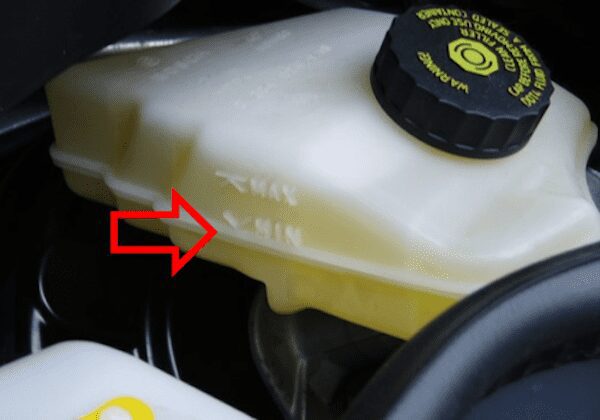
If your brake fluid has dropped slightly below the minimum line marked on the reservoir, and your brake pads or rotors are simply worn from normal use, it is generally safe to top off the reservoir with fresh fluid. Just make sure you are using the exact same type of brake fluid already in your system, since mixing incompatible types can cause real problems with seals and performance.
Keep in mind, though, that once you eventually replace those worn pads or rotors, the fluid level is going to rise back up as the caliper pistons retract. If the reservoir is filled all the way to the top before that happens, you could end up with fluid overflowing out of the reservoir during the pad replacement. Not a huge deal, but messy and worth knowing about ahead of time.
When You Should NOT Just Top It Off
If there is an actual leak somewhere in your system, adding more fluid is basically pouring water into a bucket with a hole in it. The new fluid just leaks back out, you have not fixed anything, and in the meantime you have possibly masked a warning sign that could have led you to catch a real problem earlier.
Worse, topping off fluid repeatedly without addressing an underlying issue can lead to air entering the system, which brings back that spongy pedal feeling we just talked about. And once air gets trapped in there, it takes a proper bleed job to get it back out. Repeated do-it-yourself top offs on a leaking system can actually make that bleeding job harder and more time consuming for the mechanic later on.
Bottom line: if your pedal feels spongy along with the low fluid, skip the DIY top off and get it to a shop. That combination points toward air in the lines or an active leak, not simple pad wear.
How to Actually Fix Low Brake Fluid the Right Way
Rather than reaching for a bottle of fluid the moment you notice the level is low, take a step back and follow this approach instead.
- Check your dashboard warning lights first. Most modern vehicles come equipped with a brake pad wear indicator light. If that light is on, your fluid drop is very likely tied to worn pads, which is a completely normal and expected cause.
- Look for a brake fluid warning light too. Many cars also have a dedicated low brake fluid warning icon, separate from the pad wear light. If this one comes on, take it seriously and get the car checked promptly.
- Have a mechanic inspect the whole system. Do not just guess. A proper inspection covers the pads, rotors, calipers, hoses, and master cylinder, giving you a clear answer instead of a guessing game.
- If it is pad wear, replace the pads. The fluid level naturally corrects itself once new pads are installed. No extra fluid needed in most cases.
- If it is a leak, get it repaired properly. Depending on the source, this could mean replacing a brake hose, resealing a caliper, fixing a cracked reservoir, or in more serious cases, rebuilding or replacing the master cylinder.
- Have the system bled if air got in. This restores a firm, responsive brake pedal and removes any trapped air pockets.
Skipping straight to “just add more fluid” without going through these steps is a bit like putting a bandage over a check engine light. It might look fine for a moment, but the actual issue is still sitting there underneath, waiting to cause bigger trouble down the road.
Common Causes of Low Brake Fluid: A Quick Reference
Use this table next time you are trying to figure out whether your low fluid situation is something to shrug off or something to schedule an appointment for immediately.
| Cause | Is It Normal? | What To Do |
|---|---|---|
| Worn brake pads or shoes | Yes, completely normal | Replace pads when due, fluid level self-corrects |
| Worn rotors or drums | Yes, normal alongside pad wear | Replace during brake service |
| Cracked brake fluid reservoir | No, needs repair | Replace reservoir, professional repair required |
| Worn caliper or wheel cylinder seals | No, needs repair | Rebuild or replace caliper/cylinder |
| Deteriorated brake hoses | No, needs repair | Replace affected brake hose |
| Failing master cylinder | No, needs repair | Rebuild or replace master cylinder |
| Loose fitting or poor connection | No, needs repair | Tighten or reseal connection point |
If you can check off any item in that bottom half of the table, that is your cue to book a shop visit rather than reaching for a funnel and a bottle of fluid.
Should You Change the Brake Fluid or Just Top It Off?
This is where a lot of drivers get stuck, so let us clear it up. Topping off and changing are two completely different jobs, and neither one is a substitute for the other.
Topping Off
Topping off simply means adding fluid to bring the reservoir back up to the proper level. This addresses a volume problem, nothing more. It does not remove old, moisture contaminated fluid from the rest of the system, and it does not fix any underlying leak or wear issue.
Changing (Flushing) the Fluid
A full brake fluid change, sometimes called a flush, involves removing essentially all of the old fluid from the entire system and replacing it with fresh fluid. This addresses fluid quality, not just quantity. Since brake fluid absorbs moisture over time, old fluid gradually becomes less effective at handling the extreme heat generated during hard braking, which can lead to a spongy pedal feeling completely separate from any leak or air issue.
Most manufacturers recommend a full brake fluid flush every two to three years, regardless of mileage, though you should always check your specific owner’s manual for the exact interval. Even if your fluid level has never dropped a single millimeter, that fluid is still aging and absorbing moisture the entire time it sits in your lines.
Which One Do You Actually Need?
Here is a simple way to think about it. If your fluid is low but otherwise clean looking and it has not been more than two to three years since the last flush, a top off paired with addressing whatever caused the drop, whether that is pad wear or a leak repair, is usually enough.
If it has been longer than that recommended interval, or the fluid looks dark, cloudy, or has a burnt smell to it, a full flush is the better call regardless of what the current level looks like. Dark, old fluid loses its ability to resist boiling under heavy braking, which is a genuine safety concern on long downhill drives or in stop and go traffic on a hot day.
A Quick Word on Brake Fluid Types
Not all brake fluid is created equal, and grabbing the wrong bottle off the shelf can cause real problems. Here is a quick breakdown so you know what you are working with.
| Fluid Type | Base | Common Use |
|---|---|---|
| DOT 3 | Glycol-based | Common in many older and standard passenger vehicles |
| DOT 4 | Glycol-based | Higher boiling point, common in many modern cars and performance vehicles |
| DOT 5 | Silicone-based | Used in specific applications, does not mix with glycol-based fluids |
| DOT 5.1 | Glycol-based | High performance option, despite the name it is not compatible with DOT 5 |
Always check your owner’s manual or the cap on your brake fluid reservoir, which usually lists the exact type required. Mixing an incompatible fluid type, especially mixing silicone-based DOT 5 with any glycol-based fluid, can cause seal damage and serious brake performance issues. When in doubt, stick with whatever type is already in the system, or ask your mechanic before adding anything.
How to Check Your Brake Fluid Level at Home
Checking your own fluid level takes about two minutes and requires zero tools. Here is how to do it safely.
- Park on level ground and make sure the engine is off and cool.
- Pop the hood and locate the brake fluid reservoir. It is usually a small, translucent plastic container near the back of the engine bay, often labeled with a brake symbol on the cap.
- Look at the side of the reservoir without opening the cap. Most reservoirs have MIN and MAX lines molded right into the plastic, so you can see the level from the outside.
- Check the fluid color if visible. Fresh brake fluid is typically a light golden or amber color. Fluid that looks dark brown or black has likely absorbed moisture and contamination over time and is due for a flush.
- Avoid opening the cap unnecessarily. Every time that cap comes off, you expose the fluid to air and moisture. Only open it if you actually need to add fluid.
Make a habit of glancing at this reservoir every time you check your oil. It takes seconds and gives you an early warning sign long before your pedal ever starts feeling spongy on the road.
Real World Example: What a Slow Leak Can Look Like
Picture this scenario. A driver notices their brake fluid reservoir sitting slightly below the minimum line during a routine oil change. Their pads still have plenty of material left, based on the last inspection three months earlier. The pedal feels normal, no sponginess, no dashboard warning lights.
In this case, a mechanic would likely suspect something other than simple pad wear, since the pads are not old enough to account for a noticeable fluid drop on their own. A closer inspection reveals a very slight seepage around one of the rear wheel cylinders, the kind of leak that is slow enough not to leave a puddle on the driveway, but steady enough to slowly drain fluid from the reservoir over a few months.
Caught early like this, the fix is often just replacing a seal or the wheel cylinder itself, a relatively affordable repair. Left unchecked for another year, that slow leak could progress into a full failure of that wheel cylinder, potentially leading to a sudden loss of braking power on that corner of the car. This is exactly why routine fluid level checks matter, even when nothing feels obviously wrong yet.
Signs Your Low Brake Fluid Needs Urgent Attention
Not every low fluid situation calls for the same level of urgency. Use this list to gauge how quickly you need to act.
- Brake warning light illuminated on the dashboard alongside low fluid. Get this checked as soon as possible.
- Spongy or sinking brake pedal. Schedule a visit within the next day or two, and drive cautiously in the meantime.
- Visible fluid puddle under the car, especially near a wheel. Do not drive the vehicle. Have it towed or inspected on the spot if possible.
- Grinding or squealing brakes combined with low fluid. This suggests severely worn pads causing the fluid drop, and continuing to drive risks damaging your rotors.
- Slight fluid drop with no other symptoms and pads confirmed to be wearing normally. This can typically wait until your next scheduled service, though it is worth keeping an eye on.
When brakes are involved, erring on the side of caution costs you a little time and maybe a diagnostic fee. Erring on the side of “it will probably be fine” can cost you a lot more, and in the worst case, put you and everyone else on the road at risk.
Frequently Asked Questions About Low Brake Fluid
Is it dangerous to drive with low brake fluid?
It depends on how low and why. A slight drop from normal pad wear with a firm pedal is not an immediate danger. But if the pedal feels soft or a warning light is on, treat it as a safety issue and get it checked before continuing to drive.
How often should brake fluid be checked?
A quick visual check every time you get an oil change is a solid habit, roughly every 5,000 to 7,500 miles depending on your vehicle. It only takes a moment and can catch a developing leak long before it becomes a bigger problem.
Can low brake fluid damage my car if left unaddressed?
Yes. Beyond reduced braking performance, air entering the system from persistently low fluid can lead to corrosion inside brake lines and components, along with increased wear on seals throughout the hydraulic system.
Why does my brake fluid keep going low even after I top it off?
This pattern strongly suggests an active leak rather than normal pad wear. A single top off correcting the level permanently is expected with pad wear. Repeated drops after topping off point toward a leak that needs professional diagnosis.
Does brake fluid color really matter?
Yes, it is one of the easiest visual clues available. Clear to light amber fluid is healthy. Dark brown or black fluid has absorbed moisture and contaminants over time and should be flushed, even if the level itself looks fine.
Your brakes are not a place to gamble on assumptions. A dropping fluid level might be nothing more than your pads doing exactly what pads are supposed to do, wearing down after faithfully stopping your car thousands of times. Or it might be your braking system quietly asking for help before a small leak turns into a bigger failure. Either way, the fix is the same simple habit: check that reservoir regularly, pay attention to how your pedal feels, and let a qualified mechanic sort out the difference between normal wear and a real problem. Your brakes only get one job to do, and it is the most important one in the whole car. Give them the attention they deserve.