
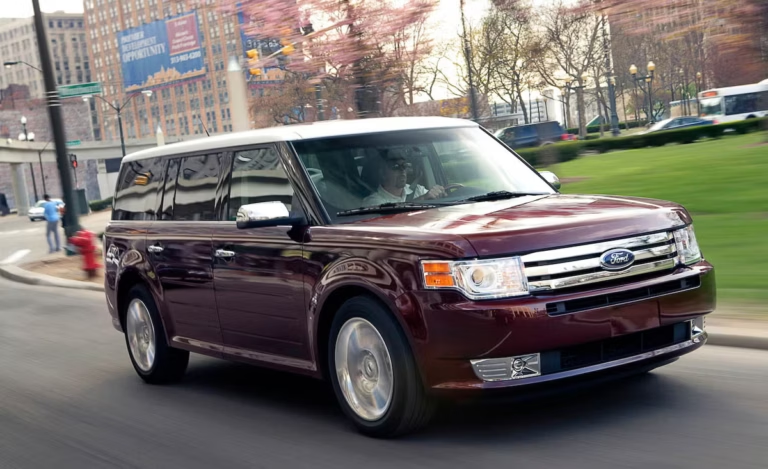
The Ford Flex is one of those vehicles that never quite got the recognition it deserved when it was sitting on showroom floors. It was too boxy to be a proper crossover in the eyes of some buyers and too low-slung to pass as a real SUV. But the people who bought them, they understood something that spec sheets and marketing brochures never fully captured. This is a vehicle that combines the passenger space of a three-row SUV with the driving dynamics of a large sedan, all wrapped in a shape that makes loading kids, cargo, and everything in between remarkably easy. Ford pulled the plug after the 2019 model year, which means you cannot walk into a dealership and order a new one. What you can do is find a used example that has been well maintained, and if you are considering that path, you probably want to know what else is out there that scratches the same itch.
Maybe you loved the Flex’s boxy profile and the way it swallowed a full cart of groceries without folding a single seat. Maybe the available turbocharged V6 that turns a family hauler into something genuinely quick caught your attention. Or maybe you are just drawn to vehicles that refuse to look like everything else on the road. Whatever the reason, the Flex’s departure from the market left a gap that several other three-row crossovers and full-size SUVs attempt to fill. Some get close. Some take a different approach entirely. Here are thirteen vehicles that share at least part of the Flex’s personality, followed by a deeper look at the three that sit closest to the bullseye.
13 Vehicles Worth Cross-Shopping Against the Ford Flex
- Toyota Highlander
- Honda Pilot
- Chevrolet Traverse
- Hyundai Palisade
- Buick Enclave
- Cadillac XT6
- Audi Q7
- Toyota Sequoia
- Lexus GX
- GMC Yukon
- Volkswagen Atlas
- Subaru Ascent
- Nissan Pathfinder
The Three That Come Closest to the Flex Formula
- Toyota Highlander — The all-around balanced pick with a reputation for reliability and a comfortable ride.
- Honda Pilot — The interior packaging champion that makes the most of its available space.
- Chevrolet Traverse — The closest thing to the Flex’s boxy utility and spacious third row.
What Made the Ford Flex So Special in the First Place
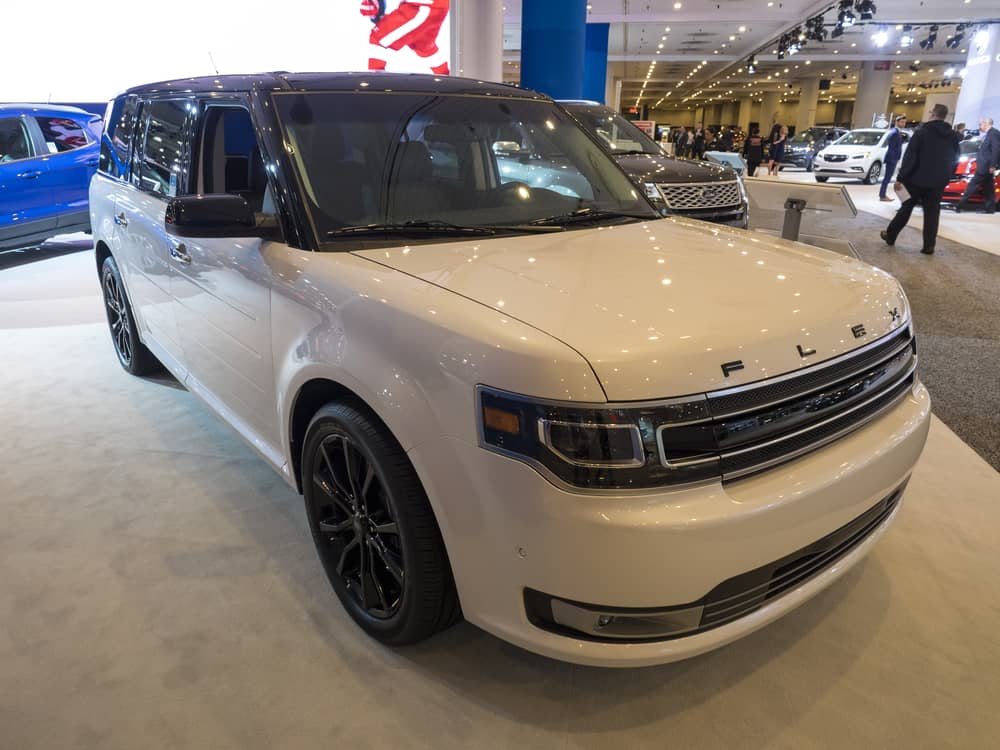
Before comparing alternatives, it helps to understand exactly what the Flex brought to the table in its final production year. The 2019 Ford Flex was offered in three trim levels: the base SE, the mid-tier SEL, and the top-dog Limited. Every Flex left the factory with a 3.5-liter V6 under the hood. In the SE and SEL, that engine produced 287 horsepower and 254 pound-feet of torque, which is perfectly adequate for a vehicle of this size. Where things got interesting was the Limited trim, which could be optioned with a twin-turbocharged version of that same V6. That EcoBoost engine pushed output to 365 horsepower and 350 pound-feet of torque, transforming the Flex from a practical family box into something that could genuinely hustle. A six-speed automatic transmission handled shifting duties across the lineup. Front-wheel drive was standard on all trims, while all-wheel drive could be added to the SEL and Limited for buyers who needed extra traction in wet or snowy conditions.
The acceleration figures tell the story. An EcoBoost-equipped Flex could sprint from zero to 60 miles per hour in 6.2 seconds. That is quicker than most minivans, faster than many crossovers, and frankly surprising for a vehicle shaped like a refrigerator on wheels. More important than the numbers was how the Flex drove. Despite its size, it did not feel top-heavy or ponderous through corners. The lower roofline compared to traditional SUVs kept body lean in check, and the steering, while not sports-car sharp, provided enough feedback to place the vehicle accurately on the road. It drove smaller than it looked, and that made it easier to live with in tight parking lots and crowded city streets.
Interior packaging was where the Flex truly shone. The boxy shape was not a styling gimmick. It created a cabin with nearly vertical side windows and a roofline that did not slope down toward the rear. That meant third-row passengers got real headroom, not the compromised afterthought found in sleeker SUVs. Access to the third row was easier than in most competitors because the rear doors were long and opened wide, and the step-in height was low enough that you did not have to climb up into the vehicle. The second row offered limousine-like legroom, and even adults could survive back there on a road trip without filing complaints. Cargo versatility was another win. With both rear rows folded flat, the load floor was nearly level and the squared-off cargo area could swallow bulky items like furniture, large boxes, or a full set of tires without the awkward angles that curved rooflines force you to work around.
Pricing on the used market makes the Flex an appealing value. For a 2019 model, prices typically range from around $24,600 to $37,900 depending on trim, mileage, and condition. Compared to similarly equipped competitors like the Honda Pilot, which often carries a premium of several thousand dollars, the Flex offers a lot of capability for less money. That value proposition is one reason the Flex has developed a loyal following even after its discontinuation.
Toyota Highlander: The Sensible All-Rounder That Does Everything Well
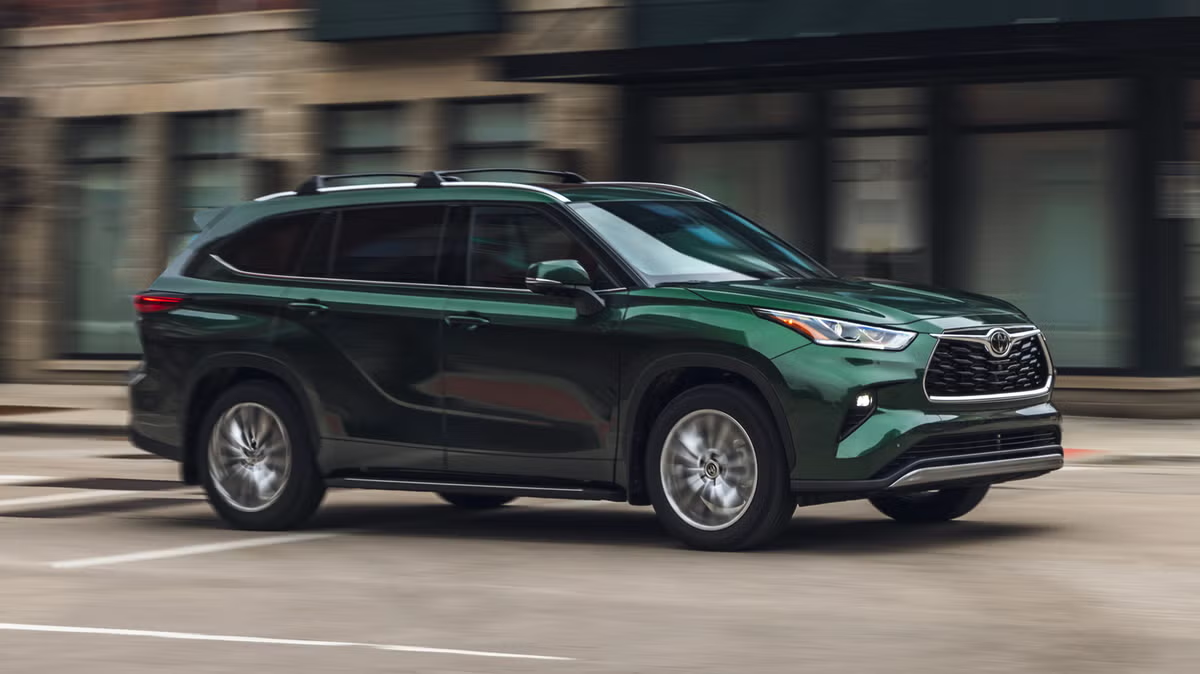
The Toyota Highlander is the default answer for many families shopping in the three-row crossover segment, and that popularity is not accidental. Toyota has spent decades refining this vehicle into something that delivers on the promises most buyers actually care about: reliability, resale value, comfort, and ease of use. It competes directly with the Ford Flex in terms of size and seating capacity, though it takes a very different stylistic approach. Where the Flex is unapologetically boxy, the Highlander uses flowing lines and a more conventional SUV profile to blend in with the rest of the segment.
Under the hood, the base engine in the 2019 Highlander is a 2.5-liter four-cylinder that produces 185 horsepower and 184 pound-feet of torque. That engine exists primarily to achieve a lower starting price and better fuel economy on paper. In the real world, it feels underpowered in a vehicle that can weigh well over two tons when loaded with passengers and cargo. The engine you actually want is the available 3.5-liter V6, which generates 295 horsepower and 263 pound-feet of torque. Even with that upgrade, the Highlander takes 7.9 seconds to reach 60 miles per hour, which is notably slower than the EcoBoost Flex’s 6.2-second run. The acceleration is not sluggish, but it lacks the sense of urgency that the turbocharged Ford delivers when you lean into the throttle. The Highlander feels competent and composed rather than exciting, which is exactly the character Toyota intended.
The trade-off for that more relaxed acceleration is fuel economy that leads the segment. Front-wheel-drive V6 models return an EPA-estimated 21 miles per gallon in the city and 29 on the highway, for a combined 24 mpg. All-wheel-drive versions drop slightly to 20 city and 27 highway, for a combined 23 mpg. Those numbers are good enough that differences of one or two miles per gallon matter to buyers who are comparing spreadsheets. The Highlander Hybrid goes even further, delivering 36 mpg combined in front-wheel-drive form and 35 mpg combined with all-wheel drive. That kind of efficiency in a three-row vehicle that can tow up to 5,000 pounds when properly equipped is genuinely impressive.
The Highlander’s interior is well-built and comfortable, though it does not match the Flex’s expansive feeling of space. The sloping roofline, while attractive from the outside, cuts into third-row headroom and reduces cargo versatility. Folding the seats creates a flat load floor similar to the Flex, but the opening itself is smaller and shaped less usefully for bulky items. The third row works best for children, which is true of many vehicles in this class but more noticeable here than in the Flex. Where the Highlander excels is in seat comfort and noise isolation. The front seats are supportive for long drives, and the cabin stays quiet at highway speeds, making it a relaxing vehicle for road trips.
Pricing is where the Highlander asks buyers to make a decision. A used 2019 model typically ranges from $30,500 to $42,500, which is a significant premium over a comparable Flex. The higher price reflects Toyota’s stronger resale value and reputation for longevity. The Flex was a bargain new, and it remains a bargain used. The Highlander holds its value better, but you pay for that on the front end. Which approach makes more financial sense depends on how long you plan to keep the vehicle and how you weigh the certainty of Toyota’s reliability against the Flex’s lower initial buy-in.
Honda Pilot: The Space Efficiency Expert With Clever Engineering
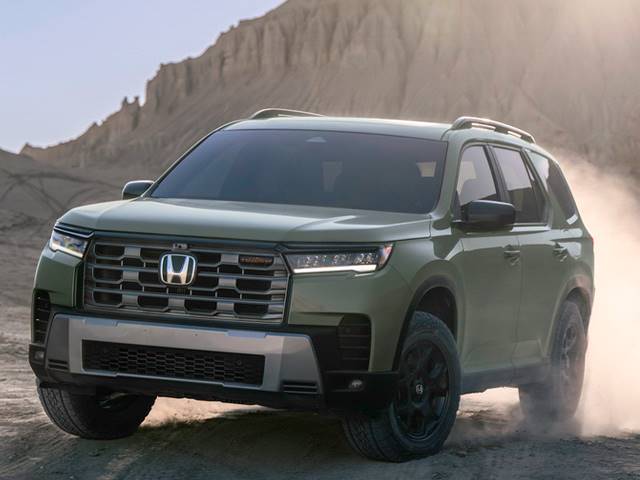
The Honda Pilot has been one of the best-selling vehicles in the three-row segment for years, and its strengths align closely with what made the Flex so practical. Honda’s approach to interior packaging is among the best in the industry, and the Pilot benefits from that expertise in ways that are immediately obvious the first time you climb inside. The one-touch slide-and-fold second-row seats make accessing the third row easier than in nearly any competitor, and the space in all three rows feels genuinely usable rather than theoretical.
The Pilot uses a single engine across its lineup: a 3.5-liter V6 that produces 280 horsepower and 262 pound-feet of torque. While it does not offer the turbocharged punch of the Flex’s EcoBoost option, the naturally aspirated V6 delivers power smoothly and pulls the Pilot to 60 miles per hour in an even 7 seconds. That is quicker than the Highlander and competitive with the non-turbo Flex. The transmission is either a six-speed or a nine-speed automatic depending on trim level, and it shifts unobtrusively in normal driving. The engine note is refined rather than sporty, which suits the Pilot’s mission as a comfortable family hauler.
What the Pilot gives up to the Flex is some of that boxy utility. The roofline is not as squared off, though it does retain more of its height toward the rear than sleeker competitors like the Highlander. The result is a cargo area that is easier to load than many crossovers but still does not match the Flex’s flat, wide opening. The interior design prioritizes comfort with wide front seats, supportive padding, and available power lumbar support that makes long drives fatigue-free. The second-row seats slide and recline, allowing passengers to stretch out. Here is an important distinction: the Pilot is a two-row vehicle for most model years, not a three-row like the Flex. Honda offers three-row capability in other models such as the Passport, so buyers who need that third row should verify the specific Pilot configuration before assuming it has the extra seating.
Fuel economy from the V6 is competitive. The Pilot returns up to 20 miles per gallon in the city and 27 on the highway with front-wheel drive, which is essentially on par with the class average. The 19.5-gallon fuel tank provides a useful range between fill-ups, reducing the frequency of gas station stops during long trips. A hybrid variant has been rumored for future model years, which would further improve efficiency, but the current lineup relies solely on the gasoline V6.
Towing capacity is a strong point. The all-wheel-drive Pilot can pull up to 5,000 pounds when properly equipped, matching the Flex’s maximum towing capability. Front-wheel-drive models are rated at 3,500 pounds. That means the Pilot can handle the same trailers, boats, and campers that the Flex can, which is important for buyers who need their family vehicle to pull double duty as a tow vehicle for weekend adventures.
Technology is an area where the Pilot stands out. The infotainment system on 2019 and newer models is a significant improvement over previous generations. Honda includes a suite of driver-assistance features called Honda Sensing as standard equipment, bundling adaptive cruise control, lane-keeping assist, and collision mitigation braking. The cabin offers USB ports throughout, an HDMI connection, and even a 115-volt household-style power outlet, making it easy to keep devices charged and passengers entertained. The adaptive cruise control does have one limitation: it only operates down to 20 miles per hour rather than coming to a complete stop, which means it is less useful in heavy stop-and-go traffic.
Used pricing for a 2019 Pilot runs from about $27,500 to $40,000, which is slightly higher than a comparable Flex. The premium reflects Honda’s strong reputation and the Pilot’s higher original MSRP. For buyers who prioritize interior packaging and thoughtful features over the Flex’s unique styling and turbocharged thrust, the Pilot makes a compelling case for itself.
Chevrolet Traverse: The Closest You Can Get to the Flex’s Boxy Spirit
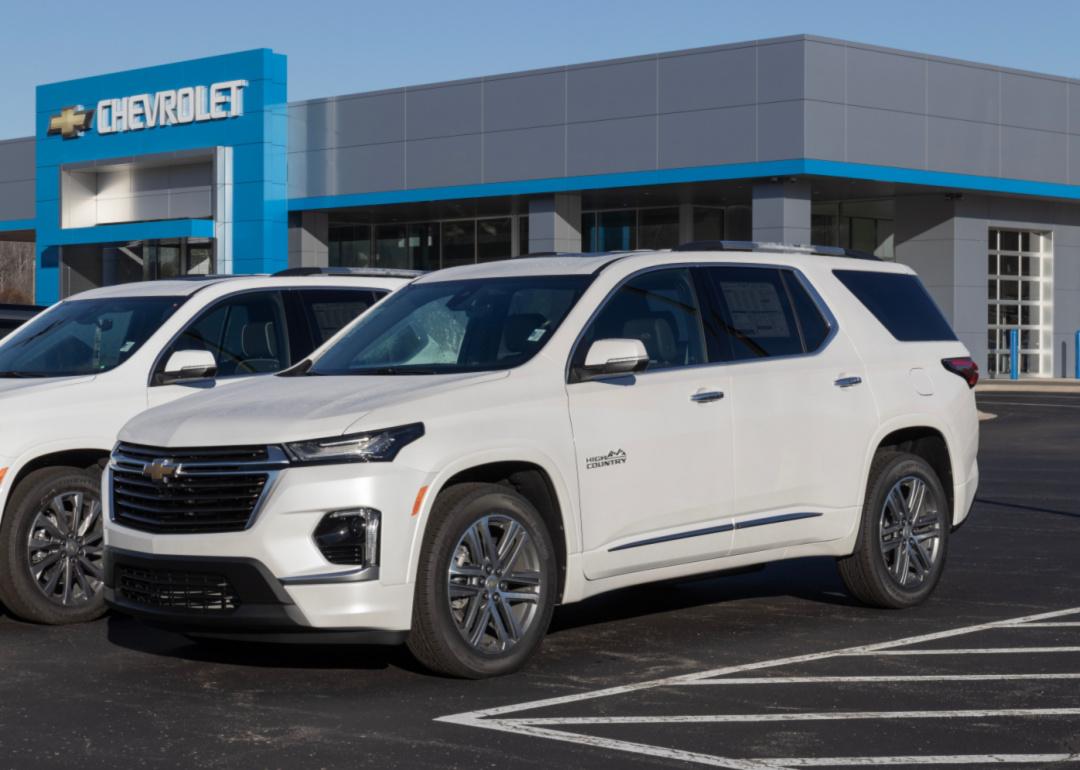
If the Flex had a spiritual successor among vehicles still in production, the Chevrolet Traverse would be the leading candidate. It is not identical in shape, but it leans further into the boxy, utilitarian aesthetic than most of its competitors, and the interior space benefits accordingly. All three rows offer genuine room for adults, and the cargo area behind the third row is one of the largest in the segment. When both rear rows are folded flat, the Traverse opens up a cavernous 98.2 cubic feet of cargo volume. That is a number you typically associate with full-size SUVs, not three-row crossovers, and it makes loading large items remarkably straightforward.
Chevrolet powers the Traverse with a single engine option: a 3.6-liter V6 that produces 310 horsepower and 266 pound-feet of torque. The nine-speed automatic transmission works well in most situations, though it does favor higher gears to optimize fuel economy. That means the throttle response can feel a bit lazy unless you press deeply into the pedal, at which point the engine wakes up and delivers the acceleration you expect from 310 horsepower. The zero to 60 mile per hour sprint takes 7.1 seconds, which is respectable for a vehicle of this size. On the road, the Traverse rides comfortably, but it has a taller ride height than the Flex and exhibits more body lean through corners. The Flex’s lower stance gave it a more planted feel that the Traverse cannot quite replicate.
One area where the Traverse disappoints compared to the Flex is outward visibility. The design, while spacious inside, uses thicker pillars and a higher beltline that make it harder to see out of the rear corners and over the shoulder. Blind-spot monitoring becomes nearly essential, and it is not included on the lower trim levels. You need to step up to at least the LT Leather trim to get that feature, which pushes the price higher than the base window sticker might suggest. The Flex, with its large windows and relatively thin pillars, offered excellent visibility that made parking and lane changes less stressful.
Fuel economy from the V6 is average for the class. Front-wheel-drive models achieve an EPA-estimated 18 miles per gallon in the city and 27 on the highway, for a combined 21 mpg. All-wheel drive reduces those numbers slightly. An earlier version of the Traverse offered a turbocharged 2.0-liter four-cylinder engine that delivered better fuel economy and smooth power delivery, but that option was discontinued after the 2018 model year. Buyers who find a used Traverse with that engine will see 20 mpg city and 26 mpg highway, which is a small but meaningful improvement over the V6.
Towing capability mirrors the Flex. The standard rating is 3,500 pounds, and properly equipped Traverse models can handle up to 5,000 pounds. The top High Country trim includes trailering enhancements such as a touchscreen-based hitch guidance system, which helps compensate for the limited rear visibility when hooking up a trailer.
Pricing for a used 2019 Traverse typically falls between $26,600 and $43,000. The lower trims are affordable but can feel sparse in terms of features. The LT Leather trim and above bring the equipment level up to where it feels competitive with the Flex’s mid-tier and top trims. When comparably equipped, the Traverse and the Flex are close in price, and the decision often comes down to which shape you prefer and how important that open, airy cabin feel is to your daily experience.
Other Competitors Worth a Closer Look
Beyond the top three, several other vehicles share the Flex’s mission of moving families and their belongings with a minimum of fuss. Each takes a slightly different approach, and the right one for you depends on which aspects of the Flex’s personality matter most.
Hyundai Palisade
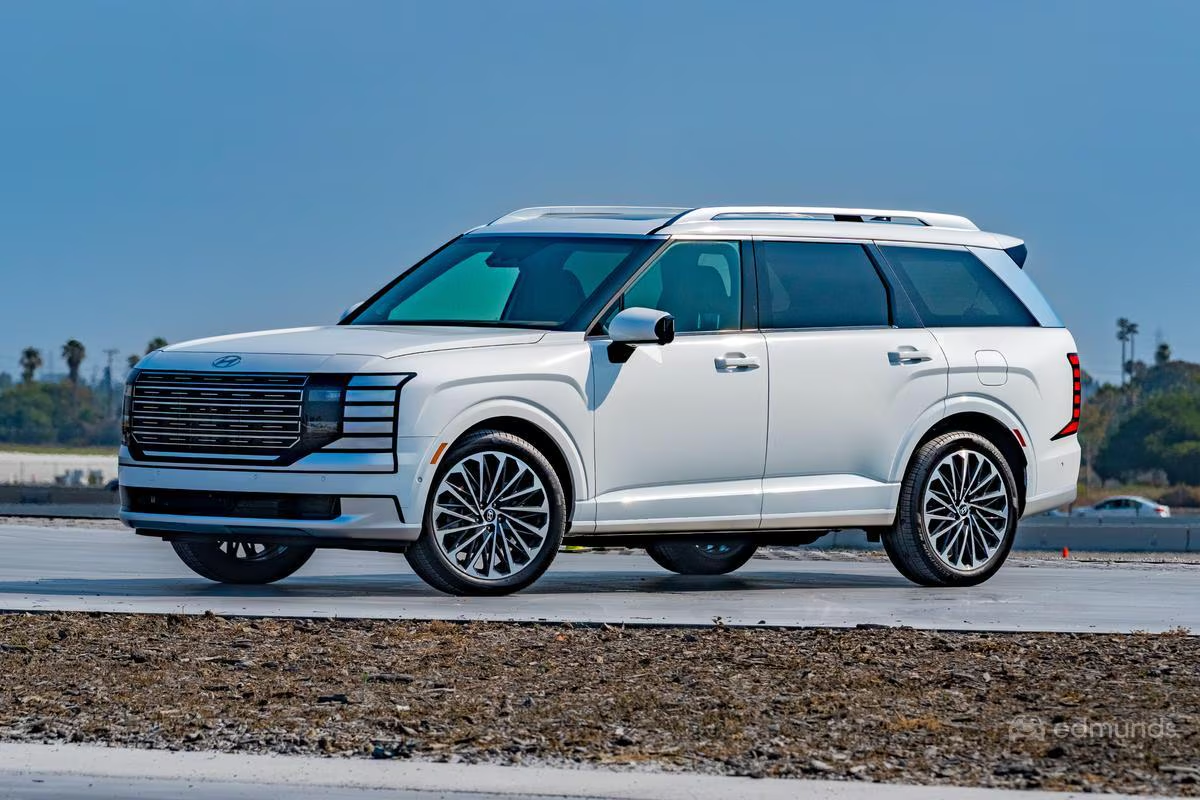
The Palisade arrived as Hyundai’s flagship three-row SUV and immediately impressed with its upscale interior, smooth ride, and generous feature list. It offers a naturally aspirated 3.8-liter V6 with 291 horsepower and an eight-speed automatic. The cabin feels more premium than its price suggests, with available Nappa leather, a digital instrument cluster, and a quiet, well-insulated environment. The third row is usable for adults, and the cargo space behind it is competitive. Where the Palisade differs from the Flex is in styling and driving character. It is more conventionally attractive and prioritizes comfort over any pretense of sportiness. Towing capacity maxes out at 5,000 pounds, matching the Flex’s capability.
Buick Enclave
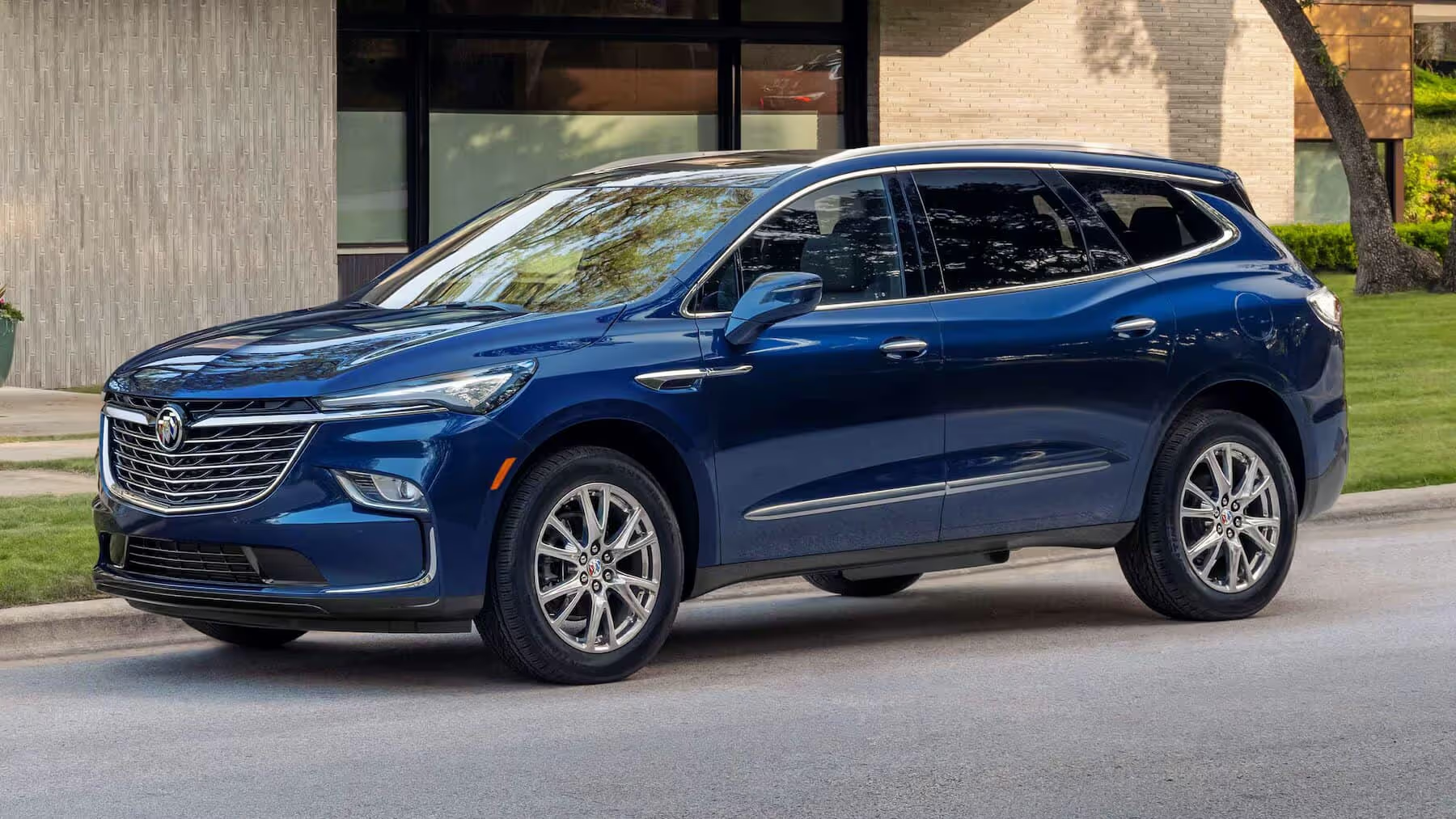
The Buick Enclave shares its platform with the Chevrolet Traverse but wraps it in a more luxurious package. The 3.6-liter V6 delivers the same 310 horsepower, and the ride quality is tuned for comfort. Buick’s QuietTuning technology, which includes active noise cancellation and acoustic laminated glass, makes the cabin exceptionally serene at highway speeds. The Enclave seats up to seven passengers, and the interior materials are a noticeable step up from the Traverse. Pricing is higher than the Flex, but a used Enclave can represent good value for buyers who prioritize a quiet, comfortable ride.
Cadillac XT6
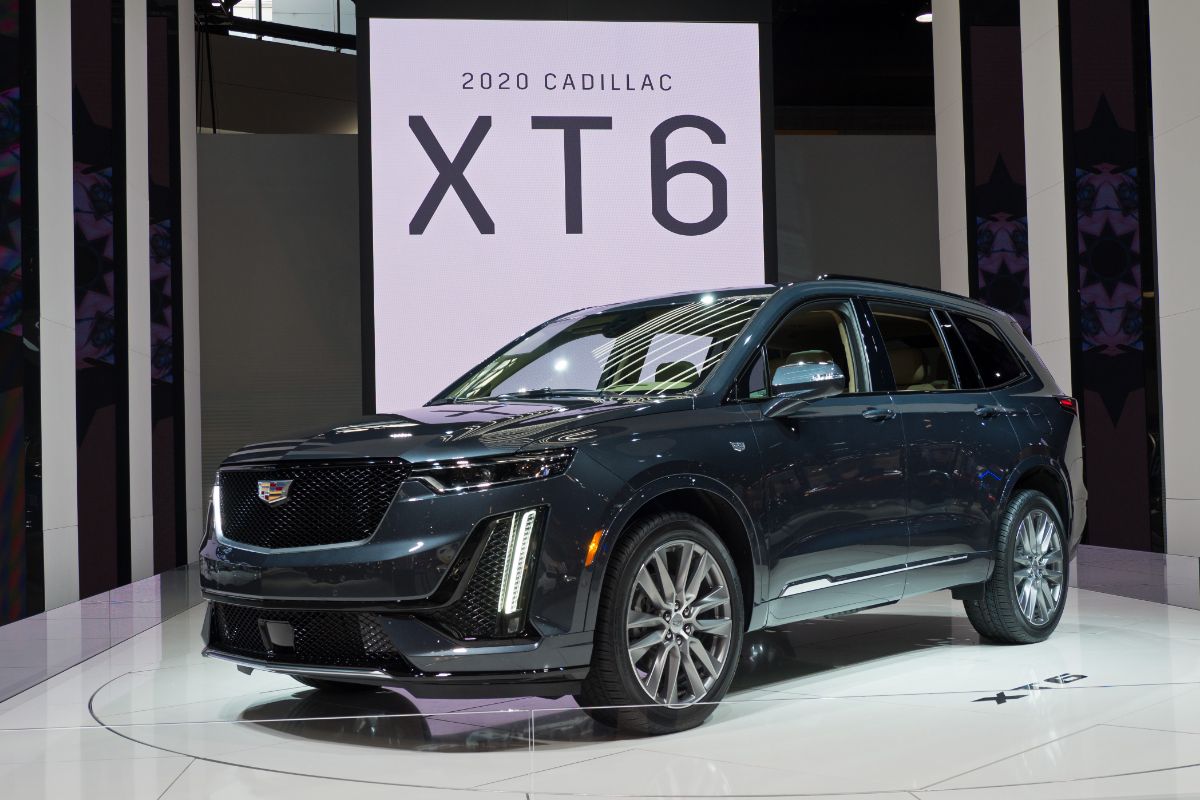
The XT6 is Cadillac’s entry into the three-row crossover space, and it brings sharp styling with the brand’s signature LED lighting and a cabin loaded with technology. The standard 3.6-liter V6 produces 310 horsepower, and the nine-speed automatic transmission is tuned for smooth operation. The XT6 offers a more athletic driving experience than the Enclave or Traverse, with quicker steering and a firmer suspension. The third row is best for occasional use, and cargo space is somewhat compromised by the sleeker roofline. The XT6 competes more on style and brand prestige than on outright utility, making it an alternative for buyers who want a premium badge and are willing to trade some practicality for it.
Audi Q7
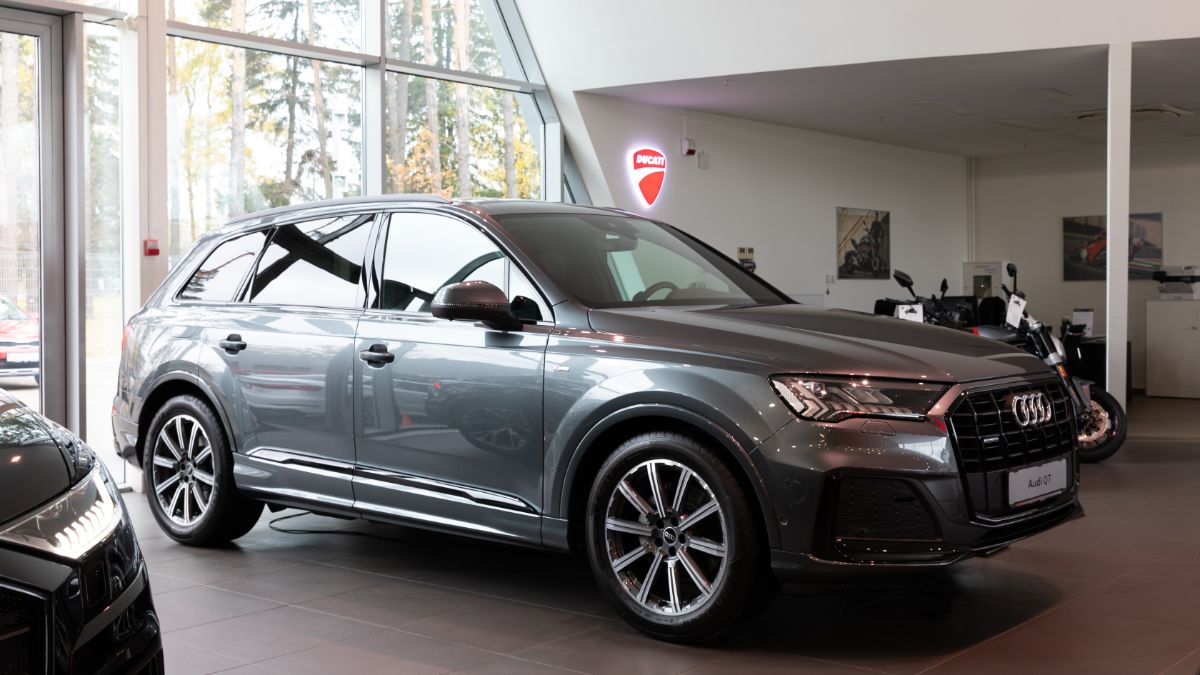
The Audi Q7 brings European engineering to the three-row segment. The supercharged 3.0-liter V6 produces 335 horsepower in most configurations, and the Quattro all-wheel-drive system is standard. The Q7 drives with a composure and precision that is rare among large crossovers. The interior is beautifully assembled with high-quality materials and Audi’s virtual cockpit digital instrument display. The third row is tighter than American competitors, and the cargo area is smaller, but the overall driving experience is significantly more engaging. A used Q7 can be found at prices that overlap with a well-equipped Flex, though maintenance costs will be higher. For a buyer who values driving dynamics and interior craftsmanship above absolute cargo volume, the Q7 is a compelling choice.
Toyota Sequoia
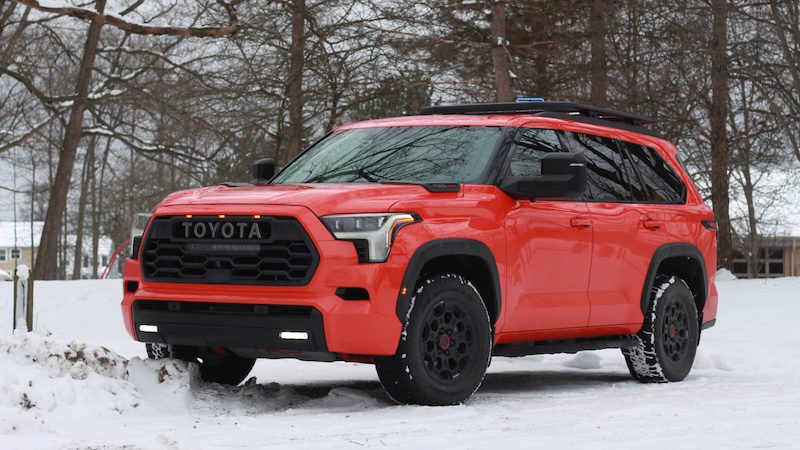
The Sequoia is a body-on-frame full-size SUV, which puts it in a different mechanical category than the unibody Flex. It offers a 5.7-liter V8 with 381 horsepower and 401 pound-feet of torque, along with a towing capacity of up to 7,400 pounds. The Sequoia is larger, thirstier, and more truck-like in its driving dynamics. It appeals to buyers who need serious towing capability or who simply prefer the robustness of a body-on-frame design. The interior is spacious, though the third row does not fold flat into the floor, which compromises cargo versatility compared to the Flex’s innovative packaging. The Sequoia makes sense for someone who admired the Flex’s passenger space but needs more towing muscle and does not mind the trade-offs in fuel economy and on-road handling.
Lexus GX
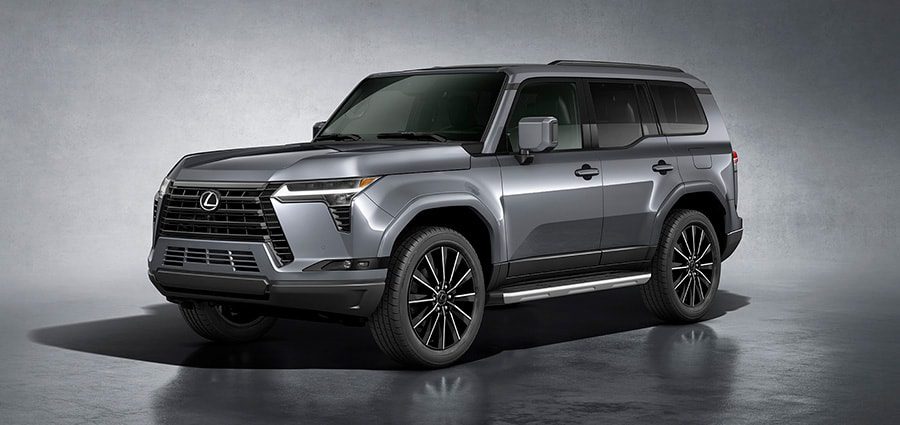
The Lexus GX is another body-on-frame alternative, based on the Toyota Land Cruiser Prado platform. It features a 4.6-liter V8 with 301 horsepower, standard full-time four-wheel drive, and legitimate off-road capability. The GX offers a luxurious interior with Lexus build quality and materials, and it can seat up to seven passengers. The side-opening rear door is a unique feature that some buyers prefer for ease of loading. The GX is not as fuel-efficient or as spacious inside as a Flex, but it brings a level of off-road prowess and long-term durability that the unibody crossovers cannot match. It is a niche choice for buyers who want a luxury vehicle that can also handle rough forest roads or winter conditions with confidence.
GMC Yukon
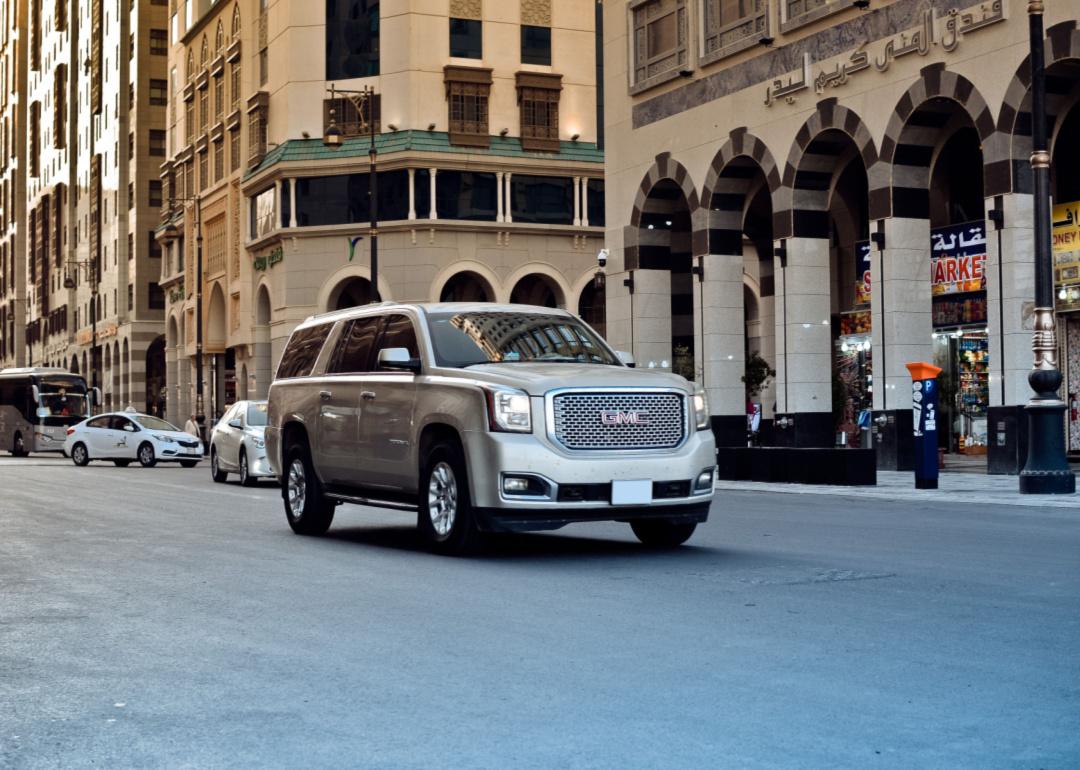
The GMC Yukon is a full-size SUV that offers three spacious rows and a choice of V8 engines. The standard 5.3-liter V8 produces 355 horsepower, and an available 6.2-liter V8 pushes that to 420. Towing capacity reaches up to 8,400 pounds. The Yukon is significantly larger than the Flex and carries itself with a commanding presence on the road. The interior is well-appointed, especially on the Denali trim, which has become synonymous with GMC luxury. Fuel economy is lower than any crossover on this list, but the Yukon compensates with unmatched passenger and cargo volume. It is the right choice for a buyer who found the Flex to be just a little too small and wants the next step up in capability.
Volkswagen Atlas
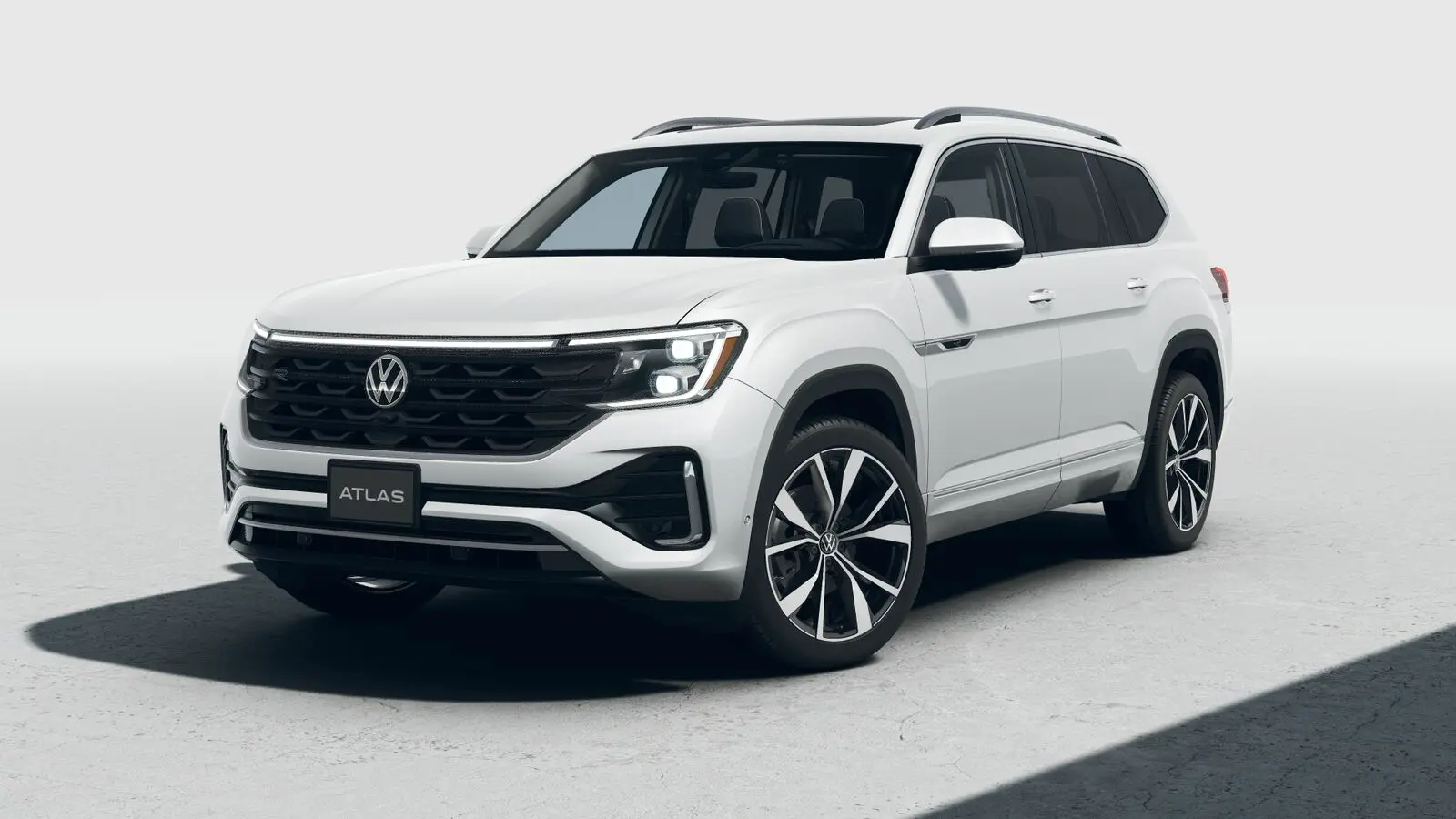
The Atlas is Volkswagen’s American-market-focused three-row crossover, designed with the kind of space and utility that families in the United States expect. It offers a choice of a turbocharged 2.0-liter four-cylinder or a 3.6-liter V6, with the V6 producing 276 horsepower. The Atlas rides on a platform that prioritizes interior volume, and the result is a cabin that feels genuinely spacious in all three rows. The styling is clean and understated, with a squared-off profile that echoes the Flex more than most competitors. The Atlas can tow up to 5,000 pounds when equipped with the V6 and the tow package. It represents a modern interpretation of the Flex’s formula, trading the turbocharged performance edge for a more contemporary design and Volkswagen’s trademark solidity.
Subaru Ascent
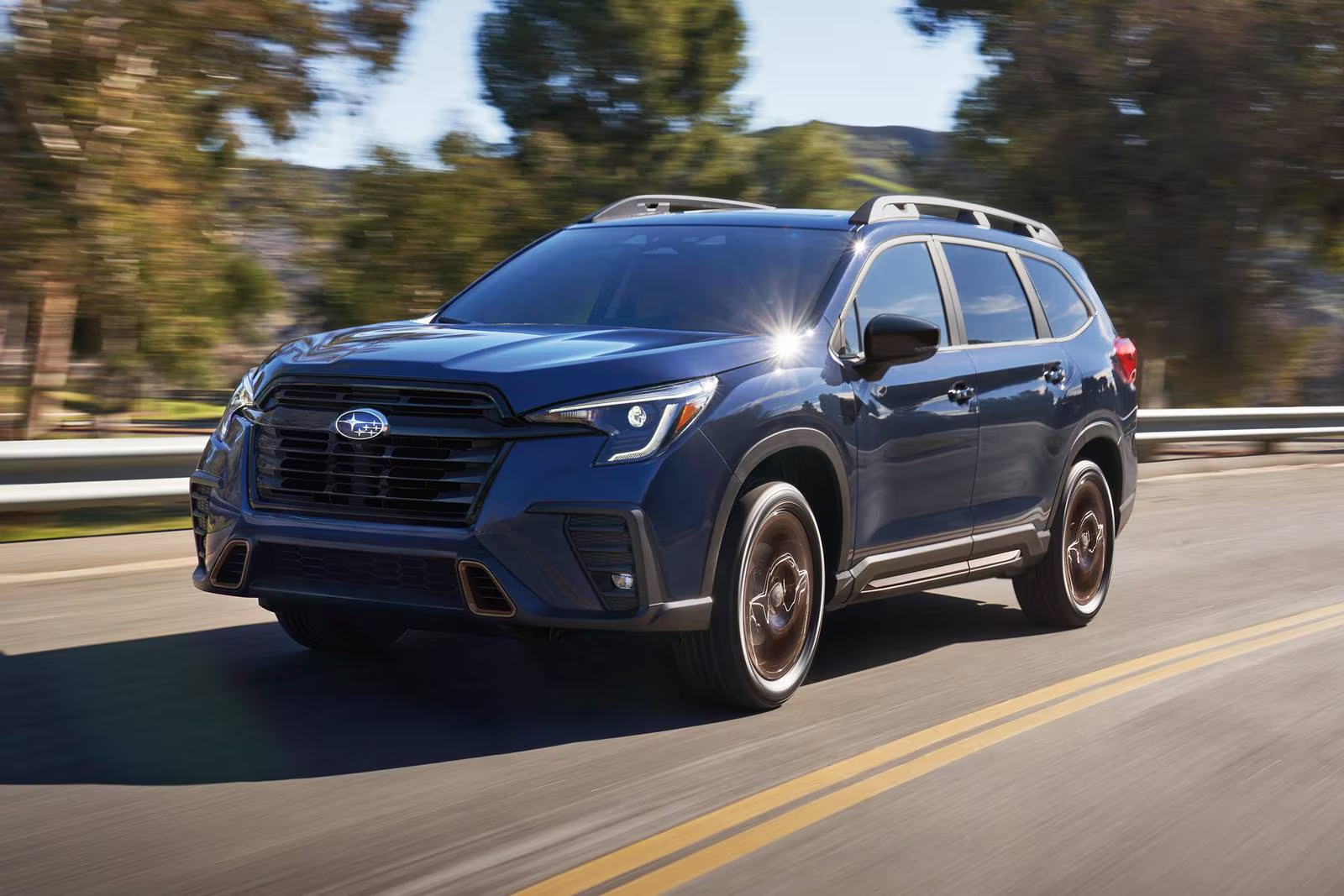
The Ascent is Subaru’s largest vehicle, built on the same platform as the Outback and Legacy. It comes standard with a turbocharged 2.4-liter flat-four engine that produces 260 horsepower and 277 pound-feet of torque. Subaru’s symmetrical all-wheel drive is also standard, giving the Ascent a traction advantage in poor weather. The interior seats up to eight passengers, and the third row is genuinely usable for adults. The Ascent can tow up to 5,000 pounds, matching the Flex’s capability. The driving experience is comfortable and predictable, with Subaru’s EyeSight driver-assist technology providing a comprehensive safety net. The Ascent is the right pick for a buyer who lives in an area with real winters and wants the all-weather confidence of standard all-wheel drive combined with three-row practicality.
Nissan Pathfinder
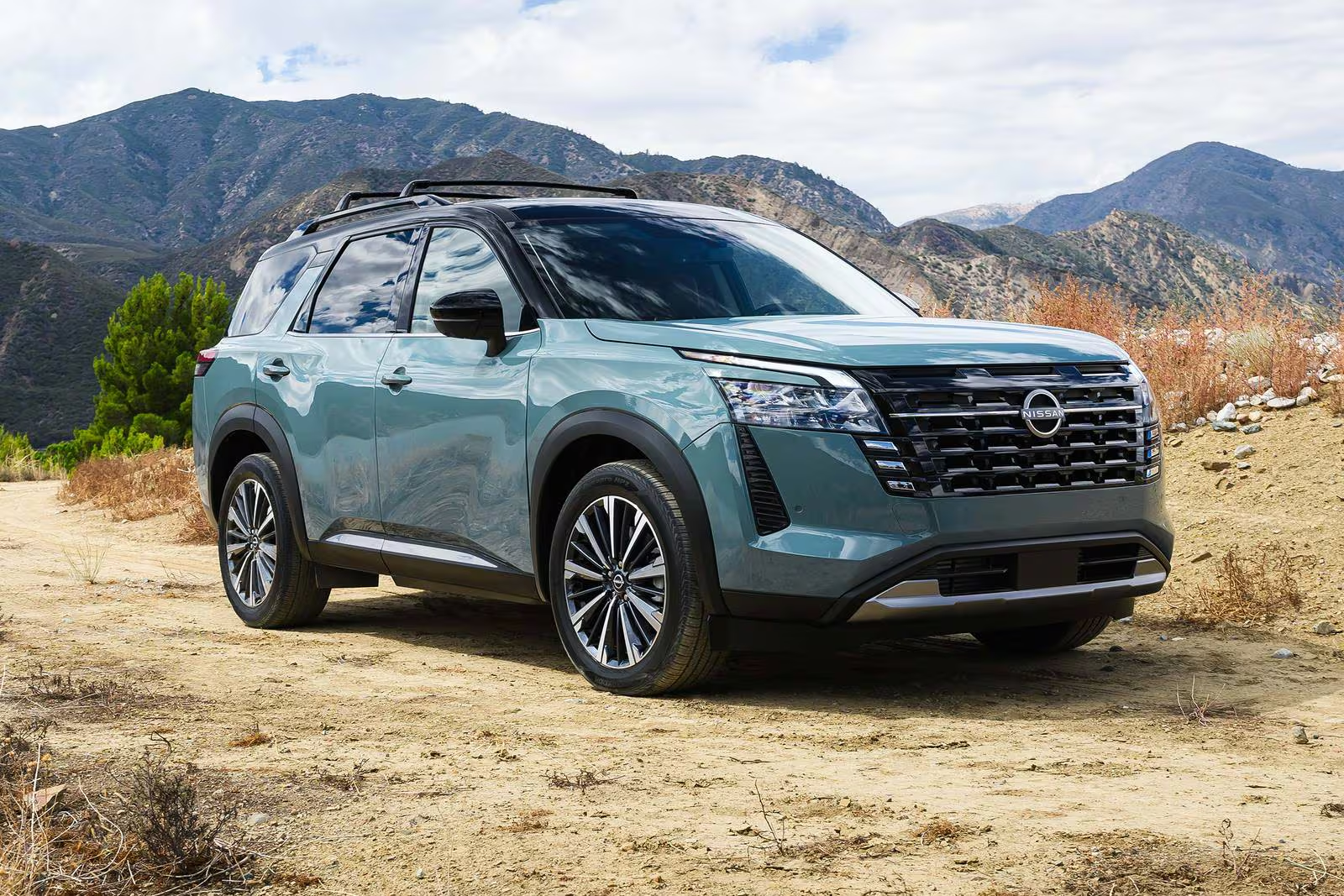
The Pathfinder has gone through several identity changes over the years, and the current generation returns to a more rugged, capable stance. The 3.5-liter V6 delivers 284 horsepower and 259 pound-feet of torque, paired with a nine-speed automatic transmission. Towing capacity reaches 6,000 pounds, which is a step above the Flex. The Pathfinder offers a comfortable ride and a straightforward interior layout that prioritizes function. The third row is adequate for occasional use, and the cargo area provides competitive volume. The Pathfinder appeals to buyers who want a capable family SUV with towing credentials that exceed the segment average, all at a price point that remains accessible on the used market.
Side-by-Side Spec Comparison
| Vehicle | Base Engine | Horsepower (max) | 0-60 mph | Max Towing | Third Row | Used Price Range (approx.) |
|---|---|---|---|---|---|---|
| 2019 Ford Flex | 3.5L V6 / 3.5L Turbo V6 | 365 hp (EcoBoost) | 6.2 sec | 5,000 lbs | Standard | $24,600 – $37,900 |
| Toyota Highlander | 2.5L I4 / 3.5L V6 | 295 hp | 7.9 sec | 5,000 lbs | Standard | $30,500 – $42,500 |
| Honda Pilot | 3.5L V6 | 280 hp | 7.0 sec | 5,000 lbs | Not standard (check model year) | $27,500 – $40,000 |
| Chevrolet Traverse | 3.6L V6 | 310 hp | 7.1 sec | 5,000 lbs | Standard | $26,600 – $43,000 |
| Hyundai Palisade | 3.8L V6 | 291 hp | ~7.2 sec | 5,000 lbs | Standard | Varies by year |
| Buick Enclave | 3.6L V6 | 310 hp | ~7.2 sec | 5,000 lbs | Standard | Varies |
| Cadillac XT6 | 3.6L V6 | 310 hp | ~7.0 sec | 4,000 lbs | Standard | Varies |
| Audi Q7 | 3.0L Supercharged V6 | 335 hp | ~5.9 sec | 7,700 lbs | Standard | Varies |
| Toyota Sequoia | 5.7L V8 | 381 hp | ~6.7 sec | 7,400 lbs | Standard | Varies |
| Lexus GX | 4.6L V8 | 301 hp | ~7.8 sec | 6,500 lbs | Standard | Varies |
| GMC Yukon | 5.3L V8 / 6.2L V8 | 420 hp | ~6.0 sec | 8,400 lbs | Standard | Varies |
| Volkswagen Atlas | 2.0T I4 / 3.6L V6 | 276 hp | ~7.9 sec | 5,000 lbs | Standard | Varies |
| Subaru Ascent | 2.4T Flat-4 | 260 hp | ~7.0 sec | 5,000 lbs | Standard | Varies |
| Nissan Pathfinder | 3.5L V6 | 284 hp | ~7.5 sec | 6,000 lbs | Standard | Varies |
How to Choose the Right Flex Alternative for Your Needs
The Ford Flex occupied a niche that no single vehicle has perfectly filled since its departure. The combination of a low step-in height, a truly flat load floor, a spacious third row that adults could tolerate, and available turbocharged performance is difficult to find in a single package. That does not mean you cannot find a vehicle that delivers what matters most to you. It just means you have to identify which of the Flex’s qualities are non-negotiable and which ones you are willing to trade.
If the priority is cargo versatility and a boxy shape that makes loading easy, the Chevrolet Traverse is the closest match. If reliability and resale value sit at the top of your list, the Toyota Highlander and Honda Pilot are the benchmarks. If you want the closest thing to a luxury Flex, the Buick Enclave or Cadillac XT6 wrap similar practicality in more premium materials. If you need more towing capacity and do not mind the fuel economy penalty, the Toyota Sequoia, GMC Yukon, or Nissan Pathfinder step up to the challenge. If winter weather is a constant factor in your life, the Subaru Ascent’s standard all-wheel drive provides peace of mind that a front-drive Flex could not match.
The Flex was never about following trends. It was about solving problems for families who valued substance over style, even though its style eventually became iconic in its own right. The vehicles on this list each solve those problems in their own way. Some do it with more efficiency. Some do it with more luxury. Some do it with more muscle for towing. None of them are exactly a Flex, but a few of them get close enough that you might forget what you are missing until you see a boxy silhouette at a stoplight and feel a small pang of nostalgia for what Ford decided to stop building.
The test drive will tell you more than any spec sheet can. Find a used Flex in good condition and drive it back-to-back with the competitors that match your budget. Pay attention to how easy it is to load your stroller, your gym bag, or your weekend project supplies into the back. Notice how the seats feel after an hour. Observe how much effort it takes to climb into the third row and whether the headliner is brushing against your passengers’ hair. Those real-world usability details are what made the Flex great, and they are what will guide you toward the right replacement.