
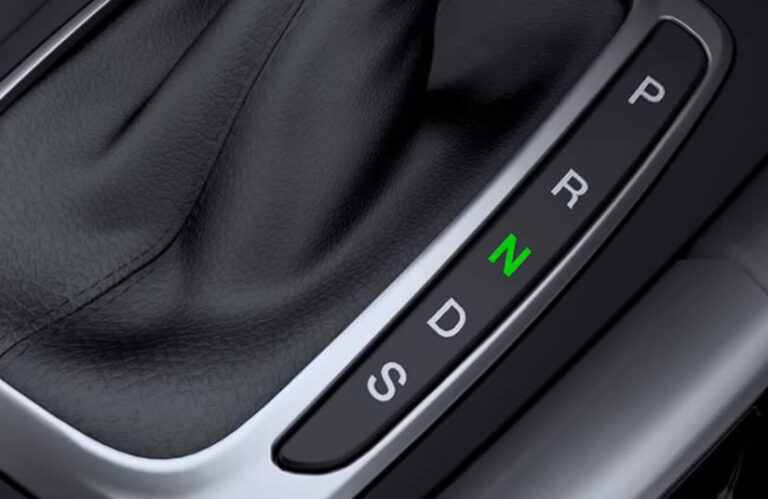
Automatic transmissions have taken over the roads, and it is easy to see why. No clutch pedal to juggle, no stalling at intersections, no burning through a foot’s worth of rubber trying to get the timing right on a hill start. Just put it in drive and go.
But here is the funny thing. Despite how common automatics have become, a surprising number of drivers still misuse one of the simplest features on the gear selector, the neutral position. Some people shift into neutral at every red light thinking it saves wear on the transmission. Others coast down long hills in neutral believing it saves gas. A few even park in neutral instead of using park, not realizing what that actually does to the car sitting behind them, or in front of them.
So let us settle this once and for all. Does putting an automatic transmission into neutral actually harm your car? The honest answer is that it depends entirely on when and how you use it. Used correctly, neutral is a helpful and sometimes necessary tool. Used at the wrong moment, it can genuinely wear down expensive internal components faster than they should. Let us break down exactly where that line is.
What Neutral Actually Does Inside Your Transmission
Before we get into right and wrong ways to use neutral, it helps to understand what is physically happening inside that transmission housing when you move the shifter to N.
In simple terms, shifting into neutral disconnects the engine from the wheels. Normally, when you are in drive, power flows from the engine, through the torque converter, through a series of clutches and gear sets inside the transmission, and finally out to the wheels through the drive axle. That is what actually moves the car forward.
When you shift into neutral, that chain of connection gets broken deliberately. The input shaft coming from the engine effectively stops delivering power to the output shaft that spins the wheels. The wheels are left free to spin on their own, completely disconnected from whatever the engine is doing. This is exactly why a car in neutral can be pushed by hand or towed, since nothing inside the drivetrain is fighting against that movement.
This single function is actually incredibly useful, but only in specific situations. Let us go through where it genuinely earns its place on the gear selector.
Where Neutral Actually Comes In Handy
Towing a Broken Down Vehicle
This is probably the most important legitimate use of neutral in an automatic vehicle. If your car breaks down and needs to be towed, shifting into neutral before towing prevents serious damage to the transmission.
Here is why this matters so much. If a car with an automatic transmission gets towed while still in park or drive, the wheels are forced to turn while the internal transmission components are not receiving any lubrication, since the engine is off and the fluid pump inside the transmission is not running. That combination of forced rotation and zero lubrication is a recipe for serious internal damage in a very short amount of time.
Shifting to neutral solves this problem. With the input shaft disconnected, the wheels can spin freely without dragging any internal transmission parts along with them. This is why every tow truck operator worth their paycheck will shift a car into neutral before hooking it up and pulling it down the road.
How Fast and How Far Can You Actually Tow in Neutral?
This is where opinions start to differ a bit, even among experienced mechanics. Some recommend keeping towing speeds under about 30 kilometers per hour, which works out to roughly 19 miles per hour. Others say you can safely go up to 50 kilometers per hour, or around 31 miles per hour, depending on the vehicle and transmission design.
Regardless of which number you go with, one thing every mechanic agrees on completely. Towing an automatic transmission vehicle in neutral is meant for short distances only, not a cross country road trip. Even in neutral, some very minor lubrication and cooling issues can develop over long stretches, since the transmission fluid pump still is not running the way it would with the engine on.
| Towing Scenario | Recommendation |
|---|---|
| Short distance, local tow to nearest shop | Neutral is fine, keep speed moderate and distance short |
| Longer distance, multiple miles or highway travel | Use a flatbed tow truck instead, do not tow on the drive wheels |
| All-wheel drive or four-wheel drive vehicles | Almost always require a flatbed regardless of distance |
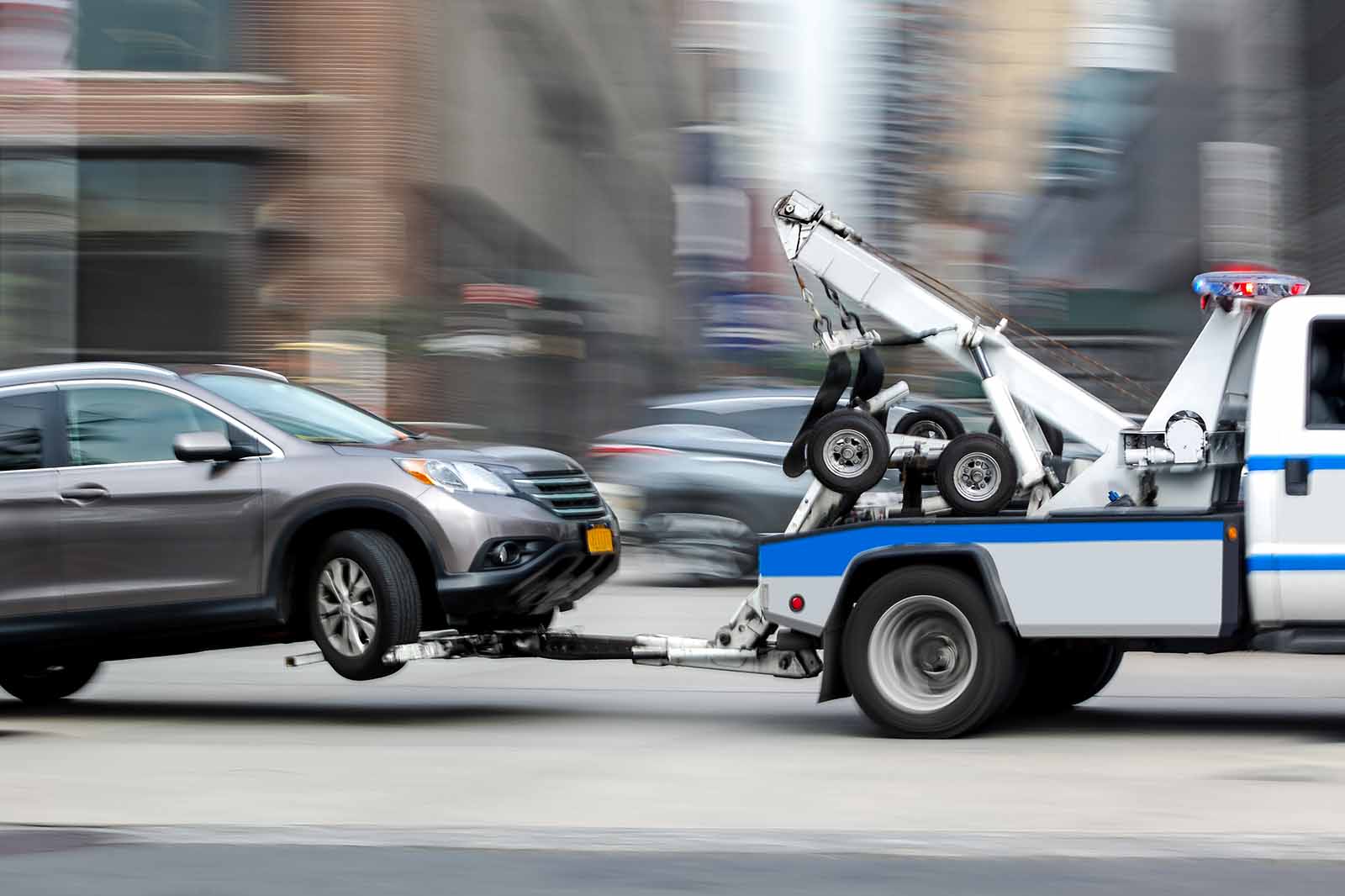
If your nearest repair shop is more than a few miles away, do everyone, including your transmission, a favor and call for a proper flatbed tow truck instead of dragging the car behind another vehicle in neutral. It costs a bit more upfront, but it is far cheaper than replacing a transmission that overheated or ran dry during an overly ambitious tow.
Repair Shop Use
Mechanics also rely on neutral when working underneath a vehicle or when moving it around the shop without starting the engine. Shifting into neutral unlocks the wheels, allowing the car to be rolled onto a lift, pushed into a parking spot, or repositioned without needing to fire up the engine every single time. This is standard practice in any shop and nothing to worry about as a car owner.
Starting the Engine on a Level Surface
Some drivers also start their car in neutral rather than park, particularly older vehicles or certain specific models where this is an accepted practice. If you do this, it is absolutely necessary to have your foot firmly on the brake pedal or the parking brake fully engaged before starting the engine. Since neutral does not lock the wheels in any way, an unattended vehicle in neutral on even a slight incline can roll on its own the moment the engine starts and settles into idle.
Where Neutral Becomes a Genuine Problem
Now for the part that actually answers the original question. Yes, using neutral at the wrong time absolutely can harm your car, sometimes in ways that cost real money to fix. Here are the situations where drivers commonly go wrong.
Mistake One: Parking in Neutral Instead of Park
This one might be the most dangerous mistake on this entire list, not just for your transmission, but for everyone around your car. Some drivers, particularly in parking lots, shift into neutral instead of park when they stop somewhere briefly, perhaps thinking it is gentler on the transmission or just out of habit.
Here is the problem with that idea. Neutral does not lock your wheels in any way whatsoever. Park does. When you shift into park, a small mechanical pawl physically locks into the transmission’s output shaft, preventing the wheels from rotating at all. Neutral offers none of that protection.
If you leave your car in neutral without the parking brake firmly engaged, even a barely noticeable slope in a parking lot can be enough for the car to start rolling on its own. This has caused real accidents, real property damage, and in some tragic cases, real injuries. There is simply no good reason to choose neutral over park when you are stepping away from a stopped vehicle. Use park. Every single time.
Mistake Two: Coasting Down Hills in Neutral
This is a classic myth that refuses to die, the idea that shifting into neutral while coasting downhill saves fuel. In reality, modern fuel injected engines already cut fuel delivery entirely when you take your foot off the gas while still in drive and moving downhill, meaning you are burning essentially the same amount of fuel, or in some cases even less, by simply staying in drive.
But fuel savings are honestly the smaller concern here. The bigger issue is what shifting to neutral does to your transmission’s internal lubrication while the car is still moving. When you shift out of drive and into neutral while coasting, the transmission fluid pump, which relies on engine rotation to circulate fluid properly under normal operating pressure, does not deliver oil the way it should under those conditions. Components inside the transmission can end up spinning with far less lubrication than they need, essentially running dry for that stretch of the drive.
Since an automatic transmission is packed full of rubbing components including clutch packs, bands, and gear sets, all of which depend on consistent oil flow to stay cool and avoid metal on metal wear, running them without proper lubrication accelerates wear dramatically. Do this occasionally and you might not notice much difference. Do it as a regular habit on every downhill stretch you drive, and you are shaving real years off the lifespan of an expensive component.
There is also a control and safety angle here worth mentioning. A car in neutral cannot use engine braking to help slow down on a steep descent, meaning your brakes end up doing all the work alone. On a long, steep hill, that extra strain can lead to brake fade, a genuinely dangerous situation where your brakes lose stopping power from overheating right when you need them most.
Mistake Three: Shifting to Neutral at Every Red Light
This habit seems logical on the surface. Why keep the transmission engaged in drive while sitting still at a red light, right? Would it not be gentler to pop it into neutral and let everything relax for a minute?
In reality, this habit does more harm than good, and here is the mechanical reason why. Every time you shift between drive and neutral, internal clutch packs inside the transmission open and close to make that shift happen. These clutches are precision components designed to engage smoothly a reasonable number of times throughout a normal drive. Shifting back and forth constantly, multiple times per trip, day after day, accelerates wear on those clutch components well beyond what they were designed for.
Think about it from a numbers perspective. A typical commute might involve stopping at eight or ten traffic lights. If you shift to neutral and back to drive at every single one of those lights, you have just doubled or tripled the number of shift events your transmission goes through in a single trip, compared to simply staying in drive the entire time with your foot on the brake.
Multiply that extra wear by every single workday over a period of years, and you start to understand why mechanics see transmissions fail earlier in vehicles belonging to drivers with this particular habit.
What You Should Actually Do at a Red Light Instead
The simplest and safest approach is to just leave the transmission in drive and hold the brake pedal down while you wait. That is it. That is the whole trick.
While sitting in drive with your foot on the brake, the torque converter inside your transmission continues to build and maintain proper fluid pressure, and all the internal components stay properly lubricated the entire time. There is no unnecessary shifting happening, no extra wear being added, nothing extra for the transmission to deal with beyond what it is designed to handle.
If you find yourself sitting at an unusually long red light or stuck in a lengthy traffic jam that is going to last several minutes, a better option than shifting to neutral is simply shifting to park and turning off the engine, if conditions and safety allow for it. This avoids the shift wear issue entirely while also saving fuel during an extended stop, which regular idling in drive would not accomplish nearly as well.
Neutral, Drive, and Park: A Side by Side Comparison
Since a lot of the confusion around this topic comes down to not fully understanding what each gear position actually does, here is a straightforward comparison table to keep things clear.
| Gear Position | Wheels Locked? | Engine Connected to Wheels? | Best Used For |
|---|---|---|---|
| Park (P) | Yes, mechanically locked | No | Parking the car anywhere, even briefly |
| Neutral (N) | No | No | Towing, shop repairs, some starting procedures |
| Drive (D) | No | Yes | Normal driving, including stops at traffic lights |
Notice something interesting here. Neutral and park both disconnect the engine from the wheels, but only park actually locks those wheels in place. That single difference is exactly why neutral should never substitute for park when you step away from your vehicle, even for just a moment.
Why Automatic Transmissions Are So Sensitive to Lubrication in the First Place
It is worth taking a short detour here to explain why lubrication comes up so often in this conversation. Unlike a manual transmission, which relies mostly on simple mechanical gear meshing, an automatic transmission is a genuinely complex hydraulic system.
Inside that transmission housing sits a torque converter, multiple sets of planetary gears, several clutch packs, bands, and a network of hydraulic passages, all working together and all constantly bathed in transmission fluid. That fluid does far more than just reduce friction between moving parts. It also transmits hydraulic pressure that actually controls which gear the transmission is in, and it carries away heat generated by all that internal friction.
When that fluid circulation gets interrupted, whether from towing without shifting to neutral, coasting in neutral without proper engine driven pump function, or simply running low on fluid due to a leak, components inside start experiencing more friction, more heat, and more wear than they were ever designed to handle. This is exactly why transmission repairs tend to be so expensive compared to something like a brake job. There are simply more precision components involved, and once wear sets in, it tends to cascade into bigger failures rather quickly.
Real World Example: The Cost of a Bad Habit
Picture two identical vehicles, same make, model, and year, both driven by commuters with similar daily routes involving plenty of stop and go traffic and several traffic lights each way.
Driver A gets into the habit early on of shifting to neutral at every red light, believing it is easier on the transmission. Driver B simply stays in drive and rides the brake at every stop, just like their driving instructor originally taught them years ago.
Over five years and roughly sixty thousand miles, Driver A’s transmission has gone through tens of thousands of additional shift cycles compared to Driver B, purely from that neutral habit at red lights. When Driver A’s transmission starts showing signs of clutch wear and rough shifting a few years earlier than expected, a mechanic pulling apart that transmission would likely find increased wear on the very clutch packs responsible for that drive to neutral transition, exactly the components taking the extra hit from years of unnecessary shifting.
Meanwhile, Driver B’s transmission, having gone through a normal, expected number of shift cycles for that mileage, is still shifting smoothly with no unusual symptoms. Same car, same mileage, same driving conditions, but one habit made a measurable difference in how long that transmission lasted.
This is obviously a simplified illustration, and plenty of other factors affect transmission lifespan too, including fluid maintenance, driving style, and simple manufacturing variation between individual units. But the underlying mechanical principle behind this example is completely real, and it is exactly why mechanics consistently advise against the neutral at every red light habit.
What About Shifting to Neutral While Moving on the Highway?
This deserves its own mention because it comes up occasionally, usually from drivers wondering if it helps in an emergency or during a long downhill stretch on the highway.
Shifting an automatic transmission into neutral while the car is moving at higher speeds is genuinely risky, and on many modern vehicles it is actually restricted by the transmission’s own electronic controls specifically to prevent this from happening. Some vehicles will simply refuse to engage neutral at higher speeds, or will delay the shift until speed drops to a safer range.
Beyond the lubrication and wear concerns already covered, shifting to neutral at highway speed also removes your ability to use the engine for braking assistance and can create a momentary sense of the car “surging” or feeling disconnected, which is disorienting at best and dangerous at worst if it happens unexpectedly during an emergency maneuver. There is essentially no scenario during normal highway driving where shifting to neutral provides any benefit over simply staying in drive.
Common Situations and What You Should Actually Do
Let us put all of this into a simple, practical reference you can actually use next time you are behind the wheel and unsure what to do.
- Stopped at a red light: Stay in drive, hold the brake pedal.
- Stuck in a long traffic jam that will last several minutes: Shift to park and turn off the engine if it is safe to do so.
- Parking anywhere, even briefly: Use park with the parking brake engaged, never neutral alone.
- Coasting down a hill: Stay in drive, let the engine assist with braking.
- Car breaks down and needs towing a short distance: Shift to neutral before towing.
- Car needs towing a long distance or on the highway: Call for a flatbed tow truck instead.
- Starting the car: Use park whenever possible, and always keep your foot on the brake regardless of which gear you start in.
- At the repair shop or when moving the car by hand: Neutral is the correct and expected choice here.
Keep this list in your back pocket, and you will avoid the most common neutral related mistakes that end up costing drivers real money in premature transmission repairs.
Does This Advice Apply to Every Automatic Transmission?
For the most part, yes, though it is worth mentioning that transmission technology has evolved quite a bit over the decades, and some newer designs handle these situations a bit differently.
| Transmission Type | Neutral Behavior Notes |
|---|---|
| Traditional torque converter automatic | Follows all the general guidance covered throughout this article |
| Continuously variable transmission (CVT) | Generally follows the same principles, avoid unnecessary neutral shifting and coasting |
| Dual clutch automatic | Similar concerns apply, frequent unnecessary shifting can wear clutch components faster |
| Hybrid and electric vehicles | Different drivetrain design overall, always check the owner’s manual for specific towing and neutral guidance since these systems vary significantly |
If you drive a hybrid or fully electric vehicle, definitely check your specific owner’s manual before towing or making assumptions about neutral behavior, since these drivetrains often work quite differently from a traditional gasoline powered automatic transmission, particularly around regenerative braking systems and electric motor engagement.
Signs Your Transmission May Already Be Suffering From Poor Habits
If some of the habits described in this article sound uncomfortably familiar, keep an eye out for these warning signs that your transmission might already be feeling the effects of excessive shifting or improper neutral use.
- Delayed engagement when shifting from park or neutral into drive, where there is a noticeable pause before the car actually starts moving.
- Rough or jerky shifts between gears that used to feel smooth.
- Slipping sensation, where the engine revs up momentarily without a corresponding increase in speed.
- Unusual noises such as whining, clunking, or humming coming from underneath the car during gear changes.
- Burnt smell from transmission fluid, which typically indicates it has overheated at some point, sometimes visible as a darker color when checked on the dipstick.
If any of these symptoms sound familiar, it is worth getting your transmission fluid and overall transmission health checked out by a mechanic sooner rather than later. Catching wear early is almost always cheaper than waiting for a full failure.
Frequently Asked Questions About Using Neutral in an Automatic Car
Is it bad to leave my automatic car in neutral for a long time while parked?
Yes, this is not recommended. Without the parking brake firmly engaged, the car can roll unexpectedly since neutral does not lock the wheels. Always use park with the parking brake applied when leaving your vehicle unattended.
Can shifting to neutral save fuel while driving?
Not meaningfully. Modern engines already cut fuel delivery when coasting in drive with your foot off the gas pedal, so shifting to neutral offers little to no fuel savings while introducing unnecessary transmission wear and reduced control.
Is it safe to shift into neutral while my car is moving at highway speed?
It is not recommended and many modern transmissions restrict this from happening electronically. It removes engine braking assistance and can create a disorienting, disconnected feeling that is best avoided during normal driving.
Do I need to shift to neutral before towing my automatic car?
Yes, for short distance towing this step is important to prevent damage to internal transmission components that would otherwise spin without proper lubrication. For any longer distance, use a flatbed tow truck instead.
Why does my mechanic put my car in neutral during service?
This allows them to move the vehicle around the shop or roll it onto a lift without needing to start the engine each time, since neutral leaves the wheels free to turn.
At the end of the day, neutral is not some forbidden setting hiding on your gear selector, but it is also not a habit to lean on during everyday driving. Save it for towing, shop work, and specific starting situations, and let drive and park handle everything else the way they were actually designed to. Your transmission does not ask for much, just proper lubrication, sensible shifting, and a little respect for what is actually happening inside that housing every time you move the shifter. Give it that, and there is a good chance it outlasts the rest of the car around it.