
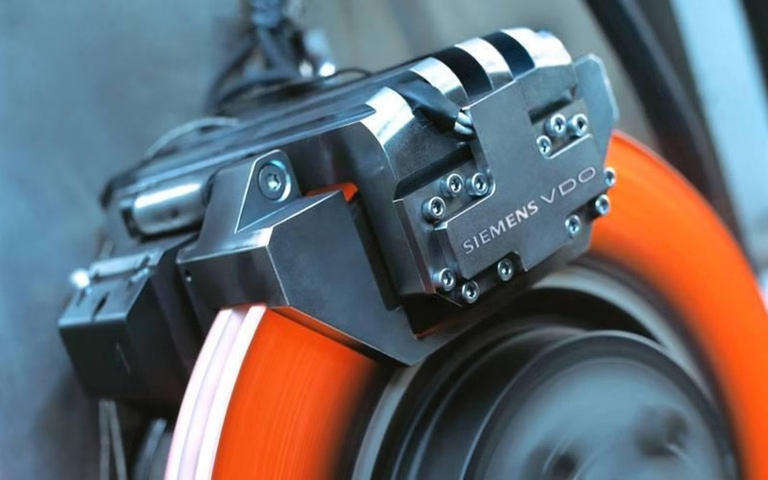
Picture a friend who just switched to an electric car bragging that they have not touched a brake shop in three years. Sounds like an exaggeration, right? It is not. That is just how electric vehicle braking works, and once you understand why, the whole thing stops sounding like magic and starts making a lot of sense.
A lot of new EV owners ask the same question the moment they slide behind the wheel for the first time: do these things even have brake pads, or is that whole system replaced by something electric and futuristic?
The short answer is yes. Electric vehicles absolutely have brake pads, just like gas cars do. The difference is that EV brake pads tend to last a lot longer, thanks to a clever bit of engineering called regenerative braking.
Drive an EV for a week and you will notice something odd. You press the brake pedal far less often than you did in your old gas car, and when you do press it, the car often slows down before the physical brakes even engage.
That is regenerative braking at work. Instead of relying purely on friction to slow the car down, the electric motor reverses its role and starts acting like a generator, turning your forward motion back into electricity that gets stored in the battery.
This process takes a huge amount of stress off the physical brake components. Brake pads designed for long life and low noise end up doing far less work over the life of the vehicle, which is a big part of why so many EV owners rarely think about brake maintenance at all.
That said, EVs still keep a full set of traditional friction brakes with pads and rotors, because there are situations where regenerative braking simply is not enough, like an emergency stop or a full battery that cannot accept more charge. Some manufacturers go a step further and fit galvanized brake pads, which resist corrosion better and hold up longer, fitting nicely with the low-maintenance reputation electric cars have built for themselves.
How EV Braking Actually Works Under the Hood
Electric vehicles run on two braking systems working together, not one. There is the regenerative system, and there is the traditional friction system most drivers already know from years of driving gas cars. Together, they cover both efficiency and raw stopping power.
Regenerative braking flips the electric motor’s normal job on its head. Instead of drawing power from the battery to spin the wheels, the motor gets spun by the wheels themselves during deceleration, and that spinning motion generates electricity that flows back into the battery.
Here is what that feels like in practice. Ease off the accelerator pedal, and the car starts slowing down almost immediately, well before your foot ever touches the brake pedal. That resistance you feel is the regenerative system quietly capturing energy that would otherwise be lost as heat in a conventional car.
Press the brake pedal gently, and regenerative braking takes the lead. Stomp on it because someone cut you off, and the vehicle switches over to conventional hydraulic brakes with pads and rotors, because that system can generate stopping force far faster than regeneration alone.
So yes, EVs have brake pads. Both electric and gas vehicles rely on the same basic hydraulic brake pad and rotor setup. EVs just do not need to lean on that system nearly as often.
Many electric cars let you adjust how aggressively the regenerative system kicks in. Crank it up to the highest setting, and you get what is commonly called one-pedal driving, where lifting your foot off the accelerator alone is enough to bring the car to a near stop in most everyday situations.
Drivers who get used to one-pedal driving often say it changes how they drive entirely. City commuters especially notice it, since stop-and-go traffic barely touches the physical brake pedal once you get the hang of modulating speed with the accelerator alone.
This hybrid approach, regeneration first and friction brakes as backup, explains the whole story behind why EV brake pads tend to outlast their gas-powered counterparts. You are simply not grinding metal against metal nearly as often.
Regenerative Braking vs Traditional Braking: What Is Actually Different
It helps to see these two systems laid out side by side, because the differences explain almost everything about why EV maintenance schedules look the way they do.
| Feature | Traditional Friction Braking | Regenerative Braking |
|---|---|---|
| How it slows the car | Friction between pads and rotors | Electric motor reversed to act as a generator |
| What happens to the energy | Converted to heat and lost | Converted to electricity and stored in the battery |
| Wear on components | Constant wear with every stop | Minimal wear, no friction involved |
| Byproduct | Brake dust and gradual pad wear | None, it is an electrical process |
| When it activates | Whenever the brake pedal is pressed | As soon as you lift off the accelerator, or with light pedal pressure |
In a gas-powered car, you have no choice but to rely fully on friction braking every single time you slow down. That constant grinding is exactly why brake pads on conventional vehicles wear out relatively fast, especially for drivers who spend a lot of time in stop-and-go city traffic.
Electric vehicles flip that script. Regenerative braking handles the bulk of the deceleration on its own, well before the friction brakes ever get involved.
Even so, EVs and hybrids still keep conventional hydraulic brakes on board as a backup for hard stops, low battery situations, and emergencies. You will just use them a fraction as often compared to a gas car covering the same miles.
Less friction means less heat, less wear, and less brake dust settling on your wheels. Over the life of the vehicle, that adds up to real savings, both in maintenance bills and in the number of trips to a repair shop.
How Long Do EV Brake Pads Actually Last
Here is where things get genuinely impressive. Electric vehicles carry the same style of brake pads as gas cars, but the replacement schedule looks nothing alike.
Plenty of EV owners report brake pads that outlast anything they ever experienced with a conventional vehicle. Some Tesla owners have gone past 100,000 miles without a single brake pad replacement, something that would be nearly unheard of in a traditional car doing the same amount of daily driving.
Generally speaking, EV brake pads hold up for somewhere between two and five years before needing replacement, though a lot of that comes down to how and where you drive. Compare that to conventional vehicles, which often need new pads every one to two years under normal use, and the gap becomes obvious pretty fast.
What Actually Determines How Long Your EV Brake Pads Last
- Driving style: Aggressive braking wears pads faster, regardless of powertrain
- How much you rely on regenerative braking: One-pedal driving fans see the biggest pad life gains
- Type of roads you drive on: Highway commutes mean fewer stops, and fewer stops mean less pad wear
- Climate conditions: Cold weather can reduce regenerative braking effectiveness in some models
- Vehicle weight: Heavier EVs, especially those with large battery packs, put more strain on the friction brakes during hard stops
Think about two EV owners with identical cars. One commutes forty miles a day on the highway with barely any stop-and-go traffic. The other spends an hour crawling through downtown gridlock every morning. The highway driver will likely stretch their brake pads far longer, simply because there is less need for hard braking events in the first place.
Manufacturers of hybrid and electric vehicles often recommend a brake inspection around the five-year mark, a schedule that would sound almost negligent for a conventional gas vehicle but makes perfect sense given how little the friction brakes get used.
Even with all that extended lifespan, periodic inspection still matters. A pad that rarely gets used is not necessarily a pad in perfect condition, which brings up a problem unique to EVs that a lot of new owners never see coming.
Keep Your EV Brakes Healthy With These Maintenance Habits
Here is the twist nobody warns you about when they talk up how long EV brake pads last. Brakes that barely get used can develop their own set of problems, mainly rust and corrosion building up on the rotors from sitting idle too much.
Despite leaning on regenerative braking most of the time, EVs still need real maintenance attention paid to their friction brake system. Skipping that maintenance because “EV brakes last forever” is exactly the kind of thinking that leads to surprise repair bills down the road.
Start with regular inspections. Get your brake pads checked at least twice a year, even if everything feels completely normal. A technician can catch pad thickness issues, uneven wear patterns, and early signs of rotor corrosion long before they become a real problem.
An ounce of prevention beats a brake job you did not see coming. Since EV brakes see less regular use, rust has more opportunity to creep onto the discs, especially for owners living in humid or coastal climates.
A few habits go a long way toward keeping your braking system in good shape:
- Occasionally turn off or reduce regenerative braking mode so the mechanical brakes get some actual use
- Clean brake components during routine seasonal tire swaps
- Take an occasional drive specifically to apply moderate brake pressure a few times, sometimes called a brake cleaning drive
- Follow the manufacturer’s recommended schedule for flushing brake fluid
When the time finally comes to replace your pads, consider brake pads built specifically for EVs. These are engineered around the unique demands of electric vehicles, including quieter operation and a different weight distribution compared to gas cars.
Noise matters more in an EV than most people realize. There is no engine noise to mask brake sounds in an electric car, so a squeak that would go unnoticed in a gas vehicle becomes impossible to ignore in an EV. Choosing pads with strong noise-dampening properties saves you from that annoying reminder every time you slow down.
| Maintenance Task | Recommended Frequency |
|---|---|
| Visual brake pad inspection | Every 6 months |
| Rotor corrosion check | Every 6 to 12 months, more often in humid climates |
| Brake fluid flush | Per manufacturer schedule, typically every 2 to 3 years |
| Full brake system inspection | Around the 5-year mark, or per manufacturer guidance |
| Manual friction brake use (to prevent rust buildup) | Occasionally, especially if you drive mostly highway miles |
Brake maintenance still matters even with all the advantages regenerative braking brings to the table. Reduced wear does not mean zero wear, and a corroded rotor sitting quietly under your wheel well will not announce itself until it becomes a real problem.
Your safety depends on brakes that work exactly when you need them, whether your car runs on gasoline, electricity, or something in between. So the next time your EV goes a year without a single brake warning light, do not take that as permission to forget about the system entirely. Book that inspection anyway. Your future self, and your rotors, will thank you.