
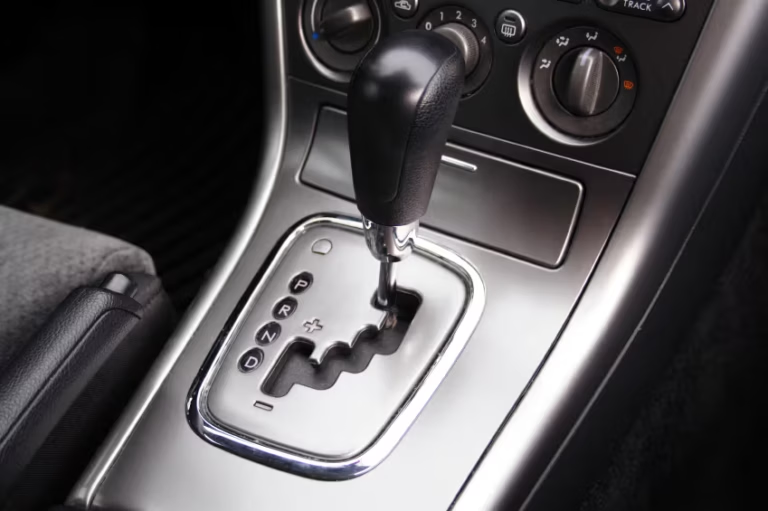
You select Drive, release the brake, and the engine revs while the car stays put. Maybe Reverse works but Drive does not, or the vehicle waits several seconds before clunking into gear. Either way, this is not a problem to ignore because a transmission that will not engage can leave you stuck in a driveway, parking lot, or traffic lane.
Low transmission fluid is one possible cause, especially when a leak has been ignored. A shifter locked in Park is another problem with a different first check. Internal transmission damage, a failed solenoid, broken linkage, a bad range sensor, a torque-converter problem, or an electronic fault can also prevent the vehicle from moving.
Start safely. Keep your foot on the brake, set the parking brake, and avoid repeatedly raising engine speed to force the car into motion. If you smell burnt fluid, see a large leak, hear grinding, or the car engages suddenly, switch it off and arrange a tow rather than turning a small fault into a major repair.
What it means when Drive does not engage
An automatic transmission uses fluid pressure, clutches, bands, gears, valves, sensors, and a torque converter to transfer engine power to the wheels. Selecting D sends a command through the shifter and range sensor, then the transmission control system applies the components needed for forward movement.
If the transmission has no usable fluid pressure, the forward clutch cannot apply correctly. If a solenoid or valve body passage is stuck, the pressure may go to the wrong circuit. If a clutch pack is worn or burned, the transmission may apply it but still fail to transmit torque.
The engine revving does not prove the transmission is fine. It only tells you that the engine is producing power while the wheels are not receiving it in the expected way. The sound, delay, fluid condition, dashboard warning, and behavior in Reverse can help narrow the fault.
Drive does not engage, but Reverse works
When Reverse works normally but Drive does not, the problem may be limited to a forward clutch circuit, solenoid, valve-body passage, range command, linkage adjustment, or internal clutch pack. The exact cause depends on the transmission design.
Do not assume the entire transmission is ruined. A scan, pressure test, linkage inspection, and fluid check may identify an external or hydraulic problem. In some cases, a repair to the control system is enough. In others, the transmission must be removed for internal repair.
Neither Drive nor Reverse engages
If the vehicle will not move in any gear, low fluid, a failed pump, a broken axle or driveshaft, torque-converter damage, a major internal failure, or a control problem becomes more likely. Check whether the engine changes sound or load when selecting D or R, but do not keep shifting repeatedly to test it. A safe tow is preferable to repeated slipping.
A broken axle can make a transmission seem dead because the differential sends power through the failed side instead of turning the wheels. If the transmission engages but the car still does not move, inspect the axles and driveline as well as the transmission.
Check the shifter before blaming the transmission
Sometimes the transmission is not the first problem at all. The shift lever may be stuck in Park, the brake-switch signal may be missing, the shift cable may be disconnected, or the range sensor may not agree with the lever position. These problems can stop the vehicle from selecting or recognizing Drive.
Press the brake pedal and watch the brake lights. If the brake lights do not come on, the shift interlock may not release. A blown fuse, failed brake-light switch, wiring fault, or low battery voltage can prevent the lever from moving out of Park.
If the lever moves but the dashboard still shows P, N, or another position, the cable, range sensor, shifter assembly, or transmission-side lever needs inspection. Do not force the lever. A broken shift cable can make the cabin lever move while the transmission remains in Park.
The shift interlock and emergency release
Automatic vehicles use a shift-lock interlock to help prevent the driver from moving out of Park without pressing the brake. The emergency release is often a small covered slot near the shifter. The location and procedure are different by vehicle, so use the owner’s manual.
Releasing the interlock can move the car, but it does not repair the underlying fault. It is meant to help you move the vehicle to safety or load it for towing. If the brake lights are not working, the car may be unsafe to drive even after the lever moves.
Never crawl under a car and try to release a transmission mechanism with the engine running. Keep the wheels chocked, use the parking brake, and get assistance if the vehicle is on a slope. A car that unexpectedly rolls can injure someone before you have time to react.
Low transmission fluid can stop Drive from engaging
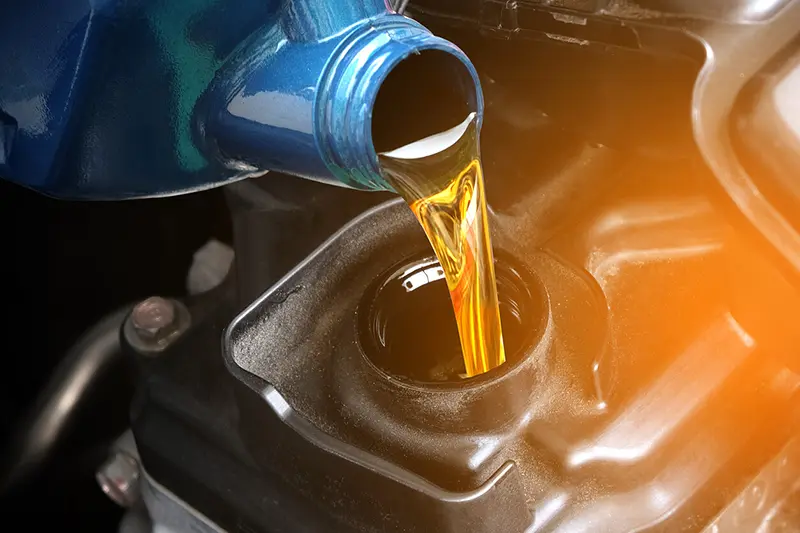
Automatic transmission fluid provides hydraulic pressure, lubrication, cooling, and friction control. If the level is too low, the pump may draw air instead of a solid column of fluid. Pressure can fall far enough that the transmission will not apply a clutch or gear, especially when the fluid is hot.
Low fluid is usually a symptom of a leak, not normal consumption. A transmission does not burn fluid the way an engine burns fuel. Fluid may escape from a pan gasket, axle seal, cooler line, front pump seal, electrical connector, case seam, or torque-converter seal.
Do not pour in fluid simply because the dipstick looks low without checking the correct procedure. Some transmissions have a dipstick, some require a specific temperature range, and some are filled through a level plug. The engine may need to be running, the vehicle may need to be level, and the fluid may need to be at a specified temperature.
How to check the fluid correctly
- Park on a level surface and apply the parking brake.
- Read the owner’s manual for the correct fluid type and checking temperature.
- Warm the transmission only as the manufacturer directs.
- With the brake applied, move through the gear positions if the manual instructs you to do so, then return to Park.
- Read the dipstick or level plug procedure exactly.
- Add only the specified fluid in small amounts and recheck the level.
Do not mix fluids based only on color. Red fluid is not a universal specification, and many modern fluids have different friction characteristics. Using the wrong fluid can cause slipping, harsh shifts, shudder, or clutch damage.
If the fluid is far below the mark, find the leak before driving. Adding a bottle may allow the car to move, but the fluid can escape again and leave the pump empty. A transmission that has been run low may already have overheated clutches or a damaged pump.
What fluid condition tells you
Healthy fluid varies by application, so color alone is not a complete test. Burnt odor, dark fluid, visible metal, clutch material, or a milky appearance deserves attention. A small amount of material in the pan may occur with wear, but large flakes or a heavy layer of debris can indicate internal damage.
Milky or pink fluid can indicate water or coolant contamination. A failed transmission cooler inside the radiator can allow coolant and transmission fluid to mix. That mixture can damage clutch friction material and bearings quickly.
Do not use a fluid flush to hide burnt fluid, slipping, or a transmission that will not engage. A proper inspection should come first. Depending on the failure, the repair may be a leak fix and refill, a valve-body repair, or a complete rebuild or replacement.
Transmission fluid leaks that cause loss of Drive
A leak may begin as a few drops and become serious over time. Drivers often see a red, brown, or oily spot on the driveway and assume it is engine oil. The color is not reliable, so place clean cardboard under the vehicle and have the source identified.
Fluid can travel along the underside of the transmission before dripping. The spot on the ground may be several inches away from the actual leak. A shop may clean the case, add an approved dye, use a lift, and inspect the seals and lines while the transmission is operating.
Common leak locations
- Transmission pan gasket or drain plug
- Axle or output-shaft seals
- Transmission cooler hoses and fittings
- Electrical connector seals
- Front pump or torque-converter seal
- Case seam or cracked housing
- Shift-shaft seal or selector mechanism
A pan gasket or cooler hose may be an external repair. A front pump seal often requires more labor because the transmission may need to be separated from the engine. Do not assume that adding fluid is the long-term solution just because the car moves after topping up.
How the transmission shifter can prevent Drive
The shifter sends a mechanical or electronic request to the transmission. In a cable-operated system, the cable connects the cabin lever to a selector lever on the transmission. If the cable stretches, breaks, comes out of its bracket, or the bushing fails, the lever position may not reach the transmission.
In an electronic shift-by-wire system, the selector sends a signal to a control module. The module then commands the transmission range. A low battery, network communication fault, sensor failure, or software problem can prevent the requested gear from being applied.
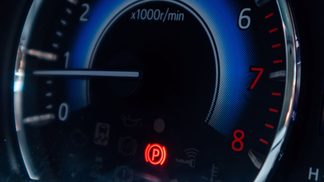
Look at the instrument display when you select D. If the display does not change, the vehicle may not be recognizing the command. If it shows D but does not move, the command may be reaching the transmission while hydraulic or mechanical components fail to apply.
Simple shifter checks
With the engine off, move the lever slowly through the positions while watching the display. Do not force it past a stop. Check whether the brake lights work and whether the lever feels loose, unusually stiff, or disconnected.
Some vehicles will not select Drive if the battery voltage is extremely low. If the starter cranks slowly, dashboard lights flicker, or several systems show warnings, test the battery and charging system. Jump-starting the vehicle may restore enough power to move it, but it does not explain why the battery went low.
Solenoids and the valve body can block forward movement
Inside an automatic transmission, the valve body routes pressurized fluid to different clutches and brakes. Solenoids are electrically controlled valves that help manage this pressure. A stuck solenoid, clogged passage, broken wire, or control fault can prevent the forward clutch from applying.
Symptoms can include delayed engagement, harsh engagement, no Drive, no Reverse, incorrect shifts, or limp mode. A scan tool may show transmission codes, but a code does not prove the solenoid itself is bad. The circuit, fluid contamination, valve body, and pressure need testing.
Removing a valve body is not a good first DIY job unless you have the service information, a clean work area, correct torque tools, and a way to keep dirt out. Small valves and check balls can be misplaced. A repair that starts as a no-Drive complaint can become a second failure if the assembly is reinstalled incorrectly.
What a transmission pressure test shows
A technician can connect a pressure gauge to specified test ports and compare readings in Park, Reverse, Neutral, and Drive. Low pressure in every range may point toward low fluid, a pump, filter, regulator, or internal leak. Pressure that is normal in Reverse but missing in Drive may point toward a forward circuit or valve-body issue.
Pressure testing must follow the manufacturer’s safety and temperature procedure. A reading taken at the wrong temperature or port can lead to a false conclusion. The gauge result is most useful when combined with scan data and the vehicle’s symptoms.
Torque-converter and internal transmission problems
The torque converter transfers power from the engine to the transmission through fluid. It also allows the engine to keep running while the vehicle is stopped in Drive. A failed converter can produce slipping, shudder, noise, overheating, or a no-move condition.
If the pump drive inside the converter or transmission is damaged, fluid pressure may be lost. A broken input shaft, stripped splines, damaged clutch drum, or failed forward clutch can also prevent Drive from working. These failures usually require significant disassembly rather than a quick fluid top-up.
A new torque converter may solve a converter-specific problem, but it cannot repair a damaged pump, valve body, clutch pack, or gearset. The shop should identify the failure before quoting the part.
Signs of internal damage
- Engine revs increase but road speed does not
- Drive engages only after a long delay
- A loud clunk occurs when Drive finally engages
- Burnt fluid odor or dark debris is present
- Transmission slips when hot or under load
- Grinding, whining, or rattling comes from the transmission area
- Drive and Reverse both fail after a loud event
Do not keep revving the engine to force engagement. The clutches can build heat while slipping, and the sudden engagement can shock the driveline. If the vehicle does move after a delay, drive only far enough to reach a safe location or arrange a tow.
Electrical faults and transmission control modules
Modern automatic transmissions depend on sensors and control modules. A range sensor, input-speed sensor, output-speed sensor, pressure sensor, solenoid, wiring harness, fuse, or module can affect Drive engagement. Low battery voltage or a damaged ground can cause several transmission symptoms at once.
Scan the transmission control module with equipment that can access manufacturer-specific data. A basic code reader may read engine codes but miss the transmission codes. Record the codes before clearing them, along with the gear selected, fluid temperature, and warning messages.
Common transmission code families can involve shift solenoids, gear-ratio errors, pressure control, range sensors, or communication. Do not order a solenoid based only on an internet code list. The exact test depends on the vehicle and transmission.
Check the battery and grounds
Electronic transmission control can behave badly when system voltage drops. Check battery terminals, engine grounds, transmission grounds, alternator output, and relevant fuses. A loose ground can pass a simple continuity test but fail under load.
If the battery was recently replaced, check whether the vehicle needs a relearn or initialization procedure. Some vehicles also require the correct battery type and registration through a control module. A battery job does not normally cause a mechanical no-Drive condition, but low voltage can create confusing electronic symptoms.
Could the problem be a broken axle or driveline?
Yes. If the transmission engages but the wheels do not receive power, a broken axle, differential, driveshaft, transfer-case component, or CV joint can imitate a transmission failure. You may hear a snap or grinding noise, or the engine may load slightly without the vehicle moving.
Do not spin the drive wheels in the air to diagnose the problem unless the vehicle is properly supported and you know the safety procedure. A rotating wheel, axle, or driveshaft can catch clothing or injure someone. Let a shop inspect the driveline on a lift.
Four-wheel-drive and all-wheel-drive vehicles add transfer-case and front-driveline components. A problem in one of those systems can affect movement in Drive. The transmission may be healthy even though the vehicle does not move.
What to do when the car will not move into Drive
- Keep the brake applied. Prevent unexpected movement if the transmission engages suddenly.
- Check the dashboard position. Confirm that D appears when selected.
- Look for warnings. Note transmission, check-engine, battery, ABS, or service messages.
- Check the ground. Look for fresh red, brown, or oily fluid without crawling under an unsupported vehicle.
- Check fluid only with the correct procedure. Use the specified fluid and temperature instructions.
- Try Reverse only if safe. Do not repeatedly shift between gears or raise engine speed.
- Arrange a tow if the problem remains. A flatbed may be needed for some vehicles, especially all-wheel-drive models.
If topping up the correct fluid restores movement, do not consider the problem solved until the leak is repaired and the fluid level is rechecked. If the fluid is badly low, ask the shop to inspect the pan, seals, cooler lines, and transmission for damage. Ask whether the fluid loss was severe enough to require a pressure or internal inspection.
What not to do when Drive fails
- Do not use the accelerator to force the car into Drive.
- Do not keep shifting from Reverse to Drive while the vehicle is moving.
- Do not add a random transmission fluid because the color looks similar.
- Do not overfill the transmission.
- Do not crawl under the car with only a jack supporting it.
- Do not clear transmission codes before recording them.
- Do not tow an all-wheel-drive vehicle with the wrong wheels on the ground.
A transmission that engages after several seconds is still a fault. Delayed engagement can become a no-move condition, and the delay often gets worse as the fluid warms. Arrange diagnosis before it leaves you somewhere unsafe. Do not wait for total failure if the warning signs are already present right now today too.
How much does it cost to fix a car that will not move in Drive?
The original article gives an approximate range of about $8 to $20 per quart for transmission fluid. It also lists leak repair from about $150 for a seal to around $1,000 for a new torque converter, and says a permanently damaged transmission can cost several thousand dollars. Those figures are general estimates, not a current quote for every vehicle or location.
The true repair cost depends on the transmission design, fluid type, access, labor rate, diagnostic time, parts availability, and whether the original cause damaged internal components. A fuse, brake-switch, loose cable, or low-voltage problem can be relatively simple. A pump, torque converter, valve body, clutch pack, or replacement transmission is a much larger repair. Towing and fluid cleanup may add to the bill when the vehicle cannot be safely driven.
Ask for an itemized estimate that separates diagnosis, fluid, leak repair, parts, labor, programming, and towing. Ask whether the shop inspected for internal debris and whether the quoted transmission is rebuilt, remanufactured, used, or new. A low price can hide a short warranty or leave out the cause that damaged the original unit.
When a fluid change may help and when it will not
If the fluid is merely old but at the correct level and the transmission engages normally, service may be part of routine maintenance. If the car will not move because the fluid is critically low, adding the correct fluid and repairing the leak may restore operation. If the clutches are burned or the pump has failed, a fluid change will not rebuild those parts.
Be cautious with power flushing a transmission that is already slipping or contaminated. The right service depends on the vehicle and condition. Ask the technician what was found in the pan, what the fluid looks like, and whether a drain-and-fill or another service is appropriate.
How to prevent a future no-Drive problem
Follow the transmission service interval in the owner’s manual, including the correct fluid specification and filter procedure. Some transmissions are marketed as low-maintenance, but that does not mean leaks, overheating, or abnormal shifts should be ignored.
Check underneath the vehicle during oil changes. Look for wet axle seals, cooler lines, pan edges, and fluid on the crossmember. A small leak is easier to repair before the level drops enough to starve the pump.
Pay attention to delayed engagement, slipping, harsh shifts, shudder, whining, and burnt odor. A transmission that still moves can be warning you before it stops. Write down when the symptom happens, whether the transmission is hot or cold, and whether it occurs in Drive, Reverse, or both.
What a proper shop diagnosis looks like
The technician should confirm the complaint, check the selector position, inspect fluid level and condition, scan all relevant modules, and look for leaks. If the transmission is not applying a gear, pressure testing and linkage inspection may be needed. If it applies but the wheels do not turn, inspect the axles and driveline.
A road test may be useful when the vehicle still moves, but it should not be forced if engagement is delayed or unpredictable. The technician can compare cold and hot behavior, shift timing, pressure, engine load, and speed-sensor data. The vehicle owner’s manual should be checked for the correct fluid and towing procedure, and the NHTSA vehicle-safety resources are a useful general reminder to avoid driving an unsafe vehicle.
If the transmission must come out, ask what evidence supports removal. Internal damage may be confirmed by debris, pressure results, gear-ratio data, clutch inspection, or a failed converter test. Good shops do not need to guess at a rebuild before checking external causes.
How the symptom changes the diagnosis
The exact behavior is useful evidence. If the car engages Drive immediately when cold but loses it after warming up, fluid pressure may be falling as the fluid thins, or a worn internal seal may be leaking more when hot. If it works in the morning and fails after a long trip, record that pattern before the vehicle is towed.
If Drive engages with a delay and then slams into gear, do not keep testing it. A delayed clutch fill followed by a hard engagement can damage mounts, axles, and internal clutches. The transmission control system may also be reacting to a pressure or sensor fault.
If the engine revs freely but the vehicle creeps only when you select a lower gear, the forward clutch or its hydraulic circuit deserves attention. If it moves in Reverse but not Drive, tell the shop exactly that. If neither direction works, low pressure, pump failure, torque converter damage, or a driveline fault becomes more urgent to check.
When Drive engages only after shifting several times
Repeatedly moving the shifter between Park, Neutral, Reverse, and Drive may briefly change the pressure or contact at a failing circuit. That does not repair the fault. It can also make the symptom harder to reproduce and adds more heat if the clutches slip during the attempts.
Keep the brake firmly applied and allow the transmission to settle. If the vehicle still does not move, turn it off and arrange help. A tow is cheaper than damaging the transmission by forcing it to engage.
Why transmission temperature affects engagement
Automatic transmission fluid changes thickness as it heats. A worn transmission may maintain enough pressure with cold, thicker fluid but lose pressure after the fluid reaches operating temperature. A restricted cooler, failed cooling fan, or heavy load can make the problem appear sooner.
Watch for a transmission-temperature warning, burnt smell, slipping after towing, or a delayed engagement after sitting in traffic. Do not add an external cooler or use a different fluid as a guess. Confirm the manufacturer’s cooling and fluid requirements first.
An overheating transmission can damage clutch material and seals even if the car still moves. If the fluid is dark and smells burnt, a service may not be enough. The shop may need to inspect the pan, test pressure, and determine whether internal friction material has failed.
Checking the transmission fluid leak without getting hurt
Park on a level surface and place clean cardboard under the transmission area. Look from the side with a flashlight, keeping away from the exhaust, belts, fans, and wheels. Do not slide under the vehicle unless it is supported by properly rated jack stands on a solid surface.
Record the location and color of any drops, but do not rely on color as proof. Engine oil, transmission fluid, power-steering fluid, and coolant can look similar after running across a dirty crossmember. A technician can clean the area and trace the leak accurately.
If fluid is pouring out, the level is below the dipstick, or the car has stopped moving, do not drive to a parts store for fluid. A tow protects the pump and internal clutches. If you must add fluid to move the vehicle off a dangerous roadway, add only the specified type and arrange a repair immediately.
Questions to ask before approving the repair
Ask which gear was tested and whether the transmission is receiving the command to select it. Ask whether the fluid level and condition were checked using the correct temperature procedure. These questions separate a real transmission diagnosis from a guess based on one symptom.
Ask whether the shop found a leak, low pressure, a failed solenoid, a range-sensor problem, a broken axle, or internal clutch damage. If a replacement transmission is recommended, ask what evidence rules out the external causes. Get the warranty and the type of replacement unit in writing.
Also ask whether the cooler lines, radiator cooler, torque converter, mounts, axles, and control-module programming are included. A repair can be incomplete if the original cause is left in place. This is where a clear estimate saves arguments later.
What I would do if this were my car
I would keep the brake applied, check whether the cluster shows D, and look for a fresh fluid leak. I would not rev the engine or keep moving the shifter back and forth. If the fluid level could be checked safely according to the manual, I would use only the specified fluid and add just enough to bring it into range.
If the transmission was low, I would repair the leak before driving normally. If topping it up did not restore Drive, or if the fluid smelled burnt, I would tow the car. I would want a scan and pressure test before approving a torque converter or replacement transmission.
I would also ask the shop to check the shift cable, range sensor, battery voltage, grounds, axles, and transmission cooler. A no-Drive complaint is expensive when the wrong part gets replaced. The diagnosis should prove whether the fault is external, hydraulic, electrical, driveline-related, or internal.
The mechanic’s verdict when a car will not move into Drive
A car that will not move in D may have low transmission fluid, an active leak, a locked shifter, a broken cable, a range-sensor fault, low battery voltage, a solenoid or valve-body problem, a failed pump, a torque-converter fault, internal clutch damage, or a broken axle. The symptom alone cannot identify the failed part.Check the simple items safely, but do not treat adding fluid as a permanent repair when the level is low. Use the correct fluid and checking procedure, record warning codes, and stop driving if the car engages suddenly, smells burnt, leaks heavily, or refuses to move in every gear.DIY is reasonable for reading the manual, checking the brake lights, inspecting for a visible leak, and checking fluid when the vehicle procedure allows it. A mechanic should handle pressure testing, electrical diagnosis, internal transmission work, and towing decisions. The clear takeaway is simple: protect the transmission from repeated slipping and get the cause diagnosed before a delayed Drive engagement becomes a complete no-move failure.