
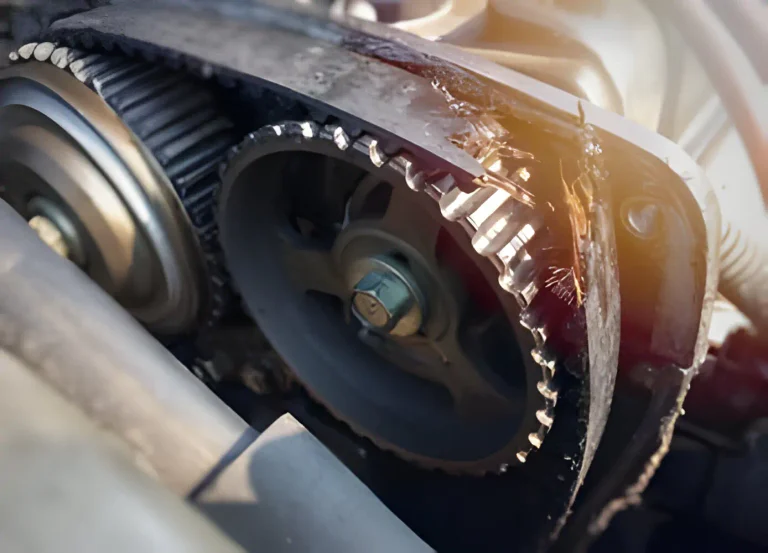
I can usually tell when a towed-in car has a broken timing belt before it drops off the flatbed. The owner walks into the shop, tells me the engine shut off silently at a stoplight or on the freeway, and then says, “When I tried to restart it, the starter motor sounded super fast and high-pitched, like a sewing machine spinning in thin air.” The very next words out of their mouth are always the same: “Did it bend the valves?”
The honest mechanic answer is that it depends entirely on whether your engine is an interference design or a non-interference design. On an interference engine, a snapped timing belt lets the moving pistons slam straight into the open intake and exhaust valves, bending the steel valve stems in a fraction of a second. On a non-interference (free-running) engine, engineers left enough physical clearance inside the cylinder that the pistons and open valves never occupy the same space, so the engine simply quits running without smashing its own internals.
Knowing which side of that line your engine sits on is the difference between a routine $800 timing belt kit and a $2,800 cylinder head rebuild. Let’s walk through what actually happens inside the cylinders when a belt snaps, how to check if your valves are bent before you spend big money tearing the engine apart, and when it makes sense to fix the head versus swapping in a used engine.
Quick answer: interference vs. non-interference engines
Before you touch the ignition key or authorize a shop to pull your cylinder head off, look at how the three scenarios break down in the service bay:
| Engine Type | What Happens Inside When the Timing Belt Breaks? | Valve Damage Risk | Typical Repair Needed |
|---|---|---|---|
| Interference engine (Most modern high-compression 4-cyl and V6 engines) | Camshaft stops holding several valves open while pistons keep pumping up to Top Dead Center and strike the valves | High (90%+ if broken at road speed) | Cylinder head removal, new bent valves/guides, head gasket set, and full timing belt kit ($1,800 to $3,500+) |
| Non-interference engine (Select older Toyota, Mazda, Ford, and Volvo engines) | Camshaft stops with valves open, but pistons stop short of the open valve heads at the top of their stroke | Very Low (unless severe carbon buildup or over-revving occurred) | New timing belt, water pump, tensioner, and idler pulleys ($550 to $1,100) |
| Unknown engine type | You don’t know yet whether the pistons and valves share the same clearance zone | Unknown (Treat as High until verified!) | Stop cranking immediately! Look up the exact engine code and run a borescope or leak-down check first |
Why valves bend after a timing belt breaks
To understand why a broken rubber belt can cause so much metallic carnage in half a second, picture the mechanical dance happening inside your engine at 2,500 RPM. At that highway cruising speed, your pistons are slamming up and down inside the cylinders more than 40 times every single second. At the same time, the overhead camshafts are pushing steel intake and exhaust valves down into the combustion chamber to let air in and exhaust out, then snapping them shut just milliseconds before the piston arrives at the top of the cylinder.
The toothed rubber timing belt is the only thing keeping the crankshaft (which drives the pistons) and the camshafts (which open the valves) locked in step. When that belt snaps, or when a seized water pump or idler pulley strips the rubber teeth off the belt, two things happen at once:
- The camshafts stop spinning almost instantly: Because the stiff steel valve springs are pushing hard against the camshaft lobes, the disconnected camshaft snaps to a halt in whatever random position it was in, leaving two, four, or six valves hanging wide open down inside the cylinders.
- The crankshaft and pistons keep spinning by momentum: Even if you take your foot off the gas immediately, the heavy spinning flywheel, crankshaft, and rolling transmission momentum keep the pistons pumping up and down for dozens or hundreds of revolutions before the car coasts to a stop.
On an interference engine, the piston comes flying up to Top Dead Center at high speed and smacks the open face of the valve. Because the valve sits at an angle (typically 15 to 25 degrees relative to the flat piston top), the impact bends the thin steel valve stem sideways like a struck nail. Even a tiny bend of 0.005 inches (five thousandths of an inch) prevents the precision 45-degree face of the valve from sitting flat against its seat in the cylinder head, leaving a permanent gap that leaks 100% of the cylinder’s compression!
What else can get damaged besides the valves?
When a piston hits an open valve at highway speed, the valve stem takes the first hit, but the shockwave travels in both directions. Up in the cylinder head, a sideways blow to a valve stem can crack the cast-bronze or iron valve guide, snap a cast-aluminum rocker arm, or crush a hydraulic lifter bucket. Down in the engine block, the sharp edge of the steel valve head stamps a shiny crescent-shaped dent (mechanics call them “eyebrows”) into the soft aluminum crown of the piston.
Here is a piece of real-world shop experience that surprises a lot of people: shallow crescent witness marks on top of an aluminum piston usually do not ruin the engine block! As long as the piston didn’t crack, the top ring land isn’t pinched tight around the compression ring, and a broken valve head didn’t snap off completely and punch a hole through the center of the piston, we can carefully dress down any sharp aluminum burrs on top of the piston crown to prevent hot-spot pre-ignition and reuse the bottom end safely.
The lucky diesel exception: sacrificial rocker arms
Every diesel engine on the road is a high-compression interference engine because diesel pistons come within a paper’s thickness of the cylinder head to ignite fuel by compression heat. However, several European and domestic diesel engine designers built a clever fuse into the valvetrain: fracture-split sacrificial rocker arms. On these engines, the camshaft sits above cast-aluminum roller rocker fingers that are intentionally engineered with a thin weak point in the casting.
When the timing belt snaps and the flat diesel piston comes up and hits the vertical valve straight on, the valve pushes straight back up and snaps the weak aluminum rocker arm in half instead of bending the heavy vertical valve stem! I’ve repaired half a dozen belt-snapped diesels where we pulled the valve cover, fished out six broken rocker arms, verified 100% cylinder seal with a leak-down tester, bolted on a new set of rocker arms and a timing belt kit, and saved the owner from ever pulling the cylinder head off the block.
Which common engines are interference vs. non-interference?
Over the last twenty-five years, automakers squeezed more horsepower and better fuel economy out of smaller engines by raising compression ratios and using deeper valve lift with variable valve timing. Because of that, most newer timing-belt engines are interference designs, while several classic Japanese, American, and European workhorses are non-interference. Here is how some of the most common timing-belt engines we see in the shop stack up:
| Manufacturer & Engine Family | Interference or Non-Interference? | Real-World Mechanic Notes |
|---|---|---|
| Honda / Acura V6 (J30, J32, J35, J37) & 4-Cyl (B, D, F, H series) | Interference | Almost all belt-driven Hondas (Odyssey, Pilot, Ridgeline, MDX, TL, Civic, Accord) will bend valves if the belt snaps at speed. |
| Subaru 2.5L & 2.0L EJ Series (1997 to 2012 Outback, Forester, Impreza, WRX, STI) | Interference (Post-1996 EJ25/EJ20) | Very tight valve-to-piston clearance; worse, on DOHC Subarus the intake and exhaust valves on the same head can hit each other! (Early 1990 to 1996 EJ22 2.2L was non-interference.) |
| Toyota / Lexus 3.0L & 3.3L V6 (1MZ-FE, 3MZ-FE) & 3.4L V6 (5VZ-FE) | Non-Interference (Most versions) | Classic Camry, Avalon, Highlander, Sienna, ES300, RX330, Tacoma, and 4Runner 3.4L V6 engines almost always survive a broken belt with zero bent valves. |
| Toyota / Lexus 4.7L V8 (2UZ-FE in Tundra, Sequoia, 4Runner, GX470, LX470) | Depends on VVT-i year! | Early 1998 to 2004 non-VVT-i 4.7L V8s are mostly non-interference; 2005 to 2009 VVT-i 4.7L V8s ARE interference and bend valves when the belt breaks! |
| Volkswagen / Audi 1.8T 20-Valve & All 1.9L / 2.0L TDI Diesels | Interference | 1.8T 20-valve turbo engines bend multiple small intake/exhaust valves rapidly when the water pump or tensioner roller fails. |
| Mazda 1.6L & 1.8L (B6 / BP in 1990 to 2005 MX-5 Miata & Protege) | Non-Interference | Famous free-running engines; if a Miata timing belt snaps on the highway, you coast to the shoulder, slap a new belt on, and drive home. |
| Hyundai / Kia 1.6L, 2.0L Beta, & 2.7L Delta V6 | Interference | Strict 60,000-mile belt intervals on older Accent, Elantra, Tiburon, Santa Fe, and Sonata models; snapping the belt almost always bends 4 to 8+ valves. |
| Ford 2.0L & 2.3L / 2.5L Lima SOHC (Ranger, Mustang, Pinto) | Non-Interference | Tough cast-iron non-interference engines that survive snapped belts without touching a single valve. |
Six clear signs your valves may be bent after a belt failure
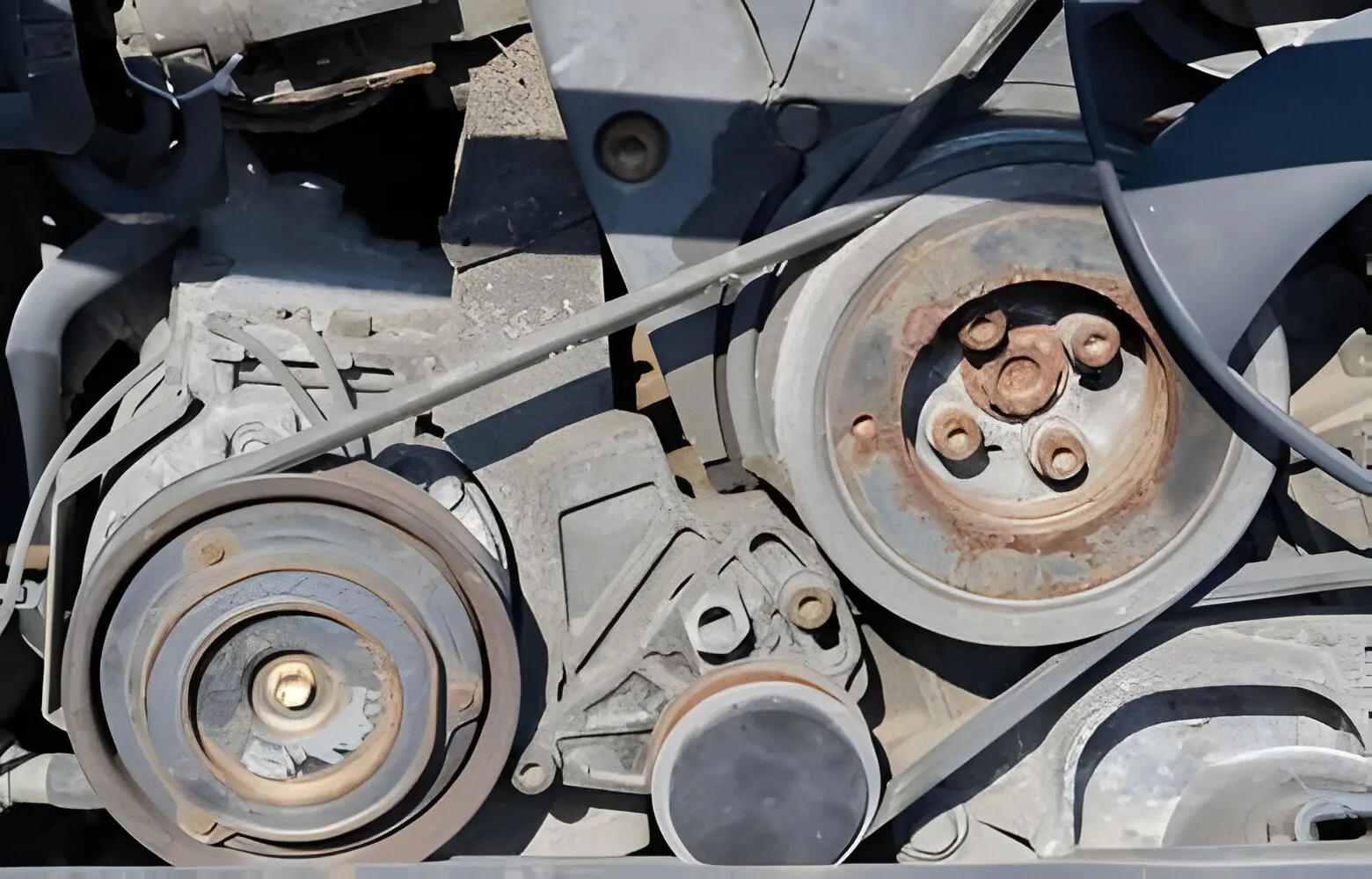
Peeking under the upper plastic timing cover and seeing a shredded rubber belt only tells you why the engine died; it doesn’t tell you whether the valves survived. Before pulling the cylinder head, mechanics look and listen for six specific clues that reveal bent valves.
- 1. The engine cranks unusually fast with an even, high-pitched whirr: Normally, when you turn the key, the starter motor has to push each piston up against 150 to 200 psi of trapped air compression, giving a healthy starter its familiar rhythmic “chug-chug-chug-chug” cadence. When a timing belt snaps, and especially when multiple valves are bent stuck open, there is zero air compression fighting the pistons, so the starter spins the crankshaft twice as fast with a smooth, breathless “wheeeeee” sound.
- 2. The engine refuses to start or pops back through the intake after jumping timing: If the belt stripped a handful of teeth without breaking completely in half, the engine might still try to cough while cranking, shooting raw fuel vapor and popping noises backward out of the plastic air intake box because the bent intake valves can no longer seal the combustion flame inside the cylinder.
- 3. You heard a sharp metallic clatter or rattle the instant the engine lost power: While a breaking belt on a non-interference engine just makes the car go dead quiet as the tachometer drops to zero, a high-RPM belt failure on an interference engine often produces a brief machine-gun rattle or metallic clack-clack-clack as the pistons hammer the open valves shut.
- 4. Huge valve lash clearance under the valve cover (a classic mechanic shortcut!): Before you even spend three hours installing a new timing belt to run a compression test, pop the valve cover off! If a valve stem is bent by even a few thousandths of an inch, it gets wedged in its guide and cannot snap all the way back up to the top of its seat. Slide a feeler gauge under each camshaft lobe on its base circle: if healthy valves have 0.008 inches of clearance and two valves suddenly have a loose, sloppy 0.080-inch gap (or a rocker arm is lying loose in the head), those two valves are 100% bent!
- 5. A cylinder leak-down test hisses air out the throttle body or tailpipe: When we thread a compressed-air leak-down tester into the spark plug hole with all the camshafts unbolted (or turned so the cylinder’s valves should be closed) and pump 90 psi of shop air into the cylinder, a healthy cylinder holds the air tight. If air immediately roars out of the open throttle body, the intake valves are bent; if air hisses out of the exhaust tailpipe, the exhaust valves are bent.
- 6. Zero psi on one or more cylinders during a compression test (after timing a new belt): If you install and time a new timing belt and spin the engine with a compression gauge in the spark plug holes, a healthy engine shows 145 to 195+ psi across all cylinders. Bent valves almost always read a dead 0 psi to 30 psi on the affected cylinders.
What you should do step by step after a timing belt breaks
The decisions you make in the first ten minutes after your timing belt breaks can literally determine whether a lucky engine survives or gets destroyed in your driveway. Follow this exact shop sequence:
- Stop cranking the starter motor immediately: Once an engine shuts off suddenly on the road and sounds fast or strange on your first restart attempt, take your hand off the key or push-button! If the belt only jumped three teeth at a low-speed stoplight, or if the camshaft stopped in a lucky spot between lobes at idle, cranking the starter motor ten more times in the parking lot can finish stripping the belt teeth and hammer the pistons into valves that were still straight.
- Confirm whether your exact engine code is interference or non-interference: Don’t go by the car model name alone, because manufacturers often put three different engines into the same car (or changed a non-interference engine into an interference engine when they added Variable Valve Timing, like the 2005 Toyota 4.7L V8!). Check the engine code on your under-hood emissions sticker or VIN (8th digit) against factory service data.
- Run a non-invasive valve check before buying a full timing kit on an interference engine: If you know the engine is an interference design, don’t spend five hours bolting on a $350 water pump and timing belt kit just to find out the engine has zero compression afterward. Either slide a $35 USB borescope camera down the spark plug holes to look for shiny silver valve-impact marks on top of the pistons, check under the valve cover for loose rocker arms / huge valve lash, or unbolt the camshaft caps so all valves spring shut and pump compressed air into each spark plug hole with a leak-down adapter.
- Find out WHAT killed the timing belt: A quality rubber timing belt almost never snaps early on its own unless it was left in the car for 140,000 miles. Spin the water pump pulley, the hydraulic tensioner roller, and every idler bearing by hand! Half the “broken timing belt” cars in our shop actually suffered a seized water pump bearing or locked-up idler pulley that melted through the back of the belt, or a leaking camshaft oil seal that soaked the rubber in hot motor oil until it turned to mush.
- Repair based on hard test numbers, not wishful thinking: If your leak-down and compression tests pass across every cylinder, install a complete timing belt kit (belt, water pump, tensioner, idlers, and seals) and enjoy the car. If two or more cylinders fail the leak-down test with air pouring out the intake or exhaust, pull the cylinder head (or price out a used engine) right from the start so you aren’t paying for the timing belt labor twice.
Can valves bend if the timing belt only jumps teeth?
Yes, valves can definitely bend even if the timing belt is still in one piece and only jumped teeth. A timing belt does not have to snap in half to cause piston-to-valve contact on an interference engine; it only has to slip far enough out of synchronization that a valve is still hanging open when the piston arrives at Top Dead Center.
How many jumped teeth does it take to bend a valve? While every engine’s cam profile and piston pocket depth are slightly different, here is the general rule of thumb we see in the shop across most 4-cylinder and V6 interference engines:
| How Far the Timing Belt Jumped | What Usually Happens to the Engine | Symptoms & OBD-II Codes |
|---|---|---|
| 1 tooth off (Often from an installation mistake or slack tensioner) | Valves do NOT bend. Clearance is reduced slightly, but pistons and valves still miss each other. | Slightly down on power (or low-end torque), rough idle, reduced fuel economy, and cam/crank correlation code P0016 or P0017. |
| 2 to 3 teeth off (Weak hydraulic tensioner or stretched belt) | Borderline danger zone. Most engines still clear by a hair at idle, though high-compression VVT engines can kiss the valves if VVT advances the cam under load. | Hard starting, loud misfires (P0300), backfiring into the intake, stalling at idle, and immediate Check Engine Light. |
| 4 or more teeth off (Stripped belt teeth, failed tensioner, or cold jump) | High risk of bent valves on interference engines. Valve timing is off by 30+ crankshaft degrees, putting the piston and open valve in the same spot. | No-start condition, fast uneven cranking as some cylinders lose compression, and audible metallic ticking if pistons touch the valves. |
Why do belts jump teeth without breaking? The #1 culprit is a weak automatic hydraulic timing belt tensioner that leaks its internal oil out over winter. When you park the car in gear on a hill, or when you crank a cold engine on a freezing morning, the slack belt whips on the non-tensioned side and skips two or three teeth over the small crankshaft gear. You can read more about how the engine computer tracks camshaft and crankshaft timing synchronization codes on the EPA On-Board Diagnostics (OBD) portal.
Is it worth fixing bent valves? (Cost breakdown vs. engine swap)
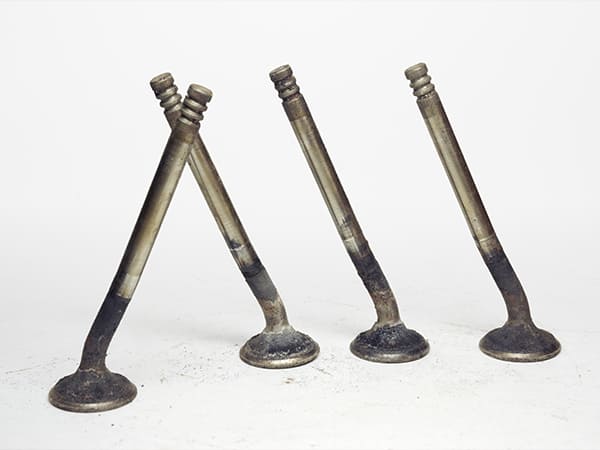
When we confirm that a customer’s interference engine has bent valves, we always sit down and run the numbers across three options before turning another wrench: rebuilding the cylinder head(s), swapping in a tested low-mileage used engine, or selling the car as a mechanic’s special. Which choice makes financial sense depends on your car’s overall condition, rust, transmission health, and whether it’s an inline 4-cylinder (one cylinder head) or a V6 / Boxer engine (two cylinder heads!).
Here is what the real-world math looks like in an independent repair shop today:
| Repair Path | What the Job Includes | Typical Total Cost (Parts & Labor) | When This Is the Smartest Move |
|---|---|---|---|
| Option 1: Timing Belt Kit Only (Non-interference engine, or an interference engine that passed leak-down!) | New timing belt, water pump, hydraulic tensioner, idler pulleys, cam/crank seals, and fresh coolant | $550 to $1,150 | Always do a quick leak-down check first; if the valves aren’t bent, this gets you back on the road fast. |
| Option 2: Pull Cylinder Head & Replace Bent Valves (Inline 4-Cylinder) | Remove 1 cylinder head, machine shop resurface & valve job (new bent valves, stem seals, guide check), head gasket set, new head bolts, and full timing belt kit | $1,600 to $2,600 | Great choice on a well-maintained 4-cylinder car where you know the bottom end and oil change history are clean. |
| Option 3: Pull BOTH Cylinder Heads & Rebuild (V6, V8, or Subaru Boxer) | Remove 2 cylinder heads, machine shop work on up to 24 or 32 valves, dual head gasket sets, head bolts, intake/exhaust gaskets, and full timing belt kit | $2,600 to $4,200+ | Makes sense on high-value trucks/SUVs (like a clean Honda Pilot/Odyssey, Toyota V8, or Subaru STI) worth $10,000+. |
| Option 4: Swap in a Low-Mileage Used / Imported Engine (With fresh timing belt kit installed on the stand!) | Used complete long-block engine, installing a brand-new timing belt & water pump kit while the engine is out on the shop floor, plus R&R labor and fluids | $2,200 to $3,800 | Often cheaper and safer than rebuilding two heads if a broken valve head punched a hole in a piston or if your old engine already had 200,000+ miles and burned oil! |
One honest shop rule if you ever go with Option 4 (putting a used salvage-yard engine into your car): never drop a used timing-belt engine into your car without bolting a brand-new timing belt and water pump kit onto it while it is sitting right there on the shop floor! Putting a new timing belt on an engine sitting on an engine stand takes 30 minutes of easy access; skipping it on a mystery junkyard engine is begging to go through the exact same heartbreak six months later.
Real-world shop stories: three broken timing belts with three different endings
Every week somebody tells me on the phone, “A guy on a forum said my engine is 100% toast,” or “My buddy said I can just slap a $40 belt on it.” To show you why testing beats internet guessing every time, here are three real broken-timing-belt jobs from our shop bays.
Case 1: the 2008 Honda Odyssey that got a miracle at a red light
A dad had his 2008 Honda Odyssey 3.5L V6 (J35 engine, 100% an interference engine) towed in after it died while idling in neutral at a railroad crossing. Because he was smart and had read about timing belts before, the moment the engine shut off silently, he did not try to crank the starter motor a single time. He put the hazard lights on and called a tow truck.
When we pulled the front timing covers off, we found the hydraulic belt tensioner had failed at 138,000 miles and the belt had slipped off the front camshaft pulley as the engine came to a stop at 650 RPM. Before quoting him $3,200 to pull both V6 cylinder heads, I lined up the timing marks carefully, slipped a test belt onto the pulleys, and ran a compression and leak-down test across all six cylinders. Every single cylinder held 175 to 185 psi with less than 4% leak-down! Because the belt slipped at idle RPM and he never touched the starter key afterward, not a single valve bent. A $950 Aisin timing belt and water pump kit had that minivan running for another 70,000 miles.
Case 2: the 2004 Toyota Highlander 3.3L V6 on the interstate
An older couple was driving their 2004 Toyota Highlander 3.3L V6 (3MZ-FE engine) at 70 mph on the highway when the engine suddenly lost all power. They coasted onto the shoulder and cranked the starter five or six times trying to get it to fire up, hearing that fast, compression-free whirring sound every time. When the tow truck dropped it off at a general repair shop down the highway, the service writer told them that because it broke at 70 mph, the engine was ruined and needed a $4,500 replacement motor.
They had it towed a second time to our shop for a second opinion. The Toyota 3MZ-FE 3.3L V6 is a non-interference engine! The reason it cranked fast on the shoulder wasn’t because the valves were bent; it was because the stationary camshafts happened to stop holding a couple of intake valves open while the crankshaft spun underneath them. We cleaned out the shredded 16-year-old belt, bolted on a new water pump, tensioner, idlers, and belt, and that Toyota fired up on the first turn of the key and purred like a kitten.
Case 3: the 2011 Subaru Forester XT that bent 12 of 16 valves
Then there is the other side of the coin. A customer bought a 2011 Subaru Forester with the 2.5L DOHC turbo engine (EJ255) and put off the 105,000-mile timing belt service to save money. At 124,000 miles, while accelerating onto a highway ramp at 4,200 RPM, the small cogged idler pulley bearing seized solid, melted its mounting bolt out of the engine, and snapped the timing belt instantly.
On a DOHC Subaru EJ25, not only do the pistons hit the open valves, the upper intake camshaft and lower exhaust camshaft on the same cylinder head are close enough that their open valves crash into each other when the belt lets go! Our borescope showed bright silver crescent marks on all four pistons, and when we pulled both cylinder heads off the horizontally opposed block, 12 out of the 16 valves looked like bent mushrooms. We had our machine shop rebuild both heads with 12 new valves, checked the piston ring lands carefully, installed a complete timing kit with the updated heavy-duty idler bracket, and got him back on the road, right after a $3,100 lesson on why a $900 preventative timing belt job is always cheaper than waiting for it to snap.
How to prevent a timing belt from breaking
A timing belt is one of the very few parts on a car that gives you almost zero warning before it snaps. Unlike worn brake pads that squeal for a month or a bad wheel bearing that hums louder every week, a timing belt can feel 100% normal at 8:00 a.m. and snap clean in two at 8:05 a.m. Following four preventative rules keeps your valves safe:
- Respect both the mileage AND the time interval (usually 60,000 to 105,000 miles OR 7 to 10 years): Check your owner’s manual for the exact schedule for your engine. Most modern Honda, Toyota, and Subaru belts are rated for 90,000 to 105,000 miles, while older Hyundai, Kia, VW, and Mitsubishi belts often call for 60,000 to 75,000 miles. And don’t forget age: even if your grandma’s car only has 42,000 miles on the odometer, a 12-year-old rubber belt dries out, cracks at the root of the teeth, and can strip without warning!
- Always replace the water pump, hydraulic tensioner, and idler pulleys at the same time: Never pay a mechanic (or spend four hours yourself) to take the whole front of the engine apart and only swap the $35 rubber belt! At least half of the “timing belt failures” I see in the shop are actually caused by an old water pump bearing seizing up, an idler roller spitting its ball bearings out, or a weak hydraulic tensioner letting the belt go slack 20,000 miles after a belt-only change.
- Never ignore a cold-start rattling noise or front oil leak near the timing cover: On Honda V6s and many 4-cylinder engines, a failing hydraulic timing belt tensioner makes a loud “clack-clack-clack-clack” rattle like a diesel engine for the first two minutes after a cold morning start. And if your front camshaft or crankshaft seal is leaking oil onto the bottom of the timing cover, fix it immediately before the oil swells and weakens the rubber belt teeth.
- Stick with OEM or Tier-1 Japanese/European timing kits (Aisin, Gates, Continental, INA, NTN, Koyo): Stay far away from $69 no-name online timing belt kits! A cheap counterfeit water pump or tensioner bearing can lock up in 10,000 miles and destroy a $3,000 interference engine; stick with factory OEM parts or reputable OEM suppliers like Aisin (for Toyota/Honda/Subaru) and Continental/INA (for European engines). You can also check whether your vehicle has any factory timing tensioner or belt campaign notices on the NHTSA recall and service bulletin database, and engineering standards for synchronous belt drives are maintained by SAE International.
Frequently asked questions about broken timing belts and bent valves
Will every broken timing belt bend valves?
No. Whether the valves bend depends first and foremost on whether your engine is an interference or non-interference design. Non-interference engines have enough physical room between the piston tops and the open valves that they almost never bend valves when the belt snaps. Even on an interference engine, if the belt slips or snaps at a low 650 RPM idle in a driveway and the driver does not keep cranking the starter motor, a small percentage of engines get lucky and stop before bending a valve, which is why you should always run a leak-down or compression check before pulling the cylinder head.
Can I just install a new timing belt and try starting it?
On a confirmed non-interference engine, yes: lining up the camshaft and crankshaft timing marks and installing a new timing belt kit is the standard fix. On an interference engine, however, you should first spin the newly timed engine over two full revolutions by hand using a breaker bar and socket on the crankshaft pulley bolt (never with the starter motor first!) to make sure nothing binds mechanically, and then run a compression test through the spark plug holes before reassembling all the outer covers and accessories.
How many valves usually bend when a timing belt breaks?
It varies widely depending on what RPM the engine was turning when the belt let go and how many valves each cylinder has. On a 16-valve 4-cylinder engine or 24-valve V6, the camshafts never hold all the valves open at once; at any given instant, only about a quarter to a third of the valves are pushed far enough down into the cylinders to get hit. When a belt snaps at city speeds, we commonly find 2 to 8 bent valves, whereas a belt failure at 4,500 RPM on the highway (where the camshafts get kicked around by the pistons) can bend 8 to 16+ valves across multiple cylinders.
Does a broken timing chain do the same thing?
Yes, a snapped or jumped metal timing chain on an interference engine causes the exact same piston-to-valve collision as a broken rubber timing belt. In fact, because almost all modern timing-chain engines use high compression and variable valve timing (making them interference designs), a stretched timing chain that jumps four teeth when its plastic chain guides shatter or its oil-fed chain tensioner fails will bend the valves just as fast as a snapped belt.
A mechanic’s verdict: what to do next and when to see a shop
When your timing belt breaks, the answer to “did it bend the valves?” comes down to engine geometry and a thirty-minute diagnostic test. If you own a non-interference engine (like an older Toyota 3.0L/3.3L/3.4L V6 or a first- or second-generation Mazda Miata), take a deep breath of relief: your pistons and valves don’t share the same space, and a fresh timing belt and water pump kit will almost certainly have you driving again without ever opening the engine.
If your car has an interference engine, resist the urge to keep cranking the key on the side of the road, and don’t let anyone guess whether the valves are bent just by looking at the shredded belt. Have a mechanic (or do it yourself if you have the tools) check valve lash clearance under the valve cover, peek inside the spark plug holes with a borescope camera, or run a compressed-air cylinder leak-down test before deciding on the repair.
If the leak-down test shows air pouring out the intake or exhaust from bent valves, compare the cost of pulling and rebuilding the cylinder head ($1,600 to $3,500+) against bolting a brand-new timing belt kit onto a clean, low-mileage used engine ($2,200 to $3,800). And once your car is back on the road, write the date and mileage of that new timing belt on a sticker right on top of the radiator support so you never get caught off guard by an overdue belt again.