
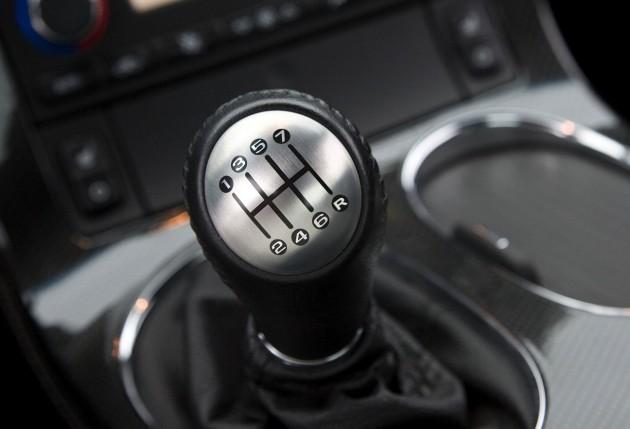
This is one of those driving myths that refuses to die. Older drivers pass it on to younger ones, and it sounds logical enough on the surface that most people never think to question it. Put the car in neutral, let it coast, use less fuel. Simple, right?
Wrong. And understanding exactly why it is wrong will also help you understand what actually does save fuel when you are coasting or going downhill.
Does Putting Your Car in Neutral Actually Save Gas?
No, it does not. Coasting in neutral does not reduce fuel consumption in a modern vehicle. In fact, it can slightly increase it. When the car is in neutral, the engine continues to idle and fuel continues to flow to maintain that idle speed. The engine revs stay up, the injectors keep working, and fuel keeps burning.
On average, coasting in neutral on a long journey can result in approximately 0.2 to 0.5 additional liters of fuel consumed per 100 kilometers compared to staying in gear with the throttle released. That is a measurable penalty, not a saving.
Why the Logic Seems Right But Isn’t
The reasoning behind this myth is not completely irrational. More engine revolutions generally mean more fuel injected. An engine idling at 750 to 850 RPM is doing far less work than one spinning at 2,000 to 3,000 RPM during normal driving. So dropping to idle speed in neutral should mean big fuel savings, right?
The problem is that this reasoning only applied to older carburetor-based engines. On those engines, fuel was metered through calibrated jets based on engine operating mode, and it was always flowing to some degree. Coasting in neutral genuinely did bring the engine to idle, which used slightly less fuel than driving in gear at higher RPM.
Even on those older systems, engineers eventually recognized the inefficiency. They developed what are known as forced idle economizers, which cut off the fuel supply to the idle circuit when the car was coasting above approximately 2,000 RPM in gear. When that happened, fuel consumption during engine braking dropped to essentially zero.
But in neutral, those systems still needed to supply fuel to keep the engine running. So even on older vehicles, coasting in a gear with the throttle released was already more efficient than coasting in neutral by the time those improvements arrived.
How Modern Fuel Injection Systems Changed Everything
Modern engines with electronic fuel injection handle this situation in a way that makes neutral coasting even less defensible as a fuel-saving technique.
Here is exactly what happens when you lift your foot off the gas pedal while remaining in gear on a modern injection engine:
- The engine management system detects that the throttle is closed
- It checks that engine RPM is above the preset threshold
- It sends no electrical signal to the fuel injectors
- It sends no signal to the ignition coils
- No fuel enters the cylinders, and no combustion occurs
- Clean air is simply blown through the engine while the drivetrain keeps it spinning
- When RPM drops toward idle, the system gradually reintroduces a lean mixture to maintain idle
The result is that fuel consumption during in-gear coasting is essentially zero until the engine approaches idle speed. The wheels are doing the work of keeping the engine turning, not fuel combustion.
In neutral, that cannot happen. The engine has to maintain idle under its own power, which means the injectors have to keep firing. Fuel consumption stays at idle rate the entire time.
What About All the Engine Components?
Here is another angle worth understanding. When the engine is coasting in gear, the crankshaft is being rotated by the drivetrain. That rotation keeps everything running:
- The alternator keeps charging the battery
- The oil pump keeps circulating oil through the engine
- The power steering pump maintains assist pressure
- The vacuum brake booster stays effective
- The air conditioning compressor remains operational
None of these systems care where the rotational energy comes from. Whether it comes from combustion or from the momentum of the wheels driving the engine, they all work exactly the same way. The engine in overrun mode is not being harmed. It is being spun by an external source while consuming no fuel and maintaining full auxiliary system function.
Why Coasting in Neutral Is Also a Safety Problem
Beyond fuel efficiency, there is a safety dimension to this habit that deserves direct attention.
When you coast in neutral, you lose engine braking. Engine braking is the natural resistance the drivetrain provides when you come off the throttle in gear. That resistance slows the vehicle without any brake input and significantly reduces the stopping distance required when you do apply the brakes.
In an emergency braking situation, the combination of friction braking and engine braking working together is meaningfully more effective than friction braking alone. In neutral, you have removed that secondary stopping force entirely.
This matters most on downhill stretches and in high-speed situations where stopping distances are already extended. Driving in neutral on a long descent is particularly problematic because it places the entire braking burden on the brake pads and rotors, which can lead to brake fade if they overheat during extended use.
There is also a control issue with automatic transmissions specifically. Placing an automatic into neutral while moving effectively disconnects you from the normal emergency responses the transmission can provide. In a vehicle equipped with modern safety systems, some of those systems assume the drivetrain is engaged and may not function optimally when neutral is selected while moving.
The Engine Braking Myth That Keeps This Problem Going
One reason drivers continue to coast in neutral is a secondary myth: the belief that engine braking damages the engine or transmission. This is also not true.
Engine braking does not damage modern engines or transmissions. The drivetrain is designed to handle the loads involved in overrun driving. There is no increased wear from allowing the drivetrain to decelerate the vehicle. In fact, the reduced brake wear from using engine braking to assist stopping is a practical benefit that extends the service life of your brake pads and rotors.
Drivers who abandon engine braking to protect a transmission they believe is being harmed are both wrong about the damage and actively hurting their fuel economy and safety in the process.
When Does Neutral Make Sense While Driving?
There are legitimate uses for neutral while moving, but they are specific and limited.
- Manual transmissions at very low speed: Coming to a stop, pressing the clutch and coasting the last few meters to a traffic light is normal driving behavior and does not represent a meaningful fuel penalty over that short distance.
- Emergency situations with a stuck throttle: If the accelerator sticks open, shifting to neutral disconnects the engine from the drivetrain while you bring the car to a controlled stop. This is exactly the right thing to do in that specific emergency.
- Being towed: When a vehicle needs to be towed and a flatbed is not available, placing an automatic transmission in neutral allows the vehicle to roll without driving the transmission backward, which could cause damage.
None of those situations involve neutral as a fuel-saving technique during normal driving.
What Actually Saves Fuel While Coasting?
The evidence is clear. Staying in gear with the throttle released is the most fuel-efficient way to coast in a modern vehicle. Here is a direct comparison:
| Situation | Fuel Consumption | Safety Impact |
|---|---|---|
| In gear, throttle released (above threshold RPM) | Essentially zero | Full engine braking available |
| In neutral while coasting | Idle fuel rate continuously | No engine braking |
| In gear at idle RPM | Idle fuel rate | Light engine braking |
The in-gear coasting advantage is most pronounced when driving downhill or approaching a stop from speed. In those situations, an engaged drivetrain with the throttle released is consuming nothing while also helping slow the vehicle. Neutral provides neither benefit.
The Takeaway for Everyday Driving
The habit of coasting in neutral made more sense in an era before electronic fuel injection, and even then it was being replaced by more efficient approaches as engineers understood the problem better. On any vehicle manufactured in the last few decades with a modern injection system, it is simply the wrong technique.
If you want to maximize fuel efficiency during coasting or deceleration, keep the car in gear, come off the throttle, and let the drivetrain do what it is designed to do. The fuel injection system will cut supply automatically, your auxiliary systems will keep running, engine braking will assist your brakes, and you will arrive at your destination having burned less fuel than the driver coasting in neutral alongside you.
The next time someone in your passenger seat tells you to drop it into neutral going downhill, you now have the explanation to set the record straight.