
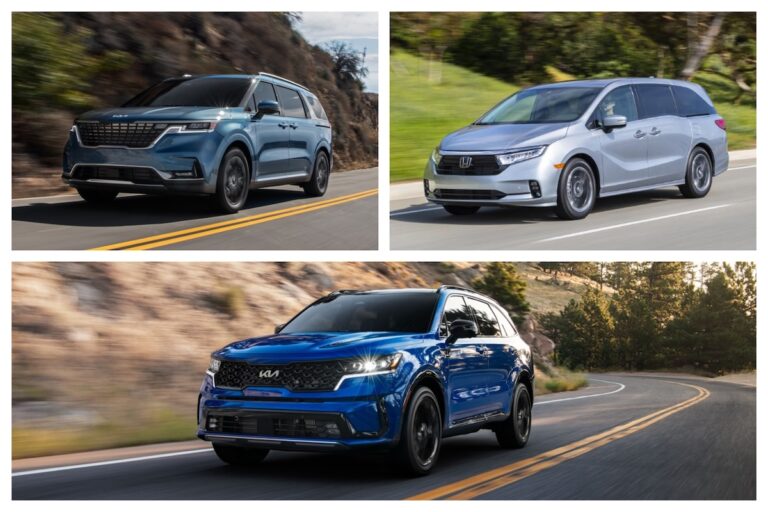
You are shopping for your next vehicle and you have narrowed it down to two options: an SUV or a minivan. Both are popular, both carry families comfortably, and both have their fans. But walk into a dealership without understanding the real differences between them, and you could easily end up with the wrong vehicle for your life.
This is not just a matter of style preferences or brand loyalty. SUVs and minivans are built around fundamentally different priorities. One is engineered for versatility and adventure. The other is optimized for family hauling, interior space, and practical day-to-day convenience. Neither is better in every situation. The right answer depends entirely on what you actually need from a vehicle.
So let’s break this down properly. Here is an honest, category-by-category comparison of SUVs versus minivans so you can make a decision that makes sense for your situation.
SUV vs. Minivan: The Core Difference Before Anything Else
Before getting into the individual categories, it helps to understand the underlying design philosophy of each vehicle type.
A minivan was designed from the ground up with one job in mind: move a family and their stuff as efficiently and comfortably as possible. Every design decision, from the sliding doors to the fold-flat seats, serves that purpose. Minivans are uncompromising family haulers.
An SUV was designed with broader ambitions. It needs to handle daily driving, look good doing it, carry passengers, tow things, and ideally handle rough terrain when needed. That versatility is the SUV’s biggest strength and, in some ways, its biggest compromise. Being good at multiple things means it is rarely the absolute best at any single one of them.
Keep that context in mind as we go through each comparison point below.
1. Doors: Sliding vs. Swinging and Why It Matters More Than You Think
The door design is one of the most immediately noticeable differences between these two vehicle types, and it has real practical consequences that go beyond aesthetics.
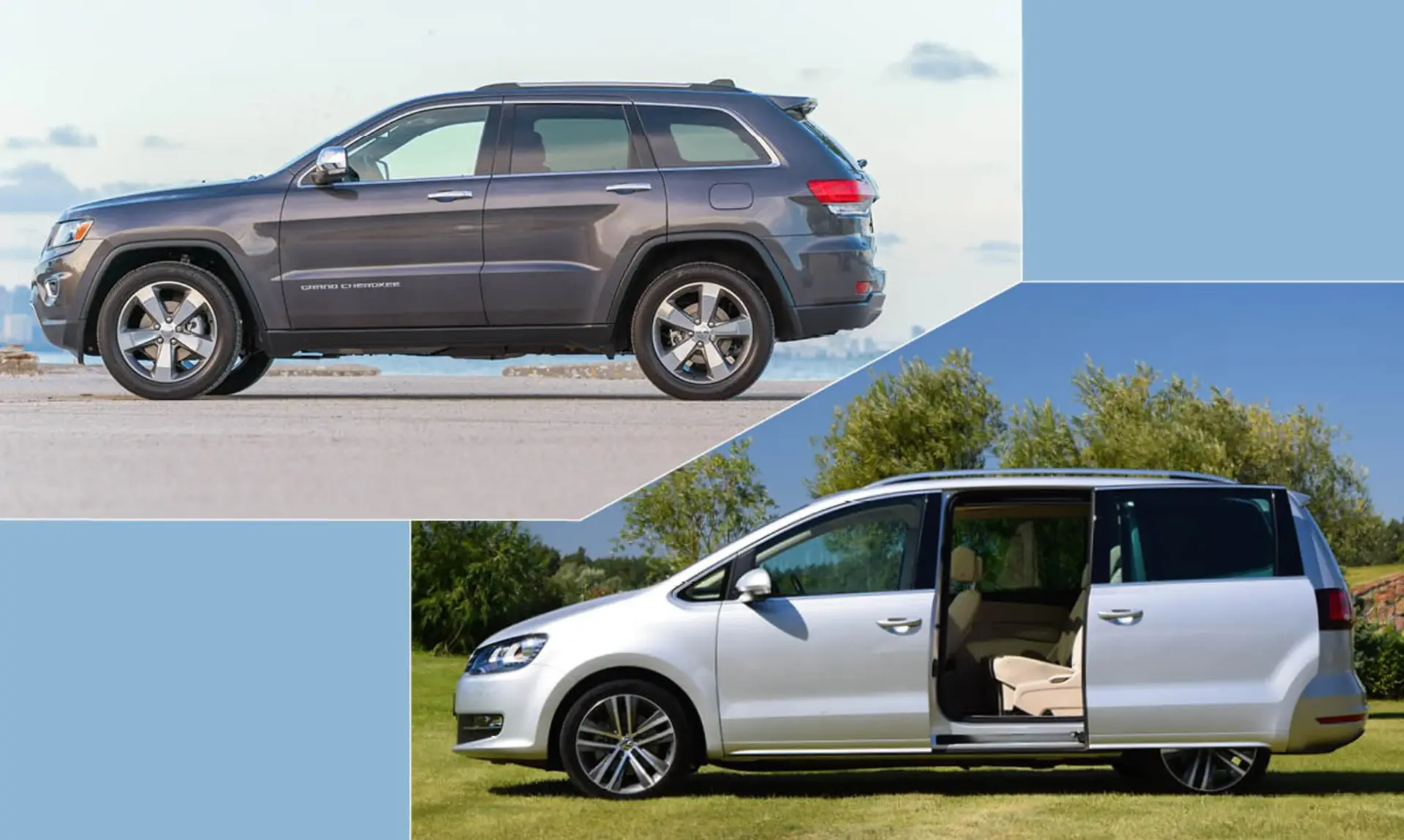
Minivans use sliding rear doors. The door tracks along the side of the vehicle rather than swinging outward. SUVs use traditional swinging rear doors that open outward on a hinge, just like a standard sedan or hatchback.
That difference sounds minor until you try to get three kids out of the car in a crowded parking lot. A swinging door needs clearance space beside the vehicle to open fully. Park a little too close to the car next to you and suddenly you are squeezing children through a half-open door. A sliding door on a minivan opens fully regardless of how close the neighboring car is parked. The door slides backward along the body of the vehicle without encroaching on the space beside it at all.
For families with young children who need to be buckled into car seats regularly, this is not a trivial detail. It is a genuine quality-of-life advantage that minivan owners notice every single day. Most modern minivans also have power-operated sliding doors that open and close at the touch of a button, which adds another layer of convenience.
SUV swinging doors are not a disadvantage in every scenario. They are perfectly functional for adults and older kids who can manage getting in and out independently. But for parents of young children doing multiple school pickup and grocery runs daily, the minivan’s sliding door setup is hard to argue against.
2. Exterior and Interior Design: Practical Box vs. Bold Presence
Let’s be honest about this one. If you are the kind of person who cares how your vehicle looks in the driveway, the SUV is almost certainly going to appeal to you more than a minivan.
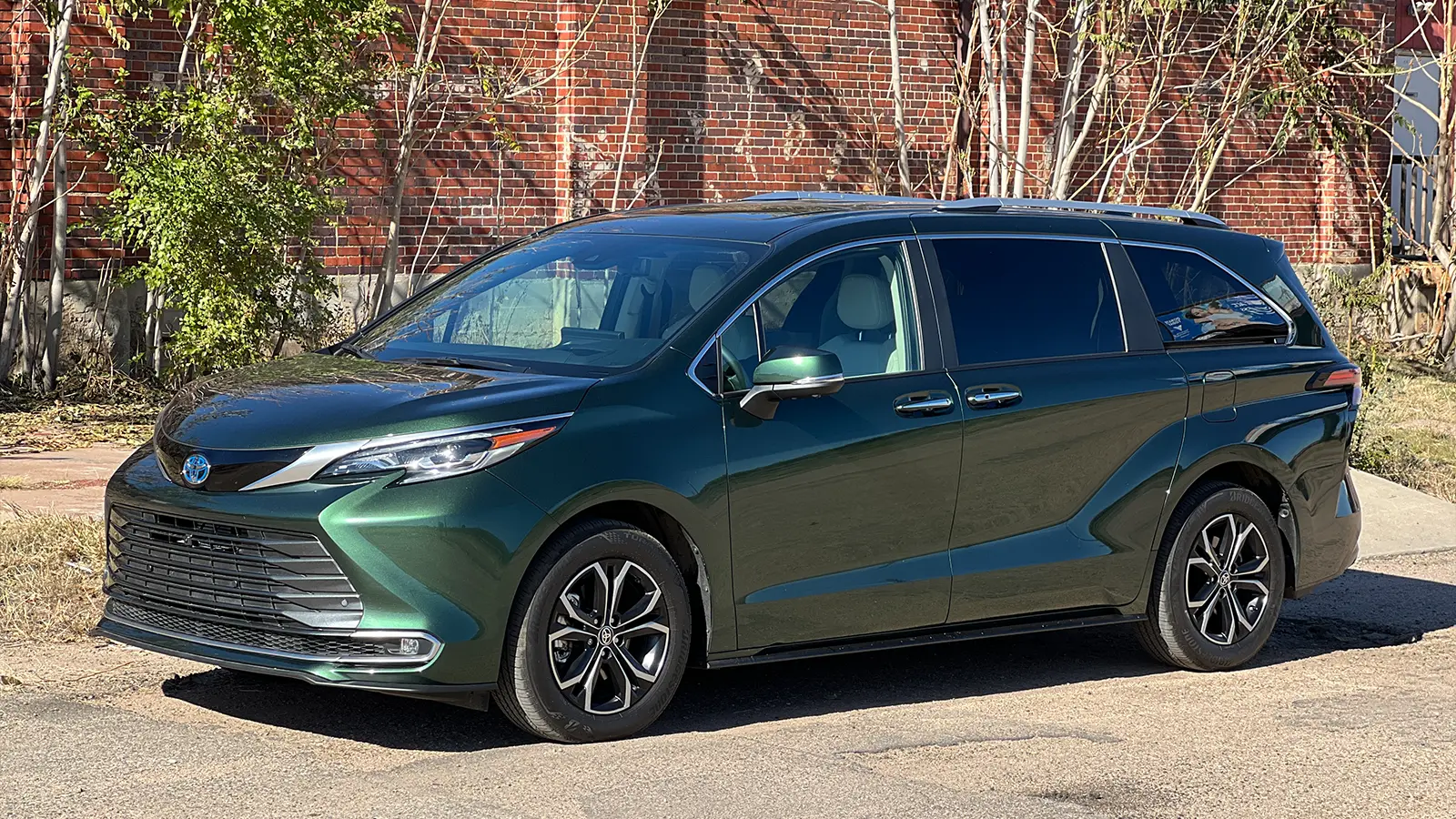
Minivans have a tall, boxy profile that is specifically engineered to maximize interior headroom and cargo volume. That tall, flat-sided shape is not accidental. It is the direct result of prioritizing interior space above everything else. The result is a vehicle that looks utilitarian because it essentially is utilitarian. Some buyers find this a perfectly acceptable trade-off. Others simply cannot bring themselves to drive something that looks like a bread loaf with wheels.
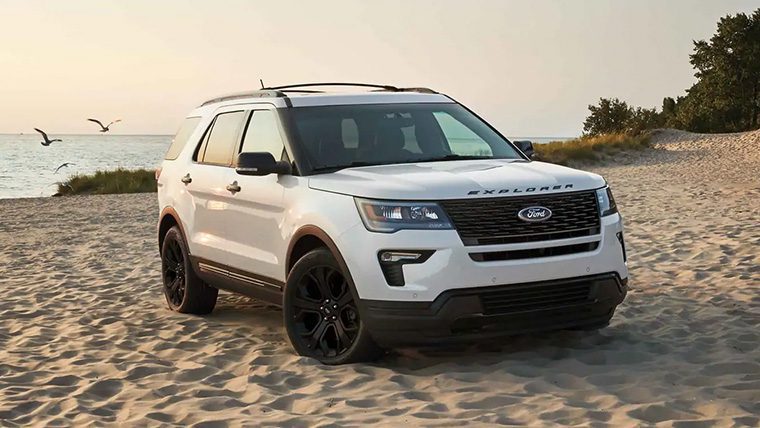
SUVs, by contrast, come in a far wider range of body styles. From the compact, car-based crossover SUV to the full-size body-on-frame truck-based SUV, there is enormous variation in how SUVs look. Many have aggressive styling, sloping rooflines, raised ride heights, and premium exterior treatments that give them a considerably more imposing and desirable street presence. Luxury SUVs from brands like Cadillac, BMW, and Mercedes take that further with interior appointments that rival high-end sedans.
Interior design follows a similar pattern. SUV interiors range from basic and functional to lavishly appointed with premium materials, ambient lighting, and the latest technology. Minivan interiors are generally comfortable and well-organized but are more focused on flexibility and practicality than luxury.
Design Comparison at a Glance
| Design Factor | SUV | Minivan |
|---|---|---|
| Exterior Profile | Varied, often bold and sporty | Tall, boxy, utilitarian |
| Interior Styling | Wide range from basic to luxury | Functional, organized, practical |
| Color Availability | Broad range of colors and trim levels | Standard color options |
| Curb Appeal | High | Moderate |
| Headroom | Good, varies by model | Excellent across all rows |
3. Seating: How Many People and How Comfortable Are They?
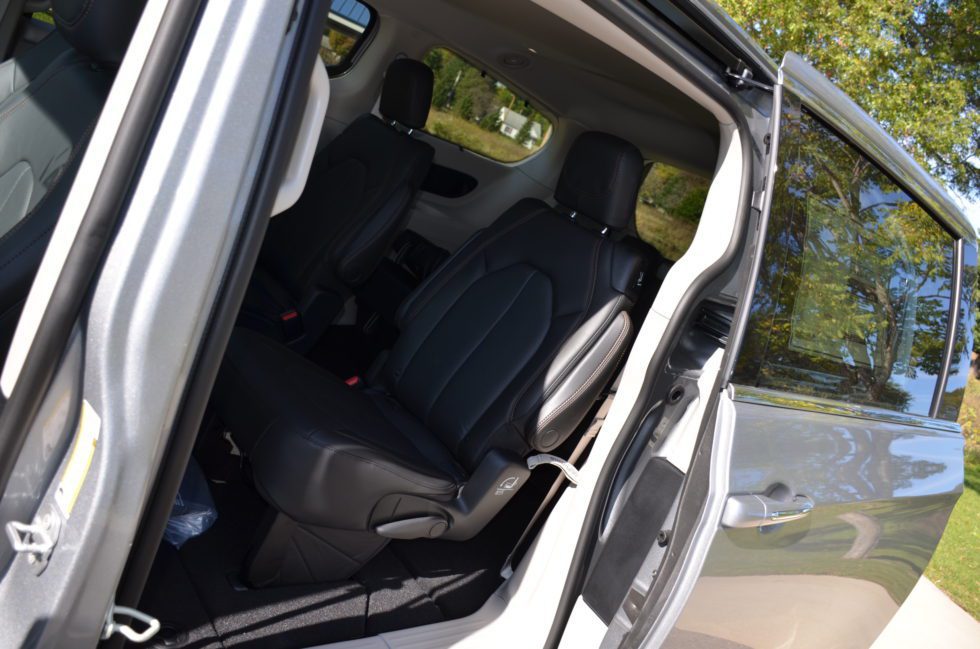
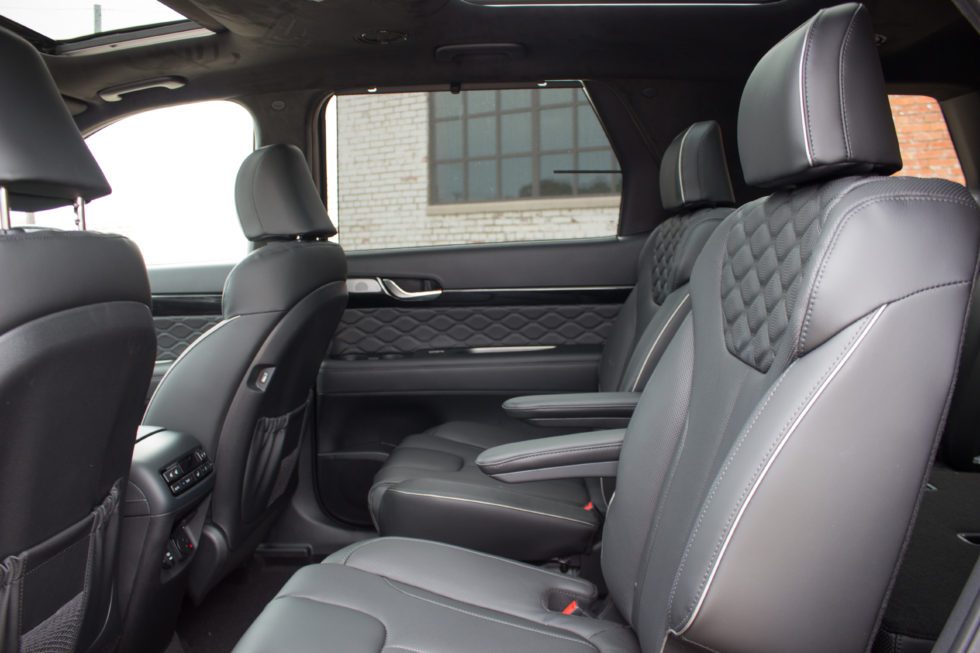
Both vehicle types can carry multiple passengers, but the seating experience is noticeably different between them.
Most minivans seat seven or eight passengers across three rows. The second-row seats in a minivan are typically captain’s chairs with a wide aisle between them, which makes it easy for passengers to move between rows and allows children in the third row to be reached without contorting yourself into an uncomfortable position. That walkthrough aisle is a feature that no three-row SUV can match because SUVs use a fixed second-row bench or captain’s chairs that block access to the rear.
Third-row seating in a minivan is genuinely usable by adults. The tall roofline means adequate headroom, and the wider body gives meaningful shoulder room. Third-row seating in most SUVs, particularly mid-size models, is better suited for children or short adults. Full-size SUVs like the Chevrolet Suburban or Ford Expedition offer better third-row space, but they are significantly larger and more expensive vehicles overall.
SUV seating tends to be wider and more supportive in the front two rows, often with more adjustment options and better lateral support. If comfort in the front and second rows is your priority and you rarely need to seat seven or eight people, an SUV handles that well. But for consistent transport of large groups including children who need supervision and easy access, the minivan’s seating layout is genuinely more functional.
4. Cargo Space: Where the Minivan Wins Convincingly
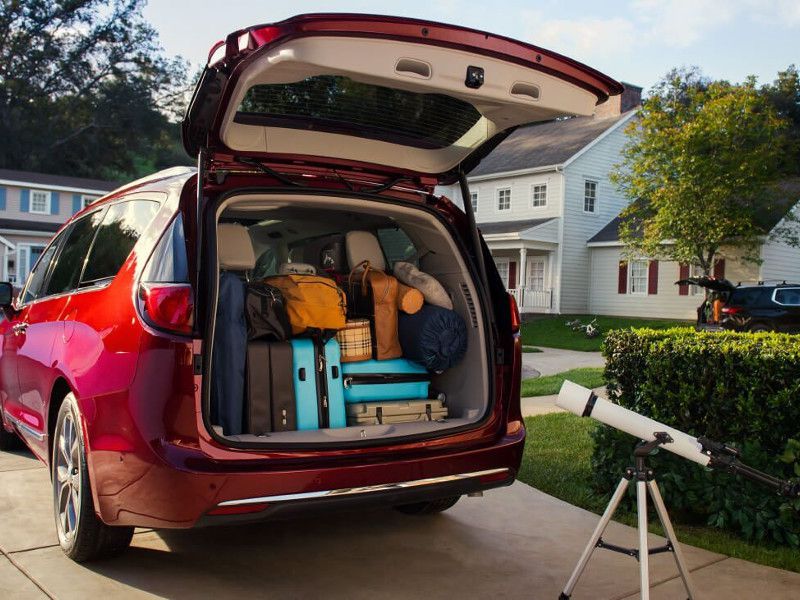
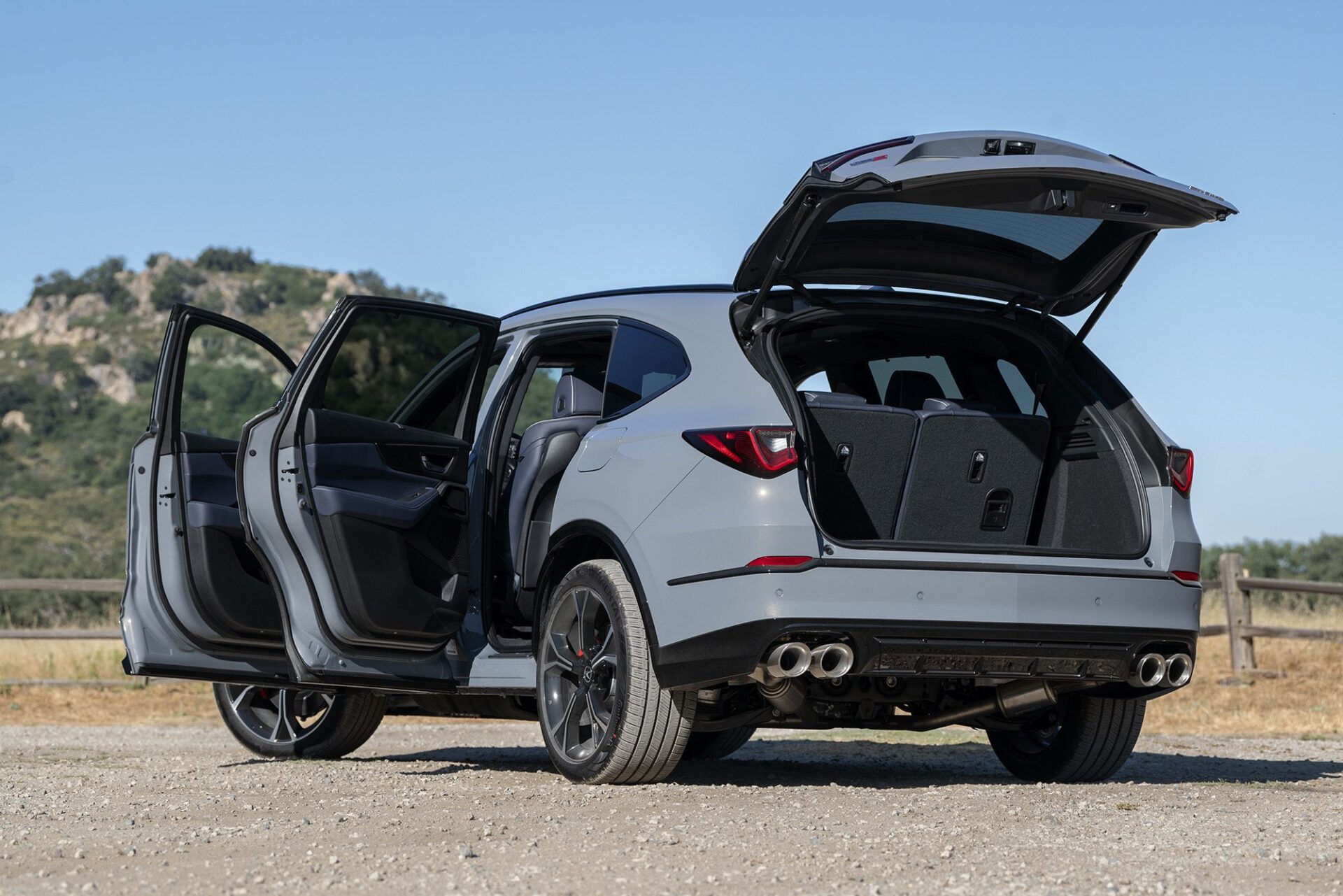
This is one of the clearest areas where minivans hold a definitive advantage, and it is worth understanding exactly why.
The key feature is fold-flat or completely stow-able seats. Many modern minivans, including the Honda Odyssey and Chrysler Pacifica, offer second and third-row seats that fold completely flat into the floor or can be fully removed. When you stow all the rear seats in a minivan, the flat, open cargo area you are left with is genuinely cavernous. We are talking about enough space to move furniture, load bicycles, or transport large quantities of equipment without disassembling anything.
SUVs generally cannot match this. Most SUV third-row seats fold down, but they do not disappear into the floor in the same way. When folded, they often leave an uneven or raised load floor that limits what you can actually fit. Second-row seats in SUVs are designed to stay in place and do not typically offer the same stow-away functionality.
If you regularly need to transport both passengers and large cargo on the same trip, or if you frequently need to convert your vehicle into a cargo hauler for home improvement runs, weekend markets, or sports equipment, the minivan is the more practical choice by a meaningful margin.
Cargo Space Comparison
| Cargo Feature | SUV | Minivan |
|---|---|---|
| Behind Third Row | Limited, typically 15 to 20 cubic feet | More generous, often 30+ cubic feet |
| Third Row Folded | Good improvement, but uneven floor | Excellent, approaches van-like space |
| All Rows Down/Stowed | Moderate, second row usually stays | Exceptional, completely flat floor |
| Ease of Loading | Moderate, higher floor on body-on-frame models | Low, easy step-in height |
5. Engine Power: More Nuanced Than You Might Expect
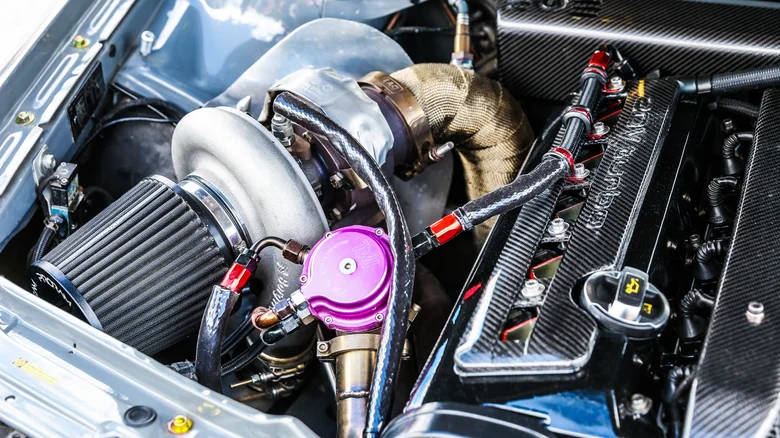
Engine power in this comparison is more nuanced than many buyers realize. The assumption is usually that SUVs are the powerful ones and minivans are underpowered family vehicles. The reality is a bit more interesting.
Most modern minivans are powered by V6 engines, and some models have been available with V8 compatibility. The Honda Odyssey runs a 3.5-liter V6 producing around 280 horsepower. The Chrysler Pacifica uses a similar 3.6-liter V6 generating roughly 287 horsepower. These are not weak engines. For a vehicle whose primary job is carrying families on highways and around town, that output is more than adequate and delivers a comfortable, confident driving experience.
SUV engine options are far more diverse. Smaller crossover SUVs often use turbocharged four-cylinder engines that produce 150 to 200 horsepower. Mid-size SUVs typically use V6 engines in a similar range to minivans. Full-size, body-on-frame SUVs step up to V8 engines producing 350 to 400-plus horsepower, particularly in models designed for towing heavy loads.
The important point here is that raw horsepower numbers alone do not tell the full story. The minivan’s V6 engines are tuned for smooth, efficient power delivery in family driving conditions. Full-size SUV V8 engines produce impressive power but also consume significantly more fuel. The right engine for you depends on what you need that power for.
6. Fuel Efficiency: Minivans Burn More, But the Numbers Are Closing

Historically, minivans have been less fuel-efficient than similarly-sized SUVs, largely because they are heavier and less aerodynamically efficient. But that gap has narrowed considerably, and hybrid options have changed the equation dramatically.
A typical non-hybrid minivan like the Honda Odyssey or Chrysler Pacifica returns around 22 to 28 miles per gallon in combined driving. The Chrysler Pacifica Hybrid, which uses a plug-in hybrid powertrain, can achieve the equivalent of around 82 to 84 MPGe in electric mode, making it one of the most efficient people-movers currently available in any vehicle category.
SUV fuel economy varies enormously based on size and engine type. A compact crossover SUV like the Toyota RAV4 Hybrid achieves around 38 to 41 miles per gallon in combined driving. A standard mid-size SUV without hybrid assistance typically returns 20 to 26 miles per gallon. Full-size SUVs with V8 engines can drop to 14 to 18 miles per gallon in combined driving, which adds up quickly at the fuel pump.
If fuel economy is a priority and you want a larger vehicle, the Pacifica Hybrid is genuinely compelling. For buyers focused on a non-hybrid option, mid-size SUVs and mid-size minivans land in a fairly similar fuel economy range, with the SUV having a slight edge in most cases.
Fuel Economy Comparison by Vehicle Type
| Vehicle Type | Typical Combined MPG | Notes |
|---|---|---|
| Standard Minivan | 22 to 28 MPG | Honda Odyssey, Chrysler Pacifica |
| Plug-in Hybrid Minivan | Up to 84 MPGe | Chrysler Pacifica Hybrid |
| Compact Crossover SUV | 28 to 35 MPG | Toyota RAV4, Honda CR-V |
| Mid-size SUV | 20 to 26 MPG | Ford Explorer, Toyota Highlander |
| Full-size SUV (V8) | 14 to 18 MPG | Chevy Suburban, Ford Expedition |
7. Driving Experience: The Area Where SUVs Pull Ahead
This is where the SUV genuinely earns its widespread popularity. If the driving experience matters to you beyond simply getting from point A to point B, the SUV delivers something a minivan simply cannot replicate.
Body-on-frame SUVs with four-wheel drive or all-wheel drive are genuinely capable off-road vehicles. The Toyota 4Runner, Ford Bronco, and Land Rover Defender are not pretending to be off-road capable. They are built for it. Raised ground clearance, locking differentials, skid plates, and robust four-wheel drive systems allow these vehicles to handle terrain that would stop almost any other vehicle in its tracks.
Even car-based crossover SUVs with all-wheel drive offer meaningfully better capability in snow, mud, and light off-road conditions compared to a front-wheel-drive minivan. If you live in an area that sees serious winter weather, or if you regularly drive on unpaved roads, the SUV’s capability advantage is real and worth paying for.
Towing capacity is another area where SUVs, particularly full-size models, have a clear edge. A full-size SUV can tow anywhere from 6,000 to 9,000 pounds depending on the model and configuration. A minivan typically tops out at around 3,500 pounds of towing capacity. If you pull a boat, a horse trailer, or a significant camper, a minivan is not going to be your vehicle.
That said, the driving dynamics of most SUVs, especially crossovers, have become increasingly car-like over the years. They ride well, handle confidently, and are comfortable on long highway trips. The taller ride height also gives many drivers a sense of confidence and improved visibility that they genuinely prefer over lower-slung vehicles.
8. Safety Features: Both Are Strong, But the Details Matter
Both SUVs and minivans have made enormous strides in safety technology over the past decade. Modern examples of both vehicle types typically offer automatic emergency braking, lane departure warning, blind-spot monitoring, rear cross-traffic alert, and adaptive cruise control as either standard or available features.
Where there is a meaningful difference is in crash dynamics. Heavier, larger vehicles generally perform better in certain crash scenarios simply due to mass and structure. Full-size SUVs have a size advantage in frontal collisions with smaller vehicles, though this benefit comes with a responsibility to other road users.
Minivans tend to score very well in standardized crash testing. The Honda Odyssey and Chrysler Pacifica have both received top safety ratings from the IIHS and NHTSA in recent model years. Their lower center of gravity compared to taller SUVs also reduces rollover risk, which is a safety consideration that often gets overlooked when comparing these vehicle types.
SUVs, particularly taller body-on-frame models, have higher centers of gravity which increases rollover risk during evasive maneuvers. Electronic stability control systems have reduced this risk significantly in modern vehicles, but the physics have not changed. A taller vehicle with a higher center of gravity is inherently more susceptible to rollover than a lower-profile vehicle in extreme situations.
9. Cost: Purchase Price, Running Costs, and Long-Term Value
Cost is often the factor that tips the decision one way or the other, and the SUV versus minivan comparison has some interesting dynamics here.
In terms of purchase price, minivans are generally more affordable than comparable three-row SUVs. A well-equipped Honda Odyssey or Chrysler Pacifica in the mid-to-upper trim levels typically costs between $40,000 and $50,000. A comparable three-row mid-size SUV like the Toyota Highlander or Kia Telluride in similar trim levels lands in a similar range, though premium three-row SUVs from brands like Chevrolet, Ford, or luxury marques can push significantly higher.
Running costs tell a more interesting story. Minivans, despite their reputation as less glamorous vehicles, often have lower insurance costs and lower overall ownership costs than equivalent SUVs. Minivans are generally not driven aggressively, have relatively straightforward mechanical systems, and are not particularly expensive to repair or maintain. Luxury SUVs can carry significantly higher insurance and maintenance costs.
Resale value has historically favored certain SUV models over minivans, though this varies widely by brand and model. Japanese minivans like the Honda Odyssey and Toyota Sienna have strong resale values relative to many mid-size SUVs. The Toyota Sienna in particular, which is only offered as a hybrid, holds its value exceptionally well.
Cost Comparison Overview
| Cost Factor | SUV | Minivan |
|---|---|---|
| Starting Price (mid-size) | $35,000 to $55,000+ | $35,000 to $50,000 |
| Fuel Costs | Varies widely; higher for V8 models | Moderate; much lower for hybrid versions |
| Insurance Costs | Moderate to high depending on model | Generally lower |
| Maintenance Costs | Moderate to high | Moderate |
| Resale Value | Strong for popular brands | Strong for Honda and Toyota |
10. The Social Factor: The One Nobody Talks About Honestly
Here is something worth addressing directly because it genuinely influences purchasing decisions even when buyers will not admit it out loud. The minivan carries a social stigma that the SUV does not. Somewhere along the way, the minivan became associated with a certain kind of suburban parenthood that some buyers actively want to avoid signaling to the world.
SUVs, by contrast, carry a perception of capability, adventure, and status. Even if a particular SUV buyer never takes their vehicle off-road, the possibility feels present. The SUV says something different about the driver than a minivan does, or at least many buyers perceive it that way.
This is worth naming openly because it absolutely factors into how people make decisions in this category. A minivan might be the more practical choice for your life in almost every measurable way, but if you genuinely do not want to drive one, that matters. You will live with this vehicle every day. How you feel about it is part of the equation.
But it is also worth pushing back on that stigma a bit. Minivan buyers who actually live with one for a few months almost universally report that they stopped caring about what the vehicle says about them once they experienced how genuinely convenient it is. The sliding doors at school pickup, the flat floor when moving a couch, the walkthrough aisle when a child needs something in the third row on a highway trip. Those practical advantages have a way of quickly outweighing the social calculus.
SUV vs. Minivan: Which One Is Right for You?
After going through all of these categories, the choice becomes clearer when you think honestly about your own priorities. Here is a simplified framework to help you decide.
Choose a Minivan If:
- You regularly transport five or more people including young children
- Easy access for car seats and child restraints is a daily priority
- You need maximum cargo flexibility, including hauling large items regularly
- Fuel efficiency and lower overall running costs matter to you
- You want a plug-in hybrid option for a large family vehicle
- Third-row passenger comfort for adults is a regular requirement
- You do not need off-road capability or heavy towing capacity
Choose an SUV If:
- Off-road capability or serious four-wheel drive performance matters to you
- You regularly tow a boat, trailer, or camper exceeding 3,500 pounds
- You want a broader range of styling options including luxury trim levels
- You have five or fewer regular passengers and do not need maximum cargo space
- All-wheel drive performance in winter weather is a priority
- You want higher ground clearance and the raised driving position that comes with it
- A car-like driving experience in a more capable package appeals to you
The honest truth is that for most families with young children doing school runs, grocery trips, and occasional road trips, the minivan is the more rational vehicle. It does the specific job of family transport better than any SUV at any price point. But rational and right are not always the same thing. If you love driving, care about how your vehicle looks, or genuinely need capability that a minivan cannot provide, the SUV is the correct answer for you. Know what you actually need, be honest about what you want, and that decision will make itself.