
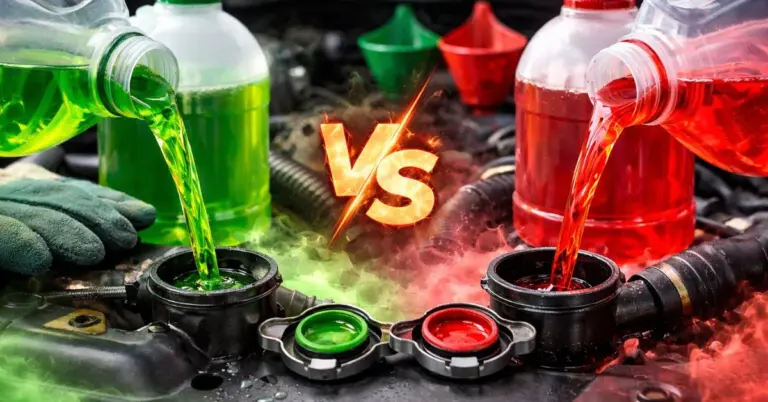
Every engine runs on a few key fluids that quietly do all the hard work behind the scenes. Most people think about engine oil first, and that makes sense. But ask any mechanic who has been in the game long enough, and you will hear the same thing again and again. Cooling system issues ruin just as many engines, sometimes even more.
Here is why. Your engine is basically a controlled explosion happening thousands of times per minute. That process creates a massive amount of heat. If that heat is not managed properly, metal parts expand, seals fail, and internal components start breaking down. It does not take long either. A single overheating event can do permanent damage.
This is where coolant steps in. It circulates through the engine, absorbs heat, and carries it away to the radiator where it gets released. But that is only part of the job. Coolant also protects against corrosion, prevents buildup inside the system, and keeps things flowing smoothly through tight passages.
Sounds simple, right? It should be. But here is the catch. Not all coolants are the same. And using the wrong one is one of those mistakes that does not always show up right away. It builds slowly, then suddenly you are dealing with overheating, leaks, or worse.
If you have ever stood in front of a shelf full of green, red, orange, and yellow coolant bottles wondering what actually matters, you are not alone. The color is just a label. The real difference is in the chemistry, and that is what determines whether your engine stays healthy or starts wearing out from the inside.
Why Picking the Wrong Coolant Can Cost You an Engine
A lot of drivers treat coolant like windshield washer fluid. Top it off, move on, and forget about it. That approach worked years ago when most engines were built with similar materials. Today, that approach can backfire.
Older engines were made mostly from cast iron, brass, and copper. These materials are fairly forgiving. Modern engines are a different story. Manufacturers now use aluminum, magnesium alloys, plastics, and composite materials to reduce weight and improve efficiency.
These newer materials react differently depending on what coolant is running through them. Use the wrong type, and you may not notice anything at first. But inside the system, corrosion can begin, seals can degrade, and deposits can form.
Over time, that leads to real problems:
- Clogged radiator passages
- Water pump wear
- Deteriorated hoses
- Overheating under load
It is the kind of damage that creeps in slowly. Then one day, you are stuck on the side of the road wondering what went wrong.
That is why checking your owner’s manual before buying coolant is not optional. It is one of the simplest ways to avoid expensive repairs.
Green Coolant: The Traditional Option That Still Has Its Place
Green coolant is the one most people recognize. It has been around for decades and is based on Inorganic Additive Technology, or IAT.
Its main ingredients include ethylene glycol or propylene glycol, along with additives like silicates and phosphates. These additives form a protective barrier on metal surfaces inside the engine and cooling system.
That protective layer helps prevent corrosion, especially in engines with older metal components.
Here is what makes green coolant stand out:
- Reliable for older vehicles built before around 2000
- Strong protection for copper and steel parts
- Easy to find and budget-friendly
- Simple formulation that has proven itself over time
But there is a trade-off. Green coolant does not last as long as newer formulas. The protective additives break down faster, which means it needs to be replaced more often.
In most cases, you are looking at:
- Every 2 to 3 years
- Or around 36,000 miles
Skip that interval, and the coolant stops protecting the system. Once that happens, corrosion starts forming inside the radiator and engine block.
For older cars, green coolant is still a solid choice. For newer vehicles, it is usually not what the engine was designed for.
Red Coolant: Built for Modern Engines and Longer Service Life
Red coolant represents a newer generation of cooling technology. It is commonly referred to as Dexcool or similar variants, and it uses Hybrid Organic Acid Technology, known as HOAT.
This type of coolant combines organic and inorganic additives. The result is a more stable formula that lasts longer and works better with modern engine materials.
In practical terms, red coolant offers several advantages:
- Longer lifespan compared to traditional green coolant
- Better protection for aluminum components
- Reduced wear on water pumps
- More consistent performance under heat
Many manufacturers design their engines specifically around this type of coolant. That includes brands like Toyota, Honda, Nissan, and Hyundai.
The service interval is also longer. In many cases, red coolant can last up to five years before needing replacement.
It does cost more upfront. But when you factor in the longer lifespan and better protection, it often balances out.
Green vs Red Coolant: A Clear Breakdown
Looking at color alone does not tell the full story. Here is a side-by-side comparison that shows what really separates these two types.
| Feature | Green Coolant | Red Coolant |
|---|---|---|
| Technology | IAT | HOAT |
| Lifespan | 2 to 3 years | Up to 5 years |
| Best Use | Older vehicles | Modern vehicles |
| Additives | Silicates, phosphates | Organic inhibitors |
| Cost | Lower | Higher |
| Stability | Moderate | Higher |
The key takeaway is simple. These two coolants are designed for different types of engines. Swapping them without understanding the differences can lead to trouble.
What Really Happens When You Use the Wrong Coolant
Using the wrong coolant does not usually cause immediate failure. That is why people think it is not a big deal. The engine keeps running, and everything seems fine.
But inside the cooling system, things are changing.
Different coolant formulas use different additives. When those additives are not compatible with the materials in your engine, they can break down or react in ways they should not.
Here is what that leads to:
- Corrosion inside the radiator and engine block
- Damage to water pump seals
- Clogged coolant passages
- Overheating under stress
One of the worst scenarios happens when different coolant types are mixed. The additives can react and form a thick, gel-like substance.
I have seen cooling systems completely blocked by this. The radiator, heater core, and hoses all clogged at once. Fixing it required a full system flush and several component replacements.
If you are not sure what coolant is currently in your system, do not guess. Drain it, flush it, and refill with the correct type.
Which Vehicles Should Stick With Green Coolant
Green coolant is best for older vehicles. That typically means cars built before the early 2000s.
These engines were designed with materials that work well with IAT coolant. The protective additives are effective for those older designs.
Common scenarios where green coolant makes sense:
- Classic cars
- Older domestic vehicles
- Engines with heavy metal components
Just remember, it requires regular maintenance. Ignore the change interval, and problems will follow.
Which Vehicles Are Better Off With Red Coolant
Red coolant is designed for modern engines that rely heavily on aluminum and advanced materials.
Typical vehicles include:
- Toyota
- Honda
- Nissan
- Hyundai
If your vehicle has an aluminum radiator or a modern cooling system, red coolant is usually the correct choice.
It also reduces maintenance frequency, which is helpful if you prefer longer service intervals.
How to Choose the Right Coolant Without Guessing
Choosing the right coolant is not complicated once you know what to look for.
- Check your owner’s manual first
- Look for the correct specification, not just the color
- Do not mix different coolant types
- Consider your driving conditions and climate
If you are still unsure, ask a mechanic. It is a quick conversation that can prevent long-term damage.
Real-World Example From the Shop
A driver came in with overheating issues on a fairly new car. The coolant looked thick and dirty, almost like sludge. The radiator was partially blocked, and the water pump was starting to fail.
The cause was simple. The wrong coolant had been added during a top-up. Over time, it reacted with the existing fluid and created buildup.
The fix involved flushing the system, replacing the radiator, and installing a new water pump. It was not a small bill.
All of that could have been avoided with the correct coolant.
How Often Should You Replace Coolant?
Coolant does not last forever. Even long-life formulas break down over time.
- Green coolant: every 2 to 3 years or around 36,000 miles
- Red coolant: up to 5 years depending on the manufacturer
Skipping coolant changes is one of the easiest ways to create overheating problems.
Signs Your Coolant Needs Attention Right Now
Your car will usually give you warning signs before things get serious.
- Engine temperature running higher than normal
- Rust or debris in the reservoir
- Sweet smell under the hood
- Visible leaks
- Cloudy or discolored coolant
Catch these early, and you are looking at a simple fix. Ignore them, and the repair bill grows fast.
Your cooling system works quietly in the background every time you drive. You do not notice it when it is working. You definitely notice it when it fails. So next time you check under the hood, take a second look at what is in your coolant reservoir. Is it the right type for your engine, or just whatever happened to be available when it needed topping off?