
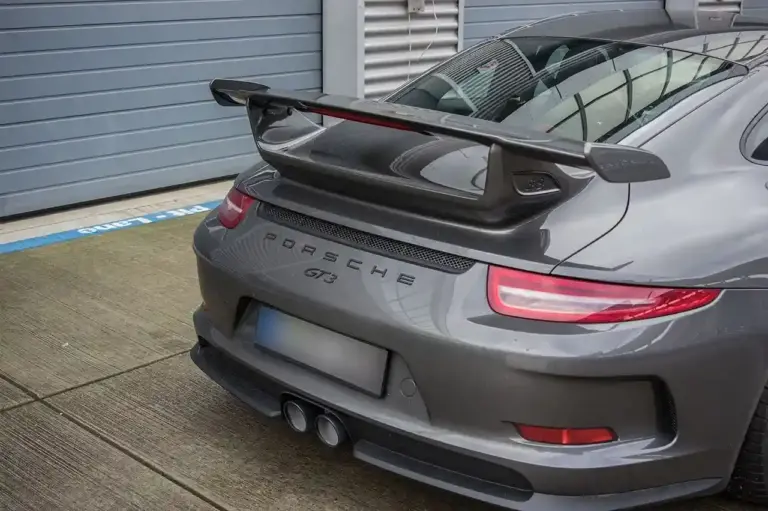
You have probably seen spoilers on cars even if your own vehicle does not have one. They show up on everything from pickup trucks and sports cars to dedicated drag racers and daily drivers. Most people write them off as a styling accessory, something automakers bolt on to make a car look faster. But spoilers actually do a real job, and understanding the different types helps you figure out which one makes sense for your car.
So let’s go through every type of car spoiler, what each one does, and why it exists in the first place.
What Is a Car Spoiler, Really?
The name tells you everything. A spoiler spoils the airflow around a moving car. Specifically, it disrupts the turbulent, fast-moving air that builds up around the vehicle’s body as it moves forward. That turbulence creates drag and lift, two things you generally do not want.
Drag slows the car down and forces the engine to burn more fuel. Lift, especially at the rear, reduces tire grip and can make the car feel unstable or loose, particularly at highway speeds and above. A spoiler interrupts that airflow before those problems get out of hand.
Front spoilers in the industry are typically called air dams. They block airflow from getting under the car, which reduces underbody drag and lift at the front axle. Rear spoilers manage the air as it comes off the roofline and transitions to the trunk area.
That said, not every spoiler you see on the road is doing meaningful aerodynamic work. Some are purely decorative. A few can actually make aerodynamics slightly worse if they were not properly engineered for the car they are on. Knowing the difference between the types helps you pick the right one for the right reason.
Where Did Car Spoilers Come From?
The spoiler’s story starts in the 1960s on NASCAR oval tracks. Back then, race cars were still built to closely resemble their street counterparts, which sounds charming but created real aerodynamic headaches at race speeds.
The 1966 Dodge Charger was a good-looking car, but at high speed it had a problem. Its flat front end and long, sloping roofline created lift that made the car feel unstable and unpredictable on the track. After some pressure from the Dodge teams, NASCAR allowed them to attach a small strip of metal, roughly half an inch to two inches tall, to the rear trunk lid. That little strip trapped airflow on the decklid and generated downforce, bringing the rear of the car back down onto the track.
It was not glamorous. It was a chunk of metal. But it worked, and other manufacturers took notice almost immediately.
From there, the spoiler concept spread rapidly through motorsport and eventually into road car manufacturing. Engineers realized that even modest aerodynamic improvements at the rear of a vehicle could have a real impact on handling stability, high-speed composure, and fuel efficiency. Sports car manufacturers adopted them first, but over the following decades, spoilers started appearing on everything from family sedans to pickup trucks.
Today, a lot of production cars roll off the factory floor with some form of spoiler already fitted because the aerodynamic benefits are genuinely worth having, even at everyday driving speeds.
The 10 Types of Car Spoilers You Should Know
1. Pedestal Spoiler: The One Most People Picture
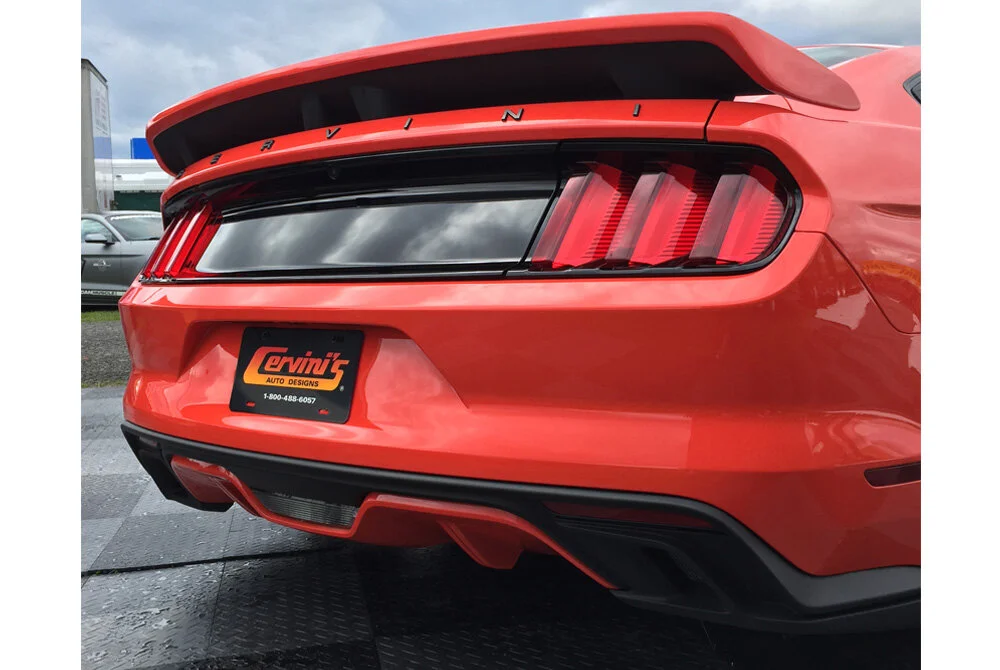
When someone says “spoiler,” this is almost certainly the image that comes to mind. The pedestal spoiler sits on top of the trunk lid, mounted on two raised supports with a small gap between the spoiler itself and the trunk surface. It runs across the width of the car like a bar elevated just above the bodywork.
What it does: At higher speeds, airflow rushing over the roof hits the pedestal spoiler and gets disrupted. This reduces the speed of the air and the lift it would otherwise generate at the rear of the car. The result is better rear-end stability and a modest improvement in handling, particularly for rear-wheel-drive cars that can be prone to oversteer under power.
Pedestal spoilers are incredibly common as aftermarket accessories because they are straightforward to bolt on and they come in a massive range of shapes, heights, and materials. From subtle, factory-looking designs to more aggressive raised profiles, there is a pedestal spoiler for almost every taste and budget.
The functional benefit is real but modest on street cars. On the track or at sustained highway speeds, the stability improvement becomes more noticeable. For most people, though, the pedestal spoiler is as much a style choice as an aerodynamic upgrade, and there is nothing wrong with that.
2. Front Spoiler (Air Dam): The Underrated Performer
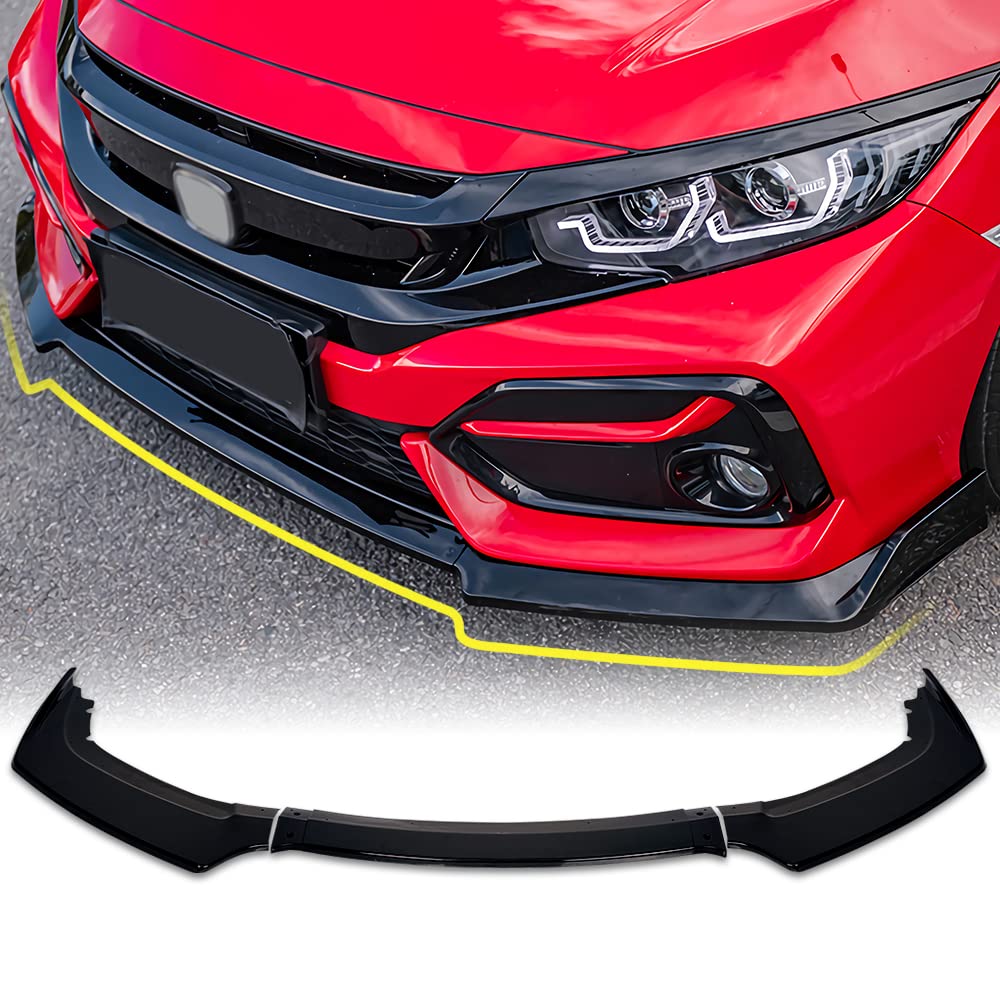
The front spoiler goes by a few names. Air dam. Chin spoiler. Front air dam. They all refer to the same thing: a panel or extension that hangs below the front bumper, close to the ground.
What it does: Its primary job is to block air from flowing under the car. Air that gets beneath the vehicle creates turbulence, drag, and lift at the front axle. The air dam acts as a physical barrier, redirecting airflow around the sides of the car rather than letting it pile up underneath.
The secondary benefit is cooling. By directing a portion of the incoming air toward the radiator, a well-designed front spoiler can help maintain optimal engine temperatures at speed. This is partly why front spoilers were originally developed for racing applications, where engines are working at or near their limits for extended periods.
On a street car, a front spoiler can provide a modest improvement in fuel efficiency by reducing drag and can give the car a lower, more aggressive visual stance. The trade-off is ground clearance. A front air dam that sits very close to the ground will absolutely clip speed bumps, steep driveways, and parking curbs. That is something to think carefully about before fitting one to your daily driver.
3. Lip Spoiler: Subtle but Surprisingly Effective
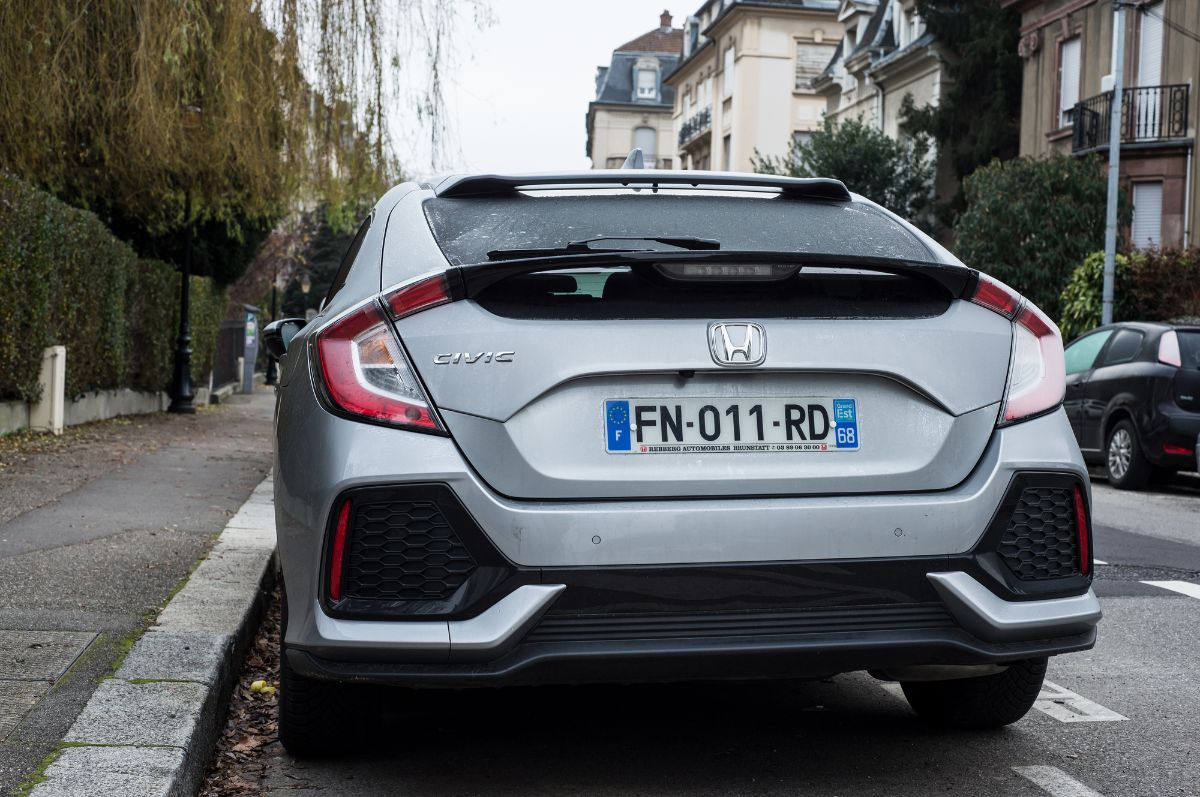
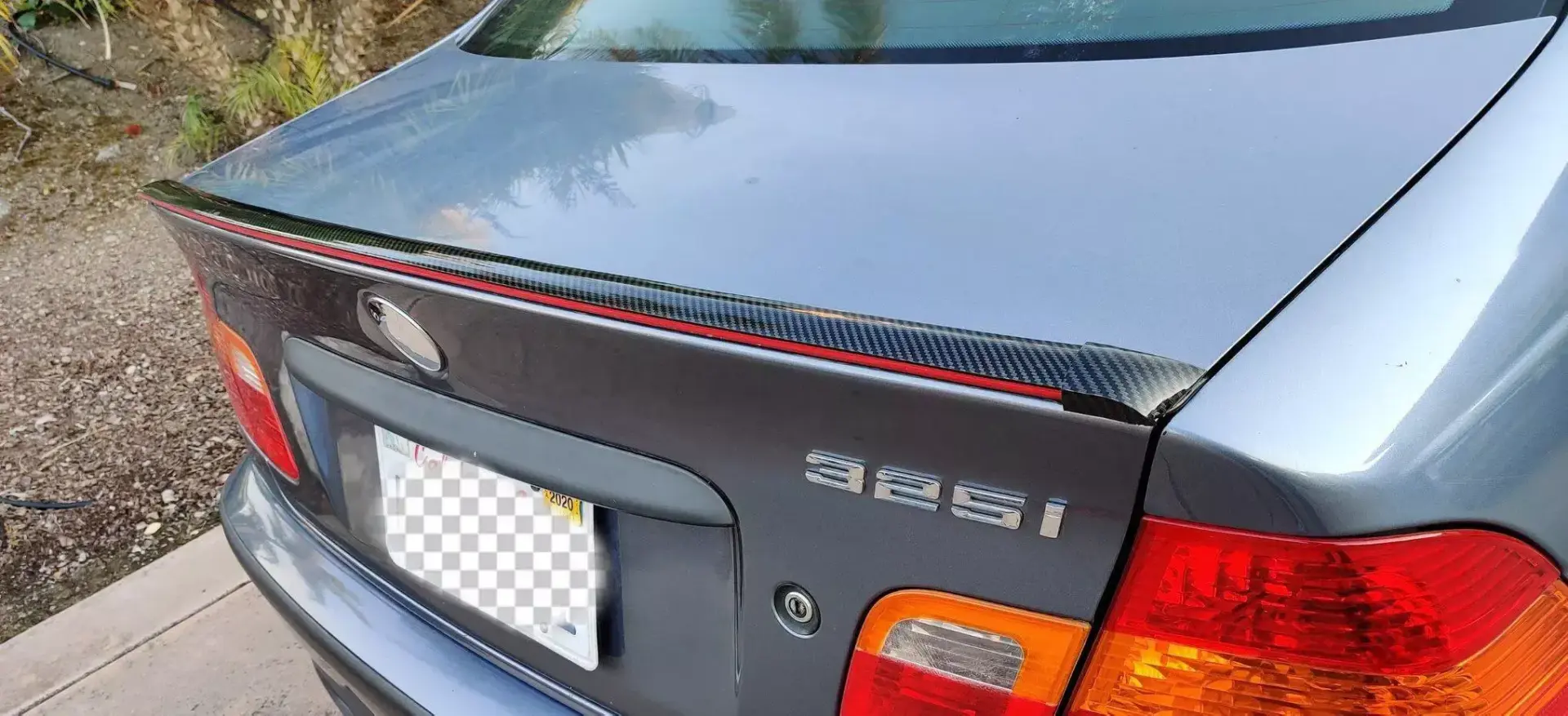
The lip spoiler is the understated option. Instead of standing up off the trunk like a pedestal spoiler, it is a small, low-profile extension along the trailing edge of the trunk lid. Think of it as the trunk lid growing a subtle ridge at its very back edge.
What it does: Despite how small it looks, a lip spoiler does useful aerodynamic work. It slightly alters the angle at which air departs the rear of the vehicle, which smooths out the turbulent wake behind the car and reduces both drag and lift in the process.
At legal road speeds, the performance difference is minimal but measurable. The bigger appeal of a lip spoiler is that it looks integrated, almost factory, without adding any bulk or visual aggression to the car. A lot of performance-oriented production cars come with a subtle lip spoiler from the factory for exactly this reason.
If you want something that improves the car’s aerodynamic profile without screaming “modified,” the lip spoiler is probably your best bet. It cleans up the rear of the car, looks purposeful without being flashy, and tends to complement most body styles without clashing.
4. Roof Spoiler: The Hatchback’s Best Friend
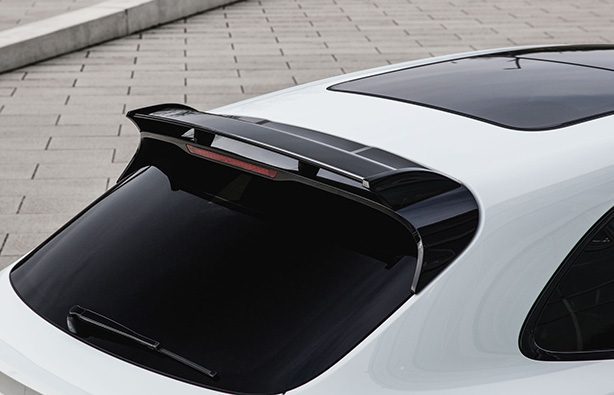
Instead of sitting on the trunk lid, the roof spoiler mounts at the trailing edge of the roofline, just above the rear window. This position gives it access to the airflow coming directly off the top of the car, which is where a lot of the aerodynamic action happens.
What it does: The roof spoiler disrupts the airflow as it transitions from the roofline toward the rear of the car. On vehicles with a sharp roofline drop, like hatchbacks, fastbacks, and certain SUVs, air can detach from the body surface and create a turbulent wake that increases drag significantly. The roof spoiler helps manage that transition, keeping airflow attached longer and reducing the size of the turbulent wake.
Visually, roof spoilers give a car a sportier edge without being as prominent as a trunk-mounted pedestal. They work particularly well on hatchbacks because that body style benefits most from managing the roofline-to-rear transition. Some roof spoilers also incorporate a high-mounted stop light, which improves rear visibility for drivers behind you while adding a functional element to what might otherwise look purely cosmetic.
5. Lighted Spoiler: Style Meets Safety
The lighted spoiler sits on top of the trunk in a similar position to a pedestal spoiler, but with one key addition: an integrated brake light built into the spoiler body itself.
What it does: From an aerodynamic standpoint, it functions similarly to a pedestal spoiler, disrupting airflow at the rear of the car and reducing lift. But the real selling point here is visibility. By raising the brake light higher than the standard tail lights, a lighted spoiler gives following drivers an earlier, clearer warning when you slow down or stop.
This matters more than people realize. Studies have consistently shown that higher-mounted center brake lights reduce rear-end collision rates, which is why center high-mount stop lamps became mandatory on passenger cars in many markets. A lighted spoiler extends that principle while also adding a distinctive look to the car’s rear end.
It is not a performance-first modification, but if you are going to add a spoiler anyway and you want a practical reason to justify it beyond aerodynamics and looks, the added safety dimension of a lighted spoiler is a legitimate one.
6. Ducktail Rear Spoiler: The Classic That Never Gets Old
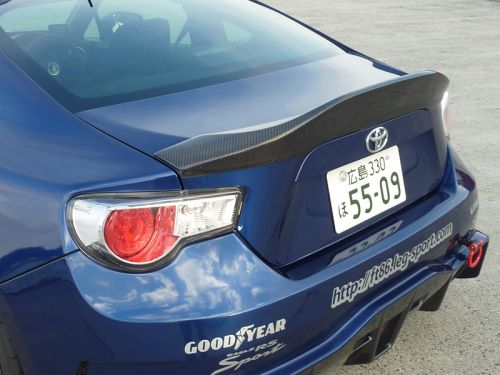
Once you know what a ducktail spoiler looks like, you cannot unsee it. The shape is exactly what the name describes: a slightly upswept, tapered lip that curls away from the rear of the trunk lid like a duck’s tail feathers flicking upward.
What it does: The ducktail creates a subtle but effective disruption of the airflow at the rear of the car. Because it is not a full-width pedestal spoiler, it tends to generate less drag than larger spoiler designs while still providing a useful reduction in rear lift. The shape guides the departing airflow in a way that keeps the rear of the car more planted at speed.
The ducktail spoiler has deep automotive heritage. Porsche introduced it on the 911 RS 2.7 in 1972, and it became one of the most iconic design elements in sports car history. The shape was functional first, born from wind tunnel testing, but it was also unmistakably beautiful in the way that purely purposeful design sometimes turns out to be.
Since then, ducktail spoilers have been adopted across many platforms. They work especially well on fastback and notchback body styles, where the short trunk and steep roofline create the right visual proportion for the shape. The Porsche 911 GT3 has brought the ducktail back in modern form, and a lot of aftermarket companies offer ducktail spoilers for popular enthusiast platforms like the Toyota GR86, Subaru BRZ, and various generations of the Mustang.
7. Whale Tail Spoiler: When Aerodynamics Gets Dramatic

The whale tail is the ducktail’s bigger, more dramatic sibling. Where the ducktail is subtle and elegant, the whale tail is unmistakable. It sweeps upward from the rear of the car with broad, curved edges that evoke exactly the image the name suggests.
What it does: The whale tail generates more downforce than a ducktail or a lip spoiler, making it genuinely useful at higher speeds where rear lift becomes a real handling concern. Its larger surface area catches more airflow and creates a more significant pressure difference that helps push the rear of the car down onto the road.
The original whale tail became famous on the Porsche 930 Turbo in the mid-1970s. On that car, it served both an aerodynamic purpose and a cooling function, channeling air toward the rear-mounted turbocharged engine’s intercooler. It was not just an aesthetic choice. It solved a genuine engineering problem.
On modern applications, whale tail spoilers are primarily a performance and styling choice for sports cars where the visual impact is part of the appeal. They look bold and intentional. They signal that the car is serious about performance. And on the right vehicle, they genuinely are.
8. Truck Spoiler: Because Pickups Need Aero Help Too
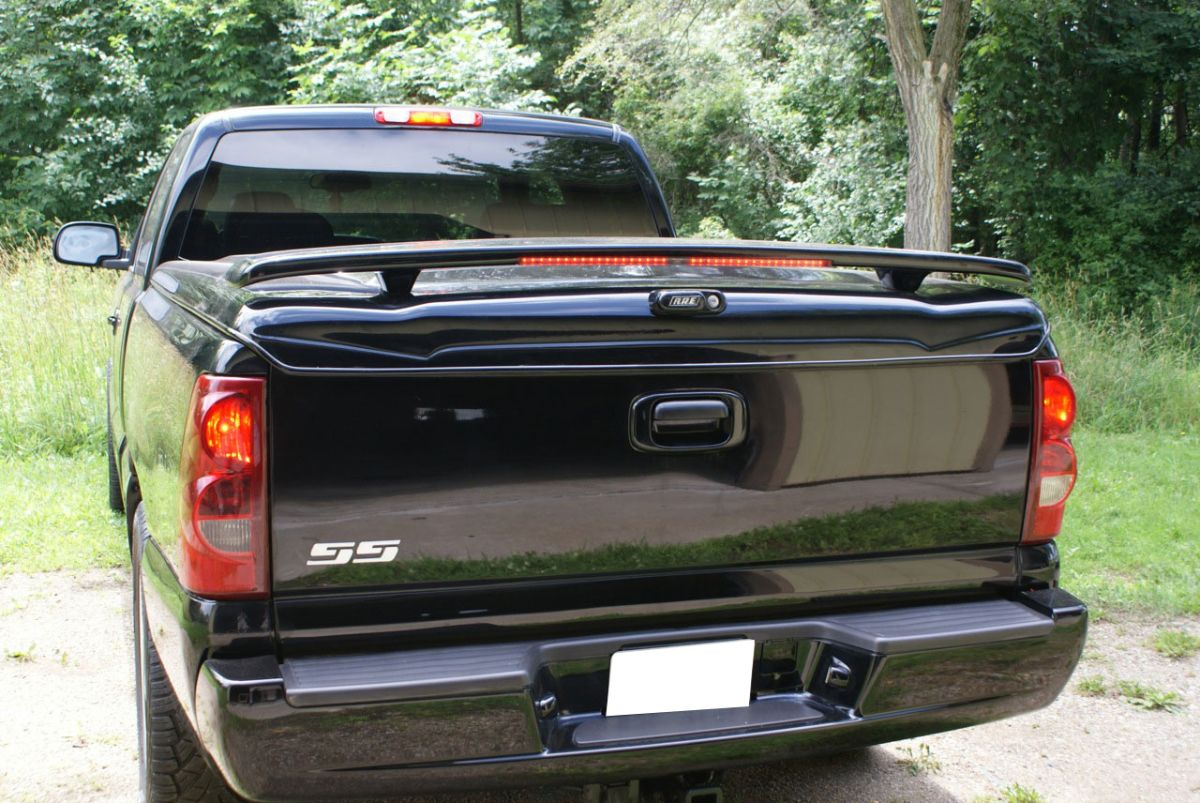
If you drive a pickup truck, you are probably aware that aerodynamics is not exactly your vehicle’s strong suit. The upright cab, the flat bed sides, and the open box create a genuinely terrible aerodynamic profile that costs fuel efficiency and creates significant drag at highway speeds.
What it does: A truck spoiler mounts across the rear edge of the cab, at the transition between the cab and the open bed. Its job is to manage the airflow as it comes off the roof and falls into the bed. Without any intervention, that air tumbles into the box, creates a turbulent recirculation zone, and drags significantly on the truck at highway speeds.
A properly designed cab spoiler can reduce that turbulence, which lowers drag and improves fuel economy on the highway. Many modern pickup trucks come with cab spoilers as standard or optional equipment for exactly this reason. They also tend to incorporate the third brake light, giving you both an aerodynamic and a safety benefit in one piece.
Aftermarket truck spoilers are available in a wide range of styles, from subtle factory-matched designs to more aggressive, sport-oriented shapes. Even if the aerodynamic gains are modest, the visual improvement to the rear of the truck is often worth the installation on its own.
9. Branded Spoiler: When Heritage and Design Collide
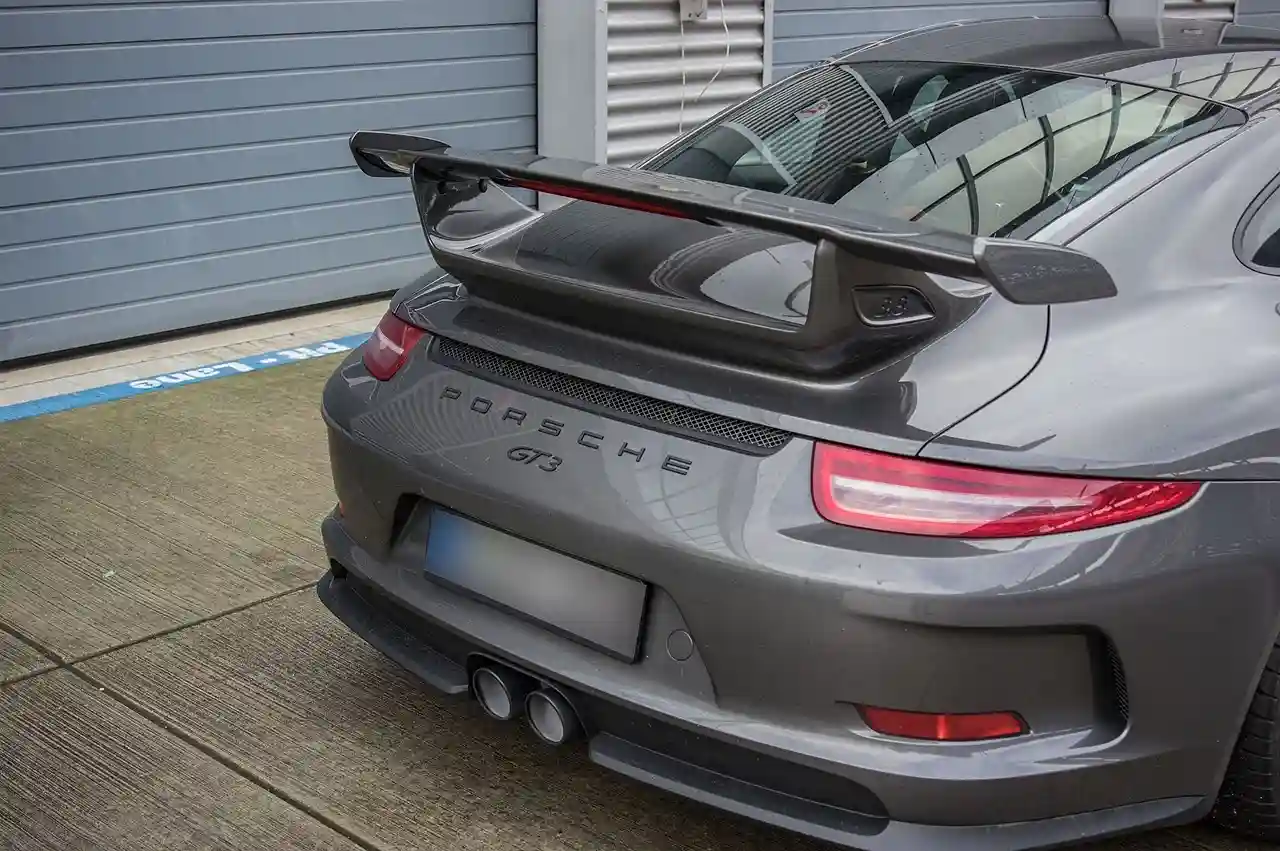
Some spoilers have become so closely associated with specific performance shops or vehicle platforms that they carry the brand name as part of their identity. These are not generic catalog parts. They are designs that have developed a following of their own.
Cervini’s stalker spoiler for the Ford Mustang is a good example. It became iconic enough that people request it by name rather than by description. Saleen’s Fox Body Mustang spoiler, with its distinctive bottomless cup shape, became so recognizable that countless other manufacturers copied the general design. Roush Performance has its own spoiler lineup for the S550 Mustang generation that carries significant cache among Mustang enthusiasts.
What makes these different: Beyond the name recognition, branded spoilers from established performance companies tend to be designed with a specific platform in mind. They are engineered to fit properly, look intentional, and in many cases, actually improve the aerodynamics of that particular vehicle rather than just adding visual bulk.
If you own a vehicle with a strong enthusiast following, like a Mustang, a Camaro, or a WRX, there is almost certainly a well-regarded branded spoiler option designed specifically for your car. That specificity is worth paying a premium for over a generic one-size-fits-all piece.
10. Mustang Chin Spoiler: A Front-End Fix That Actually Works
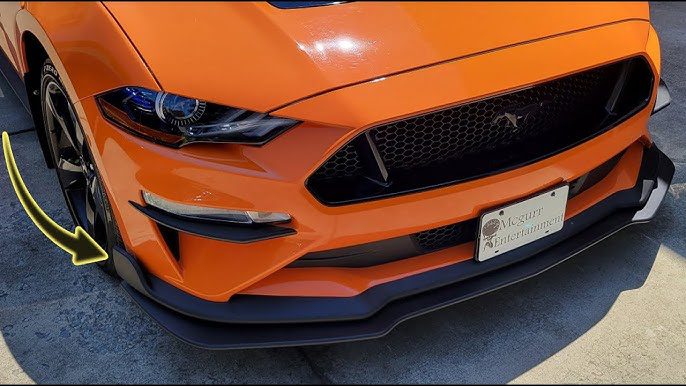
The chin spoiler is essentially a front air dam, but the Mustang-specific version deserves its own mention because it has become both a performance staple and a visual signature for the platform.
What it does: The chin spoiler mounts under the front bumper and blocks airflow from getting under the car. Think about what is happening under your vehicle at speed. There are suspension components, exhaust pipes, fuel lines, and chassis rails, all creating a chaotic landscape that catches air, generates turbulence, and creates both lift and drag. The chin spoiler acts as a dam, preventing air from entering that space in the first place.
The result is reduced front-end lift, which improves front tire grip and steering response, along with reduced overall drag, which helps fuel efficiency and top speed. As a bonus, directing air away from the underbody means more of it goes toward the radiator, which can help keep the engine cooler during hard driving.
On the Mustang, the chin spoiler has evolved from a purely functional racing accessory into a defining visual element. The aggressive, dropped front end look that a chin spoiler creates has become part of the car’s identity across multiple generations. It looks mean, but it earns its place aerodynamically too.
A Quick Reference Guide to All 10 Spoiler Types
| Spoiler Type | Where It Mounts | Primary Function | Best Suited For |
|---|---|---|---|
| Pedestal | Top of trunk lid | Reduces rear lift, improves stability | Sports cars, street performance builds |
| Front (Air Dam) | Below front bumper | Blocks underbody airflow, reduces drag | Racing and performance street cars |
| Lip | Trailing edge of trunk | Smooths departing airflow, reduces drag | Daily drivers, subtle style upgrades |
| Roof | Trailing edge of roofline | Manages roofline-to-rear transition | Hatchbacks, SUVs, fastbacks |
| Lighted | Top of trunk lid | Aerodynamics plus integrated brake light | Visibility-focused builds |
| Ducktail | Rear trunk edge | Reduces rear lift with minimal drag | Sports cars, classic-inspired builds |
| Whale Tail | Rear trunk area | Generates significant downforce | High-performance sports cars |
| Truck | Rear cab edge | Reduces bed turbulence and drag | Pickup trucks |
| Branded | Varies by design | Platform-specific performance and style | Enthusiast builds on specific platforms |
| Chin (Mustang) | Below front bumper | Front lift reduction, cooling improvement | Mustangs and front-focused builds |
How to Choose the Right Spoiler for Your Car
The right spoiler depends on three things: what your car actually needs aerodynamically, how you drive it, and what you want it to look like. Those three factors do not always point in the same direction, and that is fine.
If you track your car or drive it hard on canyon roads at speed, an aerodynamically functional spoiler designed for your specific platform is worth spending money on. Look for something engineered for your car, not a universal fit piece. Front and rear aerodynamics also need to work together. A large rear spoiler without a corresponding front air dam or splitter can actually unbalance the car, giving the rear more grip than the front and leading to understeer.
If you drive mostly on public roads at normal speeds, a subtle lip spoiler or a factory-style ducktail will give you a small aerodynamic benefit at highway speeds while looking clean and intentional. These are low-commitment options that are hard to get wrong.
If your goal is purely visual, be honest with yourself about that. Pick whatever looks best on your car and fits your budget. Just make sure the mounting hardware is solid, the fit is good, and the material quality is reasonable. A poorly fitted spoiler rattles at speed, looks cheap, and can actually create more aerodynamic problems than it solves.
Also worth noting: quality matters. A spoiler made from thin, flexible plastic that flexes visibly at speed is not doing its aerodynamic job properly. Carbon fiber, high-quality ABS plastic, and fiberglass all work well. Cheap stamped metal with no engineering behind it generally does not.
Does a Spoiler Actually Improve Fuel Economy?
This question comes up a lot, and the honest answer is yes, but only if the spoiler is properly designed and only at the right speeds.
A front spoiler or air dam that reduces underbody drag can make a measurable difference in fuel consumption at sustained highway speeds. Some studies on production trucks have shown fuel economy improvements of several percent from properly designed cab spoilers, which is meaningful over tens of thousands of miles of highway driving.
Rear spoilers have a more complicated relationship with fuel economy. If a rear spoiler reduces aerodynamic drag effectively, it can marginally improve fuel efficiency. But if it adds drag without meaningfully reducing lift, it can hurt it. The design and engineering quality of the specific part matters enormously here.
At city speeds, spoilers do basically nothing for fuel economy. Aerodynamic drag is not significant enough at 30 mph to be worth worrying about. The benefit shows up on the highway, and it scales with speed. The faster you cruise, the more an aerodynamically sound spoiler earns its keep.
What Happens When a Spoiler Is Done Wrong
Not every spoiler installation ends well. A few common mistakes worth being aware of:
- Generic spoilers on cars they were not designed for: A spoiler that was not engineered for your specific car’s aerodynamic profile can actually increase drag or create uneven pressure distribution. It might look fine but be doing nothing useful, or actively making things worse.
- Poor mounting: A spoiler that is not solidly attached will vibrate at speed. That vibration creates noise, causes premature wear on the mounting points, and in severe cases can cause the spoiler to separate from the car entirely on the highway. Make sure the hardware is appropriate for the part and the surface it is mounting to.
- Adding only rear aero without addressing the front: If you bolt a large rear spoiler onto a car without balancing it with front downforce, the car can develop more rear grip than front grip. This makes the car understeer in corners, which is the opposite of the handling improvement most people are chasing.
- Expecting significant performance gains from purely cosmetic parts: A lot of aftermarket spoilers are designed and marketed primarily for looks. If you are expecting a lap time improvement from a $60 universal fit wing from an online catalog, you are likely going to be disappointed. Set realistic expectations based on what the part was actually designed to do.
A spoiler chosen with intention and fitted correctly is a legitimate upgrade, whether the goal is aerodynamics, fuel efficiency, looks, or all three. The key is knowing what you are actually buying and what it is actually going to do on your specific car.
If you are serious about aerodynamic performance, take the time to research parts that were engineered for your platform. Talk to other owners who track the same car. Look at what factory performance variants of your vehicle use from the factory. Those are the reference points that actually matter, not what looks most aggressive in a catalog photo.