
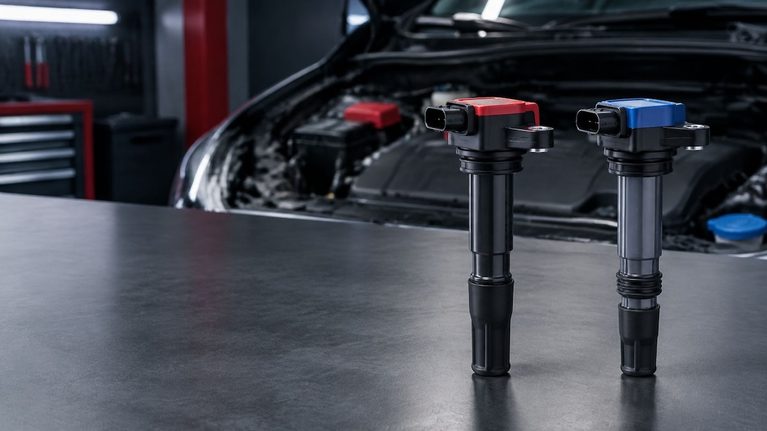
When an engine starts misfiring, the ignition coil can be one of the first parts people suspect. Choosing a reliable replacement matters, but buying a well-known brand won’t help if the fault is somewhere else or the coil doesn’t match the vehicle.
NGK and Denso are both established names in ignition parts. They supply coils for many applications and offer parts designed to meet the requirements of specific vehicles. Neither brand is automatically the best choice for every car.
As a mechanic, I’d start with the vehicle’s exact engine and the correct replacement part number, then compare genuine NGK and Denso options if both are listed for that application. Features such as multi-pack availability, design and price can help you decide, but they come after fitment and diagnosis.
This guide looks at the practical differences between NGK and Denso coils, what the brands have in common, and how to avoid buying the wrong part. It also covers when replacing one coil makes sense, when a set may be worthwhile, and what to check before fitting anything.
The short answer
If both NGK and Denso list an ignition coil for your exact vehicle and engine, either may be a suitable replacement. Compare the part numbers, seller, warranty and price for the same application rather than assuming one brand is always better.
NGK is often noted for offering coil multipacks for some applications and for using laser-etched identification on certain products. Denso is associated with compact coil designs and engineering features intended to make efficient use of space. These are useful points of comparison, but neither one proves a coil is right for your vehicle.
The most common mistake is replacing a coil based on a misfire symptom alone. A worn spark plug, damaged wiring, a fuel problem or low compression can produce similar trouble, so confirm the fault before spending money on parts.
What an ignition coil does
An ignition coil takes the vehicle’s low-voltage electrical supply and produces the high voltage needed to create a spark at the spark plug. The spark ignites the air and fuel mixture inside the cylinder. If a coil cannot provide a reliable spark when the engine needs one, that cylinder may misfire.
Coil designs vary by vehicle. Some engines use an individual coil over each spark plug, often called coil-on-plug; others use a coil pack that serves more than one cylinder, or a distributor-based arrangement. A pack of several individual coils sold together is not necessarily the same thing as one coil-pack assembly.
The engine computer and ignition system are designed around the coils specified for that engine. A replacement may look similar and plug into the wiring, but that alone doesn’t confirm it has the correct electrical characteristics, mounting points or boot shape. A part that is close but not correct can cause poor running or fail to fit properly.
That’s why a coil is better treated as a vehicle-specific repair part than as a universal performance upgrade. A well-made replacement can restore proper operation when the original coil has failed, but it won’t give the engine a useful power increase simply because it carries a particular brand name.
Symptoms of a failing coil and how to check the fault
A failing coil may cause a rough idle, hesitation under acceleration, a loss of power or difficult starting. Some faults are intermittent, so the engine may run normally when cold and begin to stumble after it warms up, or the other way around.
The check-engine light may come on if the engine computer detects a misfire. A flashing check-engine light can signal an active misfire that risks damaging the catalytic converter, so avoid continuing to drive the car as if nothing is wrong. Pull over somewhere safe and arrange help if the light keeps flashing or the engine is running very badly.
These symptoms don’t confirm a coil failure by themselves. A cylinder-specific misfire code identifies where the computer has detected a problem, not necessarily which part caused it. The fault could be the coil, spark plug, wiring, fuel injector or a mechanical problem inside the engine.
In the shop, I treat a misfire code as a starting point for testing, not as an instruction to replace a coil. A quick visual check can reveal a cracked coil housing, a damaged connector, oil in a spark plug well or water around the coil. Any of those findings may help explain the fault, but the result still needs to match the symptoms and test results.
- Read the codes before clearing them. Record which cylinder is affected and any other codes present. Clearing the information too early can make an intermittent issue harder to track down.
- Inspect the spark plug and coil boot. Check for wear, cracks, corrosion, contamination or damage. Follow the vehicle’s service information when deciding whether the plug needs replacement.
- Check the wiring and connector. A loose connection, damaged wire or poor terminal contact can interrupt the coil’s operation. Don’t pull on the wires to release a connector.
- Consider a coil swap only when suitable. On some engines, a technician can move a coil to another cylinder and see whether the misfire follows it. This is a useful test when the parts are interchangeable and access is safe, but it isn’t appropriate for every design.
If a misfire stays with the same cylinder after a coil has been moved, the coil becomes a less likely cause. A technician may then test the spark plug, injector, wiring and engine compression. Avoid unplugging coils with the engine running or handling ignition parts while the engine is being cranked, as the ignition system can produce a high voltage.
NGK ignition coils: strengths and trade-offs
NGK is widely known for ignition components and offers a range of replacement coils for different vehicles. The company is often described as an ignition specialist, and its coil products cover both original-equipment-style applications and the aftermarket. The exact range depends on the vehicle and market, so check the current catalog for your engine.
One feature often associated with NGK is its coil multipacks. For some popular applications, coils may be sold in sets that suit common four-, six- or eight-cylinder engines. Buying a set can be convenient when testing shows that several coils need replacement, but a multipack doesn’t mean every coil on the engine should automatically be changed.
NGK products may use laser-etched logos and part numbers to help identify the component and discourage counterfeiting. Those markings are useful to check, but they aren’t a complete guarantee that a part is genuine. Packaging and markings can be copied, so buy from a seller you trust and verify the part number with a reliable catalog.
For a buyer, NGK’s main appeal is a combination of application coverage, familiar ignition-parts experience and the availability of sets for some vehicles. The brand can be a sensible option when the exact coil is listed for your engine and the seller can confirm the part is genuine.
- Potential advantages: multi-coil packs for selected applications, recognizable part identification on some products, and a broad ignition-parts range.
- Things to check: pack availability varies, and buying a set isn’t always cheaper once shipping and returns are included. Compare the total cost with buying only the coil or coils that testing shows have failed.
- Best reason to choose NGK: the catalog confirms the exact application, the part comes from a trustworthy source, and its price and warranty suit your needs.
NGK’s reputation doesn’t remove the need to inspect the rest of the ignition system. If a new coil fails soon after installation, look for an underlying cause such as a damaged connector, a contaminated plug well or a spark plug problem instead of assuming the replacement brand is at fault.
Denso ignition coils: strengths and trade-offs
Denso is another established ignition-parts supplier with replacement coils for a wide range of applications. The brand is associated with early compact stick-type coil designs, which place the coil directly over the spark plug. This layout can help manufacturers package the ignition system neatly in the available space.
Engineering features often mentioned in descriptions of Denso coils include diagonal winding layouts and compact driver circuits. These are design approaches for fitting coil components into a small package. They don’t give you a simple way to rank one brand above another, because a coil still has to be designed for the engine it serves.
Denso replacement coils are intended to restore the ignition system’s operation when the correct part is selected and the original coil has failed. A proper replacement should fit the specified mounting points and connect as intended. It shouldn’t need to fit “better” than the original; the correct part should match the vehicle’s design.
People sometimes describe Denso as a budget-friendly option, but the price depends on the specific application, seller and region. A Denso coil may cost less than an NGK equivalent for one vehicle and more for another. Compare the same type of part with the same fitment rather than judging by the brand alone.
- Potential advantages: compact coil designs, OE-style replacement options and availability for many vehicle applications.
- Things to check: confirm the exact part number and compare it with the vehicle’s required coil. A similar shape or connector doesn’t guarantee an electrical match.
- Best reason to choose Denso: it is listed for your exact engine, comes from a reliable supplier and offers a suitable price and warranty.
Installation difficulty has more to do with the vehicle’s layout than the logo on the coil. One car may have easy access to each plug, while another may require the removal of covers or other components before the coils can be reached.
What NGK and Denso have in common
Both brands are established names in the ignition-parts market, and both offer coils intended to meet the requirements of specific vehicle applications. Their catalogs include replacement parts for the aftermarket, and both have experience supplying components for vehicle manufacturers.
That shared background is helpful, but it shouldn’t be taken to mean every coil made by either company is suitable for every engine. Product design, connector shape, mounting method and application all vary. Check the individual part listing rather than relying on a general statement about brand quality.
Both brands can be a sound choice when the part number is correct and the product is genuine. A lower price from a questionable seller or a familiar name on a listing isn’t enough by itself. The part has to match the vehicle and address the fault you’ve actually diagnosed.
NGK vs Denso: a side-by-side comparison
| What to compare | NGK | Denso |
|---|---|---|
| Fitment | Check the current NGK catalog for the exact engine and part number. | Check the current Denso catalog for the exact engine and part number. |
| Features often highlighted | Multi-packs for selected applications and laser-etched identification on some products. | Compact stick-coil design and engineering approaches such as diagonal winding and compact driver circuits. |
| Buying a set | Some applications may be available in multi-coil packs. Confirm quantity and fitment. | Pack formats depend on the application and catalog. Check whether individual coils or a set are listed. |
| Price | Varies with the vehicle, seller and whether you buy one coil or several. | Also varies with the vehicle, seller and product format. Compare like for like. |
| What matters most | Correct part number, genuine part, sound diagnosis and a suitable warranty. | Correct part number, genuine part, sound diagnosis and a suitable warranty. |
This comparison can narrow your choice, but it can’t tell you which part fits without vehicle details. The model year, engine size, engine code and sometimes the production date can affect the required coil. Use those details to confirm the application before you order.
How to choose the correct ignition coil
- Identify the exact vehicle and engine. Have the model year, engine size, trim and engine code available if you can find them. A single vehicle model may have more than one engine, and the coils may differ between them. For some vehicles access is straightforward, but finding the right application in the catalog can take more care.
- Check the manufacturer’s part reference. Look up the coil using the VIN or the vehicle details required by the parts catalog. If you have the old coil, compare its markings, but don’t rely on it alone: a previous owner may have installed an incorrect replacement. Before you order, verifiy the cross-reference against a current catalog or a trusted parts supplier.
- Confirm the physical design. Check the connector, mounting point, coil length and boot arrangement against the application. A coil that looks close in an online photograph may still be the wrong length or have a different electrical connector. Use clear product information rather than guessing from a picture.
- Compare genuine parts from reliable sellers. Check the part number, packaging, return policy and warranty before paying. Be cautious of listings with vague descriptions, unclear product photographs or prices that seem unusually low. If you’re unsure, ask the seller to confirm fitment using your VIN and engine details.
- Compare the full cost. Look at the price of the part, shipping and any return charges, not only the headline price. If the job requires removing other components to reach the coils, ask a repair shop what access work is involved before deciding whether to do it yourself.
- Choose based on diagnosis, not a brand preference. If testing confirms an NGK coil is the right replacement, there’s no reason to reject it simply because someone prefers Denso. The same applies in reverse. Use whichever genuine part is correctly listed for the engine and makes sense for your repair.
Should you replace one coil or all of them?
There’s no automatic rule that every coil must be changed when one fails. If testing identifies a single faulty coil and the remaining coils are working normally, replacing the faulty part may be reasonable. Inspect the spark plugs and coil boots at the same time, since problems there can contribute to a misfire.
If several coils have failed, look for a shared cause instead of fitting a full set and hoping for the best. Wiring damage, contamination, a charging-system problem or another fault may affect more than one coil. Replacing all the coils without checking why they failed can waste money and leave the original problem in place.
Sometimes it makes practical sense to replace several coils together, particularly if testing shows more than one is faulty or access makes separate repairs costly. Discuss that choice with a mechanic using the test results and the labor involved. A multipack can lower the per-coil price for some applications, but the savings only matter if the extra parts are needed.
Ignition coils don’t have one universal replacement interval for every vehicle. Follow the maintenance information for your car and replace a coil when the diagnosis supports it, rather than changing one just because a spark plug service is due.
Installation checks that can prevent a repeat failure
Some ignition coils are accessible enough for a confident home mechanic to replace. Others sit under covers or behind components that take time to remove. Check a service manual or a reliable repair procedure first, so you know what access and tools the job requires.
Work with the engine switched off and cool, and follow the vehicle’s safety instructions. Disconnect the battery only if the repair procedure calls for it. Don’t unplug or handle an ignition coil while the engine is running, and don’t test for spark by holding a coil or lead by hand.
- Save the diagnostic information. Record the fault codes and affected cylinder before clearing anything. If the car has an intermittent misfire, note when it happens, such as during a cold start or under load. That information can help you or a technician confirm whether the repair worked.
- Check the area before removing the coil. Look for oil, water, dirt or damage around the coil and spark plug well. Contamination can affect the boot or electrical connection and may point to a separate problem that needs attention. If there’s an oil leak, replacing the coil without addressing the leak could lead to another failure.
- Release the connector carefully. Use the connector’s locking tab and avoid pulling on the wiring. Plastic locks can become brittle, and forcing them may turn a straightforward part replacement into a wiring repair. Compare the old and new connectors before fitting the replacement.
- Inspect the spark plug and the replacement part. Check the plug condition and confirm its gap and replacement interval using the vehicle’s service information. Compare the new coil with the old one before installation, including the mounting points, connector and boot. If anything differs from the catalog listing, stop and confirm the part number before forcing it into place.
- Fit the coil to the specified procedure. Seat it evenly, secure the fastener using the vehicle’s specified torque and reconnect the electrical plug until it locks. Don’t guess at torque values or use force to make a mismatched part fit. A damaged coil housing or connector can create a new fault.
- Check the repair after starting the engine. Start the engine and check whether it runs smoothly, then scan for current faults if you have a suitable tool. Clear codes only after recording them and completing the repair. If the misfire returns, don’t keep swapping parts without further testing.
Pay attention to what you find during the job. A cracked boot, a loose connector or oil around the plug may explain why the engine was misfiring, while a coil that looks fine can still have an electrical fault. Visual checks are useful, but they don’t replace a proper test when the symptoms continue.
Parts cost and repair time
There isn’t one useful price for an NGK or Denso coil that applies to every vehicle. The part number, seller, region and whether the coil is sold individually or in a set all affect the total. Compare prices for the same application and check whether the listing is for an individual coil, a pack of coils or a complete coil-pack assembly.
Labor varies with access. A coil that sits in plain view may be a relatively straightforward job, while another engine may require surrounding parts to be removed first. A repair shop can give a more accurate time and cost after confirming the vehicle details and checking what the job involves.
Ask for an itemized estimate that separates diagnosis, parts and labor. If a shop recommends replacing every coil, ask what testing supports that recommendation and whether the spark plugs or wiring need attention too. It’s reasonable to ask whether buying a set will actually reduce the total cost for your particular car.
DIY replacement or a visit to the mechanic?
DIY replacement is reasonable when the coil is easy to reach, you have the correct part and you’re comfortable following the vehicle’s procedure. You should also know which cylinder is affected and have a way to check whether the misfire has stopped. If the diagnosis is uncertain, changing a coil can become an expensive guess.
A mechanic is a better choice when the fault keeps returning, the wiring looks damaged, the coil is difficult to access or the engine runs badly enough that driving it could cause further damage. Professional diagnostic equipment and service information can help separate a coil failure from a fuel, wiring or mechanical issue. Don’t keep driving with a flashing check-engine light or a severe misfire.
It’s also worth getting help if you don’t know how to release the connector, the new part doesn’t match the old one, or you can’t find the correct torque and installation information. Stopping to check is cheaper than breaking a connector or damaging the threads. A good parts counter or repair shop can help verify the application before the repair goes further.
Common questions about NGK and Denso coils
Are NGK ignition coils better than Denso?
There isn’t a universal winner. Either brand may be the right choice when it offers a genuine coil that matches the exact vehicle and engine. Confirm the part number and compare the product, seller, warranty and price for your application.
Should I buy the same brand as the original coil?
Check the vehicle’s parts information rather than assuming the brand on an old coil is the original one. It may have been replaced before, and the correct part number matters more than the logo. If both brands are listed as suitable replacements, compare the exact parts and choose a trustworthy seller.
Do NGK coil multipacks save money?
They can be convenient for an application where several coils need replacement, but a pack is not automatically the cheapest option. Compare the full pack price with the cost of the individual coils you need, including shipping and any return costs. Don’t replace working coils solely because a pack is available.
Can I mix NGK and Denso coils on the same engine?
Don’t mix parts unless each coil is listed for that exact engine and application. The brand name alone doesn’t tell you whether two parts have the same specifications. If you’re unsure, check the catalog or ask a qualified mechanic before fitting them.
Will a new coil fix a misfire?
Only if the coil is the cause. Spark plugs, wiring, fuel delivery and engine condition can all produce similar symptoms. Diagnose the fault first, then confirm the engine runs properly after the repair.
Can I keep driving with a misfire?
A mild symptom still needs attention, and a flashing check-engine light or severe misfire calls for prompt action. Continued misfiring can put extra strain on the exhaust system and may cause further damage. Stop somewhere safe and arrange a diagnosis rather than driving on and hoping the light goes away.
The expert verdict
NGK and Denso both make ignition coils that can be good replacements when the part is genuine and correctly matched to the vehicle. NGK may appeal if a suitable multi-pack is available, while Denso’s compact coil designs are among the engineering features associated with its range. Neither point is a substitute for checking the application.
Your next step is to identify the exact engine, record the fault information and confirm the coil part number in a current catalog. DIY is reasonable when the diagnosis is clear and the coil is accessible; see a mechanic if the misfire persists, the wiring is damaged or you’re unsure what caused the fault.
One clear takeaway: choose the correct genuine coil for the diagnosed problem, not a brand name on its own.