
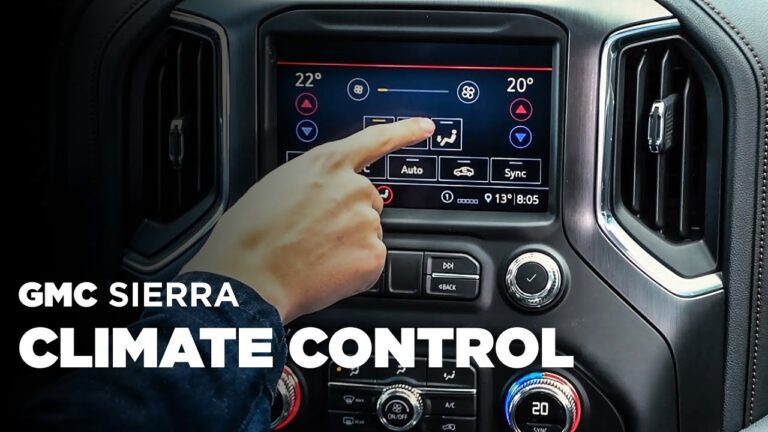
Your GMC Sierra is a workhorse. It hauls, it tows, and it takes a beating without flinching. But when the heat stops blowing on a freezing morning or the AC gives you nothing but a whisper of warm air in July, you quickly realize how much you rely on that little fan behind the dash. It is not just about comfort. It is about visibility, safety, and your sanity.
If you are staring at a dead blower motor or one that only works on certain speeds, you do not need to panic. You also do not need to shell out $800 at the dealership right away. In many cases, the fix is embarrassingly simple. You just need to know where to look.
Let us walk through the five most common culprits behind GMC Sierra blower motor problems, how to diagnose them in your driveway, and the exact steps to get that air flowing again. No fluff. No jargon. Just straight talk and practical fixes.
Why Your Sierra’s Blower Motor Quits: The Real Story
Before we start throwing parts at the problem, it helps to understand what the blower motor actually does. It is not a complex machine. It is simply a 12-volt electric motor with a fan wheel attached to it. When you turn the knob on your dash, the control module or resistor sends power to the motor. The motor spins, the fan moves, and air gets pushed through the vents.
That is the whole system in a nutshell. So when something goes wrong, it is usually one of five things: a blown fuse, a bad relay, a dead resistor, a fried control module, or the motor itself giving up the ghost. There is also a sneaky sixth possibility, which is the wiring harness melting, but we will get to that in a minute.
Quick Troubleshooting: Where to Start
If you want to save yourself time and money, start with the cheapest and easiest checks first. Do not rip out your dashboard before you have confirmed it is not a 50-cent fuse causing the problem. Here is the order of operations I recommend:
- Check the fuse box for a blown blower motor fuse.
- Listen for a click when you switch the fan on. That click tells you the relay is working.
- Smell for burning or look for smoke. That points to a resistor or wiring issue.
- Test different speeds. If only the high setting works, your resistor is likely toast.
- Check the cabin air filter. A clogged filter can cause the motor to work harder and shut down.
These five checks will point you in the right direction ninety percent of the time. Let us break down each fix in detail.
Fix #1: The Blown Fuse That Costs Pennies
The fuse is the unsung hero of your electrical system. It is a thin piece of metal designed to melt when too much current flows through it. When that happens, the circuit breaks, and the motor stops to prevent further damage. It is a sacrificial lamb, and sometimes it just needs to be replaced.
How to Find and Replace the Blower Motor Fuse
Open your owner’s manual and look up the fuse diagram. On most GMC Sierra models, the blower motor fuse is located in the under-hood fuse block, not the one inside the cabin. It is usually labeled as HVAC or BLOWER. It is often a 30-amp or 40-amp fuse, depending on the year.
Pull the fuse out with a pair of needle-nose pliers or the fuse puller tool that is usually clipped inside the fuse box cover. Hold it up to the light. If you see a break in the wire inside, or if the plastic looks cloudy and melted, it is blown.
Here is the thing though: a fuse does not blow for no reason. If you replace it and it blows again immediately, you have a short somewhere. That short is often caused by a chafed wire rubbing against metal, a failing motor that is pulling too many amps, or a resistor that has cooked itself. So if the new fuse pops right away, you have a deeper issue to chase.
If the fuse was just old and tired, replacing it will restore power in seconds. That is the dream scenario. Always keep a few spare fuses in your glovebox. They cost a couple of dollars and can save you from a very cold commute.
Fix #2: The Bad Relay That Stops Everything
Think of the relay as a remote control for electricity. It uses a small amount of current to close a switch that allows a large amount of current to flow to the blower motor. When you turn the fan knob, the signal goes to the relay, the relay clicks, and the big power flows.
When the relay fails, you get nothing. No click. No fan. No air. It is a very common failure point on GM trucks, and the fix is almost laughably simple.
How to Test and Swap a Blower Motor Relay
Relays are cheap and interchangeable. On a GMC Sierra, the blower motor relay is usually in the same under-hood fuse block as the fuse. Look for a small black or blue cube with a diagram on the top. Pull it out, and you will see four or five metal prongs on the bottom.
Now, here is the trick that saves you time: find another relay in the fuse box that has the same part number on the top. It could be the horn relay, the fog light relay, or the fuel pump relay. They are often identical. Swap them. If the blower motor starts working, you just found your problem, and the fix is a $15 relay from AutoZone.
Even so, do not get too excited. If the relay was clicking before but the motor was not spinning, then the relay might be fine, and you are looking at a motor issue instead. But if there was no click at all, the relay is a prime suspect.
One more thing: check for corrosion on the relay prongs. Moisture gets into these fuse boxes, and green crust on the metal will prevent a good connection. Clean it with a wire brush or some electrical contact cleaner before you plug a new relay in.
Fix #3: The Blower Motor Resistor That Destroys Speeds
This is the big one. If your blower motor works on high but not on low, or if it only works on one or two speeds, you are almost certainly dealing with a dead blower motor resistor. This little component is a bank of resistors that steps down the voltage to the motor. Each speed level uses a different resistor, so when one burns out, you lose that speed.
Where Is It Located?
On most GMC Sierra models, the resistor is mounted to the blower motor housing. This housing is located behind the glovebox on the passenger side. You will need to remove the lower dash panel or the glovebox itself to get to it. It is usually held in by two 8mm screws, and it has a wire harness plugged into the side of it.
The Burning Smell Is a Dead Giveaway
If you smell a weird, acrid, almost electrical burning odor coming from your vents, that is the resistor cooking itself. The resistor sits directly in the airflow path, which is supposed to keep it cool. But when debris, dust, or a failing motor causes it to overheat, the solder inside melts and the component fails.
I have seen resistors that looked like they went through a fire. The plastic is melted, the pins are bent, and there is a black charred mess where the component used to be. That is your smoking gun.
Swapping the resistor is a 20-minute job. Unplug the harness, remove the two screws, pull the old resistor out, and install the new one. The new one will cost you anywhere from $25 to $60 depending on whether you buy OEM or aftermarket. Honestly, aftermarket works just fine here.
But wait. There is a catch. If you just replace the resistor without finding out why it burned out, you will be doing this again in six months. The most common cause of premature resistor failure is a clogged cabin air filter. When the filter is clogged, the blower motor has to work harder to pull air through the system. That increased resistance causes the motor to draw more current, which generates more heat, which fries the resistor.
So, do yourself a favor and replace the cabin air filter while you are in there. It is a cheap part and takes two minutes to swap. Your new resistor will thank you.
Fix #4: The Control Module That Goes Rogue
On newer GMC Sierra models, particularly those from 2014 and up, the traditional resistor has been replaced by a blower motor control module. It looks similar but functions a bit differently. Instead of just stepping down voltage, it uses pulse width modulation to control motor speed with incredible precision.
When this module fails, the symptoms can be weird. You might get no airflow at all, or the fan might run at full blast with no way to turn it down. In some cases, it will run intermittently, shutting off randomly and then kicking back on when it feels like it.
How to Diagnose a Failing Control Module
Start by checking if you have power at the module. You will need a multimeter for this. Set it to DC voltage, connect the ground lead to a good chassis ground, and probe the power wire at the module connector. You should see battery voltage, somewhere around 12.5 volts, when the key is on.
If you have power going in but the motor is not running, the module is likely the culprit. If you do not have power going in, then you are chasing a wiring issue or a fuse problem, which brings us back to the earlier fixes.
The replacement procedure is nearly identical to the resistor. It is located in the same spot behind the glovebox, held in by the same two screws. The connector might be slightly different, but the process is the same. Unplug it, unscrew it, replace it.
Here is a real-world example for you. A buddy of mine had a 2016 Sierra that would blow cold air only when he was driving on the highway. When he stopped at a light, the fan would die completely. He thought it was a wiring short. After two days of chasing wires, he finally looked at the control module and found a cracked solder joint on the circuit board. A $40 module and ten minutes of work fixed it permanently. He almost sold the truck over that issue.
Moral of the story: do not overcomplicate the diagnosis. The module is a wear item. It fails. It is not a reflection of your truck’s overall reliability.
Fix #5: The Blower Motor Itself
If you have confirmed that the fuse is good, the relay is clicking, the resistor or module is working, and you still have no airflow, then the motor itself has likely given up. This is the most expensive fix on the list, but it is still something you can do at home with basic hand tools.
Signs the Motor Is Dying
Before it completely dies, the motor will usually warn you. Listen for a whirring or grinding noise when the fan is on. That noise is the motor bearings wearing out. As the bearings degrade, the motor has to work harder to spin the fan. Eventually, the motor seizes up completely and stops spinning.
Another sign is a rattling noise that gets louder over time. This often means debris has gotten into the motor housing, or a leaf has jammed itself against the fan blade. The motor is struggling to push past the obstruction.
You might also notice that the fan speed fluctuates on its own. The motor is pulling too much current, and the thermal overload protection in the module is kicking in to shut it down before it catches fire.
If you have a bad motor, you need to replace it. Full stop. There is no way to rebuild these little motors. Well, you could try to replace the brushes if you are a masochist, but it is not worth the effort.
What Does It Take to Replace the Blower Motor?
The blower motor is accessible from the passenger side footwell. You will need to remove the lower dash panel, which is usually held in by a few plastic push pins and a 7mm bolt. Once that is out of the way, you will see the motor held in by three 8mm screws.
Unplug the electrical connector, remove the screws, and twist the motor to disengage it from the housing. It will drop down into your lap. Installation is the reverse of removal.
Before you install the new motor, take a minute to clean out the housing. Vacuum up any leaves, dust, or debris that has accumulated. This is also a great time to check the evaporator core for any signs of a refrigerant leak, but that is a whole other can of worms.
One last tip on this: always buy a quality motor. The cheap no-name ones from online marketplaces often have poor tolerances and will start squealing within a year. Spend the extra $30 on a reputable brand like ACDelco or Four Seasons. Your ears will appreciate it.

Bonus Fix: The Melted Wiring Harness
This is the sneaky one that stumps even experienced mechanics. On certain GMC Sierra model years, particularly the 2007 to 2013 generation, the wiring harness that plugs into the blower motor resistor has a tendency to melt.
Why does this happen? The connector pins carry a lot of current, and if the connection is loose or corroded, it creates resistance. Resistance generates heat. Heat melts the plastic connector and the wires inside it.
If you pull the resistor out and see a melted, deformed connector on the wiring side, do not just replace the resistor. You have to fix the connector too. You can buy a repair harness from a dealer or a salvage yard. Solder the new connector onto the existing wires, heat shrink the joints, and plug in your new resistor.
This is a very common issue on GM trucks, and it directly relates to the GMC Sierra blower motor problems that so many owners face. If you catch it early, you can prevent a full electrical failure that could take out other components in the HVAC system.
Preventive Maintenance: Keep It From Happening Again
Nobody wants to do this job twice. Here is how you keep your blower motor running smooth for years to come.
Change Your Cabin Air Filter
I know I mentioned this already, but it deserves its own section because it is that important. The cabin air filter is your first line of defense against debris entering the blower motor. It also prevents the resistor and module from overheating. Set a reminder to change it every 12,000 miles or once a year, whichever comes first. It costs $15 and takes five minutes.
Run the Blower Motor Regularly
Here is a weird but true fact: blower motors that sit unused for months are more likely to fail. The bearings dry out, the brushes develop a flat spot, and the motor seizes when you finally turn it on. Run your fan at least once a week, even if you do not need heating or cooling. It keeps the motor lubricated and the seals fresh.
Check for Leaf Buildup in the Cowl
The air intake for your HVAC system is located at the base of the windshield, under the cowl cover. Leaves, pine needles, and dirt can accumulate there and get sucked into the blower motor. Once a month, pop the cowl cover off and clear out any debris. It takes ten minutes and prevents a world of pain.
Listen to Your Truck
Your Sierra tells you when something is wrong. If the fan sounds different, if it is louder, if it makes a clicking noise, do not ignore it. Small problems become big problems when you neglect them. A $5 bearing noise turns into a $200 motor replacement if you let it go long enough.
That said, there is one more scenario worth mentioning. If your blower motor works fine but you still have no heat, the problem is not the motor at all. It could be a stuck heater core, a bad thermostat, or low coolant. Do not waste your time swapping parts if the fan is spinning. Check the temperature of the hoses going into the firewall. If one is hot and the other is cold, you have a coolant flow issue, not an electrical issue.
When to Call a Professional
I am all for DIY repairs, but I also know when to raise the white flag. If you have done all five fixes and the blower motor still does not work, you might be dealing with a more serious electrical issue. A short in the body wiring, a faulty HVAC control head, or a problem with the climate control computer can all mimic blower motor failure.
If you are not comfortable with a multimeter or you do not want to risk damaging your truck’s electrical system, take it to a trusted mechanic. A professional diagnostic will cost you around $100, but it will save you from throwing parts at a problem you cannot see.
Final Thoughts
The next time your GMC Sierra’s blower motor starts acting up, you have a game plan. Start with the fuse, move to the relay, check the resistor or module, and only then suspect the motor itself. Nine times out of ten, it is going to be the resistor or the module, and that is a cheap, easy fix you can handle in your driveway.
Do not let a dead fan ruin your day. Grab a multimeter, a screwdriver, and a fresh part, and get to work. Your truck will be blowing cold air or warm heat before you know it.
So, when was the last time you checked your cabin air filter? If you cannot remember, go do it right now. It might just save you from this whole headache.