
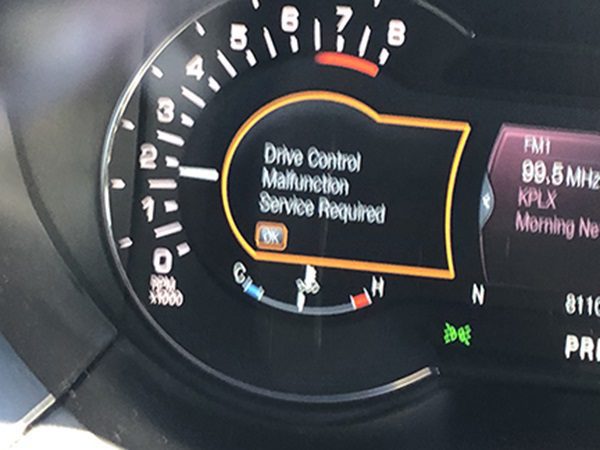
You are driving your Lincoln and suddenly that message pops up on the instrument cluster: “Drive Control Malfunction Service Required.” Maybe the vehicle gets stuck in sport mode. Maybe nothing else seems obviously wrong, but that warning just sits there staring at you. Either way, it is not something you want to ignore.
Here is the thing. This is not a rare, freak occurrence. Lincoln owners deal with this across a wide range of mileage, sometimes under 50,000 miles, sometimes well past 100,000. It does not discriminate by age or mileage. And while it can be alarming the first time it shows up, most of the causes behind it are identifiable and fixable without panic.
Let’s break down exactly what is going on, what is causing it, and what you can do about it.
What Is the Drive Control System and Why Does It Matter?
Before getting into the causes, it helps to understand what the drive control system actually does. In Lincoln vehicles, the drive control system manages how the vehicle responds to different driving conditions. It controls things like adaptive suspension, steering feel, throttle response, and in some models, all-wheel drive torque distribution.
When you switch between comfort, normal, and sport modes, you are telling the drive control system to adjust those parameters accordingly. The system relies on input from multiple sensors, modules, and actuators all working together. When any one of those components sends a bad signal or stops communicating properly, the system throws up a warning and may default to a fixed setting, which is why some drivers find themselves stuck in sport mode when the fault appears.
It is a safety measure. The system is saying, “Something is off, and I am not going to keep adjusting vehicle dynamics until it gets sorted out.” That is actually smart engineering. But it does mean you need to figure out what triggered it.

What Actually Causes the “Drive Control Malfunction Service Required” Message
Cause 1: A Weak or Failing Battery
Start here. Seriously. A failing battery is behind more “mystery” warning messages in modern vehicles than most people realize, and Lincoln is no exception. These vehicles have a heavy electrical load. The drive control system, the adaptive suspension, the various control modules, all of them depend on stable voltage to operate correctly.
When battery voltage drops below what the system expects, control modules start receiving inconsistent power and begin logging faults. The drive control warning is often one of the first to appear when a battery starts going south.
If your Lincoln is still running its original factory battery and it is three to four years old, that battery is worth checking before you do anything else. Age alone does not tell the whole story, but it is a strong hint. Cold climates accelerate battery degradation significantly.
How to fix it:
- Use a voltmeter or multimeter to test the battery. With the engine off, a healthy battery should read 12.6 volts or higher. Anything below 12.4 volts at rest suggests the battery is weak.
- Have the charging system tested too. A battery can test fine on its own but still fail under load if the alternator is not charging it properly.
- If the battery is weak, charge it fully and see if the message clears. If it comes back, replace the battery.
- After replacing the battery, clear any stored fault codes with an OBD-II scanner to give the system a clean start.
Many Lincoln owners have reported that a new battery alone cleared the drive control malfunction warning and it never returned. Always check the simplest things first before spending money on more complex diagnosis.
Cause 2: A Software Glitch in the Electronic Control Unit
The ECU is essentially the brain of your vehicle’s electronic systems. It takes input from dozens of sensors, processes all of that data, and makes real-time decisions about how the vehicle should operate. The drive control system is one of the many functions it oversees.
Like any computer, the ECU can develop software glitches. When that happens, it may misread sensor data or fail to communicate properly with other modules. The result is a drive control fault that does not necessarily point to a physical problem with any hardware component. The system is confused, not broken.
A common scenario: the vehicle gets a minor power fluctuation, the ECU stores a fault in memory, and that fault keeps triggering the warning even after the underlying condition has resolved itself.
How to fix it:
- Disconnect the negative battery terminal. Use a wrench to loosen the terminal clamp and pull the cable off the battery post.
- Wait a full 30 to 45 minutes. This is important. You need to give the vehicle’s backup capacitors and memory enough time to fully drain. A shorter wait may not fully reset the system.
- Reconnect the terminal, start the vehicle, and allow it to idle for a few minutes before checking the instrument cluster.
- If the message is gone, monitor the vehicle over the next few days. If it does not return, the glitch is likely resolved.
This will not fix a genuine hardware fault, but for software-related glitches it is often all that is needed. Think of it as a hard reboot for your vehicle’s computer.
Cause 3: A Blown or Failing Fuse
Fuses exist to protect electrical circuits from current overloads. When a circuit draws more current than it should, the fuse blows to prevent damage to the components downstream. The drive control system has its own fuse or fuses, and a blown fuse in the right location can take the entire system offline and trigger the warning message.
What makes fuse issues tricky is that one blown fuse can affect multiple systems simultaneously. The fuse protecting the central control module, the suspension control module, or the drive control unit itself can cause the malfunction message to appear even if every physical component is perfectly fine.
How to fix it:
- Turn the vehicle off and locate the fuse boxes. Most Lincoln models have at least two, one in the engine compartment and one inside the cabin. Your owner’s manual will show you exactly where they are and what each fuse controls.
- Use a test light or a fuse tester to check each fuse related to the drive control, suspension, and engine control systems. Do not rely solely on visual inspection, since some fuses can fail without the wire inside looking obviously broken.
- Pull any blown fuse and replace it with a new one of the exact same amperage. The amperage rating is printed on top of the fuse and is also listed in your owner’s manual.
- Start the vehicle and check if the message clears.
Remember the same rule that applies here as with any vehicle: if a fuse blows again shortly after being replaced, something else in the circuit is causing excessive current draw. Do not keep replacing the same fuse. That situation needs a proper electrical diagnosis.
Cause 4: Electrical Wiring Fault or Damaged Harness
This is one of the harder causes to track down, but it is more common than people expect. The drive control system relies on wiring harnesses that run throughout the vehicle to connect sensors, modules, and actuators. The harness that runs to the rear shock absorbers or the rear suspension control module is a particularly common trouble spot in Lincoln vehicles.
Wiring damage can happen in several ways. Rodents and rodents chewing through wires is a known issue in many vehicle brands, not just Lincoln. One rat getting into the engine bay or under the vehicle and chewing through a wiring harness can sever the communication between the drive control module and the sensors it depends on. Beyond pest damage, wiring can crack, corrode, or develop shorts from age, heat exposure, or physical abrasion against metal components over time.
How to fix it:
This is a situation where a standard consumer OBD-II code reader often comes up short. The drive control system in Lincoln vehicles communicates through proprietary modules that entry-level scanners cannot fully access. A dealer or a shop with a professional-grade scan tool like Ford’s IDS or FDRS software can read the actual fault codes from the suspension and drive control modules, not just the generic powertrain codes.
Once the specific fault is identified, a technician can trace the wiring harness and find the break or damage. Depending on the severity, the repair might involve splicing and repairing individual wires, or replacing a section of the harness entirely. This is not typically a DIY repair unless you have experience with automotive wiring.
Cause 5: Dirty or Faulty ABS Sensors
Each wheel on your Lincoln has an ABS sensor, also called a wheel speed sensor. These sensors monitor how fast each wheel is spinning and send that data to the ECU. The drive control system uses this information to make adjustments to suspension stiffness, traction control, and stability management.
Because these sensors are mounted close to the wheels and brake rotors, they are constantly exposed to road grime, mud, brake dust, and water. Over time, that buildup can interfere with the sensor’s ability to accurately read wheel speed. When the signal becomes erratic or disappears entirely, the drive control system flags a fault and the warning message appears.
A fully failed ABS sensor will typically trigger an ABS warning light as well. But a partially contaminated sensor, one that is reading signal but not cleanly, can trigger drive control warnings without necessarily lighting up the ABS indicator.
How to fix it:
- Jack up the vehicle and safely support it on jack stands. Never work under a vehicle supported only by a jack.
- Locate the ABS sensor at each wheel. It is a small plug-style sensor mounted near the hub or knuckle, with a wire running up into the wheel well.
- Remove the sensor mounting bolt and carefully pull the sensor out.
- Wipe the sensor tip clean with a dry microfiber cloth. Do not use water or cleaning chemicals on the sensor itself, as moisture can damage the internal components.
- Inspect the sensor tip for any physical damage like cracks or chipping. A physically damaged sensor needs replacement, not just cleaning.
- Also inspect the tone ring, which is the toothed ring on the axle or hub that the sensor reads. A cracked or missing tooth on the tone ring will cause a bad wheel speed signal regardless of how clean the sensor is.
- Reinstall the sensor, clear any stored fault codes, and test drive the vehicle.
If cleaning does not resolve the issue, replace the sensor. ABS wheel speed sensors are not expensive parts, and replacing one yourself is a manageable job if you are comfortable with basic suspension components.
Cause 6: Worn or Failing Struts and Shock Absorbers
Lincoln vehicles, particularly those with adaptive or continuously controlled damping suspension, use electronically controlled shock absorbers. These are not your basic passive shocks. They have internal solenoids that adjust damping force in real time based on input from the drive control system.
When these shocks wear out or develop internal faults, the drive control module cannot achieve the suspension settings it is trying to command. It detects the discrepancy between the commanded position and the actual position, logs a fault, and triggers the warning message.
Physical damage to the shock body, a failed solenoid inside the shock, or a leak in the damper can all cause this. You might also notice changes in ride quality, a clunking noise over bumps, or the vehicle sitting noticeably lower on one corner before the warning message appears.
How to fix it:
Adaptive shock absorbers on Lincoln vehicles are not a DIY replacement for most people. The components are expensive, the calibration process after installation requires specialized software, and getting it wrong can affect vehicle handling in ways that compromise safety. Take the vehicle to a Lincoln dealer or a shop that has experience with adaptive suspension systems.
If the shocks were recently replaced and the vehicle is still under a parts or labor warranty from that repair, the replacement may be covered. Always ask about warranty coverage before authorizing new work.
Quick Reference: Causes, Symptoms, and Fixes at a Glance
| Cause | Common Symptoms | Fix | DIY or Shop? |
|---|---|---|---|
| Weak or failing battery | Multiple warning lights, slow start | Test and replace battery | DIY |
| ECU software glitch | Warning with no obvious cause | Battery disconnect reset | DIY |
| Blown fuse | System completely offline | Inspect and replace blown fuse | DIY |
| Wiring harness damage | Intermittent warning, multiple faults | Professional scan and wiring repair | Shop |
| Dirty or failed ABS sensor | Warning with possible ABS light | Clean or replace sensor | DIY (basic) |
| Worn adaptive shocks | Rough ride, clunking, vehicle stance | Shock replacement and recalibration | Shop |
How to Read the Fault Codes Properly on a Lincoln
One thing worth addressing directly is the limitation of standard consumer OBD-II scanners when it comes to this specific problem. Most basic code readers, the ones you pick up at an auto parts store for under $50, can only read generic powertrain fault codes. They will read engine and transmission codes just fine.
But the drive control malfunction in a Lincoln is often stored in the suspension control module, the chassis control module, or the adaptive damping module, none of which a generic scanner can access. You can plug in a basic scanner, see no codes, and walk away thinking there is nothing wrong electronically, when in reality there are multiple faults sitting in modules your scanner cannot read.
For proper diagnosis, you need one of the following:
- A Ford/Lincoln dealer using the factory IDS (Integrated Diagnostic System) or FDRS software
- A professional-grade scan tool like Autel, Launch, or Snap-on that supports enhanced Ford/Lincoln module access
- An independent shop that specializes in Ford or Lincoln vehicles and has the proper equipment
Without reading the actual stored fault codes from the right modules, you are guessing. And guessing on suspension and drive control repairs can get expensive fast.
Is It Safe to Drive with the Drive Control Malfunction Warning On?
This is a question a lot of owners have, and the honest answer is: it depends on what is causing it.
If the warning appeared because of a software glitch or a weak battery, the vehicle’s actual handling ability is unlikely to be compromised. The system has defaulted to a fixed mode, but the suspension, brakes, and steering still work. Driving carefully for a short distance to get it diagnosed is generally fine in this scenario.
But if the warning is being caused by a failing adaptive shock, a damaged wiring harness affecting multiple control systems, or a sensor issue that is also disrupting traction control and stability management, the picture changes. In that case, the vehicle’s ability to respond predictably in an emergency situation may be compromised. Drive with extra caution and get it addressed quickly.
A good rule of thumb: if the drive control warning is accompanied by other lights, especially the ABS warning, stability control warning, or any suspension-related indicators, do not drive the vehicle until it has been properly diagnosed. Multiple simultaneous warnings are a sign that something significant is going on underneath.
How Much Will This Cost to Fix?
Cost varies significantly depending on the cause. Here is a realistic range for each scenario.
| Repair Needed | Estimated Cost Range |
|---|---|
| Battery replacement | $150 to $300 depending on group size |
| Fuse replacement | Under $10 for the fuse itself |
| ABS sensor replacement (one wheel) | $80 to $200 parts and labor |
| Wiring harness repair | $200 to $800+ depending on damage location |
| Wiring harness replacement | $500 to $1,500+ |
| Adaptive shock replacement (per unit) | $400 to $900+ parts and labor |
| ECU reprogramming or replacement | $300 to $1,500+ depending on extent |
| Dealer diagnostic scan | $100 to $200 for initial diagnosis |
Always get a diagnostic fee estimate upfront and ask whether it will be applied toward the repair cost if you have the work done at the same shop. Most dealers and independent shops apply the diagnostic fee to the repair bill, so it is not always an extra cost on top of everything else.
Step-by-Step Troubleshooting Order to Follow
If you want to approach this methodically and avoid unnecessary spending, work through these steps in order. Each one is cheaper and easier than the next.
- Test the battery. Get it load-tested at any auto parts store for free. Replace if it is weak.
- Check the fuses. Use a fuse tester on every fuse in both fuse boxes. Replace any blown fuses.
- Perform a battery disconnect reset. Disconnect the negative terminal for 30 to 45 minutes, reconnect, and check if the warning clears.
- Clean the ABS sensors. Pull each sensor, wipe it clean, inspect for damage, and reinstall.
- Scan for fault codes properly. If the above steps do not resolve it, take the vehicle somewhere with the right scan tools to read all module-level fault codes.
- Inspect wiring and connectors. Have a technician check the harnesses that run to the rear shocks and the suspension control module.
- Address suspension hardware. If the shocks are diagnosed as the problem, proceed with professional replacement and calibration.
Frequently Asked Questions
Can I clear the drive control malfunction warning myself?
You can clear stored fault codes using an OBD-II scanner, but if the underlying problem is still present, the warning will come right back. Clearing codes without fixing the root cause is not a real solution. It just resets the counter. If you perform a battery disconnect reset and the warning does not return, that suggests the cause was a temporary glitch rather than an ongoing fault.
Why is my Lincoln stuck in sport mode when this warning appears?
When the drive control system detects a fault, it often defaults to a fixed mode as a safety measure. Sport mode tends to be the default fallback in some Lincoln configurations. The system essentially freezes in place and stops making adjustments until the fault is cleared. Once the underlying cause is fixed and the fault codes are cleared, the ability to switch between drive modes typically returns.
Will this warning affect my Lincoln’s warranty coverage?
If your vehicle is within the factory bumper-to-bumper warranty period, drive control system repairs should be covered as long as the fault is not caused by owner-induced damage. Rodent damage to wiring harnesses is typically not covered under warranty since it is considered external damage. If the shocks or sensors are the cause and the vehicle is within warranty mileage and time limits, those repairs should be covered.
Does this problem affect all Lincoln models?
The drive control malfunction warning is most commonly reported in Lincoln models equipped with adaptive or continuously controlled damping suspension, including the MKZ, MKX, Nautilus, Navigator, Aviator, and Corsair. Models without adaptive suspension may still display the message for different reasons, typically software, battery, or sensor related issues.
The Bottom Line on Lincoln Drive Control Malfunctions
A weak battery causes this warning more often than any other single factor. Before spending a dollar on anything else, get the battery tested. It takes 10 minutes and costs nothing at most auto parts stores. If the battery is fine, move to the fuse panel. If the fuses are fine, try the ECU reset. Work through the free and cheap options before committing to anything more involved.
But if you have gone through all the basic steps and the warning keeps coming back, stop guessing. Take it somewhere with the right diagnostic tools, get the fault codes read from every module in the system, and make a repair decision based on actual data rather than assumptions. Throwing parts at a drive control malfunction without knowing what is actually wrong is one of the fastest ways to spend a lot of money and still not fix the problem.
Know the system, work the problem methodically, and you will find the answer without breaking the bank.