
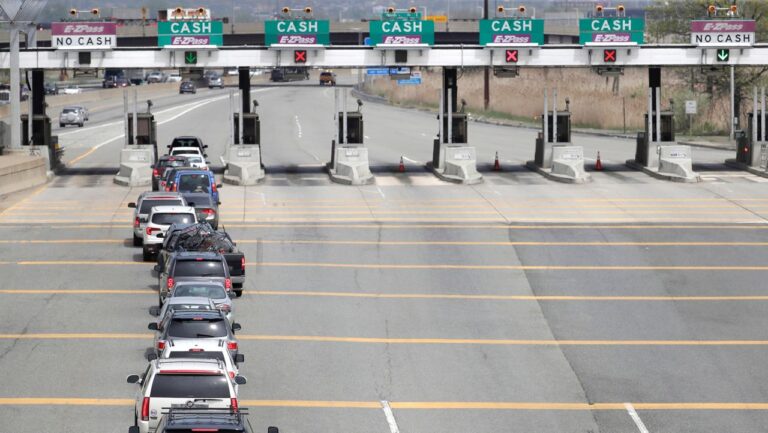
You borrow your sister’s car for a weekend, pull onto the turnpike, and then notice the E-ZPass transponder clipped to the windshield. Can you use it, or will the toll camera send a bill to the wrong person? In most ordinary passenger-car situations, you can use someone else’s E-ZPass, but the transponder, vehicle class, account details, and issuing agency rules all matter.
The simplest case is a standard two-axle passenger car using a transponder issued for the same kind of vehicle. Before you drive through a toll point, the account owner should check whether the borrowed vehicle needs to be added temporarily to the account. That step helps if the transponder fails to read and the toll agency has to identify the vehicle by its license plate.
There is no single rule that covers every E-ZPass agency in every state. E-ZPass is an interoperable network, but the agency that issued the transponder controls account procedures, vehicle lists, payment rules, and violation handling. I would spend five minutes checking the account or calling the issuing agency before a long trip, especially if the vehicle is a pickup, trailer, rental, motorcycle, or anything other than a normal passenger car.
Can you use someone else’s E-ZPass in your car?
Yes, in many situations you can use another person’s E-ZPass transponder. The main condition is that the vehicle you are driving must be in the same toll class as the vehicle or class for which the transponder is approved. A standard passenger car using another passenger-car transponder is the usual example.
The transponder belongs to the account, but the toll system also uses vehicle information. Depending on the agency and toll facility, the system may read the transponder, check the vehicle’s axle or class information, capture the license plate, or use more than one of those methods. If the information does not match, the toll may be charged incorrectly or sent for manual review.
Before borrowing the pass, ask the account owner whether the agency permits a temporary vehicle addition and how it should be done. Some agencies allow several vehicles on an account, while others have specific rules about the number of transponders, plates, rental vehicles, or temporary changes. The owner’s account portal, mobile app, customer service line, or the official agency website should give the current instructions.
What the vehicle class means
Vehicle class is more than the fact that both vehicles have four wheels. Toll agencies may classify vehicles by axle count, height, weight, trailer use, or commercial status. A small sedan and a passenger SUV may be charged in the same ordinary class, but a pickup carrying a trailer may not be.
Do not put a passenger-car transponder in a tractor-trailer, motorhome, vehicle with a trailer, or another vehicle that changes the toll classification without checking first. The transponder may not be programmed or approved for that use. A mismatch can lead to an incorrect charge, a violation notice, or a requirement to pay the difference.
Motorcycles need special attention because some toll facilities handle them differently. A motorcycle may not mount the transponder in the same way as a car, and the agency may have a separate account or mounting instruction. If you are borrowing a motorcycle or taking a motorcycle through a toll road, follow the issuing agency’s instructions rather than copying a car setup.
Why adding the borrowed vehicle to the account is a smart step
The transponder may scan correctly even when the borrowed license plate is not listed on the account. That does not mean the account information can be ignored. If the transponder is unreadable, mounted incorrectly, blocked by metal, out of battery, or not detected by the toll equipment, the camera can record the license plate instead.
When the plate is already linked to the account, the agency has a better chance of matching the toll to the correct account. Without that link, the notice may be mailed to the registered vehicle owner, even though the driver had permission to use someone else’s transponder. Sorting that out later can involve account records, photographs, rental paperwork, and customer-service calls.
The temporary addition process is usually handled through the account portal or by contacting the issuing agency. The account owner may need the vehicle’s plate number, issuing state, make, model, and sometimes the dates the vehicle will be used. Do not guess the plate number. One wrong letter or number can send the transaction to another vehicle record.
What information should be checked?
- The exact license plate number and issuing state
- The date range for the borrowed vehicle, if the agency asks for one
- The vehicle class, axle count, and trailer status
- Whether the transponder is assigned to a specific vehicle or can be moved between vehicles
- Whether the account has enough funds or a valid payment method
- Whether the transponder is active and not reported lost or stolen
Take a screenshot or save the confirmation if the vehicle is added online. If the owner makes the change by phone, write down the date, time, representative’s name if available, and confirmation number. This is not overkill when a toll notice arrives weeks later and nobody remembers what was changed.
How to move an E-ZPass transponder correctly
Move the transponder only when the vehicle is parked. Remove it from the original windshield or mounting bracket carefully, then place it in the position described by the issuing agency or device instructions. The transponder needs a clear path to the toll reader, and tinted glass, metallic windshield film, heated windshield elements, or other materials can interfere with the signal.
Do not hold the transponder in your hand as you pass through a toll point unless the agency specifically tells you to do that. A loose transponder can be read inconsistently, can be forgotten in the glovebox, or can be read by the wrong lane equipment. Some devices are designed for windshield mounting and may not work properly when placed on a dashboard.
If the vehicle has a metallic windshield or a special mounting zone, use that area. The vehicle owner’s manual may mention a location near the rear-view mirror. The transponder’s instructions and the issuing agency’s guidance take priority over a general internet tip.
Check the signal before a long trip
If you have time, pass through a toll point you already know or check the account after the first transaction. Some agencies provide online trip or transaction information, although posting time varies. Keep the borrowed transponder in the same vehicle for the trip instead of moving it between vehicles while traveling.
If the transponder does not beep, do not assume the toll was free. Many modern toll facilities do not use a traditional booth, and the transaction may be captured by a camera. The absence of a sound is not proof of a failed charge or a successful charge. Check the account later and watch the mailbox or online notice system.
What happens if the transponder does not read?
If the E-ZPass transponder fails to read, the toll facility may photograph the license plate and look for a matching account. If the borrowed plate was added correctly, the agency may charge the owner’s account or handle the transaction under its normal plate-matching process. If the plate is not listed, the registered owner may receive a bill or violation notice.
A failed read can happen because the transponder is not mounted in the correct location, the account is inactive, the device is damaged, the lane equipment has a problem, or the vehicle has material that blocks the signal. It can also happen when the account has insufficient funds or a payment method has failed.
Keep the toll location, date, approximate time, and direction of travel if you believe the pass did not read. A photograph of the transponder mounted in the vehicle may help, but don’t photograph while driving. The account owner should contact the issuing agency quickly instead of waiting for a violation to become more expensive.
Do not use two transponders in one vehicle
Remove or shield the vehicle’s original transponder before using the borrowed one, unless the issuing agency has given specific instructions that allow both devices. Two active transponders can create duplicate or confusing reads. A toll system may charge more than one account or produce a transaction that customer service has to untangle.
This comes up often with rental cars. A rental company may have its own toll program, and the driver may also bring a personal E-ZPass. Ask the rental company how its vehicle toll equipment works and follow one arrangement. Do not leave the rental transponder active while assuming your personal pass will take priority.
Sharing E-ZPass between ordinary passenger cars
For two ordinary passenger cars, moving the transponder is often straightforward. The account owner should confirm the agency’s policy, add the borrowed plate if required or recommended, and make sure the transponder is properly mounted. The borrowed car should remain in the same eligible class.
For example, if your brother has an E-ZPass for a standard two-axle car and you borrow his transponder for another standard two-axle car, the basic vehicle class may match. You should still update the plate information if the agency permits or requires it. A matching class reduces one problem, but it does not guarantee that every agency handles the account the same way.
When returning the vehicle or transponder, remove the temporary plate from the account if the agency expects that change. Leaving a borrowed plate listed can cause future tolls to be associated with the wrong account. It can also confuse a later plate update if the account owner sells the vehicle or changes insurance records.
Using a pass in a pickup or SUV
Many pickups and SUVs are treated like ordinary passenger vehicles when they meet the toll agency’s normal class rules, but you should not assume that from appearance alone. Axles, trailer use, height, and commercial registration can change the charge. A pickup with a trailer is the most obvious example, but it is not the only one.
If you are taking a borrowed transponder in a pickup, check the agency’s classification guide. Make sure the account owner knows whether the truck is being used with a trailer. If the toll point has a method for selecting or declaring a class, follow the facility’s instructions rather than expecting the transponder to correct every detail.
Risks of using someone else’s E-ZPass
The main risk is a mismatch between the transponder, the vehicle information, and the actual vehicle class. The fact that the account belongs to a friend or family member does not automatically make every use acceptable. The account owner is responsible for the account, while the vehicle owner or registered owner may become involved if a camera transaction cannot be matched.
| Situation | What may happen | Best response |
|---|---|---|
| Same class, correct mounting, account active | The toll is commonly charged to the E-ZPass account. | Confirm the agency’s temporary vehicle and plate rules before traveling. |
| Plate not added and transponder fails to read | The registered vehicle owner may receive a bill or violation notice. | Contact the agency with the toll date, vehicle details, and account information. |
| Vehicle class differs from the transponder setup | The toll may be calculated incorrectly or a violation may be issued. | Check the class before traveling and use the correct account or device. |
| Account inactive or payment method declined | The transaction may be rejected, billed by plate, or sent as a violation. | Verify the account balance and payment method before entering the toll road. |
| Two transponders active in one vehicle | Duplicate or conflicting transactions may appear. | Use one approved transponder arrangement and follow rental-car instructions. |
Administrative fees can be much larger than the original toll. The exact amount depends on the issuing agency, the state, the number of missed transactions, and how quickly the notice is handled. Do not ignore a notice because the toll itself was small.
Common E-ZPass violations and what causes them
Driving through without a usable transponder
A driver may think the transponder is in the car when it is actually in a different vehicle, turned off, damaged, or left inside a bag. The toll camera records the plate, and the agency starts a plate-based billing or violation process. This is one reason to check the device before a trip rather than discovering the problem at the first toll point.
Using the wrong vehicle class
A car transponder in a vehicle towing a trailer is a common example of a class problem. Commercial vehicles, buses, motorcycles, and larger recreational vehicles may have different rules. An incorrect class can produce an undercharge, an adjustment, or a violation depending on the toll authority.
Leaving an old plate on the account
When someone sells a car or lends a transponder, the plate should be removed or updated according to the agency’s rules. An old plate on the account can create confusion when the plate is later seen at a toll point. It can also cause a former owner’s account to be charged for a vehicle they no longer control.
Mounting the device incorrectly
A transponder buried under the center console, placed in a metal container, or mounted outside the recommended area may not read. Some people move it to the glovebox because they are worried about theft, then forget that the toll equipment needs to detect it. If the vehicle has special glass, ask the agency where it should go.
What are the consequences of an unpaid E-ZPass violation?
The first notice may include the toll and an administrative fee. If it remains unpaid, the amount can increase and the matter may be referred for additional collection or enforcement action. The exact steps vary by state and agency, so read the notice instead of relying on a general estimate from another driver’s experience.
Unpaid toll obligations can lead to DMV actions in some jurisdictions, including problems with registration renewal or other vehicle-related services. The original article mentions possible registration suspension. Whether that applies depends on local law and the agency involved, but it is a good reason to deal with the notice promptly.
A violation notice is not the same thing as a criminal accusation, and many mistakes can be corrected when the driver has evidence of a valid account or permission to use the transponder. Call the official agency named on the notice, not a number copied from an unverified message or advertisement.
Do not pay through a suspicious text message
Toll-payment scams often use urgent messages claiming that a small balance is overdue. They may imitate an agency logo and ask for card details through a link. If you receive a text or email, open the official agency website separately or call the number printed on a genuine statement.
Never give your E-ZPass password, full payment information, or account security details to someone who contacts you unexpectedly. If you think the account has been compromised, use the official customer-service channel to change the password, block the device, or review transactions.
How to appeal a toll violation
Start by reading the notice carefully. Check the plate number, state, date, time, toll location, vehicle image, amount, and deadline. A wrong plate, an incorrect vehicle image, a duplicate notice, or a toll that occurred while the vehicle was sold can be useful grounds for a correction, depending on the agency’s process.
If you used someone else’s E-ZPass with permission, gather evidence before contacting customer service. Useful records may include the account holder’s transaction history, confirmation that your plate was temporarily added, a written statement from the owner, rental or loan paperwork, and proof that the transponder was active.
- Save the notice. Do not throw away the envelope or wait until the deadline is close.
- Compare the plate and vehicle details. Look for errors in the issuing state, characters, vehicle class, date, and location.
- Check the E-ZPass account. Look for a matching transaction, a declined payment, or a device status problem.
- Submit the appeal through the official method. That may be online, by mail, by phone, or through a local customer-service center.
- Keep proof of submission. Save confirmation numbers, screenshots, receipts, and the names of representatives you speak with.
Customer service may waive an administrative fee in some situations, but do not assume it will. Be factual and polite. Explain that the transponder was used with permission, identify the vehicle class, and provide the account or confirmation details that support your claim.
How to contact E-ZPass customer service safely
E-ZPass is a network of regional agencies, so the correct customer-service center depends on who issued the transponder. The E-ZPass Interagency Group FAQ is a useful starting point, and the issuing agency’s website should be used for account-specific questions.
Customer service can explain whether another vehicle can be added, whether the device is active, how to report a lost transponder, and how to handle a violation. Have the account number, transponder number, plate, vehicle class, and travel date ready. Avoid calling while driving, especially if you need to read a long number from the transponder or notice.
When the transponder is lost or stolen
Contact the issuing agency as soon as possible if an E-ZPass transponder is lost or stolen. Ask the agency to deactivate it and explain whether a replacement is needed. The account owner should review recent transactions for tolls that were not authorized.
Do not lend a replacement device before it is properly active and the account information is correct. If a lost device later appears in another vehicle, the account owner should not assume it is safe to use again until the agency confirms its status.
Using E-ZPass across different states
E-ZPass is designed to work across a broad network of participating toll facilities. Drivers commonly use their transponders in states including New York, New Jersey, Pennsylvania, Maine, New Hampshire, Massachusetts, Maryland, Virginia, and others in the network. The New York E-ZPass facility information explains where that agency’s customers can use the system.
Illinois uses the I-PASS system, which is compatible with E-ZPass on participating roads, but interoperability does not mean every toll facility uses identical rules. Florida mainly uses SunPass, and rental-car programs may offer their own toll arrangements. Check the road operator and rental company before assuming an E-ZPass will be accepted everywhere.
Some facilities have special lanes, managed lanes, bridges, tunnels, or passenger requirements that affect the toll. A transponder may pay the toll but not qualify you for a carpool discount unless the device or account has been set correctly. The driver is responsible for knowing the facility’s rules, even when the transponder works automatically.
Keep the account details consistent during a trip
Long trips create more opportunities for a small account error to become several notices. Check the plate, state, class, account balance, and transponder before leaving. If you change vehicles during the trip, update the account as instructed before entering another toll facility.
If you are using a borrowed pass for only one day, ask when to remove the temporary vehicle. Some agencies may not require removal immediately, while others expect the account to list only vehicles associated with the transponder. The issuing agency’s instruction is the one to follow.
Rental cars need a separate check
A rental car is not exactly the same as borrowing a friend’s car. Rental companies may enroll vehicles in their own toll-payment program, charge an administrative fee, or offer a daily toll package. Using your own or someone else’s E-ZPass may be allowed, but the rental company’s contract and toll instructions still apply.
Ask the rental counter which transponder is active and how to disable or avoid the company’s toll program if you use an outside device. Keep the rental agreement and note the vehicle plate. If a toll later appears on both the E-ZPass account and the rental invoice, contact both parties with the transaction details.
Do not place the rental transponder in the glovebox and assume it cannot be read. Some companies provide a shield or a switch, while others require a different procedure. A covered device and a personal E-ZPass can still create confusion if both are active or the rental equipment is not handled as instructed.
Practical examples from everyday driving
Borrowing a friend’s sedan
You borrow a friend’s sedan for a weekend and use the friend’s passenger-car transponder. The account owner checks that the device is active, adds your plate if the agency requests it, and mounts the transponder correctly. This is the simple case, provided the sedan and account are in the same eligible class.
Using a pass in a pickup with a trailer
You borrow a pickup with a small trailer and carry the same passenger-car transponder. This is where a quick assumption can cost money. The trailer adds an axle and may change the toll class, so check the toll agency’s rules before the trip and use the correct arrangement for that vehicle combination.
The transponder is active but the account has a problem
The device is mounted correctly and the vehicle class matches, but the account’s card has expired. The toll equipment may fail to charge the account, and the plate camera may start a violation process. Checking the account balance and payment method before leaving would have prevented the surprise.
The toll notice has the wrong plate
You receive a notice for a plate that resembles yours but has one different character. Compare the photograph and plate state, then appeal through the agency named on the notice. Do not assume the agency will catch the error without a response.
What I would do if this were my trip
I would ask the E-ZPass owner to log in to the account before I left. We would confirm that the transponder is active, check the payment method, verify the vehicle class, and add my plate for the travel period if the agency allows or requires it.
I would mount the device where the toll agency specifies and remove any second transponder from the vehicle. For a normal passenger car, I would expect the arrangement to work, but I would still keep the account owner’s phone number and the transaction date in case the device failed to read.
If the vehicle had a trailer, unusual windshield glass, commercial registration, or a rental-company toll device, I would stop guessing and call the relevant agency or rental company. Those are the cases where a small assumption turns into a notice that takes longer to fix than the original toll took to pay.
What you should not do with a borrowed transponder
- Do not use a passenger-car transponder in a vehicle or trailer combination with a different toll class without checking first.
- Do not leave the borrowed device active in a different vehicle after the loan ends.
- Do not cover the device with metal, place it in a bag, or mount it outside the recommended area.
- Do not use two active transponders in the same vehicle unless the agency specifically instructs you to do so.
- Do not ignore a toll notice because you believe the borrowed E-ZPass should have paid it.
- Do not call a phone number from a suspicious toll text when the official agency contact is available.
Frequently asked questions
Can I use my friend’s E-ZPass for one trip?
In many cases, yes. The vehicle should match the transponder’s eligible class, and you should follow the issuing agency’s rules for adding the borrowed vehicle or plate. The account must also be active and funded.
Does the E-ZPass have to be registered to my name?
Not necessarily for an ordinary permitted loan, but the exact account and vehicle rules are set by the issuing agency. The important checks are the vehicle class, plate information, account status, and proper mounting.
Can I use an E-ZPass from another state?
Often, yes, because E-ZPass agencies participate in an interoperable network. Acceptance and discounts can vary by toll facility, so check the road operator and the agency that issued the device.
Can I use an E-ZPass in a rental car?
It may be possible, but check the rental company’s toll policy first. The rental vehicle may have its own toll program or transponder, and using two systems can create duplicate charges.
What if I forgot to add the license plate?
If the transponder read correctly, the toll may still be charged to the account. If it did not read, the plate may receive a bill or violation. Contact the issuing agency as soon as you notice the problem and keep the trip details.
Can I use the transponder in a vehicle with a trailer?
Do not assume the answer is yes. The trailer can change the axle count and toll class, so check the agency’s classification and payment instructions before traveling.
What if the E-ZPass flashes or beeps differently?
Device sounds and lights vary. A different beep may indicate a low balance, a read, or another status depending on the model. Check the account and contact the issuing agency rather than trying to diagnose the sound from memory.
Before you hand the transponder back
After the trip, check the account history when the transaction should have posted. Toll records do not always appear immediately, and the absence of a transaction on the same day does not prove that no charge exists. Keep the borrowed vehicle’s plate off the account when the agency’s process calls for removing temporary vehicles.
Tell the account owner about anything unusual, such as a toll reader that did not beep, a message on the dashboard, a blocked lane, or a notice from the toll road. Small details are easier to remember the same day than several weeks later. If the transponder was damaged, report it before handing it back so the owner does not unknowingly use a device that may be unreliable.
A quick account check also catches duplicate transactions. If two transponders were active or a rental company’s toll program was involved, compare the records before assuming the bill is correct. Save the trip dates and any confirmation numbers until the charges have settled.
The mechanic’s verdict on sharing E-ZPass
You can often use someone else’s E-ZPass in a borrowed vehicle, especially when both vehicles are ordinary passenger cars in the same toll class. Before traveling, verify the issuing agency’s rules, add the borrowed plate when appropriate, confirm the account is active, and mount the transponder correctly.
The common mistakes are using the device in the wrong class, leaving a second transponder active, ignoring a rental company’s toll system, and assuming a silent toll point means the payment worked. If a notice arrives, deal with it quickly and use the official agency’s appeal or customer-service process.
If this were my car, I would spend a few minutes checking the account before the trip rather than sorting out a plate photo and an administrative fee later. DIY is fine for moving and mounting a properly approved transponder, but unusual vehicle classes, trailers, rental cars, and disputed tolls deserve a direct call to the issuing agency. The clear takeaway is simple: matching the vehicle class and keeping the plate information accurate matter more than whose name is printed on the E-ZPass account.