
Your car pulls poorly going up a hill, the check engine light comes on, and there’s a hot, sulfur-like smell from underneath. A clogged or damaged catalytic converter could be involved, but it’s not the only possible cause. Ignition misfires, fuel-delivery problems, and exhaust leaks can create similar symptoms.
Yes, a severely restricted catalytic converter can contribute to engine damage if you keep driving. It can choke exhaust flow, rob the engine of power, and create excessive heat in the exhaust system. But a failing converter doesn’t automatically destroy an engine, and in many cases another engine fault caused the converter to fail in the first place.
That distinction matters. Replacing the converter without finding the original cause can leave you with the same problem and a damaged replacement. Before approving an expensive repair, make sure the shop has checked both the converter and the engine systems that could have harmed it.
What a catalytic converter does
The catalytic converter sits in the exhaust system and helps reduce pollutants from the engine before they leave the tailpipe. It changes certain harmful gases, including hydrocarbons, carbon monoxide, and nitrogen oxides, into less harmful compounds. A working converter can reduce a large share of some pollutants, often summarized as about 90 percent, though actual performance depends on the vehicle and the converter’s condition.
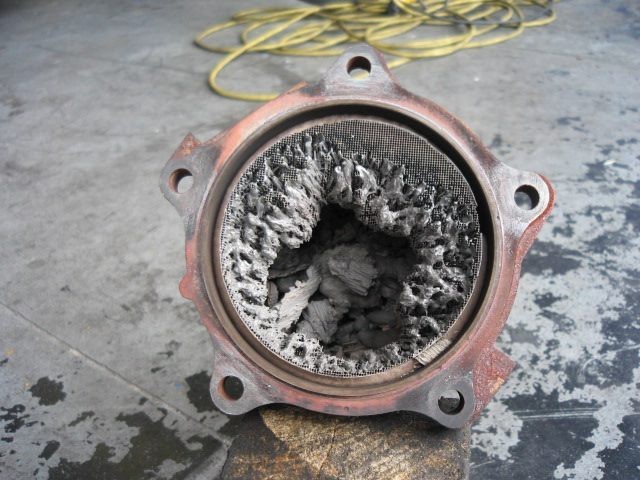
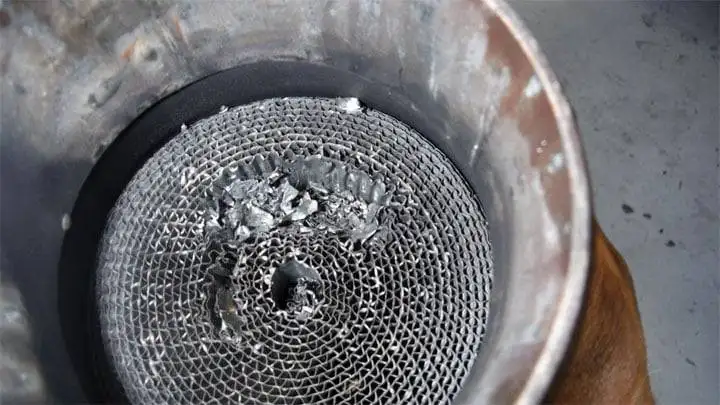
Inside the converter is a honeycomb-like structure coated with materials that help the chemical reactions happen. Exhaust flows through the small passages as the converter warms up. If that structure breaks apart, melts, or gets clogged with contamination, the converter may stop cleaning emissions properly or restrict exhaust flow.
The converter is part of the emissions system, not a substitute for the engine’s other parts. It doesn’t fix a misfire, control fuel delivery by itself, or make an unhealthy engine run correctly. Its condition depends in part on what comes out of the engine, which is why the cause of a converter failure matters as much as the converter itself.
How a bad converter can affect the engine
A clogged converter can restrict exhaust flow
When the converter’s internal passages become badly restricted, the engine can’t push exhaust out as freely as it should. That restriction creates excessive backpressure and can make the engine feel weak, especially when accelerating or climbing a hill. In severe cases, the engine may stall or refuse to start.
A serious blockage can also create excessive heat in the converter and nearby exhaust parts. It may put extra thermal stress on the engine, but it doesn’t automatically make the coolant temperature gauge rise. If the gauge shows the engine overheating, have the cooling system checked rather than assuming the converter is the only cause.
Driving hard with a severely restricted exhaust can make the situation worse. The engine may struggle to breathe, and continued operation can add stress to exhaust valves and other components. The exact risk depends on how restricted the converter is and how the vehicle is driven, so there isn’t one timeline before damage occurs.
A converter can fail without blocking the exhaust
Not every bad converter is clogged. The catalyst can lose its ability to clean emissions while exhaust still flows through the unit. In that case, the car may drive almost normally, but the check engine light may come on and the vehicle may fail an emissions inspection.
A cracked shell or broken internal substrate can also cause a rattle without creating a major restriction. A piece of the substrate may shift and obstruct flow intermittently, though a rattle alone doesn’t prove that’s happening. The converter needs to be inspected and tested before anyone calls it bad.
The problem that damaged the converter may be the greater engine risk
A converter often fails because the engine has been sending it unburned fuel, oil, coolant, or other contaminants. For example, a misfire can send fuel into the exhaust, where it may overheat the converter. If the misfire continues, it can also affect the engine and exhaust system independently of the converter.
Oil or coolant entering the combustion process can contaminate the converter and damage other engine parts. A faulty injector, ignition coil, spark plug, oxygen sensor, or fuel-control problem may also contribute, depending on the vehicle. Replacing the converter without correcting the cause can lead to another failure.
Signs a catalytic converter may be failing
Symptoms depend on whether the converter is clogged, contaminated, broken, or simply no longer cleaning emissions effectively. Some cars show a clear loss of power, while others drive normally until an inspection or diagnostic scan finds a problem. Use the symptoms as clues, not as a parts list.
Reduced power or slow acceleration
A restricted converter can make the car feel like it runs out of breath. You may notice slow acceleration, poor response when you press the pedal, or trouble maintaining speed on a hill. The symptom may become more obvious under load or at higher engine speed.
A weak fuel pump, clogged fuel filter, ignition fault, or transmission problem can also cause poor acceleration. If the car loses power suddenly, don’t keep accelerating hard to test it. Note when it happens and arrange a diagnosis.
The check engine light comes on
A scan tool may show code P0420 or P0430, which generally relates to catalyst-system efficiency on the corresponding engine bank. Those codes don’t prove the converter is clogged or that it needs replacement. An exhaust leak, oxygen-sensor problem, misfire, or fuel-control issue can affect the readings too.
Other codes may point toward the cause. For example, a misfire code or a rich-mixture code alongside a catalyst-efficiency code should make the shop look for an engine problem before installing a converter. Save the codes and freeze-frame information before clearing anything, since they can help show when the fault occurred.
A rotten-egg or sulfur smell
A sulfur-like smell can come from the exhaust when the engine or emissions system isn’t operating correctly. It may accompany a converter problem, but it isn’t a reliable diagnosis by itself. Fuel quality or an engine running rich can also be part of the picture.
If the smell is strong, the car is misfiring, or you see smoke, stop driving and have it checked. Don’t get underneath a running car to locate the odor. Exhaust components become extremely hot, and fumes can be harmful in an enclosed area.
A rattle from underneath the vehicle
A loose piece of the converter’s internal substrate can sound like small stones rattling inside a metal can. The noise may be most noticeable at idle or when the engine speed changes. A loose heat shield, exhaust hanger, or other part can make a similar sound, so the converter isn’t the only suspect.
If the car also has a loss of power, the technician should check whether a loose internal section is restricting exhaust flow. Don’t hit the converter with a tool or try to break up the material. That can cause more damage and won’t restore the catalyst.
Poor fuel economy, rough running, or misfires
Fuel economy can drop when the engine is struggling or running with the wrong mixture. A converter restriction may contribute, but a faulty oxygen sensor, injector, ignition component, or fuel-pressure problem can be the underlying cause. Rough idle and misfires also deserve attention because they can send excess fuel into the converter.
If the check engine light flashes, stop driving as soon as it’s safe and get help. A flashing light often indicates an active misfire that can overheat and damage the converter. Continuing to drive may turn a repairable ignition or fuel problem into a more expensive emissions-system repair.
Failed emissions inspection
A converter that no longer cleans exhaust properly can cause the vehicle to fail an emissions test, even if it still drives well. Inspection rules differ by location and vehicle, so check the requirements where your car is registered. In places with a vehicle roadworthiness test, including the UK’s MOT system, emissions equipment and test results can affect whether the car passes.
Removing or bypassing a required catalytic converter may violate local emissions laws and can lead to an inspection failure. Check your local requirements before choosing a replacement part. A converter that fits physically may still not meet the rules for that vehicle or jurisdiction.
| What you notice | Possible converter issue | Other causes to consider |
|---|---|---|
| Weak acceleration, especially under load | Restricted or partly blocked converter | Fuel-delivery fault, ignition problem, transmission issue |
| P0420 or P0430 code | Reduced catalyst efficiency | Exhaust leak, oxygen sensor, misfire, fuel-control problem |
| Sulfur-like smell | Converter or emissions-system problem | Rich mixture, fuel-quality issue, another exhaust fault |
| Rattle from the exhaust area | Loose or damaged internal substrate | Loose heat shield, hanger, or exhaust hardware |
| Flashing check engine light and rough running | The converter may be at risk from an active misfire | Faulty plug, coil, injector, or other engine problem |
| Failed emissions test with few driving symptoms | Converter efficiency may be too low | Oxygen sensor, exhaust leak, or engine-control fault |
Can you keep driving with a bad catalytic converter?
It depends on the symptoms and how restricted or damaged the converter is. A car with a catalyst-efficiency code and no loss of power may be able to reach a repair shop, but that doesn’t mean it’s wise to leave the problem for months. A converter that is severely blocked can make the vehicle stall or lose power in traffic.
Stop driving and arrange a tow if the car has a flashing check engine light, severe power loss, repeated stalling, smoke, a strong burning smell, or a converter that appears to be glowing red. A very hot exhaust can ignite dry grass or other material beneath the car, so avoid parking over leaves, dry brush, or grass after a severe running problem.
If the engine is running smoothly and the only sign is a steady check engine light, drive gently to a shop if the vehicle feels safe and the owner’s manual doesn’t advise otherwise. Avoid a long trip or heavy acceleration until it’s checked. A fault that seems mild can worsen, and there’s no way to judge converter restriction from the warning light alone.
Don’t keep restarting an engine that stalls because of a suspected blockage. Repeated attempts may drain the battery and won’t clear the restriction. If the car won’t maintain speed or keep running, get roadside assistance.
How a mechanic confirms whether the converter is bad
A good diagnosis starts with the symptoms, warning lights, and stored codes. The mechanic should ask when the power loss happens, whether the engine misfires, and whether the problem began after another repair. If there are codes for misfires, fuel mixture, or sensor circuits, those faults should be investigated alongside the converter.
The shop may inspect the exhaust for leaks, damaged pipes, loose heat shields, and signs of impact. An exhaust leak near an oxygen sensor can distort the readings the engine computer uses to monitor catalyst performance. A cracked or loose heat shield can rattle even when the converter itself is working properly.
A scan tool can compare the readings from oxygen sensors before and after the converter, where the vehicle’s system provides that information. The sensor pattern can help assess catalyst efficiency, but it must be interpreted with the engine running under suitable conditions. A bad sensor or an exhaust leak can mislead the diagnosis.
To check for a blockage, a technician may measure exhaust backpressure using a gauge and an appropriate service port, often at an oxygen-sensor opening. The reading is compared with vehicle-specific service information. There isn’t one pressure number that applies to every car, and removing a hot sensor can be difficult or unsafe without the right tools.
A technician might also use a vacuum gauge or temperature measurements as supporting checks. Neither should be treated as a stand-alone verdict, because engine speed, load, warm-up, and exhaust design affect the results. If the converter rattles, the shop may inspect the substrate or use other checks to confirm whether it has broken apart.
One common shop scenario is a car with a P0420 code and a slight sulfur smell. The owner expects a converter replacement, but a quick scan also shows a misfire on one cylinder. Replacing the converter first would miss the cause, and the misfire could damage the new part as well.
What can damage a catalytic converter?
Engine misfires
A misfiring cylinder may send unburned fuel into the exhaust. That fuel can burn inside the converter and cause excessive heat, which may melt or damage the internal substrate. Bad spark plugs, ignition coils, injectors, or other engine faults can be involved, depending on the vehicle.
If the engine shakes, the check engine light flashes, or the exhaust smells strongly of fuel, deal with the misfire promptly. A converter is designed to treat exhaust, not to burn fuel that should have been burned in the cylinders. Delaying the repair can damage both the converter and other parts.
A rich-running engine
An engine that runs too rich burns more fuel than it should for the available air. A leaking injector, fuel-pressure fault, sensor problem, or control issue may contribute. The extra fuel can overheat the converter and increase emissions.
Don’t assume the oxygen sensor is bad just because a code mentions fuel mixture or catalyst performance. A sensor may be reporting a real problem caused by another part. The shop should test the relevant circuit and compare live data before replacing sensors or the converter.
Oil or coolant entering the exhaust
If the engine burns oil or coolant, contaminants can reach and foul the converter. The underlying problem might involve an engine seal, internal wear, or another fault that needs its own diagnosis. A new converter won’t stop oil or coolant from entering the exhaust.
Tell the mechanic if you’re adding oil or coolant between services, see blue or white smoke, or notice a persistent sweet smell from the exhaust. Those details may point to an engine problem that should be addressed before installing a replacement converter.
Impact or physical damage
The converter and exhaust pipes sit underneath the vehicle, where they can be damaged by road debris, a hard impact, or corrosion. A crushed pipe can restrict exhaust flow, while a cracked shell may leak exhaust. A rattling heat shield can imitate internal converter damage.
If the issue began after hitting something, mention where the impact occurred. The technician should inspect the full exhaust path, not just the converter. Replacing the converter won’t fix a crushed pipe or a loose mounting point elsewhere in the system.
Can a catalytic converter be cleaned?
Sometimes deposits can be reduced, but cleaning is not a cure for every converter problem. A chemical cleaner won’t repair a melted or broken honeycomb, close a cracked shell, or restore catalyst material that has been damaged or contaminated beyond service. Products sold as universal fixes shouldn’t replace a proper diagnosis.
If a mechanic recommends cleaning, ask what condition they found and what result they expect. Cleaning may be reasonable only when the converter is structurally sound and the cause of the deposits has been addressed. If the engine is still misfiring or burning oil, cleaning the converter without repairing that problem is unlikely to be a lasting solution.
Don’t remove a converter or pour unapproved chemicals into the fuel system as a shortcut. Some cleaning procedures may be unsuitable for a particular engine or emissions system, and removing required emissions equipment can create legal and inspection problems. Follow the vehicle manufacturer’s guidance.
Is replacing the catalytic converter worth it?
If tests confirm that the converter has failed, replacement is often the proper repair. The choice depends on the vehicle’s condition, the cause of the failure, and the cost of the repair compared with the car’s overall value. A vehicle with a healthy engine and body may be worth repairing, while a car with several major problems deserves a broader cost comparison.
Don’t decide to sell the car based only on the converter quote. First, ask the shop what else needs attention and whether the converter failure has caused damage elsewhere. Then compare the full repair estimate with the vehicle’s condition and your plans for it.
Replacement costs vary widely. The final bill depends on the vehicle, the converter’s location, how difficult it is to remove, the required part, local labor rates, and whether the repair needs additional gaskets, hardware, or sensor work. Emissions rules can also affect which replacement parts are permitted.
Ask for an itemized estimate that separates the converter, labor, diagnosis, and any related repairs. Make sure the quote explains whether the part meets the requirements for your vehicle and location. A cheaper unit that doesn’t meet applicable rules or fit the system correctly can become an expensive mistake.
Most importantly, ask what caused the original converter to fail and how the shop confirmed it. If the answer is a misfire, oil consumption, a rich mixture, or another engine fault, get that problem addressed as part of the repair plan. Otherwise, the replacement converter may be exposed to the same conditions that damaged the old one.
Mistakes that can make the repair more expensive
- Replacing the converter based only on a code. P0420 or P0430 points toward catalyst efficiency, but it doesn’t identify every possible cause.
- Ignoring a flashing check engine light. An active misfire can overheat the converter and may damage other parts.
- Cleaning a converter that is physically damaged. Cleaning can’t rebuild a melted or broken internal structure.
- Installing a new converter before fixing the engine fault. The same misfire, rich mixture, or oil-burning problem may damage the new part.
- Assuming a rattle proves the converter is bad. Heat shields, hangers, and other exhaust parts can make similar noises.
- Driving hard with severe power loss. A restricted exhaust can worsen, and the car may stall when you need power.
- Choosing a replacement without checking emissions requirements. Rules and approved parts vary by vehicle and location.
What I’d do if my car showed these symptoms
I’d save the diagnostic codes, note when the power loss or smell happens, and avoid hard driving until the car is checked. If the light is flashing, the car is stalling, or there’s smoke or a strong burning smell, I’d stop and arrange a tow. If it’s running normally with only a steady warning light, I’d book a diagnosis soon rather than replacing parts on a guess.
You can record symptoms and check for obvious warning signs, but leave exhaust-pressure testing and work on a hot converter to a mechanic with the right equipment. Ask the shop to confirm whether the converter is restricted or inefficient, then find out what caused the failure. A bad converter can contribute to engine trouble, but fixing the root cause is what protects both the engine and the replacement part.