
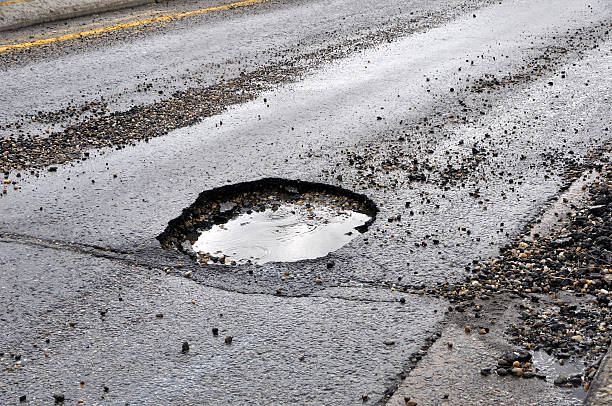
You hear a sharp thump, the steering wheel kicks in your hands, and you’re left wondering if the tire or suspension took a hit. Potholes can damage tires, wheels, steering, and suspension, especially when you meet one at speed or don’t see it until the last second.
The best protection is spotting the hole early and slowing down smoothly when there’s room. If you can safely go around it, do so, but don’t swerve into another vehicle, a cyclist, or a pedestrian. When there’s no safe way around, keep control of the car and avoid a last-second panic maneuver.
There’s no trick that makes a pothole harmless. Your tires and suspension are built to handle rough roads, but a sharp-edged hole can still cause damage. Here’s how to reduce the risk, what to do if you hit one, and which signs mean it’s time to have the car checked.
Why potholes form and why they’re hard to spot
Water seeps through cracks in the pavement and into the material underneath. When temperatures fall below freezing, that water expands as it turns to ice, weakening the pavement around the crack. After it thaws, the road surface may be left with gaps and loosened material.
Traffic then flexes the weakened surface. Repeated pressure from cars and heavier vehicles can break the asphalt apart, leaving a hole that may grow with each freeze-and-thaw cycle. Poor drainage and an already worn road can make the damage worse.
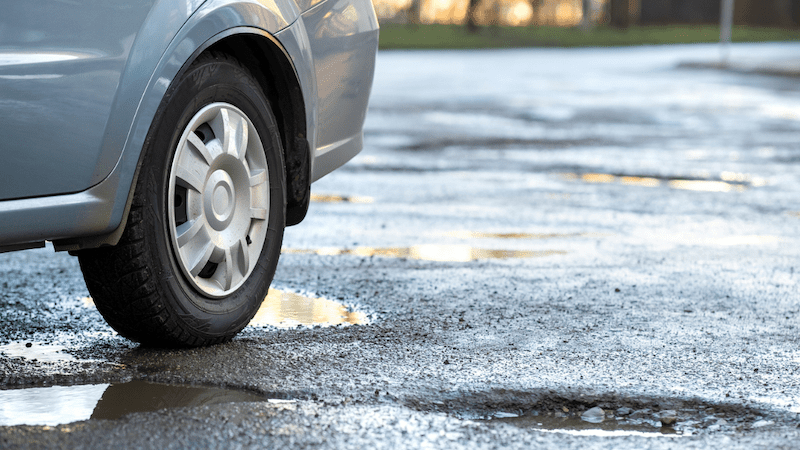
Potholes often appear or become more obvious after cold weather, rain, or a change in temperature. Some are easy to see in daylight, while others are hidden by water, slush, snow, road shadows, or glare from oncoming headlights. A puddle can hide both the depth and the shape of a hole.
Be cautious around standing water, especially if you can’t see the road surface underneath. Don’t drive through a puddle at speed just because the car ahead did. It may be shallow, or it may cover a sharp-edged pothole, debris, or a deeper section of damaged pavement.
Spot potholes early and make room to avoid them
Look well ahead instead of watching only the few feet in front of your bumper. Give yourself enough following distance to see the pavement and respond if the vehicle ahead suddenly brakes or changes position. A car in front can also hide a pothole, so don’t assume the road is clear just because its tires missed a rough patch.
Watch how traffic moves, but use the other driver’s path as a clue, not as a line to follow blindly. The vehicle ahead may have avoided the hole, or it may have hit it without a visible reaction. Keep your attention on your own lane and the space around your car.
If there’s a clear, legal way around the pothole, change position gradually. Check your mirrors and blind spot, and make sure the next lane is free of cars, motorcycles, cyclists, and pedestrians. A sudden swerve can cause a worse crash than a pothole, so don’t force a lane change when there isn’t room.
In heavy traffic, you may not have a safe path around the hole. Ease off the accelerator and slow down if you have enough space. The posted speed limit is a maximum for suitable conditions, not a promise that it’s safe to travel at that speed on a broken, wet, or poorly lit road.
At night or in heavy rain, increase your caution. Headlights, reflections, and water can make the road surface difficult to read. If a route is badly damaged and you have a reasonable alternative, taking the smoother route may be safer than trying to dodge holes in poor visibility.
Drivers in vehicles with low-profile tires should be especially alert. A shorter tire sidewall offers less cushioning between the wheel and the road than a taller one. SUVs and trucks aren’t immune either; a heavier vehicle can still damage a tire, wheel, or suspension when it hits a sharp hole.
How to cross a pothole when you can’t avoid it
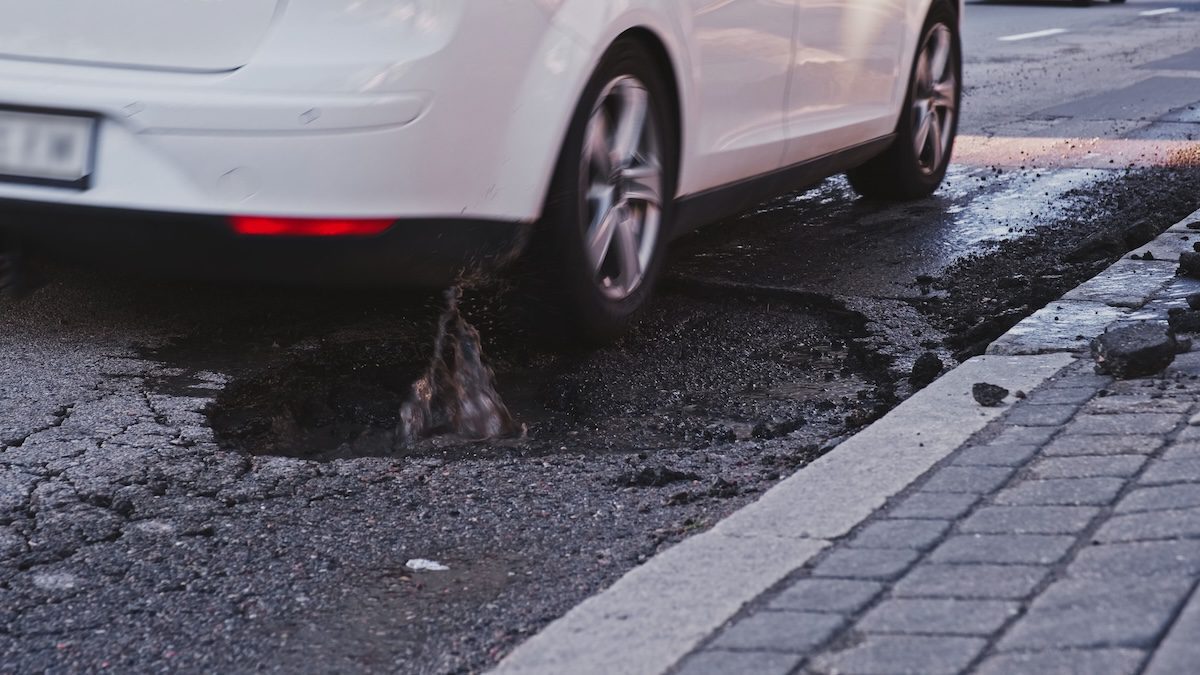
If you see the hole with enough distance to react, brake smoothly before you reach it. Slowing down reduces the force of the impact, but braking hard at the last second can pitch the car’s weight forward and load the front suspension just as the front wheel reaches the hole.
When it’s safe to do so, finish most of your braking before the tire reaches the edge and ease off the brake as you cross. Keep the steering steady and the wheels as straight as the road allows. Don’t accelerate toward the hole or make a sharp turn at the last moment.
“Don’t brake” is too simple as a rule. If braking is necessary to avoid hitting a person, another vehicle, or a larger hazard, brake. Protecting the car comes second to keeping people safe. The useful point is to avoid a sudden, hard brake directly at the pothole if you’ve already had time to slow down earlier.
If the pothole is directly ahead and there’s no safe room to move, keep the car under control and meet it as straight as you reasonably can. Don’t jerk the wheel to put only one side of the car around it if that sends you into traffic or off the road. A controlled, lower-speed impact is usually a better choice than a sudden swerve.
If the hole is large or looks deep enough to damage the car, stop only if you can do so safely and without blocking traffic. On a busy road, don’t come to an abrupt stop in a travel lane to avoid a pothole. Continue to a safe place or choose another route when you can.
Keep both hands on the steering wheel and be ready for a jolt. The car may pull briefly as a wheel drops into the hole or climbs out of it. Once you’ve crossed, keep a steady grip and avoid making a second sudden maneuver to correct a small movement.
Prepare your car for rough roads
Check your tire pressures with a reliable gauge and use the cold-pressure recommendation on the driver’s door placard or in the owner’s manual. Don’t use the maximum pressure printed on the tire sidewall as the everyday target. Correct pressure helps the tire work as designed; adding extra air won’t make it a pothole-proof tire.
Underinflated tires can be more vulnerable to damage when the tire is squeezed between the road and the wheel. Overinflating isn’t a good fix either, and it can affect ride and handling. If your tire-pressure monitoring light comes on, check the pressure with a gauge when it’s safe rather than assuming the warning is a false alarm.
Give the tires a quick visual check for cuts, cracks, bulges, or objects stuck in the tread. Look at the tread and sidewalls, including the parts you can see on the inside of each tire when the car is parked safely. If a tire already has damage, it may be less able to handle a hard impact.
Pay attention to existing suspension or steering problems too. A clunk over small bumps, a steering wheel that sits crooked, or uneven tire wear deserves attention before it becomes a roadside surprise. Worn suspension parts don’t cause potholes, but a car that already has a handling fault may be harder to control on a rough road.
Keep useful roadside items in the car, such as a flashlight, a tire-pressure gauge, and the contact details for roadside assistance. If your vehicle has a spare tire, know where it is and whether you have the wheel-lock key and the tools needed to use it. Only change a wheel yourself if the location is safe and you can follow the vehicle’s instructions.
Know what pothole damage looks and sounds like
Not every pothole hit causes a problem, and a single thump doesn’t tell you what happened. After an impact, pay attention to how the car feels and listen for changes that weren’t there before. The pattern can help you decide whether to stop, book an inspection, or continue carefully to a safe place.
| What you notice | Possible damage | What to do |
|---|---|---|
| A bulge or bubble on the tire sidewall | Internal tire damage | Don’t continue at highway speed. Arrange a tire inspection and replacement if needed. |
| A cut, exposed cord, or tire losing air | Tire damage or a puncture | Stop somewhere safe and arrange a spare or roadside assistance. |
| Steering wheel off-center or car pulling | Possible alignment, tire, steering, or suspension damage | Have the car inspected, especially if the pull is strong or sudden. |
| Vibration through the steering wheel or seat | Possible wheel or tire damage, or a balance problem | Check the tire and wheel and arrange a shop inspection if it continues. |
| A new clunk, rattle, or scraping sound | Possible suspension, wheel-area, or underbody damage | Stop if anything is dragging or the noise is severe, then have it checked. |
| Fluid under the car or a burning smell | Possible underbody or component damage | Switch off the engine if you suspect a leak and call for help. |
A tire sidewall bulge is a serious warning because the tire may have internal structural damage. Don’t poke it or assume it’s safe because it’s holding air. Have the tire assessed promptly, and don’t drive at speed if you see a bulge, exposed cords, or a rapid loss of pressure.
A small mark on a tire isn’t always the same as a dangerous cut. If you can see cords, the rubber is split deeply, or the tire is losing air, treat it as urgent. When you can’t tell whether the damage is superficial, ask a tire shop to inspect it rather than judging from a quick look.
A vibration can come from a bent wheel or damaged tire, but it can also have other causes. A steering wheel that pulls to one side may point to an alignment issue, a damaged tire, or a bent steering or suspension part. A clunk or scrape can come from a loose or damaged component, so don’t keep driving if something is hanging down or contacting the road.
What to do immediately after hitting a pothole
First, keep the car straight and under control. If it still feels safe to drive, move out of traffic and find a suitable place to stop. Use your hazard lights if you need to warn other drivers, but don’t stop in a live lane just to inspect a wheel.
Once you’re parked somewhere safe, walk around the car and look at the tires and wheels. Use a flashlight if you have one. Check for a sidewall bulge, a cut, a flat tire, visible wheel damage, or anything hanging underneath the vehicle.
Check the tire pressures with a gauge if you can do so safely. A tire that has lost pressure may have been punctured or damaged at the wheel rim. Don’t rely only on the dashboard warning; the tire-pressure monitoring system can take time to alert you, and not every vehicle uses the same warning strategy.
Look for fluid under the vehicle, but don’t crawl underneath it on the roadside. If you see a leak, smell fuel, hear scraping, or notice a sudden change in braking or steering, switch off the engine if appropriate and call for assistance. A jack is not a reason to work beside fast-moving traffic.
If the tire looks sound and the car drives normally, continue cautiously to a safe destination or repair shop. Keep the speed down and pay attention to the steering, vibration, and noises. Don’t take a high-speed drive to “test” the car after a hard impact.
Take a photo of the damage and note where and when the impact happened if it’s safe to do so. If you plan to report the road defect or ask about an insurance claim, those details may be useful. Reporting procedures and insurance coverage vary, so check with the relevant road authority or your insurer rather than assuming reimbursement is guaranteed.
Have the car checked before buying parts
A visible tire or wheel problem is often easy to spot, but some damage is hidden on the inside of the tire or behind the wheel. A shop can remove the wheel, inspect both sides of the tire, and check whether the rim is bent or cracked. A tire that looks fine from the outside may still need a closer examination after a hard hit.
If the car pulls or the steering wheel is no longer centered, the shop may measure the alignment. An alignment check can show whether the wheel angles have changed, but an alignment adjustment won’t repair a bent control arm, tie rod, or other damaged part. The mechanic should inspect the steering and suspension before adjusting the alignment.
For vibration, the technician may check the tire and wheel for damage or imbalance. A bent rim can sometimes be repaired, but whether that’s safe depends on the wheel and the damage. A cracked wheel needs proper assessment, not a quick patch that hides the problem.
Ask the shop to explain what it found and show you the damaged part when practical. Tell them whether the impact was at the front or rear, whether you heard a bang, and what changed afterward. “It pulls left after I hit a hole on the passenger side” is a useful starting point for diagnosis.
What pothole repairs may cost
There isn’t one useful price for pothole damage because the repair depends on what was hit and what failed. A tire with a repairable tread puncture is a different job from a damaged sidewall, bent wheel, alignment problem, or broken suspension component. Vehicle type, parts, local labor rates, and the extent of damage all affect the estimate.
A repair quote may include tire replacement, wheel repair or replacement, balancing, alignment work, or steering and suspension parts. If the damage is underneath the car, the shop may also need to inspect a splash shield, exhaust component, or another part before pricing the repair. Ask for an itemized estimate so you can see which work is required and why.
Some tire damage can be repaired, while sidewall damage and structural damage generally call for replacement. A shop should inspect the tire and follow the tire maker’s repair criteria rather than promising that every puncture can be patched. Don’t choose a repair based only on the lowest quote if the tire or wheel is unsafe.
If the car needs alignment, have the shop check for bent parts first. Paying for an alignment before repairing a damaged component can mean paying twice. Ask whether the estimate includes the initial inspection, any replacement parts, and a follow-up alignment check where needed.
Insurance may or may not help with the repair, depending on your policy, deductible, and the circumstances. Keep photos, receipts, and the location details, then ask your insurer what documentation it needs. Don’t delay a safety repair while waiting for a coverage decision.
Don’t trust these common pothole myths
“Go faster and the car will float over it”
Speed doesn’t make the impact disappear. Hitting a sharp hole faster can increase the force on the tire, wheel, and suspension, and it gives you less time to react. Slow down when it’s safe rather than trying to jump or skim over the pothole.
“Never brake if you’re about to hit one”
That advice leaves out the most important part, which is safety. If you have space, slow down before the hole and ease off the brake as the wheel reaches it when that’s safe. If you need to brake to avoid a collision or protect someone, do it.
“A larger vehicle can handle any pothole”
Vehicle size doesn’t make tires or suspension immune to impact damage. A heavier vehicle can put more load on its wheels, and a low-profile tire may have less sidewall cushioning. Drive to the road conditions, not to the size of the vehicle.
“If the car still drives straight, nothing is damaged”
Some tire and wheel damage won’t cause an obvious pull right away. A sidewall bulge, a slow leak, or a small wheel bend may show up later as vibration or pressure loss. Check the tires after a hard hit even if the steering feels normal.
“Adding extra tire pressure will protect the wheel”
Overinflating a tire isn’t a reliable way to protect it from potholes. Use the pressure listed on the driver’s door placard or in the owner’s manual, and check it when the tires are cold. Correct pressure supports the tire’s intended operation; it doesn’t make a severe impact safe.
Adjust your driving when potholes are common
If your usual route has repeated road damage, leave more time so you’re not rushing. A slower, steady drive gives you more opportunity to see holes and choose a safe path. If a parallel route is in better condition and doesn’t create another safety problem, it may be the better option.
In rain, darkness, or fog, increase your following distance and reduce speed to suit what you can see. Don’t follow so close that the vehicle ahead blocks your view of the pavement. Potholes and puddles can appear in the same place, and visibility can change quickly as you move between lit and unlit sections.
Keep a firm grip on the steering wheel over rough pavement, but don’t tense up and make abrupt corrections. A sudden steering input can move the car into another lane or onto the shoulder. Make small, deliberate adjustments only when the space around you is clear.
After a series of potholes, listen for new noises and notice whether the steering feels different. A single hard impact is worth checking if it was severe, but repeated smaller impacts can also damage a tire or loosen a component over time. If the car starts feeling unsettled, arrange an inspection instead of waiting for the next tire-pressure warning.
Use this routine when a pothole appears ahead
- Look at the whole scene. Check the road ahead, the vehicle behind, and the space in nearby lanes.
- Choose a safe path. Go around only if there’s room and the maneuver won’t put someone else at risk.
- Slow down early. Brake smoothly when you have distance, rather than making a hard stop at the edge of the hole.
- Keep the car steady. If you can’t avoid the pothole, hold a controlled line and don’t accelerate into it.
- Check the car afterward. Look for tire, wheel, steering, suspension, or underbody symptoms once you’re safely parked.
This routine won’t prevent every impact, especially when a hole is hidden by water or appears suddenly. It does help avoid the common mistake of making a risky swerve to save a tire. A small amount of preparation is useful; a panic move usually isn’t.
When to call roadside assistance or a mechanic
Call for help if the tire is flat, losing air quickly, has a bulge or exposed cords, or the wheel looks cracked or badly bent. Don’t drive at highway speed with visible tire damage. If the car pulls sharply, the steering feels loose, or something is scraping, stop in a safe place and arrange an inspection.
A milder vibration, a new clunk, or a steering wheel that’s slightly off-center still deserves attention, even if the car remains driveable. Tell the shop when the symptom began and which wheel took the impact. If the symptom gets worse while you’re driving, stop and reassess rather than pressing on.
You can check tire pressure and look for visible damage at home if the car is parked safely. Leave work under the car, suspension repairs, and wheel removal in an unsafe roadside location to a professional. The expert advice is simple: slow down early when you can, avoid sudden swerves, and have any new tire or handling problem checked after a hard hit.