
A guy came into my shop last spring with a stack of envelopes he had been ignoring for two months. He had borrowed a friend’s pickup, hauled a transmission down to Austin, and figured tolls were somebody else’s problem. Three separate bills showed up instead, from three different agencies, and one of them already had a late fee on it.
Here’s the good news. Texas does not fine you for driving a toll road without a TxTag. You get billed by mail, and you can pay it online, by phone, or with a check. The bad news is that the whole thing is slow, the rates are higher than the tag rates, and the paperwork gets messy if you wait.
I’ve helped enough customers untangle these bills to know where people trip up. Below is how Pay By Mail actually works, what every line on the bill means, which agency is chasing you, and how to pay it without making it worse. If you’re an out-of-state driver or you just moved here, there’s a section for you too.
What actually happens when you drive a Texas toll road without a TxTag
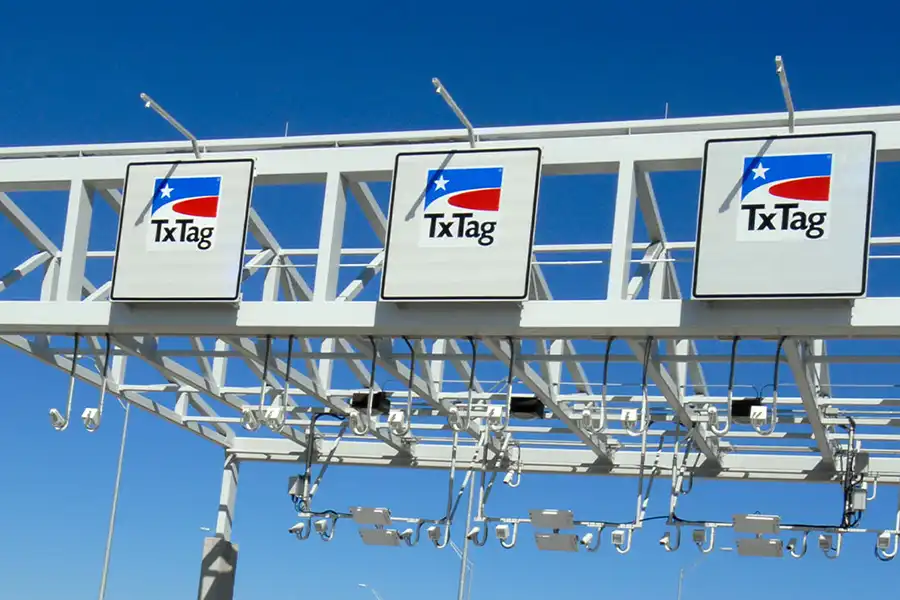
Almost every toll facility in Texas now runs open road tolling. There are no booths, no barriers, and nobody to hand cash to. What you drive under is a gantry packed with cameras and a transponder reader, and it captures your front and rear license plates in a fraction of a second.
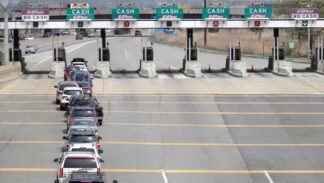
If the reader picks up a valid tag, the toll posts to that account at the tag rate. If it doesn’t, your plate image goes into a queue and the system looks up the registered owner. That’s the Pay By Mail path, and it starts automatically. You don’t sign up for it, you don’t opt in, and you can’t opt out.
The plate lookup pulls the address tied to your vehicle registration, which is why an old address is the single most common reason a toll bill goes sideways. More on that in a minute.
How long before the bill shows up
Expect a window, not a fixed date. A toll you drove on Tuesday can generate a statement two weeks later or five weeks later, depending on which authority operates that road and how backed up their image review queue is. Bad weather, unreadable plates, and holiday volume all slow it down.
Most Texas toll authorities give you a period after the trip to pay online before a paper statement gets mailed and the statement fee gets added. That window varies by agency and they change the terms, so check the specific authority’s site for the road you drove, like TxTag for TxDOT roads, rather than trusting a number you read somewhere.
My rule of thumb: if you know you went under a toll gantry without a tag, go online within a week and search your plate. Paying early is the cheapest version of this whole situation.
The one thing that wrecks Pay By Mail more than anything else
A stale registration address. Texas keeps your plate with the vehicle when ownership changes, and toll bills follow the registered owner of record. If you moved and never updated it, or if you bought a used car that still carries the old owner’s plate assignment in the tolling database, mail goes to a stranger.
Then the statement fee stacks, then a late fee stacks, and eventually you get a notice about a fine you never saw coming. Fix the address at your county tax office as soon as you move. It takes fifteen minutes and it prevents months of grief.
One trip, three bills: why Texas tolls are not one system
This confuses people more than the money does. Texas has multiple toll authorities and they each run their own billing, their own rates, and their own customer service line. There is no single place that shows you every unpaid toll in the state.
A single drive from north Dallas to the airport and back can cross NTTA roads. A drive through Houston hits HCTRA. Austin is Central Texas Regional Mobility Authority and TxDOT. So a weekend trip can hand you three envelopes with three different return addresses, and paying one does nothing for the other two.
The main Texas toll authorities you’ll run into
| Authority | Where it operates | Tag name | Roads you’ll recognize |
|---|---|---|---|
| TxDOT (TxTag program) | Statewide, including Austin and El Paso | TxTag | SH 130, Mopac Express Lane, 71 Toll, 45 SW, 183 Toll |
| North Texas Tollway Authority | Dallas, Fort Worth, Collin, Rockwall counties | TollTag | President George Bush Turnpike, Sam Houston Tollway, Grand Parkway, Dallas North Tollway |
| Harris County Toll Road Authority | Houston area | EZ TAG | Sam Houston Tollway segments, Hardy Toll Road, Westpark, Grand Parkway |
| Central Texas Regional Mobility Authority | Austin and Travis and Williamson counties | Uses TxTag and interoperable tags | 183A, 290 Toll, 71 Toll, 45 SW |
You don’t need an account with every one of them to pay a bill. You need to know which one billed you, which is printed right on the statement.
How to figure out who you owe
Read the top of the notice. The agency name, the toll road name, and the date of travel are all up there, along with a plate number and usually an image of the vehicle. If the plate in the photo isn’t yours, stop and read the section on misread plates before you pay anything.
If you lost the envelope or you never got one, go to each authority’s website and use the plate lookup or Pay By Mail search. Enter the plate, the state it’s registered in, and usually the last few digits of the VIN or the invoice number if you have one. That search is free, and it will tell you whether a balance exists.
Three ways to pay, and which one I’d actually use
You have real choices here, and they differ in speed and in how much room you have to fix a mistake.
Online payment portals (fastest, and the one I use)
Every Texas toll authority runs a web portal where you can pay a Pay By Mail bill or an unmailed toll with a credit or debit card. You’ll typically enter your license plate number and the state of registration, and sometimes an invoice number off the statement.
Pay online and you get a confirmation number on the spot. Screenshot it or print it. That confirmation is your proof if the system later claims you never paid, which happens more often than you’d think around billing cycle rollovers.
Two practical notes. Card payments sometimes carry a small convenience fee depending on the authority. And if you’re paying several bills at once, do them one agency at a time instead of hunting for a combined payment, because there isn’t one.
Paying by phone
Each authority has a customer service line with an automated payment option and live reps during business hours. Have your plate number, the state of registration, the invoice number, and a card ready.
Phone payment is worth it in one specific situation: you don’t understand the charge. A rep can tell you which road, which gantry, which axle count, and which date. You cannot get that from a portal error message.
If you’re setting up toll payment for a rental car, get the rental details in front of you first. You’ll need the plate on the vehicle, the rental agreement number, and any account number tied to the rental company’s toll program. Without those you’ll be on hold for nothing.
Paying through the mail
If you get a Pay By Mail statement, your toll charges go to the address on your vehicle registration. To pay by mail you send a check or money order with the payment slip or your account number to the address printed on the statement.
Mail is the slowest option and the one most likely to bite you, because transit time plus processing time can push you past the due date and trigger that late fee. If you insist on mailing it, use a date that gives you at least two weeks of cushion and keep a copy of the check and the slip.
Also worth knowing: Pay By Mail rates are higher than the rates you’d pay with an electronic tag. The mailed statement isn’t the discount option, it’s the default option for people without a tag.
The fees on your Texas toll bill, line by line
People get angry at the total and never look at the parts. Here’s what makes up a bill when you don’t have a TxTag.
Toll rates and how your charge gets calculated
Without a tag you’re billed at the Pay By Mail rate, which is higher than the tag rate on the same gantry. Each toll transaction has its own rate, commonly in the $1.50 to $2.00 range per transaction, but it varies by road, by time of day on priced lanes, and by vehicle class.
Vehicle class matters a lot if you tow. A pickup pulling a car hauler or a boat counts as more axles than the same pickup alone, and the bill reflects that. If you drove through with a trailer and the number looks high, that’s usually why, not an error.
Statement fees, late fees, and the fine you really want to avoid
| Charge | Typical amount | When it hits |
|---|---|---|
| Pay By Mail toll rate | Often about $1.50 to $2.00 per transaction | Every pass without a valid tag |
| Statement fee | $1.15 per mailed statement | When the bill gets printed and mailed to your registration address |
| Late fee | $4 per month on overdue amounts | After the due date passes with no payment |
| Court fine | Up to $250 | When a long-overdue toll becomes a citation |
| Mailing or processing fees | Varies by authority | Depends on the agency’s own policy |
Do the math on a small trip and it gets ugly fast. Six toll transactions at a dollar seventy five is ten fifty in tolls. Add a $1.15 statement fee, sit on it for three months, add three $4 late fees, and a ten dollar errand turns into twenty four dollars before anybody mentions a court. Double the trips and you’re past forty.
Exact numbers move around, and each authority publishes its own fee schedule and rate table. If the amount on your statement doesn’t match what you expected, pull up that authority’s published rates for the road and the date you drove before you assume it’s an error.
What happens if you just ignore the bill
I’ve watched this play out maybe a dozen times, and it always follows the same order.
First the statement arrives. Then a reminder, sometimes with an added fee. Then the account goes past due and the monthly late charges start stacking. From there the authority can refer the debt to a collection agency, and some add administrative and collection costs on top.
After that it can become a citation. Texas toll authorities can pursue unpaid tolls as a civil or criminal matter depending on the situation, and fines can reach up to $250 per violation. The authority is the one that decides whether to pursue it, and the Texas Transportation Code is what gives them that path. That is where a two dollar toll becomes an expensive lesson.
Two more things worth knowing. A collections entry can show up on your credit history, and unpaid toll obligations can complicate things like registration renewal or vehicle transfer in some counties. Neither is worth testing over a ten dollar bill.
What to do if it’s already late
Pay the balance today, then call. Paying first stops the meter, and it puts you in a much better position when you ask for a courtesy adjustment on fees.
Many authorities will waive a first-time late fee or reduce administrative charges if you contact them, pay the underlying toll, and explain the situation calmly. Bring a reason they can verify: a move, a hospital stay, a never-received statement, a misread plate. Don’t invent one, they check.
If a citation already went to court, contact the court listed on the notice rather than the toll agency. Once it’s in the court system, the agency no longer controls it.
Why a tag costs less, and when it’s worth getting one
A TxTag is a small transponder that mounts inside your windshield. The gantry reads it by radio, no camera matching needed, and your account gets charged at the lower tag rate. No statement fee, because nothing gets mailed.
The other benefit people underrate is speed of resolution. A tag pass posts to your account within days and you can see it in your transaction history. A Pay By Mail pass can take weeks and shows up as paper you have to reconcile.
The honest break-even math
If you drive Texas toll roads a couple of times a month, a tag pays for itself quickly between the rate difference and the statement fees you stop eating. If you cross a toll road twice a year, Pay By Mail is fine and there’s no reason to open an account you’ll forget about.
The trap is the in-between driver. Someone who commutes on a toll road three days a week but keeps telling themselves they’ll get a tag next month is donating money every single trip. That’s the driver I push hardest.
Where to mount the tag so it actually reads
This is the part I fix most often, because customers toss the tag in the console or stick it up wherever there’s room. Mount it on the inside of the windshield, high and centered or per the diagram on the sleeve, behind the rearview mirror area, with the adhesive strip fully seated against clean dry glass. Your owner’s manual usually has a spot marked for transponders and toll devices too, often a shaded band near the mirror, and it’s the safest place to start.
Three things kill reads. A tag sitting loose on the dash. A tag mounted over a metallic tint film or a heavy windshield shade. And a windshield with a big crack, pit, or an aftermarket repair patch right where the tag sits. If you’ve had windshield work done, move the tag and clean the glass before you stick it again.
Metallic or ceramic tint on the top strip of the windshield can block the signal on some vehicles. If your tag reads on some roads and not others, and the tag is fine, that film is a suspect worth checking.
Using your tag across Texas, Kansas, and Oklahoma
Toll authorities in several states have agreements that let one tag work across state lines. That’s called interoperability, and it saves you from opening a second account every time you cross a border.
Three states, one tag
Texas, Kansas, and Oklahoma all accept each other’s tags. Texas’s own TxTag, the Kansas Turnpike Authority‘s K-Tag, and the Oklahoma Turnpike Authority‘s PIKEPASS are interoperable. Hold any one of those and you’re set on toll roads in all three states without opening extra accounts.
- TxTag: works on all toll roads in Texas and is accepted in Kansas and Oklahoma.
- K-Tag: issued by Kansas, valid on Texas and Oklahoma toll roads too.
- PIKEPASS: from Oklahoma, good on Texas and Kansas turnpikes.
Two conditions though. Your account has to be in good standing, because a tag on a depleted or suspended account reads like no tag at all. And the tag has to be mounted properly on the vehicle it’s registered to. A working account with a loose tag is still a Pay By Mail trip.
Partner programs beyond the three-state group
Your TxTag reaches past the neighboring states too. It’s usable wherever you see signs for SunPass and BancPass, both part of the wider electronic toll collection effort that lets one tag cover multiple jurisdictions.
- SunPass: run by Florida’s Turnpike Enterprise, and your TxTag is accepted there.
- BancPass: a pay-as-you-go, cash reloadable toll sticker, usable where TxTag is accepted and vice versa.
Close to home, NTTA (North Texas Tollway Authority) issues its own TollTag, a separate entity from TxTag but part of the same interoperability program covering Texas, Oklahoma, and Kansas. HCTRA (Harris County Toll Road Authority) issues the EZ TAG, which also works across those states.
Practical translation for a Houston driver heading to Dallas: you don’t need to buy a second tag. You do need to make sure the one you have is registered to the vehicle you’re driving, because a tag assigned to a car you sold won’t cover the truck you bought.
Discounts and rewards programs that still help you
Skipping TxTag doesn’t lock you out of everything, though the biggest savings clearly sit on the tag side.
Frequent user programs
NTTA runs a TollPerks program that rewards toll road usage. Frequent users earn points when they travel on NTTA toll roads, and those points can be redeemed for discounts at participating businesses. The current terms are posted on NTTA’s site, and they’ve changed the rewards structure more than once over the years.
It’s a real benefit if you’re already a commuter. It’s not a reason to open an account you won’t use, since the points only come from tagged trips.
Programs for occasional drivers
The Harris County Toll Road Authority has an EZ TAG Express program that offers savings for occasional users without the commitment of a sticker tag. If you’re in Houston a few times a year, that’s worth a look on HCTRA’s site before you default to Pay By Mail rates.
Promotions come and go around new road openings and holiday travel periods, so check the authority’s site for the roads you actually use instead of assuming an old offer is still live.
Where the discount really lives
Be honest with yourself here. The largest savings isn’t a rewards program, it’s the gap between the tag rate and the Pay By Mail rate on every single trip, plus a $1.15 statement fee you never see. Carpool and off-peak discounts on managed lanes are real too, but most of them require a properly registered tag to apply.
How to spot a toll road before you’re committed to it
Once you’re on an open road tolling facility there’s no stopping and no paying cash. Your only real decision happens before the entrance, which means you have to know what the signs look like.
Signs to watch for
- Electronic toll collection signs: tells you there’s a tolled facility ahead with no booths.
- Express lane markers: shows the entrance to the faster, priced lanes.
- Last exit before toll: your chance to get off if you’d rather not pay.
- Toll amount signs: many facilities post the current price or a price range, sometimes varying by time of day.
Around Austin and Dallas the tolled segments are clearly marked and managed by the Mobility Authority and TxDOT, so you can decide whether the faster lanes are worth the transaction. Roads you’ll see signed include SH 130, the Mopac Express Lane, and the President George Bush Turnpike.
The last exit sign is your friend
Treat “last exit before toll” like a merge warning, not a suggestion. On a facility like SH 130 the entrance ramps come up fast, especially at highway speed with a trailer behind you, and the exit is often a short deceleration lane.
If you have no tag and no intention of paying by mail, take that exit. The five minutes you lose costs less than the statement fee, and a lot less than a fine.
Express lanes versus managed lanes
Express lanes like the Mopac Express Lane or the 71 Toll Lane offer a quicker commute with variable pricing that moves with traffic. When it’s empty you pay less. When it’s packed the price climbs, because the point is to keep it moving.
Managed lanes, such as those on 45 SW Toll, 183 Toll, and other central Texas toll roads, may allow discounted or toll-free travel if you meet conditions like carpooling. Rules can differ between peak and off-peak hours.
| Lane type | Who it’s for | How pricing works | What to know without a tag |
|---|---|---|---|
| Express lanes | Mostly single occupancy vehicles | Prices fluctuate with current traffic levels | You’ll be billed the rate that was live when you entered |
| Managed lanes | Mixed, with carpool incentives | May offer HOV discounts and different peak and off-peak rules | Carpool discounts generally need a registered tag and proper vehicle setup |
| Standard tolled road | Everyone | Fixed rate by vehicle class and distance | Pay By Mail rate applies, plus the statement fee |
One warning I give every customer: some managed lane systems require an active tag or a switched transponder to use the lane at all, and entering without one is treated as a violation rather than a simple Pay By Mail trip. Check the rules posted for that specific lane before you enter it.
If you do go through without a TxTag, the toll gets billed to the vehicle’s registered owner, usually by a mailed invoice. For a smoother experience you can look at a Dallas TollTag, a Houston EZ TAG, or a similar device that handles automatic toll payment for every vehicle you register to it.
Rental cars, borrowed trucks, and dealer plates
This is where the money really gets away from people, so slow down here.
Rental cars
Most major rental companies offer a toll program, and it usually works like this: they pay the toll for you, then charge your card the toll plus an administrative fee. That fee can be a flat daily charge or a per-use charge, and over a week it can exceed the tolls themselves.
Read the rental agreement section on tolls before you leave the lot. If the daily admin fee applies whether or not you use a toll road, that changes the math completely.
Your options in a rental come down to three. Take their toll program and accept the fee. Add the rental plate to your own tag account if the authority allows it, which some do for a limited window. Or plan a route that avoids tolled roads, which for a short in-town rental is often the cheapest choice of all.
Borrowed vehicles and plates that follow the car
In Texas the plate generally stays with the vehicle, not the driver. Borrow a friend’s truck and drive a toll road, and the bill goes to your friend. That’s an awkward conversation to have, and it’s why I always ask before I borrow a vehicle for a run.
If you borrowed a car and already know you hit a toll, pay it yourself online using the plate before the statement mails. Your friend gets a zero balance instead of a bill with a $1.15 statement fee on it.
Buying a used car with toll history
Do this one and thank me later. Within a week of buying any used vehicle in Texas, search the plate on each major authority’s Pay By Mail lookup and confirm there’s nothing outstanding that isn’t yours.
Old toll debt can hang around in the system tied to the plate, and image review delays mean a trip the previous owner took can generate a statement after you’ve already signed the title. A ten minute check protects you, and it also tells you whether the plate needs to be replaced or the registration address needs correcting.
Trailers, extra axles, and why the bill looks bigger than the trip
If you tow, budget differently. A tag assigned to the truck may or may not cover the trailer axles depending on how the account is set up, and the vehicle class is determined by what the gantry counts that day.
Two problems show up in my shop all the time. First, the tag reads the truck but the system bills a different axle count than you expected. Second, the tag doesn’t read at all because it’s mounted low, blocked by a bull bar mount, or sitting behind a windshield patch, so the whole trip goes to Pay By Mail at the higher rate.
Before a long tow trip, check that your account lists the correct vehicle class and that every plate on the combination, including the trailer, is registered in the state the authority expects. Then keep the receipt images from your account history for a couple months in case you need to dispute an axle count.
Out-of-state and out-of-country plates
Non-residents get billed the same way: plate image, registered owner lookup, mailed statement. The difference is timing and data. A plate registered in another state or another country takes longer to resolve, and some authorities route those bills through a partner service.
If you’re visiting Texas and you know you used a toll road, don’t wait for mail to find you. Search your plate on the authority’s site for each road you drove and pay it there. Visitor portals and prepaid short-term accounts exist for exactly this situation.
For a driver who comes through Texas regularly, say a contractor running freight on I-35 or a family that visits every summer, an interoperable tag ends up cheaper than repeated Pay By Mail rates. Run the numbers on your own trip frequency before deciding.
When the toll bill is wrong, and how to fight it
Errors happen. Cameras misread characters, a tag in a neighbor’s car gets billed to you, and image review is done by people and software that both make mistakes.
| What you’re seeing | Likely cause | What to do |
|---|---|---|
| No bill ever arrived | Old registration address, or the statement is still in the queue | Update your address, then search the plate online and pay directly |
| Bill in someone else’s name | Plate still tied to a prior owner in the tolling record | Contact the authority with your title and registration in hand |
| Plate in the photo isn’t yours | Character misread, common with 8 and B, 0 and Q, 5 and S | File a dispute and include your own plate photo plus registration |
| Charged for a road you never drove | Wrong gantry data, or a cloned or look-alike plate | Dispute immediately and give them your location that day if you can |
| Toll billed even though you have a tag | Dead tag, loose tag, depleted account, or tag not assigned to that vehicle | Check account balance and mounting, then request the tag rate be applied |
| Two bills for one trip | Entry and exit gantries on a distance-priced road, or two authorities | Compare timestamps and road names before you assume it’s a duplicate |
| Axle count too high | Trailer counted, or the tag didn’t cover the trailer | Ask for the vehicle class review and send photos of your setup |
How to file a dispute that gets taken seriously
Gather three things before you call: a clear photo of your front and rear plates, your current registration, and a note of where you actually were on the date in question. If you have a receipt, a work order, or a phone photo with a timestamp from that day, include it.
Then use the authority’s dispute process, online or by phone, and get a case number. Write down the date, the rep’s name, and the case number. If it gets denied once, ask for a review and send your documentation in writing rather than repeating the same phone call.
Pay the undisputed portion while a dispute is open when you can. Leaving the whole balance unpaid during a long dispute is how a misread plate turns into a late fee and a collection letter.
Why dirty or damaged plates cause toll bills you didn’t earn
Here’s the part where my job and your toll bill actually overlap. Plate capture is a camera reading characters off a reflective surface at highway speed, and anything that degrades that surface costs you.
Common culprits I see on vehicles every week:
- A plate caked in road grime, mud, or dried bug residue, especially after a job site or a rainstorm.
- A bent or creased plate from a tight parking garage or a loading dock, which changes how light reflects off the characters.
- A cracked, yellowed, or peeling plate cover that creates glare under the gantry lights.
- Faded or scratched characters on an old plate, where the reflective layer has worn off.
- A plate mounted at an angle, tucked behind a hitch receiver, or half-covered by a bike rack.
- A missing front plate, or a temporary paper tag that cameras struggle with.
Fix what you can. Wash the plate, straighten a bend with a soft block of wood and even pressure, replace a cracked cover or drop the cover entirely, and get a fresh plate from the county if the characters are worn. Those are cheap fixes compared to disputed bills and statement fees.
While you’re at it, check the plate lights and make sure the registration sticker is current and legible. Not because the toll camera cares, but because a plate issue is rarely the only thing wrong on a car that’s been neglected. NHTSA’s guidance on keeping lamps clean and working applies just as well to the little lights over your plate as it does to your headlights.
Mistakes I see drivers make with Texas tolls
- Assuming Pay By Mail works everywhere. On some managed lane systems you need an active tag to be in the lane at all. Entering without one can be treated as a violation, not a bill.
- Waiting for the envelope. The cheapest moment to pay is before the statement fee gets added. Waiting costs you $1.15 per statement plus the risk of a late fee.
- Paying the wrong agency. A payment to NTTA does nothing for an HCTRA bill. Match the road name on your statement to the agency you’re paying.
- Letting the registration address go stale. Every mailed notice that goes to an old house is a fee you’ll eventually pay.
- Leaving the tag loose or in the wrong spot. A tag in the cupholder is a Pay By Mail trip with extra steps.
- Assuming the rental includes tolls. It usually includes tolls plus an administrative fee, and sometimes that fee applies daily.
- Using somebody else’s tag. Tags are tied to a vehicle and an account. Mismatches cause misreads, wrong bills, and disputes that take weeks.
- Ignoring a court notice. That’s the point where a two dollar toll becomes up to $250, and where it can touch your credit and your registration.
- Forgetting the trailer. Extra axles cost extra, and a tag registered to the truck alone may not cover the combination the way you assumed.
Questions I get at the counter about Texas tolls
Can I pay a Texas toll in cash after the fact?
Not at the road. Open road tolling means there’s no cash lane and no attendant, so the payment happens after your trip through the authority’s Pay By Mail system. You settle it online, by phone, or with a check, and nearly every agency wants a card or a check rather than cash. Some authorities do have a retail payment location or a kiosk, so call before you drive across town hoping to hand somebody a twenty.
How do I find out if I have an unpaid toll I never knew about?
Go to the website of each authority whose roads you might have used and search your plate. There’s no statewide search that covers everything, which surprises people. If you can’t remember the road, start with the one nearest your route and work outward, and check the registration address at the same time so future mail actually reaches you.
Does an unpaid toll go on my driving record?
A toll bill by itself isn’t a moving violation, and it won’t show up the way a speeding ticket does. The risk is downstream: once it becomes a citation, a collections account, or a court judgment, it can affect your credit history and complicate registration or title work. Treat it like a bill you can’t afford to ignore rather than like a ticket.
Can I pay a toll for a trip somebody else took in my vehicle?
Yes, and you often have to. The bill follows the registered owner, so a friend, a teenager, or an employee driving your vehicle puts the toll in your name. Pay it online with the plate, then settle it with the driver privately. If you loan vehicles out regularly, a tag on the account makes it easier to see who used which road and when.
My tag is in my other car. Will it still work if I move it?
Tags are assigned to a specific vehicle on your account, and moving one between cars without updating the account is a common cause of misreads and Pay By Mail bills on the vehicle that has no tag listed. If you swap vehicles often, add every plate to the account instead of shuffling one transponder around.
How long do I actually have to pay?
Each authority sets its own deadline on the statement, and the pre-statement window for paying online before the $1.15 fee applies is set by that same agency. Read the due date off the notice you received and don’t average it with something you read online. When in doubt, pay early, because the fees only move in one direction.
Small habits that keep this from ever happening again
None of this is complicated, it just needs a system. Here’s what I’d do if it were my truck.
Keep a running note of toll roads you use. A note on your phone with the date, the road, and whether you had a tag takes five seconds and turns a confusing statement into something you can verify.
Check your tag account every few weeks even when you’re not traveling. A declined card or a low balance turns into Pay By Mail trips without warning you.
Keep the windshield area behind your tag clean, and inspect the glass for chips near the mounting spot. A star crack right where the tag sits is a reason to relocate it before the next toll road.
Set a reminder to review your vehicle registration address once a year, or immediately after any move. And if you tow, photograph your setup before a big trip so you have proof of the axle count if it’s ever disputed.
Handle it yourself, call the authority, or get help
Do it yourself online if: the bill is clearly yours, the plate photo matches, the amount makes sense for the trip, and you’re inside the grace window. Search the plate, pay with a card, save the confirmation. Ten minutes, done.
Call the toll authority if: you never received a statement, the amount doesn’t match the road you drove, the axle count is wrong, you were billed twice for one trip, or you’re asking for a first-time late fee waiver. Have your plate, invoice number, and card ready.
Escalate in writing if: a dispute was denied and you have documentation, the plate in the image isn’t your vehicle, or you suspect a plate that looks like yours is generating charges. Send copies, never originals, and keep the case number.
Get professional help if: a citation has gone to court, you’re facing multiple fines across agencies, or a collections entry has appeared on your credit. At that point the toll agency isn’t the decision maker anymore, and a traffic attorney or a credit dispute route is cheaper than guessing.
If you’re a regular Texas toll road user, though, skip all of this. Get a interoperable tag, mount it properly, keep the account funded, and the whole category of problem goes away.
The bottom line for Texas drivers without a TxTag
You won’t get a ticket for one toll road pass without a tag. You’ll get a bill at the higher Pay By Mail rate, plus a $1.15 statement fee, sent to whatever address is on your registration. Pay it online within the grace period and it costs you a few dollars. Ignore it and the same trip can climb through $4 monthly late fees, collections, and eventually a fine of up to $250.
My verdict: Pay By Mail is a perfectly reasonable backup for the driver who hits a toll road a handful of times a year, and a poor choice for anyone who commutes on one. If you tow, if you rent, or if you cross into Kansas or Oklahoma, get a TxTag, a TollTag, or an EZ TAG and make sure it’s mounted where the gantry can actually see it.
Do one thing today. Look up your plate on the authority for the road you last drove and confirm your registration address is current. That single check prevents about nine out of ten toll bill headaches I see come through this shop.