
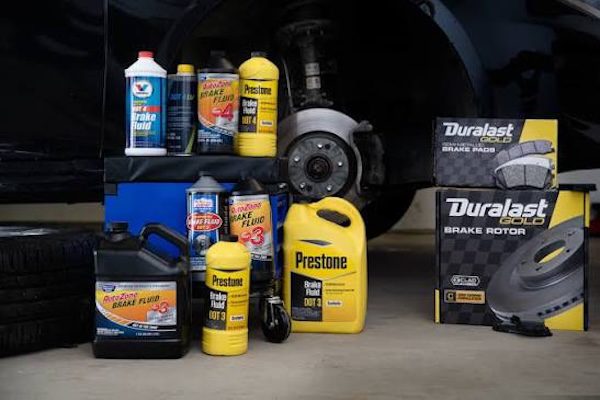
You are topping off your brake fluid reservoir in the driveway, and you realize the bottle in your hand is not the same brand you used last time. Maybe it is not even the same DOT rating. Now you are standing there wondering if you just set yourself up for a brake failure on the highway tomorrow morning.
Take a breath. In most cases, mixing brake fluid brands is not the disaster people assume it to be. What actually matters is not the label on the bottle or the company that made it. What matters is the grade, the chemical base, and the specific properties that grade represents. Get that part wrong, though, and you genuinely can end up with a compromised braking system.
This guide walks through exactly which brake fluids play nicely together, which ones absolutely should never touch each other, and what happens if you mix old fluid with new. By the end, you will know precisely what to grab off the shelf next time you are topping off your reservoir in a hurry.
The Short Answer: Brand Does Not Matter, Grade Does
Here is the core truth worth remembering before anything else. Mixing brake fluid from different manufacturers is perfectly safe, provided both fluids share the same DOT grade. A bottle of DOT 4 from one brand and a bottle of DOT 4 from a completely different brand will blend together without any real drama.
The confusion usually comes from mixing up grades rather than brands. DOT ratings like DOT 3, DOT 4, and DOT 5.1 describe specific chemical properties, particularly boiling point and moisture resistance, not who manufactured the bottle sitting on the shelf. That distinction changes everything about how you should approach mixing.
What Actually Happens When You Mix Compatible Grades
Say you mix DOT 3 and DOT 4 together, both of which share a similar glycol-ether chemical base. The worst outcome you are looking at is ending up with a fluid whose overall boiling point drops to somewhere between the two original fluids. Not ideal, but not catastrophic either, and certainly not something that will send you careening into an intersection with no brakes.
Which Brake Fluid Types Can Safely Mix Together
Let’s get specific about which combinations work and which ones you genuinely want to avoid. This is where a lot of DIY mechanics get tripped up, mainly because DOT numbering makes it seem like everything in the lineup is interchangeable. It is not.
DOT 3, DOT 4, and DOT 5.1 Get Along Just Fine
These three fluids all share the same glycol-ether base, which means they mix together without triggering any chemical incompatibility. That said, mixing them is not entirely consequence free.
- DOT 3 has the lowest boiling point of the three, and it remains widely used in older and more budget-oriented vehicles.
- DOT 4 boils at a noticeably higher temperature than DOT 3, making it a better choice for vehicles that generate more braking heat.
- DOT 5.1 pushes that boiling point even higher, which explains why it shows up frequently in heavy-duty trucks and high-performance vehicles that put serious stress on their braking systems.
Here is the practical takeaway. If you mix any two of these three fluids together, the resulting blend takes on the boiling point of whichever fluid had the lower rating. Mix DOT 3 into DOT 4, and you end up with something that performs closer to DOT 3 than DOT 4, even though technically both fluids are now blended together in the reservoir.
| Fluid Type | Base Chemistry | Typical Use Case | Can Mix With |
|---|---|---|---|
| DOT 3 | Glycol-ether | Standard passenger vehicles | DOT 4, DOT 5.1 |
| DOT 4 | Glycol-ether | Most modern passenger vehicles | DOT 3, DOT 5.1 |
| DOT 5.1 | Glycol-ether | Heavy-duty and high-performance vehicles | DOT 3, DOT 4 |
| DOT 5 | Silicone | Specialty and classic vehicles | None of the above |
DOT 5 Is the Odd One Out, and It Matters a Lot
Here is where things get genuinely important, and where a mistake can actually cause real damage. DOT 5 brake fluid uses a silicone base rather than the glycol-ether base found in DOT 3, DOT 4, and DOT 5.1. That chemical difference means DOT 5 does not mix with the other three at all.
Even worse, silicone-based fluid is not compatible with anti-lock braking systems. If your vehicle has ABS, introducing DOT 5 into a system designed for glycol-based fluid can cause real problems, ranging from seal damage to compromised ABS function exactly when you need it most.
DOT 5 tends to show up in specific applications, mainly heavy vehicles, certain racing applications, and classic cars where owners specifically want its water-resistant properties for long-term storage. If your vehicle was not specifically designed around DOT 5, do not introduce it into the system, and definitely do not mix it with anything else already in there.
Can You Mix Old Brake Fluid With New Brake Fluid?
This question comes up constantly, and the answer surprises a lot of people. Even if the old and new fluid share the exact same DOT grade and chemical base, mixing them is still not something you want to do carelessly.
Why Old Fluid Causes Problems Even When the Grade Matches
Brake fluid is hygroscopic, meaning it actively absorbs moisture from the surrounding air over time. Every time you open that reservoir cap, a tiny bit more moisture gets in. Over months and years, this accumulated moisture degrades the fluid’s performance, particularly its boiling point.
Mixing degraded old fluid with fresh new fluid does not restore the old fluid’s lost properties. Instead, you end up diluting your fresh fluid’s benefits while also adding unnecessary volume to the system. In the real world, this becomes a real headache during brake pad or rotor replacement, since overfilling the reservoir can cause fluid to overflow and make a genuine mess in your engine compartment.
What Water Contamination Actually Does During Braking
Here is why this matters beyond just being a minor inconvenience. Braking generates real heat through friction between the pads and rotors, and that heat transfers directly into the brake fluid sitting in the lines. If that fluid contains absorbed water, the heat causes the water content to boil and turn to vapor.
Vapor, unlike liquid, compresses easily under pressure. Your entire braking system relies on the fluid being essentially incompressible to transfer force from your foot on the pedal into actual stopping power at the wheels. Introduce compressible vapor into that equation, and you get a spongy, less effective brake pedal right when you need firm, reliable stopping power the most.
Bottom line here: never reuse old brake fluid, and never top off a system with old fluid pulled from another source. Brake fluid is one of those components where cutting corners genuinely threatens your safety, not just your wallet.
How Long Can You Actually Drive on Mixed Brake Fluid?
Sometimes life throws you a curveball. Maybe your brake fluid level dropped unexpectedly during a road trip, and the only bottle available at the gas station convenience store is a different grade than what is already in your system. What then?
Short-Term Mixing in an Emergency
If you genuinely have no other option, mixing DOT 3 with DOT 4, or either of those with DOT 5.1, will get you to your destination without immediate danger. The performance difference between DOT 3 and DOT 4 specifically is fairly small, so a blend of the two will not dramatically change how your brakes feel during that emergency drive.
That said, mixing DOT 5.1 into a system that primarily runs DOT 3 creates a more noticeable performance drop, since you are essentially diluting a high-performance fluid down toward the properties of a much more basic one. If your vehicle specifically calls for DOT 5.1 due to heavy braking demands, this mismatch matters more than it would in a standard commuter car.
Why You Cannot Drive on a Mixed Blend Indefinitely
Mixing brake fluids alters the overall boiling point of whatever ends up in your lines, and it typically reduces resistance to vapor formation as well. This blended fluid simply will not hold up as long term protection the way a pure, correctly specified fluid would.
A mixed fluid is more prone to absorbing moisture faster and losing effectiveness sooner than fluid that matches your vehicle’s actual specification. Treat any mixed fluid situation as a temporary fix, not a permanent solution, and plan to correct it as soon as reasonably possible.
What to Do Once You Reach Your Destination
The moment you arrive wherever you were headed, get to a mechanic and have the entire braking system flushed. A proper flush removes all the mixed fluid from the lines and replaces it with fresh fluid matching exactly what your vehicle’s manufacturer recommends.
Do not put this off. Every day you drive on a compromised blend is another day your braking system operates below its intended performance level, and brakes are not the place to gamble on “probably fine.”
Which Brake Fluids Should Never Be Mixed Under Any Circumstances
Let’s bring this back to the core rule that governs everything covered so far. Different brake fluids exist for different purposes, built from genuinely different ingredients, and that chemical difference is what determines compatibility, not the brand printed on the label.
Synthetic Versus Non-Synthetic Matters More Than DOT Number Alone
Glycol-based fluids, which cover DOT 3, DOT 4, and DOT 5.1, are classified as non-synthetic and remain compatible with each other. DOT 5 stands apart as a synthetic, silicone-based fluid, and it simply does not belong in the same system as the others.
If you are switching your vehicle over to DOT 5 for any reason, a full system flush is not optional, it is necessary. Any residual glycol-based fluid left in the lines will contaminate the new silicone fluid and potentially cause seal damage or system malfunction down the road.
What DOT Numbers Actually Tell You
Keep this in mind every time you are shopping for brake fluid: DOT ratings communicate boiling point and water resistance capability, nothing about brand quality or manufacturer reputation. A DOT 4 fluid from one company performs essentially the same as DOT 4 from another, since both are held to the same regulatory standard.
This is exactly why glycol-based fluids like DOT 3, DOT 4, and DOT 5.1 blend together without dramatic performance loss. You can combine them and expect a predictable, if slightly diminished, result rather than an unpredictable chemical reaction.
Upgrading to a Higher DOT Rating: What to Expect
Adding a higher DOT-rated fluid into a system currently running a lower rated one raises the overall boiling point of the blend, but the resulting mixture will not perform as well as fluid that is 100 percent the higher grade. Think of it as a half-measure rather than a genuine upgrade.
If your long-term goal is switching to a higher performing fluid, treat any temporary mixing as just that, temporary, and plan a proper flush and refill as soon as you reasonably can.
Do You Need to Flush the System When Switching Grades?
This depends entirely on which direction you are switching. Moving from DOT 3 to DOT 4 does not strictly require a full flush, since both share the same glycol-ether base, though doing one anyway is generally recommended for the cleanest possible result.
Switching to DOT 5, on the other hand, absolutely requires a complete flush beforehand. There is no safe way to introduce a silicone-based fluid into a system still holding glycol-based residue, and skipping this step risks real damage to your braking components.
A Quick Reference Table for Brake Fluid Compatibility
| Mixing Scenario | Safe? | Notes |
|---|---|---|
| DOT 3 with DOT 4 (different brands) | Yes | Minor drop in boiling point, generally fine short term |
| DOT 4 with DOT 5.1 | Yes | Small performance change, both share glycol base |
| DOT 3 with DOT 5.1 | Yes, but not ideal | Noticeable performance drop compared to pure DOT 5.1 |
| Any glycol-based fluid with DOT 5 | No | Different chemical base, ABS compatibility risk |
| Old fluid with new fluid, same grade | Not recommended | Old fluid moisture contamination reduces overall performance |
Why This All Actually Matters for Your Safety
Brake fluid does one job, but it is an important one. It transfers the force from your foot pressing the pedal into hydraulic pressure that clamps your brake pads against the rotors, ultimately slowing your vehicle down. This entire process depends on the fluid staying essentially incompressible under pressure and heat.
Every factor covered in this guide, from moisture absorption to boiling point to chemical base compatibility, ultimately comes back to one question: will this fluid still be doing its job properly when you slam on the brakes to avoid an accident? That is not a rhetorical question. It is the entire reason DOT ratings and compatibility rules exist in the first place.
Practical Tips for Keeping Your Brake Fluid in Good Shape
- Check your owner’s manual first. Your manufacturer specifies exactly which DOT grade your vehicle requires, and that specification should always be your starting point.
- Replace brake fluid on schedule. Most manufacturers recommend a full flush every two to three years, regardless of how the fluid looks or how your brakes feel.
- Keep the reservoir cap sealed tightly. Every unnecessary moment the cap sits open invites more moisture absorption into the fluid.
- Buy fresh, sealed bottles. Never use a partially used bottle of brake fluid that has been sitting open in your garage for months, since it has likely already absorbed meaningful moisture from the air.
- Label mixed situations clearly. If you ever do mix grades in an emergency, note it somewhere so you or your mechanic knows a full flush is needed sooner rather than later.
Frequently Asked Questions
-
Can I mix brake fluid from two different bottles of the same grade but different brands?
Yes, this is completely safe. DOT ratings are standardized regardless of manufacturer, so two bottles labeled DOT 4 will perform essentially the same regardless of brand.
-
What happens if I accidentally put DOT 5 into a system designed for DOT 4?
This creates a genuine problem. The silicone base in DOT 5 does not mix properly with the glycol-ether base in DOT 4, and the result can include seal damage and unreliable ABS performance. If this happens, get the entire system flushed and inspected as soon as possible.
-
Is it ever acceptable to top off brake fluid with an unknown or unlabeled bottle?
No. Always confirm the DOT grade before adding any fluid to your system. Using an unknown fluid risks introducing an incompatible chemical base into your brakes.
-
How do I know if my brake fluid has already absorbed too much moisture?
Brake fluid test strips are available at most auto parts stores and give a quick moisture content reading. A spongy or less responsive brake pedal can also indicate degraded fluid, though this symptom can point to other issues as well.
Brake fluid does not get much attention until something goes wrong, and by then it is often too late to just top it off and hope for the best. Check your manual, match your grades, and treat any mixed fluid situation as temporary rather than permanent. Your brakes are not the place to guess.