
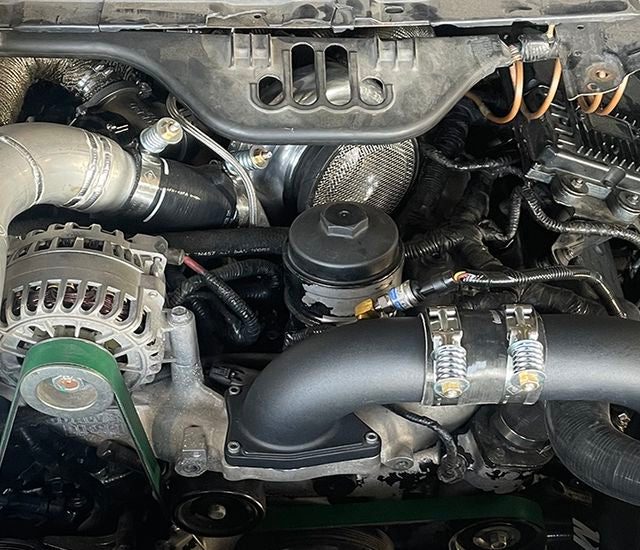
The first time many owners think about an EGR delete is after the engine starts running badly and the repair estimate comes back higher than expected. A diesel may hesitate, smoke, go into limp mode, or log an EGR fault, while the intake is coated with a thick mixture of soot and oily residue. Someone then suggests blocking the EGR, fitting a delete kit, and changing the software so the warning light stays off.
An EGR delete removes or disables the exhaust gas recirculation system so exhaust gas no longer flows back into the intake. That can reduce one source of intake soot, and a vehicle with a valve stuck open may feel better after the system is disabled. It is not a simple reliability upgrade, though. The EGR system is part of the engine’s emissions and temperature strategy, and removing it can cause legal, inspection, calibration, and mechanical problems.
When a customer asks me whether I would delete the EGR on my own road car, my answer is no. I would find out why the valve is failing, inspect the intake and cooler, check the sensors and wiring, and repair the system properly. Off-road and competition vehicles are a separate discussion where local rules allow it, but a street-driven car needs a solution that works with its emissions controls, not one that only turns off a warning light.
What the EGR system does for the engine
EGR stands for exhaust gas recirculation. The system routes a controlled amount of exhaust gas back into the intake under selected operating conditions. That exhaust gas contains little oxygen compared with fresh intake air, so it changes the mixture entering the cylinders and lowers peak combustion temperature.
Lower combustion temperature helps reduce nitrogen oxide emissions, often written as NOx. NOx forms more readily when combustion temperatures and oxygen availability are high. The EGR valve, engine control unit, airflow sensors, temperature sensors, turbocharger, and other emissions components work together to control how much exhaust gas is used and when it is used.
That does not mean the engine uses EGR at all times. The control strategy depends on the engine design, load, speed, coolant temperature, intake temperature, emissions equipment, and operating conditions. A diesel may use a cooler to lower the temperature of the recirculated gas, while a gasoline engine may use EGR in a different way.
On a modern engine, the EGR valve is only one piece of a larger system. A fault in a vacuum hose, electrical connector, position sensor, differential-pressure sensor, cooler bypass, intake throttle, or air leak can look like an EGR failure. Replacing the valve without checking those parts is how owners end up paying twice.
Why recirculated exhaust creates intake deposits
Many diesel engines send soot-containing exhaust through the EGR passages. At the same time, the crankcase ventilation system sends oil vapor into the intake. When soot and oil vapor meet, they can form a sticky deposit on the EGR valve, throttle body, intake manifold, and intake ports.
Short trips and long periods of idling can make the problem worse because the engine may spend more time at lower temperatures and lower airflow. Poor combustion, worn injectors, a turbocharger oil leak, excessive crankcase pressure, or a restricted air filter can add more material to the intake. The EGR system may be blamed because it is where the buildup is easy to see, even when another fault is feeding the problem.
I have removed intake manifolds that were restricted enough to affect airflow, yet the owner had been told to replace the EGR valve without anyone checking the crankcase ventilation or injector balance. The valve was dirty, but it was not the whole story. Cleaning the visible part without finding the source would only postpone the same complaint.
What an EGR delete actually changes
An EGR delete may involve a blanking plate, a replacement pipe, changes to vacuum or coolant plumbing, software calibration, or some combination of those changes. The exact method varies by engine. A mechanical block-off without software changes may turn on the check-engine light, while software changes without correctly handling the hardware can create faults the tuner did not expect.
Once EGR flow is reduced or removed, the engine no longer receives the exhaust dilution that its calibration expects. Combustion temperatures may rise under conditions where the engine was designed to use EGR. Airflow, boost pressure, fuel quantity, exhaust temperature, oxygen readings, and after-treatment operation can also change.
Some delete kits are sold as if the job is only about keeping soot out of the intake. That description leaves out the emissions control logic, sensor checks, regeneration strategy, and legal requirements. A vehicle can feel strong on a short test drive and still have a calibration problem that appears later during towing, highway driving, a DPF regeneration, cold operation, or an emissions inspection.
Why software matters
The engine computer monitors EGR position and flow in several ways. Depending on the engine, it may compare commanded valve position with a position sensor, watch intake airflow change, calculate pressure differences, or check related temperature and oxygen readings. If the expected change does not occur, codes can return even when the engine seems to run normally.
Turning off the diagnostic monitor does not make the mechanical or legal issue disappear. It only changes what the computer reports. Poorly written calibration can also disable more monitoring than the owner intended, interfere with DPF regeneration, alter fueling, or create an engine that behaves unpredictably when conditions change.
If a vehicle is used only for closed-course competition, calibration is still a job for someone who understands that specific engine and its complete after-treatment system. For a road vehicle, I would not recommend software intended to defeat an emissions monitor. Keep the original calibration and repair the fault.
Symptoms that can point to an EGR problem
A bad EGR valve can cause rough idle, unstable engine speed, hesitation, poor acceleration, excessive smoke, higher fuel consumption, hard starting, or stalling. Some turbo diesel vehicles may enter limp mode and limit power. These symptoms can be frustrating, but they do not identify the failed part by themselves.
- Rough idle or an engine speed that hunts up and down
- Hesitation when leaving a stop or accelerating under load
- Reduced power and delayed turbo response
- Excessive black, gray, or unusual exhaust smoke
- Higher fuel consumption without a change in driving
- Hard starting or stalling when the engine is cold or warm
- Limp mode on some turbo diesel vehicles
- A check-engine light or emissions warning
- A rough running condition after the EGR valve is commanded open
Codes often associated with EGR faults include P0401, P0403, P0404, P0405, P0406, P0407, P0408, and P0409. Their exact meaning depends on the vehicle and engine. P0401 commonly relates to insufficient EGR flow, while other codes can relate to control circuits, valve position, or sensor voltage. The code is a direction for testing, not a permission slip to buy a valve.
The original article links to bad EGR valve symptoms and solutions. That link has been removed here, but the useful point remains: EGR symptoms overlap with turbocharger faults, intake leaks, injector problems, a dirty airflow sensor, a restricted diesel particulate filter, and wiring faults. A proper diagnosis separates those possibilities.
How symptoms can help narrow the fault
| Symptom | Possible EGR connection | Other checks worth making |
|---|---|---|
| Rough idle | A valve stuck partly open can dilute the intake charge at the wrong time. | Vacuum leaks, injector balance, intake leaks, air-metering data, and engine timing. |
| Hesitation or poor acceleration | Incorrect EGR flow can disturb airflow and fueling during a transition. | Boost leaks, turbo control, fuel pressure, clogged filters, and a restricted intake or exhaust. |
| Black smoke | Reduced fresh-air flow or incorrect EGR operation can contribute to an over-rich diesel charge. | Air filter, turbocharger, boost hose, injector, airflow sensor, and DPF condition. |
| EGR flow code | The computer did not detect the expected change in flow or valve position. | Passages, sensors, wiring, vacuum supply, exhaust pressure, and the valve itself. |
| Limp mode | The computer may limit power because EGR or another emissions fault is severe. | Stored codes, boost pressure, DPF loading, fuel pressure, turbo control, and sensor data. |
How a mechanic diagnoses an EGR fault before recommending repair
A good diagnosis begins with the complaint and the stored data. I want to know whether the problem appears at idle, during acceleration, under steady cruise, during a cold start, or after the vehicle reaches operating temperature. I also want the freeze-frame information from the scan tool before anyone clears the codes.
A capable scan tool can show commanded EGR position, actual position, airflow, manifold pressure, engine speed, coolant temperature, fuel trims on applicable engines, and other related data. The technician may command the valve open and closed while watching whether the engine response and sensor readings change as expected.
On a vacuum-operated system, the vacuum pump, hose, control solenoid, and actuator need testing. A hand vacuum pump can show whether the actuator holds vacuum, but the result has to be compared with the service information. A valve that moves on the bench may still leak, stick when hot, or fail to deliver the required flow when installed.
On an electronically controlled valve, check the power supply, ground, signal wires, connector pins, position sensor, and actuator operation. Do not probe a small connector with a large test light and spread the terminals. Back-probing with the proper meter leads or using a breakout harness prevents a simple diagnosis from creating a wiring fault.
Inspect the air and exhaust side too
An intake manifold can be restricted by deposits even when the EGR valve moves correctly. Remove and inspect the relevant parts when the evidence supports it. A camera through an access opening may show buildup, but a visual inspection does not always tell you how much airflow is being lost through the runners.
Look for boost hose splits, loose clamps, a leaking intercooler, a damaged intake gasket, a dirty airflow sensor, and a stuck intake throttle. Check the exhaust side for a leaking EGR pipe, cracked cooler, damaged pressure line, or a restricted DPF. If the engine is consuming oil, find out why before blaming every deposit on EGR.
Injector condition matters on diesel engines. Poor spray pattern, excessive return flow, incorrect fueling, or a combustion problem can create smoke and deposit buildup that looks like an EGR issue. A new valve will not correct an injector that is putting too much fuel into the cylinder.
Expected benefits of an EGR delete, and where the claims fall short
People consider an EGR delete for understandable reasons. They may have paid for repeated cleanings, experienced a valve failure in an awkward location, or seen a restricted intake manifold. The claims below can be true in limited situations, but each needs a warning beside it.
| Claimed benefit | Why it may happen | What can still go wrong |
|---|---|---|
| Cleaner intake | Less exhaust soot enters the intake manifold. | Oil vapor from the PCV or crankcase ventilation system can still create deposits. |
| Fewer EGR-related faults | The faulty valve, cooler, or flow path is removed from operation. | Software changes may be unreliable, illegal, or may hide a different fault. |
| Improved response on some engines | More fresh air may enter under conditions where the original valve was stuck open. | A properly repaired EGR system may restore the same lost response without a delete. |
| Lower short-term repair cost | The owner avoids replacing an expensive valve or cooler at that moment. | Inspection trouble, fines, poor tuning, or after-treatment repairs can cost more later. |
The clean-intake claim is the one I hear most often. It has a mechanical basis, but it is incomplete. Oil vapor still enters many intake systems, and the engine may continue to create deposits from poor combustion or a crankcase ventilation fault. Removing EGR does not turn a dirty intake into a clean one forever.
The response improvement also needs context. If the original valve is stuck open, disabling it can make the engine feel stronger because the fault has been prevented from affecting the intake. Repairing the valve, clearing the deposits, and fixing the cause can produce the same improvement while preserving the emissions strategy.
The legal and inspection problem is bigger than a warning light
In many countries and regions, removing or disabling emissions equipment on a road vehicle is illegal. The exact rule depends on where the vehicle is registered and how it is used, but the safe approach for a street car is to keep the EGR system operating as designed. Passing a basic visual check does not make a modification legal.
In the United States, the Environmental Protection Agency’s information on vehicle emissions inspections and maintenance explains why emissions systems and readiness monitors matter. The National Highway Traffic Safety Administration’s vehicle safety resources are another useful reference, although local emissions authorities and the vehicle’s registration rules control the final answer.
Deleting hardware can cause an inspection failure even if the check-engine light is turned off. A scan tool may show monitors not ready, altered software, or missing system operation. A vehicle that cannot pass inspection may also become harder to sell, insure, register, or return to factory condition.
Do not assume that a modification is acceptable because a shop is willing to install it. Shops and tuners do not make the law. Ask the local inspection authority or a qualified emissions professional before changing an emissions component, especially if the vehicle is used on public roads.
Why a delete can create problems at resale
A buyer may notice missing hardware, non-factory wiring, blanking plates, unusual software, or an emissions warning. Returning the car to stock can require parts that the previous owner discarded. If a delete has changed the calibration, a replacement factory module or a correct reflash may be needed before the vehicle passes a test.
Be honest about modifications when selling a vehicle. A short-term sale that leaves the buyer with an inspection failure can turn into a dispute. From a mechanic’s point of view, a factory system with a documented repair is easier to service than a mystery tune and a box of removed parts.
The mechanical downsides of deleting EGR
The EGR system lowers peak combustion temperature under the conditions where the engine uses it. Removing that flow may raise combustion temperatures and change the thermal load on pistons, valves, turbocharger components, exhaust manifolds, and after-treatment parts. The extent depends on the engine and calibration, so I would not claim that every delete will damage an engine. The risk is real enough that it should not be treated as harmless.
The engine computer may also expect EGR flow during specific operating modes. If actual airflow does not match the model, the ECU can set a fault, reduce power, or use a backup strategy. A delete tune that suppresses the code may still leave the engine operating outside the conditions the manufacturer used for durability and emissions testing.
Diesel engines add another layer because the EGR system can interact with the diesel particulate filter, selective catalytic reduction system, exhaust gas temperature sensors, and turbocharger controls. Changing one component can affect regeneration frequency, exhaust temperature, soot calculations, and the amount of fuel used for after-treatment events.
What can happen to a DPF
A diesel particulate filter captures soot and periodically burns it during regeneration. The engine computer uses sensor readings and operating data to decide when regeneration is needed. If an EGR delete changes the soot model, temperature behavior, or fueling, the DPF system may not behave as expected.
Some vehicles may regenerate more often, while others may not complete regeneration correctly. A DPF warning, rising differential pressure, reduced power, or repeated regeneration request should be diagnosed with the right scan tool. Do not assume an EGR delete solved the problem because the car feels stronger after a software change.
If the DPF is already restricted, continuing to drive while ignoring the warning can raise repair costs. The correct procedure varies by vehicle, and forced regeneration should not be used to cover an engine fault or a DPF that is physically damaged.
What can happen to the turbocharger
Turbocharger control depends on exhaust energy, intake airflow, boost pressure, and actuator position. Changing EGR flow can change the relationship between those values. A calibration that adds fuel or boost to make the vehicle feel faster can push the turbocharger outside the range intended by the manufacturer.
Watch for overspeed or overboost codes, an unusual siren noise, blue smoke, oily charge-air pipes, poor boost response, or a compressor wheel that contacts its housing. These symptoms need diagnosis before anyone blames or replaces the EGR system. A turbo problem can also cause the intake deposits that started the conversation in the first place.
EGR delete versus cleaning and repair
| Repair path | When it makes sense | Advantages | Limitations |
|---|---|---|---|
| Clean the EGR valve and intake | Moderate soot buildup with a valve and sensors that still test correctly. | Keeps the emissions system in place and may cost less than replacement. | Cleaning will not repair a failed motor, position sensor, cooler, or damaged passage. |
| Replace the failed EGR part | The valve, cooler, actuator, sensor, or control solenoid fails testing. | Restores factory operation when the correct part is fitted. | Access can be difficult and the repair may be expensive on some engines. |
| Repair the root cause | Deposits return quickly or the system fault is being caused by another problem. | Addresses injectors, oil vapor, boost leaks, vacuum faults, poor driving cycle, or a bad sensor. | Requires more testing than simply replacing or blocking the valve. |
| EGR delete | Closed-course or off-road use only where local rules allow it and the complete system is calibrated correctly. | Removes one source of intake soot and may prevent a particular valve fault. | Usually unsuitable for road use, may violate emissions rules, and can cause calibration or after-treatment problems. |
Cleaning is often worthwhile when the valve is dirty but electrically sound. It is not a universal cure. Some valves have a position sensor or motor that fails internally, and forcing the mechanism with solvent or a screwdriver can make it worse.
Intake cleaning can be a larger job than EGR cleaning. Deposits may be spread through the manifold, throttle body, ports, and cooler. The technician needs to prevent loose material from entering the cylinders and should replace gaskets or seals that cannot be reused.
Do not spray a random solvent into the intake while the engine is running. Some products are not safe for sensors, rubber components, turbochargers, or diesel after-treatment systems. Use a cleaning method approved for the engine and remove the component when the deposit level requires physical cleaning.
Does an EGR delete increase horsepower?
Sometimes a driver feels better throttle response after an EGR delete, especially if the old valve was stuck open or the intake was heavily clogged. That improvement may come from removing the original fault rather than from the delete itself. A clean, correctly functioning EGR system does not have to make the engine feel weak.
On a newer engine, deleting EGR without a high-quality calibration can reduce performance, trigger limp mode, increase smoke, or create problems with DPF regeneration and exhaust temperature management. A tune that adds fuel may produce a stronger sensation while increasing stress and emissions.
There is no universal horsepower result. The engine’s design, software, turbocharger, air system, fuel system, and after-treatment controls all matter. Be cautious of a claim that an EGR delete guarantees a specific power gain without showing how the vehicle was tested and what other modifications were made.
If my own car had poor response and an EGR code, I would first record boost pressure, airflow, fuel data, and misfire information. I would inspect the intake and repair the EGR fault. Spending money on a delete before collecting that information is guessing with expensive parts.
How much does an EGR delete cost compared with repair?
The original article does not give a price range, and there is no honest single price for an EGR delete. The hardware, access, software work, local labor rate, engine type, and legal requirements vary too much. A low advertised price may cover only a plate or a software file, not diagnosis, intake cleaning, return to stock, or repairs caused by the modification.
Cleaning may be the least expensive path when the valve and related parts are healthy. Replacing a valve, cooler, actuator, sensor, or intake manifold costs more, but it restores a road-legal system when the correct parts are used. If access is poor, the labor can be a larger part of the bill than the component itself.
Ask for a written estimate that separates diagnosis, cleaning, parts, labor, gaskets, coolant, software, and any follow-up testing. Ask what happens if the code returns. I would also ask whether the quoted replacement is new, remanufactured, or used, and whether it is correct for the vehicle’s emissions configuration.
A delete can look cheaper because it avoids a replacement part. The comparison is incomplete if it leaves out inspection failure, restoration to factory condition, fines, lost resale value, DPF or turbocharger repairs, and additional diagnostic time. Short-term savings are not guaranteed.
Common EGR delete mistakes I see in the shop
Blocking the valve without fixing the fault
A blanking plate stops flow, but it does not repair a failed sensor, leaking cooler, damaged wire, restricted intake, or injector problem. The original code may remain, and the engine may develop a second fault. On some systems, a physical block can also change pressure readings in a way that exposes more errors.
Turning off codes instead of diagnosing them
Clearing a fault code is not the same as repairing a vehicle. A calibration that hides an EGR code can also hide an important warning about airflow, exhaust temperature, DPF loading, or a sensor that the engine uses for protection. The driver may not know something is wrong until performance drops or damage has occurred.
Blaming every deposit on EGR
Oil vapor, worn turbo seals, excessive crankcase pressure, poor injectors, low-quality combustion, and short-trip use can all contribute to deposits. If those causes remain, the intake may become dirty again even after a cleaning or a delete. Find out what is feeding the buildup.
Ignoring the cooler
An EGR cooler can leak internally, clog, or develop a coolant problem. Coolant loss, unexplained white exhaust, pressure in the cooling system, or a sweet smell deserves attention. Disabling the valve does not automatically make a leaking cooler safe.
Using the wrong cleaning method
Strong chemicals can damage seals, electrical parts, coatings, sensors, and aluminum components. A stiff valve should not be forced until it moves. The service procedure for a gasoline EGR valve is not automatically safe for a diesel valve, cooler, or intake throttle.
Assuming the vehicle is fine because the light is off
Some faults take time to set. A recently cleared system may not have completed its readiness checks, and a modified calibration may prevent the light from showing. Check live data, readiness status, stored and pending codes, and the vehicle’s actual behavior.
What to check before authorizing an expensive repair
- Write down the symptoms. Record when the problem happens, the engine temperature, driving speed, load, smoke color, and whether the vehicle enters limp mode.
- Scan before clearing anything. Save current, pending, and stored codes, along with freeze-frame information and readiness status.
- Confirm the code description for the exact engine. A generic scan-tool definition may not explain the manufacturer’s full diagnostic path.
- Inspect the wiring and control system. Check connectors, grounds, fuses, vacuum hoses, pressure lines, and actuator movement.
- Check airflow and boost data. Compare commanded and actual values under the conditions that create the fault.
- Inspect for deposits and leaks. Look at the EGR passages, intake manifold, cooler, air hoses, exhaust connections, and crankcase ventilation system.
- Test related engine systems. Check injectors, fuel pressure, turbocharger control, DPF loading, and oil or coolant consumption when the symptoms support it.
Ask the shop which test failed and what result they expect after the repair. “It needs an EGR” is not enough information for a large estimate. A good technician should be able to explain whether the problem is an electrical failure, a flow problem, a restriction, a leak, or a symptom of another engine fault.
Off-road and competition use is a separate case
Some owners use older diesel vehicles on private land, farms, race tracks, or competition courses. In those situations, local laws, event rules, and environmental requirements still matter. A vehicle that never travels on a public road may be treated differently from a commuter, but do not assume every off-road use is exempt from emissions or noise rules.
Competition calibration should be handled as a complete engine project. The tuner needs to consider fueling, boost, exhaust temperature, turbocharger speed, DPF or catalyst removal where allowed, cooling, and engine protection. Removing EGR from an otherwise stock engine and adding a generic file is not the same as a tested competition setup.
Keep the original parts and calibration if the vehicle might return to road use. Label the components and store them dry. Restoring a vehicle later is much easier when the original cooler, valve, brackets, sensors, wiring, and software information have not been thrown away.
Answers to common EGR delete questions
Is an EGR delete legal?
For road vehicles, it is illegal in many places because it disables emissions equipment. Laws vary, so check the rules where the vehicle is registered and used. The safe choice for a street-driven car is to keep the EGR system working and repair it when it fails.
Will an EGR delete stop intake soot forever?
It can reduce exhaust soot entering the intake, but it will not stop oil vapor, poor combustion, turbocharger oil leaks, or crankcase ventilation problems. Deposits may still form. A delete also does not explain why the original system clogged quickly.
Can a bad EGR valve damage the engine?
A stuck or malfunctioning valve can cause rough running, stalling, smoke, poor performance, and higher fuel use. The wider damage depends on the fault and how long the vehicle is driven. A cooler leak, severe deposit restriction, or related fueling problem can be more serious than a valve that simply sets an intermittent code.
Is cleaning the EGR valve worth trying?
Yes, when the valve is dirty but the actuator and position sensor test correctly. Cleaning the EGR and intake can restore drivability while keeping the car legal. If the valve is electrically failed, cracked, seized, or outside its tested range, cleaning will not substitute for replacement.
Will removing EGR improve fuel economy?
There is no universal result. A faulty valve can hurt fuel economy, and repairing it may improve the mileage. A delete can alter fueling and operating temperature in ways that help one condition and hurt another. Track fuel use before and after a repair, but do not treat a short-term change as proof of a safe improvement.
Can an EGR delete stop limp mode?
It may prevent one EGR-related trigger on a modified vehicle, but limp mode can also come from boost, fuel pressure, DPF, temperature, sensor, or transmission faults. Suppressing the warning does not repair those problems. Scan the vehicle and find the condition that caused the power reduction.
Can I clean the intake without removing it?
Sometimes a manufacturer-approved cleaning procedure can be performed in place, but it depends on the engine and amount of buildup. Loose carbon entering the cylinders or damaging a turbocharger is a real concern. If the manifold is heavily restricted, removal and controlled cleaning are usually easier to verify.
What I would do if this were my car
I would start with a full scan and a visual inspection, not a delete kit. I would save the codes, check the valve command and actual response, inspect the wiring and hoses, and look at airflow, boost, fuel, and temperature data. If the intake were visibly restricted, I would inspect the crankcase ventilation, injectors, turbocharger, and oil consumption before cleaning it.
If the valve were dirty but functional, I would clean it using the correct procedure and replace the required gaskets. If the actuator, sensor, cooler, or valve failed testing, I would replace the defective component with the correct part. I would clear the codes only after the repair, complete the required drive cycle, and verify that the fault does not return.
I would reserve an EGR delete for a competition or private-use application where it is legal, engineered for that engine, and supported by the rest of the build. I would not use one on a road car to avoid diagnosis. A proper repair may take more time, but it leaves the vehicle easier to inspect, sell, and service.
The mechanic’s verdict on EGR deletes
An EGR delete can reduce exhaust soot entering the intake and may make a vehicle feel better when its original valve is stuck open or its intake is badly restricted. It also removes a system that lowers combustion temperature and controls NOx emissions. On a road vehicle, the legal and inspection problems alone are enough reason to avoid the modification in many locations.
A delete can also create fault codes, limp mode, smoke, higher combustion temperatures, DPF regeneration problems, turbocharger stress, and hard-to-trace calibration faults. The original problem may be a dirty valve, failed actuator, blocked passage, bad sensor, leaking cooler, worn injector, turbo issue, or crankcase ventilation fault. Blocking the EGR does not diagnose any of those.
For most owners, the sensible next step is to scan the vehicle, confirm the failure, inspect the intake and related systems, and clean or replace the defective parts. DIY cleaning is reasonable for someone with the right tools and service information, but electrical diagnosis, cooler problems, severe deposits, and software faults belong with a mechanic who works on that engine. The clear takeaway is this: repair the cause before you remove the system, and keep EGR equipment working on any vehicle that drives on public roads.