
Noticed your car drinking oil faster than it used to? Maybe you are topping off the dipstick every other week instead of every few months. Before you start imagining a cracked engine block or a blown head gasket, there is a much smaller, much cheaper part that deserves a look first: the PCV valve.
Here is the short version. When a PCV valve goes bad, it often causes gaskets and seals inside the engine to burst under pressure they were never designed to handle. Once that happens, oil starts finding its way out through those broken seals. In some cases, that leaked oil can account for roughly 10 percent of everything the engine burns through.
That might not sound like much at first glance. But stretch that out over a few thousand miles, and you are looking at real money leaking onto your garage floor, not to mention a dirtier engine bay and a check engine light that will not leave you alone.
Let us break down exactly what this little valve does, why it fails, and what happens to your engine (and your wallet) when it does.
What Exactly Does a PCV Valve Do, Anyway?
To understand why this small part causes such headaches when it fails, you need a quick refresher on how an engine actually works.
Your engine runs on controlled explosions. Fuel and air get compressed inside the cylinders, a spark ignites the mixture, and the resulting blast pushes the pistons down. That force eventually turns into the power that moves your car down the road. Neat system, honestly.
But combustion is messy. Not every bit of that explosion stays contained where it should. Some of it, mostly unburnt fuel vapor and combustion byproducts, sneaks past the piston rings and ends up in a part of the engine called the crankcase. This is the lower section of the engine block, and it happens to be where your engine oil lives.
Now here is the problem. If those escaped vapors just sit there mixing with your oil, bad things start happening fast. The oil gets contaminated. Given enough time, it thickens into sludge, and sludge is basically the enemy of every moving part inside your engine.
On top of the contamination issue, all those trapped vapors create pressure. And pressure needs somewhere to go. Without a way to vent it safely, that buildup would eventually blow out gaskets and seals from the inside, kind of like an overinflated balloon looking for the weakest point to pop.
Before PCV Valves Existed, Cars Just Vented the Fumes Outside
Older vehicles solved this problem in the crudest way possible. They simply routed a hose from the crankcase straight out into the open air, letting those fumes vent directly into the atmosphere.
Worked fine for pressure relief. Terrible for air quality.
Once the federal government caught on to how much pollution this was creating, regulations changed. Gasoline engines were required to install a one-way valve system designed to capture those crankcase gases and deal with them responsibly instead of releasing them straight into the environment. That valve became known as the Positive Crankcase Ventilation valve, or PCV valve for short. Interestingly, diesel engines were largely left out of this requirement due to differences in how they handle combustion byproducts.
So How Does the PCV Valve Actually Work?
Instead of venting those gases outside, the PCV valve redirects them back into the engine’s air intake system. From there, the gases get pulled into the combustion chamber and burned off during the normal combustion process. Clever, right? Rather than wasting that leftover fuel vapor or polluting the air, the engine essentially recycles it.
A breather tube also plays a supporting role here, though it rarely gets any credit. This tube feeds fresh air into the crankcase, helping circulate air through the system. That circulation removes moisture and combustion waste before they have a chance to turn your oil into sludge.
Together, these two components, the PCV valve and the breather tube, keep the crankcase clean, keep pressure at safe levels, and help your oil last as long as it is supposed to. It is a quiet system that works in the background without asking for attention, right up until it fails.
What Happens When the PCV Valve Fails
Like every other component under your hood, the PCV valve is not built to last forever. Over time, it can clog up with oil residue, carbon deposits, or general grime, and once that happens, it can no longer do its job of venting excess pressure.
When the valve clogs, pressure inside the crankcase starts climbing with nowhere to escape. That rising pressure pushes against seals and gaskets that were never designed to handle that kind of stress for long periods. Eventually, something gives.
Here is where oil consumption becomes a real issue. Once a seal or gasket fails under that pressure, oil finds a new exit route, right out of the engine and onto your driveway. Your engine, sensing the drop in oil level through its normal consumption cycle, does not magically compensate for the leak. It just keeps running low, and you keep having to add more oil to make up the difference.
In real numbers, that leaked oil can make up around 10 percent of the total oil your engine goes through. Depending on how often you drive and how long the problem goes unnoticed, that is not exactly loose change.
A clogged PCV valve does not just stop at oil leaks either. The intake system can also take a hit, sometimes causing rough idling, hesitation during acceleration, or that unpleasant surging feeling where the engine seems to hunt for the right RPM on its own. If you notice both oil leaks and odd surging behavior around the same time, the PCV valve should be one of the first things you check.
Real-World Example: The Slow Leak Nobody Notices
Picture a driver with a five-year-old sedan, nothing fancy, just a daily commuter. They start noticing a small oil spot in their parking spot at work. Nothing dramatic, just a quarter-sized stain every few days. Since the car still drives fine, they brush it off.
Months later, the oil light flickers on during a highway drive. A quick check reveals the oil level sitting well below the minimum mark. What started as a tiny, easy-to-ignore leak from a clogged PCV valve gradually turned into a habit of adding a quart of oil every couple of weeks, all because the actual source never got addressed.
This is exactly how PCV valve problems tend to sneak up on people. Small warning signs, easy to dismiss individually, add up into a genuine maintenance issue if left alone long enough.
How Long Does a PCV Valve Actually Last?
Manufacturers do attempt to put a number on PCV valve lifespan, though it varies quite a bit depending on the source. Some estimates put the range between 33,000 and 81,000 kilometers, which translates to roughly 20,500 to 50,300 miles. But here is the catch: car aging is not a science with clean, predictable numbers. Driving habits, climate, oil quality, and maintenance history all play a role in how long that valve actually holds up.
Unfortunately, most owner’s manuals do not offer clear recommendations on when to inspect or replace the PCV valve. And let us be honest, most people are not exactly reading their owner’s manual cover to cover anyway. That combination of vague guidance and general disinterest means a lot of PCV valves go unchecked for years past when they should have been inspected.
The upside here is that PCV valve problems tend to announce themselves. You do not need a mechanic’s trained eye or expensive diagnostic equipment to spot the warning signs. A basic visual inspection, paired with a bit of attention to how your car has been behaving lately, is often enough to catch the problem.
Want Your PCV Valve to Last Longer? Change Your Oil on Schedule
One of the simplest ways to extend the life of your PCV valve is staying consistent with oil changes. Delaying oil changes allows gum and varnish deposits to build up inside the engine, and that buildup can clog the PCV valve faster than normal wear alone would.
Think of it this way. Fresh oil flows cleanly and does not leave behind sticky residue. Old, degraded oil breaks down chemically and starts leaving deposits everywhere it touches, including inside that small but important valve. Staying on top of your oil change schedule is basically preventative maintenance for parts you might not even realize depend on clean oil to function properly.
Why the PCV Valve Matters More Than Most People Think
New car owners often underestimate this part simply because of its size. It is small, tucked away, and easy to overlook during routine maintenance checks. But ignoring a failing PCV valve can lead to engine damage far more extensive than most people expect.
In severe cases, neglecting the problem long enough could mean replacing the entire PCV system rather than just the valve itself. And that is not even counting the potential downstream damage to other engine components affected by contaminated, sludge-filled oil.
The effects go beyond the obvious oil leaks and increased fuel consumption too. Dirty, sludge-contaminated oil does not lubricate moving parts effectively, which means increased friction, increased heat, and accelerated wear throughout the engine. Even though these symptoms are relatively easy to detect early on, that visibility does not automatically prevent damage if the underlying issue gets ignored.
A lot of car owners only realize their PCV valve needed attention after the damage is already done. This usually comes down to a simple lack of awareness. Most people do not think to inspect the PCV system regularly because it rarely gets mentioned during routine service visits unless something has already gone wrong.
There is also a second group worth mentioning: drivers who get told by their mechanic that the PCV valve needs replacing, and simply put it off. Whether it is cost concerns, scheduling conflicts, or just assuming it can wait, ignoring that recommendation often turns a cheap, quick fix into a more expensive repair down the road.
Signs Your PCV Valve Needs Replacing
Your car will usually give you a few warning signs before things get serious. Here is what to watch for:
- Rising internal engine pressure. Since the valve’s entire job is releasing excess crankcase pressure, a clog means that pressure has nowhere to go, and it will keep building.
- Gasket or seal failure. Once pressure builds beyond what the seals can handle, they give way. This is usually the direct result of a valve that has stopped venting properly.
- Visible oil leaks. Once those seals fail, oil finds new exit points. You will likely spot spots or puddles under your parked car.
- Rough idling or engine surging. A clogged PCV system can throw off your intake system’s air-fuel balance, causing the engine to hunt for a stable idle speed.
- Increased oil consumption. If you find yourself adding oil more frequently than your car’s normal consumption rate, a PCV issue is worth investigating.
- Whistling or hissing noises from under the hood. A cracked or disconnected PCV hose can create a vacuum leak that produces an audible hissing sound, especially noticeable at idle.
If you are noticing two or more of these symptoms together, particularly oil leaks paired with rough idling, treat the PCV valve as your prime suspect before assuming something more expensive is wrong.
Can a Bad PCV Valve Cause High Oil Pressure?
Yes, it absolutely can. When the crankcase cannot properly vent excess pressure because the valve is clogged, that pressure builds up internally. This buildup can push oil pressure readings higher than normal, sometimes triggering warning lights on your dashboard even when the oil pump and other components are working just fine.
This is one of those situations where the actual problem hides behind a symptom that points somewhere else entirely. A driver seeing a high oil pressure warning might immediately assume the oil pump is failing, when the real culprit is a fifteen-dollar valve that just needs replacing.
How Long Can You Keep Driving With a Bad PCV Valve?
A failing PCV valve will not leave you stranded on the side of the road. Your car will still start, still drive, still get you where you need to go, at least for a while. That said, driving with full knowledge of the risks is very different from driving blind to them.
The longer you keep the defective valve in place, the more oil you lose and the more you expose your engine to unnecessary wear. Some experts suggest you might squeeze out anywhere from 550 to 55,000 miles before things get genuinely bad, though that range depends heavily on the valve’s age, your driving habits, and how quickly the clog progresses.
That is an enormous range, and honestly, it highlights just how unpredictable this failure can be. One car might limp along for tens of thousands of miles with a partially clogged valve. Another might develop a serious oil leak within a few hundred miles once the seals give out. Rather than gambling on which scenario you will land in, addressing the problem as soon as it is diagnosed just makes more sense.
What Does It Cost to Replace a PCV Valve?
Here is the part that should make this whole conversation a little less stressful. Replacing a PCV valve is one of the more affordable repairs you will run into.
| Cost Category | Typical Price Range |
|---|---|
| Parts (PCV valve) | $10 to $35 |
| Labor | $40 to $60 |
| Total (before taxes) | $60 to $83 |
Compare that to the potential cost of a full seal and gasket replacement, or worse, an engine cleaning to remove built-up sludge, and the PCV valve suddenly looks like one of the best repair bargains you will encounter. Ignoring it, on the other hand, can quietly turn a sixty dollar fix into a several hundred dollar repair bill.
Can You Replace a PCV Valve Yourself?
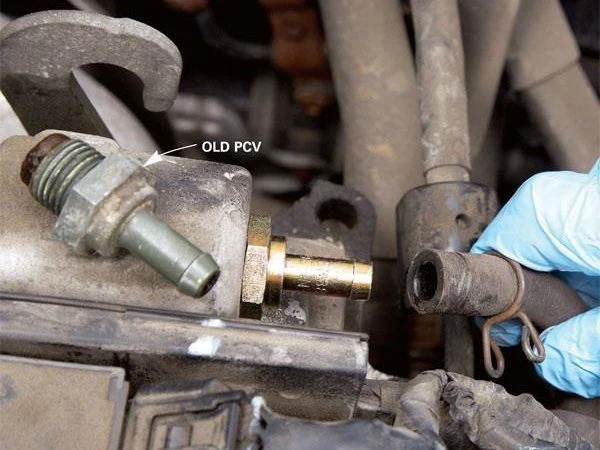
In many vehicles, yes. The PCV valve is often located on or near the valve cover, and in a lot of cases, it simply pulls out and pushes back in without needing specialized tools. If you are comfortable popping the hood and following a diagram in your owner’s manual, this can be a genuinely simple DIY job that takes less than thirty minutes.
That said, location varies significantly by make and model. Some vehicles tuck the valve away in a spot that requires removing other components just to get access. If you are not confident locating it yourself, a quick search using your specific make, model, and year, or a call to a local shop, will save you the frustration of guessing.
Quick DIY Inspection Steps
- Locate the PCV valve using your owner’s manual or a quick online search for your specific vehicle.
- With the engine off, remove the valve carefully from its housing.
- Give it a gentle shake. A healthy valve should rattle slightly, indicating the internal spring and plunger move freely.
- If there is no rattle, or if you notice oil residue and gunk clogging the valve, it needs replacing.
- Check the surrounding hoses for cracks, looseness, or signs of oil residue as well.
This simple check takes only a few minutes and can save you a diagnostic fee at the shop if you catch the problem early.
Preventing PCV Valve Problems Before They Start
A little routine attention goes a long way with this part. Here are a few habits worth building into your regular car care routine:
- Stick to your oil change schedule. Clean oil means less sludge buildup, and less sludge buildup means a PCV valve that stays clear longer.
- Ask your mechanic to check the PCV system during routine service. It rarely takes more than a couple of minutes and can catch a developing clog before it causes seal damage.
- Pay attention to how your car idles. Rough or uneven idling can be an early indicator worth investigating before it turns into a bigger issue.
- Replace the valve proactively if you are near the estimated mileage range. Given how inexpensive the part is, replacing it slightly early is a small price to pay for avoiding a bigger repair later.
PCV Valve vs Other Common Oil Leak Sources
Since a bad PCV valve is not the only thing that causes engine oil leaks, it helps to know how it compares to other common culprits.
| Source of Leak | Common Cause | Typical Repair Cost |
|---|---|---|
| PCV valve failure | Clogging causes pressure buildup, blowing seals | $60 to $83 |
| Valve cover gasket | Age, heat exposure, hardening rubber | $100 to $300 |
| Oil pan gasket | Wear over time, road debris impact | $150 to $500 |
| Rear main seal | Age-related wear, high mileage | $400 to $900 |
| Oil filter housing | Cracked housing or worn gasket | $100 to $350 |
Notice how the PCV valve sits at the low end of that cost scale. That is exactly why catching this problem early matters so much. Left unchecked, a clogged PCV valve can actually cause damage to some of these more expensive components, like the valve cover gasket, turning a cheap fix into a much pricier one.
Frequently Asked Questions
Will a bad PCV valve throw a check engine light?
In many modern vehicles, yes. A malfunctioning PCV system can trigger codes related to vacuum leaks or fuel trim issues, since the extra air or fuel vapor entering the intake throws off the engine’s air-fuel ratio calculations.
Can a PCV valve cause my car to fail an emissions test?
Absolutely. Since the entire point of the PCV system is reducing harmful emissions, a valve that is not functioning properly can allow excess vapors to escape or throw off combustion efficiency, both of which can lead to a failed emissions test.
Is it safe to drive with a disconnected PCV hose?
Not ideal. A disconnected hose creates a vacuum leak, which can cause rough idling, poor fuel economy, and inconsistent engine performance. It is a quick fix, so there is little reason to put off reconnecting or replacing it.
Does every vehicle have a PCV valve?
Nearly all gasoline-powered vehicles built after emissions regulations took effect include a PCV system. Diesel engines typically use a different type of crankcase ventilation system due to differences in how they handle combustion byproducts.
How often should I inspect my PCV valve?
A quick check during every oil change is a reasonable habit to build. It only takes a couple of minutes and can catch problems well before they cause oil leaks or engine damage.
A PCV valve rarely gets the spotlight during a typical service visit, yet it quietly protects your engine from pressure buildup, sludge, and unnecessary oil loss every single day you drive. The next time you are in for an oil change, ask your mechanic to give this small part a quick look. It takes only a few minutes, costs next to nothing compared to the alternative, and might just save you from an expensive surprise down the road.