
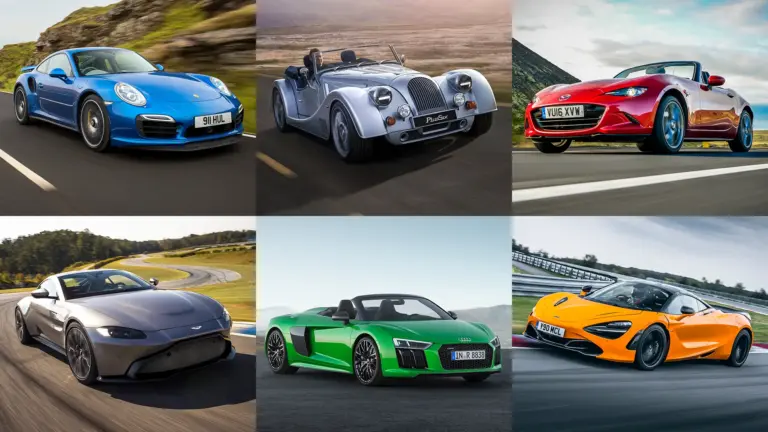
Sports cars and fuel efficiency have always had a complicated relationship. For a long time, you had to choose one or the other. Either you got something exciting that guzzled fuel, or you got something economical that barely raised your pulse.
That is changing. Manufacturers have spent the last decade engineering genuinely fast, genuinely fun sports cars that also deliver respectable fuel economy. Turbocharging, lightweight materials, hybrid powertrains, and smarter transmission technology have all played a role in closing the gap between performance and efficiency.
According to Consumer Reports, 57 percent of car buyers say reduced fuel costs are a significant factor in their vehicle decision. That percentage likely skews even higher among sports car buyers who drive their vehicles hard and regularly.
Here are 11 sports cars that prove you do not have to sacrifice excitement to get better numbers at the pump.
1. 2021 Ford Mustang EcoBoost
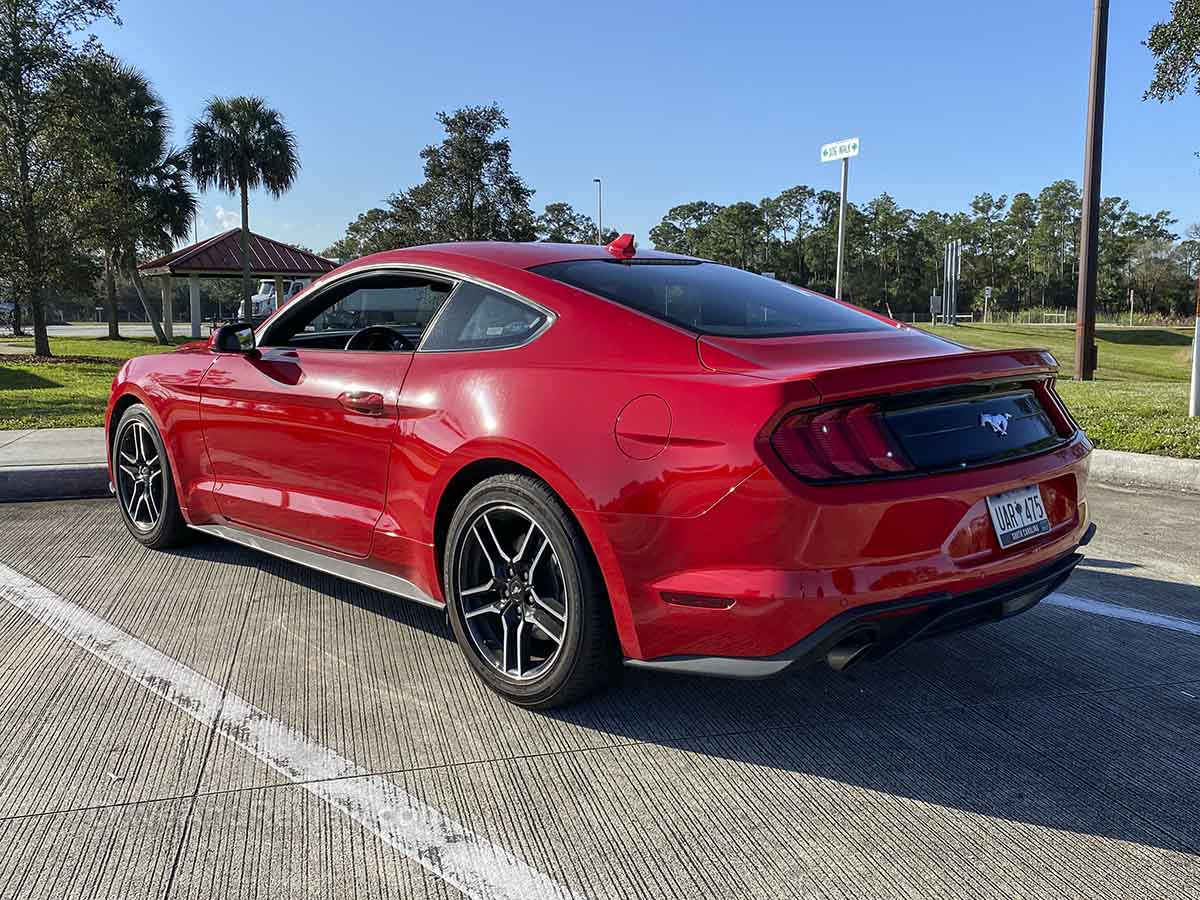
The Ford Mustang has a long history with efficiency milestones. The V6 Mustang made headlines years ago as the first car to combine 300 horsepower with more than 30 mpg highway fuel economy. That naturally aspirated V6 is now gone, replaced by the 2.3-liter EcoBoost four-cylinder as the entry-level engine.
The EcoBoost produces 310 horsepower and 350 pound-feet of torque. Paired with the 10-speed automatic transmission, it achieves up to 32 mpg on the highway. That is genuinely impressive for a rear-wheel-drive American muscle car.
For drivers who want a bit more on the performance side, Ford offers an optional performance package for the EcoBoost model. It adds summer-only tires, a limited-slip rear differential, an active exhaust system, a larger radiator, and chassis upgrades that bump output up to 330 horsepower. You get more capability without giving up much in terms of efficiency.
For anyone who wants the Mustang experience at a lower running cost, the EcoBoost is the answer.
2. Bugatti Chiron
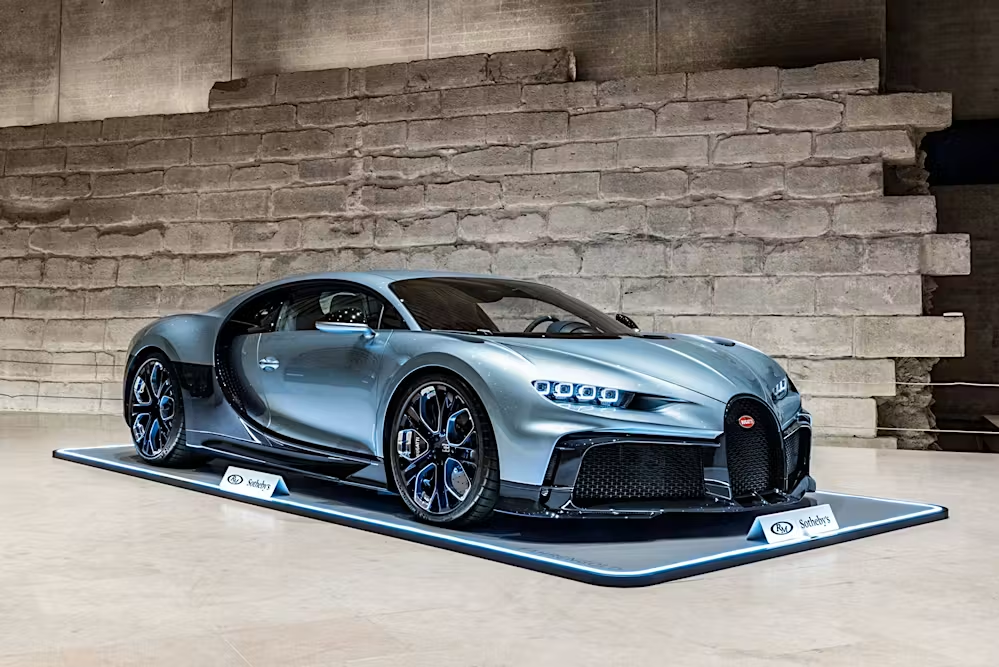
Let us be upfront about this one. The Bugatti Chiron is not on this list because of its fuel economy. At a base price of nearly $3 million, the EPA-rated 10 mpg city, 15 mpg highway, and 8 mpg combined figures are not exactly what you would call efficient.
But the Chiron earns its place here because it represents the extreme end of the sports car spectrum, and understanding what that costs in fuel terms puts the rest of the list in perspective.
Bugatti’s design philosophy, as described by their Director of Design Achim Anscheidt, is that “form follows performance.” Every decision on the Chiron is made in service of performance first. That means removing heat from the brakes and engine takes priority over fuel efficiency considerations.
The result is a car that does things no other production car can do. Fuel economy just is not one of them.
3. BMW i8
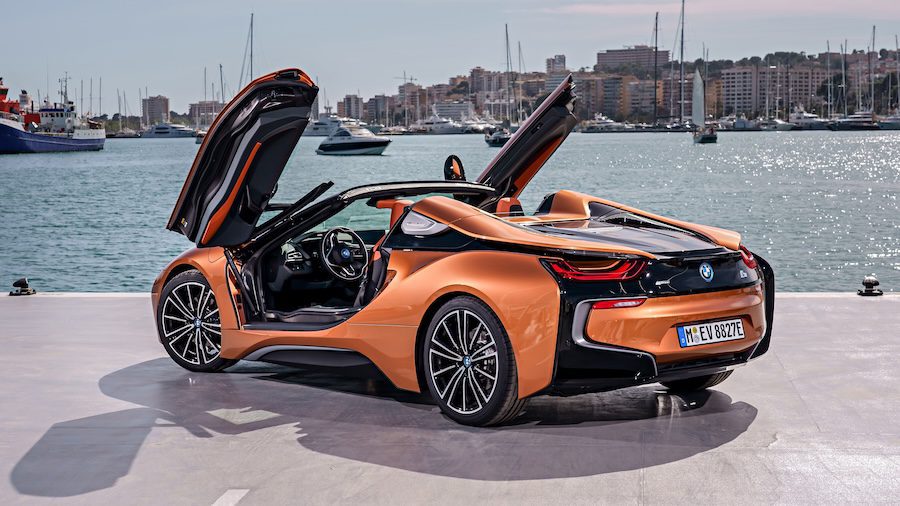
The BMW i8 is the sports car that proved hybrid technology and genuine performance excitement could coexist in the same package. The bodywork alone signals that this is something different, but the engineering underneath backs it up.
Under the futuristic exterior sits a turbocharged 1.5-liter three-cylinder petrol engine driving the rear wheels, paired with an electric motor driving the front wheels. Together they produce 369 horsepower and 420 pound-feet of torque, enough to reach 60 mph in 4.2 seconds.
The hybrid setup also provides multiple driving modes, giving the driver control over how aggressively the available power is deployed. In pure electric mode, it handles local driving quietly and efficiently. Push it in sport mode and the combined powertrain responds immediately.
The i8 represents what BMW believed the future of performance cars would look like. It aged as more of a preview than a definitive answer, but it remains one of the most genuinely interesting sports car concepts ever put into production.
4. Ferrari 812 Superfast
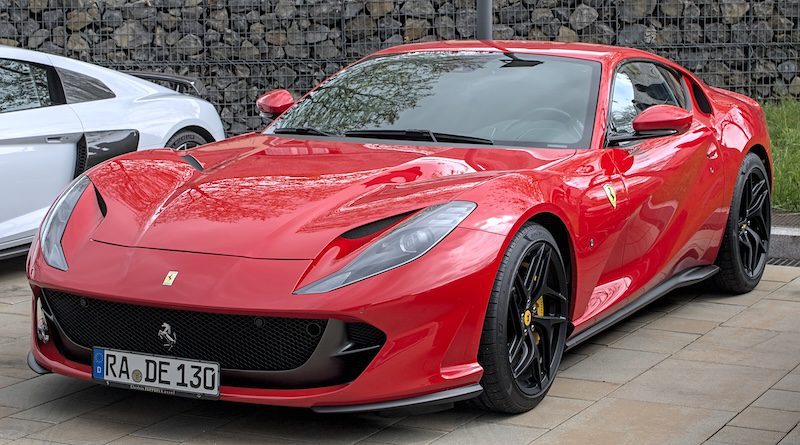
The Ferrari 812 Superfast is another name on this list that is not here because of fuel efficiency. The name itself tells you everything about the priorities during its development. Fuel economy rated at 12 mpg city, 16 mpg highway, and 13 mpg combined confirms it.
But what you get for that fuel consumption is extraordinary. A 6.5-liter V12 with an aluminum block, direct fuel injection, and 48 valves produces 789 horsepower at 8,500 rpm and 530 lb-ft of torque. Top speed reaches 211 mph. The price is $315,000.
The 812 Superfast sits on this list as the benchmark of naturally aspirated performance. The Ferrari engineers were not trying to save fuel. They were trying to build the best naturally aspirated V12 sports car possible. By that measure, they succeeded completely.
5. Porsche 718 Cayman
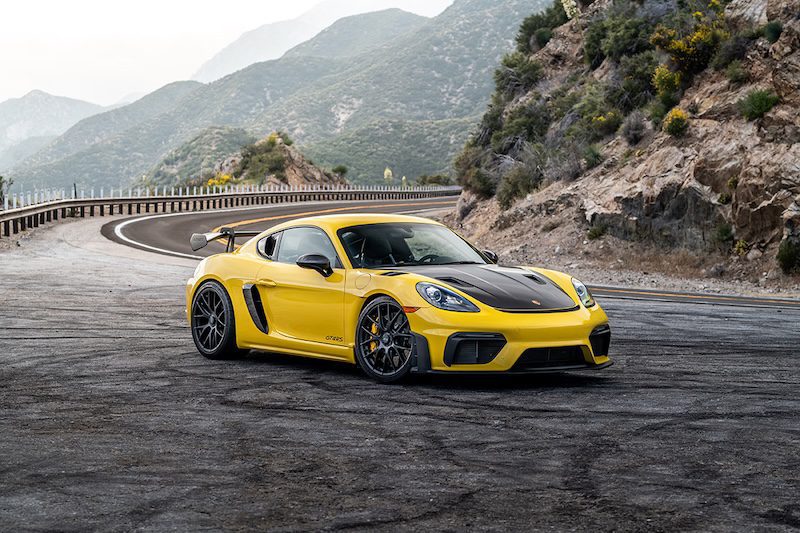
The Porsche 718 Cayman is one of the most celebrated driver’s cars in production, and it happens to be reasonably fuel efficient for the performance it delivers.
Porsche’s approach to fuel efficiency follows a clear strategy: smaller displacement engines with turbocharging. The Cayman moved away from the flat-six shared with the 911 in 2017, adopting a turbocharged and intercooled flat-four setup instead.
The base model carries a 2.0-liter engine producing 300 horsepower. The S model steps up to a 2.5-liter unit with 350 horsepower, paired with a standard six-speed manual transmission. The GTS version, introduced in 2018, extracts 365 horsepower from the 2.5-liter engine and adds brake-based torque vectoring along with adaptive dampers.
What sets the Cayman apart from everything else at its performance level is how it communicates with the driver. The steering, the braking, the balance through corners. Few cars at any price get those fundamentals as right as the Cayman does.
6. Tesla Model 3
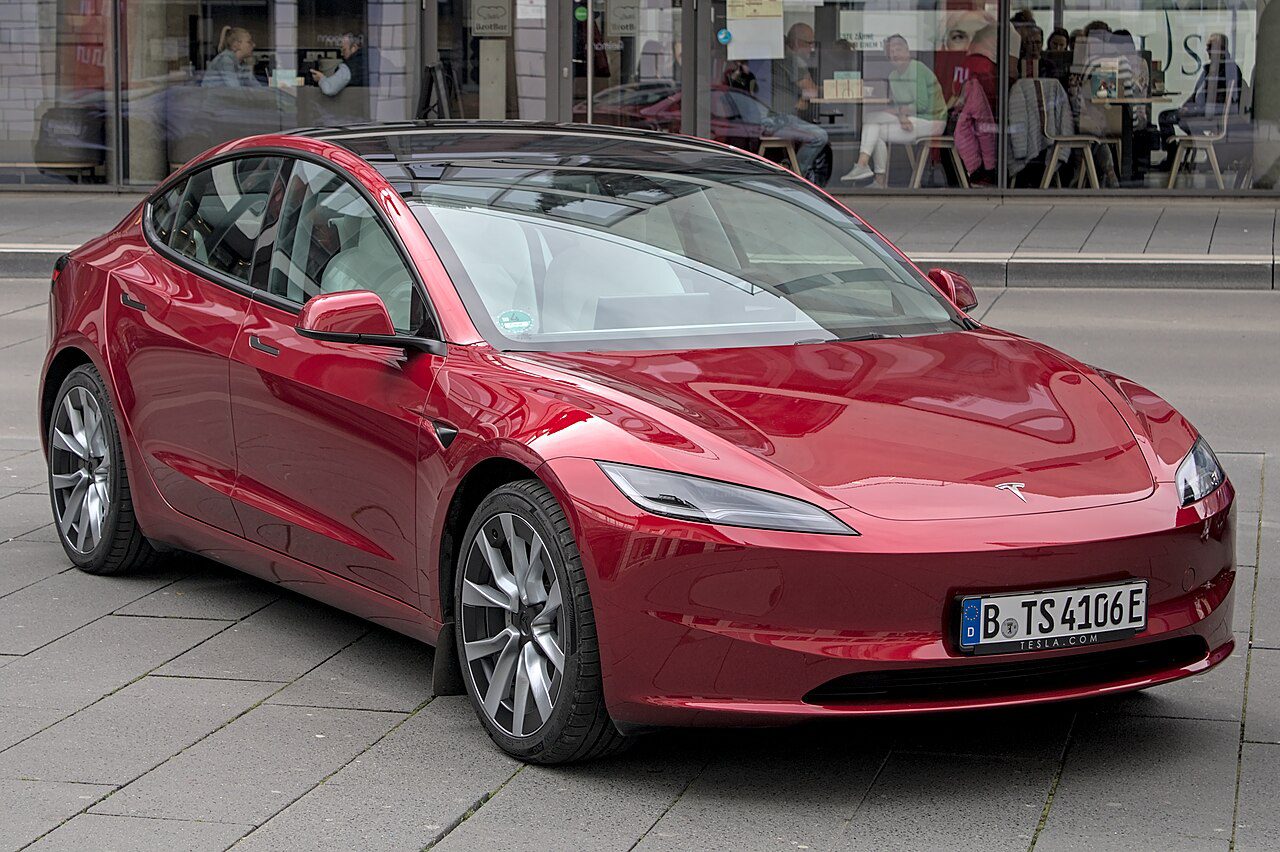
The Tesla Model 3 occupies a genuinely unique position in this category. It delivers sports car levels of acceleration, excellent range, and zero direct emissions, all in a package that is practical enough for daily use.
Electric vehicles get instant, full torque from zero RPM. That characteristic makes EVs feel dramatically faster than their horsepower figures might suggest, especially in real-world driving conditions where you rarely reach the top of the rev range.
The Model 3 is part of a growing EV sports car ecosystem that also includes the Tesla Model S, the Tesla Model X, the BMW i3, and the Ford Mustang Mach-E. Each offers that same combination of immediate acceleration and low ongoing fuel costs.
The efficiency picture does depend on where your electricity comes from. A grid powered largely by renewables makes EV ownership genuinely low-emissions. A coal-heavy grid changes that calculation. Regardless, the charging infrastructure across the United States continues to expand, making long-distance EV travel more practical than it was even a few years ago.
7. Karma Revero
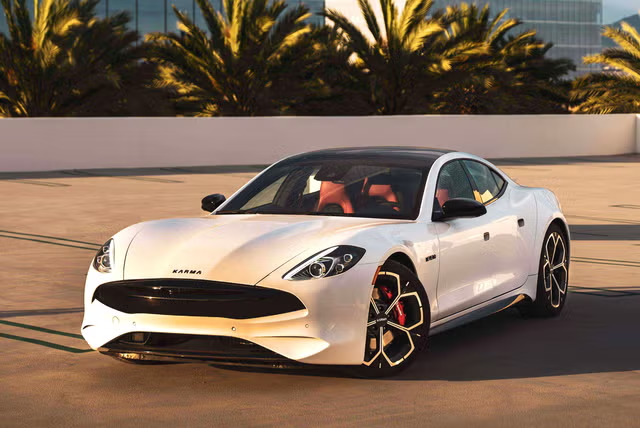
The Karma brand has an interesting history. The original Fisker Karma debuted in 2012 as a hybrid sports car that was ahead of its time. After various changes in ownership and brand identity, it returned as the Karma Revero.
The mechanical architecture is largely carried over from the original, which is not necessarily a bad thing. A turbocharged 2.0-liter four-cylinder internal combustion engine is paired with two electric motors for a combined output of 403 horsepower and an impressive 981 pound-feet of torque.
That torque figure is the headline number. It delivers the kind of low-speed thrust that makes the car feel genuinely quick in everyday driving. The hybrid setup also allows for electric-only driving in appropriate conditions, reducing fuel consumption for shorter trips.
The Revero is a niche choice, but for drivers who want a hybrid sports car with a distinctive identity, it offers something different from the mainstream options.
8. Mercedes-Benz AMG SLC
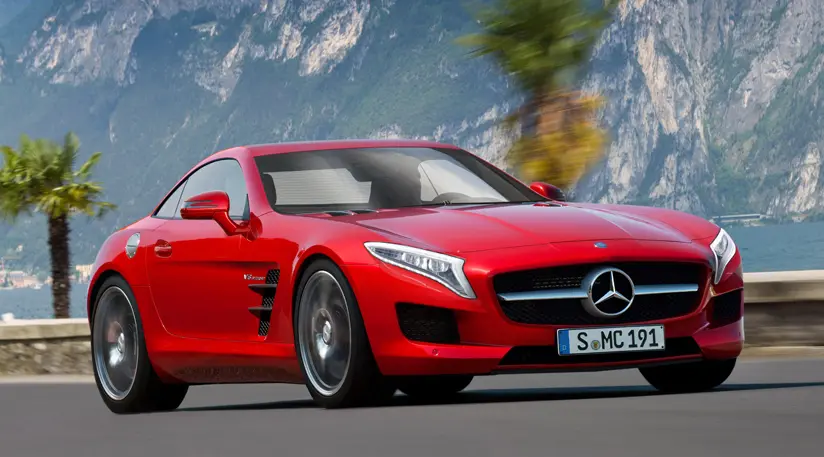
The Mercedes-Benz SLC represents the German approach to the open-top sports car. It is polished, refined, and technically capable, with a folding hardtop that includes a photochromic glass roof element and opens or closes in 20 seconds at speeds up to 25 mph.
The entry-level SLC 300 runs a 2.0-liter turbocharged four-cylinder producing 241 horsepower and 273 pound-feet of torque. It reaches 60 mph in 5.7 seconds and returns 25 mpg city, 32 mpg highway, and 27 mpg combined. For a proper sports roadster with a German badge, those fuel economy numbers are genuinely good.
The AMG SLC43 is the more exciting version at just under $62,000. Its twin-turbocharged V6 produces 362 horsepower and gets to 60 mph in 4.6 seconds. Even with that performance boost, it still manages 20 mpg city, 29 mpg highway, and 23 mpg combined. The penalty for adding significant performance is surprisingly modest.
9. Audi TT RS Coupe
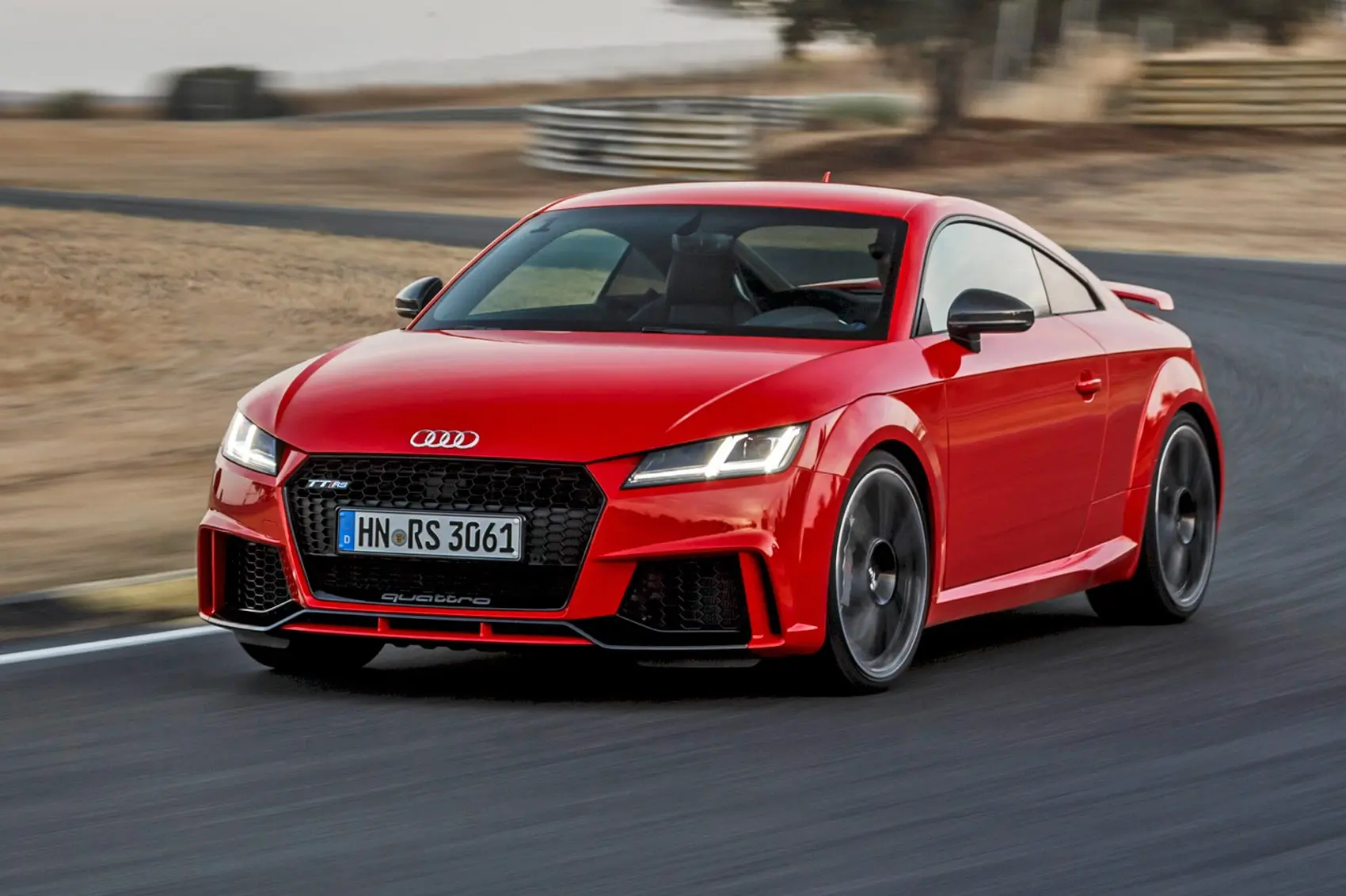
The Audi TT RS is one of those sports cars that does almost everything well. The interior quality is genuinely excellent, the exterior styling has aged well across multiple generations, and the fuel efficiency for the performance class it sits in is above average.
Starting at just under $65,000, the TT RS comes well-equipped as standard. Bluetooth connectivity, full LED headlights, Audi’s Virtual Cockpit digital instrument cluster, keyless entry and start, a rearview camera, heated front leather seats, and parking sensors are all included from the base spec.
Under the hood sits a turbocharged and intercooled inline five-cylinder engine with an aluminum block and direct fuel injection. The aluminum construction shaves 42 pounds compared to the previous iron-block version, contributing to both efficiency and handling. The result is 23 mpg city and 30 mpg on the highway.
The five-cylinder engine also produces a distinctive sound that sets it apart from the more common four and six-cylinder alternatives in this segment.
10. Alfa Romeo 4C
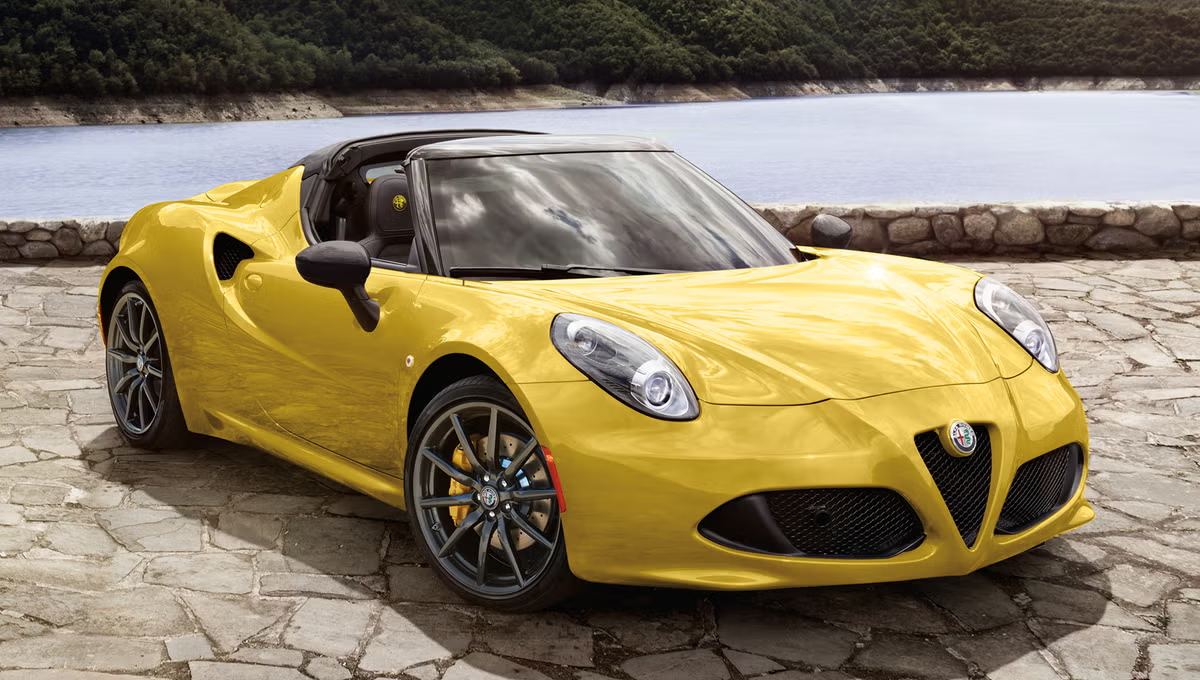
The Alfa Romeo 4C is a pure driving machine in a way that very few modern cars can claim. It was designed around a simple but increasingly rare philosophy: lightweight and driver-focused above everything else.
The extensive use of carbon fiber throughout the structure keeps the 4C’s weight to just 2,465 pounds. That is a number that would be remarkable for any production sports car, let alone one at a budget-friendlier price point compared to Italian mid-engine alternatives.
The engine is a turbocharged 1.8-liter four-cylinder producing 237 horsepower and 258 pound-feet of torque. In a car this light, that output feels much more substantial than the numbers suggest. Acceleration is sharp, steering communication is direct, and the car rewards a driver who wants to be actively involved in the process of going fast.
The 4C is not comfortable. It has no power steering, minimal sound insulation, and the ride is firm to the point of abrasive on poor road surfaces. But for a driver who wants a genuinely raw experience, it offers something that almost nothing else at its price delivers.
11. Fiat 124 Spider Abarth
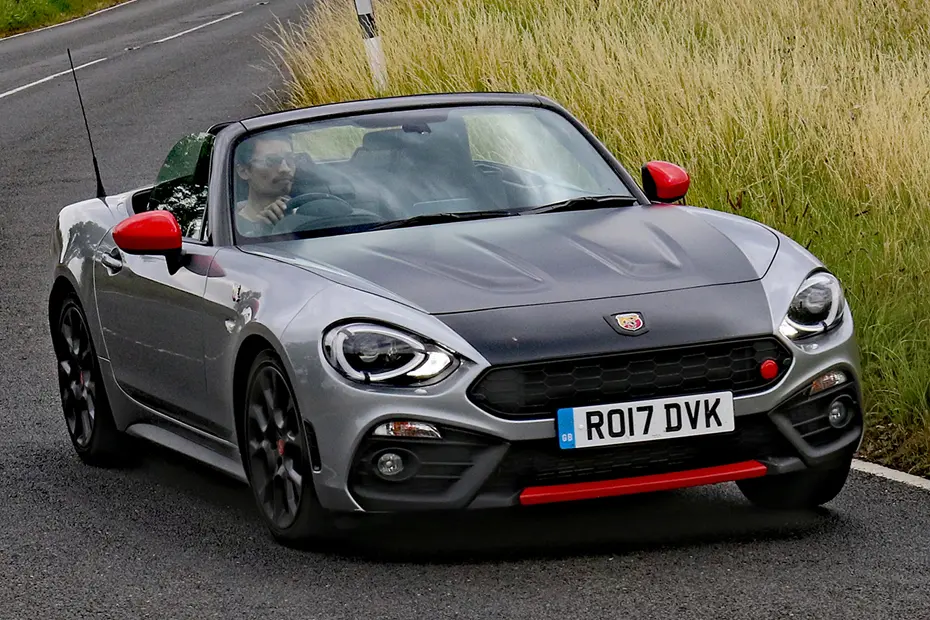
The Fiat 124 Spider has a connection to the Mazda MX-5 Miata that goes beyond just looking similar. The two cars share the same chassis platform, which gives them comparable handling characteristics and similarly light, agile road manners.
The differences are meaningful though. Where the Miata uses a naturally aspirated 2.0-liter four-cylinder producing 155 horsepower and 148 pound-feet of torque, the Fiat 124 Spider runs a Fiat-Chrysler turbocharged 1.4-liter four-cylinder producing 164 horsepower and 184 pound-feet of torque. The extra torque from the turbo setup makes the Fiat feel more relaxed at lower engine speeds.
The 124 Spider comes in three trim levels: Classica, Lusso, and Abarth. The Abarth variant gets additional horsepower and more aggressive suspension tuning. The interior quality is higher than the Miata, and the suspension has its own distinct character. The ride is comfortable and smooth for everyday use, with enough agility when pushed.
Fuel economy comes in at 26 mpg city and 35 mpg on the highway, which is competitive with the Miata and strong for an open-top sports car.
Quick Comparison: Best MPG Sports Cars at a Glance
| Car | Horsepower | City MPG | Highway MPG |
|---|---|---|---|
| 2021 Ford Mustang EcoBoost | 310 hp | 22 | 32 |
| Bugatti Chiron | 1,500 hp | 10 | 15 |
| BMW i8 | 369 hp | 28 (mpge) | 29 (mpge) |
| Ferrari 812 Superfast | 789 hp | 12 | 16 |
| Porsche 718 Cayman | 300 hp (base) | 21 | 28 |
| Tesla Model 3 | Varies by trim | Electric | Electric |
| Karma Revero | 403 hp | Hybrid | Hybrid |
| Mercedes AMG SLC 300 | 241 hp | 25 | 32 |
| Audi TT RS Coupe | 400 hp | 23 | 30 |
| Alfa Romeo 4C | 237 hp | 24 | 34 |
| Fiat 124 Spider Abarth | 164 hp | 26 | 35 |
The message across this list is clear. You no longer have to accept poor fuel economy as the price of owning a sports car. Technology has changed the equation significantly. Whether you want a turbocharged four-cylinder muscle car, a hybrid supercar, a pure electric performance machine, or a lightweight Italian roadster, there is a sports car on this list that delivers real driving satisfaction without punishing you every time you visit the fuel pump.