
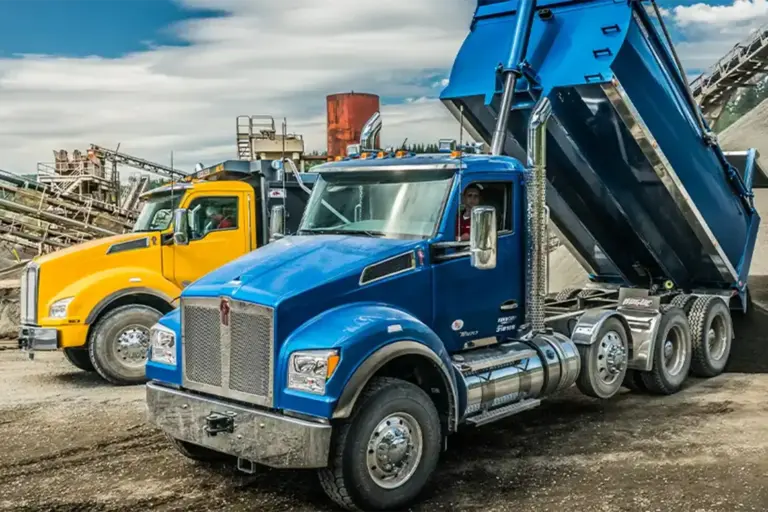
If you have ever been stuck behind a dump truck at a stoplight and noticed what looks like extra wheels dangling in the air or tucked up along the side, you were probably wondering what on earth those are for. They look strange. They look out of place. And at first glance, they seem completely unnecessary.
But they are not decorative, and they are not spare tires. Those extra wheels serve a very specific and practical purpose, and once you understand it, the whole design makes complete sense.
The Real Reason Dump Trucks Have Extra Wheels
Here is the short answer. Dump trucks carry extremely heavy loads. Every state and country has laws that limit how much weight a truck can put on each axle. More axles mean the total weight gets spread out over more contact points, which means the truck stays within legal limits.
When the truck is empty or lightly loaded, those extra axles get lifted off the ground. When the truck is fully loaded, they get lowered down to share the weight and keep everything legal.
That is the core of it. But the full picture is a bit more interesting than that.
Understanding Axle Weight Limits
Every road, bridge, and highway has a weight capacity. If vehicles exceed that capacity, the infrastructure deteriorates faster and becomes dangerous. That is why transportation authorities in every state set strict weight-per-axle limits for commercial vehicles.
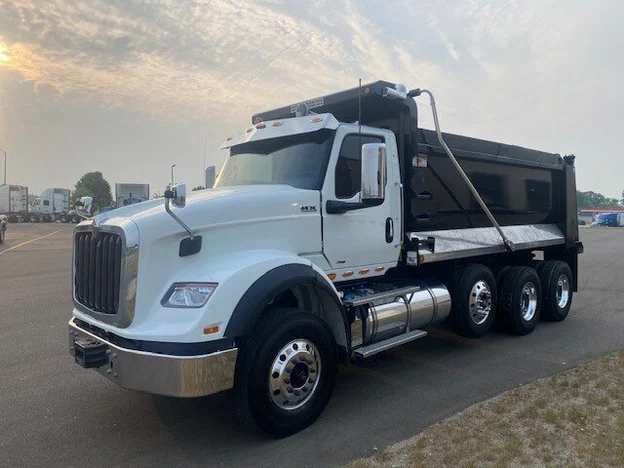
Here is a general idea of how those limits typically work in the United States:
- A single axle is limited to roughly 20,000 pounds
- A tandem axle setup is capped at around 34,000 pounds
These limits vary by state, but those numbers give you a solid baseline. Now consider what a fully loaded dump truck weighs. A truck hauling a full load of gravel, rock, or asphalt can easily put enormous stress on its axles. Without additional axles to distribute that weight, the truck would be over the legal limit before it even leaves the quarry.
This is where the extra wheels come in. By adding more axles, the total weight gets divided over a larger number of contact points. The per-axle load drops, the truck stays within legal limits, and it can legally carry a significantly larger total payload.
What Are These Extra Axles Actually Called?
Depending on where the additional axle sits on the truck, it gets a different name.
- Pusher axle: This is positioned just behind the drive axle, pushing against the load from behind. It helps carry weight from the middle of the load.
- Tag axle: This sits at the very rear of the truck, behind the drive axle. It trails behind and helps distribute load weight toward the back end of the vehicle.
- Dead axle or lazy axle: This is a free-rotating axle that does not connect to the drivetrain at all. It does not power the truck. It just rolls along and carries weight. A simple example of a dead axle concept is the rear axle on a front-wheel-drive car. It spins freely but does not drive the vehicle.
These lift axles can be raised and lowered by the driver, typically using an air-powered system controlled from inside the cab.
Why Do Dump Trucks Lift the Extra Wheels When the Truck Is Empty?
This is the part that trips most people up. If the extra axles help with weight distribution, why not just leave them down all the time?
Because running unnecessary axles on the ground creates its own set of problems.
- Increased tire wear: Every set of tires in contact with the road is wearing down. If the truck is empty and does not need the extra axles, dragging those tires along the pavement wastes money on tire replacement.
- Reduced fuel efficiency: More rolling resistance means the engine has to work harder. Extra axles on the ground when they are not needed reduce fuel economy noticeably over long distances.
- Poor traction on the drive wheels: This one is counterintuitive but important. When a truck is empty, having fewer axles on the ground actually improves traction on the drive wheels because more of the vehicle’s weight is concentrated on them. Spread the weight over too many axles on a light truck, and the drive wheels may not have enough downward force to grip the road well, especially on wet or slippery surfaces.
- Difficulty making tight turns: Extra axles on the ground in tight cornering situations cause what is known as lateral scrubbing. The tires essentially drag sideways instead of rolling cleanly through the turn. Lifting the axle during sharp bends eliminates that scrubbing and allows the truck to maneuver much more easily.
So lifting the axles when they are not needed is not laziness or carelessness. It is the smarter and more efficient way to operate the truck.
When Do Drivers Lower the Extra Axles?
The extra axles come down in a few specific situations.
- When the truck is fully or heavily loaded: This is the primary use case. A full load of gravel, sand, or demolition debris demands full weight distribution across all available axles.
- When crossing a bridge with a posted weight limit: Even if the truck is not at maximum payload, some bridges have strict per-axle limits. Lowering additional axles spreads the load and keeps the truck under those thresholds.
- When operating in jurisdictions with specific road regulations: Some routes or work sites have their own restrictions that require full axle deployment regardless of load weight.
The driver makes this call in real time based on the load they are carrying and the route they are traveling. It is one of many judgment calls that experienced commercial truck operators handle routinely.
Do the Extra Axles Power the Truck?
In most configurations, no. The extra lift axles on dump trucks are typically dead axles, meaning they roll freely but are not connected to the engine or transmission. They carry weight but do not contribute to moving the vehicle forward.
The powered axles, meaning the ones that actually drive the truck, remain fixed and always in contact with the road when the truck is moving.
That said, some heavier specialized configurations do include powered lift axles. These are less common but exist in certain heavy-haul and off-road applications where maximum traction is needed even under extreme load conditions.
How Many Extra Axles Can a Dump Truck Have?
This depends on the size of the truck, the type of work it does, and the regulations in the state or country where it operates.
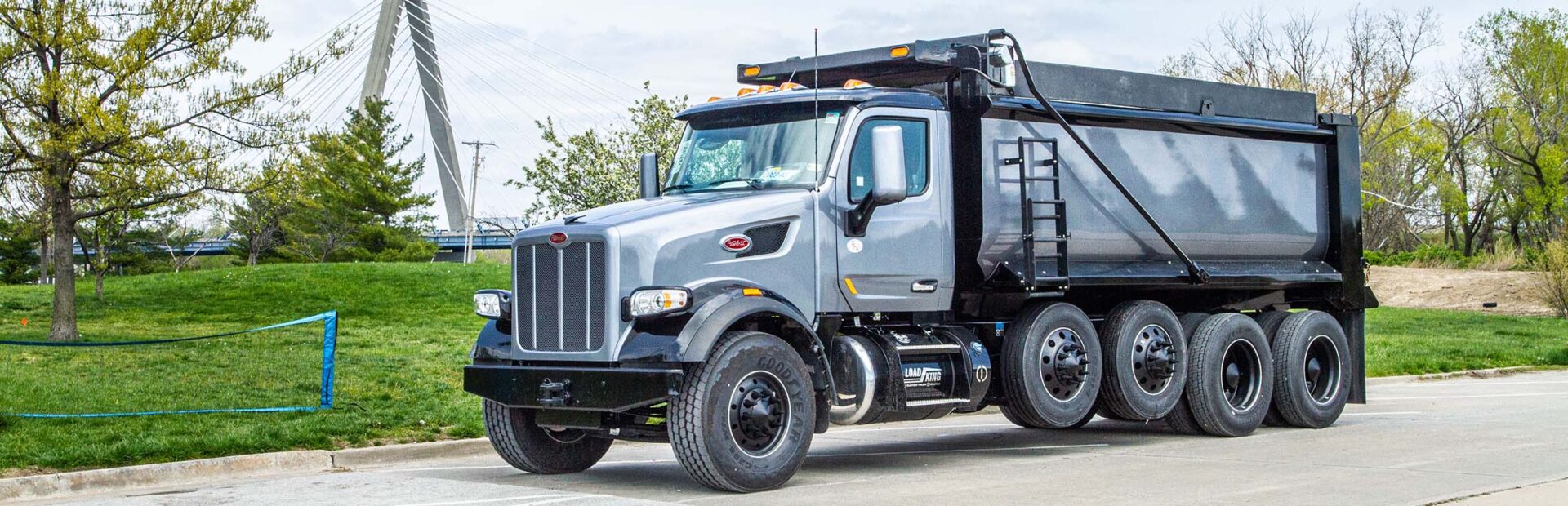
A standard dump truck might have a single lift axle. Larger multi-axle dump trucks, sometimes called super dumps or transfer dump trucks, can have three, four, or even more axles. Each additional axle increases the legal payload capacity the truck can carry.
Here is a simplified comparison of how axle count affects payload:
| Axle Configuration | Approximate Legal Payload Capacity |
|---|---|
| Single axle dump truck | Up to 15,000 lbs |
| Tandem axle dump truck | Up to 26,000 lbs |
| Tri-axle dump truck | Up to 33,000 lbs |
| Quad-axle dump truck | Up to 38,000 lbs |
| Super dump (multiple axles) | Up to 80,000 lbs in some configurations |
These numbers vary based on individual state laws and truck specifications, but they give you a sense of how dramatically payload capacity increases with each additional axle.
State-by-State Differences in Axle Weight Laws
One of the more complicated aspects of this topic is that weight limits are not uniform across the country. The federal government sets baseline limits through the Federal Highway Administration, but individual states can set their own rules that are stricter or, in certain cases, allow for specific exemptions.
For example, some states allow heavier axle loads during certain seasons, particularly when roads are frozen solid in winter and can handle more weight without damage. Other states have more restrictive limits to protect older infrastructure.
This is why you might see a dump truck with its extra axles deployed in one state but raised in another, even carrying the same load. The driver is always working within the legal framework of wherever they are operating at any given moment.
What Happens If a Dump Truck Exceeds Axle Weight Limits?
The consequences are significant and not just financial.
Overweight vehicles damage roads and bridges faster than properly loaded ones. The relationship between vehicle weight and road damage is not linear. A vehicle twice the legal weight does not cause twice the damage. It causes exponentially more damage. This is why regulations exist and why enforcement is taken seriously.
For the driver and the company, the consequences of being caught overweight include:
- Substantial fines that increase with the degree of excess
- Being required to offload cargo at the weigh station until the truck is within limits
- Potential loss of operating permits
- Liability for road damage in extreme cases
Weigh stations exist specifically to enforce these limits. Commercial trucks are required to pull in at active weigh stations, and the data collected helps transportation authorities monitor compliance.
The Economic Logic Behind Lift Axles
From a business perspective, lift axles make a lot of financial sense.
A dump truck hauling more material per trip means fewer trips are needed to complete a job. Fewer trips mean less fuel consumed, less driver time, and lower overall operating costs. The cost of installing and maintaining a lift axle system is recovered quickly through improved efficiency and the ability to haul larger legal payloads.
For contractors and fleet operators, the return on investment for proper axle configuration is measurable and real. A truck that can legally haul 20 percent more material per load in a year will generate significantly more revenue and incur lower per-ton transportation costs than one that is limited to smaller loads.
Other Types of Trucks That Use Lift Axles
Dump trucks are not the only vehicles that use this technology. Lift axles appear on a range of heavy commercial vehicles for the same basic reasons.
- Concrete mixer trucks: The rotating drum full of wet concrete is heavy. Lift axles help manage axle weight while the truck travels to the pour site.
- Flatbed semi-trailers: Some heavy-haul flatbeds have retractable axles under the trailer to distribute extreme loads.
- Garbage trucks: In some configurations, lift axles help manage weight as the truck fills throughout a collection route.
- Cement and bulk tanker trucks: Similar weight management needs apply to liquid and bulk material haulers.
Anywhere a vehicle needs to carry heavy, variable loads and stay within legal weight limits, lift axles are a practical engineering solution.
What Drivers Need to Know About Operating Lift Axles
Managing lift axles is a skill that experienced commercial drivers develop over time. Getting it right requires judgment about current load weight, the route ahead, road conditions, and local regulations.
A few practical considerations that drivers think about when managing lift axles:
- Always lower extra axles before crossing a weight-restricted bridge
- Raise axles when traveling empty to protect tires and improve fuel economy
- Be aware of how lifted axles affect vehicle height in areas with low clearances
- Raise lift axles when making tight turns to prevent scrubbing and improve maneuverability
- Understand the specific weight laws for every state on a planned route when crossing state lines
Commercial drivers who haul heavy loads are much more aware of their vehicle’s technical specifications than most people assume. Axle management is just one part of the knowledge base that separates professional heavy equipment operators from casual drivers.
So the next time you see a dump truck with its extra wheels hovering a few inches off the ground, you will know exactly what you are looking at. It is not a spare. It is not decorative. It is a precision weight management tool that helps the truck carry more, protect the roads it travels on, stay within the law, and operate as efficiently as possible. Simple idea, smart engineering.