
Wheels are one of the first things anyone notices about a vehicle. Before they see the paint, the body kit, or the interior, they see the wheels. A great set can completely change the character of a car. A bad choice can make an otherwise sharp vehicle look unfinished.
But here is the thing. Most people buy wheels purely on looks and end up disappointed, either because the wheels they chose do not perform the way they expected, or because they did not account for fitment, weight, or how the wheel material behaves under real driving conditions.
Table of Contents
New wheels can range from $50 each all the way into the tens of thousands for exotic materials and custom builds. That is an enormous range, and making sense of it requires understanding what you are actually comparing. This guide breaks down the main types of car wheels, what each one is built for, and who each type is actually suited for in the real world.
1. Steel Wheels: The Tough and Practical Choice
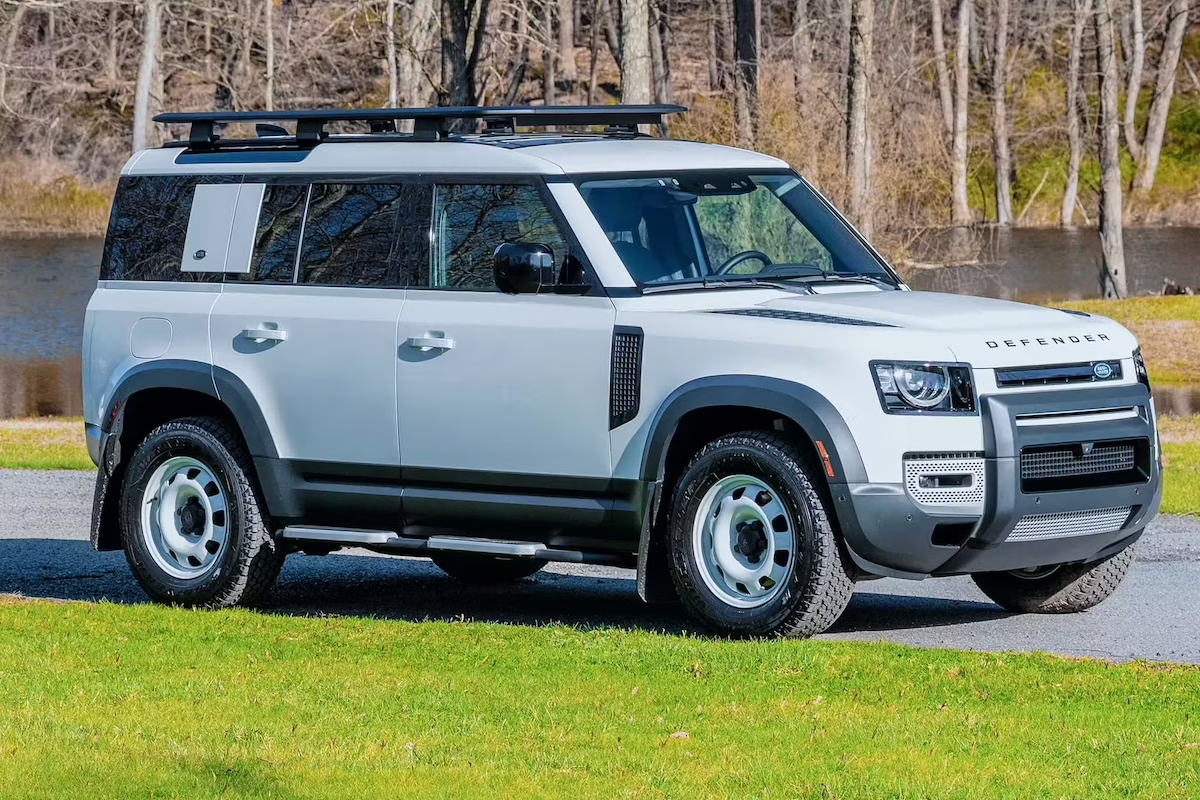
Steel wheels are the workhorses of the wheel world. They are heavier, less visually exciting, and completely unbothered by any of that. If you need a wheel that takes a beating and keeps going, steel is the answer.
These wheels are stamped and welded from steel sheet metal. The manufacturing process is straightforward, which keeps the cost low. You can find a set of steel wheels for a fraction of what alloy wheels cost, and they are significantly cheaper to repair or replace when damaged.
The weight is the main trade-off. Steel wheels are substantially heavier than their alloy counterparts. That added unsprung weight, which is the weight below the suspension that the car has to manage, puts more strain on the axle, the bearings, and the suspension components. It also increases fuel consumption because the engine has to work harder to rotate heavier wheels. You will not win any fuel economy competitions on a set of steelies.
But in real-world scenarios where durability matters more than efficiency, steel wins. Police departments have relied on steel wheels for decades for exactly this reason. They are cheap to maintain, they handle curb strikes without cracking, and when they do get damaged, a damaged steel wheel can often be hammered back into reasonable shape rather than being discarded entirely. That is a feature that alloy wheels simply cannot offer.
Steel wheels are also the go-to choice for winter tire setups in cold climates. Many drivers run a dedicated set of steel wheels with winter tires during the cold months to protect their nicer alloy wheels from road salt corrosion and pothole damage.
Best for: Winter driving setups, work vehicles, budget-conscious drivers, high-abuse environments.
2. Alloy Wheels: The Most Popular Choice for Good Reason
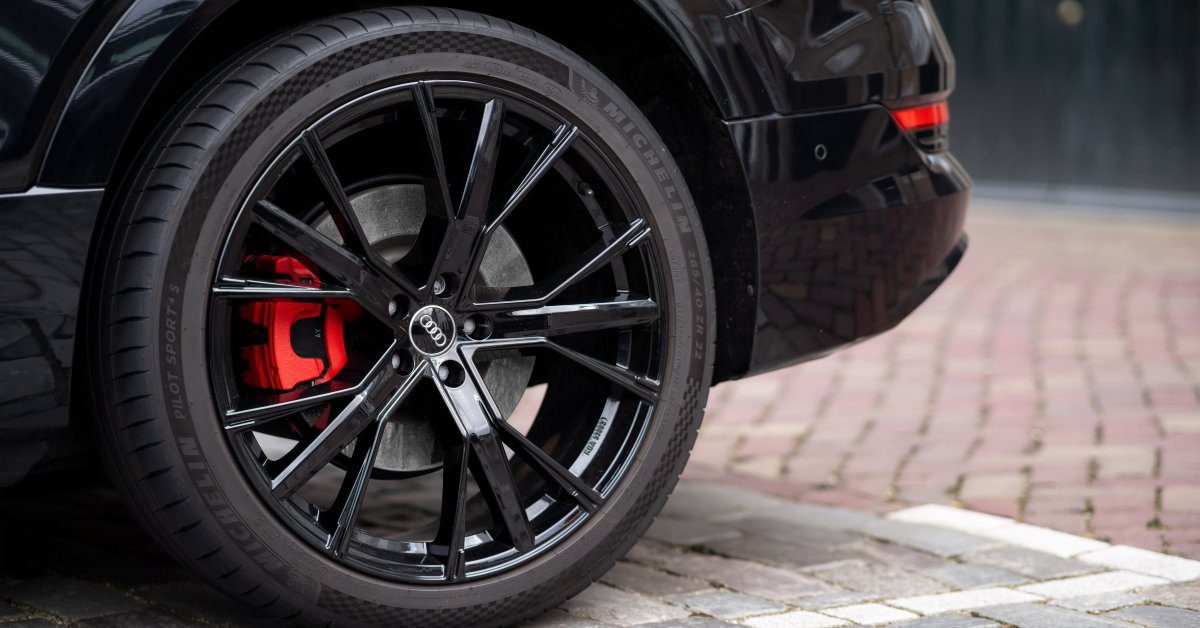
Alloy wheels are what most people are referring to when they talk about upgrading their wheels. They dominate the aftermarket, they come standard on most modern vehicles above the base trim level, and they offer a genuine performance benefit beyond just looking good.
Alloy wheels are made from an aluminum or magnesium alloy, sometimes a combination of both. The result is a wheel that is significantly lighter than an equivalent steel wheel. Less unsprung weight means the suspension can react faster to road imperfections. Braking distances improve slightly. Steering feel becomes sharper. Fuel economy gets a modest boost because the engine is not fighting the rotational inertia of heavy wheels.
The design options available in alloy wheels are virtually unlimited. Five-spoke, multi-spoke, mesh, split-spoke, concave face, flat face, two-tone finishes, polished lips, brushed surfaces. If you can imagine a wheel aesthetic, it has almost certainly been produced in alloy.
The main vulnerability of alloy wheels compared to steel is their susceptibility to cracking and bending under sharp impacts. Hit a deep pothole at speed on a steel wheel and you will likely dent it. Hit the same pothole on an alloy wheel and you might crack it. Alloy wheels can be repaired in many cases, but a cracked wheel that runs along the structural face rather than just the finish is a safety risk and needs replacement.
Cost is higher than steel both for the initial purchase and for repairs. But the combination of weight savings, appearance, and the wide variety of available styles makes alloy the right choice for the majority of daily drivers who want to upgrade from the factory steel wheels.
Best for: Daily drivers, enthusiasts wanting style and modest performance gains, most road conditions.
3. Cast Wheels vs. Forged Wheels: Understanding How the Wheel Is Made
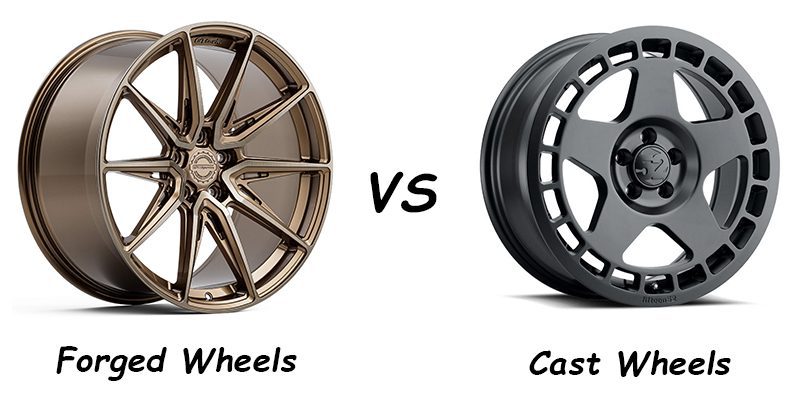
Whether you are looking at steel or alloy wheels, they are produced using one of two fundamental manufacturing methods. Casting and forging produce wheels with genuinely different structural characteristics, and understanding the difference helps you make a smarter purchase decision.
Cast Wheels
Casting is the more common and less expensive manufacturing process. Molten metal is poured into a mold, allowed to cool, and then machined to the final dimensions. The process is fast, efficient, and relatively inexpensive, which is why the vast majority of aftermarket alloy wheels and virtually all steel wheels are cast.
The downside of casting is porosity. As the molten metal cools and solidifies inside the mold, tiny air pockets can form throughout the structure. This makes cast wheels slightly more porous and somewhat less dense than forged wheels. Under normal daily driving conditions, this is a complete non-issue. However, under the sustained high stress of track driving or aggressive off-road use, that porosity means cast wheels are more susceptible to cracking under repetitive heavy loads.
For the overwhelming majority of drivers, a quality cast alloy wheel is entirely sufficient. They offer a great balance of cost, weight, and durability for street use.
Forged Wheels
Forged wheels start as a solid billet of aluminum. That billet is subjected to enormous pressure, which compresses and aligns the grain structure of the metal. The resulting wheel has a far denser, stronger internal structure than a cast wheel of similar dimensions.
The practical benefits are significant. Forged wheels are lighter than cast wheels of the same size because the engineer can remove more material from a structurally superior base. They are also considerably stronger, meaning they can handle impacts and stress that would crack or deform a cast equivalent. Many forged wheel designs are developed using CAD software, which allows for intricate designs that would be difficult or impossible to achieve cleanly through casting.
The cost reflects all of this. Forged wheels are substantially more expensive than cast wheels. They are the choice of serious performance drivers, track cars, and high-end sports car owners who need maximum strength at minimum weight and are willing to pay for it.
Best for: Cast wheels suit daily drivers and most performance applications. Forged wheels are for serious track use, high-performance sports cars, and drivers for whom weight savings and ultimate strength are worth a premium price.
4. Split Rim Wheels: The Multi-Piece Construction Explained
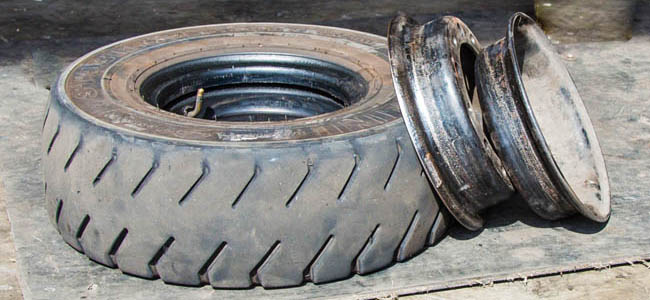
Split rim wheels, more accurately called multi-piece wheels, are identifiable by the series of small bolts running around the outer edge of the rim. These bolts are not decorative. They are structural fasteners holding the separate sections of the wheel together.
A true split rim wheel is assembled from two or three individual components. The center section of the wheel, which is the part with the spokes and the hub mounting face, is manufactured separately from the outer barrel. These components are then bolted together to form the complete wheel. This multi-piece construction serves a practical purpose: it allows the wheel builder to mix and match center and barrel dimensions, making it much easier to achieve very specific fitment requirements, particularly for vehicles with unusual offsets or space constraints.
Be aware that counterfeit split rim wheels exist in the market. Some wheels are manufactured to look like multi-piece wheels, with cosmetic bolts around the barrel that appear to be holding sections together. In reality, these are single-piece cast wheels with purely decorative hardware. The bolts do nothing structural and can be a safety concern if buyers assume they are purchasing a genuine multi-piece wheel.
Always verify with the seller whether the wheel is a genuine multi-piece design or a single-piece wheel with decorative hardware before purchasing.
Best for: Custom builds requiring specific offset and fitment dimensions, wide-body vehicle builds, high-end sports cars with challenging fitment requirements.
5. One-Piece, Two-Piece, and Three-Piece Wheels: What the Numbers Mean
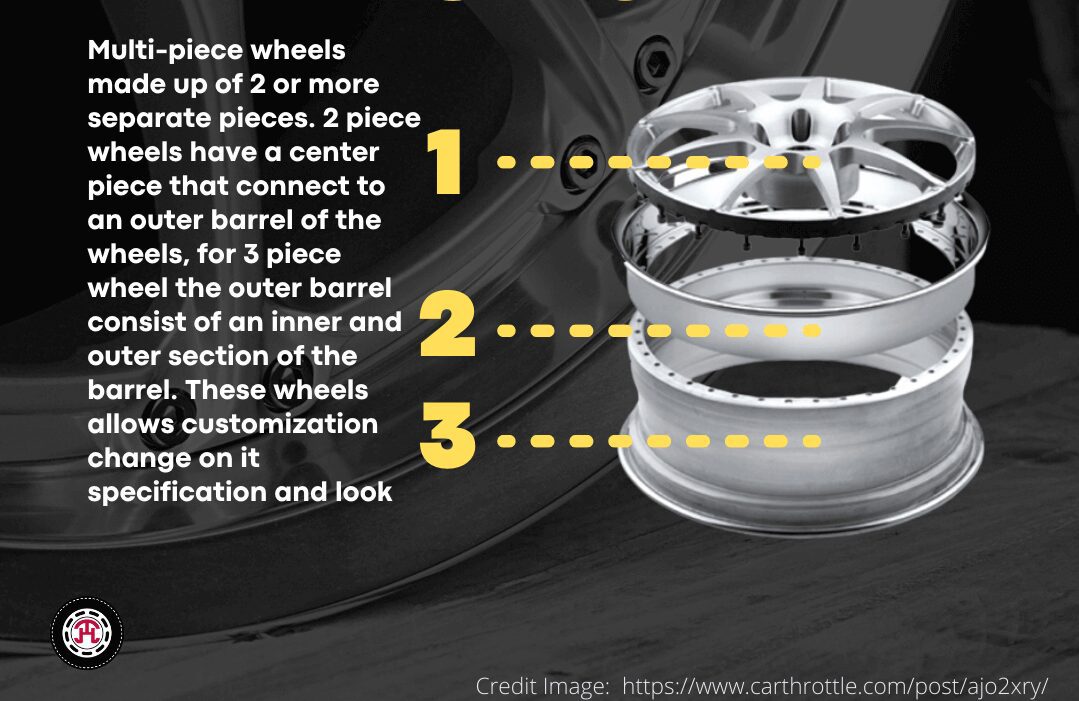
This classification system describes how many separate components were assembled to create the finished wheel. It applies primarily to alloy wheels and is closely related to the forged versus cast distinction discussed earlier.
One-Piece Wheels
All cast wheels are one-piece by default. The entire wheel, the center, the spokes, and the barrel, is formed in a single casting or forging operation. One-piece wheels are the most structurally simple, the easiest to balance, and the most cost-effective to produce. The overwhelming majority of factory wheels and aftermarket wheels sold today are one-piece designs.
Two-Piece Wheels
Two-piece wheels consist of a forged or cast center section that is bolted or welded to a separate rim barrel. This construction allows the manufacturer to offer different center designs paired with different barrel widths and depths without having to tool up an entirely new mold for each combination. Two-piece wheels provide more design flexibility than one-piece wheels and are typically found in the mid-to-high price tier of the aftermarket.
Three-Piece Wheels
Three-piece wheels take the multi-piece concept further by splitting the barrel itself into an outer lip section and an inner barrel section, with the center section making the third piece. All three components are bolted together with hardware around the rim edge.
Three-piece wheels are the most customizable option available. Because each section is manufactured and finished separately, the buyer can choose different finishes for the center and the outer lip, specify barrel depth and width with great precision, and achieve fitment targets that are virtually impossible with a one-piece wheel. They look exceptional on high-end sports cars, wide-body builds, and show vehicles.
They are also more expensive to purchase, more complex to maintain, and require periodic inspection and re-torquing of the assembly hardware to ensure the sections remain properly secured. For a track car or a daily driver, the additional complexity of a three-piece wheel is usually not worth the premium unless aesthetics and specific fitment requirements demand it.
Best for: Show cars, high-end custom builds, vehicles with unusual fitment requirements, buyers who want maximum design flexibility.
6. Carbon Fiber Wheels: The Exotic Option
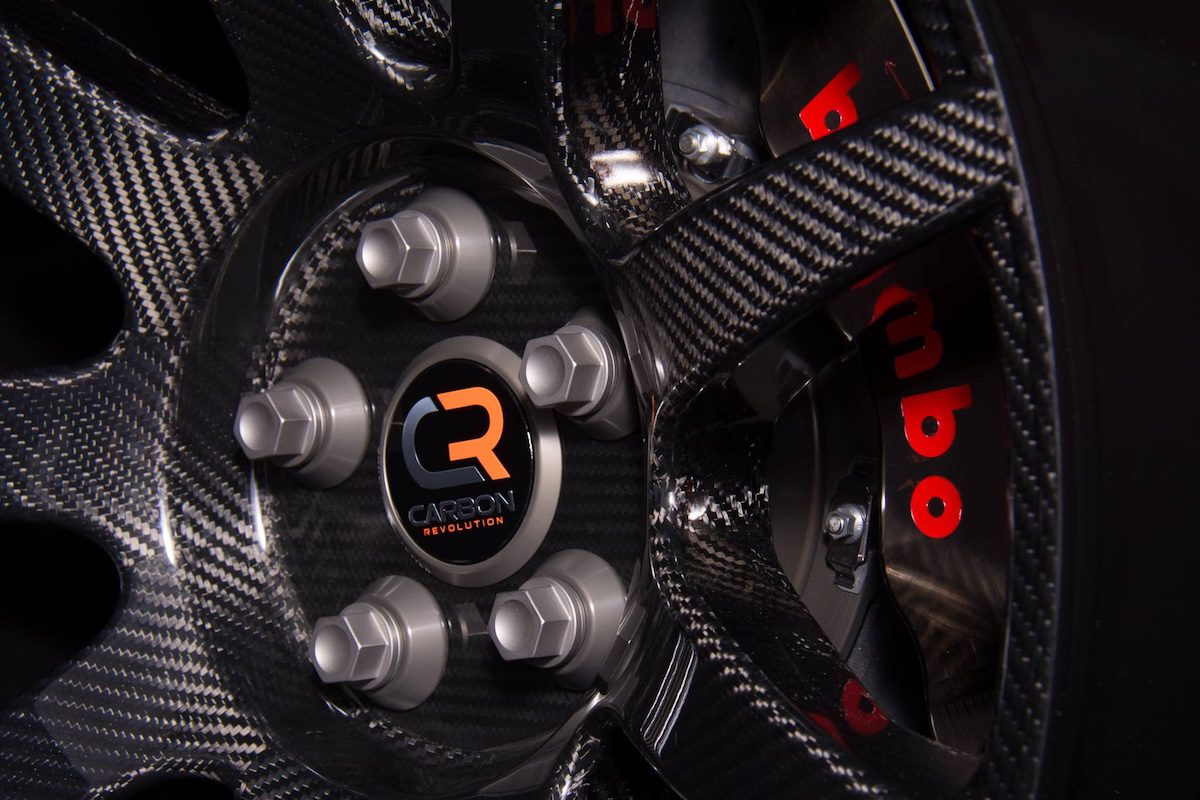
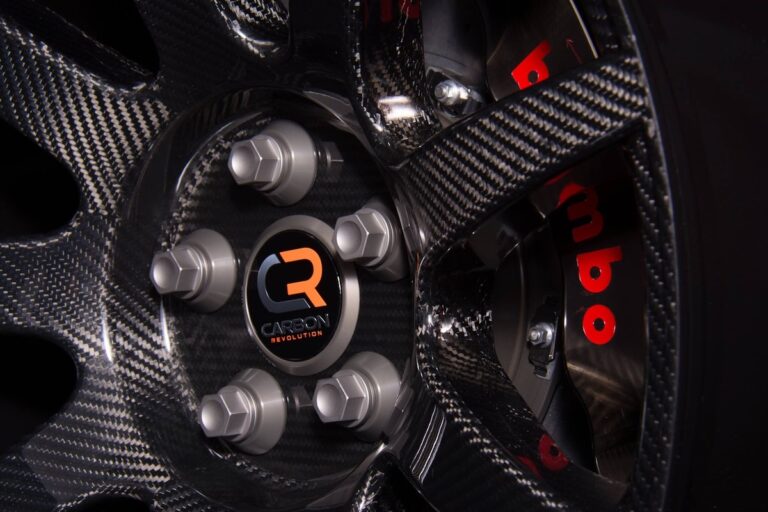
Carbon fiber wheels represent the absolute cutting edge of wheel technology. They are lighter than any aluminum alloy wheel of comparable size, extraordinarily strong for their weight, and visually distinctive in a way that immediately communicates serious engineering intent.
The manufacturing process involves layering and curing carbon fiber fabric under precise conditions. Each wheel is essentially handcrafted, which is the primary reason for the eye-watering price. A single carbon fiber wheel can cost more than a complete set of high-quality forged alloys.
The performance benefits are measurable. Reducing unsprung rotational weight as dramatically as carbon fiber allows translates into sharper throttle response, quicker deceleration, and improved ride quality because the suspension has less mass to control. On a dedicated track car or a hypercar where every gram matters, carbon fiber wheels make a genuine performance difference.
For everyday use, however, they are deeply impractical. Carbon fiber wheels do not respond well to the kinds of impacts that normal road driving delivers. A significant pothole strike or a hard curb hit can damage the fiber structure in ways that are not always visually obvious but can compromise the structural integrity of the wheel. Repair options are limited compared to alloy wheels. And the cost of replacing a damaged carbon fiber wheel is substantial.
Best for: Track-focused hypercars, professional motorsport applications, and buyers with unlimited budgets who want the ultimate in weight reduction.
Quick Comparison: Which Wheel Type Is Right for You?
| Wheel Type | Weight | Durability | Cost | Best Use Case |
|---|---|---|---|---|
| Steel | Heavy | Excellent | Low | Winter tires, work vehicles, tight budgets |
| Cast Alloy | Moderate | Good | Moderate | Daily drivers, most street applications |
| Forged Alloy | Light | Excellent | High | Performance driving, track use, sports cars |
| Split Rim / Multi-Piece | Varies | Good | High | Custom fitment builds, show cars |
| Carbon Fiber | Very Light | Limited on road | Very High | Track cars, hypercars, professional motorsport |
| Three-Piece | Varies | Good | Very High | Wide-body builds, extreme custom fitment |
What to Consider Before You Buy
Most people shopping for new wheels focus almost entirely on how the wheel looks. That is understandable, but it leads to expensive mistakes. Before you fall in love with a particular design, work through these practical considerations first.
- Correct fitment dimensions: Bolt pattern, center bore diameter, offset, and wheel width all have to match your specific vehicle. A wheel that does not fit correctly is not just cosmetically wrong. It can create unsafe driving dynamics, clearance issues with suspension components, and accelerated bearing wear.
- Load rating: Every wheel has a rated load capacity. Make sure the wheels you are considering are rated to handle the weight of your vehicle.
- Your driving environment: If you live somewhere with brutal winters, pothole-filled city streets, or unpaved roads, a gorgeous set of forged alloy wheels with aggressive styling might not survive long. Match the wheel type to where and how you actually drive.
- Tire compatibility: Wheel width and diameter affect which tire sizes will fit correctly. Make sure your intended wheel size works with a tire selection that suits your vehicle’s speedometer calibration and clearance envelope.
- Budget for the complete setup: New wheels often require new tires, a wheel alignment, new lug nuts if the seat type changes, and potentially new hub centric rings. Factor all of this into your total budget from the start.
Upgrading your wheels is one of the most impactful changes you can make to a vehicle’s appearance and performance. But it is also one of the easiest areas to make an expensive mistake by prioritizing looks over fitment and function. Take the time to get the right wheel for your specific vehicle and your actual driving conditions, and the investment will pay off every time you look at the car. Get it wrong, and you will be selling a set of barely-used wheels at a significant loss six months from now.