
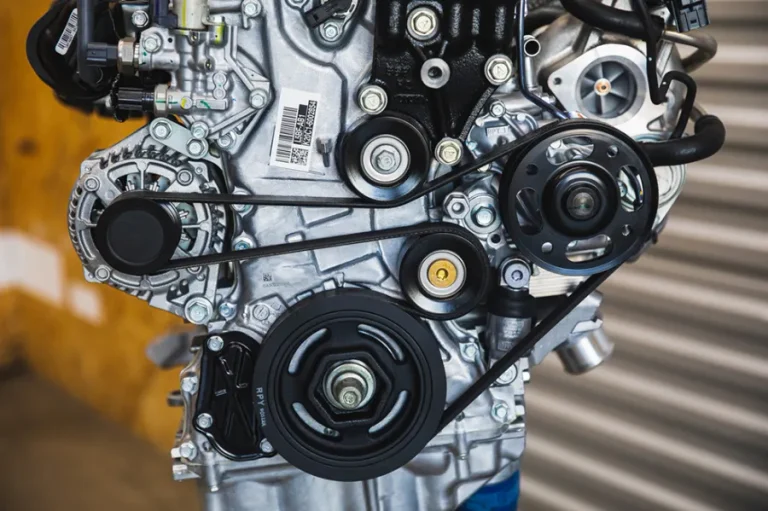
You hear a slap under the hood, the battery light comes on, and the steering suddenly feels heavier. When you stop, the serpentine belt is hanging loose but still in one piece. That usually means the belt slipped off its pulleys, not that the belt system is healthy.
A belt can come off because the tensioner is weak, a pulley is out of line, a bearing is failing, or one of the accessories is binding. Simply putting the belt back on without finding the cause may get you moving for a short time, but it can come off again.
If it happens while you’re driving, pull over somewhere safe and shut off the engine. Depending on your vehicle, the belt may drive the alternator, power-steering pump, water pump, or air-conditioning compressor. Don’t continue just because the engine is still running.
What the serpentine belt does, and why it can come off intact
The serpentine belt transfers power from the crankshaft pulley to engine accessories. It winds around several pulleys, with an automatic tensioner usually keeping it tight enough to stay on track. Some cars use more than one belt or have an electric accessory that isn’t driven by the serpentine belt.
The belt can remain unbroken and still come off if it loses tension or starts tracking sideways. A pulley that wobbles, a weak tensioner, or an accessory that suddenly becomes hard to turn can push the belt off its ribs. The belt may look whole, but its edges or ribbed surface could still be damaged.
Which systems stop working depends on the car. The belt may drive the alternator and air-conditioning compressor, and on some engines it also drives the water pump or hydraulic power-steering pump. Other vehicles use an electric water pump or electric power steering, so check the owner’s manual rather than assuming every accessory is belt-driven.
Why a serpentine belt comes off without breaking
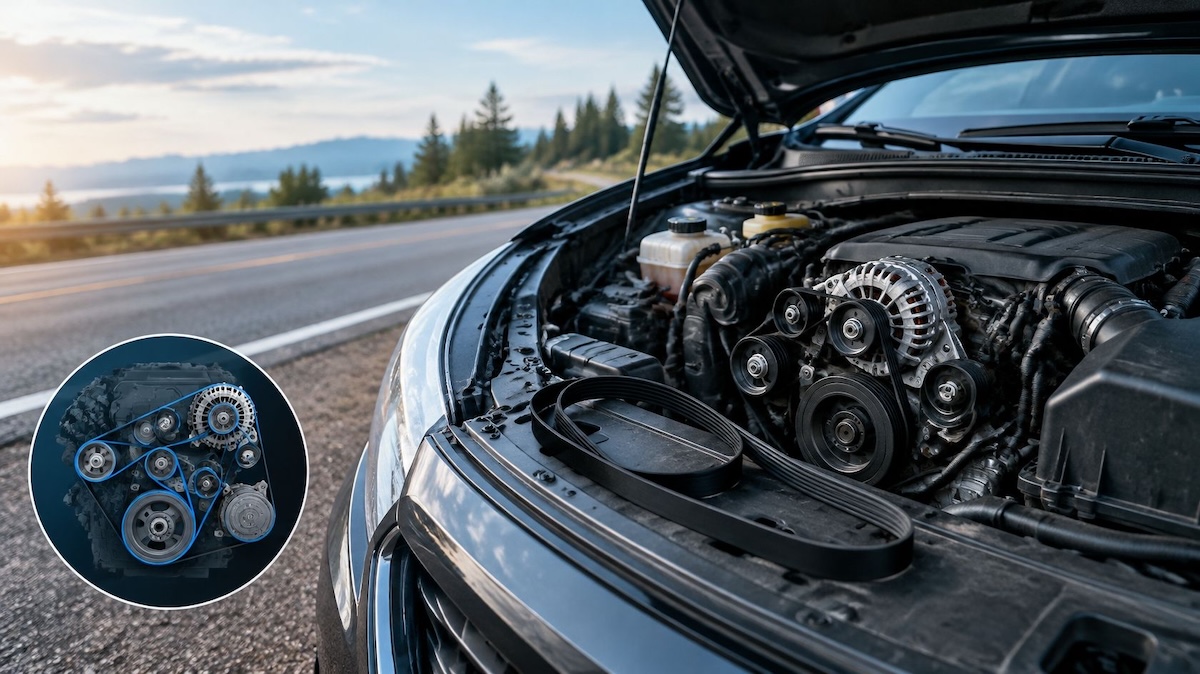
A weak or damaged belt tensioner
The tensioner uses a spring-loaded arm and pulley to maintain belt tension as the engine runs. If the spring weakens, the arm binds, or the tensioner is damaged, the belt can start to slip or wander across the pulleys. A belt may jump off during acceleration, when the engine rocks under load, or when an accessory suddenly places more resistance on the system.
Before the belt comes off, you might hear a squeal or chirp, especially at startup or when switching on the air conditioning. A worn tensioner can also make the arm bounce or flutter while the engine is running. Don’t reach toward it to check while the engine is on. A technician can observe its movement safely from a distance and test it with the correct procedure.
A worn idler or tensioner pulley bearing
An idler pulley guides the belt, while the tensioner pulley is part of the tensioning assembly. Their bearings can wear, become noisy, or develop play. A pulley that tilts or wobbles may push the belt off the edge even when the belt itself hasn’t snapped.
A failing bearing can make a growl, squeak, or rough scraping noise that changes with engine speed. Sometimes the noise is easy to hear with the hood open; sometimes it only shows up when the bearing is hot. A belt that has come off should prompt an inspection of both the idlers and the tensioner, not just a quick check of the belt.
Pulleys are misaligned
The belt has to run in line with the pulley grooves. A bent mounting bracket, a loose fastener, incorrect installation, or a damaged pulley can shift the belt’s path enough to make it walk off. Misalignment often leaves clues such as frayed belt edges, uneven rib wear, or rubber dust near a pulley.
The crankshaft pulley, sometimes called the harmonic balancer, can also contribute if its outer section or mounting is damaged. A mechanic may check pulley alignment with a straightedge or a suitable alignment tool. Don’t try to correct alignment by loosening parts and shifting them around without knowing the vehicle’s setup.
An accessory pulley is binding or seizing
The alternator, air-conditioning compressor, power-steering pump, and water pump on some engines all place load on the belt. If one pulley or accessory starts binding, the belt can slip, flap, or jump off. A bearing that is close to failing may turn roughly before it locks up completely.
Drivers sometimes notice a burning-rubber smell, a sudden squeal, or a brief loss of power before the belt comes off. If the accessory seizes, a replacement belt alone won’t solve the problem. The seized or binding component needs to be identified and repaired first.
Some accessories can be difficult to assess by hand because their normal resistance varies. For example, an air-conditioning compressor may not spin like a simple idler pulley. A mechanic can remove the belt and check each pulley and accessory using the service procedure for that vehicle.
The belt is the wrong size or routed incorrectly
A belt that’s too long may not have enough tension, while one that’s too short can overload the tensioner or make installation difficult. If a belt was recently replaced and then came off, confirm that the part number and routing are correct for the engine. Many cars have a routing diagram under the hood, but not all do.
It’s easy to route a belt incorrectly when several pulleys sit close together. The belt might still turn the engine accessories for a while, but a rib can ride on the edge of a pulley and work its way off. If the problem began soon after service, bring the repair invoice and tell the shop exactly when the belt was fitted.
Oil, coolant, or another fluid got on the belt
Oil and coolant can degrade belt material or make the belt slip. A leaking valve cover, water pump, hose, or another nearby part may leave the belt wet or coated in residue. Even if you clean or replace the belt, the leak needs attention or the problem may return.
Fluid contamination can leave a shiny, glazed surface or soften the belt. Look for wetness around the pulleys and the path the belt follows, but inspect only with the engine off and cool. Don’t spray cleaners or belt dressing on the belt as a shortcut. They won’t fix a leak or a tracking problem.
The belt is worn or damaged, even though it hasn’t snapped
A belt can be in one piece but still have missing ribs, frayed edges, glazing, or damage from a previous slip. Modern belt materials don’t always show obvious cracks, so a quick glance isn’t enough to judge condition. The belt should be checked along its full length and across its ribbed surface.
If a belt has been forced off a pulley, its edges may be cut or the ribs may be torn. Reusing it without inspection can lead to another failure. Whether it can be reused depends on its condition and the manufacturer’s guidance, but I wouldn’t put a visibly damaged belt back on and hope for the best.
A pulley or bracket is loose, bent, or damaged
A pulley that is loose on its shaft or a bracket that has shifted can change the belt’s alignment. Damage may follow a previous repair, an impact, or a bearing failure. A belt that keeps coming off in the same place is a strong reason to inspect the pulley path rather than repeatedly fitting new belts.
Check for obvious damage from a safe distance, such as a pulley that appears crooked or a bracket that is visibly cracked. Don’t put your fingers near the belt or try to tighten a fastener while the engine is running. If something looks loose, stop using the vehicle and have it checked.
What you may notice when the belt comes off
The first clue may be a warning light, a sudden change in steering effort, a sharp squeal, or a slap under the hood. The exact symptoms depend on which accessories the belt drives and how the vehicle is designed. Some warnings can appear together if the alternator stops charging.
| What you notice | What may be affected | What to do |
|---|---|---|
| Battery or charging warning light | The alternator may no longer be driven by the belt. | Pull over safely and shut off the engine. Don’t count on the battery to keep the car running for long. |
| Steering suddenly feels heavy | A belt-driven hydraulic power-steering pump may have stopped turning. | Keep both hands on the wheel and move to a safe place. Steering may need much more effort. |
| Temperature gauge rises or a temperature warning appears | The belt may drive the water pump on that engine. | Stop safely and switch off the engine to prevent overheating damage. |
| Air conditioning stops cooling | The belt may drive the A/C compressor. | It’s a clue, but don’t assume the A/C is the only affected system. |
| Lights dim or electrical features begin to fail | The battery may no longer be receiving a charge from the alternator. | Stop and arrange help before the vehicle loses more electrical power. |
| Squealing, flapping, or a burning-rubber smell | The belt may be slipping, rubbing, or coming off a pulley. | Pull over when safe. Don’t open the hood until the engine is off. |
Loss of power steering assistance
If your car has hydraulic power steering driven by the serpentine belt, steering assistance may drop when the belt comes off. The steering wheel doesn’t usually lock, but turning it can take much more effort, particularly at low speed or while parking. Keep a firm grip and avoid making an abrupt turn to reach the shoulder.
Many newer vehicles use electric power steering, which may not depend on the serpentine belt. Even then, the belt failure can still affect the alternator or other systems. Check the manual for your vehicle’s layout rather than assuming the steering symptom will always happen.
The alternator stops charging the battery
If the belt drives the alternator, the alternator may stop charging when the belt comes off. The car can continue running for a while on the battery, but its available power is limited. The battery light may come on, followed by dim lights, warning messages, or an engine that eventually stalls.
The radio doesn’t necessarily stop immediately, and the engine may not stall at once. How quickly electrical problems develop depends on the car, battery condition, and electrical load. Don’t use that delay as a reason to keep driving.
The engine may overheat if the belt drives the water pump
Some engines use the serpentine belt to turn the water pump, while others use a timing belt, a separate belt, or an electric pump. If the serpentine belt drives the water pump, losing the belt can stop coolant circulation and cause the engine temperature to climb. Watch the temperature gauge, but don’t wait for it to reach the red zone before pulling over.
Once the engine is hot, shut it off and let it cool. Don’t open a radiator cap or pressurized coolant reservoir while the engine is hot. If the temperature warning came on, arrange a tow rather than restarting the engine to see whether it will make it home.
The engine may stall or show several warnings
As the battery loses charge, electrical systems may become unreliable and the engine may stall. Low voltage can also cause warning lights or stored fault codes that weren’t present before. A check engine light or reduced-power mode may appear, but neither is a guaranteed symptom of a detached belt.
When the belt is off, the engine itself may still run for a short time if its remaining systems are working. That doesn’t mean the car is safe to drive. The belt may power an accessory the engine needs to stay cool or the electrical system needs to keep operating.
What to do when the belt comes off while driving
- Stay in control. Hold the steering wheel firmly and avoid sudden lane changes. If steering assistance has dropped, use steady pressure rather than jerking the wheel.
- Signal and move out of traffic. Turn on the hazard lights and steer to a safe shoulder, parking area, or exit if you can do so without putting anyone at risk.
- Watch for overheating. If the temperature gauge rises or a warning appears, stop as soon as it’s safe and switch off the engine.
- Don’t keep driving because the belt looks intact. The alternator may not be charging, and the water pump or power-steering pump may no longer be operating.
- Call for roadside assistance. Tell the operator that the serpentine belt came off and mention any battery, temperature, steering, or burning-smell symptoms.
Once you’re stopped, keep clear of traffic and wait in a safe place. Don’t reach into the engine bay while the engine is running, and remember that the pulleys and exhaust can remain hot after shutdown. If you see smoke, smell burning rubber, or notice fluid leaking, mention that when you call for help.
A tow is usually the sensible choice if the belt is completely off. Even a short drive can drain the battery or overheat an engine whose water pump is belt-driven. The risk depends on the vehicle, so don’t try to guess how far you can go.
Can you put the belt back on yourself?
Sometimes a belt can be reinstalled, but that doesn’t explain why it came off. Before the car is driven again, the tensioner, idler pulleys, accessory pulleys, alignment, belt condition, and routing should be checked. If one part is worn or binding, the belt may come off again as soon as the engine runs.
If you’re experienced with basic repairs and the car is safely parked at home, start with a visual check with the engine off and cool. Look for torn ribs, frayed edges, fluid contamination, a pulley that appears crooked, or an obvious broken bracket. Don’t turn the engine over to watch the belt path while your hands are near moving parts.
Use the belt-routing diagram for your exact engine, either under the hood or in the service information. A routing mistake can cause the belt to ride on the edge of a pulley or leave an accessory undriven. If you can’t confirm the correct route, don’t guess.
The tensioner can be under strong spring force and may snap back if handled carelessly. A belt tool or the correct size breaker bar may be needed to release it, depending on the vehicle. If you’re unfamiliar with the tensioner location or release direction, let a mechanic handle the job.
Don’t use a screwdriver to pry the belt over a pulley, and don’t force it past the ribs. That can damage the belt, pulley, or your hand. A belt that’s difficult to route may be the wrong size, incorrectly routed, or blocked by a pulley that isn’t moving freely.
If the belt came off on the roadside, don’t try to reinstall it beside moving traffic. The shoulder may be narrow, the engine may be hot, and the tensioner can be difficult to access. Call for assistance and have the car taken somewhere safe for inspection.
How a mechanic finds the real cause
A technician will usually inspect the belt and the full pulley path before installing a replacement. That includes checking for missing ribs, edge wear, glazing, contamination, and signs of rubbing. The belt’s condition can show whether it slipped, tracked sideways, or was damaged by a pulley.
Next, the tensioner and idlers are checked for alignment, movement, bearing noise, and excess play. With the engine off and the belt removed, the mechanic can inspect accessory pulleys for roughness or binding. The correct procedure matters because some components have normal resistance that can be mistaken for a failed bearing.
The technician may use a straightedge or belt-alignment tool to check whether the pulleys sit in the same plane. A scan tool or multimeter may also be used to check charging-system faults after the belt issue is repaired. If a battery warning appeared, the battery and alternator should be tested rather than assuming everything will work normally once the belt is back on.
One common shop scenario is an intact belt found hanging near the bottom of the engine after a driver hears a short squeal. The belt looks reusable at first glance, but the tensioner pulley has a rough bearing and sits slightly out of line. Reinstalling the old belt without replacing the failed pulley would likely send the car back to the roadside.
If the belt came off after recent work, the mechanic should verify the part number and routing. If it happened without a recent repair, the inspection should include the tensioner, idlers, accessory bearings, brackets, and any signs of fluid leakage. A good repair fixes the reason the belt left its path, not only the visible symptom.
What the repair may involve and how cost varies
There isn’t one reliable price for this repair without the vehicle and the failed part. Replacing only a belt is usually less involved than replacing a tensioner or repairing a seized accessory. Access, parts availability, local labor rates, and the amount of disassembly required all affect the estimate.
A shop may recommend a new belt if the old one has damaged ribs, frayed edges, glazing, or fluid contamination. If the tensioner or an idler is worn, that part may need replacement too. A seized alternator, A/C compressor, water pump, or power-steering pump can make the job considerably larger.
Ask for an itemized estimate that separates the belt, tensioner, idlers, accessory work, and any repair to a leaking hose or seal. Also ask what test showed the cause. A quote that only lists a new belt doesn’t answer why the old one came off.
Repair time can vary as well. A belt that’s easy to reach may be a straightforward job once the cause is found, while a difficult-to-access tensioner or failed accessory can take longer. The shop can give you a useful time estimate after it knows the vehicle and has inspected the belt drive.
Don’t replace every pulley automatically without a reason, but don’t fit a fresh belt around a pulley that’s noisy, loose, or binding. Ask the mechanic to show you any failed part when practical. That makes it easier to understand why the repair includes more than the belt itself.
Warning signs to catch before the next belt failure
Squealing or chirping from the engine bay
A squeal at startup or when the A/C switches on can mean the belt is slipping. A repeating chirp may point to alignment or a pulley problem. Noise can also come from other parts, so listen for when it happens and tell the shop whether it changes with engine speed or accessory use.
A belt that slips may leave shiny or glazed patches on its ribs. If the noise returns after a belt replacement, ask the shop to check tension and alignment rather than fitting another belt without inspection. The belt may be reacting to a failed tensioner or accessory.
Frayed edges, missing ribs, or black rubber dust
Frayed edges can mean the belt is walking sideways on a pulley. Missing ribs or chunks of rubber show that the belt has been damaged, even if it’s still in one piece. Black dust near the belt path may come from wear, though dirt and other residue can look similar.
Inspect only with the engine off. Don’t pull at the belt or reach between pulleys while the engine is running. If you see severe damage, arrange an inspection before the belt comes off completely.
A pulley that wobbles or a new growling noise
A pulley that visibly wobbles, sits crooked, or makes a rough bearing noise needs attention. You may hear a growl or squeak that changes as the engine speed changes. Don’t try to check pulley play with the engine running.
Some pulleys are hard to judge by eye, especially from above the engine bay. A mechanic can inspect the bearings and alignment with the belt removed. If the noise is getting louder or is accompanied by a burning smell, avoid driving the car.
Electrical or temperature warnings
A battery warning light, dimming headlights, or a rising temperature gauge can signal that a belt-driven accessory has stopped working. These symptoms can also have other causes, but they’re worth checking promptly if they appear with a belt noise. Don’t wait for the engine to stall before dealing with them.
Mistakes that can lead to another failure
- Putting the belt back on without checking the pulleys. A seized bearing or weak tensioner can throw it off again.
- Assuming an unbroken belt is undamaged. The ribs or edges may be worn even though the belt is still in one piece.
- Fitting the wrong belt or routing it from memory. Check the part number and the diagram for the exact engine.
- Driving on because the engine still runs. The alternator may not charge, and a belt-driven water pump may have stopped.
- Checking pulleys while the engine is running. Moving belts and fans can cause serious injury.
- Using belt dressing to quiet a squeal. It doesn’t repair a worn bearing, weak tensioner, contamination, or misalignment.
- Ignoring a leak that has soaked the belt. The belt may slip again unless the source of the fluid is fixed.
Be cautious with advice that says to replace the belt and “see if it holds.” A new belt can temporarily hide the symptom while the worn pulley or tensioner remains in place. I’d rather see the belt drive inspected properly once than pay for the same roadside problem twice.
How to reduce the chance of it happening again
Have the belt and pulley system checked during routine service, especially if you hear a chirp or squeal. Look for worn ribs, edge damage, contamination, and uneven tracking. A belt may not show obvious cracks, so follow the inspection guidance for your vehicle rather than relying on appearance alone.
Fix oil and coolant leaks near the belt promptly. A leak can damage the belt and may be a sign of a failing pump, seal, or hose. Cleaning the belt without repairing the leak only treats the residue, not the cause.
If the belt has been replaced recently, keep the invoice and note the date and mileage. That information helps a shop check whether the correct belt was installed and whether another part failed soon afterward. If the same belt comes off twice, request a full alignment and accessory inspection rather than another belt-only repair.
There’s no single replacement interval that fits every car and driving condition. Use the maintenance schedule in the owner’s manual and have the belt inspected when other engine work is done. A short inspection is worthwhile if you notice noise, fraying, or a change in the way the belt tracks.
Common questions about a belt that came off
Can a serpentine belt come off without breaking?
Yes. A belt can slip off a pulley because of low tension, misalignment, a worn bearing, a binding accessory, contamination, or incorrect routing. It may remain intact while still having damage that makes it unsafe to reuse.
Can I drive a short distance without the serpentine belt?
It’s not a good idea. The belt may drive the alternator, water pump, or power-steering pump, depending on the vehicle. Since you may not know which system has stopped working or how quickly the engine will overheat or lose electrical power, arrange a tow.
Will the engine stop immediately when the belt comes off?
Not necessarily. The engine may keep running for a while on battery power if the alternator is no longer charging, but the car can stall as voltage drops. If the belt drives the water pump, the engine may also overheat.
Does the belt always run the water pump?
No. Some engines drive the water pump with the serpentine belt, while others use a timing belt, a separate belt, or an electric pump. Check the owner’s manual or ask a mechanic about your engine’s layout.
Can I reuse the belt if it looks okay?
Maybe, but inspect the ribs, edges, and full length first, and follow the manufacturer’s guidance. A belt can look whole yet have a damaged rib or a polished surface from slipping. More importantly, don’t reuse it until the reason it came off has been found and fixed.
What I’d do if this were my car
I’d get safely off the road, shut the engine down, and call for a tow rather than trying to drive home. At the shop, I’d want the tensioner, idlers, belt alignment, accessory pulleys, and belt condition checked before anything is reinstalled. If the battery or temperature warning came on, I’d mention that too.
You can inspect for obvious damage at home with the engine off and cool, but leave a belt that came off while driving to a proper diagnosis before using the car again. The clear takeaway is simple: an intact belt can still have a serious pulley or tensioner problem, so fix the cause before fitting it back on.