
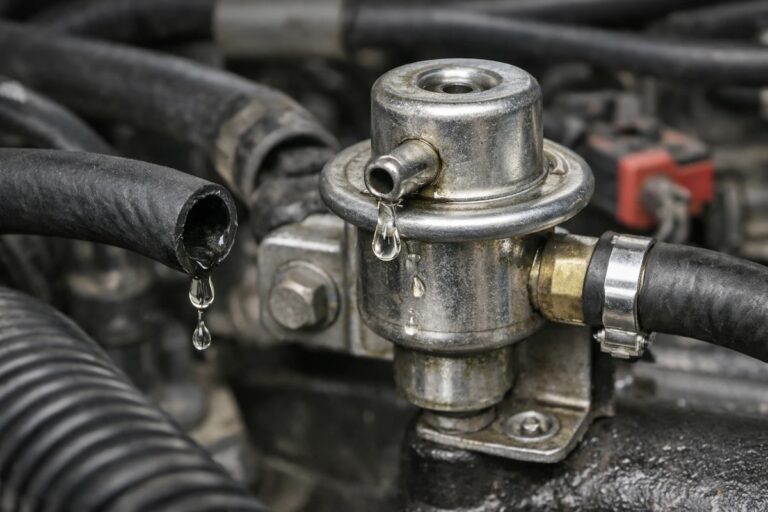
A rough idle, long cranking, black smoke, or a strong gasoline smell can all point to a fuel-delivery problem. A faulty fuel pressure regulator is one possible cause, but those symptoms can also come from a weak fuel pump, leaking injector, wiring fault, or another part of the fuel system.
The regulator’s job is to keep fuel pressure within the range the engine’s injection system needs. If pressure is too high or too low, the injectors may deliver the wrong amount of fuel. The engine can run poorly, use more fuel, or refuse to start.
Before replacing anything, it helps to know which type of fuel system your car has. Older return-style systems use a separate mechanical regulator in many cases, while some newer cars control pressure electronically or place the regulator inside the tank assembly. The symptoms can overlap, but the checks and repair can be quite different.
What a fuel pressure regulator does
A fuel pressure regulator controls or helps control the pressure of fuel supplied to the injectors. The fuel pump moves fuel from the tank toward the engine, and the regulator helps keep pressure where the system requires it. It doesn’t pump fuel itself.
The engine computer controls how long each injector opens, often called injector pulse width. The amount of fuel delivered also depends on the pressure difference across the injector. If pressure isn’t controlled correctly, the same injector command may deliver too much or too little fuel.
Not every vehicle has a separate regulator mounted on the fuel rail. Some use a regulator in or near the tank, and some rely on electronic control of the pump and fuel pressure. The vehicle’s year, model, engine, and fuel-system design determine which arrangement it has.
How a return-style regulator holds pressure steady
In a traditional return-style system, the fuel pump sends more fuel toward the rail than the engine needs at that moment. A mechanical regulator uses a spring-loaded valve and diaphragm to control pressure. When pressure rises above the regulator’s setting, the valve opens and sends excess fuel through a return line to the tank.
Many of these regulators also have a hose connected to intake-manifold vacuum. At idle, manifold pressure is lower than it is when the throttle is open. The vacuum reference changes the regulator’s setting so the pressure difference across the injector stays roughly consistent as engine conditions change.
When the throttle opens and manifold vacuum drops, fuel pressure at the rail may rise in response. In a turbocharged or supercharged engine, a manifold-referenced regulator may also respond to boost. The exact behavior depends on the system, so use the vehicle’s service information rather than relying on a universal pressure figure.
The often-mentioned “one-to-one” relationship refers to how some manifold-referenced regulators adjust fuel pressure as intake-manifold pressure changes. It does not mean the engine’s air-to-fuel mixture is one part air to one part fuel. The engine computer manages the mixture using injector timing and information from sensors.
How returnless and electronic systems differ
Many newer fuel systems don’t send a constant stream of unused fuel back from the engine to the tank. Depending on the vehicle, pressure may be controlled by a regulator in the tank or by changing the fuel pump’s output. A pressure sensor can report fuel pressure to the computer, which then adjusts the system as needed.
Some engines, including gasoline direct-injection designs, use both a low-pressure supply from the tank and a high-pressure system at the engine. That setup can use additional valves and controls, and it isn’t safe to treat it like an older port-injection system. A basic fuel-pressure gauge or a general repair guide may not be suitable for testing it.
| Fuel-system design | How pressure is controlled | What that means for diagnosis |
|---|---|---|
| Return-style system | A regulator controls pressure and sends excess fuel back to the tank. | A mechanic may check rail pressure, the vacuum reference, and the return circuit. |
| Returnless system | A regulator, pump control, or a combination of electronic controls manages pressure. | Diagnosis may require scan-tool data and vehicle-specific testing. |
| Gasoline direct injection | The system may have separate low- and high-pressure stages. | High-pressure components need the correct equipment and service procedure. |
Symptoms that can point to a bad fuel pressure regulator
A regulator fault can make an engine run rich, run lean, or struggle to maintain pressure. The same symptoms can come from other parts, so one symptom by itself isn’t enough to diagnose the regulator. Pay attention to when the problem happens and whether it’s getting worse.
Hard starting or long cranking
If fuel pressure is too low, takes too long to build, or drops after the engine is shut off, the car may crank longer than usual before starting. You might notice this after the car has been parked overnight or after stopping to refuel. A weak battery, leaking injector, failing pump check valve, or another fuel-system fault can cause similar trouble.
The engine turning over doesn’t mean fuel pressure is correct. The starter can crank normally while the engine struggles to fire. Tell the mechanic whether the problem is worse when the engine is cold, hot, or after the car has been sitting.
Rough idle, stalling, or misfires
Incorrect fuel pressure can upset the mixture and lead to a rough idle, fluctuating engine speed, hesitation, or stalling. You may feel a stumble when pulling away from a stop or notice the engine misfire under load. A faulty ignition coil, worn spark plugs, vacuum leak, or dirty injector can produce much the same symptoms.
If the engine stalls in traffic or the misfire is severe, don’t keep driving to see if it clears up. A car that loses power unexpectedly can be difficult to control, and continued misfiring may damage the exhaust system. Have it checked before using it for a long trip.
Poor fuel economy, black smoke, or a gasoline smell
A regulator that allows excessive pressure, or a failed diaphragm that lets fuel enter the intake on some systems, can make the engine run rich. Common clues include worse fuel economy, a strong fuel odor, dark exhaust smoke, and sooty spark plugs. A sensor or injector problem can also make the mixture rich.
Black smoke generally means the engine is burning too much fuel or not burning it properly. It doesn’t mean gasoline is leaking from the tailpipe. If you see liquid fuel at the exhaust outlet, smell raw fuel strongly, or find fuel under the car, stop the engine and arrange an inspection. Fuel leaks are a fire risk.
A rich-running engine can also contaminate the engine oil with fuel and shorten the life of the catalytic converter if the problem continues. Don’t ignore a fuel smell or repeated black smoke, even if the car still starts and drives. The longer it runs badly, the more likely a small repair can turn into a larger one.
Hesitation or loss of power under acceleration
If pressure falls below what the engine needs, the car may hesitate, surge, or lose power when you accelerate or climb a hill. It might idle acceptably but struggle when the engine is under load. A restricted filter, weak pump, low voltage at the pump, or blocked fuel line can cause the same pattern.
Note whether the issue occurs at a certain speed, during hard acceleration, or after the car has warmed up. Those details help a technician reproduce the fault. Don’t try to force the problem by accelerating hard on a public road.
Fuel leaks or fuel in a vacuum hose
A damaged seal or regulator housing can leak externally. On some older vacuum-referenced regulators, a ruptured diaphragm can also allow fuel into the vacuum hose. A technician may check that hose for signs of liquid fuel when diagnosing the system.
Don’t disconnect fuel lines or run the engine with a vacuum hose removed as a home test. Fuel pressure can remain in the system after the engine is off, and gasoline vapor can ignite easily. If you see wet fuel, smell a strong raw-fuel odor, or notice a leak, don’t drive the car.
A louder fuel-pump whine
The fuel pump normally makes some operating noise, and a faint hum by itself isn’t a sign of a bad regulator. A louder whine can come from an aging pump, low fuel, a restriction, or a problem elsewhere in the fuel system. A regulator that’s not controlling pressure correctly may be part of the picture, but sound alone can’t confirm it.
If the pump has become noticeably louder and the car also hesitates or starts poorly, mention both symptoms. A shop can check pressure and the pump’s electrical supply rather than replacing the regulator based on a noise. A healthy-sounding pump can still deliver the wrong pressure, and a noisy pump can have a cause unrelated to the regulator.
A check engine light or fuel-system code
The engine computer may detect fuel-pressure or mixture problems and turn on the check engine light. Depending on the vehicle, possible generic codes can include P0089 for fuel pressure regulator performance, P0087 for fuel rail or system pressure that’s too low, or mixture codes such as P0171 and P0172. The exact code definitions and monitoring strategy can vary by vehicle.
A code doesn’t prove the regulator is faulty. A pressure sensor, pump, wiring, injector, or fuel restriction can trigger a related code. The computer may also report an oxygen-sensor or mixture fault because it sees the result of a fuel problem, not because the oxygen sensor itself has failed.
| Symptom | Possible regulator-related issue | Other causes to rule out |
|---|---|---|
| Long crank or hard start | Pressure may be low or may not hold after shutdown. | Weak battery, pump check valve, leaking injector, ignition fault. |
| Black smoke or poor fuel economy | Pressure may be too high or the engine may be running rich. | Leaking injector, sensor fault, ignition misfire, air-metering problem. |
| Hesitation under load | Pressure may fall below what the engine needs. | Weak pump, restricted filter, poor pump voltage, ignition problem. |
| Fuel smell or visible wetness | A regulator seal or diaphragm may be leaking on some designs. | Fuel line, injector seal, tank, or another connection may be leaking. |
| Fuel-pressure or mixture code | The regulator or its control circuit may need testing. | Pressure sensor, wiring, pump, injector, or fuel restriction. |
Why a fuel pressure regulator fails
Wear inside the diaphragm, spring, or valve
A mechanical regulator contains moving parts that can wear or stick. A weak spring, damaged diaphragm, or valve that doesn’t open and close properly can make pressure too high, too low, or inconsistent. The resulting symptoms depend on the system and how the part has failed.
Some regulators are exposed to fuel and heat for years, so age can take its toll. There isn’t one universal replacement interval for the part. It’s usually tested when symptoms or pressure readings point to a problem.
Contamination or corrosion
Dirt, rust, or other contamination in the fuel system can interfere with a regulator valve or restrict fuel flow. A clogged strainer or filter can also make the fuel pump work harder and create symptoms that look like a regulator problem. If a component has failed because debris is in the tank, the tank and related parts may need inspection before a replacement is installed.
A damaged vacuum hose or blocked return line
On a vacuum-referenced regulator, a cracked, loose, or blocked hose can stop the regulator from responding properly to changes in intake pressure. The regulator may be fine while the hose is the actual fault. In a return-style setup, a kinked or blocked return line can also affect pressure.
These faults can be easy to miss if someone replaces the regulator without checking the surrounding hoses and lines. A visual inspection helps, but fuel-pressure testing is needed to confirm what the system is doing. Don’t use compressed air or improvised fittings to clear a fuel line.
Another fuel-system fault can look just like a bad regulator
A weak fuel pump, a clogged filter, poor electrical power to the pump, leaking injectors, or a faulty pressure sensor can all produce hard starts or poor engine performance. An oxygen sensor or air-metering problem can also cause rich or lean mixture symptoms. The regulator is only one link in the system.
In the shop, a car may arrive with poor fuel economy and black smoke, and the owner is sure the regulator has failed. Sometimes the pressure is normal and one injector is leaking instead. Testing first is cheaper than replacing a regulator and discovering the symptom hasn’t changed.
How a mechanic checks the fuel pressure regulator
The first step is to confirm the vehicle’s fuel-system design and the complaint. A technician may scan for stored codes, check live data, and inspect the fuel lines, vacuum hose, connectors, and related wiring. If there’s a visible fuel leak, that takes priority over running further tests.
On some vehicles, a fuel-pressure gauge connects to a service port on the fuel rail. Other vehicles need a specific adapter or a different test method. The pressure must be compared with the manufacturer’s specification for that exact engine, not with a number found for a different car.
A proper test may check pressure when the key is switched on, while the engine idles, and under conditions set out in the service procedure. On a return-style system, the technician may check how pressure responds to the regulator’s vacuum reference. The response should match the manufacturer’s procedure; pressing the accelerator while parked isn’t a reliable universal test.
The shop may also check whether the system holds pressure after the engine is shut off. If pressure drops quickly, the regulator could be leaking, but so could an injector or the pump’s check valve. A falling pressure reading points to a problem that needs to be isolated, not automatically to a regulator replacement.
If pressure is low, the technician may test pump voltage and ground, fuel delivery, and any filter or restriction. If pressure is too high, the regulator, return line, or pressure-control system may need closer attention. A scan tool can help compare commanded and actual pressure on systems that provide that data.
High-pressure gasoline direct-injection systems require extra caution. Don’t loosen a fuel rail or line to see whether fuel comes out, and don’t connect an ordinary gauge to a high-pressure circuit. Fuel under pressure can cause serious injury, so those checks belong to a qualified technician with the correct equipment.
Can you check a regulator yourself?
You can safely gather clues without opening the fuel system. Note how long the engine cranks, whether the problem is worse hot or cold, whether the check engine light is on, and whether you smell fuel. If you have an OBD-II scanner, record the codes before clearing anything.
With the engine off and cool, you can look for obvious fuel wetness around accessible hoses or connections without touching or loosening them. If you see a leak or smell strong raw fuel, don’t start the engine. Keep cigarettes, flames, and anything that can spark away from the vehicle, and arrange professional help.
Fuel-pressure testing is a different matter. The correct gauge, fittings, pressure-relief procedure, and service information are important, and some vehicles don’t have a simple test port. If you’re not experienced with fuel systems, leave the pressure check to a shop.
What fuel pressure regulator replacement may cost
A broad estimate for replacing a fuel pressure regulator is around $150 to $350. The part may cost about $60 to $240, with labor around $80 to $140. These are rough figures, not a guaranteed quote for every vehicle or repair shop.
The price depends on the regulator’s location, the vehicle, local labor rates, and whether the part is sold separately. If it’s integrated into a fuel pump or tank assembly, the repair may cost more than replacing an accessible external regulator. Diagnosis may also add labor if the cause isn’t clear at first.
Ask the shop whether the estimate includes testing, the regulator or assembly, seals, and any related parts that need replacement. If the regulator is being replaced because of a pressure reading, ask what reading was found and what specification it was compared with. A quote that explains the failed test is more useful than a list of parts with no diagnosis behind it.
The cheapest part isn’t always the best choice for a fuel-system repair. A poor-quality regulator can cause the same problem to return, and a new part won’t fix a blocked return line or weak pump. I’d rather see the shop spend a little time confirming the cause than throw parts at a pressure problem.
Mistakes that can waste money or create a safety risk
- Replacing the regulator based on one symptom. Hard starting, poor economy, and misfires can all come from other fuel or ignition faults.
- Treating an OBD code as a parts order. A code identifies a system or condition that needs testing, not always the failed component.
- Using a pressure number from another vehicle. Fuel pressure specifications vary by engine and system design.
- Opening fuel lines without relieving pressure. Fuel can spray unexpectedly, and vapors can ignite.
- Assuming the regulator is separate from the pump. On some vehicles, pressure-control parts are built into a larger assembly.
- Ignoring fuel odor or wetness. A leak is a fire hazard, even if the car seems to run normally.
- Replacing the regulator without checking the return line or vacuum hose. A surrounding fault can make a new part appear defective.
Don’t use a spark test, open flame, or improvised hose to check for fuel. Don’t keep driving a car that smells strongly of gasoline or has visible fuel leaking. The safe move is to shut it down and have it transported to a repair shop.
What I’d do if my car showed these symptoms
I’d start by recording the symptoms and scanning for codes, then have the fuel pressure checked against the correct service information. If there’s fuel leaking, a strong raw-fuel smell, or liquid fuel in a hose or under the car, I’d stop driving it and arrange a tow. If the issue is only a rough idle or poor mileage, I’d still want a pressure test before buying a regulator.
You can check the owner’s manual, note the warning lights, and look for obvious leaks without taking fuel lines apart. Leave fuel-pressure testing and regulator replacement to a mechanic if you don’t have the right equipment and experience. The clear takeaway is this: a bad regulator can upset fuel delivery, but pressure testing is what tells you whether the regulator is actually at fault.