
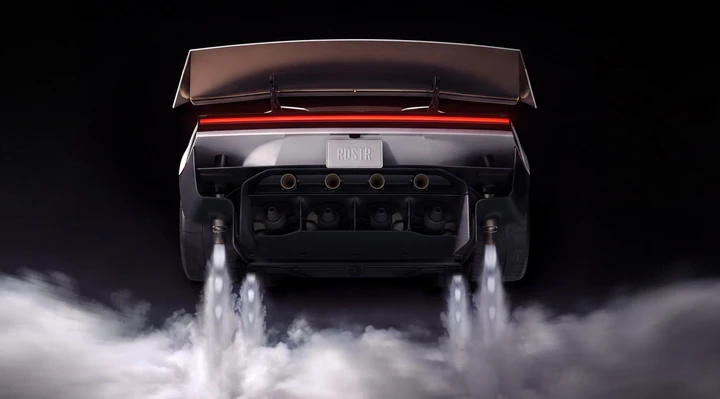
Most performance cars are developed to accelerate harder, corner faster, and stop shorter. Tesla’s latest Roadster project takes a much stranger approach. Engineers have been working on technology intended to generate enough downforce to hold a car against an inverted surface while also exploring compressed-air thrusters capable of lifting a vehicle off the ground.
That’s a long way from building a conventional electric sports car. The project involves specialized fans, high-pressure gas systems, carbon-fiber storage tanks, and custom testing ramps designed for maneuvers that ordinary road cars were never built to attempt.
What makes the story more interesting is how Tesla reportedly kept much of this work hidden. Behind-the-scenes footage released in connection with the Roadster project offers a look at the engineering experiments, component testing, and unusual equipment involved in its development.
There is an important distinction, though. Demonstrating an experimental system doesn’t automatically establish that the same equipment is ready for a customer-owned production car. Testing a maneuver under controlled conditions is one thing. Making the technology reliable, serviceable, and safe enough for everyday ownership is another.
Let’s look at what the footage reveals, how the proposed fan and cold-gas systems work, and why developing this kind of vehicle presents problems that go well beyond building a fast electric motor.
What Tesla’s secret Roadster development footage reveals

The most interesting part of the Roadster story isn’t simply the promise of extreme performance. It’s the amount of specialized engineering required to explore maneuvers that fall outside normal automotive testing.
According to the development account, Tesla released short behind-the-scenes videos showing portions of the work carried out before the vehicle’s public demonstration.
The footage reportedly includes mechanical component testing, propulsion experiments, and construction of a custom ramp intended for unusual vehicle maneuvers.
These are the kinds of experiments that require a controlled test environment. You can’t safely explore inverted driving or airborne vehicle movement on an ordinary proving-ground road.
Why the Roadster needed more than conventional vehicle testing
When an automaker develops a sports car, engineers spend considerable time evaluating acceleration, braking, suspension movement, steering response, and tire behavior.
They also check how the vehicle handles repeated high-load operation.
A conventional performance car might undergo repeated laps at a test track to evaluate brake temperatures, battery performance, and suspension durability.
Even aggressive track testing remains largely focused on keeping the tires in contact with the pavement.
The Roadster experiments described in the footage introduce additional problems.
If a vehicle is expected to remain attached to an inverted ramp, engineers must create enough force to overcome gravity while maintaining control.
If compressed-air thrusters are used to lift the vehicle, the system must control not only upward movement but also vehicle attitude and landing behavior.
That introduces forces and operating conditions most production passenger cars never encounter.
From a mechanic’s perspective, I’d be interested in how Tesla protects the suspension, battery enclosure, cooling system, and high-pressure components during these tests.
Those systems still have to survive the loads created by the maneuver, even if the propulsion equipment performs exactly as intended.
Why the custom testing ramp matters
One detail mentioned in the development material is the construction of a specialized ramp.
That might sound like a minor part of the project compared with the fans and thrusters, but it plays an important role.
A custom ramp allows engineers to establish repeatable testing conditions.
Its geometry determines how the vehicle approaches the maneuver, how forces change during the transition, and where the car should travel afterward.
For ordinary suspension testing, engineers might use a controlled series of bumps or a known track surface.
For an inverted driving experiment, the ramp itself becomes part of the engineering problem.
The transition from an upright surface to an inverted section must be considered alongside the vehicle’s speed, aerodynamic loading, and mechanical grip.
If the testing involves airborne movement, the ramp can also influence the car’s initial trajectory.
That’s why building a purpose-designed structure makes more sense than attempting these experiments on an improvised course.
How Tesla reportedly kept the Roadster project hidden
Developing a new vehicle without attracting attention is difficult, especially when the project involves unusual hardware and specialized testing facilities.
Most automakers can hide early engineering work inside research buildings, but full-vehicle testing becomes harder to conceal.
Prototype vehicles need space to operate. Engineers need access to equipment, replacement parts, and measurement systems.
When a project involves a custom ramp and experimental propulsion hardware, controlling outside visibility becomes another challenge.
Keeping experimental hardware away from public view
The development account describes Tesla conducting mechanical testing and propulsion experiments without releasing images before the official unveiling.
That level of secrecy requires careful coordination.
Experimental vehicles may need to move between workshops, fabrication areas, and testing locations.
Each movement creates another opportunity for someone outside the project to see the equipment.
Automotive manufacturers commonly use restricted facilities and controlled access when developing unreleased products.
For an unusual project like this Roadster, those precautions would be especially valuable.
A photograph of a conventional prototype might reveal bodywork or suspension changes. A photograph of an exposed fan assembly or compressed-gas system could reveal much more about the intended technology.
Why the testing equipment needed secrecy too
People often focus on keeping the car itself hidden.
But specialized testing equipment can reveal what engineers are trying to accomplish.
A large ramp, unusual vehicle restraints, or equipment designed to measure vertical thrust could offer clues about the project’s direction.
Even if someone never saw the Roadster, the testing setup might suggest that Tesla was experimenting with something beyond conventional acceleration performance.
That makes facility access and equipment handling part of the secrecy challenge.
The original account describes several years of closed-door development. The publicly described footage, however, doesn’t establish every detail of the project’s internal timeline or security arrangements.
What it does highlight is the amount of work required to explore these ideas before showing them publicly.
How Tesla’s underbody fan could create extreme downforce
One of the most unusual systems described for the Roadster is an active underbody fan designed to generate substantial downforce.
Downforce is familiar territory in motorsport. Race cars use aerodynamic surfaces and underbody airflow to increase the force pressing their tires against the road.
More downforce can improve available tire grip, although it also introduces additional loads and aerodynamic trade-offs.
Tesla’s reported approach goes further by using a powered fan to create a pressure difference beneath the vehicle.
How a fan generates downforce
Imagine placing a powerful extraction fan beneath a vehicle and using it to remove air from a controlled space between the floor and the road.
If the system reduces pressure beneath the car while maintaining higher pressure above it, the pressure difference produces a downward force.
Engineers refer to the broader aerodynamic principle as ground effect.
Unlike a passive aerodynamic system that depends heavily on vehicle speed, a powered fan can potentially generate a pressure difference even when the car is moving slowly.
That’s one reason fan-assisted downforce is interesting for an experiment involving steep or inverted surfaces.
The original Roadster development account describes a system capable of producing up to 2 g of downforce.
That is a substantial claimed load, but the figure needs context.
The exact force available would depend on the vehicle, the pressure difference generated, and how effectively the underbody system maintains that pressure.
What does 2g of downforce actually mean?
In simple terms, a downforce level equivalent to 2 g represents a downward aerodynamic force approximately twice the vehicle’s weight under standard gravity.
That doesn’t mean the vehicle suddenly becomes heavier in the ordinary sense. Its mass remains unchanged.
Instead, the aerodynamic system adds force pressing the vehicle toward the surface.
Consider a hypothetical car weighing 1,500 kilograms.
Its weight under normal gravity is approximately 14,715 newtons.
An additional aerodynamic force equivalent to 2 g would be roughly 29,430 newtons.
Those figures illustrate the scale of the claim. They aren’t specifications for the Tesla Roadster.
Generating that kind of force would place significant demands on the fan, airflow passages, mounting structure, and surrounding bodywork.
It would also create substantial loads on components connected to the vehicle’s chassis.
Could the Roadster really drive upside down?
From a physics standpoint, an inverted vehicle can remain against a surface if the forces holding it there exceed the forces pulling it away.
The challenge is producing those forces consistently while maintaining control.
When a vehicle is upside down, gravity pulls it away from the driving surface.
A sufficiently powerful suction-based aerodynamic system could potentially oppose that force.
But the required force isn’t the only issue.
The system must also maintain enough stability for the tires to provide steering and braking forces.
Surface irregularities, changes in ride height, airflow leakage, and vehicle movement can affect the pressure beneath the floor.
That’s where an engineering demonstration becomes much more complicated than the basic concept suggests.
A car producing enough theoretical downforce to support its weight isn’t automatically capable of driving upside down safely.
It also needs predictable handling and a reliable way to enter and leave the inverted section.
Why keeping the underbody sealed is such a difficult job
Anyone who has worked around vacuum equipment knows that maintaining a pressure difference can be harder than creating one.
Air naturally moves from higher-pressure areas toward lower-pressure areas.
If outside air can enter freely beneath the vehicle, the fan may struggle to maintain the intended suction effect.
That makes the underbody design especially important.
Ride height can change the fan’s performance
A road car’s distance from the pavement changes constantly.
Braking compresses the front suspension. Acceleration can shift loading toward the rear.
Cornering introduces body roll, and bumps move individual wheels through their suspension travel.
Those changes affect the gap between the underbody and the road.
For a suction-based downforce system, changes in that gap can influence airflow leakage.
Engineers therefore need to consider how the fan performs as the suspension moves.
A system that produces excellent results on a smooth, controlled test surface may behave differently on uneven pavement.
Debris creates another problem
A powerful fan positioned beneath a car would operate close to dirt, stones, water, and other road debris.
That’s not an ideal environment for high-speed rotating equipment.
Engineers would need to consider how foreign objects are prevented from damaging the fan or blocking airflow passages.
Protective structures can help, but they may also restrict airflow.
Finding the right balance is part of the design challenge.
I’d be especially interested in how the system handles standing water and loose gravel.
Those are ordinary road conditions, but they can create serious problems for equipment designed around tightly controlled airflow.
The fan also needs a lot of power
Moving large quantities of air against a pressure difference requires energy.
The greater the required airflow and pressure, the more demanding the system can become.
For an electric vehicle, that energy ultimately has to come from the available electrical system unless another power source is used.
That creates a trade-off between fan operation and the vehicle’s other electrical demands.
The original development description doesn’t provide verified fan motor specifications, electrical consumption, or operating duration.
Without those figures, it’s impossible to calculate how much the system would affect driving range or thermal management.
Those details would be important for evaluating any production application.
The cold-gas thrusters are even more unusual
The second major technology described in Tesla’s Roadster development is a high-pressure cold-gas propulsion system.
Instead of relying on combustion to produce thrust, cold-gas thrusters release stored compressed gas through specially designed nozzles.
The escaping gas produces a reaction force in the opposite direction.
It’s the same basic physical principle behind rocket propulsion, although cold-gas systems operate differently from chemical rockets.
This technology has applications in aerospace engineering, where controlled bursts of gas can be used to influence a vehicle’s movement or orientation.
How compressed-air thrusters produce movement
Picture a sealed pressure vessel connected to a controlled valve and nozzle.
When the valve opens, high-pressure gas escapes through the nozzle.
The gas accelerates in one direction, generating a reaction force on the vehicle in the opposite direction.
Point the nozzle downward, and the resulting reaction force acts upward.
Place thrusters in different positions and orientations, and they can potentially influence more than vertical movement.
They may also affect pitch, roll, or yaw, depending on the arrangement.
That’s why the location and control of each nozzle matter.
A single upward force doesn’t necessarily keep a vehicle level.
If the force acts away from the center of mass, it can also create a rotational moment.
Why Tesla would use cold gas instead of a conventional rocket
Cold-gas systems avoid some of the complications associated with combustion-based propulsion.
They don’t require a fuel-burning reaction inside the thruster.
Instead, they use energy already stored in the compressed gas.
That doesn’t make them harmless or simple.
High-pressure storage systems require careful engineering, and rapidly expanding gas can create demanding operating conditions.
However, controlled gas release offers a possible way to generate short bursts of force without using a conventional rocket engine.
For an experimental vehicle maneuver, that characteristic could be useful.
Why carbon-fiber pressure tanks matter to the Roadster project
The development account describes internal carbon-fiber tanks intended to store compressed gas at very high pressure.
That choice makes sense from an engineering standpoint because pressure vessels must withstand substantial internal forces.
At the same time, automotive applications place considerable value on controlling weight.
A heavy storage system would work against the performance goals of a sports car.
How composite pressure vessels work
High-pressure composite vessels can use carbon-fiber reinforcement to help withstand internal loading.
Depending on the design, they may also incorporate a liner and other structural components.
The exact construction depends on the pressure rating, stored gas, operating environment, and applicable engineering requirements.
Carbon fiber offers high strength relative to weight, making it useful in certain pressure-vessel applications.
But manufacturing quality matters enormously.
Defects, impact damage, or improper handling can compromise a pressure vessel’s integrity.
That’s why these components require specialized design, manufacturing controls, and inspection procedures.
What happens if a high-pressure system develops a leak?
High-pressure gas systems need more than strong tanks.
They also require dependable valves, fittings, seals, pressure regulation, and monitoring equipment.
A leak can reduce available stored energy and affect system performance.
Depending on the pressure and failure location, escaping gas can also create a safety hazard.
For a vehicle-mounted system, engineers must account for vibration, temperature changes, and impact loads.
Those are normal parts of automotive operation.
A pressure system that works on a stationary test rig still needs to withstand the conditions encountered inside a moving vehicle.
I’d want to see extensive validation of the tank mounting points and protection around the plumbing.
Road cars experience potholes, curb impacts, and occasional collisions. A high-pressure assembly has to be designed with those possibilities in mind.
How powerful are the Roadster’s claimed air thrusters?
The original development account describes a cold-gas system capable of generating thrust four or five times greater than that of a normal engine.
That comparison sounds dramatic, but it needs careful interpretation.
Engine output is commonly described using torque and power. A thruster produces force directly through expelled gas.
Those measurements aren’t interchangeable.
Without a defined reference engine, thrust value, operating duration, or vehicle mass, the comparison can’t be translated into a reliable performance specification.
What matters for the described maneuvers is whether the thrusters can generate enough force for the required movement.
How much thrust would it take to lift a car?
To lift a vehicle vertically using thrusters alone, the upward thrust must exceed the downward force of gravity.
For a hypothetical 1,500-kilogram vehicle, its weight is approximately 14,715 newtons under standard gravity.
Thrusters would need to produce more upward force than that to create upward acceleration from a stationary position.
Again, this is a physics example, not a confirmed Tesla Roadster specification.
The actual requirement would depend on vehicle mass, orientation, other forces, and the intended maneuver.
Maintaining a stable hover or executing a controlled jump introduces further requirements.
Those are separate problems from simply producing enough instantaneous thrust.
Why short bursts are different from sustained flight
A compressed-gas system stores a finite amount of energy.
Every time gas is released, some of that stored energy is consumed.
That makes the duration of thrust an important limitation.
A brief burst might be useful for a short maneuver, but sustained flight would require an entirely different level of stored energy and control.
The development description focuses on short lifts, airborne maneuvers, and controlled landings.
It doesn’t establish that the Roadster could operate as a conventional flying vehicle.
That’s an important distinction when evaluating the technology.
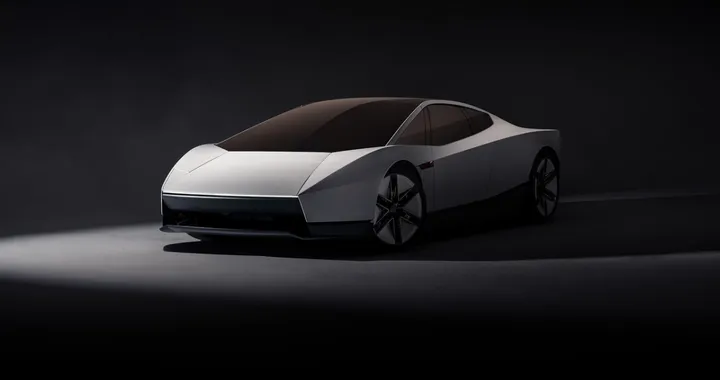
How Tesla could control a mid-air flip
Making a vehicle leave the ground is one problem. Controlling its orientation once airborne is another.
When all four tires are off the pavement, the driver no longer has normal steering and braking forces available through the road.
The vehicle continues moving according to its momentum and the forces acting on it.
To change its orientation, an additional control mechanism is needed.
Pitch, roll, and yaw explained
Engineers describe vehicle rotation around three main axes.
Pitch refers to the nose moving upward or downward.
Roll describes rotation around the vehicle’s front-to-rear axis, while yaw describes rotation around its vertical axis.
For an airborne flip, controlling pitch or roll becomes especially important.
Thrusters positioned at suitable locations could theoretically generate rotational moments.
But the control system would need accurate information about vehicle orientation and movement.
That could involve sensors and software designed to estimate how the vehicle is rotating.
The original account doesn’t provide a detailed explanation of Tesla’s control algorithms or sensor arrangement.
Those details would be necessary to evaluate exactly how the reported maneuver was controlled.
Why timing matters during an airborne maneuver
Even a powerful thruster can create an unwanted result if it activates at the wrong moment.
Consider a vehicle beginning to rotate forward.
A correctly timed force might help control the rotation.
The same force applied too late could increase the difficulty of returning the car to the desired landing attitude.
Engineers therefore need to consider how quickly valves respond, how accurately sensors measure movement, and how the control system responds to changing conditions.
Those timing requirements become demanding when the entire maneuver happens over a short period.
Why landing the Roadster could be harder than lifting it
An airborne demonstration tends to draw attention to the moment the vehicle leaves the ground.
From a mechanical standpoint, I’d be equally interested in what happens when it comes back down.
A road car’s suspension is designed to absorb bumps and maintain tire contact during normal driving.
It isn’t ordinarily expected to handle repeated landing loads from controlled aerial maneuvers.
What happens to suspension components during landing?
When the tires contact the surface after an airborne maneuver, the suspension begins absorbing the impact.
The springs compress, dampers control movement, and forces pass through control arms, wheel bearings, bushings, and mounting points.
The severity of the impact depends on factors such as descent speed, vehicle attitude, and available suspension travel.
If the suspension reaches the end of its travel, additional loads can pass into the chassis structure.
That can become a serious engineering concern.
Even a strong performance-car suspension may require special consideration for unusual landing conditions.
Why the battery pack needs protection
In an electric vehicle, the battery pack is one of the most important structural and safety considerations.
Its enclosure must protect the cells and associated electrical systems from damage.
A hard landing could place unusual loads through the vehicle’s underbody and chassis.
Engineers would need to evaluate those loads carefully.
High-voltage electrical connections, cooling lines, and mounting structures also need protection.
Any experimental maneuver involving major impact loads calls for careful inspection afterward.
From a workshop perspective, I’d want to know how Tesla checks the battery enclosure and surrounding structure between repeated tests.
Why testing without a driver makes sense
The development account specifically mentions aerial maneuvers conducted without a driver onboard.
That’s a sensible precaution during experimental testing.
Removing the driver reduces the risk of injury if a maneuver doesn’t go as planned.
It also allows engineers to explore operating conditions that would be inappropriate for a human occupant during early development.
However, driverless testing doesn’t eliminate the need for safety precautions.
The surrounding test area must still protect engineers, technicians, and other personnel.
Remote control, emergency shutdown arrangements, and controlled access can all be relevant to this type of testing.
The publicly described material doesn’t establish Tesla’s complete safety procedures, so those specific arrangements shouldn’t be assumed.
Fan-assisted downforce isn’t new, but Tesla’s application is unusual
Although the Roadster project sounds futuristic, the underlying idea of using a fan to increase vehicle downforce has automotive history.
Engineers have experimented with fan-assisted aerodynamic systems for decades.
The goal has generally been to increase tire grip by reducing pressure beneath the vehicle.
Tesla’s reported approach applies the principle to an especially extreme demonstration.
The Chaparral 2J showed the potential of fan downforce
One well-known historical example is the Chaparral 2J racing car.
Developed for racing in 1970, the car used a fan-assisted system to help generate downforce.
Its unusual design demonstrated that powered airflow could influence vehicle grip independently of conventional wings.
The Chaparral’s system was developed for racing performance rather than airborne stunts or inverted driving.
Still, it shows that fan-generated downforce has been explored in automotive engineering for many years.
The Brabham BT46B took a different approach
Another famous example is the Brabham BT46B Formula One car.
It became known for its fan-assisted aerodynamic arrangement during the 1978 racing season.
The car demonstrated how aggressively engineers were exploring airflow management in motorsport.
Its history also illustrates how technical innovations can raise questions about regulations and permitted vehicle design.
Tesla’s Roadster project operates in a different context, but the underlying engineering interest in manipulating underbody pressure is familiar.
Why modern materials and controls matter
Contemporary engineering gives manufacturers access to tools that weren’t available to earlier racing teams.
Computer-aided design, simulation software, modern sensors, and electronic control systems can help engineers evaluate complex airflow and vehicle movement.
Composite materials also provide additional options for managing component strength and weight.
These technologies don’t eliminate the laws of physics.
They give engineers more ways to measure, predict, and control the forces involved.
For the Roadster, combining modern electronic control with fan-assisted downforce and compressed-gas propulsion is the interesting part of the concept.
What SpaceX technology could contribute to the Roadster
Tesla’s proposed use of cold-gas thrusters naturally invites comparisons with aerospace engineering.
Spacecraft use various propulsion and attitude-control systems to manage movement and orientation.
Cold-gas propulsion is one established approach within that broader field.
Transferring aerospace ideas into an automotive project, however, requires considerable adaptation.
Cars and spacecraft face different operating conditions
Spacecraft and road vehicles operate in very different environments.
A spacecraft may use propulsion to change orientation in conditions where aerodynamic forces are limited or absent.
A road car operates in Earth’s atmosphere and must deal with pavement, suspension movement, road debris, and traffic safety requirements.
It also needs to withstand years of ordinary use.
A system designed for a brief aerospace maneuver may not translate directly into an acceptable production-car component.
Engineers must consider packaging, durability, maintenance, and protection against damage.
Packaging is a major challenge
A high-performance electric sports car already contains several substantial systems.
These include the battery pack, electric drive units, cooling equipment, power electronics, suspension, and braking hardware.
Adding high-pressure tanks, valves, plumbing, and thruster nozzles creates additional packaging demands.
Every component needs space.
The system also adds weight, which can affect acceleration, handling, and efficiency.
Finding room for experimental propulsion equipment without compromising the rest of the vehicle is one of the more interesting engineering problems.
The Roadster development account doesn’t provide enough verified packaging information to determine how Tesla arranged every component.
Could these systems work on a production Tesla Roadster?
A successful demonstration can establish that a concept works under specific conditions.
Production readiness requires much more.
Automakers have to consider manufacturing consistency, component durability, maintenance requirements, safety compliance, and long-term reliability.
That difference matters when discussing a vehicle with experimental fan and compressed-gas systems.
Reliability testing would be demanding
Imagine a fan system that performs well during a short demonstration.
Engineers would still need to determine how it behaves after repeated operation, exposure to debris, temperature changes, and vibration.
The same applies to high-pressure valves and storage tanks.
Components can perform correctly during initial tests and still develop problems after extended use.
Production development therefore requires repeated testing under a wide range of conditions.
For ordinary automotive components, those conditions include hot weather, cold starts, rough pavement, and long periods of operation.
Experimental propulsion hardware would need its own carefully designed validation procedures.
Maintenance could become complicated
As a mechanic, this is one of the first things I’d think about.
A conventional electric sports car already requires specialized procedures for high-voltage components.
Add a powerful underbody fan and high-pressure gas equipment, and service requirements become more complicated.
Technicians would need to understand the hazards associated with stored pressure and rotating machinery.
Routine inspections might also require specialized equipment or procedures.
The original report doesn’t establish what maintenance a production version would require.
But those questions would need answers before the technology could become a practical customer feature.
Repair costs could be a concern
Specialized components are often more difficult to replace than conventional automotive parts.
A damaged underbody fan assembly, for example, could involve more than replacing a simple electric motor.
Its housing, airflow passages, mounting structure, and associated controls may all need inspection.
Likewise, a high-pressure gas system could require specialized handling.
There are no verified repair prices for the experimental Roadster equipment described here.
Any specific estimate would be speculation.
What can be said is that repairability would be an important consideration if Tesla intended to offer these systems to customers.
Why safety regulations could affect the final Roadster design
Building a vehicle that performs an extraordinary demonstration is different from producing one that customers can legally register and drive.
Production vehicles must satisfy applicable safety requirements in the markets where they’re sold.
In the United States, the National Highway Traffic Safety Administration oversees federal motor vehicle safety standards and related vehicle safety responsibilities.
Any unusual propulsion or aerodynamic equipment would need to be considered within the applicable regulatory framework.
High-pressure components need careful protection
A production vehicle can experience collisions, underbody impacts, and other damaging events.
Engineers would need to evaluate how high-pressure storage and plumbing behave under those conditions.
Protecting occupants and people outside the vehicle would be central to the design.
The presence of compressed gas also creates questions about safe handling during repairs and emergency response.
Those issues aren’t reasons the technology cannot be developed.
They are engineering requirements that must be addressed.
Road use is different from controlled demonstrations
A closed test facility allows engineers to control access, surfaces, and operating conditions.
Public roads introduce unpredictable variables.
Other vehicles, pedestrians, debris, uneven pavement, and changing weather all affect safety.
Even if an experimental vehicle can perform a controlled airborne maneuver, that doesn’t mean the maneuver would be appropriate or legal on public roads.
Any production application would need to operate within the applicable laws and vehicle requirements.
What the behind-the-scenes footage still doesn’t tell us
The reported videos provide an interesting look at the Roadster’s experimental development.
But they don’t answer every technical question.
Some of the most useful engineering details remain unspecified in the original account.
We don’t have complete verified specifications
The development description discusses fan-generated downforce and high-pressure cold-gas propulsion.
However, it doesn’t provide a complete verified technical specification for the systems.
For example, there are no detailed figures establishing fan power consumption, pressure vessel capacity, nozzle arrangement, or sustained operating duration.
Without those details, it’s difficult to evaluate the performance claims independently.
It’s also impossible to calculate reliable production costs or maintenance intervals.
Controlled testing doesn’t establish repeatability
A demonstration shows what happened during that particular test.
Engineers also need to know whether the result can be repeated reliably.
That means evaluating performance across different temperatures, component conditions, and operating situations.
For a complex airborne maneuver, repeatability would be especially important.
A system that works under one carefully controlled set of conditions may need considerable development before it can handle a wider range of situations.
The final production equipment remains a separate question
Experimental prototypes often contain equipment that doesn’t appear on the final production vehicle.
Manufacturers use prototypes to explore possibilities, collect data, and evaluate competing designs.
Some experiments lead directly to production features.
Others remain research projects or are modified substantially before reaching customers.
The Roadster’s fan and compressed-gas concepts should be evaluated with that distinction in mind.
What I’d want to inspect after one of these Roadster tests
Watching a car perform an unusual maneuver is entertaining, but the condition of the vehicle afterward can tell engineers a great deal.
If I were examining a test vehicle after an inverted ramp run or controlled landing, I’d start with the components that experienced the greatest loads.
That includes the suspension mounting points, wheels, tires, underbody structure, and propulsion hardware.
Suspension and chassis inspection
The first concern would be whether the vehicle experienced any permanent deformation or damage.
Control arms, bushings, dampers, and mounting points can all experience unusual forces during a hard landing.
Engineers can use measurement equipment to compare component positions before and after testing.
Any unexpected movement deserves investigation.
I’d also want to know whether the suspension reached its travel limits during the maneuver.
Fan and airflow system inspection
A powerful underbody fan would need inspection for debris damage, unusual vibration, and mechanical wear.
Its mounting structure would also deserve attention.
If the fan operates close to the road surface, engineers should evaluate whether anything contacted the housing or airflow passages during the test.
Changes in vibration or operating behavior could indicate a developing problem.
High-pressure system inspection
The compressed-gas equipment would require specialized inspection procedures.
Engineers would need to confirm that pressure vessels, valves, lines, and mounting points remained within their intended operating limits.
Any inspection involving stored high-pressure gas must follow the appropriate safety procedures.
This isn’t equipment I’d recommend an ordinary vehicle owner or general repair shop attempt to service without the required training.
Battery and high-voltage system inspection
The electric drivetrain and battery enclosure also deserve attention after unusual impact loads.
Engineers would need to evaluate whether the vehicle’s structural and electrical systems remained intact.
Cooling connections, electrical isolation, and battery mounting arrangements are among the areas that could require assessment.
For any electric vehicle involved in a significant impact, high-voltage safety procedures come before ordinary repair work.
Why this Roadster project stands apart from ordinary performance cars
Electric sports cars are already capable of impressive acceleration.
Modern electric motors can deliver rapid torque response, and sophisticated control systems help manage traction.
But the experimental Roadster technologies described here are aimed at a different kind of performance.
Instead of relying entirely on tire forces and conventional aerodynamics, Tesla is exploring ways to apply additional forces directly to the vehicle.
The fan changes how grip can be generated
Traditional aerodynamic downforce generally depends heavily on vehicle speed.
A powered fan offers the possibility of generating substantial force through active airflow management.
That changes how engineers might approach low-speed grip and unusual surface orientations.
However, the system must still deal with airflow leakage, power consumption, and mechanical durability.
The thrusters introduce movement beyond normal tire control
Cold-gas thrusters could potentially influence vehicle movement when tire contact alone isn’t enough.
That makes them interesting for controlled experimental maneuvers.
But their usefulness depends on stored energy, thrust control, packaging, and safety.
They also add complexity that a conventional sports car doesn’t need.
The combination creates a difficult engineering problem
Using either technology independently would present substantial challenges.
Combining them introduces more interactions.
The fan affects aerodynamic loading, while the thrusters can apply forces that change vehicle movement and orientation.
Meanwhile, the suspension, chassis, and electronic control systems must respond to those forces.
That’s why the development effort described in the footage is more interesting than the spectacle alone.
The engineering has to work as a complete system.
What Tesla’s secret Roadster testing means for the future
The behind-the-scenes material offers a glimpse of how far engineers can push an experimental vehicle when conventional design limits are treated as problems to investigate.
Fan-assisted downforce and cold-gas propulsion aren’t magic. Both rely on established physical principles.
The difficult part is integrating them into a vehicle that can survive the resulting forces and operate predictably.
For the Roadster, the reported work involved a custom ramp, controlled mechanical experiments, an active underbody fan, and high-pressure gas thrusters.
The secrecy surrounding those tests adds another dimension to the story, although the technical results matter more than how successfully the project was hidden.
What I’d like to see next is detailed, independently verifiable information about the equipment’s performance and durability. Fan power requirements, operating limits, pressure-system design, and repeated test results would tell us much more than a short demonstration.
Until those details are available, it’s sensible to separate the experimental achievements from assumptions about what customers will eventually receive.
My verdict: Tesla’s reported Roadster experiments are fascinating because of the mechanical and control problems engineers are trying to solve. The fan-assisted downforce system and cold-gas thrusters offer a glimpse of an unconventional approach to vehicle performance, but proving a stunt is only one stage of development.
For anyone interested in the engineering, the next thing to watch isn’t another dramatic maneuver. It’s whether Tesla can show that these systems are repeatable, durable, and suitable for a production vehicle. That’s where an ambitious prototype becomes a serious automotive technology.