
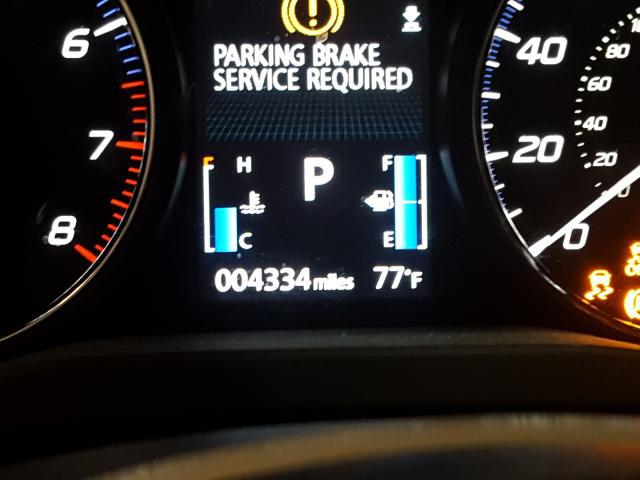
That “Parking Brake Service Required” message on your Mitsubishi’s dashboard is not something to brush off or wait on. Your parking brake is what keeps your vehicle stationary when it is parked, and on modern Mitsubishi vehicles equipped with the Electronic Parking Brake (EPB) system, a fault in that system can mean the brake is not applying when you think it is, or not releasing when you need it to. Either situation is a problem worth addressing quickly.
The EPB system replaced the traditional hand lever parking brake on most modern vehicles, and for good reason. It is more convenient, takes up less cabin space, and can apply and release automatically in certain situations. But it is also more complex, with more electronic components that can develop faults over time. When something goes wrong anywhere in that system, the warning appears on your dash.
This guide will walk you through how the EPB system works, what causes this warning to appear, and exactly what needs to be done to fix it.
How the Mitsubishi Electronic Parking Brake System Works
Understanding the system makes it easier to understand why failures happen and why certain repairs are needed. The EPB is not a simple cable-and-lever setup like an old-school handbrake. It is an electronically controlled system with several components working in sequence every time you engage or disengage the parking brake.
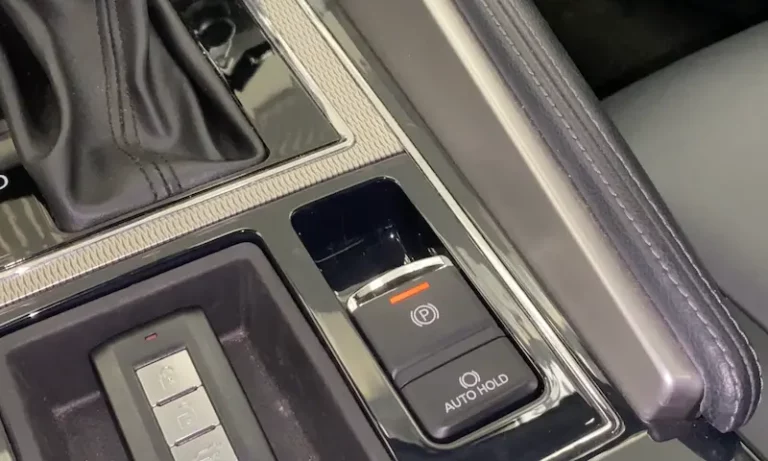
Here is the basic sequence of events when you push the EPB button:
- You press the control switch or button inside the cabin.
- That switch sends an electrical signal to the EPB control module (ECU).
- The ECU processes the signal and sends a command to the electric motor actuator at the rear brake caliper.
- The electric motor drives a screw mechanism inside the caliper that pushes the brake pads firmly against the rotor.
- A force sensor measures the clamping force being applied and feeds that data back to the ECU, which adjusts the motor output to achieve the correct holding force.
- Once the target clamping force is reached, the motor stops and the brake is held in position mechanically.
When you release the parking brake, the process reverses. The motor runs in the opposite direction, retracting the pads away from the rotor and freeing the wheels.
On many Mitsubishi models, the EPB also applies automatically when you shift the transmission into Park or switch the engine off, and releases automatically when you press the accelerator with the vehicle in Drive. This auto-apply and auto-release feature adds convenience but also means the system is operating more frequently than a manually operated parking brake ever would, which increases wear on the electric motor and its components over time.
The Key Components of the EPB System
Each of the components in the EPB system has a specific role. When any one of them develops a fault, the system either cannot function properly or detects the fault and shuts down with the warning message. Here is what each component does:
| Component | Role in the System |
|---|---|
| Control switch / button | Driver input that initiates the engage or release command |
| EPB control module (ECU) | Processes signals and controls the system’s operation |
| Electric motor actuator | Physically applies and releases the brake pads at the caliper |
| Force sensor | Measures clamping force and feeds data back to the ECU |
| Brake caliper | Houses the motor and brake pads; transfers clamping force to the rotor |
| Brake pads | Create friction against the rotor to hold the vehicle stationary |
| Brake rotor | The disc that the brake pads clamp against |
| Wiring harness and connectors | Carry electrical signals between all components |
Any fault in any of these components, from a worn brake pad to a corroded connector, can trigger the parking brake service required warning. That is why a proper diagnostic scan is always the right starting point before any repair work begins.
What Causes the Mitsubishi Parking Brake Service Required Warning?
There are several different failure points that can trigger this warning. Let us go through each one and explain what is actually happening when that component fails.
1. Failing Force Sensor
The force sensor is the feedback mechanism that tells the EPB ECU how hard the brake pads are pressing against the rotor. Without accurate feedback from this sensor, the ECU has no way to know whether the correct clamping force has been achieved. It cannot confirm whether the brake is properly applied.
When the force sensor fails, the actuator effectively operates blind. The ECU detects the missing or corrupted feedback signal and flags the fault immediately. The system will not operate in a state of uncertainty when parking brake function is involved, so the warning appears and the system may disable itself until the fault is resolved.
Force sensor failure can result from physical damage, corrosion at the connector, or internal electronic failure. Because the sensor sits at the caliper, it is exposed to brake heat, road grime, and moisture, all of which contribute to wear over time.
2. Damaged Electric Motor Actuator
The electric motor is the muscle of the EPB system. It is what physically applies and releases the brake. These motors are relatively robust, but they do wear out, particularly on vehicles where the auto-apply and auto-release feature means the motor operates dozens of times a day.
Motor failures can stem from internal mechanical wear, brush wear in brushed motor designs, winding failures, or electrical issues like a blown fuse in the motor circuit or damaged wiring to the motor. When the motor cannot operate, pushing the EPB button does nothing to the brakes. The danger here is subtle: the driver may believe the parking brake is engaged when it absolutely is not.
The EPB system is smart enough to detect when the motor is not responding correctly and will throw the warning rather than let you believe everything is fine.
3. Damaged Control Switch
The control switch is the driver’s interface with the EPB system. It is a relatively simple component, but it sits in an area of the cabin that gets regular physical use, and like any switch, it can fail over time. The switch can develop internal contact wear, moisture intrusion, or wiring damage at its connector that prevents it from sending the correct signal to the ECU.
A failed switch means the driver has no way to manually engage or disengage the parking brake. On vehicles with auto-apply functionality, the brake may still apply automatically when the engine is switched off, but manual control is lost. If the switch is sending erratic or corrupted signals, the ECU may interpret those signals as a fault and flag the warning.
4. Worn-Out Brake Pads
The brake pads in the rear calipers are the friction material that actually holds your vehicle stationary when the parking brake is applied. They wear down gradually with use, just like your regular service brake pads do. But here is the thing that catches people off guard: worn parking brake pads can trigger the EPB warning before you notice any obvious braking performance issue.
The force sensor monitors clamping force. When pads wear thin, the actuator has to travel further to achieve the same clamping force, and at a certain point, it may not be able to generate enough force to hold the vehicle on a slope. The ECU detects this discrepancy between commanded clamping force and actual vehicle stability and flags a fault.
On some Mitsubishi models, the rear brake pads serve double duty, functioning as both service brake pads and parking brake pads. Regular brake inspections should include checking rear pad thickness specifically for this reason.
5. EPB Module or Software Issues
The EPB control module runs the software that manages the entire system. Like any electronic control unit, it can develop glitches. Sometimes a simple soft fault in the module’s memory causes the warning to appear even when all the hardware components are functioning correctly. A reset of the module can clear these soft faults and resolve the warning.
In more serious cases, the module itself can fail from corrosion, water intrusion, or internal component failure. A damaged module may produce erratic system behavior, such as the parking brake applying or releasing unexpectedly, or failing to respond consistently to switch inputs. Module replacement in these cases is necessary, and depending on the vehicle, may require programming to match the vehicle’s configuration.
6. Damaged Internal Brake Components
Beyond the EPB-specific components, the underlying brake system hardware matters too. A seized caliper piston, a corroded brake line restricting fluid flow, a warped or heavily scored rotor, or a damaged caliper bracket can all affect the EPB system’s ability to operate as designed. The EPB is ultimately an electronic interface controlling a mechanical brake system, so problems with the mechanical side affect the electronic side’s ability to deliver the right results.
A seized rear caliper is a particularly common issue. When the caliper is stuck, the motor cannot move the pads freely, it overworks itself trying to overcome the resistance, and the force sensor readings become inconsistent. The ECU flags the fault and the warning appears.

How to Fix the Mitsubishi Parking Brake Service Required Warning
Here is something important to understand about EPB repairs before we get into the specific fixes. Unlike a traditional parking brake where you can inspect the cable tension and manually adjust things, the EPB system requires a scan tool with EPB-specific functionality for most repairs and adjustments. You cannot simply adjust the rear calipers by hand after changing pads on an EPB-equipped vehicle. The electronic actuator position must be reset using a scan tool with EPB service mode capability, otherwise the new pads will not seat correctly and the system may throw a fault code immediately.
With that understood, here is how each cause is addressed.
Fix 1: Diagnose the System With a Proper Scan Tool
Every EPB repair starts here without exception. An OBD-II scanner that can access EPB-specific fault codes will pull the stored codes from the EPB module and tell you exactly which component or circuit is reporting the fault. Generic OBD-II scanners that only read powertrain codes will not be sufficient here. You need a scanner that can specifically access the EPB or brake control module.
Common EPB fault codes on Mitsubishi vehicles and what they typically point to:
| Fault Code Type | What It Typically Indicates |
|---|---|
| Force sensor circuit fault | Sensor failure, damaged wiring, or corroded connector at the caliper |
| Motor actuator circuit fault | Motor failure, blown fuse in motor circuit, or wiring issue |
| EPB switch circuit fault | Control switch failure or switch wiring problem |
| EPB module internal fault | Module software glitch or module hardware failure |
| Clamping force insufficient | Worn brake pads, seized caliper, or weak motor |
| Communication fault | Wiring or connector issue between EPB module and other modules |
The fault code narrows down where to look. Work from there rather than replacing components based on guesswork.
Fix 2: Inspect and Replace the Force Sensor
If the diagnostic points to the force sensor, locate it at the rear caliper using your owner’s manual as a reference for the exact position on your specific model. Here is the inspection process:
- Raise the vehicle and remove the affected rear wheel for better access to the caliper area.
- Locate the force sensor and its wiring connector at the caliper.
- Inspect the connector for corrosion, bent pins, or looseness. A corroded connector can sometimes be cleaned with electrical contact cleaner and resolved without sensor replacement.
- Inspect the sensor wiring from the connector back toward the chassis for any signs of damage, chafing, or breaks.
- If the sensor itself is confirmed faulty, replace it with an OEM or OEM-equivalent unit. Generic sensors may not meet the precision specifications required for proper EPB force measurement.
- After replacement, clear the fault codes and use the scan tool to verify the sensor is reporting correctly before reinstalling the wheel.
Fix 3: Replace the Electric Motor Actuator
If the motor actuator is confirmed faulty, this repair requires a few specific steps that differ from a standard caliper job. Here is the process:
- Use the scan tool to retract the EPB actuator into its service position before attempting any disassembly. Most EPB scan tool software has a “service mode” or “retract” function that electrically retracts the motor to allow caliper work. Never try to manually compress an EPB caliper with a C-clamp the way you would a standard brake caliper. The internal screw mechanism will be damaged.
- Raise the vehicle, remove the wheel, and access the rear caliper.
- Disconnect the motor actuator’s electrical connector.
- Remove the mounting bolts securing the actuator to the caliper and remove the faulty unit.
- Install the new motor actuator, ensuring it is the correct unit for your specific Mitsubishi model and year. Motor specifications vary between models.
- Reconnect the electrical connector, reinstall the wheel, and use the scan tool to initialize the new actuator before driving.
If motors on both sides are the same age and mileage, replacing both at the same time is worth considering to avoid a repeat job on the other side shortly after.
Fix 4: Diagnose and Repair the Control Switch
Control switch diagnosis involves checking for proper electrical signal output when the switch is pressed. Here is how to approach it:
- Check the relevant fuse for the EPB switch circuit in the fuse box. A blown fuse here can make the switch appear faulty when the actual problem is upstream.
- Inspect the switch wiring connector for corrosion or loose pins.
- With a multimeter or the live data function on your scan tool, check whether the switch is sending the correct voltage signal when pressed. A functional switch should produce a clean, consistent signal change when activated and released.
- If the switch is confirmed faulty, replacement is typically straightforward. On most Mitsubishi models, the EPB switch is a plug-and-play replacement that does not require programming.
Fix 5: Replace Worn Brake Pads
This is where the EPB system makes brake pad replacement slightly more involved than on a conventional caliper. Here is the process:
- Use the scan tool to enter EPB service mode and retract the actuator before starting the job. This is non-negotiable on EPB-equipped vehicles.
- Remove the wheel, slide out the old brake pads, and inspect the rotor for wear, scoring, or thickness below the minimum specification. If the rotor is worn beyond spec, replace it along with the pads.
- Install the new pads. Do not apply lubricant to the friction surface of the pads.
- After reassembly, use the scan tool to run the EPB initialization procedure, which electrically advances the actuator to the correct position against the new pads.
- Test the parking brake function and confirm the system reports no faults before returning the vehicle to service.
Replacing rear brake pads on an EPB vehicle without a scan tool capable of running the initialization procedure is a mistake that results in immediately recurring fault codes and improper brake function. Make sure whoever does this job has the right equipment.
Fix 6: Reset or Replace the EPB Module
For a simple soft fault or glitch in the EPB module, a reset is the first step. This can be done by:
- Using a scan tool to clear all stored fault codes and cycling the ignition to allow the module to reinitialize.
- Disconnecting the battery for 10 to 15 minutes to power down the module and clear its volatile memory, then reconnecting and rechecking.
If the warning returns immediately after a reset with the same module fault code, the module likely has a hardware issue and needs replacement. A new EPB module may require programming to match the vehicle’s configuration and VIN, which typically needs dealer-level equipment or a shop with the correct Mitsubishi programming tool.
Fix 7: Address Internal Brake Component Issues
If the diagnostic points to a seized caliper, damaged brake line, or other internal brake hardware issue, those components need to be addressed as part of the repair. A seized caliper on an EPB vehicle needs replacement, not just cleaning, because the EPB actuator relies on the caliper piston moving freely to achieve proper clamping force. A seized piston creates resistance the motor was not designed to overcome repeatedly.
Brake line inspections should look for:
- External corrosion on steel brake lines, particularly in areas prone to road salt exposure
- Swelling or cracking in rubber brake hose sections, which can restrict fluid flow or cause internal blockages
- Leaks at any fitting or connection in the hydraulic circuit
Any brake line or caliper work must be followed by a complete brake system bleed to ensure no air has entered the hydraulic circuit.
Is It Safe to Drive With the Parking Brake Service Required Warning On?
This depends on the specific fault. In most cases, your service brakes (the ones you use while driving) are a separate hydraulic system and will continue to function normally even when the EPB has a fault. So driving the vehicle carefully to a shop is generally acceptable if that is what the situation requires.
However, there are situations where you need to be more cautious:
- If the parking brake is stuck in the applied position, driving the vehicle will overheat the rear brakes and cause serious damage to pads, rotors, and the caliper.
- If the fault involves the rear brake caliper or its hydraulic circuit, your service braking at the rear may also be compromised.
- If you are planning to park the vehicle on any kind of incline, do not rely on the EPB being functional until the fault is resolved. Use wheel chocks if you must park on a slope.
Get the diagnostic done as soon as possible so you know exactly what you are dealing with before making decisions about driving with the warning active.
Approximate Repair Costs for Mitsubishi EPB Issues
Here is a general cost guide to help set expectations. These are estimates that will vary based on your specific Mitsubishi model, year, and the labor rates at your local shop or dealership.
| Repair Type | Approximate Parts Cost | Approximate Total Cost (with labor) |
|---|---|---|
| EPB diagnostic scan | N/A | $80 to $150 (often applied toward repair cost) |
| Force sensor replacement | $50 to $150 per side | $150 to $350 per side |
| Electric motor actuator replacement | $150 to $400 per side | $300 to $700 per side |
| Control switch replacement | $30 to $100 | $80 to $200 |
| Rear brake pad replacement (EPB) | $40 to $120 per axle | $150 to $350 per axle |
| EPB module replacement | $200 to $600+ | $400 to $900+ |
| Rear caliper replacement | $100 to $300 per side | $250 to $600 per side |
Why You Should Use a Mitsubishi-Familiar Shop for EPB Repairs
Not every shop is equipped to handle EPB system repairs properly. The key requirement is a scan tool that can access Mitsubishi’s EPB module specifically, including the ability to run the actuator retract and initialize functions required for brake pad service. A shop that tries to do rear brake pad replacement on your Mitsubishi EPB vehicle with a standard C-clamp and no scan tool access will damage the caliper actuator and potentially create new faults on top of the original problem.
Before booking any EPB-related repair, ask the shop directly whether they have the scan tool capability to perform EPB service mode and initialization on Mitsubishi vehicles. A Mitsubishi dealership will always have this capability. Many well-equipped independent shops that specialize in Japanese or European vehicles will also have the right tools. A general quick-lube or basic brake shop may not.
How to Prevent EPB Problems From Developing
A few proactive habits can extend the life of your Mitsubishi’s EPB system and reduce the chance of seeing this warning again.
Keep the Rear Caliper Area Clean
Road grime, brake dust, and moisture accumulate around the rear calipers and the EPB motor actuator housing. During regular car washes, rinse the wheel wells thoroughly to remove debris from the caliper area. This slows the corrosion process on the actuator housing and its wiring connector.
Have the Rear Brakes Inspected Regularly
Include the rear brake pad thickness and caliper condition in your regular brake inspections. On EPB-equipped vehicles, catching worn pads before they trigger a fault code is far less disruptive than dealing with an EPB warning and an emergency brake pad job at the same time. Most technicians recommend checking brake pad thickness every 15,000 to 20,000 miles at a minimum.
Do Not Ignore Unusual EPB Behavior
If you notice the parking brake taking longer than usual to release, making unusual noises when applying or releasing, or feeling like it is not holding on a slope as firmly as it used to, those are early warning signs worth investigating before the full warning message appears. Catching an EPB issue in its early stages is almost always cheaper and simpler than addressing it after the system has fully faulted out.
Final Thought
The EPB system on your Mitsubishi is more than a convenience feature. It is a safety system that keeps your vehicle from rolling when parked and, on some models, assists with hill starts and emergency braking scenarios. When it flags a service required warning, start with a proper diagnostic scan, identify the specific fault, and get it repaired by a shop with the right tools for EPB service. Driving around with a parking brake system that may or may not be working correctly is a risk that is simply not worth taking.