
Your Dodge Ram 1500 is a workhorse. It hauls, it tows, and it gets you where you need to go without complaint. But like any hardworking machine, it relies on a network of sensors to keep everything running smoothly. One of the most important parts of that network? The Mass Air Flow (MAF) sensor.
This small but mighty device measures the volume and density of air entering your engine. It tells the engine computer exactly how much fuel to inject for the perfect air to fuel ratio. Get this wrong, and you are looking at poor fuel economy, rough idling, and a whole lot of frustration. But here is the thing: you do not need to be a certified mechanic to find or fix this part. You just need to know where to look.
In this guide, we are going to walk you through everything you need to know about the Dodge Ram 1500 MAF sensor location, how to clean it, how to replace it, and how to tell when it is going bad. No fluff, no jargon. Just the facts that will save you time and money.
What Does the MAF Sensor Actually Do?
Before we start digging into the engine bay, let us talk about why this sensor matters so much. The Mass Air Flow sensor is the lungs of your engine. It sits right in the intake path and measures how much air is flowing past it at any given moment. That might sound simple, but it is actually a pretty complex job.
The engine control unit, or ECU, uses that data to calculate the exact amount of fuel needed for combustion. Too much air and not enough fuel? That is a lean condition, which can cause overheating and engine damage. Too much fuel and not enough air? That is a rich condition, which wastes gas and increases emissions. The MAF sensor keeps everything balanced.
Think about it like this. When you are baking a cake, you need the right ratio of flour to sugar. Mess that up, and the cake is ruined. The MAF sensor is like the measuring cup for your engine. It ensures every cylinder gets the right amount of air and fuel for a clean, efficient burn.
The Science Behind the Sensor
Modern MAF sensors use a heated wire or film element. As air flows over that element, it cools it down. The sensor then measures how much current is needed to keep the element at a constant temperature. More air means more cooling, which means more current. The ECU translates that electrical signal into an air flow reading.
That is the theory, anyway. In the real world, that tiny wire is exposed to all sorts of nasty stuff. Oil vapor from the PCV system, dirt that slips past the air filter, and even fine dust from off-road driving can coat the element. When that happens, the sensor starts to lie to the ECU. And when the ECU gets bad data, your truck runs like garbage.
Common Symptoms of a Faulty MAF Sensor
How do you know if your MAF sensor is on its last legs? The symptoms can be subtle at first, but they get harder to ignore over time. Here is what to watch for:
- Check Engine Light: This is usually the first clue. Your truck’s computer is smart enough to know when the MAF sensor is giving readings that do not make sense. If that orange light pops on, do not ignore it.
- Rough Idling: Does your Ram feel like it is about to die when you are sitting at a red light? A dirty or failing MAF sensor can cause the engine to hunt for the right idle speed, resulting in a shaky, uneven idle.
- Poor Acceleration: When you step on the gas, does the truck hesitate or stumble? That lag is often caused by incorrect air flow readings. The engine does not know how much fuel to add, so it stumbles.
- Sudden Stalling: This is the scary one. Your truck should never stall when you are coming to a stop. If it does, the MAF sensor is a prime suspect.
- Jerking or Surging: If your Ram feels like a bucking bronco at highway speeds, the air and fuel mixture is all over the place. This surging sensation is a classic sign of MAF trouble.
- Decreased Fuel Economy: Are you visiting the gas station more often than usual? A faulty MAF sensor can cause the engine to run rich, dumping extra fuel into the cylinders and wasting your hard-earned money.
Now, here is the thing. These symptoms can also point to other issues, like a vacuum leak or a clogged fuel filter. So do not immediately start buying parts. Use these clues as a starting point, then move on to the diagnostic steps we will cover later.
Dodge Ram 1500 MAF Sensor Location: Where to Look
Alright, let us get to the main event. Where exactly is the MAF sensor on a Dodge Ram 1500? The good news is that it is not buried deep in the engine. It is actually pretty easy to find once you know what you are looking for.
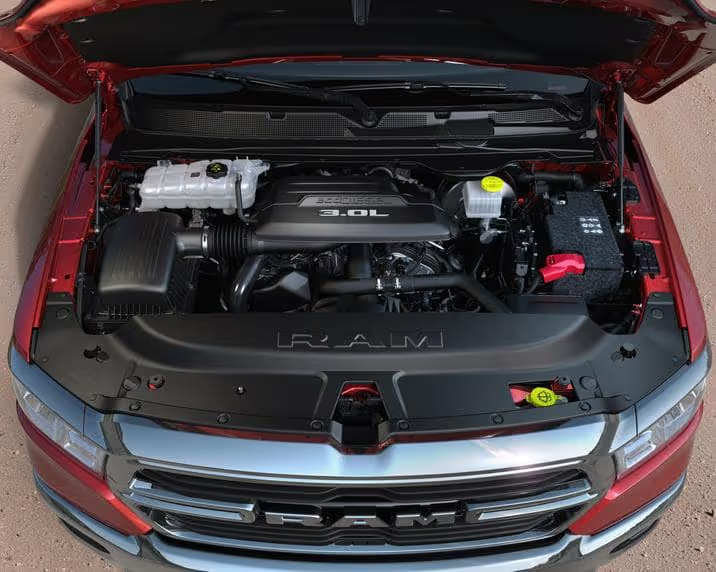
Open the hood and look at the air intake system. You will see a large plastic tube that runs from the air filter box toward the engine. Follow that tube. The MAF sensor is located right between the air filter housing and the throttle body. It is usually a small, rectangular component mounted directly on that intake tube.
Here is a quick way to spot it. Look for a plastic housing with an electrical connector plugged into it. That connector typically has four or five wires running to it. The sensor itself is held in place by two screws or Torx bolts, depending on the model year.
Model Year Variations
While the general location is the same across most Ram 1500 models, there are some slight variations depending on the engine and model year. Here is a quick breakdown:
| Engine Type | MAF Sensor Location | Notes |
|---|---|---|
| 3.6L Pentastar V6 | On the intake tube, near the air box | Easy to access from the top |
| 5.7L HEMI V8 | On the intake tube, between the air box and throttle body | May need to remove the engine cover for better access |
| 6.7L Cummins Diesel | On the intake manifold, near the turbo inlet | Diesel models have a different setup |
| 3.0L EcoDiesel | On the intake tube, near the air filter | Similar to gas models but with a different connector |
For most Ram 1500 gas engines, you are looking at the same basic setup. The sensor is clamped or screwed into the intake duct. You cannot miss it once you see that electrical connector.
What Surrounds the MAF Sensor?
Once you locate the sensor, take a moment to look at what is around it. Directly upstream is the air filter housing. This is your first line of defense against dirt and debris. If your air filter is dirty, chances are your MAF sensor is dirty too.
Downstream, you will find the throttle body. This is the valve that controls how much air enters the engine. The MAF sensor sits between these two components, measuring the air as it flows through. If either of these components is clogged or damaged, it can affect MAF sensor readings.
Handling these components gently is key. The MAF sensor element is delicate. Even touching it with your bare fingers can leave oils that cause inaccurate readings. So when you are inspecting things, look but do not touch.
Diagnosing MAF Sensor Issues with Error Codes
If your check engine light is on, the first thing you should do is pull the diagnostic trouble codes with an OBD2 scanner. This will give you a starting point for your troubleshooting. Here are the codes you are most likely to see when the MAF sensor is acting up:
P0101: Mass Air Flow Circuit Range/Performance Problem
This code means the MAF sensor is reading outside of its expected range. In other words, the sensor is telling the ECU that there is more or less air flowing than there should be. This could be caused by a dirty sensor, a vacuum leak, or a failing sensor altogether.
P0102: Mass Air Flow Circuit Low Input
This code indicates that the MAF sensor is sending a low voltage signal to the ECU. This could be due to a faulty sensor, a poor electrical connection, or a short in the wiring. Sometimes, it is as simple as a loose connector that needs to be snapped back into place.
P0103: Mass Air Flow Circuit High Input
Less common, but still worth mentioning, this code means the sensor is sending a higher than expected voltage. This could point to a short to power in the wiring harness or a sensor that is completely failed.
Now, here is the important part. Do not just throw a new MAF sensor at the problem based on these codes alone. You need to do a little detective work first.
Your Troubleshooting Checklist
- Check the Air Filter: A severely clogged air filter can cause a P0101 code. If your filter looks dirty, replace it first and clear the code.
- Inspect the Electrical Connector: Unplug the MAF sensor connector and look for bent pins, corrosion, or water intrusion.
- Check the Wiring: Trace the wires back from the sensor. Look for any fraying, melting, or damage that could cause a short.
- Look for Vacuum Leaks: A vacuum leak downstream of the MAF sensor can cause inaccurate readings. Check all hoses and gaskets for cracks.
- Clean the Sensor: If everything looks good, move on to cleaning the MAF sensor. We will cover that process next.
Taking the time to work through this checklist can save you from buying a part you do not need. Sometimes, the fix is as simple as cleaning a dirty connector or replacing a clogged air filter.
How to Clean Your MAF Sensor Without Breaking It
Cleaning the MAF sensor is one of those maintenance tasks that anyone can do. It takes about fifteen minutes and can restore your truck’s performance if the sensor is just dirty. But you have to do it right. Using the wrong cleaner or touching the sensor element can ruin it permanently.
What You Will Need
- MAF sensor cleaner (available at any auto parts store)
- A flathead screwdriver or Torx bit (depending on the screws)
- A clean, dry workspace
That is it. No special tools. No expensive equipment. Just the right cleaner and a steady hand.
Step-by-Step Cleaning Process
Step 1: Locate the Sensor. Use the directions we covered earlier to find the MAF sensor on your intake tube.
Step 2: Disconnect the Electrical Connector. Press the release tab and gently pull the connector straight off. Do not yank on the wires. If it is stuck, wiggle it gently until it releases.
Step 3: Remove the Sensor. Use your screwdriver or Torx bit to loosen the two screws holding the sensor in place. Once they are out, carefully slide the sensor out of the intake tube.
Step 4: Spray the Sensor Element. Hold the sensor so the element is facing down. Spray the MAF cleaner directly onto the element. You want to be generous, but do not blast it from too close. The pressure from the can should be enough to loosen any dirt or grime.
Step 5: Let It Dry. MAF cleaner evaporates quickly, but do not rush it. Set the sensor on a clean towel and let it air dry for at least 10 minutes. Do not use compressed air to speed up the process. That can damage the delicate wire.
Step 6: Reinstall. Slide the sensor back into the intake tube, making sure it is seated properly. Reinstall the screws and reconnect the electrical connector.
Step 7: Clear the Codes. If you had a check engine light on, use your OBD2 scanner to clear the codes. Then start the truck and see if it runs smoothly.
The Dos and Don’ts of MAF Cleaning
This is where a lot of people make mistakes. Let us be clear about what you should and should not do:
- Do use a cleaner that is specifically labeled for MAF sensors. These are alcohol based and dry without leaving any residue.
- Do not use carburetor cleaner, brake parts cleaner, or any solvent that leaves a film. These can destroy the sensor element.
- Do not touch the sensor element with your fingers, a cloth, or a Q-tip. The element is fragile and can be damaged easily.
- Do not use a wire brush or any abrasive tool to clean the sensor.
If you follow these rules, cleaning the MAF sensor is a safe and effective way to restore performance. It is one of those maintenance tasks that should be part of your regular routine, especially if you do a lot of dusty or off-road driving.
When Cleaning Is Not Enough: Replacing the MAF Sensor
Sometimes, cleaning just does not cut it. If the sensor is physically damaged, or if it has simply reached the end of its life, you will need to replace it. The good news is that replacement is just as easy as cleaning. You will need to spend a little money on a new part, but the labor cost is zero if you do it yourself.
Tools You Will Need
- Screwdriver or Torx bit set
- New MAF sensor (get the correct part for your specific engine)
- Dielectric grease (optional, for the connector)
Step-by-Step Replacement Guide
Step 1: Disconnect the Battery. This is a safety measure. You do not want any electrical current flowing while you are unplugging sensors. Remove the negative battery terminal and set it aside.
Step 2: Unplug the Old Sensor. Press the release tab on the electrical connector and pull it straight off the sensor.
Step 3: Remove the Mounting Screws. Use your screwdriver or Torx bit to remove the two screws that hold the sensor to the intake tube.
Step 4: Slide Out the Old Sensor. Carefully pull the sensor out of the intake duct. Be gentle. You do not want to crack the plastic housing.
Step 5: Install the New Sensor. Take your new MAF sensor out of the box. Handle it by the plastic housing only. Do not touch the sensor element. Slide it into the intake tube, making sure it is oriented correctly. It should only fit one way.
Step 6: Secure the Screws. Reinstall the mounting screws and tighten them snugly. Do not overtighten, as this can crack the plastic.
Step 7: Reconnect the Connector. Plug the electrical connector back into the sensor until you hear a click. If you have dielectric grease, apply a small amount to the connector pins before plugging it in. This helps prevent corrosion.
Step 8: Reconnect the Battery. Reattach the negative battery terminal and tighten it securely.
Step 9: Clear the Codes and Test. Start the truck and let it idle. If the check engine light was on, clear the codes with your scanner. Take the truck for a test drive and see if the performance issues are gone.
Choosing the Right Replacement Part
When it comes to buying a new MAF sensor, you have options. You can buy an OEM (Original Equipment Manufacturer) part from a dealership, or you can buy an aftermarket part from an auto parts store. OEM parts are going to be more expensive, but they are guaranteed to fit and function correctly. Aftermarket parts can be cheaper, but quality varies widely.
Here is a piece of advice. Stick with a reputable brand. Cheap no-name sensors are often poorly made and can fail within a few months. You are better off spending a little more upfront than dealing with the headache of a premature failure. Do a quick search for reviews before you buy, and make sure the part number matches your specific engine.
If you are unsure about compatibility, you can always check the part number on your old sensor and match it to the new one. That is the safest way to ensure a perfect fit.
Preventive Maintenance: Keeping Your MAF Sensor Healthy
You have cleaned or replaced your MAF sensor. Now, how do you keep it in good shape? It comes down to a few simple habits.
Replace Your Air Filter Regularly
Your air filter is the first line of defense for the MAF sensor. If the filter is clogged or torn, dirt and debris can make their way to the sensor element. Check your air filter every time you change your oil. If it looks dirty, replace it. This is one of the cheapest maintenance items on your truck, and it protects one of the most expensive sensors.
Check for Oil Contamination
Some engines have a problem with oil vapor from the PCV system coating the MAF sensor. If you notice a buildup of oily residue on the sensor when you inspect it, you may have an issue with the PCV valve or excessive blow-by in the engine. Fixing the root cause will save you from constantly cleaning the sensor.
Use Quality Fuel
This might sound like a no-brainer, but the quality of your fuel matters. Cheap gas with high ethanol content can leave deposits on the sensor over time. Stick with top-tier fuels from reputable stations. Your engine will run cleaner, and your MAF sensor will stay cleaner.
Inspect During Routine Maintenance
Make it a habit to inspect the MAF sensor every time you do any work under the hood. A quick visual check takes seconds. Look for any buildup on the sensor element and check the electrical connector for corrosion. Catching a problem early is always easier than dealing with a breakdown later.
The Real Cost of Ignoring MAF Sensor Problems
Here is the thing about ignoring a faulty MAF sensor. It is not just about the annoyance of a rough idle or poor acceleration. The long term damage can be significant.
Let us paint a scenario. Your MAF sensor is dirty and reading low air flow. The ECU compensates by reducing fuel delivery. This creates a lean air fuel mixture. Lean mixtures burn hotter than normal. Those high temperatures can cause pre-ignition, also known as detonation or knocking. Over time, detonation can damage your pistons, valves, and even the catalytic converter.
Now, a catalytic converter replacement is not cheap. We are talking about hundreds of dollars in parts alone, plus labor if you do not do it yourself. Compare that to the cost of a can of MAF cleaner, which is about ten bucks. Or the cost of a new MAF sensor, which is between fifty and a hundred and fifty dollars for most Ram 1500 models.
The math is pretty simple. Spending a little time and money on maintenance now can save you from a massive repair bill down the road.
When to Call a Professional
We have covered a lot of DIY territory here, but we need to be honest. Some situations call for professional help. If you have cleaned the sensor, replaced it, and still have the same symptoms, the problem might not be the MAF sensor at all.
There could be a vacuum leak, a faulty oxygen sensor, a clogged fuel injector, or even a problem with the ECU itself. These are more complex issues that require specialized diagnostic equipment and expertise. There is no shame in taking your truck to a trusted mechanic when you are in over your head.
Also, if your Ram is still under warranty, do not touch anything. Take it to the dealership and let them handle it. DIY repairs on a warrantied vehicle can void your coverage.
Finding a good mechanic is like finding a good doctor. Ask friends and family for recommendations. Read online reviews. Look for someone who specializes in Dodge or Ram trucks. A good mechanic will explain the problem, show you the evidence, and give you a fair price. If they just tell you to replace parts without explaining why, get a second opinion.
Final Thoughts
Your Dodge Ram 1500 MAF sensor is a small part with a big job. It is the gatekeeper for the air fuel mixture, and when it works correctly, you do not even think about it. When it fails, it makes itself known in a hurry.
Knowing the Dodge Ram 1500 MAF sensor location is the first step toward taking control of your truck’s maintenance. From there, you can clean it, replace it, and keep it running in top shape for years to come.
So, grab a can of MAF cleaner, pop the hood, and take a look. You might be surprised at what a little maintenance can do for your truck’s performance. And if you run into trouble, you always have the option to call in a professional. Your Ram has been there for you. Now it is time to return the favor.
Have you ever dealt with a dirty MAF sensor? What symptoms did you notice, and how did you fix it? Share your experience. Your story might help another Ram owner who is stuck on the side of the road wondering what went wrong.