
You drove to the emissions testing station with fingers crossed, waited in line, sat through the inspection, and walked out with a failure notice in your hand. The paper says “HC GPM Emissions Fail.” You stare at it. You are not an engineer. You have no idea what that string of letters and abbreviations means. All you know is that your car failed its smog test and now you cannot renew the registration until you fix whatever is wrong.
Take a breath. This is one of the most common smog test failure codes mechanics deal with, and while it sounds technical, the causes are finite and the fixes are well-established. You do not need to panic. You do need to understand what is happening inside your engine, because blindly throwing parts at the problem will drain your wallet without solving anything. Let me walk you through the whole picture, from what HC GPM actually means to exactly what breaks down inside a vehicle to produce this result, and how you get it fixed so you can pass on the retest.
What HC GPM Emissions Fail Actually Means in Plain English
HC stands for hydrocarbon. GPM stands for grams per mile. Put them together and the code is telling you that your vehicle is releasing too many hydrocarbon compounds per mile of driving, far more than your state’s legal limit allows. HC GPM is one of the key measurements taken during a smog check, and when it shows up as a failure on your report, it means unburned fuel is escaping your engine and making its way out through the exhaust pipe.
Hydrocarbons are the raw building blocks of gasoline and diesel fuel. In a perfect combustion event, your engine takes fuel, mixes it with air, ignites it with a spark, and converts nearly all of it into energy, carbon dioxide, and water vapor. None of that leftover raw fuel should be making it out the tailpipe. When it does, it means something has gone wrong in the combustion process. The fuel went in but did not fully burn, and the exhaust analysis caught it in the act.
A smog test has two main parts. The first is the OBD test, where a technician plugs a scanner into the diagnostic port under your dashboard and checks for stored trouble codes. If any warning light is triggered or any readiness monitor is incomplete, the vehicle can fail right there. The second part is the actual exhaust gas analysis. With a probe inserted into the tailpipe, the analyzer measures the following gases coming out of your engine:
- Carbon monoxide (CO)
- Oxygen (O2)
- Nitrogen dioxide (NO2)
- Hydrocarbons (HC)
- Carbon dioxide (CO2)
- Nitric oxide (NO)
Each of these gases tells the technician something specific about how the engine is running. High HC tells one clear story: fuel entered the combustion chamber and left without fully burning. The unburned fuel molecules exited through the exhaust, through the catalytic converter, and out into the atmosphere. When the reading is above your state’s maximum allowable limit, the result is a HC GPM emission failure. Your car is officially putting out more raw fuel vapor than the law permits.
Why Unburned Fuel Is More Than Just an Emissions Problem
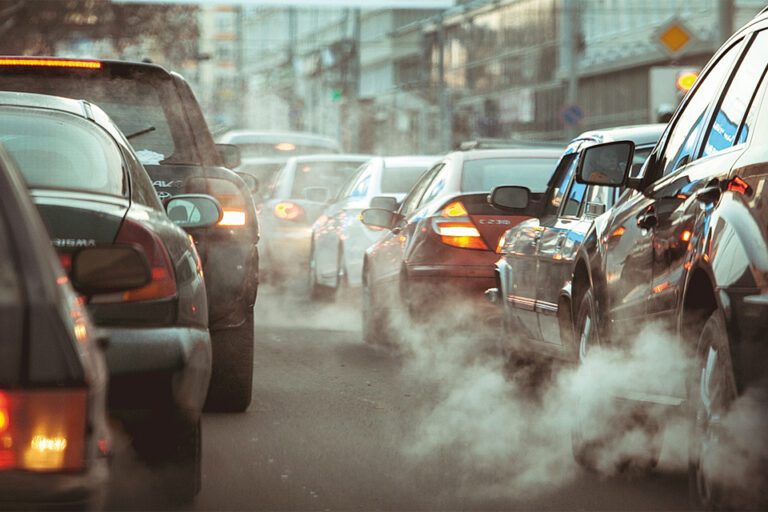
Before we get into causes and fixes, it is worth understanding why high hydrocarbon output is taken so seriously. Hydrocarbons released from vehicle exhausts are a key ingredient in ground-level ozone formation. When sunlight hits those raw fuel vapors mixed with nitrogen oxides in the air, a chemical reaction creates smog. That yellowish haze hanging over cities in summer is largely the product of vehicles putting out unburned fuel vapors. It irritates lungs, worsens asthma, and contributes to long-term respiratory disease. States set legal HC limits to keep the air breathable.
But there is a second reason to care, beyond just passing the smog test. A high HC reading means your engine is wasting fuel. Every hydrocarbon molecule that exits the tailpipe unburned is gasoline you paid for and your engine threw away. If your vehicle is failing on HC, you are likely getting worse fuel economy than you should. You might also notice rough idling, a faint smell of raw fuel from the exhaust, or an occasional stumble during acceleration. The emissions failure is a symptom, and the engine inefficiency is the disease.
The Most Common Reasons Your Vehicle Is Producing Too Many Hydrocarbons
Getting to the specific cause requires some diagnosis, but the universe of possibilities is not as large as it might seem. Every single cause of high HC emissions traces back to the same fundamental problem: fuel is entering the combustion chamber but not burning completely. The question is why it is not burning. The answer could be one of several components, and in some cases it is a combination of more than one.
An Incorrect Air-Fuel Mixture That Leaves Fuel on the Table
The combustion process requires a precise ratio of air to fuel. Engineers call it the stoichiometric ratio, and for gasoline engines it is approximately 14.7 parts of air for every one part of fuel. At that ratio, the engine burns fuel as completely as chemistry allows. Deviate from it in either direction and combustion quality suffers. Hydrocarbons go up.
A lean condition means too much air relative to fuel. You might think that would leave less fuel to escape unburned, but the reality is more complicated. An excessively lean mixture burns too slowly and at the wrong point in the combustion cycle. The flame front may not complete its travel across the combustion chamber before the exhaust valve opens, sending partially burned fuel out into the exhaust. Unmetered air sneaking into the intake manifold through a cracked vacuum hose or a failing intake gasket is a classic lean cause. So is a dirty or restricted fuel injector that delivers less fuel than commanded.
A rich condition means too much fuel relative to air. Here the math is more obvious. The excess fuel that the combustion chamber cannot process physically exits with the exhaust gases. A stuck open fuel injector, a failing fuel pressure regulator delivering too much pressure, or a bad oxygen sensor that tells the ECU to keep adding fuel can all push the engine rich. The exhaust will smell sweet or like raw gasoline, and the HC reading on the analyzer will spike dramatically.
Both lean and rich conditions often produce engine misfires as a secondary symptom. A misfiring cylinder is one where combustion simply does not occur during a given engine cycle. That entire slug of fuel air mixture exits the cylinder completely unburned. It passes through the exhaust valve, burns partially in the hot exhaust manifold, and then hits the catalytic converter. Severe or consistent misfires can destroy a catalytic converter in a very short amount of time by overheating its honeycomb structure.
A Catalytic Converter That Has Lost Its Ability to Clean
The catalytic converter is the last line of defense against high tailpipe emissions. Sitting in the exhaust stream between the engine and the muffler, it contains a ceramic honeycomb coated with precious metals including platinum, palladium, and rhodium. When exhaust gases flow through that honeycomb, those metals trigger chemical reactions that convert hydrocarbons into carbon dioxide and water, convert carbon monoxide into carbon dioxide, and convert nitrogen oxides into harmless nitrogen and oxygen.
A healthy catalytic converter can reduce HC emissions by over ninety percent. That is enormous. It is why a modern car can run a slightly imperfect combustion cycle and still pass an emissions test. The converter is doing the cleanup work. But when the converter fails, that buffer disappears. Whatever the engine produces goes directly to the tailpipe at full concentration.
Catalytic converters fail in several ways. They can melt internally from repeated misfires overheating the substrate. They can be poisoned by oil burning or coolant leaking into the combustion chamber, coating the precious metal surface with residue. They can physically break apart from road impact, leaving chunks of substrate rattling around inside. In all of these scenarios, the converter’s efficiency drops below the level needed to clean the exhaust sufficiently. The OBD system usually catches this as a P0420 or P0430 code. The smog test will fail on both the OBD scan and the tailpipe analysis.
Ignition System Problems That Let Fuel Escape Unburned
The ignition system’s job is to deliver a spark at precisely the right moment to ignite the compressed air-fuel mixture. When the spark is weak, late, or absent entirely, that mixture does not burn properly. A worn spark plug with a wide electrode gap requires a higher voltage to fire. Sometimes it does, and sometimes it fails, creating an intermittent misfire. Old ignition wires with cracked insulation allow energy to leak to ground instead of reaching the plug. A failing ignition coil may produce inconsistent spark energy, resulting in a weak combustion event where only part of the fuel charge burns.
Timing is the other critical ignition variable. Ignition timing determines exactly when in the piston’s compression stroke the spark fires. Modern engines use the ECU and crankshaft position sensor to control this dynamically. If the crankshaft sensor gives incorrect data, the timing can drift, leading to late ignition where the piston is already heading back down before the combustion event completes. The partially burned mixture rides the exhaust stroke out of the cylinder, adding raw hydrocarbons to the exhaust stream. Ignition timing faults often produce a P0300 series misfire code that shows up clearly on the OBD scan portion of the smog test.
A Damaged or Clogged Air Injection System
Not every vehicle has an air injection system (AIS), but those that do use it as an active emissions control device. The system pumps fresh air directly into the exhaust ports or the exhaust manifold, just downstream of the combustion chambers. This extra oxygen reacts with unburned hydrocarbons and carbon monoxide in the hot exhaust gas, promoting a secondary combustion that burns off some of that leftover fuel before it ever reaches the catalytic converter. The effect is a meaningful reduction in both HC and CO readings.
When the air injection pump fails, the diverter valve sticks, or the passages become clogged with carbon deposits, this secondary burn does not happen. Hydrocarbons that would have been consumed before the catalytic converter now arrive at the converter in higher concentrations. On an already struggling converter, this can push the tailpipe reading over the limit. The fix varies from cleaning the passages to replacing the pump or the check valves that prevent exhaust gas from backflowing into the pump.
Low Cylinder Compression That Ruins Combustion Efficiency
Compression is the foundation of combustion. When the piston rises on the compression stroke and squeezes the air-fuel mixture into a smaller space, it heats the mixture, making it far more reactive to the spark. High compression equals hotter, more complete combustion. Low compression equals a cooler, diluted mixture that burns sluggishly and incompletely.
Compression can drop for several reasons. Worn piston rings allow combustion gases to blow past the piston into the crankcase, reducing the pressure available for the power stroke. Worn valve stem seals allow oil to enter the combustion chamber, fouling the spark plug and diluting the fuel charge. A leaking head gasket can allow coolant into the cylinder, which immediately suppresses the combustion temperature and leaves enormous amounts of unburned fuel in the exhaust. A burned exhaust valve will not seal the combustion chamber, letting pressure bleed into the exhaust manifold before the piston completes the power stroke.
All of these compression-related issues send unburned fuel directly into the exhaust system. A compression test on each cylinder will reveal which cylinders are below spec. A leak-down test goes further, pinpointing exactly where the compression is escaping, whether through the rings, the intake valve, the exhaust valve, or the head gasket. This is not a repair you can perform with basic tools. Cylinder compression issues require engine work ranging from a valve adjustment or new piston rings to a partial or full engine rebuild.
A Complete Look at the Causes and Fixes Side by Side
| Root Cause | What It Does to HC Levels | Common Fix | DIY Friendly? |
|---|---|---|---|
| Lean or rich air-fuel mixture | Incomplete combustion, excess raw fuel in exhaust | Replace O2 sensor, clean injectors, fix vacuum leaks | Partially, depends on root cause |
| Failed catalytic converter | No longer processes HC before tailpipe | Clean or replace the converter | Cleaning yes, replacement needs a lift |
| Ignition system failure | Misfires send raw fuel to exhaust | Replace spark plugs, coils, wires, or check timing | Yes, spark plugs and wires are beginner-friendly |
| Damaged air injection system | No secondary burn, more HC reaches tailpipe | Clean passages, replace pump or check valves | Cleaning is DIY, pump replacement needs more skill |
| Low cylinder compression | Poor combustion quality, massive unburned fuel output | Compression test first, then rings, valves, or head gasket | No, requires professional engine work |
How to Actually Fix a HC GPM Emissions Failure Step by Step
The single biggest mistake drivers make after failing a smog test is guessing. They go online, find a forum where someone had a similar symptom, buy the parts that person used, and hope for the best. Half the time, the underlying cause is different. Money gets spent. The problem remains. The retest fails again. Proper diagnosis first, parts second. That is the rule.
Start With a Scan Tool and the Trouble Codes Already Stored
If your vehicle failed the OBD portion of the smog test, you already have a list of fault codes. Pull that list and read each code carefully. A P0300 through P0308 is a misfire code. A P0171 or P0174 is a lean code. A P0172 or P0175 is a rich code. A P0420 or P0430 is a catalytic converter efficiency code. A P0401 points to EGR flow issues that can affect combustion quality. Any of these codes can contribute to elevated HC. Fix the codes, address the root cause, and the hydrocarbon output usually falls back within limits.
Even if the check engine light is not on, pending codes may exist. A basic OBD-II scanner can pull these. Many auto parts stores offer free code scanning. Take advantage of that before you spend a single dollar on parts.
Fixing the Air-Fuel Mixture Problem
Mixture problems have many possible entry points. Before replacing expensive sensors, check the basics. Is the air filter clean and properly seated? A severely clogged air filter restricts airflow, which can push the mixture rich. Are all the vacuum hoses intact? Crawl under the hood and feel along each rubber hose. Any crack or loose connection creates an unmeasured air leak that leans the mixture. These are free or very cheap fixes that should always come first.
If the basic checks come up clean, move to the sensors. The mass airflow sensor measures the volume of air entering the engine. If it is contaminated with oil film from a dirty air filter, it will report incorrect values and the ECU will miscalculate the fuel delivery. Cleaning the MAF sensor with dedicated MAF cleaner spray is a ten-minute job that can sometimes transform the mixture quality overnight.
Oxygen sensors are the feedback loop for the fuel delivery system. A sluggish upstream O2 sensor fails to detect mixture errors quickly enough, letting the engine run off-target for longer than it should. Replacing O2 sensors on a high-mileage vehicle is often a worthwhile investment regardless of failure codes, because a slow sensor can cause consistent mixture errors without ever triggering a hard fault code. Check your vehicle’s service interval for oxygen sensors. Many manufacturers recommend replacement every 100,000 miles.
Addressing a Failing or Clogged Catalytic Converter
If the converter is simply clogged from carbon accumulation and has not been physically damaged or chemically poisoned, a cleaning treatment can sometimes restore enough efficiency to pass the emissions test. The process requires a commercial-grade catalytic converter cleaner poured into the fuel tank. Here is how to do it correctly:
- Purchase a reputable catalytic converter cleaning product from an auto parts store. Read the instructions for your specific product, but the general approach follows the same sequence.
- Add the cleaner to the fuel tank when it is approximately one quarter full. The lower fuel level creates a higher concentration of cleaner per gallon.
- Drive the vehicle for at least twenty minutes under sustained load conditions. A highway drive at steady speed works better than stop-and-go city driving for this purpose.
- If the converter is accessible and can be safely removed, a pressure wash with a degreaser can remove accumulated carbon from the substrate. Let it dry completely before reinstalling.
- Take the vehicle for another fifteen-minute drive and try to hold the engine between 2,500 and 3,000 RPM for extended periods. The sustained heat helps burn off loosened deposits inside the converter.
But here is the honest truth about converter cleaning. If the substrate is melted, broken, or poisoned by oil or coolant, cleaning will not help. A failed converter needs to be replaced. The cost varies significantly depending on whether you purchase an OEM unit, an aftermarket direct-fit unit, or a universal unit that requires welding. For states with strict emissions programs like California, only converters that meet specific CARB standards are legally acceptable. Using a non-compliant converter will cause the vehicle to fail the visual inspection portion of the smog test regardless of the tailpipe reading.
Restoring the Ignition System to Proper Health
If the ignition system is contributing to the HC failure, start with the cheapest and most commonly worn component: spark plugs. Pull all the spark plugs and examine them. A gray or tan plug tip is healthy. A black, sooty plug indicates a rich condition or oil fouling. A white or blistered electrode suggests excessive heat from a lean condition. Worn electrode material with a wide gap means the spark voltage requirement has increased beyond what the coil can reliably deliver.
Replace all spark plugs at the same time, not just the ones that look bad. Mixing new and old plugs creates uneven combustion quality across cylinders. Use the correct heat range and the correct gap as specified in your owner’s manual or the plugs’ packaging. Installing plugs with the wrong heat range can damage an engine quickly.
After the plugs, inspect the ignition wires if your vehicle uses them. Wrap each wire in your hand while the engine is running in a dark environment. If you see sparks arcing from the wire to a nearby ground, the insulation has broken down. Replace the entire wire set as a unit. Individual ignition coils can be tested with a multimeter by checking their primary and secondary resistance values against the manufacturer’s specifications. A coil that reads out of spec should be replaced.
Cleaning or Replacing Air Injection System Components
The air injection system is often overlooked during routine maintenance because it does not affect drivability noticeably when it starts to fail. The vehicle runs the same with or without it from the driver’s perspective. But the smog test will find the difference. If your vehicle has an AIS and it is diagnosed as contributing to the HC failure, start with cleaning the passages and the check valves with solvent and compressed air. The check valves, which prevent exhaust from flowing backward into the pump, are a common failure point. They can be purchased individually and are usually inexpensive to replace.
The air injection pump itself is a more involved replacement. It is driven by a belt or an electric motor and connects to an air manifold that distributes air to each exhaust port. If the pump has failed internally, cleaning will not bring it back. A direct replacement is required. Given the complexity of the plumbing and the location of the pump on many engines, this job often benefits from a professional mechanic’s hands.
When Low Cylinder Compression Is the Culprit
This is the category where you must be honest with yourself about your mechanical ability and your budget. Low cylinder compression repairs range from relatively accessible to deeply complex. A leaking valve stem seal can sometimes be replaced without removing the cylinder head, using a compressed air adapter to hold the valves in place while the seals are swapped. But worn piston rings and burned valves require head removal at minimum, and complete cylinder head machining in many cases.
Do a compression test on every cylinder before committing to any engine work. Use a compression gauge that threads into the spark plug hole. With the throttle wide open and the engine cranked for five to ten seconds, the gauge will show the peak compression in each cylinder. Compare the readings to your manufacturer’s specifications. Most gasoline engines should produce at least 150 to 180 psi per cylinder, and the variation between cylinders should not exceed about ten percent. A cylinder reading 90 psi when others read 170 is a severely compromised cylinder.
Follow the compression test with a leak-down test to confirm the location of the leak. A leak-down tester pressurizes the cylinder through the spark plug hole with the piston at top dead center on the compression stroke. If air escapes from the intake, you have a leaking intake valve. Air escaping from the exhaust points to a burned exhaust valve. Air in the coolant overflow tank indicates a head gasket leak. Air blowing into an adjacent cylinder through the oil filler cap or PCV hose means head gasket failure between cylinders. Each diagnosis points to a different repair path.
Other Less Obvious Factors That Can Push HC Readings Over the Limit
Beyond the five primary causes, a few additional contributors can push a borderline HC reading over the limit on test day. Being aware of these can help you prepare the vehicle properly before showing up at the testing station.
Engine oil condition matters more than many drivers realize. Old, dirty oil carries contaminants that can seep into the combustion chamber through worn rings or seals. Oil burning adds hydrocarbon compounds to the exhaust that the catalytic converter was not designed to handle in large quantities. Performing an oil change with fresh, correctly specified oil a week or two before the smog test is a legitimate preparation step. The new oil burns cleaner and gives the catalytic converter the best chance to perform at peak efficiency.
Engine temperature at the time of testing makes a measurable difference. A cold catalytic converter is far less efficient than a hot one. The converter needs to reach its light-off temperature, typically between 400 and 600 degrees Celsius, before the precious metal catalysts become active. If you pull into the smog station with a cold engine after a short drive, the converter may not be at full efficiency when the tailpipe probe is inserted. Drive the vehicle at highway speed for at least 20 minutes before arriving at the test station. This brings the engine, exhaust system, and converter to full operating temperature and gives you the best possible HC reading.
Fuel quality is another variable. Using top-tier gasoline from major branded stations ensures a clean-burning fuel with a robust detergent additive package. Budget fuel from unlabeled stations sometimes contains higher concentrations of olefins and other compounds that resist complete combustion. Filling up with premium detergent gasoline in the weeks leading up to your retest can make a small but meaningful difference in your HC output.
A clogged positive crankcase ventilation (PCV) system can also elevate HC readings. The PCV valve recirculates oil vapors and blowby gases from the crankcase back into the intake manifold, where they are burned in the combustion process. A stuck or clogged PCV valve allows those vapors to pressurize the crankcase, pushing oil past seals and into the combustion chamber. The result is oil burning, elevated HC, and a telltale blue tinge in the exhaust. Replacing the PCV valve is a two-minute job on most engines and costs less than ten dollars. It should be on your diagnostic checklist before anything else.
What Happens If You Keep Driving With High HC Emissions
Some drivers are tempted to ignore an emissions failure, especially in states where registration consequences are months away. But the root cause of high HC is always an inefficiency that compounds over time. A misfiring cylinder does not heal itself. A failing catalytic converter that is already overheated from misfires will continue to degrade. Each additional drive cycle with raw fuel entering the exhaust system accelerates the destruction of the converter’s ceramic substrate. What might have been a simple plug replacement and a converter cleaning becomes a full converter replacement that costs four to seven times more.
Oil consumption that contributes to high HC will not decrease on its own. The worn rings or valve seals will continue to allow oil into the combustion chamber. The oil contaminates the catalytic converter’s precious metal surface, a process called catalyst poisoning that is permanent. Once poisoned, no cleaning product will restore the converter’s efficiency. Replacement is the only option. Catching the oil consumption early and resealing the engine prevents a much larger bill down the road.
Your fuel economy also suffers with each mile you drive on a high-HC engine. The unburned fuel leaving through the exhaust represents real money spent at the pump that delivered zero benefit to your driving. Fixing the issue does not just pass the smog test. It gives you back the fuel economy the manufacturer intended, and on a vehicle driven 12,000 miles per year, that saving adds up to a real number.
A Practical Pre-Test Checklist for Borderline Vehicles
If your vehicle has a history of borderline HC readings or you suspect it might be close to the limit, the following steps performed one to two weeks before the smog test can push you from a fail to a pass without any major repairs.
- Change the engine oil and filter with fresh, manufacturer-specified oil.
- Replace the spark plugs if they are overdue or showing any signs of fouling.
- Replace the PCV valve. They are cheap and often neglected.
- Check all vacuum hoses and replace any that show cracking or stiffness.
- Add a bottle of catalytic converter cleaner to a quarter-full tank of fuel and drive aggressively for 20 miles on the highway.
- Use top-tier fuel for the last two or three fill-ups before the test.
- Drive the vehicle hard the day before the test to fully heat and purge the exhaust system.
- Arrive at the test station after a sustained 20-minute highway drive, not a cold start from the parking lot.
- Clear any stored fault codes only after the underlying issue is fixed, never as a way to hide a problem. Cleared codes trigger incomplete readiness monitors, and an incomplete monitor will cause an automatic OBD failure.
When Professional Help Is the Fastest Path to Passing
There is a point in every diagnostic process where the complexity of the problem and the cost of the tools required to find it tips the balance toward calling a professional. If you have replaced the spark plugs, cleaned the MAF sensor, fixed a vacuum leak, and the HC reading is still failing, the root cause is likely deeper. Measuring compression, performing a leak-down test, checking fuel injector flow balance, and testing catalytic converter efficiency with a professional scan tool that can read downstream oxygen sensor data, all of these require equipment and experience that most home mechanics do not have readily available.
A reputable emissions-focused shop or a dealer can run a full diagnostic in an hour or two and hand you a prioritized repair list. Knowing the exact cause before spending money on parts is always worth the diagnostic fee. Ask for an estimate before authorizing any repairs, and make sure the shop guarantees that the vehicle will pass the retest after completing the recommended work. Many emissions repair shops offer this assurance for verified smog failures.
The bottom line is simple. High HC in your exhaust means fuel that you paid for is being wasted. Your engine is not burning what it should, and the resulting raw fuel vapor is failing you on the smog test and contributing to the kind of air pollution that makes cities choke on summer afternoons. Every one of the causes discussed here is fixable. The key is diagnosing the right one instead of guessing, then making the repair correctly the first time. Do that, and the next time you drive away from the emissions station, it will be with a passing certificate in hand.
So the question you need to answer before you schedule that retest is not how do I pass the smog test. It is why is my engine sending unburned fuel into the exhaust, and have I fixed the actual cause, or just masked it?