
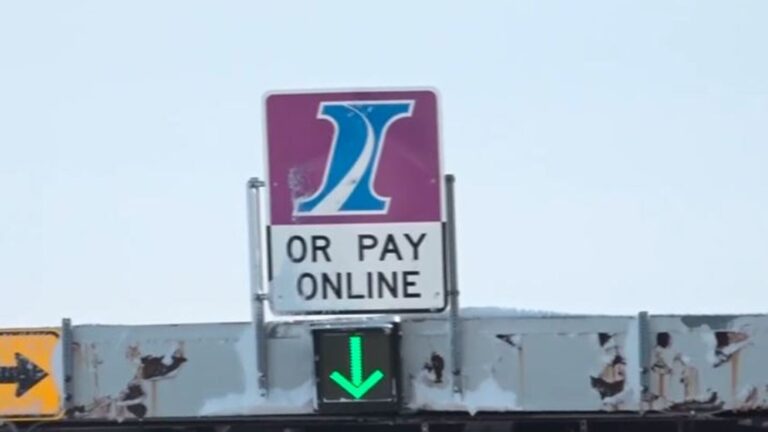
You’re driving from Illinois to Georgia with your I-PASS mounted on the windshield. It works fine back home, and you’ve used it in other states without thinking twice. But as you get closer to Atlanta, you start seeing signs for Peach Pass express lanes. Will your Illinois I-PASS cover those tolls, or do you need something else?
There’s an important update here. Georgia’s Peach Pass system now participates in E-ZPass interoperability, meaning Illinois I-PASS customers can use compatible transponders on participating Georgia toll facilities. Older information claiming I-PASS doesn’t work in Georgia is outdated.
However, that doesn’t mean you should enter every express lane without checking the rules. Your transponder needs to be active, your vehicle information must be correct, and certain Georgia express lanes have restrictions that go beyond simply paying a toll.
I’ll explain how I-PASS works in Georgia, which highways have toll lanes, how Peach Pass compares with E-ZPass, and what to check before making the trip. We’ll also cover the common mistakes that lead to unexpected toll charges and violations.
Does I-PASS work in Georgia in 2026?
Yes, Illinois I-PASS works with Georgia’s Peach Pass toll system through E-ZPass interoperability. Georgia expanded its electronic toll compatibility to include E-ZPass customers, allowing drivers from participating states to use eligible Georgia toll facilities without opening a separate Peach Pass account.
This is a significant improvement for drivers who regularly travel between Illinois and Georgia. In the past, the two systems weren’t directly compatible, so drivers needed to arrange separate toll payment options.
Now, an active I-PASS transponder can communicate with Georgia’s participating electronic toll collection equipment. When you pass through an eligible toll lane, the system identifies your transponder and processes the charge through your existing account.
You don’t need to stop at a toll booth or hand over cash. In fact, Georgia’s express lanes rely on electronic toll collection rather than traditional cash payment booths.
Before traveling, I still recommend checking the latest information from the Illinois Tollway and Georgia’s official Peach Pass website.
Tolling agreements, accepted equipment, and lane restrictions can change. A quick check before a long drive is easier than dealing with a toll dispute after you get home.
Why older websites say I-PASS doesn’t work in Georgia
If you’ve searched this question before, you’ve probably found conflicting answers. Some articles say I-PASS works in Georgia, while others insist you need a Peach Pass.
The confusion comes from changes in electronic toll interoperability.
Illinois I-PASS has long been part of the E-ZPass network. Georgia originally operated Peach Pass as a separate system, although it established interoperability agreements with other tolling programs, including Florida’s SunPass.
As Georgia expanded its partnerships, Peach Pass became compatible with additional toll networks, including E-ZPass.
That means an article written before these changes may still describe the old restrictions.
There’s another source of confusion worth mentioning. Being able to pay a toll with I-PASS doesn’t automatically mean every vehicle can use every Georgia express lane. Vehicle eligibility, operating direction, and posted restrictions still apply.
Think of the transponder as your payment method. It doesn’t override the rules for the road you’re entering.
How I-PASS and Peach Pass work together
Both I-PASS and Peach Pass use electronic toll collection, although the programs are managed by different agencies.
Illinois I-PASS is operated by the Illinois Tollway, while Georgia’s Peach Pass program is managed by the State Road and Tollway Authority (SRTA).
Each system maintains customer accounts, processes toll transactions, and uses electronic equipment to identify vehicles traveling through toll facilities.
Interoperability allows participating agencies to exchange the information needed to process toll payments across state lines.
What happens when you enter a Georgia toll lane?
Suppose you’re driving south toward Atlanta with an active Illinois I-PASS transponder installed correctly.
As you approach an eligible express lane, electronic equipment reads the transponder identification information. The tolling system then processes the transaction through the participating toll network.
The charge is associated with your I-PASS account rather than requiring you to create a separate Peach Pass account.
The process is similar to using I-PASS on participating E-ZPass roads in Indiana, Ohio, or New York.
There are a few conditions that matter:
- Your I-PASS account must be active. A suspended or closed account can prevent normal toll processing.
- Your transponder must be valid. Damaged, improperly installed, or deactivated equipment may not be detected correctly.
- Your vehicle information should be current. Check that your license plate and vehicle details match your account records.
- You must follow Georgia’s express lane rules. Payment compatibility doesn’t eliminate restrictions on vehicle types or lane access.
- Your account needs an acceptable payment arrangement. Check your balance and replenishment settings before leaving.
Most drivers won’t need to do anything unusual. If your I-PASS works normally in Illinois and your account is in good standing, you’re already in a good position.
Still, I’d rather spend two minutes checking an account than discover a payment problem halfway through a road trip.
Do you need a separate Peach Pass account?
For ordinary travel on participating Georgia toll facilities, an eligible, active I-PASS generally eliminates the need for a separate Peach Pass account.
That’s convenient for Illinois residents visiting Georgia for a vacation, business trip, or family visit.
You can keep using your existing transponder instead of managing another toll account with its own balance and payment settings.
However, Georgia residents who regularly use local express lanes may still prefer Peach Pass.
A local account can make it easier to manage Georgia-specific services, vehicle eligibility requirements, and customer support questions.
If you’re moving to Georgia permanently, compare the two programs before deciding whether to keep I-PASS as your primary toll account.
There’s no reason to open multiple toll accounts simply because you cross a state line, but there may be practical reasons to use the local system if Georgia becomes your home.
Which Georgia toll roads accept I-PASS?
Georgia’s toll network is different from the tollway system many Illinois drivers are used to.
In Illinois, you can spend long stretches driving on toll roads. Around Atlanta, Georgia primarily uses tolled express lanes alongside existing highways.
These lanes give eligible drivers the option to pay for a potentially faster trip when regular traffic is congested.
Georgia’s major express lane facilities include sections of I-85, I-75, and I-575.
Here’s how the main facilities compare.
| Georgia toll facility | Location | What drivers should know |
|---|---|---|
| I-85 Express Lanes | Northeast Atlanta corridor | Managed lanes with electronic toll collection and posted access rules. |
| I-75 South Metro Express Lanes | South of Atlanta | Reversible express lanes with operating directions that change. |
| I-75 Northwest Corridor Express Lanes | Northwest Atlanta area | Reversible managed lanes serving busy commuter routes. |
| I-575 Northwest Corridor Express Lanes | Northwest Atlanta area | Part of the Northwest Corridor express lane network. |
These facilities use Georgia’s Peach Pass tolling infrastructure, which supports participating interoperable accounts.
For current maps, lane status, and accepted payment information, check Peach Pass before entering the express lanes.
I-85 Express Lanes: What Illinois drivers should expect
I-85 is one of the busiest highways in the Atlanta area, especially during weekday commuting hours.
The express lanes provide an alternative to the regular travel lanes, with tolls that respond to traffic conditions.
If you’re driving through Atlanta during the morning or evening rush, you’ll notice how much traffic can build around major interchanges.
The express lane may save time, but don’t assume it’s automatically the better choice.
Look at the posted toll amount, check traffic conditions, and make sure your vehicle qualifies before entering.
Some vehicle categories and occupancy arrangements have specific requirements. Drivers using an out-of-state interoperable transponder should confirm how Georgia applies those rules.
Having three people in the car, for example, doesn’t mean you should assume your I-PASS account automatically qualifies for every available toll exemption.
That’s the kind of detail worth checking before a trip rather than trying to sort out while driving in heavy traffic.
I-75 South Metro Express Lanes: Watch the direction signs
The I-75 South Metro Express Lanes use a reversible lane system.
Instead of operating permanently in both directions, the lanes change direction according to traffic management schedules and conditions.
This arrangement helps serve heavy commuter traffic moving toward Atlanta at certain times and away from the city at others.
For occasional visitors, the unusual part isn’t the toll payment. It’s understanding when the lanes are open in your direction.
Never enter a reversible express lane against posted signals or through a closed access point.
Green arrows, red X signals, electronic message boards, and entrance signs provide the information you need.
Follow those signs even if your navigation app suggests using the express lanes.
Navigation software can occasionally lag behind temporary closures or changes in lane operations.
I-75 and I-575 Northwest Corridor: Useful when Atlanta traffic backs up
Northwest Atlanta has its own express lane network along portions of I-75 and I-575.
These lanes serve drivers traveling between Atlanta and communities northwest of the city.
Like the South Metro system, the Northwest Corridor includes reversible express lanes.
That makes the operating direction important.
You also need to pay attention to designated entry and exit points. Express lanes aren’t necessarily accessible wherever you happen to be on the highway.
Missing your intended entrance may mean continuing in the regular lanes until another approved access point becomes available.
For a first-time visitor, my suggestion is simple: review your route before reaching Atlanta.
Trying to figure out unfamiliar express lane entrances while surrounded by fast-moving traffic is an unnecessary distraction.
How much does it cost to use Georgia express lanes?
One of the biggest differences between Georgia’s express lanes and some traditional toll roads is how prices are calculated.
Georgia uses variable toll pricing on its managed express lanes.
Instead of charging the same amount every time, toll rates can change depending on traffic conditions and the specific facility.
When demand increases, prices may rise to help manage the number of vehicles entering the express lanes.
When traffic is lighter, the toll may be lower.
That means I can’t give you one fixed price that will accurately describe every trip through Atlanta.
The amount depends on the road, entry and exit locations, and traffic conditions when you travel.
How to know what you’ll pay before entering
Georgia displays toll information on electronic signs near express lane entrances.
Check those signs before committing to the lane.
If the displayed price seems too high for the time you expect to save, staying in the regular lanes may make more sense.
For example, imagine regular traffic is moving reasonably well, and your navigation app shows only a small time difference between the express lane and the general-purpose lanes.
Paying extra might not be worthwhile.
On another day, a traffic backup could make the express lane more attractive, especially if you’re heading to the airport or trying to reach an appointment.
The value depends on your schedule.
Personally, I’d pay for an express lane when it offers a meaningful time saving. I wouldn’t spend money merely because a toll lane is available.
Will I-PASS charge extra for using Georgia toll roads?
Your I-PASS account processes toll transactions under the applicable interoperability arrangements.
The amount charged depends on the toll facility and its rules.
Don’t assume the discounts or pricing arrangements you receive on Illinois toll roads automatically apply in Georgia.
Different toll agencies can have different rates, classifications, and discount programs.
Before traveling, check the Illinois Tollway’s current account terms if you’re concerned about out-of-state toll charges.
After your trip, review your transaction history to confirm the charges match the roads you used.
A transaction may not appear immediately, so allow time for toll processing before assuming a charge is missing.
I-PASS, E-ZPass, and Peach Pass: What’s the difference?
It’s easy to confuse these names because they all involve electronic toll payments.
The main difference is which organization manages your account and which network agreements allow your transponder to work elsewhere.
Here’s a practical comparison.
| Feature | I-PASS | E-ZPass | Peach Pass |
|---|---|---|---|
| Primary association | Illinois | Participating toll agencies across multiple states | Georgia |
| Account management | Illinois Tollway | Your issuing E-ZPass agency | Georgia’s State Road and Tollway Authority |
| Electronic toll payments | Yes | Yes | Yes |
| Use in Illinois | Yes | Through participating E-ZPass interoperability | Subject to applicable interoperability arrangements |
| Use in Georgia | Through E-ZPass interoperability | Through participating interoperability agreements | Yes |
| Account balance and billing | Managed through I-PASS | Managed by the issuing agency | Managed through Peach Pass |
The important thing to understand is that E-ZPass is a network of participating toll agencies.
It’s not one universal account managed from a single office.
An E-ZPass transponder issued by one participating agency may work on toll roads operated by another agency because of their interoperability agreements.
I-PASS participates in that network.
Georgia’s Peach Pass system has also expanded interoperability, making travel easier for drivers with compatible accounts.
Why I-PASS works in other E-ZPass states
Illinois I-PASS customers have long benefited from E-ZPass participation.
That allows an eligible I-PASS transponder to work on participating toll facilities in states such as Indiana, Ohio, Pennsylvania, New York, and New Jersey.
The arrangement is useful for anyone driving long distances through several tolling jurisdictions.
Instead of carrying a separate payment device for each state, you can use one compatible transponder on participating roads.
There are still limitations.
Some states operate more than one electronic toll system, and individual facilities may have different acceptance rules.
California’s FasTrak and Texas’s tolling programs, for example, should not be assumed to accept I-PASS simply because they use electronic transponders.
Check the specific toll operator before traveling outside the established interoperability network.
How Georgia’s Peach Pass connects with Florida’s SunPass
Georgia’s Peach Pass has an interoperability relationship with Florida’s SunPass system.
That relationship allows compatible customers to use participating toll roads across state lines.
Florida is also connected to E-ZPass interoperability through participating SunPass facilities and arrangements.
For someone driving from Illinois through Georgia and continuing into Florida, this can reduce the need for multiple toll payment accounts.
However, accepted facilities and payment rules can differ, so it’s worth confirming coverage for the entire route.
Don’t assume every toll road, express lane, bridge, or managed facility in every state follows identical policies.
The toll agency operating that specific road has the final say.
How to prepare your I-PASS before driving to Georgia
Most toll payment problems are easier to prevent than resolve.
Before leaving Illinois, spend a few minutes checking your I-PASS account and transponder.
You don’t need specialized tools or mechanical experience. This is mostly about confirming that your equipment and account information are ready.
Step 1: Confirm your I-PASS account is active
Sign in through the official Illinois Tollway website or its authorized account management service.
Check that your account is active and doesn’t have an unresolved payment issue.
If you use automatic replenishment, make sure the payment card on file hasn’t expired.
This is easy to overlook when you don’t drive on toll roads very often.
I’ve seen drivers spend plenty of time preparing their cars for a long trip, checking the tires, topping up fluids, and loading luggage, only to discover an expired card attached to an account they haven’t opened in months.
The car is ready, but the toll account isn’t.
A quick account check saves that headache.
Step 2: Verify your license plate information
Check the license plate number listed on your I-PASS account.
Make sure it matches the vehicle you’re taking to Georgia.
This matters if you’ve recently bought another car, transferred plates, or changed registration.
Toll systems may use license plate images to support transaction processing when a transponder isn’t read properly.
Having correct vehicle details can make it easier to identify and resolve toll transactions.
Don’t assume the system automatically knows you’ve changed vehicles.
If your account requires you to register each vehicle, follow those instructions before leaving.
Step 3: Check your transponder type and installation
Illinois drivers may have either a traditional I-PASS transponder or an I-PASS sticker tag.
These devices aren’t installed exactly the same way.
Older reusable transponders have their own mounting instructions, while sticker tags are designed to attach directly to the windshield.
Follow the instructions supplied with your particular device.
Incorrect placement can interfere with reliable detection.
Windshield design can also matter. Some vehicles have special windshield coatings or designated areas for electronic toll devices.
If you’re unsure where the tag belongs, check your vehicle owner’s manual along with the I-PASS installation instructions.
Don’t place the transponder where it blocks your view of the road.
Step 4: Check whether your vehicle needs special registration
Most ordinary passenger vehicles won’t require anything unusual beyond a valid account and compatible transponder.
However, special circumstances deserve a closer look.
If you’re towing a trailer, driving a commercial vehicle, or using a vehicle that falls under a different toll classification, verify the rules before entering Georgia’s express lanes.
Some managed lanes have restrictions that are separate from payment acceptance.
A transponder can successfully communicate with toll equipment even when the vehicle itself isn’t permitted to use a particular lane.
That’s why checking vehicle eligibility matters.
Step 5: Review your route before reaching Atlanta
Atlanta traffic can be demanding, especially if you aren’t familiar with its highway interchanges.
Plan your route before entering the metro area.
Check whether your navigation system intends to use toll lanes and whether you’re comfortable with that choice.
Google Maps and other navigation apps generally provide settings that allow you to avoid toll roads.
If you don’t want to use express lanes, enable the appropriate setting before you start driving.
Remember that navigation apps aren’t a substitute for posted highway signs.
Georgia’s electronic signs provide information about lane direction, closures, and toll conditions.
Can you use an I-PASS sticker in Georgia?
Illinois has introduced I-PASS sticker tags as an alternative to traditional transponders.
These windshield-mounted devices provide electronic toll identification without requiring drivers to maintain an older-style reusable transponder.
An active, properly installed I-PASS sticker is intended for use within the participating E-ZPass network, including eligible Georgia facilities.
However, make sure your particular sticker has been activated and is associated with the correct account and vehicle.
Simply attaching an unactivated sticker to the windshield won’t establish a valid payment arrangement.
Where should you mount an I-PASS sticker?
Use the mounting location specified by the Illinois Tollway for your sticker model.
Typically, electronic toll tags are positioned in a designated windshield area where tolling equipment can detect them without obstructing the driver’s view.
Clean the glass and let it dry before installation.
A dirty or greasy windshield can prevent the adhesive from attaching properly.
Once installed, avoid peeling the sticker off and moving it to another vehicle.
Sticker tags are generally designed for permanent installation, and removing one can damage its electronic components.
If you replace your windshield or sell the vehicle, follow the Illinois Tollway’s instructions for replacing or deactivating the tag.
Can you move an I-PASS sticker between vehicles?
Don’t treat a sticker tag like a portable transponder.
Traditional transponders may allow transfers between vehicles under the issuing agency’s rules, but adhesive sticker tags generally aren’t designed to be removed and reused.
If you regularly switch between two cars, check the available I-PASS equipment and account options.
Using a sticker assigned to one vehicle on another vehicle can create billing problems, especially when the vehicle information doesn’t match.
For a family with multiple cars, properly registering the vehicles and using approved equipment is the cleaner approach.
What happens if your I-PASS doesn’t register in Georgia?
Electronic toll systems are designed for reliable operation, but failed reads and account problems can still happen.
A transponder might be installed incorrectly, the account could be inactive, or the vehicle information might be outdated.
There’s also the possibility of an equipment issue.
If your I-PASS isn’t detected, Georgia’s tolling system may use available license plate information to identify the vehicle and determine how the transaction should be handled.
What happens next depends on the facility’s rules and whether a valid payment arrangement can be established.
Don’t assume an unread transponder means the toll is automatically forgiven.
Common reasons a toll transponder doesn’t work
| Problem | Possible cause | What to check |
|---|---|---|
| Toll doesn’t appear in your account | Transaction processing delay | Allow processing time and review your account again. |
| Transponder isn’t detected | Incorrect mounting location | Check the official installation instructions. |
| Account shows a payment warning | Expired payment card or insufficient funds | Update payment details and resolve the balance. |
| Unexpected plate-based notice | License plate mismatch or failed transponder read | Verify registration details and contact the toll agency. |
| Sticker stops working after removal | Damage from peeling or transferring | Request replacement equipment through I-PASS. |
| Unexpected express lane violation | Vehicle or lane restriction | Review the posted rules and the notice details. |
One thing I wouldn’t do is immediately assume the transponder is defective.
Start with the account status and mounting instructions.
Those are straightforward checks, and they don’t involve replacing equipment unnecessarily.
What to do if you receive a Georgia toll violation
If you receive a notice after using a Georgia express lane, read it carefully before paying or disputing anything.
Confirm the license plate, date, location, and nature of the alleged violation.
Then compare that information with your I-PASS account records.
If your account was active and your transponder was properly registered, contact the toll agency using the instructions on the notice.
You may also need to contact Illinois I-PASS customer service to verify your account status or transaction history.
Keep copies of relevant records, including account statements and payment confirmations.
Don’t ignore the notice simply because you believe your I-PASS should have worked.
Unresolved toll notices can become more expensive if additional administrative charges apply.
Can you pay Georgia tolls without I-PASS or Peach Pass?
This is where drivers need to be careful.
Georgia’s express lanes are designed around electronic toll collection, and they don’t operate like traditional highways with cash booths at every entrance.
You shouldn’t assume you can enter an express lane without an approved payment arrangement and settle the toll online afterward.
Some tolling systems elsewhere offer standard pay-by-plate billing, but those arrangements aren’t universal.
Georgia’s rules depend on the specific facility and the applicable toll program.
Does Georgia offer pay-by-plate tolling?
License plate recognition is used in electronic toll enforcement and transaction processing.
However, license plate recognition doesn’t automatically mean drivers can use Georgia express lanes without a valid toll account.
That’s an important distinction.
A camera may capture your plate when your transponder isn’t detected, but the resulting transaction could be handled differently from a normal prepaid toll.
Depending on the circumstances, you could receive a violation notice rather than an ordinary toll bill.
Before driving without a transponder, verify the current payment requirements through Peach Pass.
Can you pay Georgia tolls with cash?
Georgia’s managed express lanes use electronic toll collection.
Drivers shouldn’t expect to find a staffed cash booth at an express lane entrance.
If you’re visiting Georgia without a compatible toll account, the simplest option may be to remain in the regular highway lanes.
Those general-purpose lanes provide access to the same highway corridors without requiring you to purchase express lane access.
You may spend more time in traffic, but you’ll avoid entering a tolled lane without the required payment arrangement.
What about rental cars?
Rental cars deserve special attention because the rental company may have its own toll payment program.
Some rental agencies provide electronic toll services and charge customers according to their rental agreement.
Those programs may include administrative or service fees beyond the toll itself.
If you’re flying into Atlanta and renting a car, ask the rental company how toll charges are handled before leaving the lot.
Don’t assume your personal I-PASS automatically covers the rental vehicle.
Check whether the Illinois Tollway allows your equipment to be used in that rental vehicle and whether the rental company’s own toll equipment could create duplicate billing.
Also verify whether the vehicle needs to be temporarily added to your toll account.
I’ve always preferred sorting out rental toll arrangements at the counter rather than discovering extra charges after returning the car.
Do you really need Georgia’s express lanes?
For many drivers visiting Georgia, the answer is no.
The state’s express lanes are optional alternatives to regular highway lanes.
You can travel through Atlanta using general-purpose lanes without purchasing access to the managed express lanes.
Whether the express lanes are worthwhile depends on traffic, your destination, and how much time you need to save.
When paying for an express lane makes sense
Consider a driver traveling through Atlanta during a weekday rush hour.
Regular highway traffic is moving slowly, and the driver has an appointment on the other side of the city.
If an available express lane provides a meaningful travel-time advantage and the displayed toll is acceptable, using it can be worthwhile.
That’s especially true when arriving on time matters more than minimizing every travel expense.
Express lanes can also provide an alternative when congestion builds along major commuter routes.
However, travel times aren’t guaranteed.
An incident, temporary closure, or change in traffic conditions can affect the advantage you expected.
When I’d stay in the regular lanes
If traffic is moving well, I generally wouldn’t pay extra for an express lane.
The same goes for a relaxed road trip when arriving a few minutes earlier doesn’t matter.
I’d also avoid unfamiliar express lanes if I wasn’t confident about the entrance, exit, or operating direction.
Saving a few minutes isn’t worth making a risky lane change or missing your exit.
For visitors, knowing where you’re going usually matters more than squeezing every possible minute out of the drive.
Common mistakes Illinois drivers make with Georgia toll lanes
Most electronic toll problems aren’t complicated mechanical failures.
They come from account details, misunderstood lane rules, or assumptions about how another state’s toll system works.
Here are the mistakes I’d watch for before driving from Illinois to Georgia.
Assuming every toll system accepts I-PASS
I-PASS works across a large network, but electronic toll compatibility isn’t universal.
Every toll operator sets its own participation and payment rules.
Just because a highway uses a windshield transponder doesn’t mean your Illinois device will work there.
For Georgia, E-ZPass interoperability provides the connection.
For other destinations, check the participating toll network before traveling.
Entering an express lane without reading the signs
This mistake can be more serious than a simple toll payment problem.
Georgia’s reversible express lanes require drivers to follow operating-direction signals and designated access points.
A red X or closed entrance means you shouldn’t enter.
Don’t follow another vehicle into a restricted lane assuming the driver ahead knows something you don’t.
Read the signs yourself.
Forgetting to update the license plate
People change cars more often than they update old online accounts.
If your I-PASS account still lists a previous vehicle, correct the information before your trip.
It’s a small administrative task, but it can make a difference if the toll system needs to associate a plate image with your account.
Assuming a carpool automatically gets a free toll
Georgia has specific rules for eligible vehicles and certain toll exemptions.
Those rules may require account settings, registration, or other conditions.
An out-of-state interoperable transponder shouldn’t be treated as automatic proof of eligibility for every local discount or exemption.
Confirm the requirements before relying on free express lane access.
Using a damaged or incorrectly installed sticker
An I-PASS sticker isn’t something I’d remove and reapply whenever I switch cars.
Its electronic components can be damaged during removal.
If you’ve recently replaced your windshield, inspect your toll tag arrangement before heading out.
Make sure the correct equipment is installed and activated.
Ignoring toll transactions after the trip
Most drivers don’t check every toll transaction, especially after a long vacation.
Still, it’s worth reviewing your statement once the trip has been processed.
Look for unexpected charges, duplicate transactions, or tolls associated with a vehicle you weren’t driving.
If something doesn’t look right, contact the appropriate toll agency while the trip details are still fresh.
Driving from Illinois to Georgia: What about tolls along the way?
If you’re traveling from Illinois to Georgia, your toll concerns aren’t limited to Atlanta.
The route you choose may pass through several states with different tolling arrangements.
For example, a trip beginning near Chicago might involve Illinois tollways before continuing south through Indiana, Kentucky, Tennessee, or other states depending on the route.
Not every interstate on that journey requires toll payment.
Some routes have toll facilities, while others use ordinary interstate highways without toll collection.
Plan based on the actual roads you’ll use rather than assuming every state charges tolls.
Will your I-PASS work in Indiana and Ohio?
Yes, eligible I-PASS transponders work on participating E-ZPass toll facilities in Indiana and Ohio.
That includes major toll roads operated by participating agencies.
For drivers traveling east or northeast from Illinois before heading south, this can make toll payment easier.
You can continue using the same account instead of arranging separate payment methods for each participating state.
What about Kentucky and Tennessee?
Kentucky and Tennessee don’t have the same widespread passenger-car toll road networks found in states such as Illinois or New York.
Depending on your route, you may drive through these states without encountering a toll facility.
That doesn’t mean every possible road or future project will remain toll-free.
Use current route information to check whether your specific journey includes tolls.
Don’t buy another transponder simply because you’re crossing a state boundary.
Can one I-PASS cover a longer trip into Florida?
An active I-PASS can be useful on participating E-ZPass-compatible toll facilities in Florida.
Florida’s toll system includes SunPass and other tolling arrangements, so you should confirm compatibility with the roads you intend to use.
This matters because Florida has a much larger network of tolled highways and expressways than Georgia.
If you’re driving to Orlando, Tampa, Miami, or another Florida destination, you may encounter several toll facilities.
Check your planned route and make sure your account is ready for the additional charges.
How to check Georgia toll compatibility before your trip
When toll policies change, official toll agency information is more dependable than an old travel article or a comment posted several years ago.
You don’t need to spend hours researching.
Check the agencies responsible for your account and the roads you plan to use.
Illinois Tollway: Check your I-PASS account and accepted locations
The Illinois Tollway is the right starting point for information about your I-PASS account.
Use its official resources to check account status, payment methods, vehicle registration, and transponder requirements.
You can also review current guidance about using I-PASS outside Illinois.
If you’re having trouble with account activation or equipment, contact Illinois Tollway customer service before your trip.
Peach Pass: Confirm Georgia express lane rules
The Peach Pass website provides information about Georgia’s toll lanes, accepted payment arrangements, and operating requirements.
It’s especially useful for drivers who aren’t familiar with Atlanta’s managed lanes.
Look for information about lane direction, vehicle restrictions, toll rates, and interoperability.
If you’re towing, driving a larger vehicle, or planning to use an exemption, check the applicable rules before entering.
Georgia’s State Road and Tollway Authority: Official program information
Georgia’s State Road and Tollway Authority manages the Peach Pass program and provides official information about the state’s tolling operations.
This is a useful source when you need to verify broader program updates or policy changes.
For questions about a specific account or transaction, use the customer service channels identified by the relevant toll agency.
Frequently asked questions about I-PASS in Georgia
Can I use my Illinois I-PASS on Georgia’s Peach Pass lanes?
Yes. Eligible Illinois I-PASS transponders can be used on participating Georgia toll facilities through E-ZPass interoperability.
Your account must be active, and you still need to follow the express lane’s vehicle and operating rules.
Do I need to buy a Peach Pass if I already have I-PASS?
Generally, no. If your I-PASS is compatible and active, you can use it on participating Georgia toll facilities without purchasing a separate Peach Pass.
If you’re moving to Georgia or need access to special local account features, compare the programs before deciding which account works best.
Will Georgia tolls appear on my Illinois I-PASS account?
Eligible Georgia toll transactions should be processed through your I-PASS account under the applicable interoperability arrangements.
Allow time for out-of-state transactions to appear, and review your account history after traveling.
Does I-PASS work on I-75 in Georgia?
I-PASS can be used on participating Georgia express lane facilities along I-75, provided your account and equipment meet the requirements.
Remember that the South Metro and Northwest Corridor express lanes include reversible operations and specific entry restrictions.
Does I-PASS work on I-85 in Atlanta?
Yes, eligible I-PASS transponders are accepted through the applicable interoperability arrangements on participating I-85 express lane facilities.
Check current lane rules, posted toll rates, and vehicle eligibility before entering.
Can I drive through Georgia without paying tolls?
Yes. Georgia’s express lanes are optional, and drivers can use regular interstate lanes without purchasing express lane access.
If you’re trying to avoid tolls entirely, review your route and turn on the avoid-tolls setting in your navigation app.
What happens if I accidentally enter a Peach Pass lane?
What happens depends on the facility, your account status, and whether the toll system can identify a valid payment arrangement.
If you have an active compatible I-PASS, the toll may be processed normally.
If you don’t have an approved payment method or violate lane restrictions, you could receive a notice.
Don’t stop, reverse, or make an unsafe maneuver to escape the lane. Continue driving safely and follow the posted signs.
Can I use I-PASS in a Georgia rental car?
Possibly, depending on your transponder type, Illinois Tollway account rules, and the rental company’s policies.
Verify whether the vehicle can be registered to your account and whether the rental company uses its own electronic toll program.
Avoid creating overlapping payment arrangements that could lead to confusion or duplicate charges.
Does I-PASS give me free access to Georgia express lanes?
No. I-PASS provides a compatible toll payment method, but it doesn’t automatically make express lane travel free.
Georgia’s toll rates and exemptions are governed by the rules of the individual facilities.
Drivers who believe they qualify for a special exemption should verify the registration and eligibility requirements.
Will an I-PASS sticker work as well as an older transponder?
An activated I-PASS sticker is designed to provide electronic toll identification on participating facilities.
Correct installation and account activation are necessary.
Unlike a reusable transponder, a sticker generally shouldn’t be peeled off and moved between vehicles.
Can I use I-PASS in Georgia with a trailer?
Don’t assume towing is permitted simply because your I-PASS is compatible.
Georgia express lanes may restrict certain vehicle combinations, and toll classification rules can also apply.
Check the specific express lane requirements before entering with a trailer.
Do Georgia express lanes have toll booths?
Georgia’s managed express lanes use electronic toll collection rather than traditional cash toll booths.
You should have an accepted payment arrangement before entering a tolled express lane.
How can I dispute an incorrect Georgia toll charge?
Start by reviewing the transaction details, including the date, location, vehicle, and amount.
If the charge appears incorrect, contact the appropriate toll agency using its official customer service or dispute process.
Keep your I-PASS account records and any relevant travel information available.
My recommendation before driving to Georgia with I-PASS
If you’re heading from Illinois to Georgia with an active I-PASS, you shouldn’t need to purchase a Peach Pass solely to use participating Georgia express lanes. The interoperability between Peach Pass and E-ZPass has made interstate travel much easier than it used to be.
I’d still check three things before leaving: your I-PASS account status, the transponder installation, and the vehicle information attached to your account. Those simple checks help prevent the most avoidable payment problems.
Once you reach Atlanta, pay attention to the express lane signs. Georgia’s reversible lanes and vehicle restrictions are different from what many Illinois drivers are accustomed to, and an accepted transponder doesn’t give you permission to ignore them.
If you’re only passing through and regular traffic is moving well, there’s nothing wrong with skipping the express lanes. Keep the toll money and continue in the general-purpose lanes.
If you’re a frequent Georgia commuter, compare Peach Pass account features with your existing I-PASS setup. For occasional visitors, maintaining one compatible toll account is usually the simpler approach.
The takeaway: I-PASS works on participating Georgia Peach Pass facilities, but a valid account and proper lane use still matter. Check your equipment before the trip, read the signs around Atlanta, and you’ll be in a much better position to avoid unexpected toll charges.